Dance of Death: The Ossuary and The Pope.

I got right distracted today while working on the Healing Arts posts, distracted right into the amazing world of The Dance Of Death. There’s a large body of work by different artists devoted to this particular aspect of death, and they widely range in style, to say the very least. All of the art work is very beautiful, and is often poignant, witty, and sly. The main message being that death is no respecter of persons.

So this will be a sort of companion series to the Healing Arts. I’m going to start with Basel’s Dance of Death by Hieronymus Hess (1799-1850). These are based on copies of a mural which was done around around 1435-1441. The wall with the original mural was lost long ago, in 1804. Some fragments survive and are housed in a museum. We open with The Ossuary and Death’s first conquest, The Pope. Death looks positively gleeful walking off with the pope.  I’m quite enchanted with Hess’s portrayal of Death as a mostly fleshed character who must maintain modesty when it comes to the private bits. Death also changes gender in Hess’s portrayals, and there are obvious character shifts in Death, dependent on just who is being claimed. In The Pope, it almost looks as if Death were wearing a skull mask.

The Ossuary. Click for full size.

The Ossuary. Click for full size.

Death and the Pope. Click for full size.

Death and the Pope. Click for full size.

The Bakemono Zukushi “Monster” Scroll.

Rokurokubi (ろくろくび), a long-necked woman is pictured next to an Inugami (犬神) dog spirit.

Rokurokubi (ろくろくび), a long-necked woman is pictured next to an Inugami (犬神) dog spirit.

These wonderful images featured here are from a Japanese painted scroll known as the Bakemono zukushi. The artist and date is unknown, though its thought to hail from the Edo-period, sometime from the 18th or 19th century. Across it’s length are depicted a ghoulish array of “yokai” from Japanese folklore. […]

The class of yokai characterised by an ability to shapeshift, and that featured in this scroll, is the bakemono (or obake), a word literally meaning “changing thing” or “thing that changes”. The founding father of minzokugaku (Japanese folklore studies), Yanagita Kuno (1875–1962), drew a distinction between yurei (ghosts) and bakemono: the former haunt people and are associated with the depth of night, whereas the latter haunt places and are seen by the dim light of dusk or dawn.

Amongst the bakemono monsters depicted in the scroll is the rokurokubi (ろくろくび), a long-necked woman whose name literally means “pulley neck”. Whether shown with a completely detachable head (more common in Chinese versions), or with head upon the end of a long threadlike neck as shown here, the head of the rokurokubi has the ability to fly about independently of the body. In his 1904 collection Kwaidan, Lafcadio Hearn provides the first extended discussion of this yokai in English, telling of a samurai-turned-travelling-priest who finds himself staying the night in a household of rokurokubi intent on eating their guest.

Daichiuchi (大地打) is a mallet-wielding monster with a bird-like face.

Daichiuchi (大地打) is a mallet-wielding monster with a bird-like face.

Fascinating monsters all, and you can see and read much more at The Public Domain Review.

Anatomy Atlas Part 10 – Sinuses

The nasal and paranasal cavities. The source of joy for so many people around the world, and yet another proof of the intelligent design ad hoc nature of evolution.

©Charly, all rights reserved. Click for full size.

I always have had hayfever throughout the year. Once when my GP asked my at what time of year I have the most problems my reply was “Well, it usually is the worst from January til December.”. That was a rare occasion, because he does not laugh often.

But despite constantly runny nose alternately either due to cold or due to allergy, I never had serious problems with sinuses. Until last two years. Maybe the subtle changes in bone structures due to aging came over some tipping point.

What I remember from school about this predicament is that our upright posture is responsible for most of it. The sinuses evolved in quadrupeds and they use gravity for draining the phlegm. Evolution has tried to keep up with our evolving of upright posture and flat face, but did not manage it well enough. Thus our species is blessed with the ability to flip from just annoyingly runy nose to headsplitting ache overnight.

As I said at the beginning. Oh the joy.

This Black Cloud Called Trump.

Brenda Goodman, “Impending” (2018), oil on wood, 80 x 72 in (courtesy of the artist). © Brenda Goodman.

Brenda Goodman, “Impending” (2018), oil on wood, 80 x 72 in (courtesy of the artist). © Brenda Goodman.

Fifteen months ago, Trump was just beginning to embrace his new position of power but now he’s well into the dismantling of our democracy. My emotions are whipped around all day long. Mothers are torn away from their babies at the border. Families living good, productive lives here are sent back to “where they came from” — a place some of them hardly know. The reversal of all that Obama put in place to protect our environment. The destruction of an educational system that was once the best in the world. The attack on our press, which is treated like an enemy. Taking away our rights as he edges closer and closer to a dictatorship. And the lies. The constant lies. So that we can hardly find truth anymore. So many gut-wrenching changes.

I have nothing to add here. You can read more at Hyperallergic.

Making a Rondel Dagger – Part 8 – Buffing

After many hours and a few more due to setbacks (scratches, aaaargh) I finally got to the point where the blade was polished with the 7.000 grit paper. This is very fine mirror polish, but it looks a bit, well, strange, unnatural and artificial. There are different options for how to deal with this and I decided to go for buffing.

Buffing is an abrasive process that uses some very fine polishing compounds on some soft carrier (cloth, felt, paper, leather – all are usable and all have their advantages and disadvantages). In this case I have first used very fine commercial polishing compound applied to a felt wheel. Since I do not have space for a set of specialized buffers in my workshop, I have to do with a drill held firmly in a vice.

Buffing a blade on a wheel can be dangerous process, I think more dangerous than grinding. The main thing to keep in mind in this regard  is that the cutting edge orientation must be opposite to how it is held during sharpening – that is, the edge should point in the direction of the movement, not against it. Forgetting this is very, very dangerous, since the blade can bite in the soft wheel in an instant and be hurled in random direction with great force. A care has also to be taken near any and all edges.

Buffing with the commercial compound has produced very fine finish very quickly, but I was still not satisfied with it. It looked too artificial, machine-made. Luckily enough there is an even finer abrasive at hand – jeweler’s rouge. Nowadays I could buy half a kilo of ferrous oxide for mere 2,-€ (with 4,-€ shipment, ha!), but since I have no shortage of steel dust and rusting iron, I am making my own with a process that I devised when buying stuff online was not yet a thing. Not to save money (it is actually the exact opposite), but for fun. I have used all I had yonks ago, but I have just finished making a small batch from the steel dust ground from my previous dagger and it came handy this time.

I do not have a separate buffing wheel for jewelers rouge yet. So I lightly dusted a piece of cloth from an old t-shirt soaked in WD-40. Emphasis on the word “lightly”. Jewelers rouge is very mild abrasive and if it is clean enough, it will not scratch the blade too badly even if not too precisely ground and sieved. But it is good to use the cloth as a sort of final sieve and work the abrasive slowly through the cloth to the blade, and not apply it directly on it.

Theoretically this buffing can be done at home while watching a movie, because it takes a looong time and is boring as hell, but if you do that, you have to be careful. Do not be tempted to scratch your nose or touch anything, that stuff is vicious. It is not dangerous, but the very fine red dust is very strong and vivid pigment and unless you are extremely careful, it gets everywhere and you will have pink fingerprints on everything you touch. Pink switches, pink door handles and definitively pink soap bar. Oh, and if you forget to wear respirator whilst grinding the stuff and sifting, pink bogeys.

I have spent approximately two hours running the oil soaked red rug along the blade and the blade is finally and definitively done to my satisfaction. Next step is to find materials for the guard, bolster and rondel. And a fitting piece of wood for the handle.

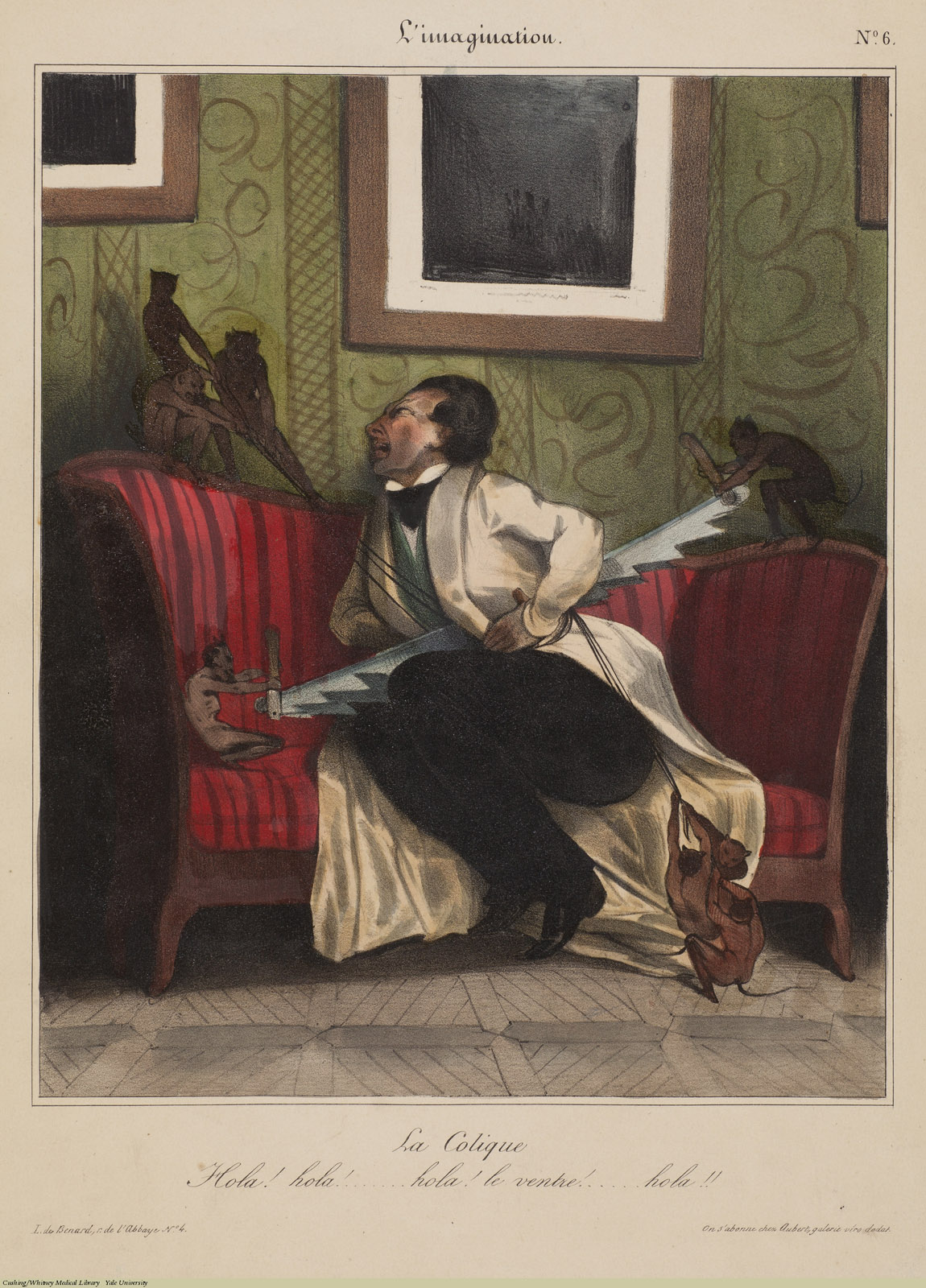
The Healing Arts: Le mal de tête, La Colique, Le Cure.

Click for full size.

Le mal de tete. Charles Ramelet / Honore Daumier, Lithograph coloured. Subject: Headache, Depiction of Pain.

Le mal de tete. Charles Ramelet / Honore Daumier, Lithograph coloured. Subject: Headache, Depiction of Pain.

La Colique. Charles Ramelet / Honore Daumier, Lithograph coloured. Subject: Cholic, Depiction of Pain.

La Colique. Charles Ramelet / Honore Daumier, Lithograph coloured. Subject: Cholic, Depiction of Pain.

Le Cure. Oui, mes freres... Charles Ramelet / Honore Daumier, Lithograph coloured. Subject: Alcohol, Sleep.

Le Cure. Oui, mes freres… Charles Ramelet / Honore Daumier, Lithograph coloured. Subject: Alcohol, Sleep.

Decor.

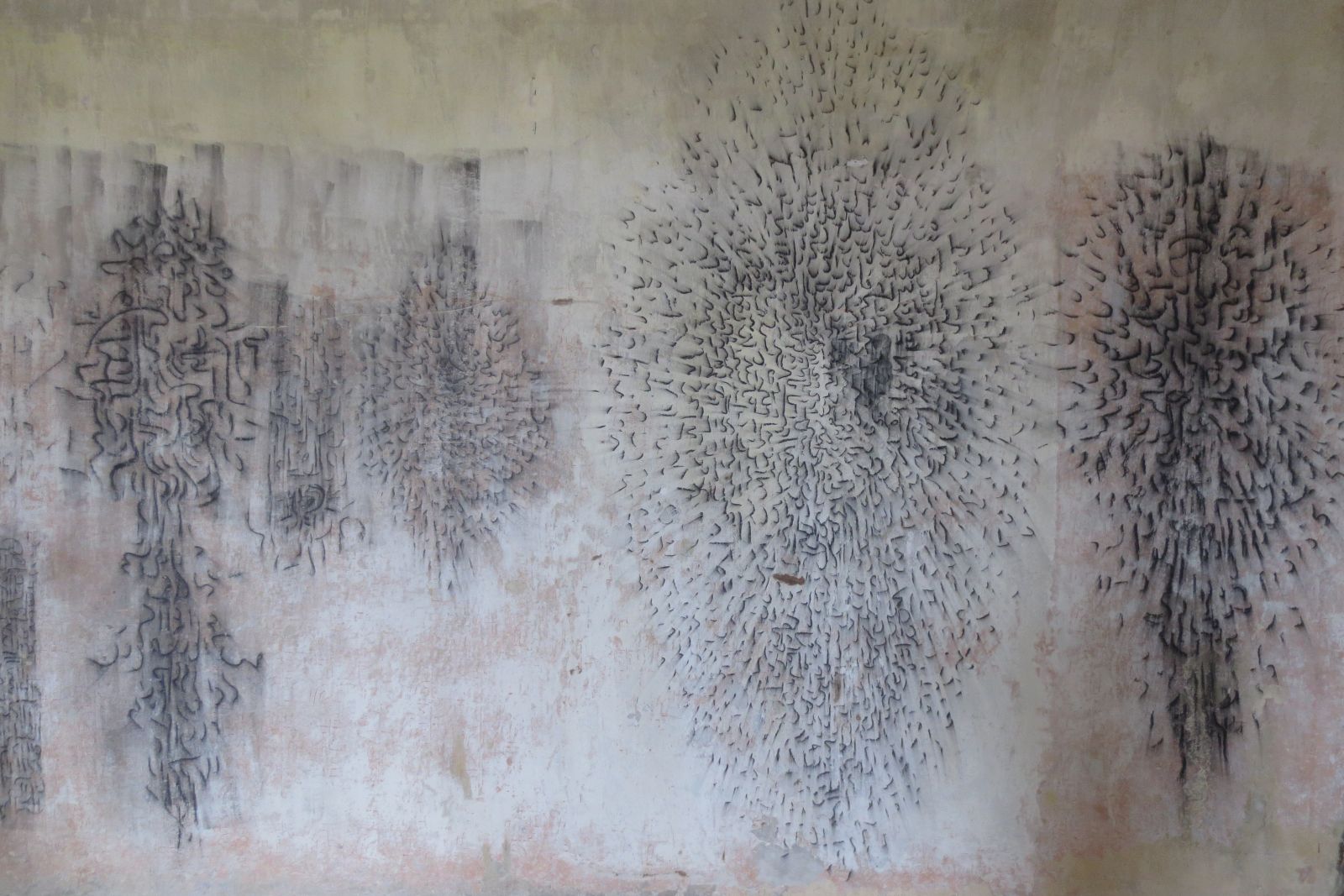
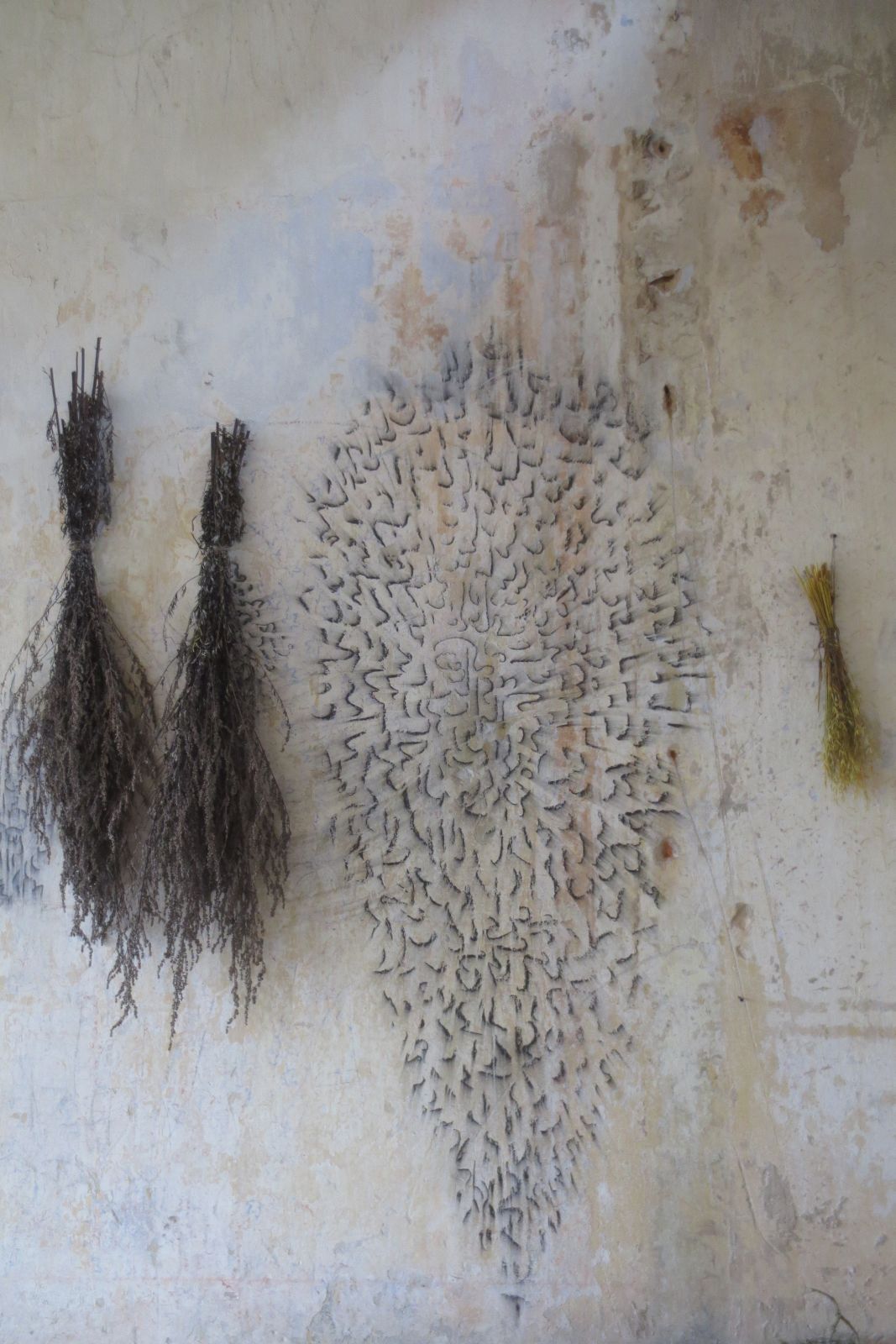
From rq: Wallpaper, wall art. This is an abandoned school down the southern half of the country. The first is layers of wallpaper/paint (couldn’t really tell), the second two are a local artist’s work for a nature-focused show that used the building as canvas and location. Click for full size!

© rq, all rights reserved.