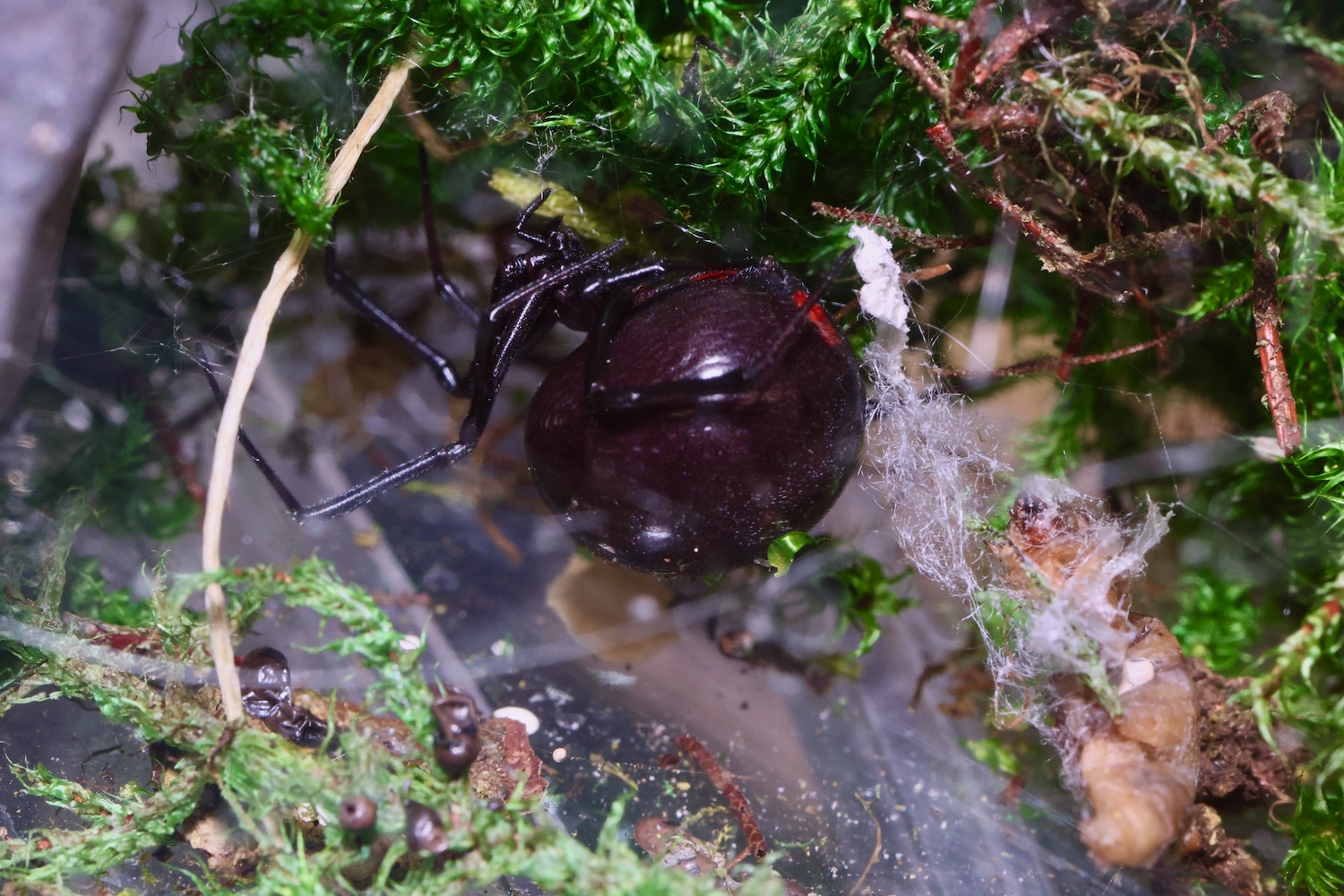
I’m arachnophobic?

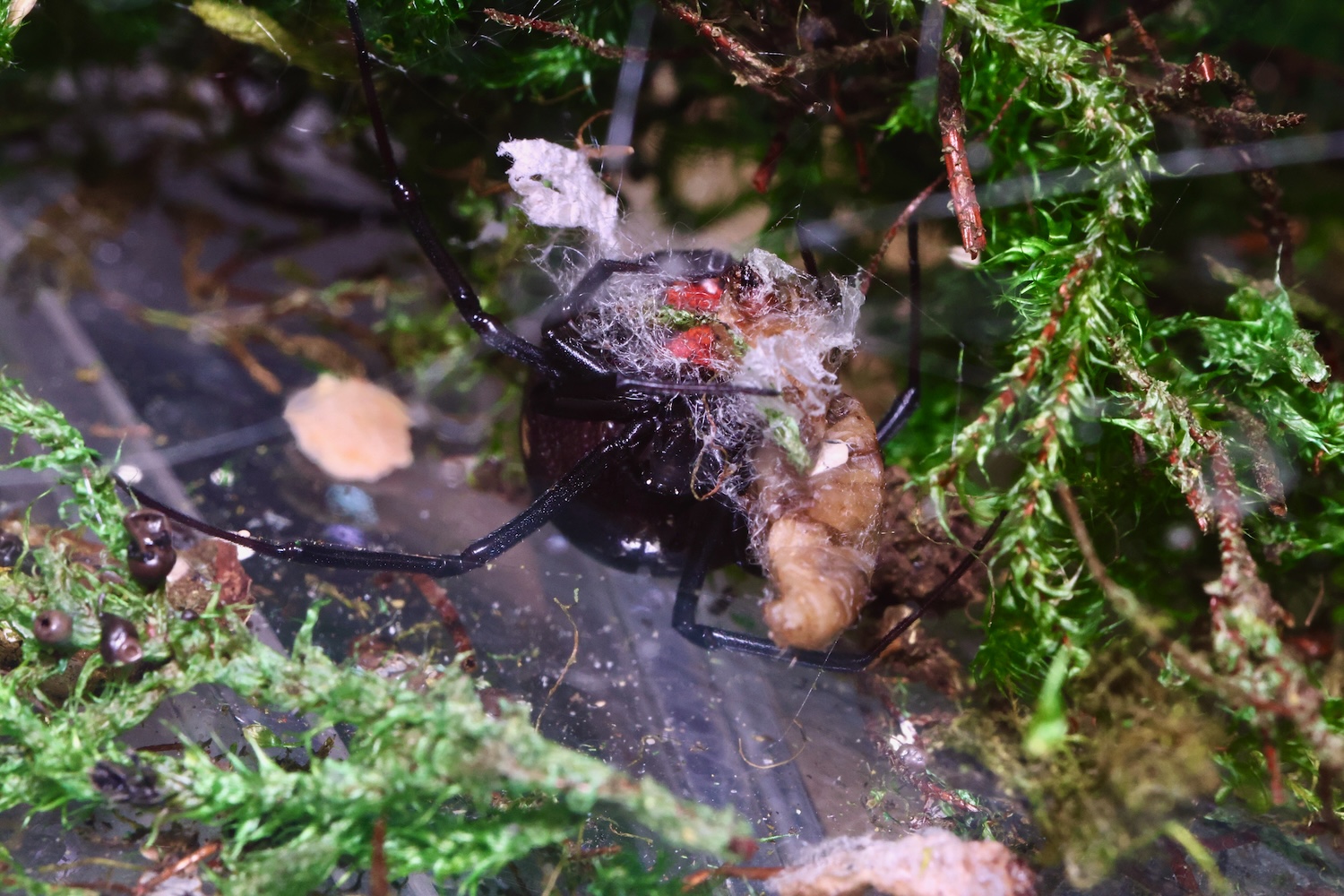
If you’re like me, that picture will make you start identifying all the anatomical errors.

This was fun. I found a paper about developing an arachnophobia scale, a questionnaire that someone could use to evaluate a person for arachnophobic tendencies, title Questionnaire Dimensions of Spider Phobia, by Watts and Sharrock. I figured I’d breeze through it, see that I’m clearly an arachnophile, and get a good laugh. Except…I think I would personally mess up their metrics. I’m apparently some weird outlier.

But I’m not. You know who is weird? These people.

In the cognitive domain a distinction emerged between those who were very vigilant for spiders, constantly scanning for them. Generally visual scanning was predominant. but one pilot S claimed also to use her senses of smell and hearing to detect spiders. She frequently lay awake listening for them. For others, cognitions about spiders took the form of distressing internal preoccupations. They felt haunted by spiders, imagined them vividly and often dreamed about them. They tried to think about spiders as little as possible.

Anyway, so I pulled up their questionnaire and quickly realized it’s not appropriate for typical people — you know, the kind who love spiders.

Their questions are organized into a couple of reasonable categories: vigilance, preoccupation, and avoidance/coping. So first, let’s see if you’re vigilant about spotting spiders.

Do you check the lounge for spiders before sitting down?

Yes. You wouldn’t want to sit on one and crush it.

Do you ever make plans in case you come across a spider?

Yes. I’m often intentionally planning to find spiders.

Do you sometimes look at the corners of the room for spiders?

Yes. Also the walls, ceiling, and floor.

When watching television, would you notice a spider crawling across the floor elsewhere in the room?

Yes.

Do you check the bedroom for spiders before going to sleep?

No, not really. I’m usually looking forward to a good night’s sleep.

Would your mind be a lot easier if spiders didn’t exist?

Sick! No! Spiders are an important part of the ecosystem!

Are you always on the lookout for spiders?

Yes.

Have you a “plan for action” in case you find a spider in the kitchen?

Of course. I have capture vials stored in the kitchen.

Do you make very certain there are no spiders around before taking a bath?

Why? Am I shy?

Do you sometimes sense the presence of a spider without actually seeing it?

Yes. The most tell-tale signature is seeing silk threads.

If there’s a spider in the house. are you the most likely person to find it?

No. Mary has a very good eye.

Can you spot a spider out of the corner of your eye?

Yes, if one is there.

The next category is preoccupation, like whether you are obsessed with spiders. I’m not going to do well here.

Do you sometimes dream about spiders?

Yes.

Do you think a lot about spiders?

Yes. And what’s wrong with that?

Do you worry more about spiders than most people?

Definitely. I worry about the health of the spider population all the time — for instance, the grass spiders appear to be late in their annual appearance. I hope they’re OK.

When you imagine a spider, can you see parts of it in great detail?

I am very familiar with spider anatomy, so yes.

Do you ever find yourself thinking about spiders for no reason?

Not for no reason.

Do you sometimes find it an effort to keep thoughts of spiders out of your mind?

Why would I make that effort?

Do you often think about particular parts of spiders for example the fangs?

I’m more of a palps man, myself.

Are you sometimes distracted by thoughts of spiders?

Never distracted.

Are you sometimes haunted by thoughts of spiders?

Weird choice of words…no, not haunted.

When watching television do you think more about the danger of there being a spider in the room than about the programme?

It is not dangerous to have a spider in the room.

Have you had nightmares about spiders?

No. Do you have nightmares about beautiful women (or men) jumping into bed with you?

The next block of questions are about how you cope when you see spiders.

Can you deal effectively with spiders yourself when you find them?

Yes.

Do you get other people to get rid of spiders when you find them?

“Get rid of”? Why?

Would you know how to cope with spiders in the bath?

Put your hand down, lift them out, set them free.

Do you sometimes use a book or a newspaper to deal with a spider?

Spiders can’t read and are uninterested in human news.

Do you feel a lot more secure if someone else is in the house in case you come across a spider?

The someone else is probably more dangerous than the spider.

When you find a spider in a room, would you avoid going in that room until someone else had removed it?

There are spiders in every room. Avoiding them would require going outside, and there are even more spiders there.

Would you get help if you came across a spider?

Help to do what?

If you find a spider in the bath, would you, say, use a shower to wash the spider down the plughole?

Sadist. Hell, no.

If you discover a spider in the room, do you leave the room straight away?

Why?

Would you think about using a broom to deal with a spider in the kitchen?

That’s useless. Small paintbrush, and a cup.

Cognitive/behavioral items!

When imagining a spider, is it always the same one or kind?

I know an awful lot of kinds of spiders.

Do you ever lie in bed at night and listen out for spiders?

No. They are very, very quiet.

If you thought you saw a spider would you go for a close look?

I usually do.

When you see a spider. does it take a long time to get it out of your mind?

No, because it is then a permanent resident of my memory palace.

Are you slightly scared to enter a room, say a bathroom, where spiders have been in the past?

Ridiculous. Spiders have been and will be in every room.

Another category is factual knowledge. These are stupid. Of course I know the answers to these questions.

Are spiders insects?
Do spiders have SIX legs?
Are spiders solely meat eaters?
Have you a good idea whereabouts spiders are likely to appear?
Do you know when (what time of year) you are likely to come across a spider?

They don’t provide a scoring sheet or answer key, you’ll just have to decide for yourself if you feel arachnophobic.

May all these anti-woke crusaders sink without a trace

Did you know that Dr Phil, that old fraud, had put together a media company called Merit Street Media to combat the “Woke Mind Virus”? And that he partnered with Trinity Broadcasting Network (there’s a combo formed in Hell) to set it up? And that they sunk somewhere between $100 and $500 million into the assets for this company?

No? I didn’t either. Completely missed it. The first I heard of it was this bit of news:

This week, Merit Street also filed for Chapter 11 bankruptcy, Variety reports. At the same time, the company has sued TBN, and accused it of sabotaging the business, the outlet notes. Merit Street claims that TBN has “abused its position as the controlling shareholder” and that, as a result, Merit Street was forced to “pay or incur obligations to third parties in excess of $100 million.”

Not only a failure, but an ugly lawsuit between some awful conservatives, it’s like Christmas in July. The company also says of TBN:

The company further states that TBN provided production services that were “comically dysfunctional. Although it promised the equivalent of the professional facilities and services that Dr. Phil had long relied on when producing his show in Los Angeles for CBS, the supposed ‘first class’ services TBN promised under the Joint Venture Agreement were nothing of the sort. TBN provided screens and teleprompters that blacked out during live shows, an incomplete control room operating out of a truck, an unusable cell phone app for viewers, and amateur video editing software.”

Go Christian, go broke.

Birds are OK, I guess

After all, one of the virtues of bird is that they can be used to motivate research into insects. That’s nice. We couldn’t possibly get the general public interested in arthropods when there are charismatic warm-blooded flying things to save.

Juncos are known as seed-eating birds. They spend their days rummaging through the undergrowth searching for fallen seeds. At feeders, they prefer smaller grains, like millet. But seeds don’t provide the protein juncos, or any songbirds, need to grow a new set of feathers while they molt. And the protein this baby junco needs to molt its blotchy juvenile feathers and to grow sleek stone-gray feathers on top and white ones below would come only from bugs. In fact, 90 percent of the more than 10,700 known bird species rely on insects for food during at least part of their life cycle. Even the most dedicated seed-eating songbirds must eat insects and other arthropods, that many-legged group of creatures that includes spiders and millipedes, to produce eggs, to grow new feathers and to feed their young. Without insects, in other words, they wouldn’t survive.

So, yes, we should care about the health of insects because they are bird food, and birds are dependent on insects for protein. That’s why we should care about this next terrifying statistic.

Unfortunately, insects are disappearing at a rate of about 1 to 2 percent a year. And the decline is not limited to just one species nor just one group of insects. The data suggests that the decline is widespread, even global. These findings have been confirmed in hundreds of rigorous, peer-reviewed studies, says David L. Wagner, a University of Connecticut entomologist and the lead scientist of a program known as the Status of Insects, which coordinates pertinent research on insect populations from around the world. “The weight of the evidence is clear,” Wagner says. “I feel like it would stand up in a court of law.”

That 1 to 2 percent is a mean. I think from what I’ve seen here, in this rural agricultural region, is that it is much higher — the population of visible, obvious insects is less than half of what it was when I moved here 25 years ago. Less dense clouds of insects clustered around street lights. Car grills that are no longer choked with splattered bugs. Fewer reports of clouds of mayflies rising off lakes.

I think it’s scary without even considering bird populations. We’re wiping out a key component of the food web here. Do we have to wait for birds to drop out of the sky or bird song to fade from the dawn symphony before we will care?

Besides, as we all know, insects are spider food. Getting the public to care about spiders is probably an even harder sell.

Dreading 2026

I’m starting to hear all about a major celebration of the country’s 250th anniversary next year, and it’s clear that the Trump administration is planning to use it for more propaganda. One ominous sign is that the White House is working with…<hack, spit> PragerU, which is not a university, to provide “educational” material for a major exhibit. PragerU is also not the Smithsonian Institution. But they’re the ones in charge of telling the nation’s history.

The Department of Education has tapped conservative media platform PragerU to tell the nation’s origin story in an “America 250” exhibit that opened in the White House complex this month.

The PragerU Founders Museum on the first floor of the Eisenhower Executive Office Building features 82 historical paintings of people and events from the American Revolution to inspire patriotic fervor for the yearlong celebration of the July 4, 1776, signing of the Declaration of Independence.

Each painting includes a QR code linking to a short PragerU video or essay on the White House website. Online content includes artificial intelligence-generated talking figures coming to life from the paintings, such as the 56 men who signed the Declaration on July 4, 1776, and a written recap of the decisive Battle of Yorktown in 1781.

“President Trump is championing the spirit of patriotism in our country,” said Liz Huston, a White House spokeswoman. “The Founders Museum is an innovative way for schools and community centers to encourage Americans to reflect on the pivotal moments and people that shaped our nation into one that values courage, hard work, and freedom.”

For a different perspective…

Social justice advocates, however, said the inclusion of PragerU reflects a Trump administration agenda to whitewash history. They say the exhibit fails to acknowledge the experiences of marginalized racial minorities, women and gay people during the revolution.

“This [exhibit] promotes a limited view of all that America is, was, and will be,” said Robert Kesten, executive director of Stonewall National Museum, Archives, & Library, an LGBTQ historical preservation group. “It shortchanges us and ignores all the progress we have made historically and academically.”

Omekongo Dibinga, a professor of intercultural communications affiliated with American University’s Antiracist Research and Policy Center, said PragerU videos aim to make White people “not feel guilty about history.”

“PragerU’s videos are ignorant and disrespectful,” Mr. Dibinga said. “The goal of this partnership is to accelerate the erasure of non-White male history and use PragerU’s 3.37 million followers to spread their propaganda.”

And also to promote a Christian Nationalist view. Here’s a video that discusses Trump’s, and PragerU’s, atrocious slopaganda.

I’m cancelling the Fourth of July at my house

Hey, y’all remember when Game of Thrones was a hot show? It had dragons, and zombies, and bloody destructive wars, and gratuitous nudity, and engaging characters, and multiple plot lines that were plummeting forward. Must-see TV, with gigantic budgets!

And then the last season comes along, it’s hot garbage, it betrays all the premises of the previous seasons, closes plot lines with idiot finality and illogical resolutions, and everyone realizes…maybe it was all shallow pretense all along, a series of excuses to justify the next slam-bang event in a long chain of them, and all interest in repeat viewing dissipates, and the show is only remembered as an embarrassment, because of that horrible conclusion.

I am reminded today of another long-running serial that started with grand ideals (FREEDOM!), had heroic battles, vivid, memorable characters, a vast landscape of spectacular scenery, beautiful dreams of a progressive society, and then it ends with a squalid little fart. We discover it was all a lie. We should have known. We started with a fantasy of equality and freedom composed by a team of rich landowners who made sure that the little people would never break their grip on power. We announced that the central theme of this great endeavor was liberty, while postponing emancipation of the horde of slaves we held, and taking over all that beautiful land by genocide of the people already living there.

And now, on the verge of our 250th anniversary, we have put the reins of power in the hands of a babbling loon who wants to deport anyone with a skin color less pasty than his own, who has just passed a bill that slashes the social safety net and enriches millionaires even more, all while his allies shred education and science in this country.

The “one big, beautiful bill”, as Trump calls it, won final approval by the House of Representatives on Thursday, in time for his signature on 4 July, the US Independence Day holiday. In addition to the tax cuts, it will also channel tens of billions in dollars towards immigration enforcement and building a wall along the Mexican border.

To cut costs, Republicans included provisions to end green energy incentives created under Joe Biden, but the bulk of the savings will come from changes to two programs: Medicaid, which provides healthcare to low-income and disabled Americans, and the Supplemental Nutrition Assistance Program (Snap), which helps low-income Americans afford food.

Both programs will face new and stricter work requirements, and states will be forced to share part of the cost of Snap for the first time ever. The nonpartisan Congressional Budget Office (CBO) estimates the bill’s Medicaid changes could cost as many as 11.8 million people their healthcare, and the left-leaning Center on Budget and Policy Priorities forecasts about 8 million people, or one in five recipients, may lose their Snap benefits.

Look at those chucklefucks cackling over their evil laws

And of course Trump capped it all off with an anti-semitic slur in his victory speech.

I’m sorry, but the finale of this series really sucks. Can I cancel my subscription? Get my money back? I would never have started watching if I’d known how badly the writers and show-runners were going to botch it in the conclusion.

The family of antique names

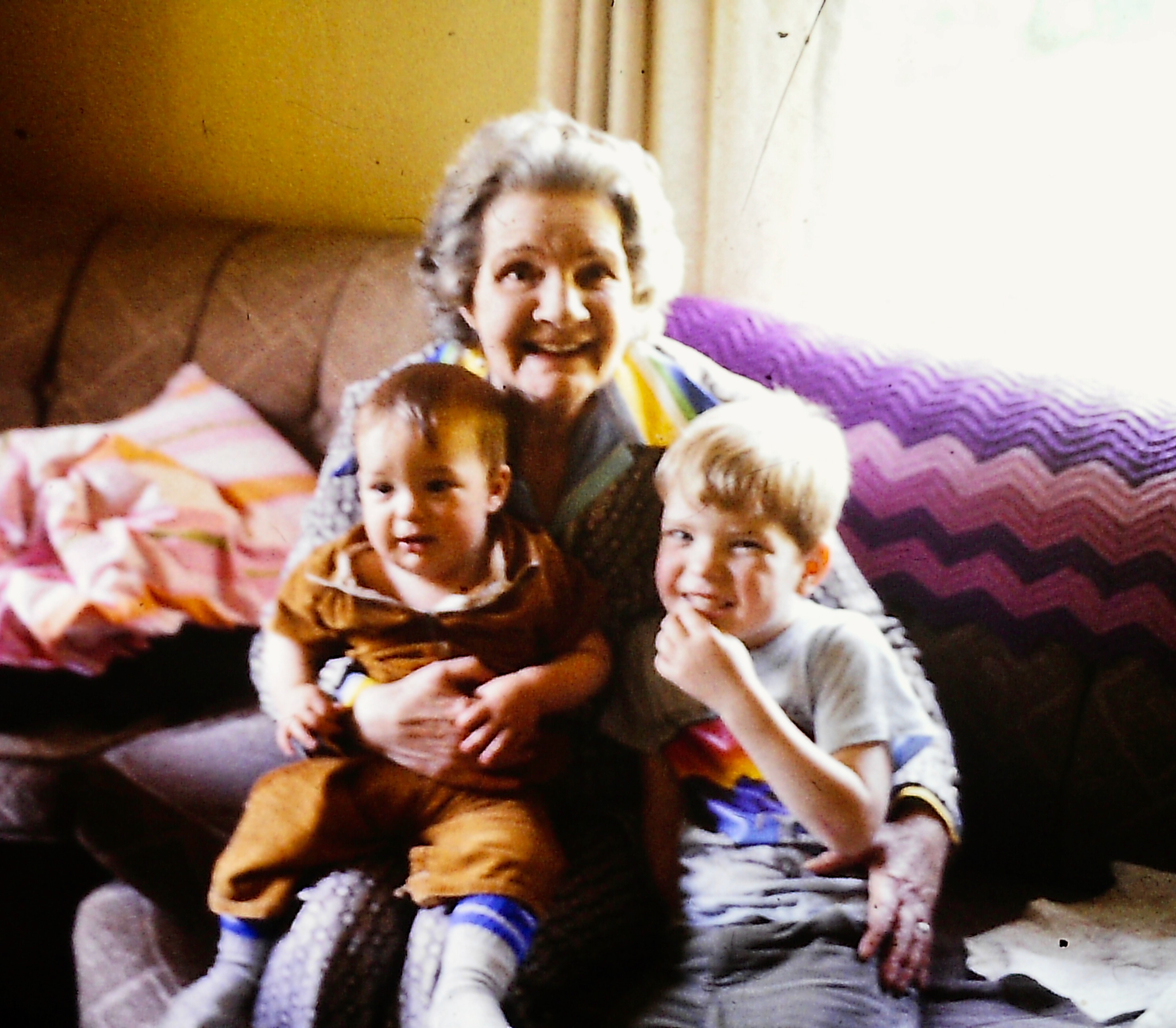
I recently bumped into another archaic photo from the family collection. It’s from sometime in the 1920s, and the attractive woman shepherding her kids is my great-grandmother, Nellie Berg, in Norman, Minnesota. It’s kind of awesome because I remember her in the 1970s, when she was the first in our family to get a color TV, and I discovered that she was a fanatic about roller derby.

One thing that jumped out at me were the names, which sounded familiar and normal to me, but are distinctly old-fashioned and not that common anymore. I like them, they have good associations, but I haven’t seen these appear in my student lists in quite a while.

That’s Nellie in the back. The child on the left is my grandmother, Nora. Next to her is Claude, and then Muriel, and Arlene in front. The father of that brood was named Clarence.

There’s nothing wrong with those names, I’m just interested in how whenever I look back on the family tree, I see so many names that are totally out of style nowadays. All you Nellies, Clarences, Noras, Claudes, and Muriels, speak up in the comments and let me know that the good ol’ names haven’t totally faded away.

Also, I should mention that all of these names came from families with purely Swedish and Norwegian ancestry. I’d be curious to know how these markers changed in various other cultural groups.

I’m just an old fuddy-duddy, I guess

My university gives “guidance” on the use of generative AI in student work. It’s not really guidance, because it simply doesn’t care — you can allow it or prohibit it. They even give us boilerplate that we can use in our syllabuses! If we want to prohibit it, we can say

In this class, the ability to [skill or competency] is essential for [field of study/professional application]. Because this course emphasizes [skill for development or specific learning outcome], using Generative AI tools [including those available to you through the University of Minnesota,] are not permitted.

If we allow it, we can say

In this course, students will [statement of learning outcomes, competencies, or disciplinary goals]. Given that Generative AI may aid in [developing or exploring course, discipline, professional, or institutional goals/competency], students may use these tools in the following ways:

The example allowing AI goes on much longer than the prohibitive example.

I will be prohibiting it in all my classes. So far, I’ve been pretty gentle in my corrections — when someone turns in a paper with a substantial, obvious AI, I tend to just flag it, explain that this is a poorly written exploration of the thesis, please rewrite it. Do I need to get meaner? Maybe. All the evidence says students aren’t learning when they have the crutch of AI. As Rebecca Watson explains, ChatGPT is bad for your brain.

I was doing a lot of online exams, thanks to COVID, but since the threat of disease has abated (it’s not gone yet!), I’ve gone back to doing all exams in class, where students can’t use online sources. My classes tend to be rather quantitative, with questions that demand short or numerical answers, so generative AI is mostly not a concern. If students started answering with AI hallucinations, it would be! I’m thinking of adding an additional component, though, an extra hour-long in-class session where students have to address an essay question at length, without AI of course. They’ll hate it and dread it, but I think it would be good for them. Even STEM students need to know how to integrate information and synthesize it into a coherent summary.

Another point I like in Rebecca’s video is that she talks about how she had to learn to love learning in her undergrad career. That’s also essential! Taking the time to challenge yourself and explore topics outside your narrow major. Another gripe with my university is that they are promoting this Degree in Three program, where you undertake an accelerated program to finish up your bachelor’s degree in three years, which emphasizes racing through the educational experience to get that precious diploma. I hate it. For one, it’s always been possible to finish the undergrad program in three years, we don’t put obstacles in front of students to get an extra year of tuition out of them, and we’ve always had ambitious students who overload themselves with 20 credits (instead of the typical 15) every semester. It makes for a killer schedule and can suck much of the joy out of learning. It’s also unrealistic for the majority of our students — every year we get students enrolled in biology and chemistry programs that lack basic algebra skills, because the grade schools are doing a poor job of preparing them. We have solid remedial programs at the same time we tell them they can zoom right through the curriculum? No, those are contradictory.

I think I’m going to be the ol’ stick-in-the-mud who tells students I’ll fail them for using ChatGPT, and also tells them they should plan on finishing a four year program in four years.