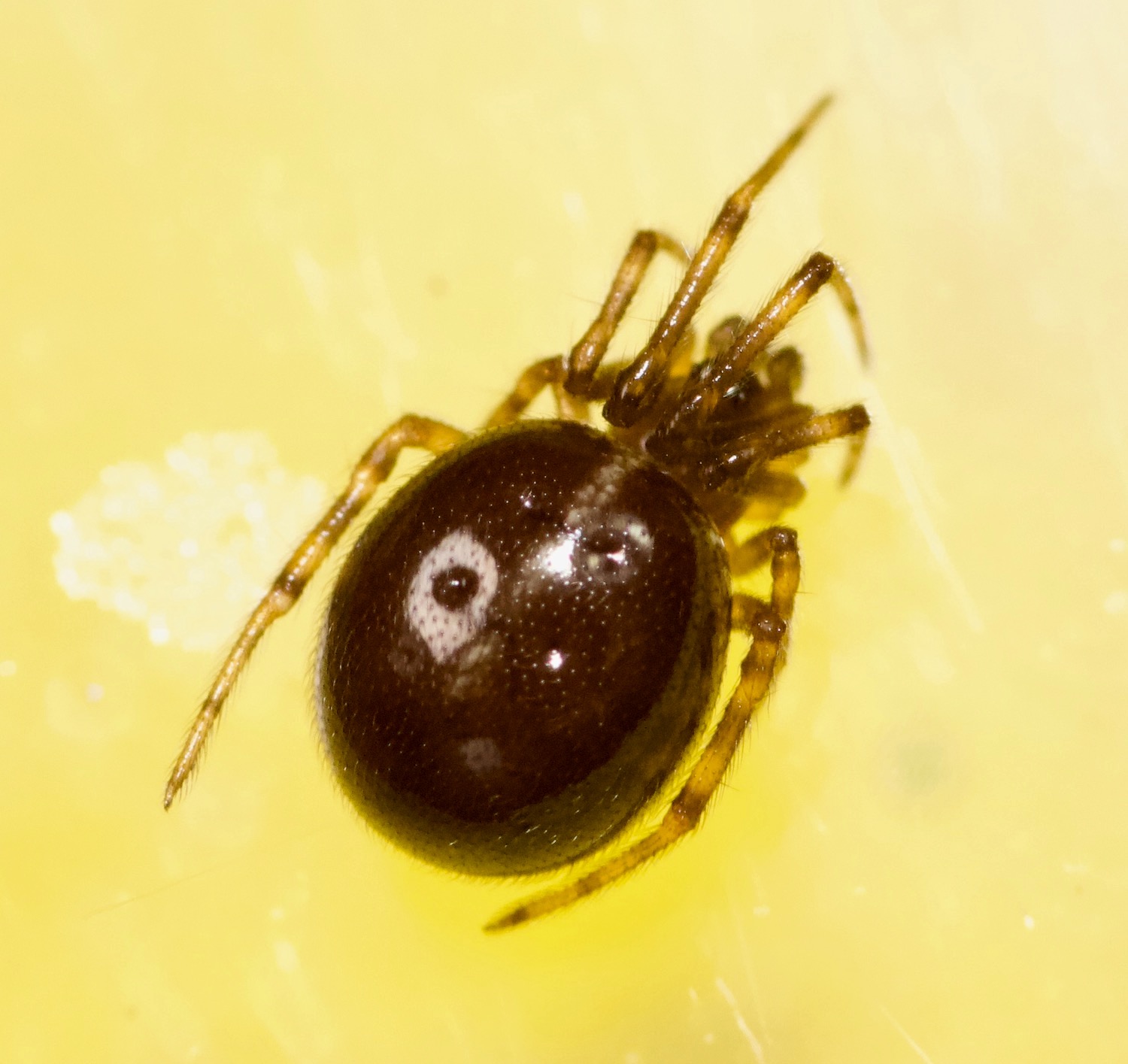
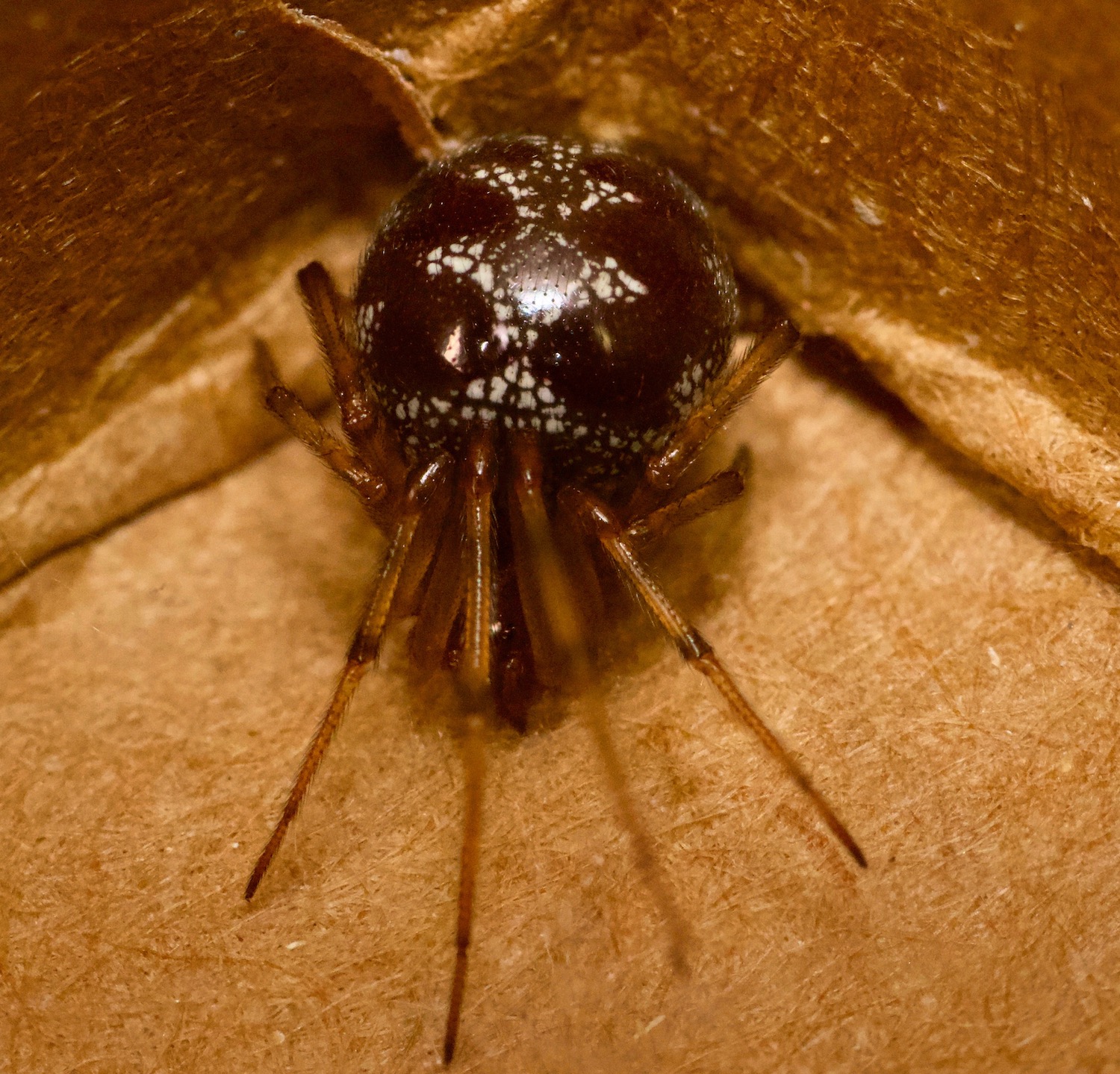
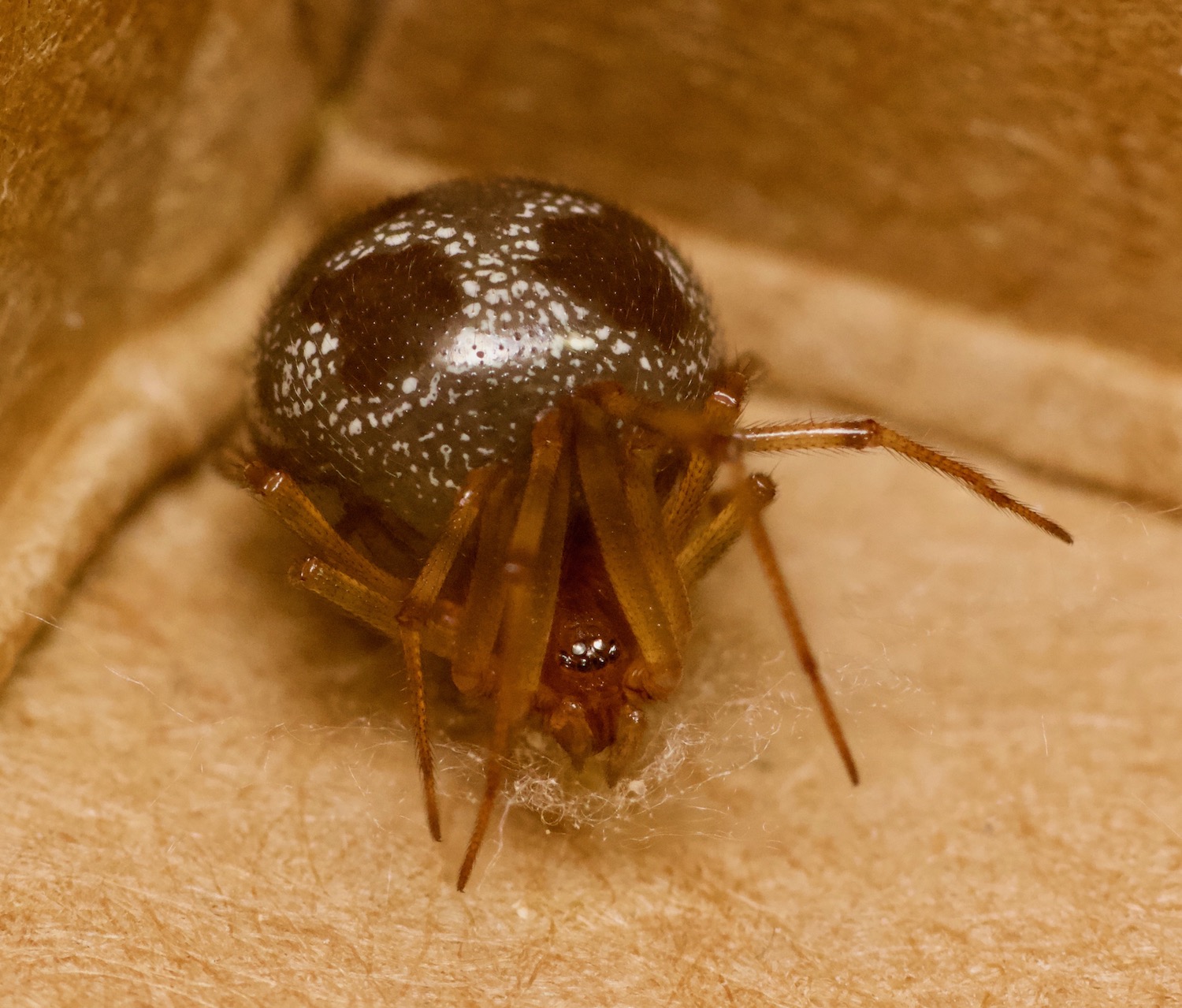
Ferda! Also, Yara ♥ Chad

You’ve missed the spiders, haven’t you? I was away for a week, and only today had time to spend a long morning working with them. They’ve been growing; I fed them a lot before I left, and when I came back I found that almost all of them had molted.
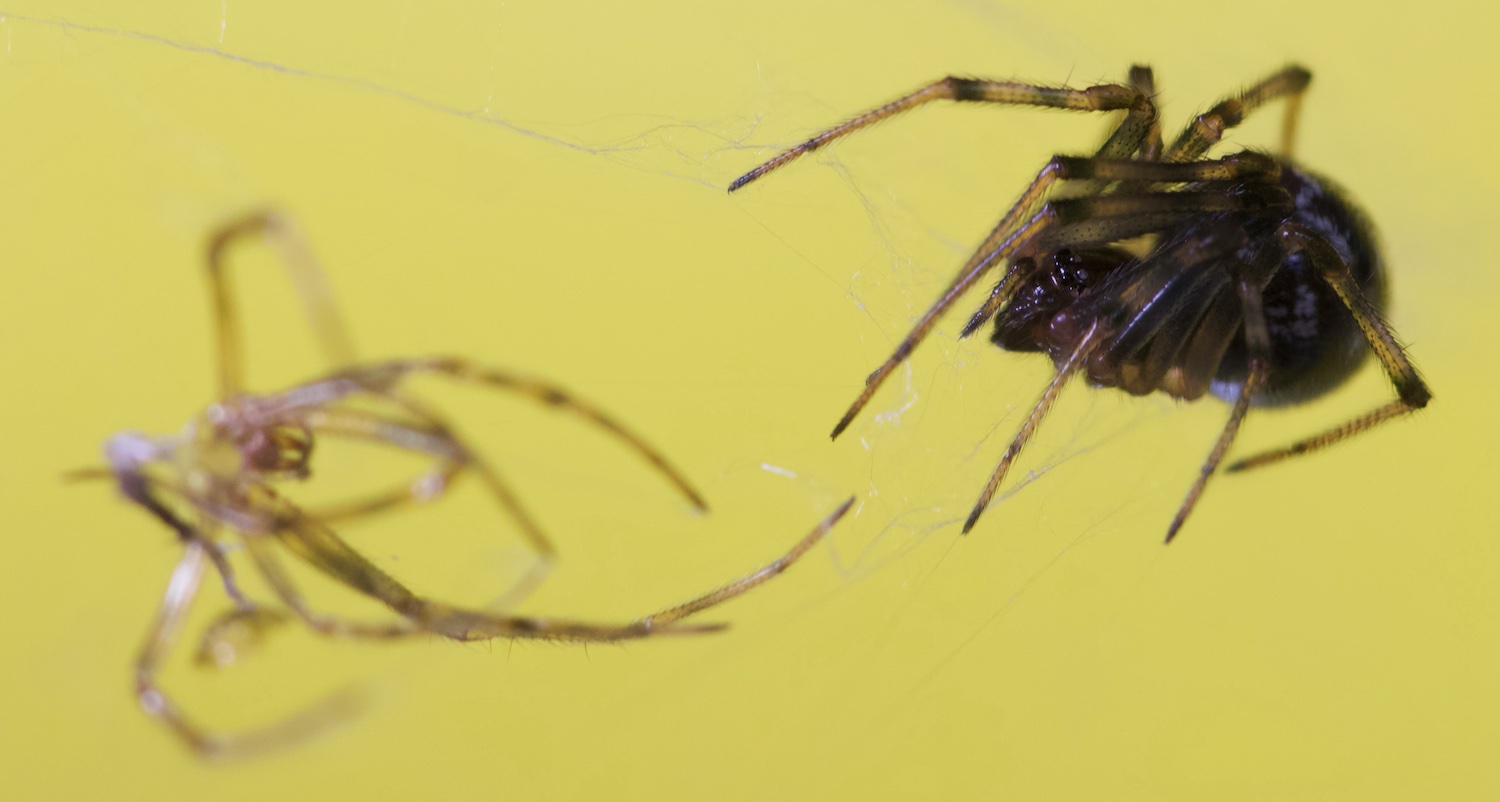
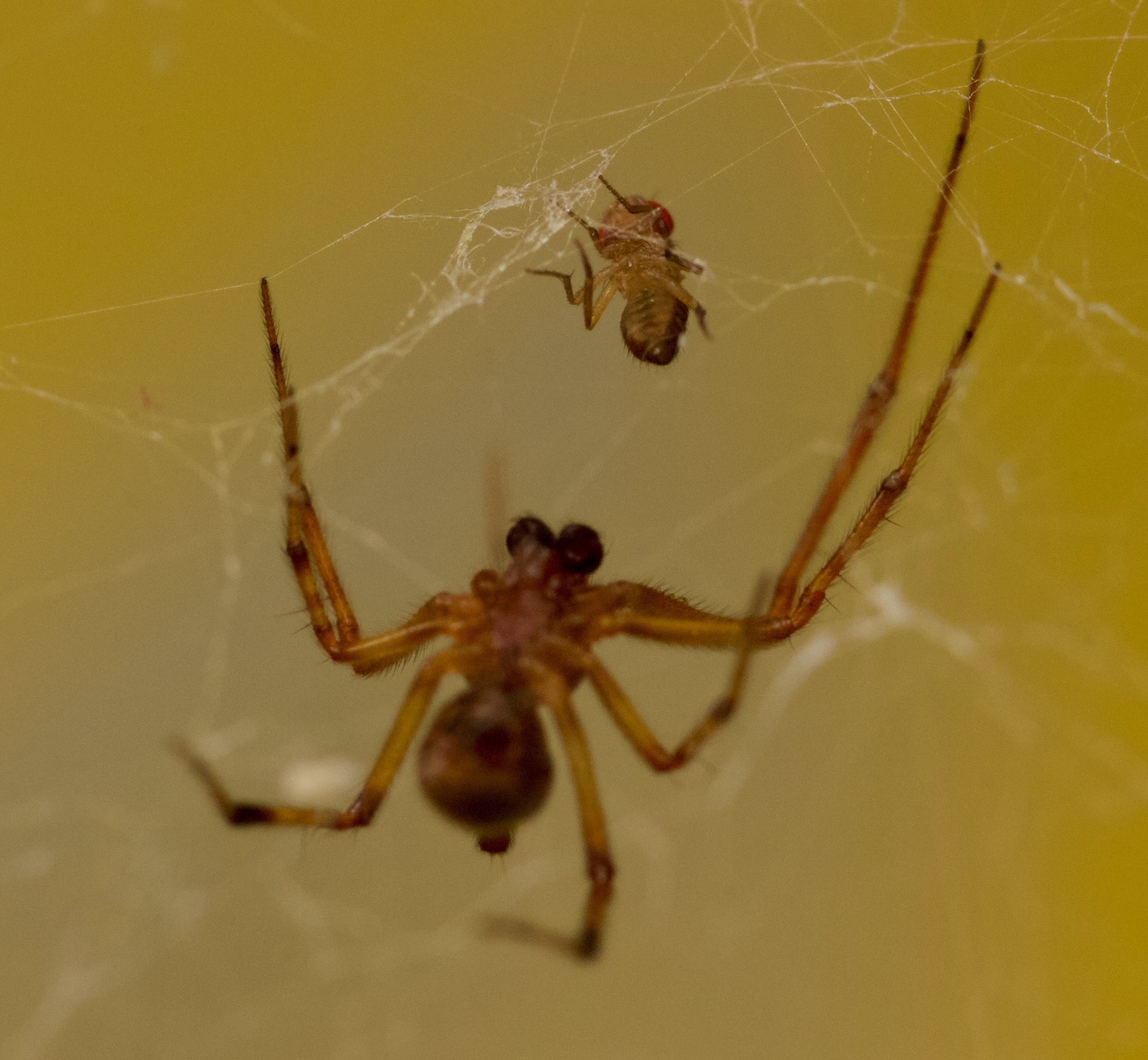
I gave them all a lot of flies today, because we’ve got another of those blizzards coming in tomorrow, and I may not be able to make it into the lab for a few days.

One big problem is that I’m down to only two Parasteatoda males, and no males for Steatoda triangulosa. This happened last year, too — the males are so much more fragile and they die off more rapidly. I resolved to invest more effort in raising da boys so this wouldn’t happen, and I didn’t do enough, obviously. Next year! I’ll do better! Or if I get a nice clutch of eggs to hatch soon, I’ll segregate the males and females as early as possible and make sure they’re well fed and protected.

Which may happen…

This is Chad, the biggest male I’ve got. Look at those bulging palps at the front of his head!
Chad got his chance. I put him in the cage with Yara, and they hit it off immediately. Yara scuttled over to him, and there was a bout of touchy-feeling probing, legs everywhere, and then she presented her epigyne to him, and he scurried right in there with those masculine palps. No fighting! No running away! I have high hopes for this encounter.
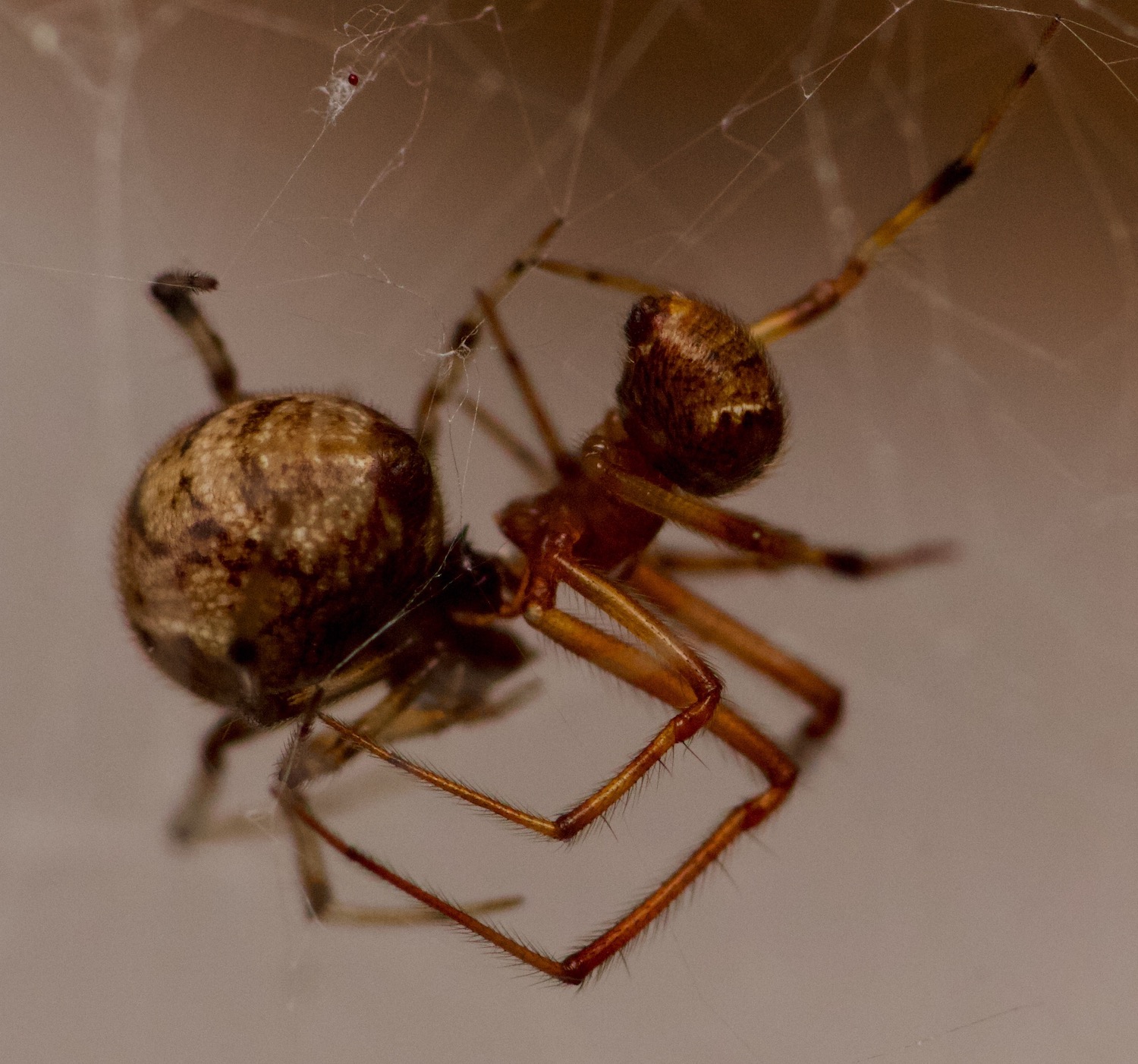
Aww, isn’t that sweet? I’m leaving them together for the next few days to make sure, then Chad is going to be introduced to some other ladies around the lab.

Clean up the corpses of your victims before they begin to stink

That’s an important lesson I learned from my spiders. I’m going out of town for a week, so over the weekend I made sure that everyone was well fed and watered, stuffing them full of waxworms. Which meant that today I had to go in and extract all the blackened, shriveled corpses of their prey so they wouldn’t just be sitting there rotting for days and days. A pile of dead flies or larvae do acquire a distinctive aroma, so I wanted everyone left with clean cages before I abandoned them.

Also, wow, were these all plump, sleek, shiny spiders. They’ll do fine without me for a few days now.

Bathroom buddy

Look who was keeping warm in a corner of our bathroom:

I’d really like to know where they hide most of the time. All winter long we see these isolated individuals suddenly popping up out of nowhere.


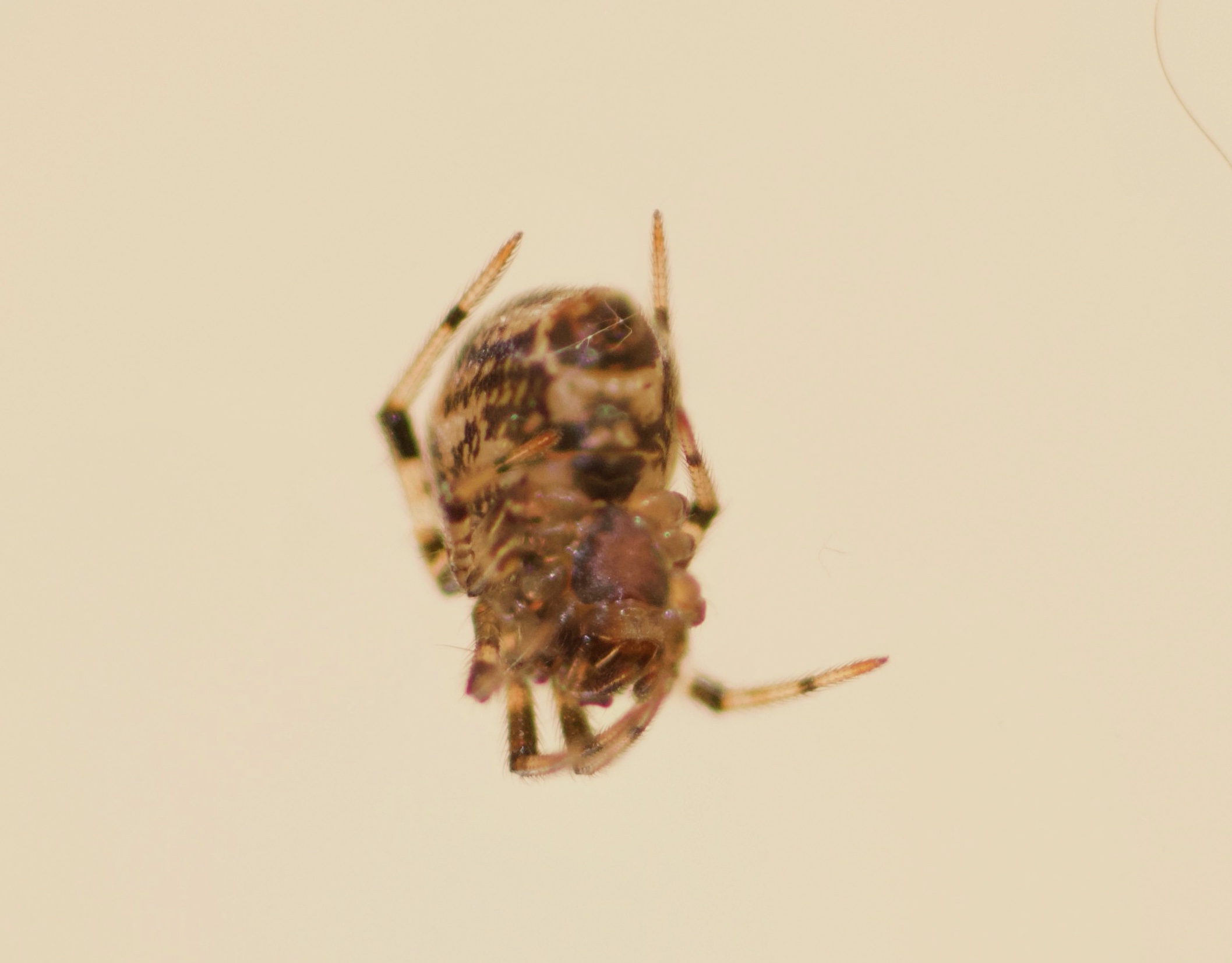
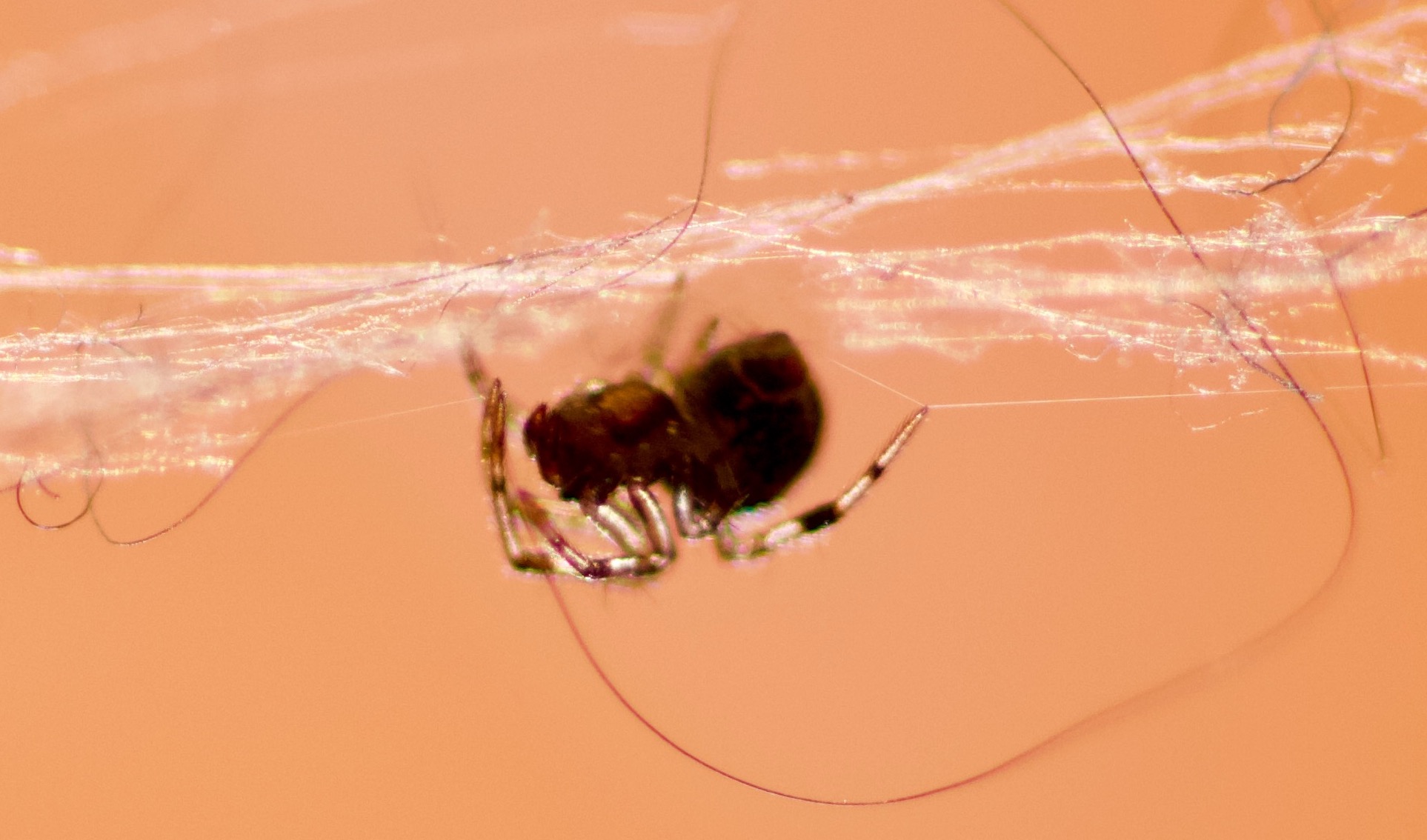
Found another one hanging out in the dining room with a mess of fibers. It’s very tiny, half the size of the one above.

Spiders had their breakfast

This morning, I cruised down to the local bait shop and bought a bunch of waxworms. “Good luck fishing,” said the proprietor, as I was going out the door. I didn’t feel like explaining that there would be no fish involved today.

I got to the lab and delicately tweezered one pale white waxworm into the center of each cobweb, where it would squirm unhappily. It had been lifted out of its comfortable environment and was hanging suspended from a couple of cables, which it did not like at all. Picture a whale trussed up and dangling from the ceiling of a meatlocker, straining to escape the trap, while little fanged predators look on.

The spiders usually paused for a few minutes. I imagine they were briefly stunned at the immensity of the bounty that has fallen from the skies, but they didn’t wait long — they swiftly scuttled out, their hindlimbs flickering as they quickly reinforced the webbing, occasionally moving in close for a long kiss.

When I left, I looked in the incubator…rank after rank of transparent cages, like little glass abbatoirs, each with a madly writhing worm struggling desperately to escape, each with a small long-legged creature clinging to their back, biting.

Warmed my heart, it did. They looked so happy and eager (the spiders, not the worms). It reminded me of my kids on Christmas morning.

Australia has spiders? Shocking!

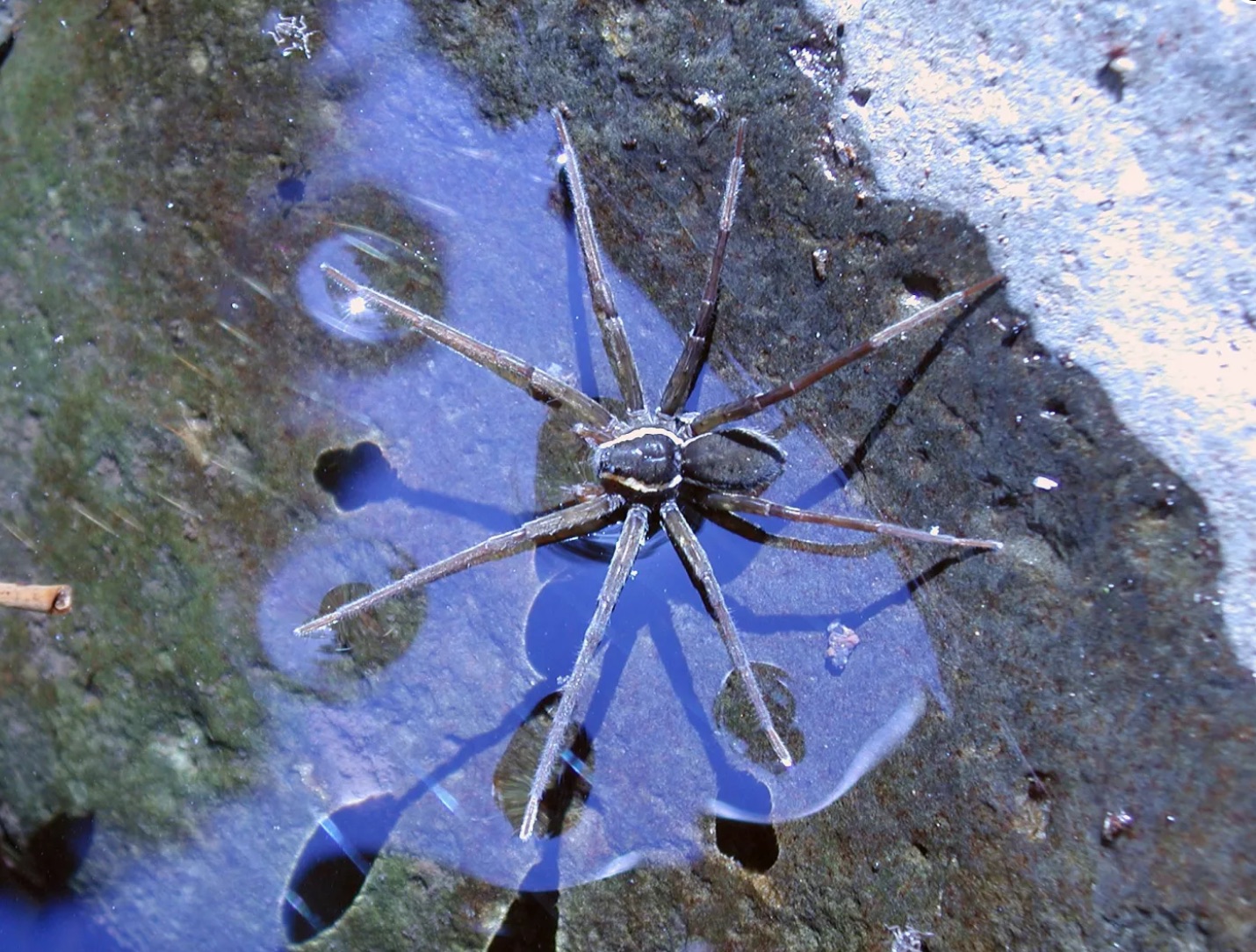
I’ve had so many people tell me about this new spider, Dolomedes briangreenei, and the news makes it sound like a surprise that it can dive under water and eat small aquatic vertebrates.

Spiders have been known to do all kinds of amazing things, and there’s nothing surprising about any of that. We have several species of Dolomedes right here in Minnesota, and they’re semi-aquatic and kill and eat tadpoles and small fish all the time. The Australian Academy of Science has announced the discovery of 51 new species of spiders just this past year! I’m relatively new to this taxonomy stuff, and one thing I know is that finding new species is routine, as is discovering that species have gone extinct.

Beauty contest!

We encountered a few indoor spiders today, so I thought I’d stage a little beauty contest.

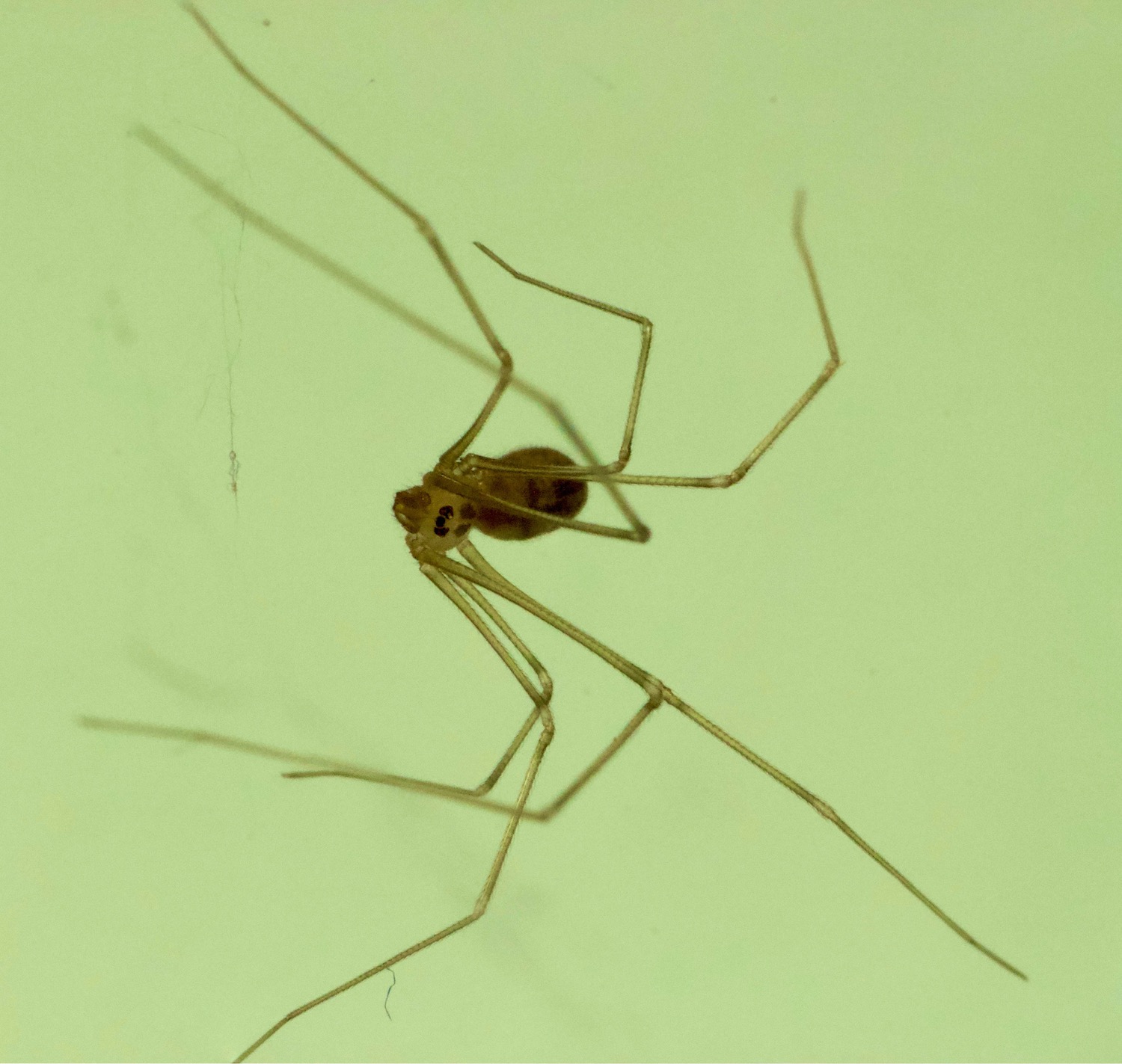
Contestant #1: Pholcus phalangioides, found wandering the laboratories of the University of Minnesota. Hobbies: must be biology, since she was captured working in a biology lab.

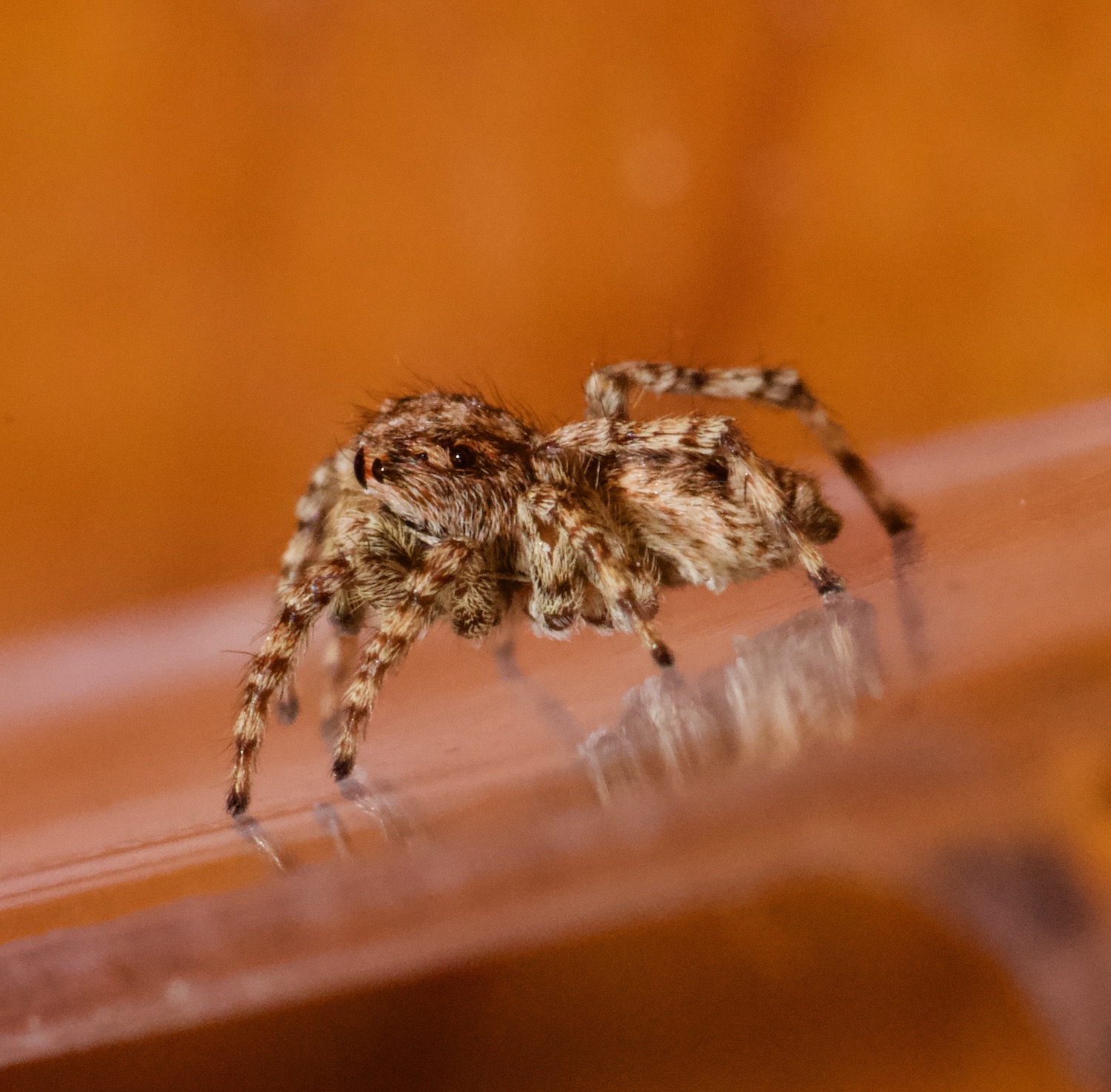
Contestant #2: Sitticus fasciger, found hopping around in my house. Hobbies: jumping, obviously.

You are the judges! Who wins your approval?

Where the spiders at?

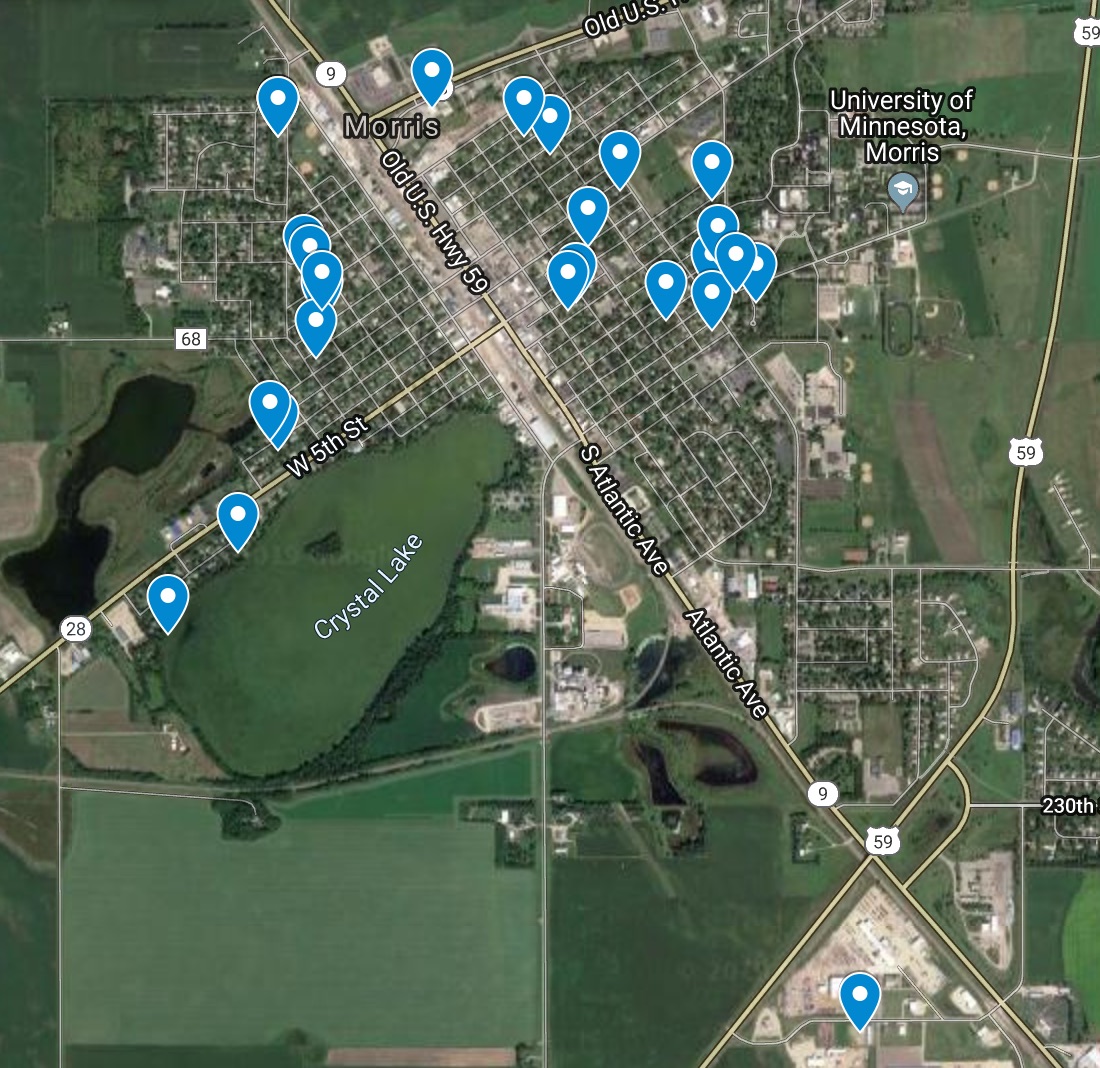
I’m free of teaching duties for a few weeks, so my goal for now is to get a paper written summarizing our spider survey results. I’ve been working on figures lately, and here’s a map of our survey sites.

(I also have a boring grayscale map of the same thing, which is probably what I’ll have to use for publication.)

See? We surveyed both sides of the railroad tracks. We should have tried getting more homes in the southeast side of town, though. Not shown are some of our less careful observations of locations outside of garages and sheds, where we’d find many more Araneid spiders. That’s something for another day.

I’ve also been digging deeper into our data — we have all these locations with tallies of all the species present, which is kind of overkill, since the environments we’re looking at are all dominated by just four species, and they’re all coexisting in the same spaces. I’m getting a sense of some of the peculiarities of the distribution, though: I’ve been surprised to see how rare Steatoda triangulosa is around here — we found only one site with that species back in June — and how Steatoda borealis is uncommon as well, but they form these little localized colonies where they are the only Theridiidae present.

Now I’ve got plans for these new angles to pursue, but I have to wait for the world to thaw out and for spiders to rise up again.

Someone was peeking around in my dreams last night

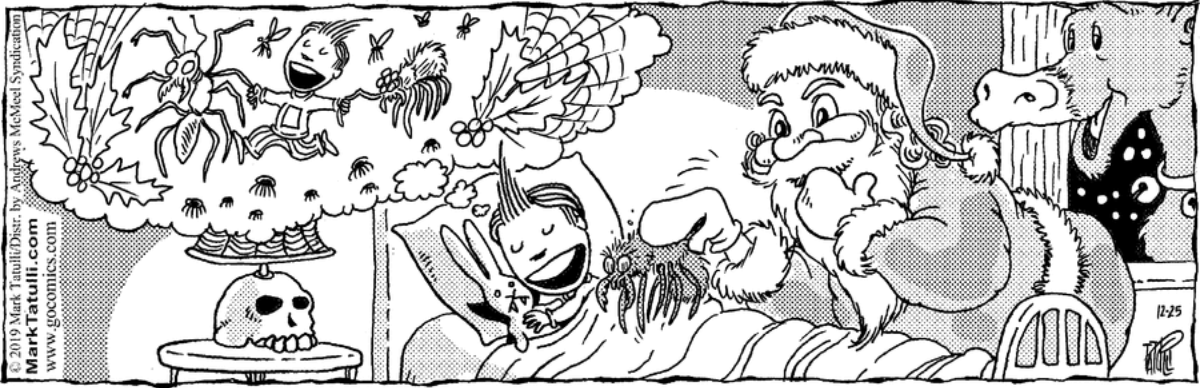
However, the transmission was garbled. What is that 8-legged abomination on the left, with antennae and three tagma? Such a thing would never manifest itself in my dreams.

My bedtime reading lately has been Spiderlight by Adrian Tchaikovsky, which can partly be blamed for my dreams. It’s a fantasy novel, the usual quest to defeat the evil big bad with a party of a priest, a fighter, a rogue, etc. with one significant twist: they recruit (that is, force) a giant spider to join the team, after magically making it sort of a human/spider hybrid so they can talk to it. It’s entertaining. It’s got spiders in it, so of course it’s fun.

A Xmas pinup #lovespiders

I checked on my colony this morning — no news to report. However, Trillian was just being herself, hanging out all relaxed in her web, legs spread out, and so I had to snap a picture.

Spiders do have personalities. Trillian is a casual exhibitionist, happy to sprawl out in her web, while, for instance, Mary Jane is shy and timid, tending to huddle in a corner. Trillian wins on photogenicity, that’s for sure.

Steatoda triangulosa