Watch the fishing lure action right here — also pay attention to the closeups that reveal how transparent Grimalditeuthis is.
It would be so cool to be able to see our own guts like that.

Watch the fishing lure action right here — also pay attention to the closeups that reveal how transparent Grimalditeuthis is.
It would be so cool to be able to see our own guts like that.

You want closeups of an erupting volcano? Don’t go yourself, send a drone. These are some amazing shots from Iceland.

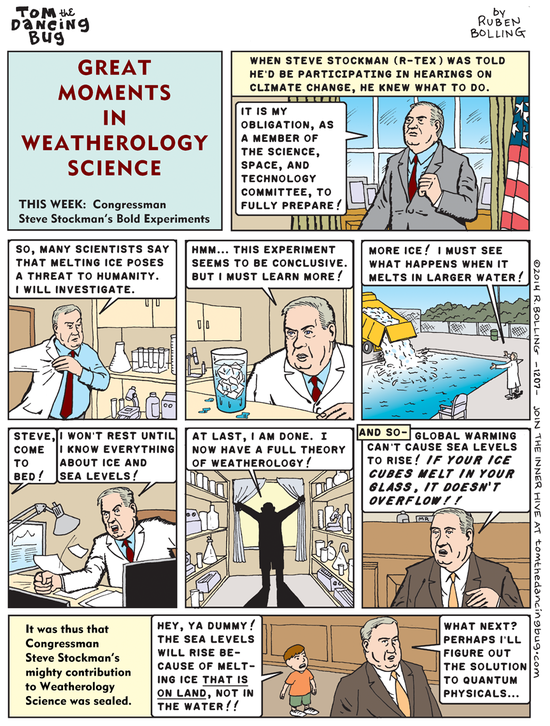
Not really. I lied. Steve Stockman made up a bunch of crap, which is only the Republican version of doing science.
You might say this is a cartoon. Steve Stockman didn’t really say anything like that, did he? Yes, he did.

Allspice, cloves, nutmeg, ginger, and cinnamon — they don’t actually look all that appetizing.

That same bozo who sent me the Hitler quote sent me another image in reply:
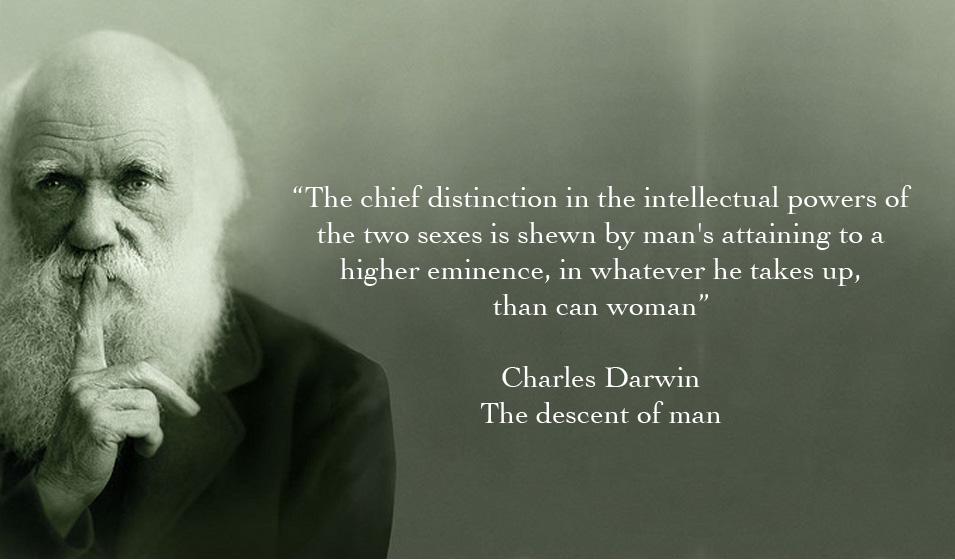
Fair enough. Darwin got a lot of things wrong. I’m actually going to be lecturing my intro biology students on where Darwin screwed up in a few weeks, focusing mainly on his bad genetics, but I’ll toss that quote into the mix, too. To be perfectly fair, I’ll also include the more complete quote below the fold…and no, nothing in the larger context excuses it.

The 2014/2015 Cafe Scientifique series in Morris starts today! Come on out to the Common Cup Coffeehouse at 6pm to hear Michael Ceballos of the biology discipline talk about Malaysia: Intersections between Modern Science and Traditional Indigenous Knowledge. All the cool people will be here.
The next Café Scientifique will take place on Tuesday, September 30, at 6 p.m., at the Common Cup Coffeehouse (501 Atlantic Avenue, Morris, MN 56267). Michael Ceballos, assistant professor of biology, will lead the discussion, “Malaysia: Intersections between Modern Science and Traditional Indigenous Knowledge.” All are welcome to attend. Audience participation is encouraged.
The indigenous people of Borneo, or bumi putra, enjoy a rich history of utilizing natural resources to produce food, shelter, clothing, medicines, weaponry, and artesania. This traditional ecological knowledge and the flora, fauna, and microbiota of Borneo have more recently been explored by modern-day scientists. This discussion will focus on current research efforts underway on the island—some of which are being conducted by University of Minnesota, Morris students and faculty with funding from the National Science Foundation.
Café Scientifique is an ongoing series that offers a space where anyone can come to explore the latest ideas in science and technology for the price of a cup of coffee. Meetings take place outside of a traditional academic context and are committed to promoting public engagement with science. Interested audiences can look forward to additional discussions, typically held on the last Tuesday of selected months.
Café Scientifique is supported in part by a grant to the University of Minnesota, Morris from the Howard Hughes Medical Institute through the Precollege and Undergraduate Science Education Program. Additional information is available at morris.umn.edu/hhmi.
It’s going to be good. If you don’t show up, Michael is going to hunt you down with that blowgun.

Somewhere in the midst of my usual Monday swirl of work, I’ll be making time for a few events with a visiting scholar: Peter Agre, Nobel Laureate, is spending the day at UMM. He’ll be giving a couple of open lectures: at 10:30, he’ll be telling us about aquaporins, and at 7 he’ll be giving a less technical lecture on science education. Maybe I’ll see you there!

Some of the best evidence against dualism is the experience of stroke victims — in an instant, a small biological incident can completely change who you are. This story by Christina Hyung-Oak Lee, about her stroke at the age of 33, is fascinating and terrible. Also a bit scary, since her stroke symptoms didn’t fit any of the standard easy diagnostics, and it was days before she went in for treatment.

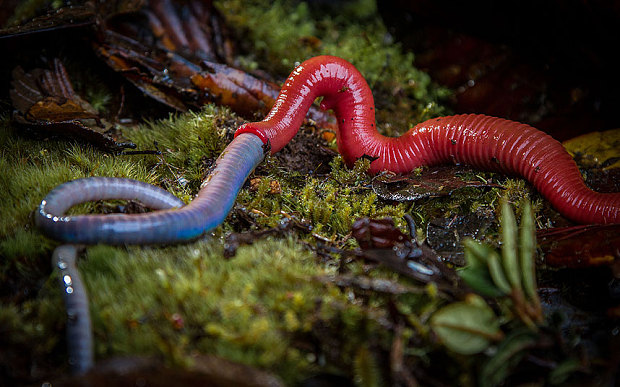
It’s the Kinabalu Giant Red Leech of Borneo! This foot long beast isn’t satisfied with merely sucking blood, it swallows its prey whole.

It’s reassuring to know that it’s not just other atheists who hate me, but that I also still piss off the creationists. In addition to the mob of atheist dudebros howling at my door, there has been a recent resurgence of creationist loonietarianism in my email. It seems to have been triggered by a Seventh Day Adventist pastor, Doug Batchelor.