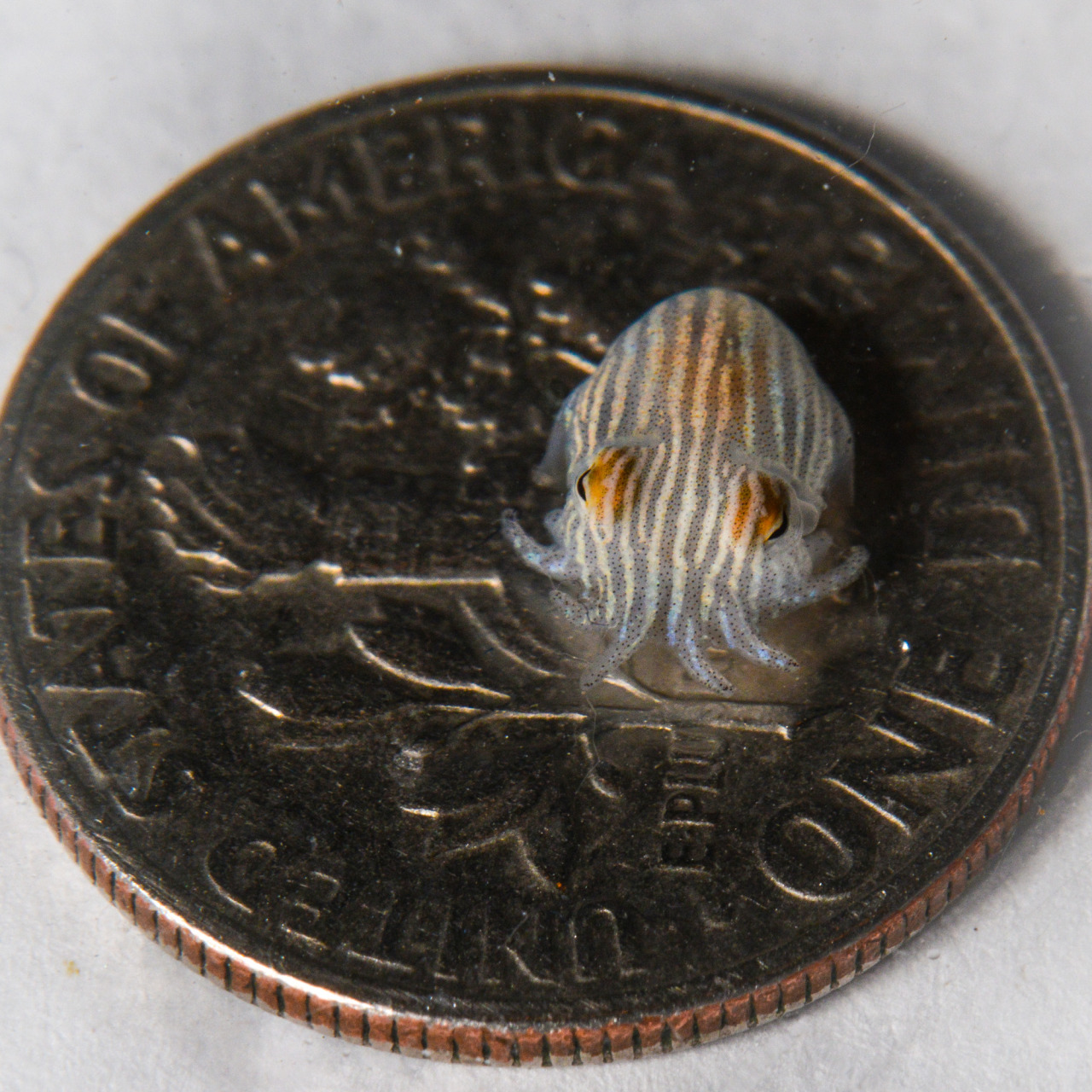
As I just explained, however, the erotic possibilities will remain unexplored.
Pharyngula
Evolution, development, and random biological ejaculations from a godless liberal

As I just explained, however, the erotic possibilities will remain unexplored.

Yesterday was awful. All the aches and pains of being confined to a tiny space for more than a day jumped up and bit me in the butt, and I’m also struggling with a bad case of jet lag and the crankies. So I spent yesterday in an achey, woozy fog, and today looks only slightly better.
Then to top it all off, the internet connection at my house died. I could not communicate with the rest of the world from my comfy chair, and I was too messed up to stagger someplace with a live connection. I dropped off the internet for most of yesterday, which, considering my mood, might have been a good thing.
Also, this morning I read this story about resurrecting Renaissance technologies. Internet down, and people are building wooden printing presses and trying to bring back bookmaking? Definitely signs that we’re in the End Times.
The way I feel right now, though, I’m just going to bow to the zombies, presenting them my head, and tell them to eat and get it all over with.

Just before I left the States, I read this, shall we say, interesting article about how your brain is not a computer. The subhead, which does more or less summarize the content, is:
Your brain does not process information, retrieve knowledge or store memories. In short: your brain is not a computer
Curiously, in order to comprehend the article, I had to retrieve knowledge and stored memories about neuroscience (I have a degree in that) and computers (I worked in the field for several years), and I had to process the information in the article and in my background, and I found that article confusing. It did not compute.
Jeffrey Shallit, who knows much more about the information processing side of the story, also found it somewhat enraging.



Derek Lowe has a sensible article about glyphosphate, the herbicide otherwise known as Roundup. Glyphosate is scary: it’s a chemical, don’t you know, and it kills weeds, so who knows what it’s doing to your children and your cats; even scarier, some crops are being genetically modified to be resistant to glyphosate, and then proteins that protect against Roundup might end up in your cornflakes.
And now some people are raving that glyphosate causes autism, because of course every chemical compound that they don’t understand causes behavioral problems that we don’t like. We must have a scapegoat. It doesn’t matter that it has never been found to have an effect on humans.
An extensive scientific literature indicates that glyphosate is specifically not genotoxic, is not a carcinogen or a teratogen, nor has any specific adverse health effect ever been demonstrated to have been caused by exposure to or low-level consumption of glyphosate. It has little effect on non-target organisms other than plants; a contributing factor to this is that glyphosate inhibits an enzyme found in plants. This enzyme is not found in humans, other mammals, birds, fish, or insects.
The use of glyphosate on herbicide tolerant crops has proven problematic to anti-GMO activists since adoption of the technology promotes the switch to a chemical with a lower environmental impact quotient and lower toxicity.
Lowe explains the statistical nature of risk, and the cautious style of chemical classifications, that allows almost any chemical to be judged as risky to some degree, and feeds sensationalist misreadings. All the data really seems to be saying that it does nothing to animals, but let’s cover our bets and keep an eye on it.
I even have an anecdote about Roundup. We tried to see if it has any early teratogenic effects. The results are sadly unpublishable (for very bad reasons) so it’s safe to summarize them here.
We have a simple assay for developmental errors. Zebrafish pop out a bunch of eggs every morning when the lights come on, and we clean them up and separate them out into beakers, with about 100ml of water for 50 embryos. For our controls, we use fish tank water, the same stuff the adults are swimming around in. It’s got fish pee in it, bacteria, fungal spores, even tiny invertebrates (check your home aquarium water — would you drink it?). We use that because it does have some challenges for growing embryos, and provides a good background for comparisons — we lose 5-10% of the embryos, usually to fungal growth, in these situations.
I had a student who wanted to test local water sources for potential teratogens. So they collected jugs of water from nearby ponds and streams, which are rich with agricultural runoff. We then grew embryos in simple, unfiltered water from Lake Crystal, or the Pomme de Terre river, or nearby ponds, just to see if we had any preliminary effect worth pursuing. This is why we use crude tank water for the controls — those sources would also be complex and biologically rich.
Here’s the boring result: nothing happened. Fish grew happily in water from a shallow pond full of duck poop with an ethanol plant on one side and a dairy farm on the other, with no detectable disorders or effects on the rate of development. In fact, the pond water embryos were healthier in one sense — they had reduced mortality from fungal infections than embryos in tank water. Tentative explanation for that: tank water might specifically be a breeding ground for fungi that thrive on fish, or the fungi might be more sensitive to agricultural chemicals than the fish are. Anyway, it was a negative result.
Then we thought to push it, and see if we could get any deleterious effect from those agricultural chemicals, so I bought a gallon of Roundup at the hardware store, and we did a dilution series. Nope, nothing. We had embryos growing in a concentration of several percent glyphosate, and they didn’t seem to mind at all. We used concentrations that were approximately ten times what Monsanto recommends that you spray directly on your lawn, and the zebrafish didn’t care.
Now of course this was a limited and preliminary experiment. All we were examining was survival and basic morphology, and we were only looking at early developmental events, like gastrulation and neurulation and the earliest twitching behaviors, and we can say with some confidence that those were unaffected. We did not look at older animals, so if it were an endocrine disruptor (it isn’t) for instance, we wouldn’t know it. We also don’t have a test for fish autism.
I can also say that I wouldn’t drink glyphosate, but not because I’m afraid it would give me cancer. It’s because the straight stuff is kind of oily and smells nasty. So those stunts where people give Monsanto executives a glass of Roundup and dare them to drink it are really misleading — they’re not going to drink it because concentrated-just-about-anything is unpleasant.
I think the bottom line is that making a claim about the deleterious effects of a substance requires actual data, and not cherry-picking suggestive and vaguely defined effects.
It also says that the file drawer effect is a problem. I suspect there have been lots of preliminary experiments that see nothing, and are abandoned as unpublishable, like ours. That effect is also complicated. You can’t tell me just to take the data we got and publish that, because it really was just a quick pilot experiment to see if there was something worth pursuing. It’s not just that a negative result is unpublishable, but that we didn’t see enough of an effect to make it worth our while to invest enough time and effort to make the results thorough and robust enough to even consider getting it into publishable shape. And thus science staggers on.

Classes are over, and that means I have more time to think…about my classes. So I’m on the lookout for ideas to improve my teaching, and gosh, look, Nature has an article on better ways to teach genetics. So I read it eagerly, and was left scratching my head. It’s a short news article, so it’s a bit thin on the details of how to teach genetics the way it recommends, but I’m also confused about how this approach would be useful.
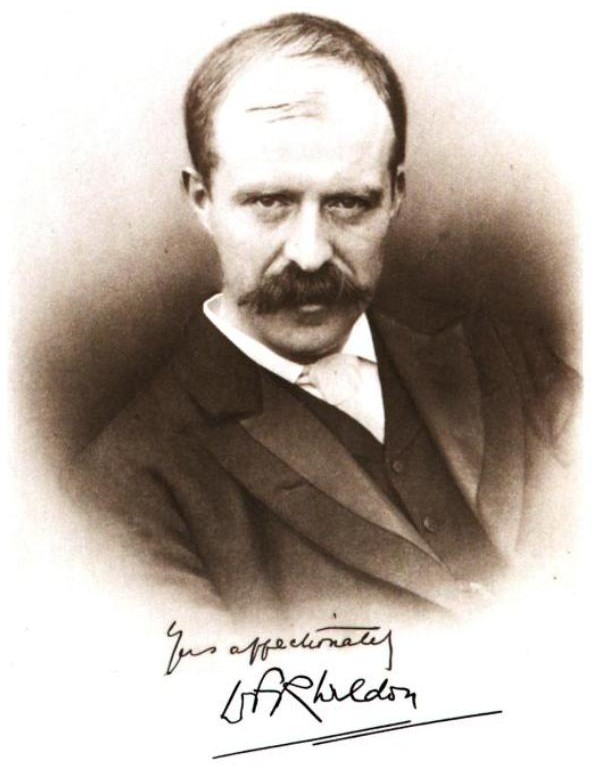
The author, Gregory Radick, advocates teaching Weldonian genetics, rather than Mendelian genetics.
In a recent two-year project, we taught university students a curriculum that was altered to reflect what genetics textbooks might be like now if biology circa 1906 had taken the Weldonian rather than the Mendelian route. These students encountered genetics as fundamentally tied to development and environment. Genes were not presented to them as what inheritance is ‘really about’, with everything else relegated to ignorable supporting roles. For example, they were taught that although genes can affect the heart directly, they also affect blood pressure, the body’s activity levels and other influential factors, themselves often influenced by non-genetic factors (such as smoking). Where in this tangle, we ask them, is a gene for heart disease? In effect, this revised curriculum seeks to take what is peripheral in the existing teaching of genetics and make it central, and to make what is central peripheral.

Next they’ll try telling us the elephant didn’t get its trunk by a crocodile tugging on it.
The genomes of okapi and giraffe have been sequenced, and the signatures of specific genetic changes that are unique to their lineage have been identified. It looks like it wasn’t an act of will after all, but the accumulation of small changes over millions of years. Surprise!
This is an interesting comparison between long-necked mammals, short-necked, related mammals, and mammals as a whole that identified a number of genes that showed evidence of selection. The idea was to find the genes associated with a specific morphological change.
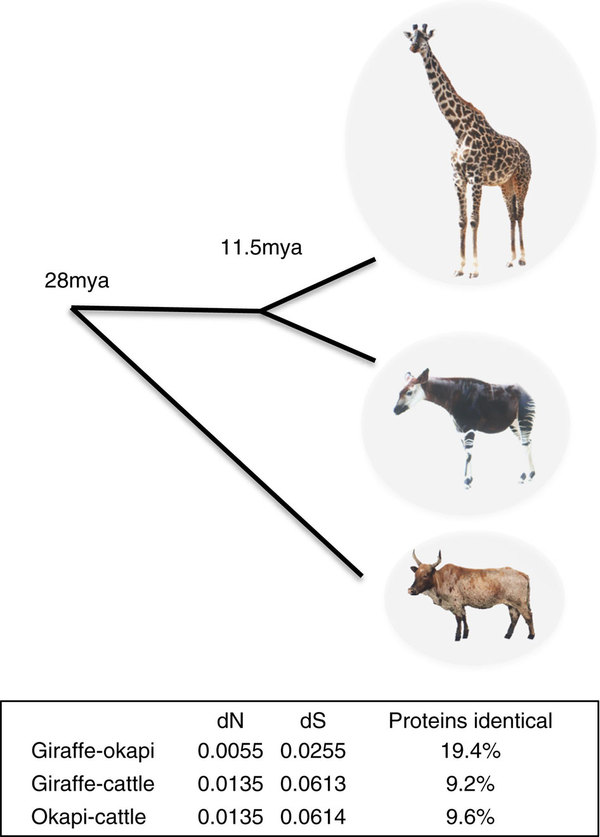
Using the average pairwise synonymous substitution divergence (dS) estimates between giraffe, okapi and cattle as calibrated by the pecoran common ancestor (27.6 mya), the divergence of giraffe and okapi from a common ancestor is estimated to be 11.5 mya.

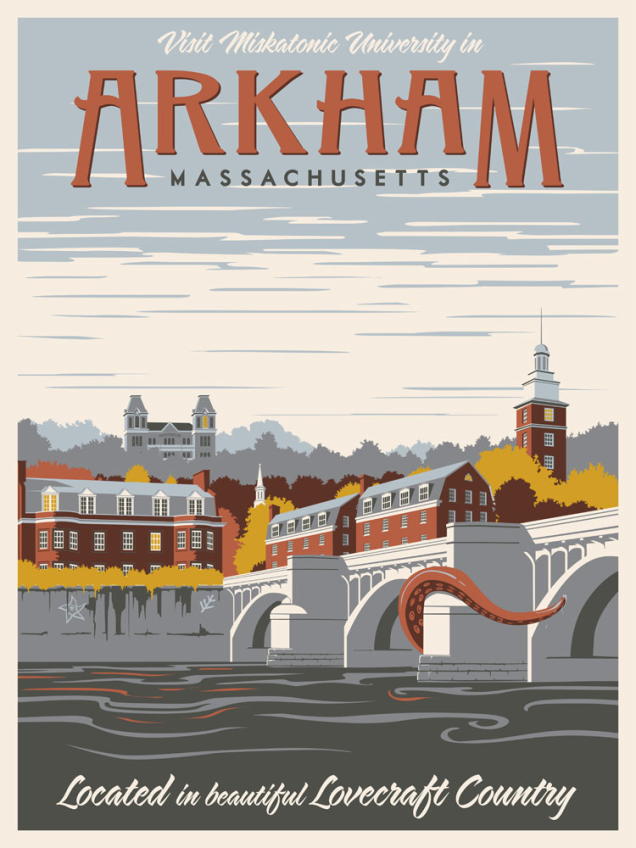
Except…the text is disturbing. It’s on the wrong side of the continent. Read this story of a common occurrence around Puget Sound.
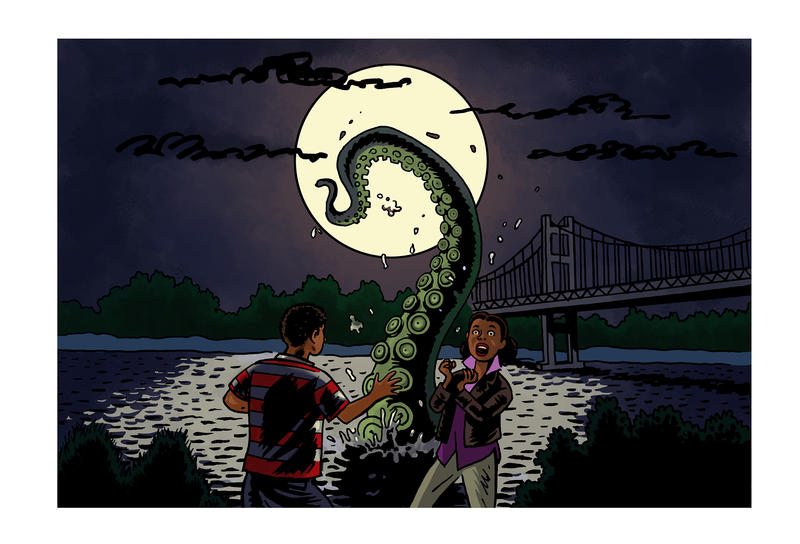
Douglass Brown was 15 when he saw a giant tentacle emerge from Puget Sound.
He was in Tacoma, walking down the beach with a girl he liked. Then he looked out at the water.
“I see this arm come out of the water. It was 10, 15 feet in the air,” Brown says. “It looked like an octopus or something like that, and I just took off running.”
I can so imagine walking along the beach with my girl when I was that young, and enjoying the aquatic wildlife. Except that I can’t imagine running — that’s the part where you hold each other a little closer, and sigh romantically.
(Also, I think the “10, 15 feet” part is a gross exaggeration. “Inches,” maybe. But then, one does tend to inflate in those situations.)


The world is full of naive people who think we’re going to be immortal some day soon, in spite of all the evidence that says no (Kurzweil is a prominent example of such techno-optimism, as is Aubrey de Grey). It’s not just bad biology, it’s also bad physics, as Peter Hoffman explains. We’re all made of parts that are constantly being battered by thermal energy as an essential part of their operation, and damage accumulates until…we break down. This is unavoidable.
If this interpretation of the data is correct, then aging is a natural process that can be reduced to nanoscale thermal physics—and not a disease. Up until the 1950s the great strides made in increasing human life expectancy, were almost entirely due to the elimination of infectious diseases, a constant risk factor that is not particularly age dependent. As a result, life expectancy (median age at death) increased dramatically, but the maximum life span of humans did not change. An exponentially increasing risk eventually overwhelms any reduction in constant risk. Tinkering with constant risk is helpful, but only to a point: The constant risk is environmental (accidents, infectious disease), but much of the exponentially increasing risk is due to internal wear. Eliminating cancer or Alzheimer’s disease would improve lives, but it would not make us immortal, or even allow us to live significantly longer.
The article points out that we can accurately model mortality with only a few general parameters, and they’re rather fundamental and physics-dependent — we can tweak the biology as much as possible, but the underlying physical properties are going to be untouchable.
I would add, though, that while the mortality curves he shows are inevitable, biology can stretch and contract them, and we do have measurable variation in different species that shows that there is a kind of scaling factor to the curves in biological diversity — it’s not as if every species that lives at the same average temperature have identical life expectancies! Even within the human species, there are genetic variants that affect longevity, and clearly different life-style choices influence mortality, even though we’re every one of us ticking along at roughly the same 37°C. So please, yes, we can reduce the incidence of heart disease and cancer, and get a longer average lifespan…but even if we were to eradicate those major causes of mortality, we’re all going to get up around the century mark, and then we’re going to plummet off a cliff because of all the accumulated cellular damage and declining physiological efficiency.
By the way, one odd thing when I tried to find an illustration to accompany this post: I searched on “aging”. Almost all the photos on the web illustrate women by a huge margin. I am forced to conclude that only women suffer from the ravages of age; men simply get mature. But at least it’s one topic that women get to dominate!