You all stayed home today, right? Otherwise, you’re getting a visitation.

You all stayed home today, right? Otherwise, you’re getting a visitation.

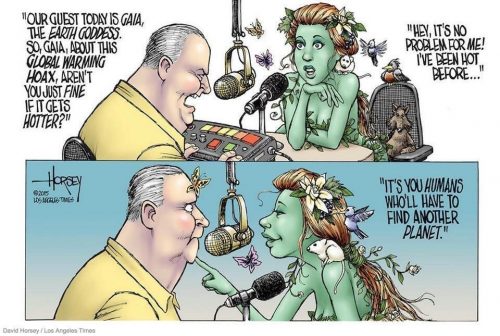
Gaia’s right, I don’t know if I can survive this. My bear-like metabolism is demanding crisp weather to properly induce hibernation.

Wow. Tom Björklund has been making these amazing paintings to humanize Neandertals. Here are a few examples:
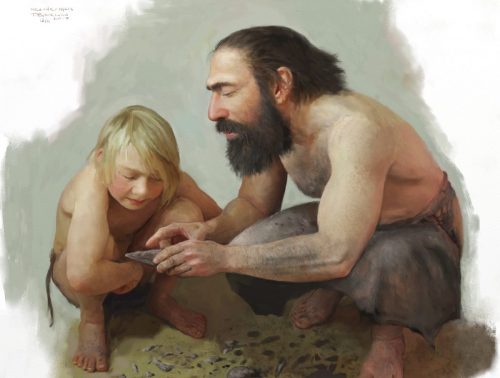
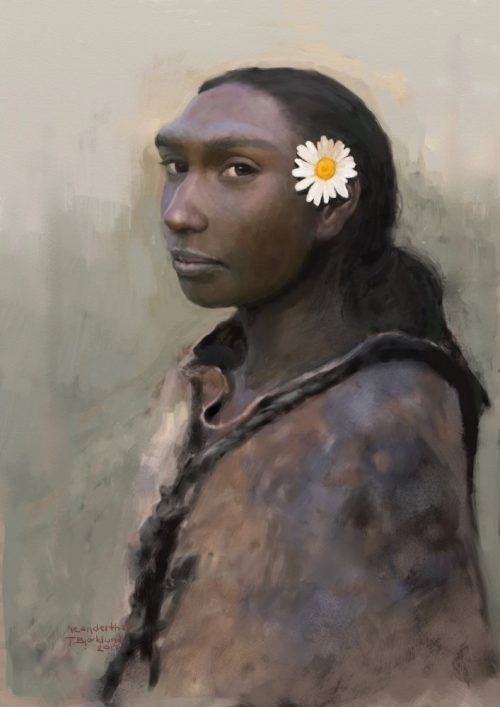
It doesn’t take much — a father teaching his child, a flower in the hair — to wrench one away from the usual distanced view we have of dead bones and stone tools. These were people.
I’d like to see a similar approach to australopithecines. We can see emotions in a chimpanzee — you know that Lucy had just as rich a repertoire of feelings as they do. We can only imagine how they expressed them.

The denizens of 4chan/pol have got it into their tiny little heads that the way to Save Western Civilization is for them increase their testosterone levels. There are a few little problems with that idea: they haven’t made the connection between “more testosterone” and “civilization”, and given that testosterone is an extremely common steroidal hormone in all vertebrates, and that bears get rather high testosterone levels without building cities and discovering writing, any connection would be tenuous. But apparently they’re fixated on this idea about manliness, and are looking for ways to naturally elevate their testosterone, and so have started consuming onions.
4Chan /pol/ users are eating onions in an effort to increase their testosterone, and it's not going well pic.twitter.com/jSX9MD4Oyo
— Will Sommer (@willsommer) November 20, 2017
Wait, why onions? There’s another tenuous connection. Onions are high in antioxidants that help break down free radicals, free radicals are produced in greater volumes in metabolically active cells, some very active cells are sperm cell precursors that are dividing rapidly, so we should eat onions to preserve our precious Western male bodily fluids! There have been serious studies on this subject, and I found one in Experimental Biology and Medicine that reports a substantial increase in sexual activity in rats fed onion juice.
Onion (Allium cepa) is one of the most commonly cultivated species of the family Liliaceae, and has long been used in dietary and therapeutic applications. Treatment with fresh onion juice has been reported to promote testosterone production in male rats. Testosterone is the male sex hormone responsible for enhancing sexual libido and potency. This study aimed to investigate the effects of onion juice on copulatory behavior of sexually potent male rats and in male rats with paroxetine-induced sexual dysfunction. Sexually experienced male rats were divided into seven groups: a control group, three onion juice-treated groups, a paroxetine-treated group, and two groups treated with paroxetine plus different doses of onion juice. At the end of the treatments, sexual behavior parameters and testosterone levels were measured and compared among the groups. Administration of onion juice significantly reduced mount frequency and latency and increased the copulatory efficacy of potent male rats. In addition, administration of onion juice attenuated the prolonged ejaculatory latency period induced by paroxetine and increased the percentage of ejaculating rats. Serum testosterone levels increased significantly by onion juice administration. However, a significant reduction in testosterone because of paroxetine therapy was observed. This reduction was restored to normal levels by administration of onion juice. This study conclusively demonstrates that fresh onion juice improves copulatory behavior in sexually potent male rats and in those with paroxetine-induced sexual dysfunction by increasing serum testosterone levels.
So, in this one study, they found that rats who were juiced on onions had sex more often (and more quickly, but let’s gloss over that). I guess if you think ejaculating rats is a good proxy for civilization, that might be suggestive.
Except…
Don’t tell /pol/ this, they might panic…
The authors of the study are…Mohammed Z Allouh, Haytham M Daradka, Mohammed M Al Barbarawi, and Ayman G Mustafa. This might throw them over the edge. They’re already suspecting that they’re being tricked into gnawing on raw onions.
Now the /pol/ users are arguing over whether leftists are tricking them into drinking onion juice as a trap. But so far, onions are winning out. pic.twitter.com/lZkCL8NYnl
— Will Sommer (@willsommer) November 20, 2017
Should we tell them there are different varieties of onions, and not all of them are as sharp or astringent as the ones they’re suffering with? My father used to eat raw onions — but they were varieties like the Walla Walla Sweet onion, which as you might guess from the name, has a gentler flavor. He was also civilized and manly, which meant kind, supportive, and hard-working. I don’t think that’s the kind of civilized those guys are aiming for, though.

Sergio Canavero has been blustering for years about how he’s going to do a complete human head transplant. His most recent shenanigans was the horrible two-headed rat, in which he decapitated a little rat, killed a big rat, and stitched the two circulatory systems together to allow the big rat’s heart to keep the little rat’s unconscious brain alive for a few hours. It was a stupid waste; the big problem is and always has been to reconnect a nervous system in a functional way, and he’s not even trying to do that.
But now he has announced that he has successfully transplanted the head from one human being onto the body of another. Successfully. What does he mean by that?
He has successfully transplanted the head from one human cadaver to the torso of another human cadaver. No word yet on whether the patient has recovered consciousness or how he is feeling.
Are you impressed yet?
What will impress me is when these gullible newsrags wake up and realize that Canavero is a fraud, and they stop giving him free press for every ghoulish act of necrophilia he commits.

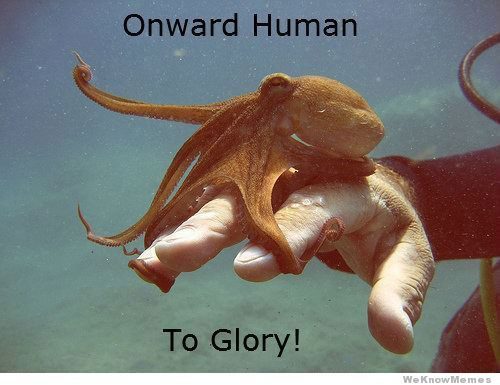
It’s been one of those weeks, so I’m glad someone knows where I’m going.

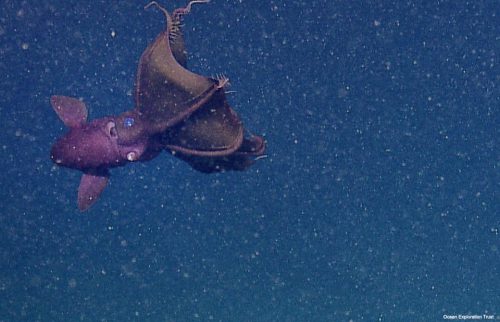
We’re neck deep in the holiday season already, so I’m joining in. Isn’t this festive? Just don’t think too hard about what’s in that marine snow.

I presume you’ve all read about this marvelous work on correcting a rare and terrible genetic disease, epidermolysis bullosa. It’s a mutation that causes the skin to blister up and tear, basically; it’s a horrible disease that makes life miserable and a constant source of pain and infection.
Patients with epidermolysis bullosa live in excruciating pain, their skin so fragile to the touch that those born with the disorder have been nicknamed “butterfly children.” The disorder produces chronic and untreatable wounds that get infected easily and can eventually become cancerous. About 500,000 people worldwide have epidermolysis bullosa.
Now it has been successfully treated by combining a technique for generating skin grafts from stem cells that was first developed for burn patients, with gene therapy, going in and repairing the defective gene, and then growing the new graft from the patient’s own gene-corrected cells. It seems to be a total success.
In August, De Luca and Pelligrini got the green light to try their technique. In September, they collected a square inch of skin from Hassan’s groin—one of the few parts of his body with intact skin. They isolated stem cells, genetically modified them, and created their gene-corrected skin grafts. In October and November, they transplanted these onto Hassan, replacing around 80 percent of his old skin.
It worked. In February 2016, Hassan was discharged from the hospital. In March, he was back in school. He needs no ointments. His skin is strong. It doesn’t even itch. “He hasn’t developed a single blister,” says de Luca, who shared the details of Hassan’s story with me. “He’s gaining weight. He’s playing sports. He’s got a normal social life.”
Solely from a humanitarian aspect, this is a triumph. But there’s another side to it as well, that addresses the kind of complaint we might get from bean-counters. This is a relatively rare disease. It would be far cheaper to just let its victims simply suffer and die out. The articles don’t talk about it, but I’m sure the cost of culturing and growing and applying gene therapy to new skin for this one victim was extravagant to an extreme. But that isn’t the point — in addition to being a clinical treatment for one person, this represents basic scientific research on a core problem, how to generate reliable quantities of genetically modified tissue.
It is the same rational we use for all basic research into rare diseases — not only is it the right and humane thing to do, but figuring out how to deal with it adds a new tool to our toolbox and gives us deeper understanding of fundamental cellular processes.

Sometimes, I think, science fiction authors have a better idea of potential alien complexity than do biologists. Here’s an essay by Tim Pratt on alien worldbuilding that does a good job of addressing a common problem.
I knew my series needed aliens, just like it needed mysterious ancient technological artifacts, space pirates, snarky computers, and cool spaceships. Turning to the task of creating aliens right after I’d put together my (mostly) human crew made me hyperaware of the issue of culture. One thing that bothers me in some science fiction (more often cinematic and televisual than written, but often there, too) is alien monocultures. Unless you’re talking about the Borg or Cybermen or other sorts of hive-minds, it never made sense to me to have an entire species of aliens with a single culture. How many thousands of cultures are there on Earth, after all, and how many subcultures within those cultures? From differences in music, religion, recreation, art, literature, food, philosophy, sexual preferences—cultures and subcultures get so wonderfully and weirdly granular. And yet, so often when our fictional humans encounter aliens, they discover the whole species consists of noble warriors or aloof philosophers or sadistic experimenters or ruthless capitalists. Where are the pacifist Klingons who run sustainable free-range krada ranches? Where are the Wookies who like to shave their entire bodies and refuse to celebrate Life Day because it’s gone too corporate? The Volus philanthropists? The punk rock Vulcans? Sure, sometimes there’s a plot point involving some rogue weirdo outlier, but in any alien species there should plausibly be whole communities, whole cities, whole religions or sects or affinity groups, who march to the beat of a different Kintarrian Death Drum.
Yeah! Diversity is important. I think I’m going to have to grab a copy of his series.

I am informed that Oxford biologists have outlined what alien life would look like — I’m a bit put off by the title. One of those things that reduces the credibility of a story for me is when the editor feels the need to pump up the authority by prefixing “biologist” with the name of a prestigious university. Wouldn’t just “biologists have outlined what alien life would look like” been adequate?
I went ahead and read the source paper in the International Journal of Astrobiology, “Darwin’s Aliens”, and you know, I’m not very impressed. It claims in the abstract that “we can make specific predictions about the biological makeup of complex aliens,” but it doesn’t — it makes vague, amorphous generalities about possible aliens. Basically, it says that there would be replicators of some sort that would use natural selection, and then it announces that there would have been “major transitions” in their evolutionary history to generate complexity.
Uh, OK.
Picture an alien. If what you are picturing is a simple replicating molecule, then this ‘alien’ might not undergo natural selection. For example, it could replicate itself perfectly every time, and thus there would be no variation, and it would never improve. Or it might have such a high error rate in replication that it quickly deteriorates. If we count things like that as life, then there could be aliens that do not undergo natural selection. But if you are picturing anything more complex or purposeful than a simple molecule, then the alien you are picturing has undergone natural selection. This is the kind of prediction that theory can make. Given heredity, variation and differential success, aliens will undergo natural selection. Or, more interestingly, without those three things, aliens could not be more complicated than a replicating molecule. Given an adapted alien, one with an appearance of design or purpose, it will have undergone natural selection.
The telling phrase in there is this one:
This is the kind of prediction that theory can make. Given heredity, variation and differential success, aliens will undergo natural selection.
I agree. That’s the kind of prediction you can make. It’s kind of…broad, don’t you think?
Then they toss in their edifying zinger.
In particular, the evolution of complex life on the Earth appears to have depended upon a small number of what have been termed major evolutionary transitions in individuality. In each transition, a group of individuals that could previously replicate independently cooperate to form a new, more complex life form or higher level organism. For example, genes cooperated to form genomes, different single-celled organisms formed the eukaryotic cell, cells cooperated to form multicellular organisms, and multicellular organisms formed eusocial societies.
Who would have guessed? Complex organisms must have experienced increases in complexity in their evolutionary history.
You want another tautology?
Once again, picture an alien. If you are picturing something like unlinked replicating molecules or undifferentiated blobs of slime, then your aliens might not have undergone major transitions. But if what you are picturing has different parts with specialized functions, then your alien is likely to have undergone major transitions. What matters is not that we call them ‘major transitions’, but rather that complexity requires multiple parts of an organism striving to the same purpose, and that theory predicts that this requires restrictive conditions. Consequently, if we find complex organisms, we can make predictions about what they will be like.
If we find complex organisms, then we can predict what they will be like. You keep using that word, “predict”. I don’t think it means what you think it means.
Now we get an illustrative illustration of what an alien might look like.
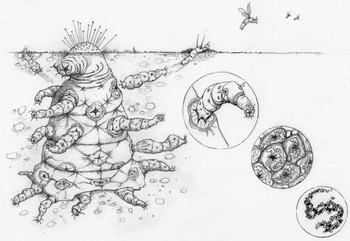
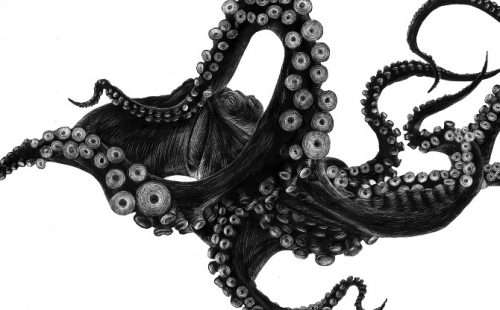
Major transitions in space: ‘The Octomite’. A complex alien that comprises a hierarchy of entities, where each lower-level collection of entities has aligned evolutionary interests such that conflict is effectively eliminated. These entities engage in a division of labour, with various parts specializing on various tasks, such that the parts are mutually dependent.
Why? The authors seem to think that they can therefore predict that aliens will consist of a literal hierarchy of complexity, with literal morphological layers. I ask you, is there anything on Earth that looks like this? Then their model fails to predict any of the forms found on the one known planet with complex life, and is therefore rather pointless.
They have a summary of their method for making predictions.
When using evolutionary theory to make predictions about extraterrestrial life, it is important to avoid circularity. Our chain of argument is: (1) Extraterrestrial life will have undergone natural selection. (2) Knowing that aliens undergo natural selection, we can make further predictions about their biology, based on the theory of natural selection. In particular, we can say something about complex aliens – that they will likely have undergone major transitions. (3) Theory tells us that restrictive conditions, which eliminate conflict, are required for major transitions. (4) Consequently, complex aliens will be composed of a nested hierarchy of entities, with the conditions required to eliminate conflict at each of those levels.
I feel like I should remind you all that in their abstract, they say “we can make specific predictions about the biological makeup of complex aliens.” Those aren’t specific predictions. I don’t see how those generalities are at all useful in the task they’ve set themselves.
Also, nowhere in their model do they take into account the confounding variable of chance — it’s as if all they have to do is invoke natural selection and then the history of the species unfolds. Which it doesn’t.
Maybe that’s the point of highlighting the authors’ university — it’s supposed to make us overlook the bullshit.