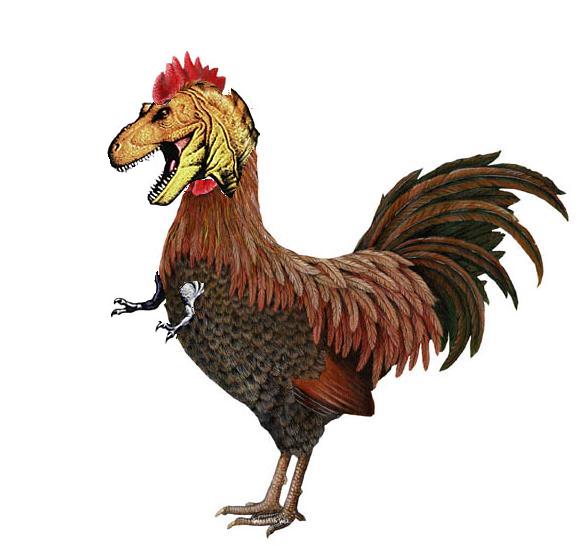
You think this is amusing?

Look at all these clips of frogs and toads eating fireflies, and afterwards flickering and glowing as the insects continue to strobe their tail-lights while inside their guts. Maybe it’s a little bit funny, but I’m wondering how it would affect predation on amphibians — after all, it’s night, and now the frog has switched on an internal light.

I’m also imagining the poor doomed bug shrieking, “Towards thee I roll, thou all-destroying but unconquering frog; to the last I grapple with thee; from hell’s heart I stab at thee; for hate’s sake I spit my last breath at thee.” They’re desperately signaling for anyone to come, calling down hell on their tormentor.

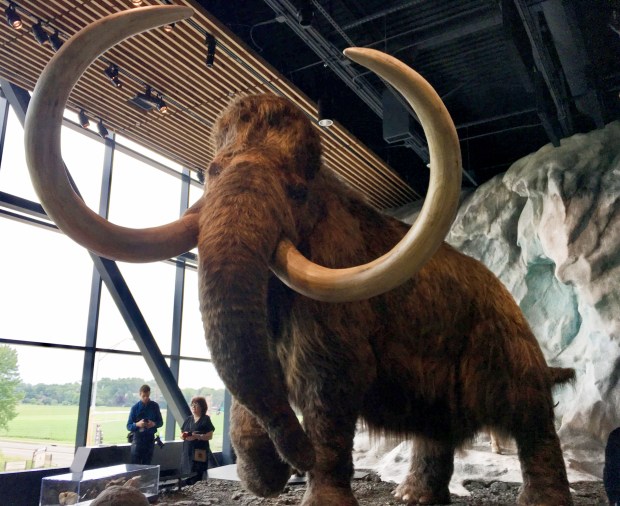
Hey! The Bell Museum is reopening in July!

I’ve been waiting for this: the brand new, shiny, grand Bell Museum is opening in St Paul in mid-July. Anyone else want to go? I’m all tied up the weekend of the opening, but some weekend in the last half of July I’ll definitely be making the trek and checking it out. I’ll announce a specific date in case anyone else wants to join me and get a selfie with the woolly mammoth.

Radiolab lets me down

I’m at the gym this morning, and I put on a podcast, as one does, and chose to start Radiolab’s series on reproduction and human development. Just my sort of thing, I thought.

And oh my god it is awful.

To personalize it and appeal to the masses, it resorts to rampant anthropomorphization and mischaracterization of the environment. Germ cells start out in the allantois, which is a “wasteland”. They migrate “pugnaciously” to the embryo proper, “looking for” the genital ridge, which is like a “cathedral” filled with somatic cells that are like “monks”, who then “care for” the germ line. They ask deep questions, like “does the cell know where it’s going?”, and no one says no, that’s a stupid question, it’s a single cell with no cognitive abilities at all. And it goes on and on.

I only listened to the end of that episode because I could not believe how much misinformation was being spread in order to make developmental biology ‘entertaining’. I’m not going to listen to the rest of the series, because I can’t afford to smash my phone.

If you must listen, there is a tiny bit of factual information in there, but it’s all been slathered in the goop of humanizing individual cells, and it is totally detestable in the way it tries to make happy cartoon people of developmental processes. Not recommended at all. Listen with extreme caution and skepticism.

Jurassic Park is fiction, someone tell Jack Horner

Jack Horner has an ambitious goal. He wants to reverse-engineer birds to recreate dinosaurs.

Dinosaurs could potentially walk among us in real life soon as the paleontologist who inspired the original Jurassic Park movie has announced a research project to bring the extinct creatures back to life. Dr. Jack Horner says scientists are only 5 to 10 years away from genetically engineering dinosaurs into existence.

Yeah, I know. He’s been puttering about with this for years, using every incremental change in bird genetics engineered in a lab as confirmation of his project’s feasibility. It’s interesting developmental biology. It’s not going to get him to his goal.

Horner cited a 2015 study as his “proof of concept,” noting that scientists at Harvard and Yale were able to trick a bird’s head into changing into a dinosaur snout.

“Basically what we do is we go into an embryo that’s just beginning to form, and use some genetic markers to sort of identify when certain genes turn on and when they turn off,” he said.. “And by determining when certain genes turn on, we can sort of figure out how a tail begins to develop. And we want to fix that gene so it doesn t stop the tail from growing.”

And there’s the problem: “that gene”. There isn’t a “that gene” — there is a whole ensemble of interacting genes that work together, and it’s simply not going to be doable in 5-10 years. There will be small changes in the desired direction, but every one of those new changes will have a ripple effect on a dozen or more other genes, and each of them will have to be tweaked to adjust their response, but then each of those will have downstream effects on a dozen other genes.

It’s not impossible, since evolution obviously shaped every species, but evolution is a massive project in parallel processing, with large population numbers and thousands of generations. We don’t know enough to be able to go in and in one grand experiment change all the relevant genes in exactly the right way, with foreknowledge of their interactions, to do what he wants in such a short time.

Also, evolution had an easier job in one sense: it doesn’t work towards a specific goal, but simply takes whatever it gets and accepts it if it survives. There was no intent to take a dinosaur species 150+ million years ago and sculpt it into a chicken, specifically. He’s not going to get a dinosaur — he’s going to get a weird-ass mutant chicken — and it’s going to take a lot more time, effort, and money than he naively expects.

Quoted for truth

From The Seattle 500 Women Scientists:

Despite the popular myth of the lone-wolf genius scientist, science is an inherently social, collaborative endeavor. Intensive scientific training involves close collaboration with a senior advisor. Most scientists can trace their “academic genealogy” through generations linked by formative relationships. Scientific papers typically include many authors who work together to form something greater than the sum of its parts. Conferences and workshops where scientists mingle are petri dishes of new ideas and partnerships—they are nurseries and laboratories for future scientific communities. Scientific progress depends directly on the ability of scientists to discuss, argue, collaborate, and build upon on the knowledge of others.

Yes! I tell my students this: I explain to them that they have to work in teams in lab because that’s the only way they’ll ever succeed in this career.

Brain in a bucket: or, when hype meets ethics

Dr Nenad Sestan has a technique to recover some functioning neurons from dead brains. He’s been collecting decapitated pig heads from slaughterhouses and hooking them up to perfusion pumps and running an oxygenated saline (plus other secret ingredients) through them, and then doing physiological assays on the brain tissue, finding that significant numbers of the neurons are still viable and show signs of cellular activity.

There was no evidence that the disembodied pig brains regained consciousness. However, in what Sestan termed a “mind-boggling” and “unexpected” result, billions of individual cells in the brains were found to be healthy and capable of normal activity.

This work has not yet been published in a peer-reviewed journal, so take that “billions” number with a grain of salt. Even if accurate, and I don’t think there’s any way he could have accurately gotten a good count, it still means that only a small percentage of the cells in the brain retained any capacity to function. It is mostly dead, and ignoring the Princess Bride reference, mostly dead is completely dead. The integrated whole is non-functional. The pig is not thinking, not dreaming, not awaiting the kiss from its true love to awaken. It is unresponsive. It is an ex-pig.

Sestan now says the organs produce a flat brain wave equivalent to a comatose state, although the tissue itself “looks surprisingly great” and, once it’s dissected, the cells produce normal-seeming patterns.

The lack of wider electrical activity could be irreversible if it is due to damage and cell death. The pigs’ brains were attached to the BrainEx device roughly four hours after the animals were decapitated.

Put that four hours in context. If your brain is deprived of oxygen for four minutes, irreversible damage begins. After about six minutes, you are dead and typically beyond resuscitation. Within that window between the onset of damage and death, the functional network of the brain begins to break down, and victims have an increasing chance of being reduced to a comatose vegetable.

Those pig brains were deprived of all oxygen and nutrients for 240 minutes. “Comatose” is a generous assessment of their state. You’ve no longer got a brain, you’ve got a scattering of individual cells that no longer work together, but haven’t quite gotten the message that they’re supposed to decay, or haven’t yet been chewed up by bacteria or the wash of lytic enzymes released by their definitely dead neighbors.

This is not a surprising result. No one expects that there is an instant of death in which every cell ruptures their membranes and disintegrates into a liquid acellular mass. It takes time for a mass of meat to break down completely. It is a slight surprise that they can salvage useful single cells after hours of breakdown, but only slightly.

Is this a useful observation? Yes. It would be nice to have another source of neurons for laboratory work that doesn’t require maintaining a colony of animals that you have to personally kill to extract the very freshest cells. You can also use this surviving subset to trace functional activity, which is apparently the goal of the research. It’s going to have new problems, though: how do you interpret the cellular activity of a neuron that has been hypoxic for four hours? Is it actually comparable to newly isolated or cultured cells? The Sestan lab has a lot of work ahead of them. It’s also likely to be extendable to animals other than pigs: human brains donated to research might provide a pool of living cells for physiological work.

But realistically, this is more like discovering that you can go down to the local junkyard and find an unbroken passenger side front window for a 1998 Toyota Corolla that you can use to replace the one someone broke on your car, or a replacement starter motor for your Jeep Cherokee. It does not mean that we can expect a zombie car uprising as the whole junkyard starts up and rushes to clog up the nearest freeway.

Unfortunately, it is also priming unrealistic and irrelevant ethical dilemmas.

The one type of research he thinks may call for quick action to set up rules of the road is Sestan’s unpublished brain preservation technique (which the Nature editorial did not discuss). “If people want to keep human brains alive post mortem, that is a more pressing and realistic problem,” says Hyman. “Given that it is possible with a pig brain, there should be guidelines for human tissue.”

It is not a pressing or realistic problem. What is described as a concern is not possible with a pig brain — I have to say it again, those are dead, non-functional, unsalvageable brains, although a tiny fraction of the cells might have some utility for research. Still, it could become a legitimate ethical issue, so I can see where the responsible ethicist will set up guidelines before it becomes a problem.

Imagine a situation where a patient is dying of organ failure, but their brain is still healthy. If we could decapitate them, hook them up within seconds to the pumps and fluids that Sestan pioneers, keeping their brain intact and undamaged and healthy in a nice little vat, should we? Given that there is no known technique for reconnecting such a brain, it might be greater torment than allowing them to die — would you want to spend decades in a sensory deprivation tank, just for the sake of living? That’ll be a fun one for the bioethicists to wrestle with.

But this technique is not currently anywhere close to raising this problem.

What I see as a greater problem is this annoying essentialism. It’s HUMAN, it’s a HUMAN brain, therefore we need to regard it with the same requirement of respect we accord to HUMAN BEINGS. There is a difference between an adjective and a noun. It is human tissue, yes, but it has none of the properties essential to a good definition of a sapient human being (which we don’t have in most people’s heads: they’ll talk about 46 chromosomes, or parentage, or attributes of the human body like having one head and two arms and two legs, which are all pretty much irrelevant to personhood, I would think), so people freak out over human organoids, little blobs of brain tissue around a millimeter across in a dish, or over chimeras, small subpopulations of human cells in an animal host.

As far as I’m concerned, the Sestan experiment has been grossly overhyped, although it has real potential, and the ethical gasps are actually in response to an imaginary situation, rather than anything that has happened yet.


Lest anyone think I said anything the ethicists don’t already know, I should include this bit from one of them:

Hyman…thinks most of the scenarios are exaggerated or unlikely. It’s hardly possible a tiny brain organoid will feel or think anything, he says.

Have you ever noticed how often the origin of breasts is explained as “for men”?

I made a video about hypotheses for the evolution of breasts in women. Sort of a video. It’s not very visual, and is just me talking, because I didn’t want anyone distracted by sexy pictures — that wasn’t the point. I even left my sexy face out of it.

Since it’s just me droning on, I include my script below, so you can skip the video altogether and just read what I said.

[Read more…]