Charles Pierce is dismayed and despairing. But at least we know who to blame: the guilty parties have been proudly engaged in driving the country into the gutter for decades.
Every Republican who ever played footsie with the militias out west owns this bloodshed.
Every Republican who ever spoke to, or was honored by, the Council of Conservative Citizens and/or the League of the South owns this bloodshed.
Every Republican administration that ever went out of its way to hire Pat Buchanan, and every TV executive who ever cut him a check, and every Republican who voted for him in 1992, and everyone who ever has pretended his views differed substantially from the ones in the streets this weekend, owns this bloodshed.
Every Republican president—actually, there’s only one—who began a campaign in Philadelphia, Mississippi, to talk about states rights, and who sent his attorney general into court to fight for tax exemptions for segregated academies, owns this bloodshed.
Every Republican politician who followed the late Lee Atwater into the woods in search of poisoned treasure owns this bloodshed.
Every conservative journalist who saw this happening and who encouraged it, or ignored it, or pretended that it wasn’t happening, owns this bloodshed.
The modern conservative movement—born of the Goldwater campaign, nurtured by millions of dollars from corporations and rightwing sugar daddies, sold day after day on millions of radios and on its own TV network—shoved the Republican Party right where it was dying to go anyway. These were institutions whose job it was to isolate this encroaching dementia from afflicting our politics in general.
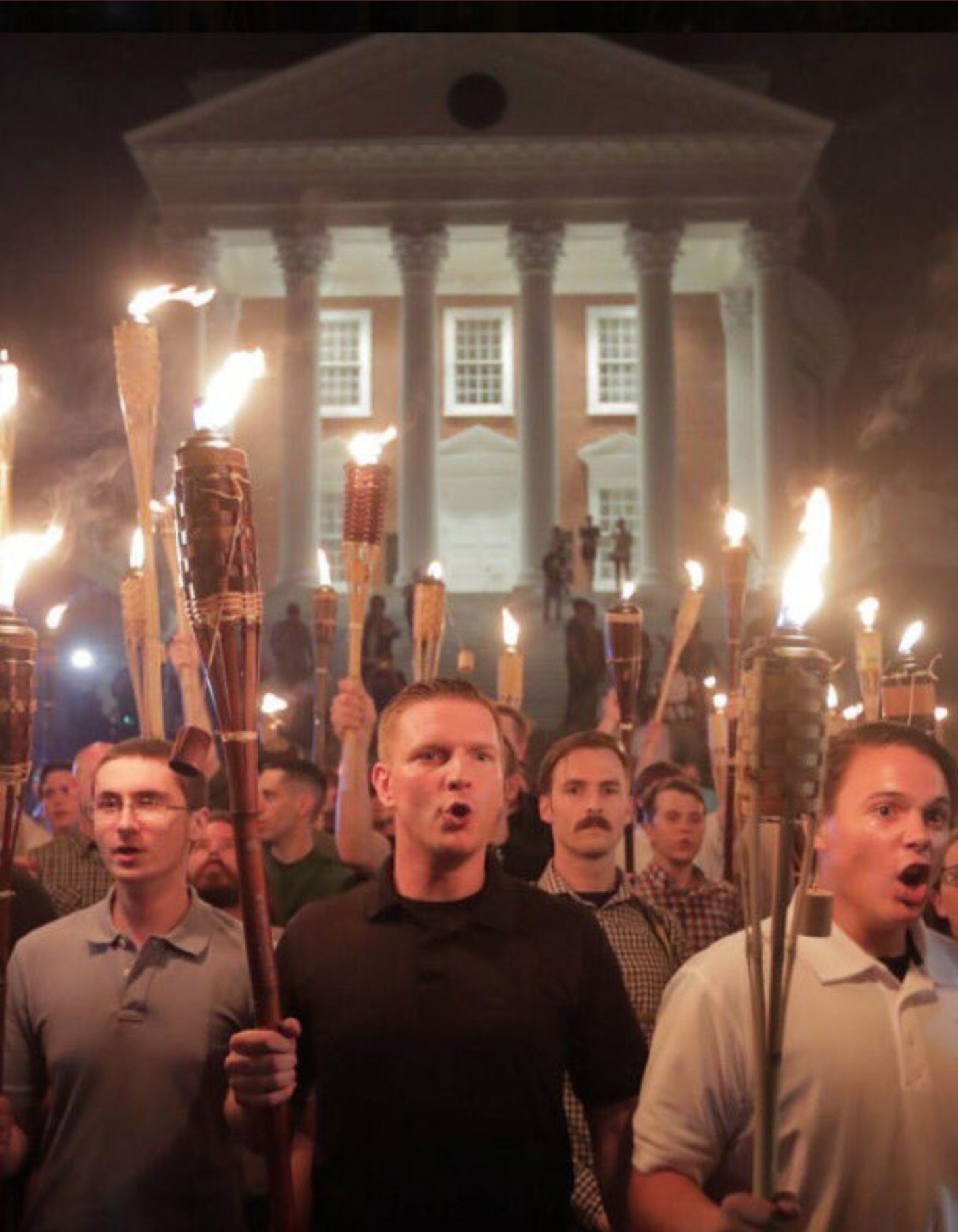
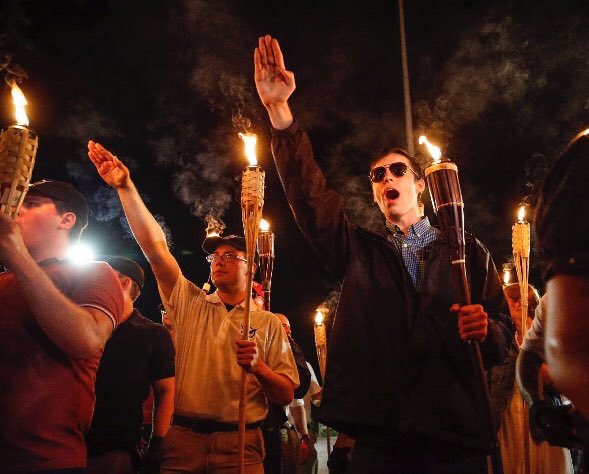
Last November, we saw the culmination of four decades of the Republican Party trying to have it both ways, profiting from the darkest forces in American culture while maintaining a respectable cosmetic distance. On Saturday, we saw the culmination of the election that produced. At least, I’m praying this is the culmination. But I’m not sure about anything anymore.
All true. But what disturbs me most is this: our enemies are idiots.
We feared the tyrannical despot with vast armies at his disposal; the cunning wormtongue who undermines strong leadership. Who knew it would be a swarm of lice with the brains of 8 year olds, nattering inanely for the “lulz”, going “kek, kek” with a cartoon frog as their symbol?
I read the Daily Stormer article titled Heather Heyer: Woman Killed in Road Rage Incident was a Fat, Childless 32-Year-Old Slut
*. Worse, I read the comments. My estimation of the intelligence of that crowd plummeted astonishingly, given that I had no high impression of them in the first place. I may have overestimated them in my comparison with 8 year olds — the pettiness, the viciousness, the amazing arrogance of these people patting themselves on the back for their “cleverness” and “wit” in going to great lengths to smear this woman they didn’t know, and who found villainy in the most innocent bits of information they could find (they dug up a photo of her with a black man — rage flared instantly) were appalling.
Stupidity, ignorance, and bigotry are the forces that are tearing apart the Republic.
*Not linking to it, obviously. One: Andrew Anglin doesn’t need the attention. Two: the Daily Stormer is currently featuring a front page splat from Anonymous, claiming they’ve taken it down (strangely, Anonymous says they haven’t). And three: GoDaddy, not the most progressive of hosting services, has finally had enough and announced that they are terminating their contract, and it’s going to be gone in 24 hours.