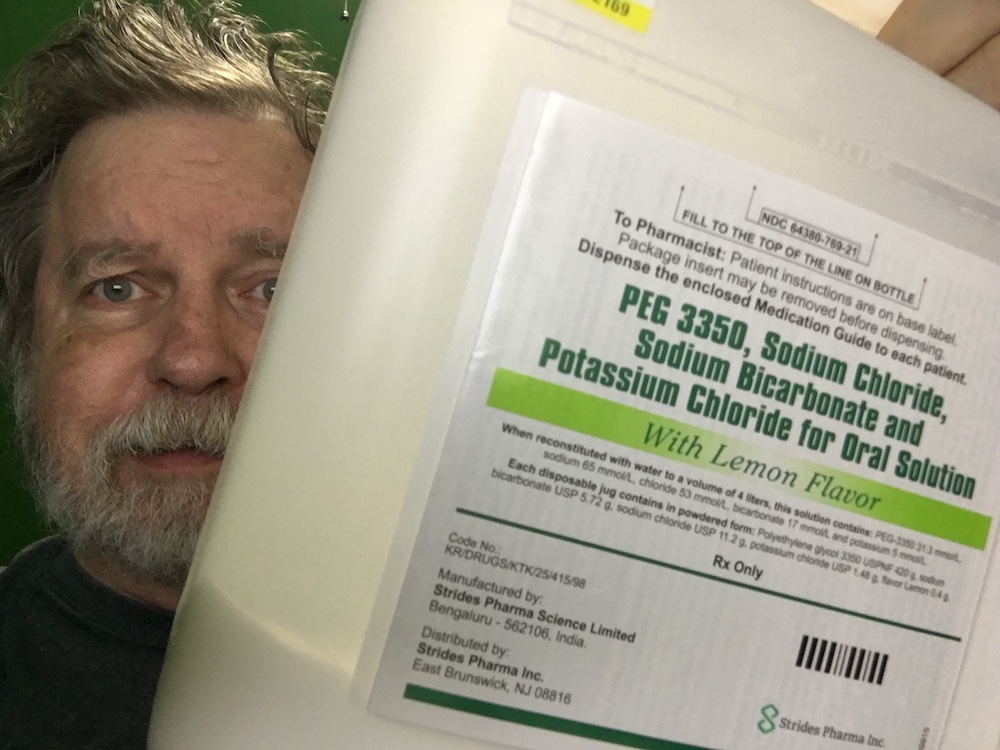
A few weeks ago, I had what is called a transient ischemic attack — don’t worry, it was brief, hasn’t returned, and the doctors examined me inside & out with embarrassing thoroughness, and have given me a clean bill of health — but it was terrifying. For a whole ten minutes, I couldn’t focus on a simple and familiar task on the computer. I knew what I had to do, if I was thinking normally, and I couldn’t figure out how to find basic, abstract functions on the screen in front of me. When it passed, then click-click-click it was a second’s work, and I couldn’t understand what had happened.
Today I read Ed Yong’s latest, and dear god, it is chilling.
On March 25, 2020, Hannah Davis was texting with two friends when she realized that she couldn’t understand one of their messages. In hindsight, that was the first sign that she had COVID-19. It was also her first experience with the phenomenon known as “brain fog,” and the moment when her old life contracted into her current one. She once worked in artificial intelligence and analyzed complex systems without hesitation, but now “runs into a mental wall” when faced with tasks as simple as filling out forms. Her memory, once vivid, feels frayed and fleeting. Former mundanities—buying food, making meals, cleaning up—can be agonizingly difficult. Her inner world—what she calls “the extras of thinking, like daydreaming, making plans, imagining”—is gone. The fog “is so encompassing,” she told me, “it affects every area of my life.” For more than 900 days, while other long-COVID symptoms have waxed and waned, her brain fog has never really lifted.
Of long COVID’s many possible symptoms, brain fog “is by far one of the most disabling and destructive,” Emma Ladds, a primary-care specialist from the University of Oxford, told me. It’s also among the most misunderstood. It wasn’t even included in the list of possible COVID symptoms when the coronavirus pandemic first began. But 20 to 30 percent of patients report brain fog three months after their initial infection, as do 65 to 85 percent of the long-haulers who stay sick for much longer. It can afflict people who were never ill enough to need a ventilator—or any hospital care. And it can affect young people in the prime of their mental lives.
AAAAAAAAAAAAIIEEE! That’s what I experienced…for ten minutes. But that’s one of the possible symptoms of long-COVID, and people go through it for months? I can’t imagine it. I wouldn’t want to go through that.
For example, Robertson’s brain often loses focus mid-sentence, leading to what she jokingly calls “so-yeah syndrome”: “I forget what I’m saying, tail off, and go, ‘So, yeah …’” she said. Brain fog stopped Kristen Tjaden from driving, because she’d forget her destination en route. For more than a year, she couldn’t read, either, because making sense of a series of words had become too difficult. Angela Meriquez Vázquez told me it once took her two hours to schedule a meeting over email: She’d check her calendar, but the information would slip in the second it took to bring up her inbox. At her worst, she couldn’t unload a dishwasher, because identifying an object, remembering where it should go, and putting it there was too complicated.
That’s exactly what I was trying to do! I was trying to put a presentation I had to give on my calendar/email, and somehow I couldn’t figure out where anything was or what steps I had to take. Even my brief experience with that was intolerably frustrating. It was so awful that immediately after I recovered my ability to act again, I checked into a hospital, despite feeling totally fine once it passed.
Thanks, Ed Yong. Now in addition to worrying about respiratory failure and death, I can dread losing my brain. I’ve managed to avoid getting COVID at all so far, and now I’m motivated to be even more scrupulous in my preventive efforts. It’s too bad my employers, a fucking university, has so little concern about the minds of their faculty and students.