It’s the last chapter of Nightjar’s series and it’s beautiful.
Chapter 11 – West Hill: A Tiny World, Part 2
Little things. Moss, rocks, wood, water. All so tiny and pretty.
It’s the last chapter of Nightjar’s series and it’s beautiful.
Little things. Moss, rocks, wood, water. All so tiny and pretty.
It’s time for the next chapter in Nightjar’s series.
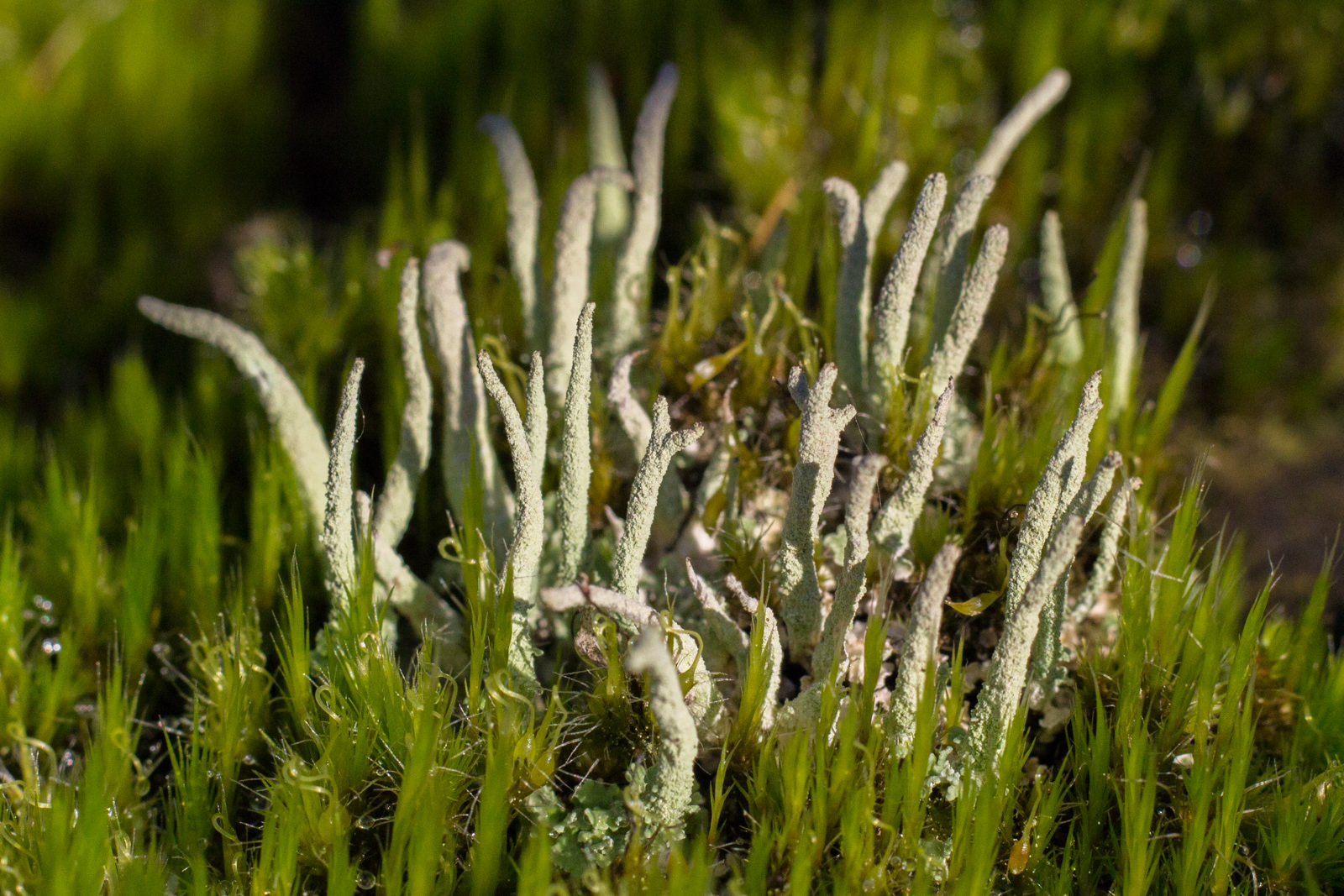
I often amaze myself with the amount of time spent and number of photos taken without looking past a square meter of space. A love for macro photography tends to do that to people, I guess. Coming down the West Hill I noticed a patch of moss and lichen. It was a small patch, but with so many things going on. Enough to fill the last two chapters of this series. First, I was fascinated by tiny lichen.
Nightjar has more rocks for us in the next chapter of her series.
There are quartzites and quartz veins on this hill, but this path isn’t the best to see quartz veins. Still it is easy to find bits of quartz here and there. Quartz hunting is always fun (although if you are like me it tends to mysteriously fill pockets).
Calling all rockhounds…Here’s Nightjar with the exciting next chapter in her series.
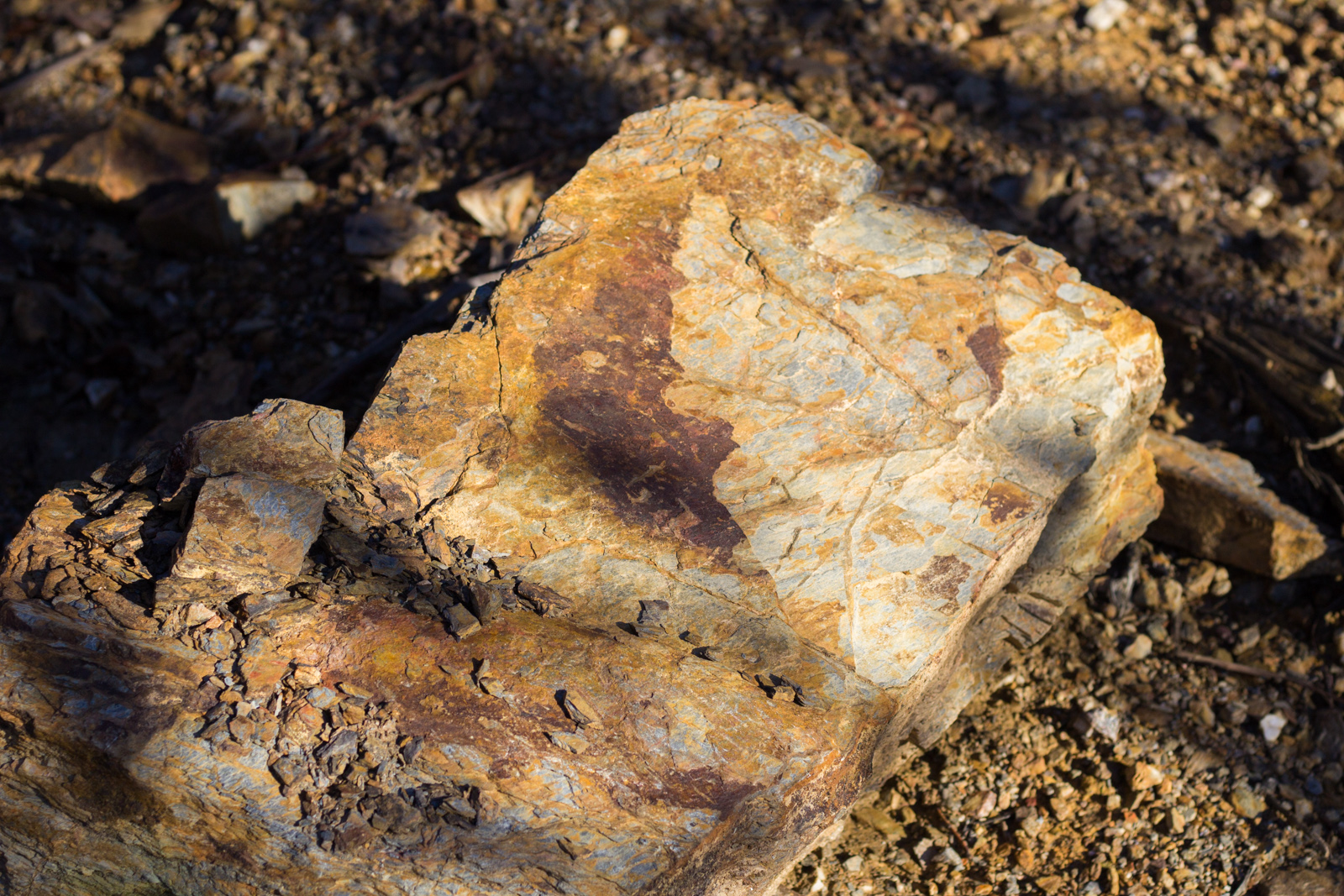
It’s not only the vegetation that is different here, the rocks are very different too. We left sedimentary rocks behind and we are now in the domain of metamorphic rocks. Mostly phyllites. Phyllite is a metamorphic rock originating from shale sediments, it’s soft and highly foliated, easy to split into sheets, and it smells of clay. The most wonderful characteristics? The colours and the sheen! You can’t mistake that sheen for anything else. Phyllites here are really pretty.
Here is Nightjar with the next chapter in her series.
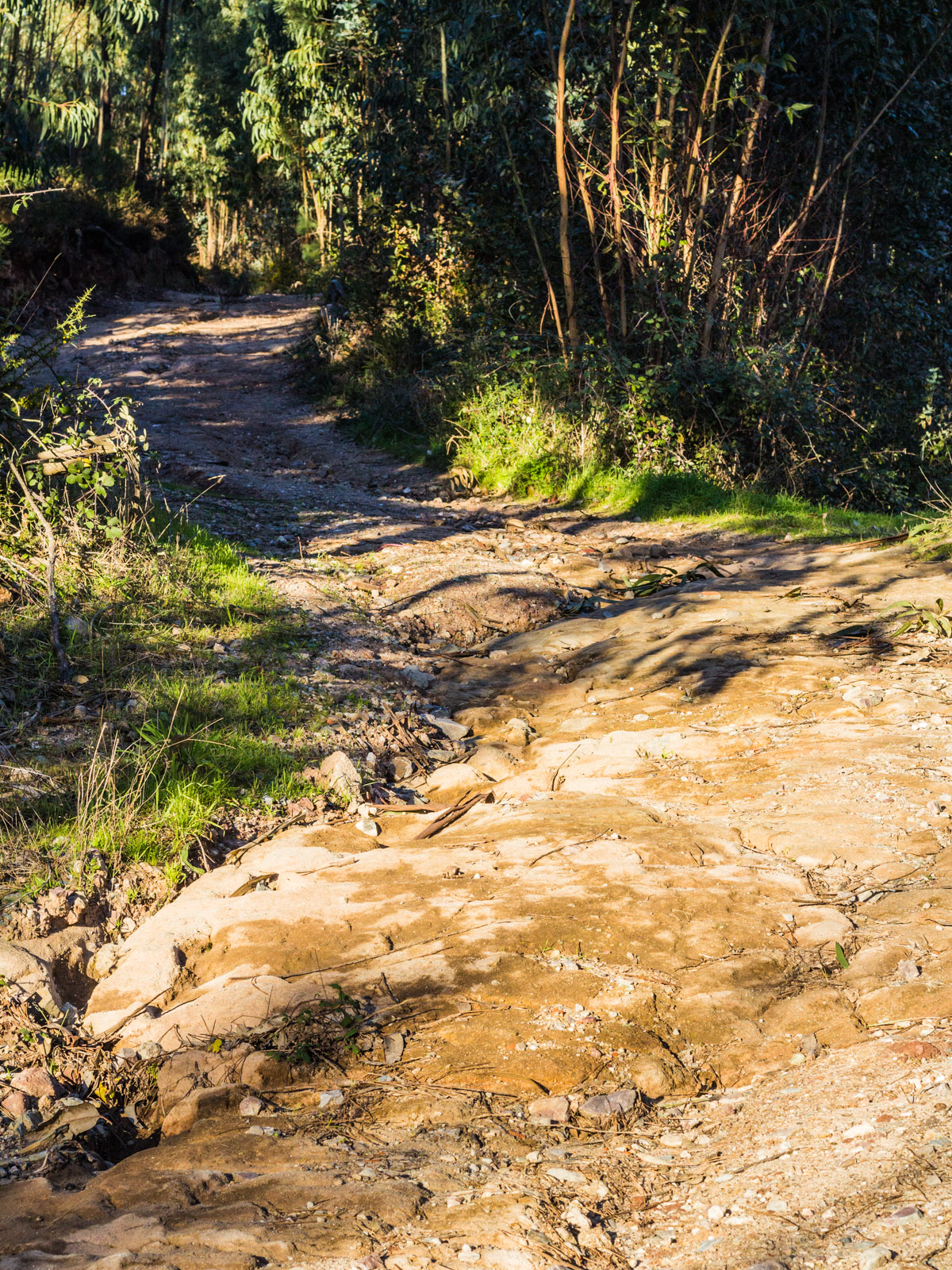
We are now at the southern base of the West Hill and the entrance looks inviting. We are in a totally different environment, the soils here are obviously more fertile and can sustain denser vegetation. Let’s go up.
This short informative video caught my eye the other day:
The CBC covered the artist a couple of years ago:
When Alex Witcombe decided to make a raptor from driftwood, he never thought it would get so much attention.
The Comox Valley resident enjoys strolling on beaches and looking at the driftwood, and that became his studio space.
“I like the gnarly pieces,” he says. “Ones with character.”
One summer day he was walking on Stories Beach in Campbell River when he was just inspired by the driftwood and got to work, building ‘Sheila the dinosaur’ in just a day.
And now he does animals, aliens, and imaginary beasts, too! He’s also on Instagram. Here’s a couple more samples, via Seashore Inspirations:


And my favourite:

It’s time for the next chapter by Nightjar and today we’re looking up to see the vast landscape around us.
I’m always searching for rocks, fossils, flowers and insects, and often I have to remind myself to look up at the views. But let’s look up from the ground now. The first thing we see are some windmills in ruins. There are several here and they were made with limestone, of course.
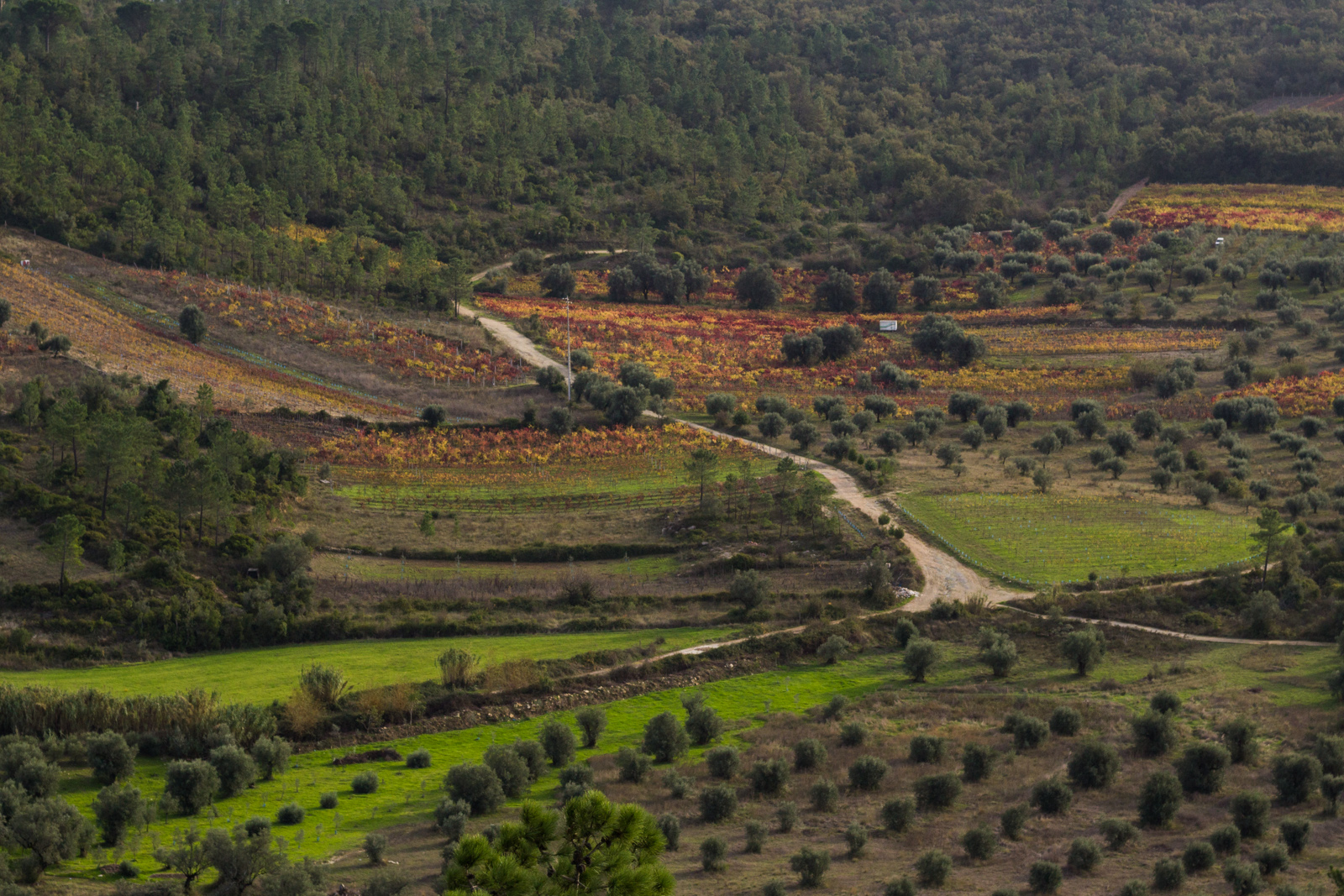
Looking down south we can see the vineyards in their full autumn display and some green fields. The round trees in the foreground and among the vineyards are olive trees. There are still many people here that produce wine and olive oil for their own consumption and to share with family. My family’s vineyard is a little bit more to the right and not shown in the photo.
On the foothill there is the village’s soccer field. A match was about to start!
Let’s look west now. Those houses are the northern part of the village and in the background we can see the West Hill. It looks very different in terms of vegetation density, doesn’t it? Can you guess what those trees are?
In the next chapter we will explore the West Hill and see this one from the other side!
Thanks, Nightjar.
Nightjar is here to share the next chapter of her series.
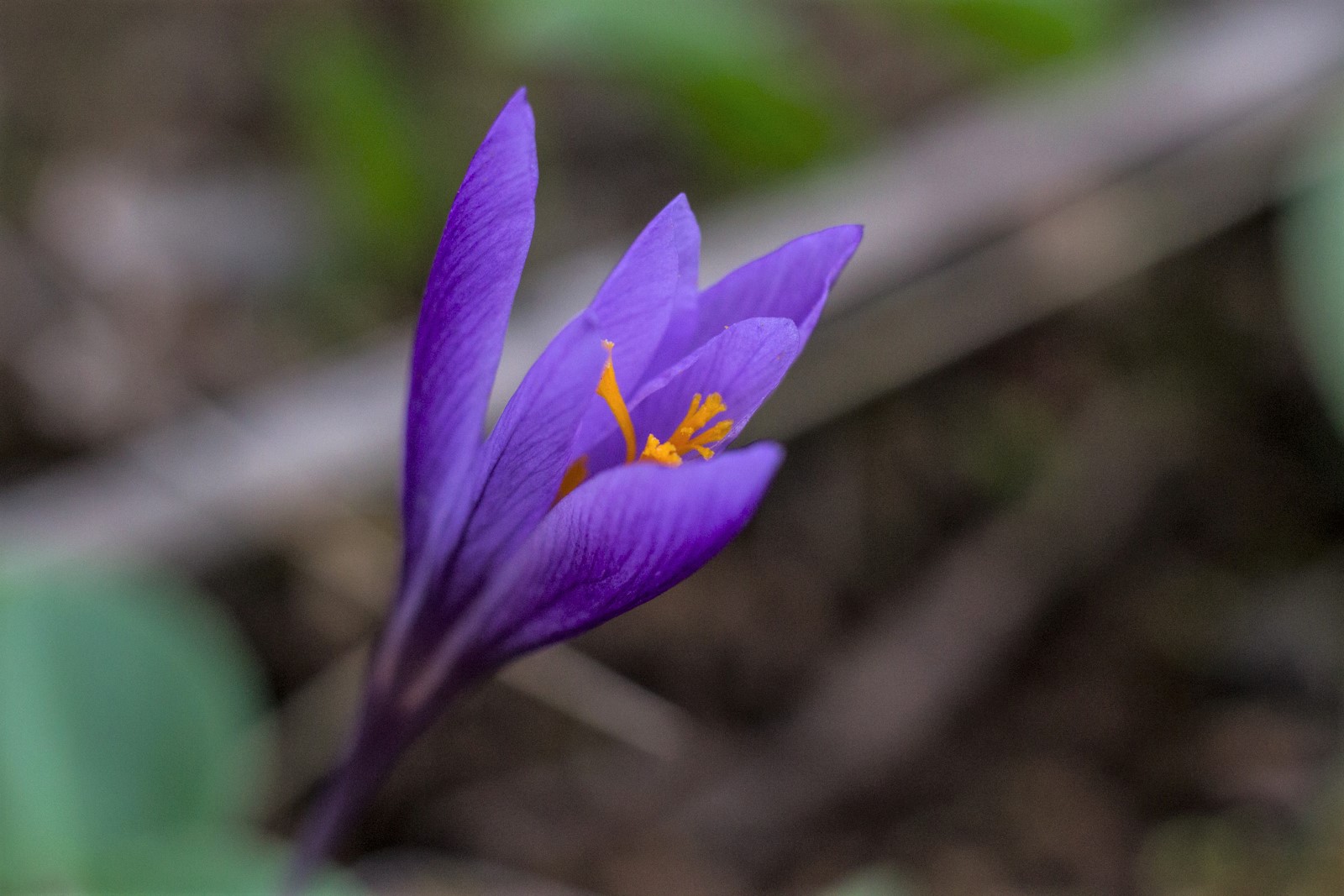
There is quite a lot of biodiversity on the top but what you see will of course depend on the time of the year you visit. Spring would be more interesting, and we would be looking for wild orchids, wild peonies (Paeonia broteri) and honeysuckles. In November we must content ourselves with the late crocus (Crocus serotinus)…
… and the autumn buttercup (Ranunculus bullatus).
Some plants have berries now, like the wild jasmine (Jasminum fruticans)…
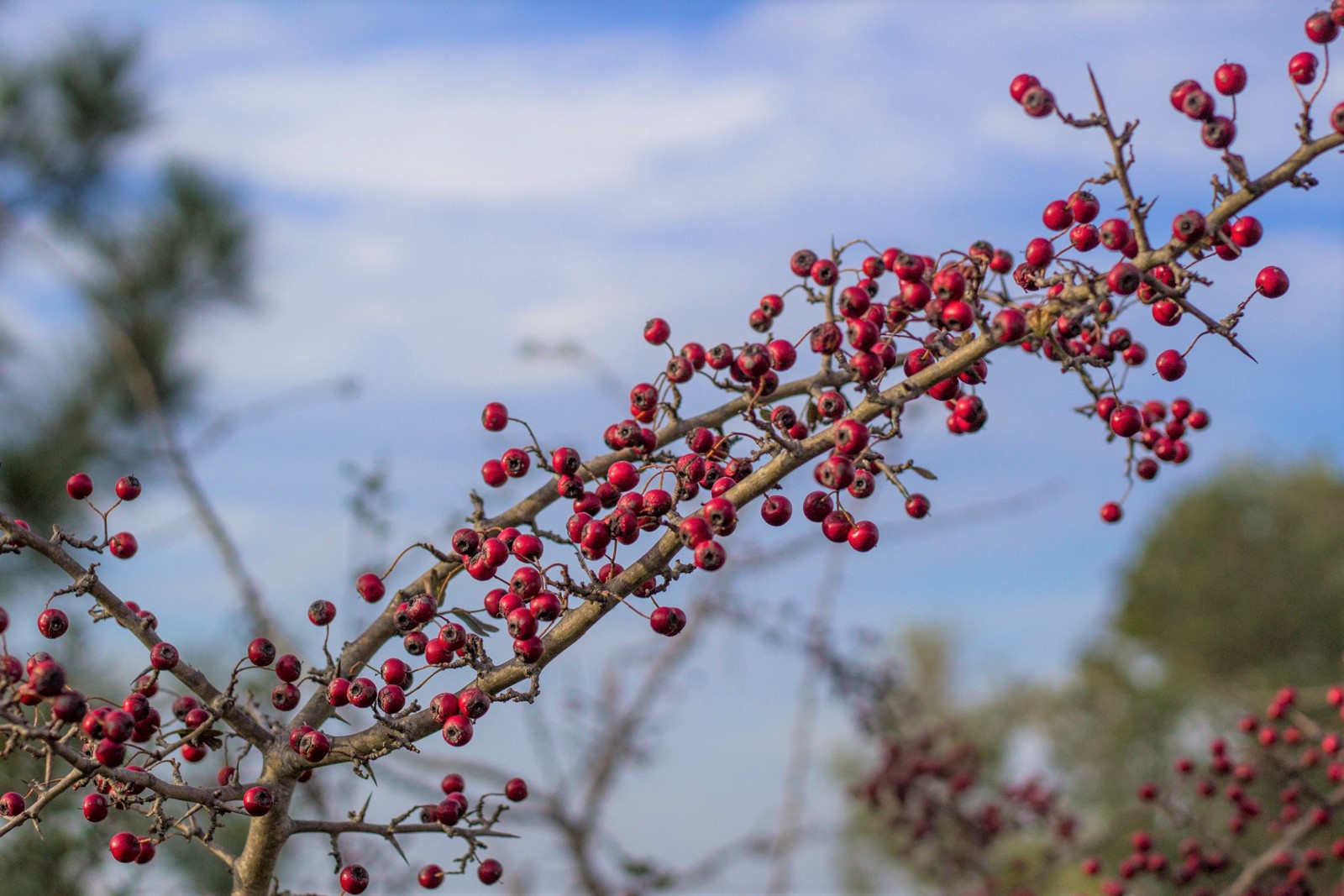
… or the hawthorn (Crataegus monogyna).
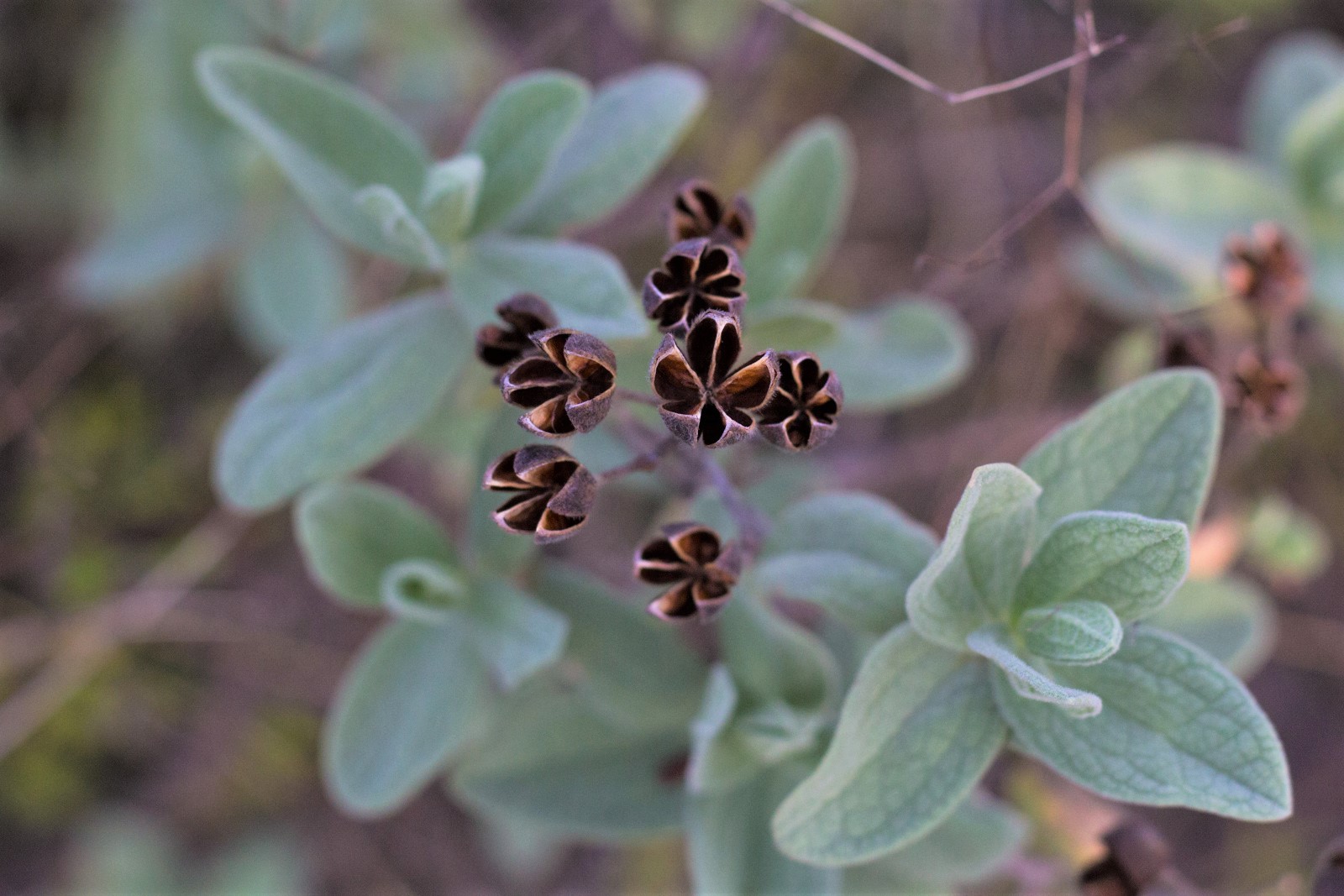
And seedcases of the grey-leaved cistus (Cistus albidus) make me want to come back in Spring for their pink flowers with yellow centers.
The next chapter will be the last here and we will just enjoy the views and see the hill we will explore next, on the other side of the village.
It’s time for Nightjar’s next chapter.
We have reached the top of the East Hill and so has this weevil, which found the perfect place to sunbathe. There aren’t many insects around this time of the year (November), visiting in spring or summer would certainly be better for insect watching purposes.
To get it out of the way, Charly started it. And reminded me of a delightful bit of propaganda reinterpretation. Puts a smile on my face every time.
The original FB post was this nice, succinct narrative:
The Soviet-Chinese propaganda posters seem to be the story of a beautiful interracial gay couple who met in a metallurgical, got married and had beautiful children and a farm
In any case, some explanation:
In October 1949, Mao Zedong announced the creation of the People’s Republic of China. China and Russia had long been allies and now, as communist states, that relationship was more important to both countries than ever before.
Communist propaganda has always been an integral part of that particular political structure, and Chinese-Russian propaganda attests to how much each country wanted to show the world they had a united front – China and Russia walking hand-in-hand, happy and gay, so to speak. The posters they used to get this idea across, however, may have been a bit too literal.
Here’s a quick sample of a couple of my favourites. Commentary at the link:


Slightly different, but no less amusing, captions available at imgur, too. If only real-life international relations were as friendly.
And too bad modern day propaganda doesn’t lend itself so easily to left-leaning reinterpretation (please point out if I’m wrong).
My little persimmon stopped stretching upwards and is now for a few days staying at more or less the same height. It has sprouted four leaves and stayed there. And it will probably stay there for a while now, nothing much outwardly visible will happen, while the seedling will be concentrating on building a hard wooden stem and nice strong roots instead of the mushy soft ones that consist of 90% of water. That is what allows for the quick growth at the beginning, by bloating cells with water – and it is visible now that the stem got actually a lot thinner than it was a week ago, as it lost its water content.
Since I want the tree to grow nice and straight upwards for a while, I turn it about 10-30° counterclockwise every evening. Also I am taking care to not over water it – it is colder on the windowsill than it is in the rest of the room, and I do not want the roots to rot. I will have to try to find information in my library about how much water persimmon actually wants to have – there are plants that need a lot and plants that need very little, and I have lost bonsai trees (sometimes quite valuable) to both under- and over-watering. So far it seems to prosper.
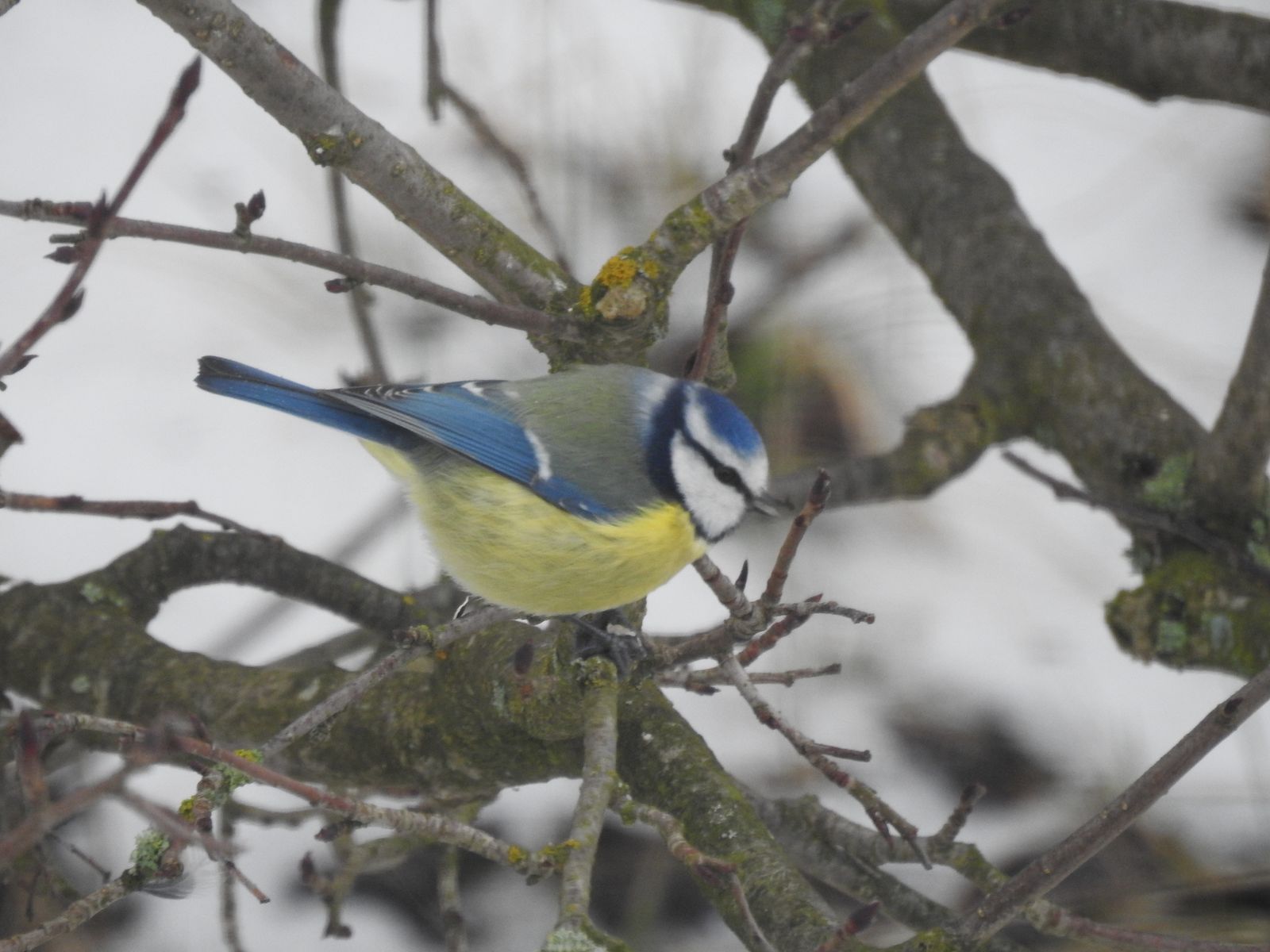
I do not have much luck with birdwatching lately, very little birds came visiting so far, and when some did, the pictures I have managed to make were totalski crapski. Finally some bullfinches have shown up too and I managed to get two useful pictures. Somewhat useful, because it is non-stop overcast and the light is, well, totalski crapski.
In addition to that the seasonal gloom is getting to me. Not as much as to despair or succumb to gloom, but enough not to feel like writing anything. Or even reading. Or doing anything else much. I have a whole folder full of pictures how to make a gingerbread house, and a few knife-making posts worth, but I just cannot convince myself they are worth writing. I wanted to play a PC game for a while and I cannot gather the enthusiasm needed even for that.
It’s time for the next Chapter in Nightjar’s series.
Fossil hunting!
I’ve had more luck in other trips, but it’s always easy to find some fossils, especially of ammonites. These are Early Jurassic sediments, laid nearly 200 million years ago. In primary school, I remember participating in a few school trips to this hill. I either imagined or saw a classmate discover a fish fossil, but the rock was too big to carry with us. We went to call the teacher and the rest of the group but when we came back, we couldn’t find the rock we had seen. At least that’s how we told the story afterwards and it still occasionally comes up in get-together dinners. Did that really happen or was it the result of the fertile imagination of a group of 7-year-olds? I’m afraid we’ll never know, but I always remember this story when I visit this place and I’m still secretly searching for that mysterious fish fossil. Sadly, I didn’t find it this time either.