From Nightjar,

R is for Red ©Nightjar, all rights reserved
Red.
In a wild poppy.

From Nightjar,
R is for Red ©Nightjar, all rights reserved
Red.
In a wild poppy.
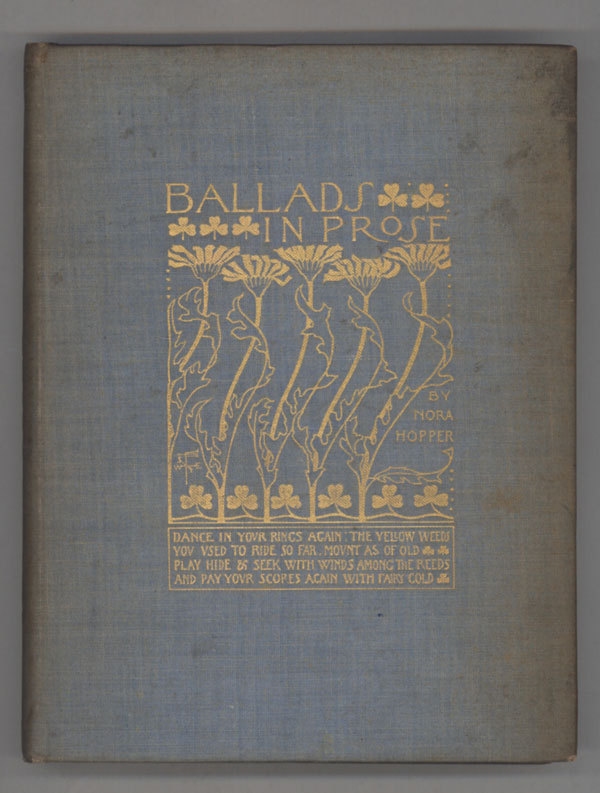
Ballads in Prose. Nora Hopper. Boston, Roberts Brothers: London, John Lane. 1894. First U.S.Edition.
via: Books and Art
Available to read at The Internet Archive
From Nightjar,

Q is for Quinacridone ©Nightjar, all rights reserved
Quinacridone.
A family of widely used synthetic pigments with a deep red to violet color range. This opening Petunia flower is reminiscent of some quinacridone shades.
Today’s book comes to us from Marcus’ collection (stderr) and it’s a classic. Published in 1920, the book is a complete culinary encyclopedia written by a master chef. Its art deco binding is beautiful and being a first edition, the book is quite rare. It’s in excellent condition, too, with its colours still bright and its tactile cover still inviting. It looks delicious.
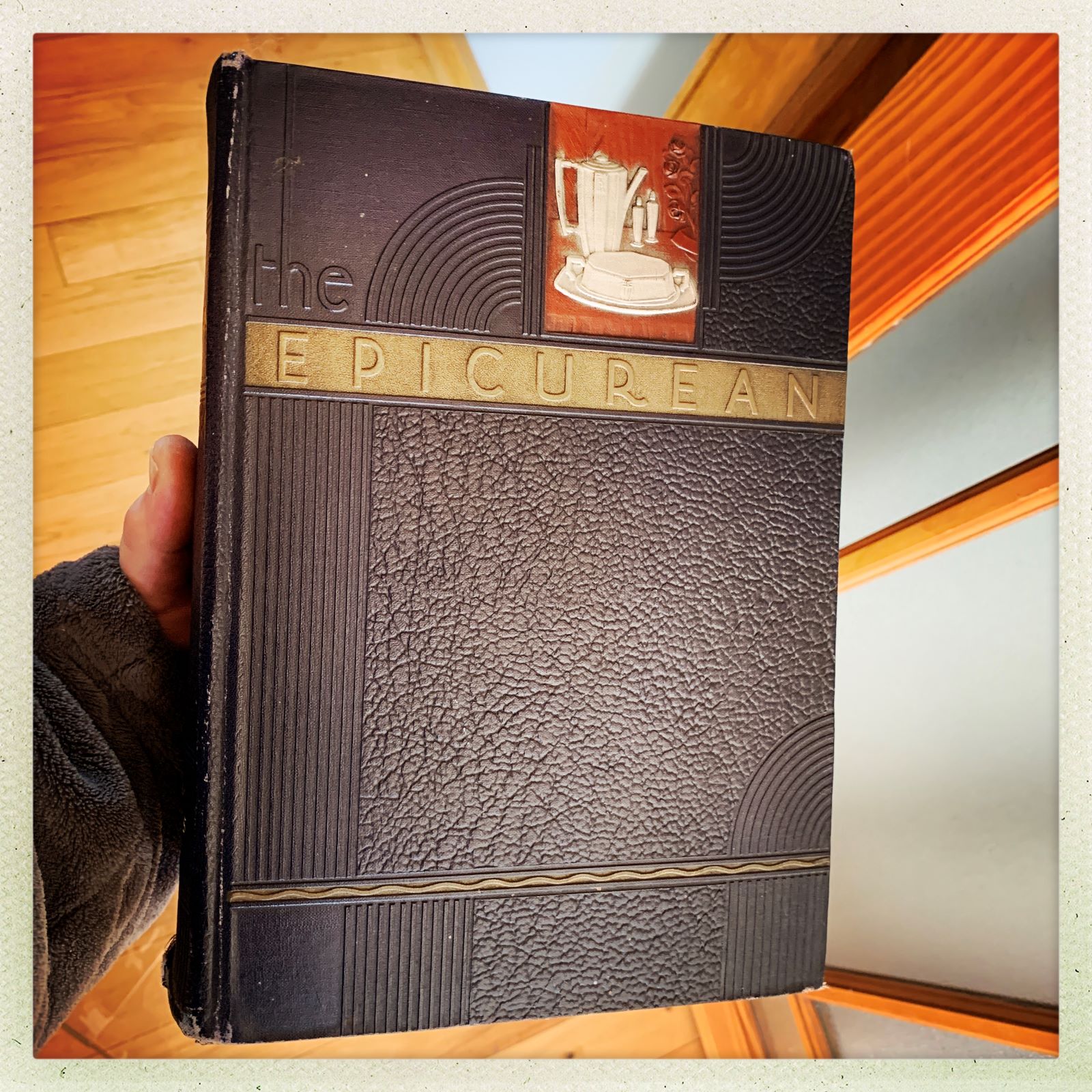
Charles Ranhofer. The Epicurean: A Complete Treatise of Analytical and Practical Studies on the Culinary Art. Including… a Selection of Interesting Bills of Fare of Delmonico’s, from 1862 to 1894. Chicago, Hotel Monthly Press, (1920).
The book has been republished countless times since 1920 and remains a comprehensive guide to cooking and entertaining, The book contains 800 illustrations, including some that are full-page. I’ve included a sampling below the fold.
The book is available to read at The Internet Archive.
from Nightjar,

P is for Purple ©Nightjar, all rights reserved
Purple.
As displayed by an Iris flower.

Photo by Dag Peak, flickr CC
One of my favourite perspectives for photographing trees is looking up, way up, because a tall tree silhouetted against the sky is majestic. In winter their uppermost bare branches create beautiful patterns in the sky that look sculptural to me. Some trees, though, create sculptural bare spaces in the summer, too, through a phenomenon known as “crown shyness.”
If you look up toward certain types of towering trees—including eucalyptus, Sitka spruce, and Japanese larch—you may notice a unique phenomenon: the uppermost branches don’t touch. Known as “crown shyness,” this natural occurrence results in rupture-like patterns in the forest canopy that seem to perfectly outline the trees’ striking silhouettes.
Numerous scientists have been studying crown shyness since the 1920’s and several theories have been put forward, but no one knows for certain what causes it.
One possibility is that it occurs when the branches of trees (particularly those in areas with high winds) bump into each other. Another suggested explanation is that it enables the perennial plants to receive optimal light for photosynthesis. Perhaps the most prominent theory, however, is that the gaps prevent the proliferation of invasive insects.
My favourite theory is the one that postulates the trees are trying to avoid bumping into one another. It seems so polite and I can imagine woody conversations along the lines of “oops – so sorry old chap – didn’t mean to crowd you. I’ll just move over here.”
I think it’s stunning and hope I get a chance to see it someday. If you’re lucky enough see it, please take a photo and share.
Here’s one last photo from the story, but I encourage you to check out the full story and look at all the photos. The link is below.
The full story and more photos are at: My Modern Met
My thanks to rq for sending this story my way.

Harvey Sutherland. The Book of Bugs. New York & London, Street & Smith, 1902.
via: The Internet Archive
from Nightjar,

O is for Orange ©Nightjar, all rights reserved
Orange.
As displayed by a California Poppy.

Mary Dickerson Donahey. Down Spider Web Lane. Illustrations by Gertrude Alice Kay. New York, Barse & Hopkins, 1909.
cover photo via: Abe Books
Available to read at Children’s Books Online (This is a fabulous site. They have lots of vintage children’s books available and you can read them all.)
from Nightjar, (photo is below the fold because there’s a spider) [Read more…]

William Earl Hodgson. How to Fish. London, A. & C. Black, 1907.
via: Biblio
Available to read at The Internet Archive
*This post has been updated due to the original photo file sitting inappropriately. It has been fixed.

M is for Maroon ©Nightjar, all rights reserved
Maroon.
A dark brownish red that gets its name from chestnuts (marron, in French). It can also be found simply in the soaked bark of maritime pines.

L is for Lavender ©Nightjar, all rights reserved
Lavender.
A light purple representing the color of the flower with the same name. There were no lavender flowers anywhere to be seen when I got to the letter L in mid-November, but a trip to the village’s limestone formation revealed a nice surprise. Little lavender-colored crocus flowers (Crocus serotinus) work just as well.

![Patrice78500 (Own work) [Public domain], via Wikimedia Commons](https://commons.wikimedia.org/wiki/File%3ADryobalanops_Aromatica_canopy.jpg)