
W. Crispin Sheppard. The Rambler Club’s Winter Camp. Philadelphia, The Penn publishing company, 1910.

W. Crispin Sheppard. The Rambler Club’s Winter Camp. Philadelphia, The Penn publishing company, 1910.

Winter Poems by Favorite American Poets. Illustrated. Boston, Fields, Osgood, & Company, 1871.

C.B. Burleigh. All Among the Loggers or Norman Carver’s Winter in a Lumber camp. Boston, Lothrop, Lee & Shepard co., 1908.
Earlier this year VBFF sent in a chainsaw sculpture from a nearby city tour she’d taken. Today, VBFF has sent us a couple of other chainsaw made sculptures from the same visit. Most of the statues were carved in place around the community, hoping to draw shoppers to the area and promote tourism. Here’s the link to the Tree Trunk Tour in London, Ontario, if you’d like to know more about the sculptures and how they’re made.
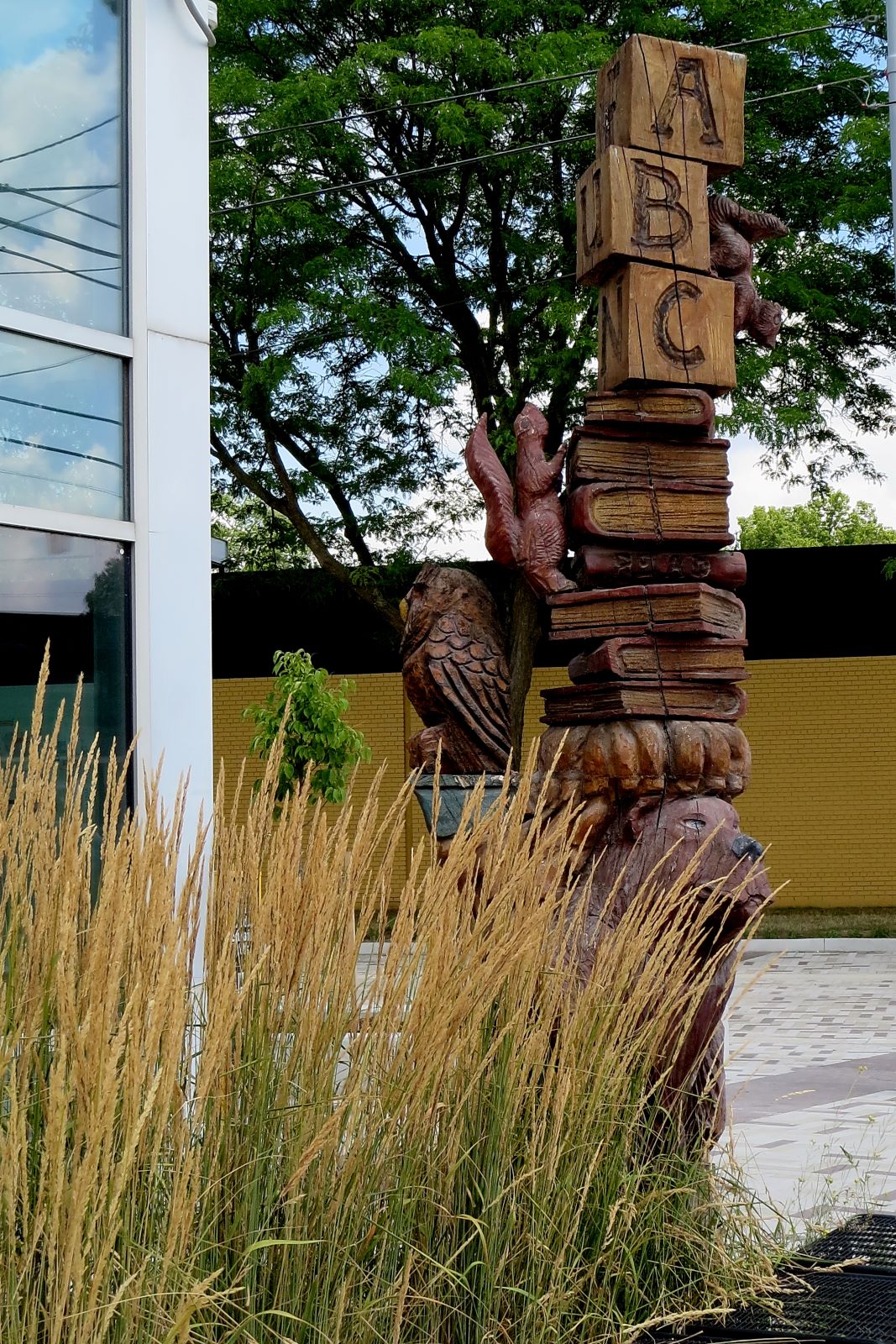
©VBFF, all rights reserved

©VBFF, all rights reserved

Sad little Minion and his faithful dog friend, ©voyager, all rights reserved
Can we talk about Christmas decorations?
I like seeing the houses in my neighbourhood all dolled up for the holidays. I find it cheerful, especially on gloomy days like today when Jack and I are dealing with bad weather (5°c with heavy rain.) Some decorations, though, are better than others, and I might be an old grump for complaining about this, but I don’t like inflatable lawn balloons. Most of them are powered by pumps and require hydro to run, and so most people who have them only run them in the evening, which seems smart and thrifty. The trouble is that these balloon decorations turn into limp puddles of plastic that look like shit when they’re not operating, which is most of the time. I think they look sad and messy.
I don’t do a lot of decorating, but I do did have a set of LED lights built into the railings when we rebuilt the porch 2 years ago. They were connected to a wi-fi controller inside the house and were operated by an app on my phone and tablet. I say were, not are because 2 nights ago someone disconnected them from the controller and tore them off one side of my porch. They’re no good to anyone without the controller, so it’s just vandalism, and it will be expensive to repair. It isn’t the first time we’ve had things stolen from our front yard. We live near a high school, and kids will be kids. Usually, we put the nice stuff in the fenced back yard, but I never suspected they would tear apart the housing and steal a built-in LED light strip that is of no use to someone else. Our guard dog (Jack) is older now and sleeps hard. I think it’s time to invest in a home camera system and a nice big sign that says, “Smile. You’re on Camera.”
I try to live in a state of gratitude and maintain a cheerful disposition. Some days it’s more complicated than others.

This Santa isn’t connected to hydro. I think he just needs a good blow and then insert the plug to keep the air in. No daily pumping required. Good Santa.

Edith Francis Foster. Marigold’s Winter. Illustrated by the author. Boston, D. Estes & company, 1908.
I have something very special from Nightjar for this Monday morning.
We had a rainy November, in fact I can’t remember a month in the recent past when it rained so much. The rain completely flooded the fields behind our house and again, I can’t remember when this last happened. I’m told by older people that this is what November used to be like and how the fields used to look like this time of the year. Makes sense. Before “normal” and “drought” became synonymous. Today we had a bit of sun and I had to go for a walk with my camera. While taking these photos all I could think of was Caine, for reasons I don’t think I have to explain. Hopefully the photos speak for themselves. Came back home with tears in my eyes and had to share this with you all. Water is Life. ♥
Your photos are beautiful, and they also make me think about Caine. She enjoyed photographing water in its many forms. I know she would love these pictures. Thank you so much for sharing them, Nightjar.

©Nightjar,all rights reserved

Charles D.G. Roberts. In The Deep Of The Snow. New York, T. Y. Crowell & co, 1907.
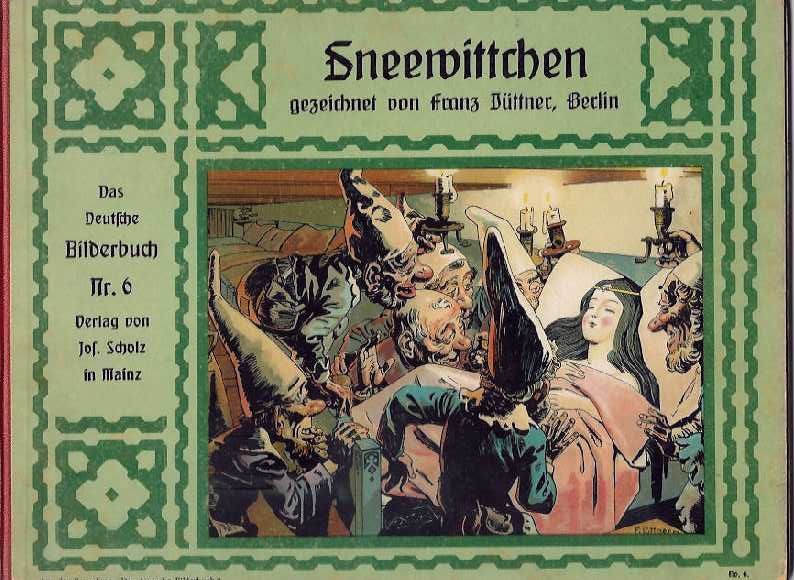
Grimm, Jakob / Grimm, Wilhelm: Sneewittchen / [Jakob und Wilhelm Grimm.] Gezeichnet von Franz Jüttner. – (Scholz’ Künstler-Bilderbücher ; 6). Mainz 1905. Scholz.
According to a study group in Lohr, Bavaria, Snow White is based on Maria Sophia von Erthal, born on 15 June, 1729 in Lohr am Main, Bavaria. She was the daughter of 18 th century landowner, Prince Philipp Christoph von Erthal and his wife, Baroness von Bettendorff.
After the death of the Baroness, Prince Philipp went onto marry Claudia Elisabeth Maria von Venningen, Countess of Reichenstein, who was said to dislike her stepchildren. The castle where they lived, now a museum, was home to a ‘talking mirror’, an acoustical toy that could speak (now housed in the Spessart Museum). The mirror, constructed in 1720 by the Mirror Manufacture of the Electorate of Mainz in Lohr, had been in the house during the time that Maria’s stepmother lived there.The dwarfs in Maria’s story are also linked to a mining town, Bieber, located just west of Lohr and set among seven mountains. The smallest tunnels could only be accessed by very short miners, who often wore bright hoods, as the dwarfs have frequently been depicted over the years.
The Lohr study group maintain that the glass coffin may be linked to the region’s famous glassworks, while the poisoned apple, may be associated with the deadly nightshade poison that grows in abundance in Lohr.
A German historian has also postulated that it may be the true story of Margarete VonWaldeck. (via ancient origins.net/myths)
According to Sander, the character of Snow White was based on the life of Margarete von Waldeck, a German countess born to Philip IV in 1533. At the age of 16, Margarete was forced by her stepmother, Katharina of Hatzfeld to move away to Wildungen in Brussels. There, Margarete fell in love with a prince who would later become Phillip II of Spain.
Margarete’s father and stepmother disapproved of the relationship as it was ‘politically inconvenient’. Margarete mysteriously died at the age of 21, apparently having been poisoned. Historical accounts point to the King of Spain, who opposing the romance, may have dispatched Spanish agents to murder Margarete.
So what about the seven dwarfs? Margarete’s father owned several copper mines that employed children as quasi-slaves. The poor conditions caused many to die at a young age, but those that survived had severely stunted growth and deformed limbs from malnutrition and the hard physical labour. As a result, they were often referred to as the ‘poor dwarfs’.
Whether true or not, the story has persisted into modern times thanks to Walt Disney and his 1937 classic telling of the tale. I’ve included the artwork done by Franz Juttner, a German artist, in 1905 for the Sneewittchen book pictured above.
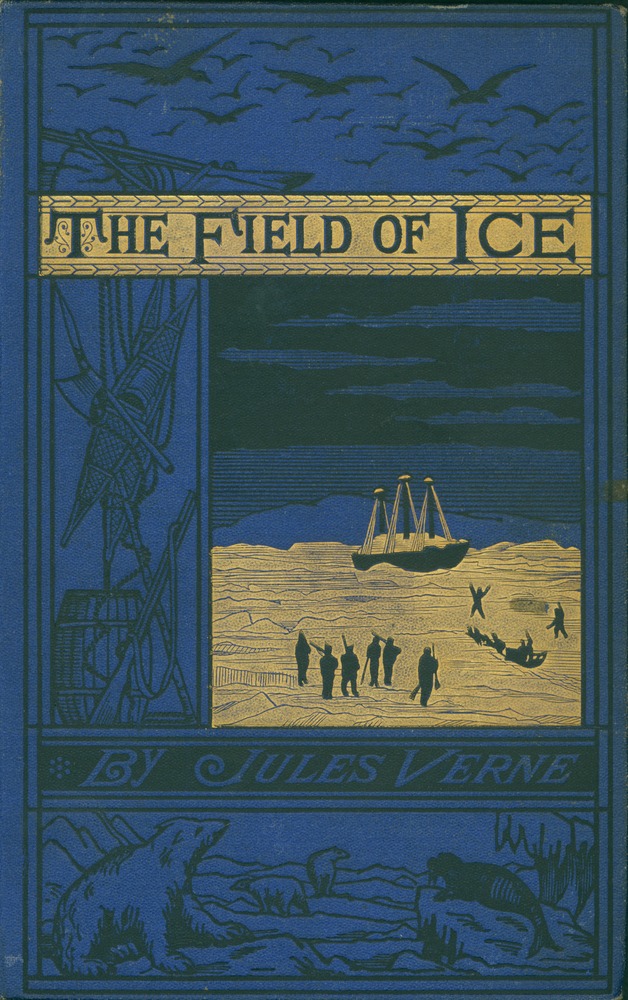
Jules Verne. The Field of Ice. London, New York, George Routledge & Sons, 1875.
via: The George Smathers Library at the University of Florida
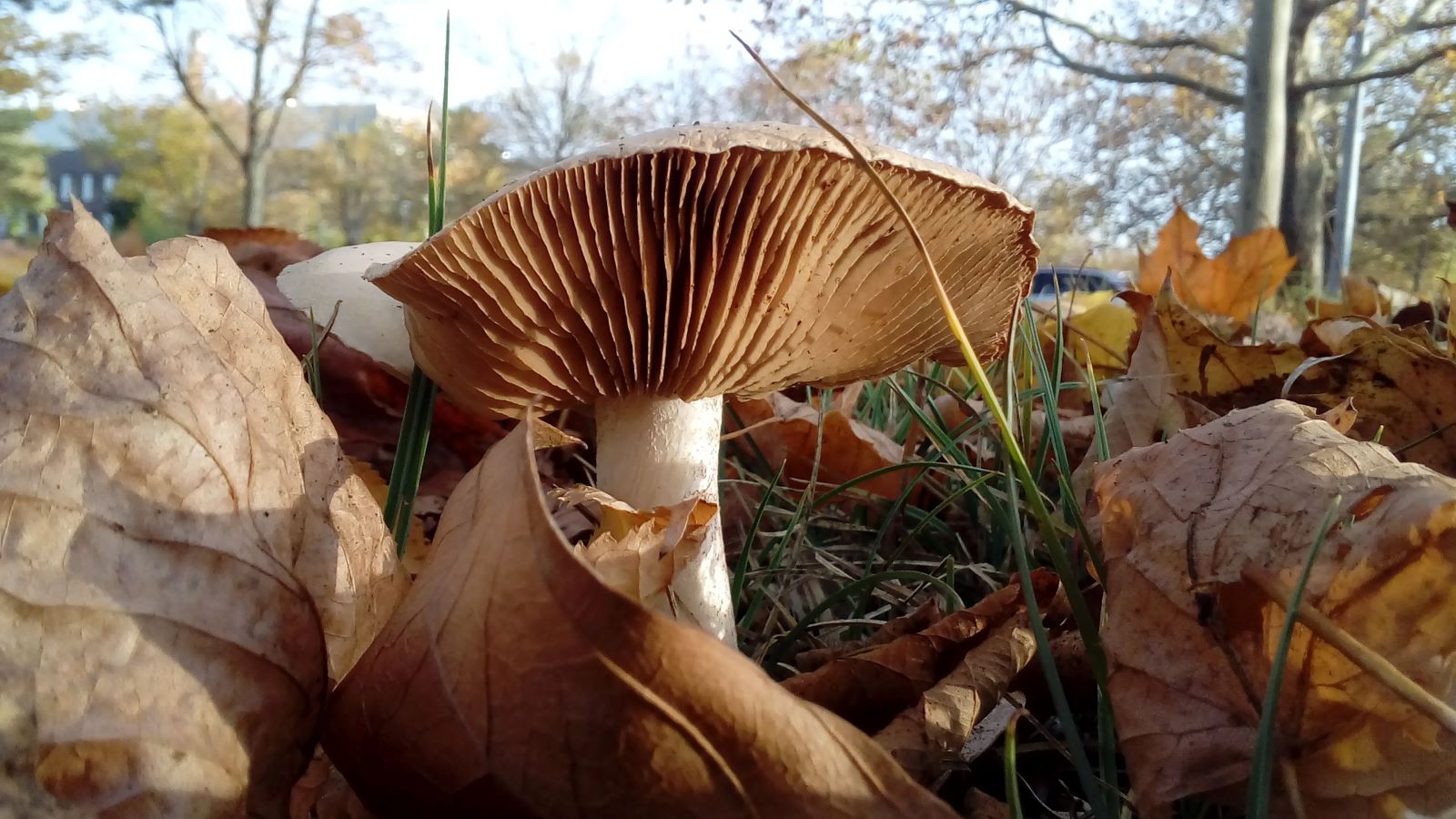
Avalus has been photographing some delicate mushrooms for us.
Mushrooms. With the end of October, Mainz remembered it was once woodland and mushrooms popped up everywhere.

Mushroomates ©Avalus, all rights reserved

©Avalus, all rights reserved

©Avalus, all rights reserved
©Avalus, all rights reserved

©Avalus, all rights reserved

Mushroom’s end ©Avalus, all rights reserved

Julia McNair Wright. On a Snowbound Train. New York, American Tract Society, 1893.
via: The Internet Archive
From Avalus,
In Dörrenbach (in the palatinate) there was this house. I find it amusing.

©Avalus, all rights reserved