One Skein.

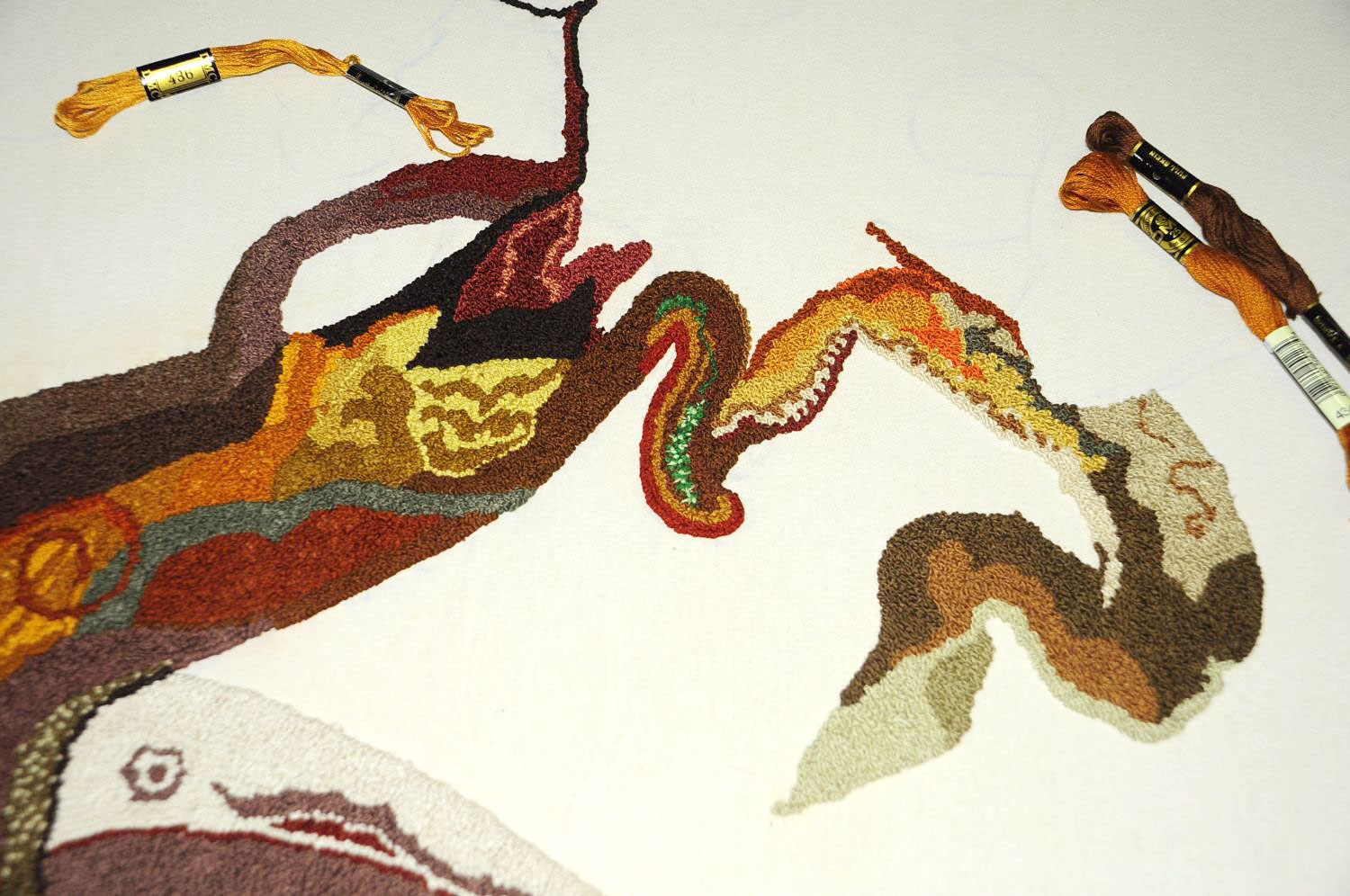
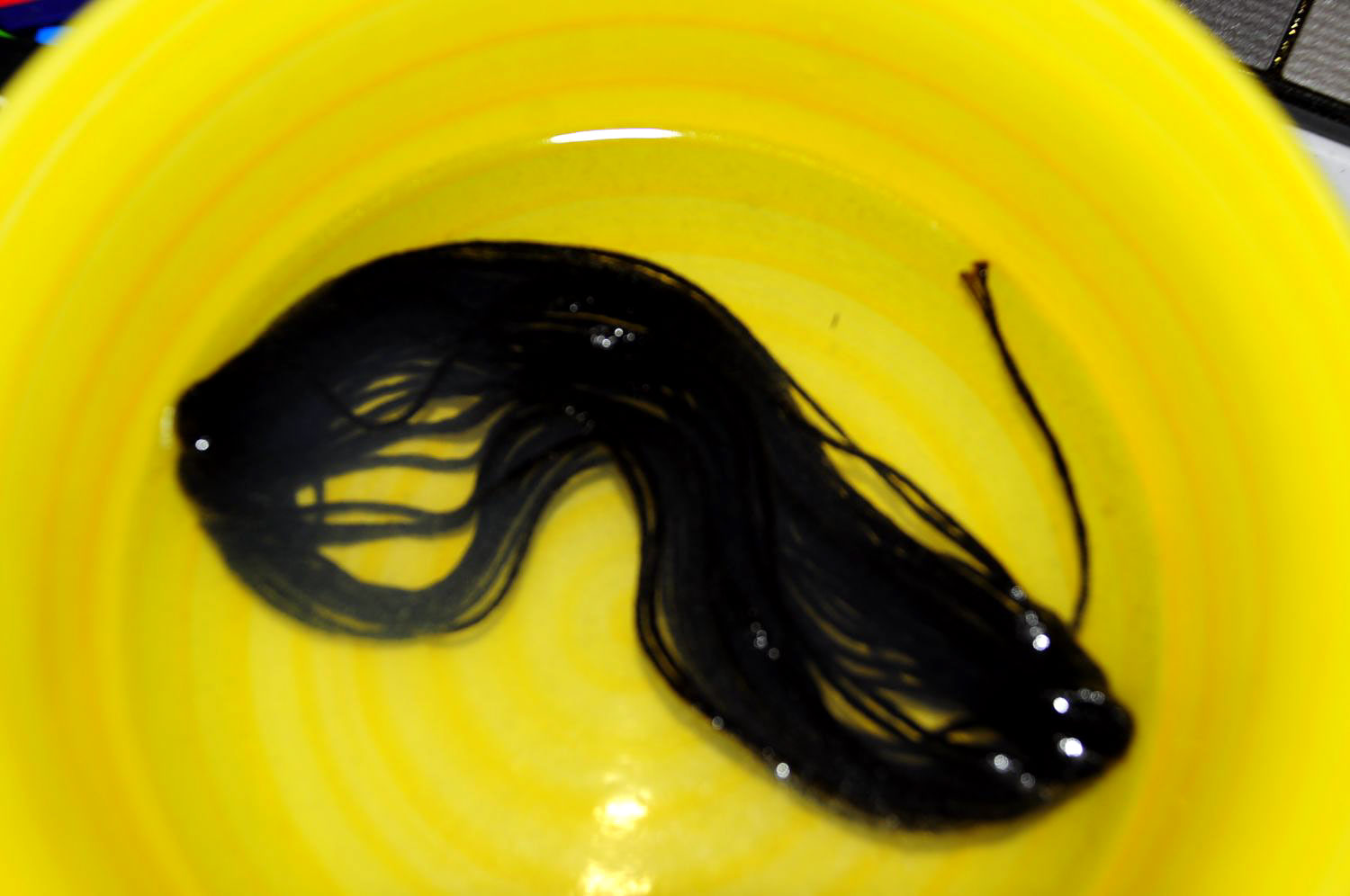
That patch of very dark brown? That’s one skein. (Approx. 1 x 2″) There are a couple of bald spaces though, so time to pre-wash another skein of DMC 3371, because it’s prone to colour bleed. That takes me to 163 skeins used. Back to work!

© C. Ford, all rights reserved.

Karl Blossfeldt.

Karl Blossfeldt, Cucurbita sp., pumpkin, tendrils (courtesy D.A.P.).

Karl Blossfeldt, Polystichum munitum, western swordfern, young furled frond (courtesy D.A.P.).

As someone who gets obsessive about shooting plants, all the various bits, and finds them endlessly fascinating, Karl Blossfeldt has long been a revered icon. There’s a new book of his photos out, and they remain some of the most beautiful botanical photos ever taken. That beauty is magnified by the fact that Blossfeldt was using a homemade camera.

Karl Blossfeldt originally made detailed photographs of plant specimens as teaching tools for his applied art students, building his own camera to magnify the sculptural qualities of seedpods, pumpkin tendrils, and horsetail shoots at up to 45 times their size. The 1928 publication of his book Urformen der Kunst (Art Forms in Nature) suddenly brought the Berlin professor widespread artistic acclaim, with critic and philosopher Walter Benjamin describing the “astonishing plant photographs” as revealing “the forms of ancient columns in horse willow, a bishop’s crosier in the ostrich fern, totem poles in tenfold enlargements of chestnut and maple shoots, and gothic tracery in the fuller’s thistle.”

[…]

We’re so familiar with macrophotography today that it may be hard to return to the early-20th-century context and imagine how these images would have startled viewers with their revelations of intricate beauty in even the smallest bud of a violet. Yet they remain compelling examples of looking closely at the world around us.

I love macro photography, and indulge in it often enough, but for me, none of it takes away from Blossfeldt’s work. There’s a joy and purity to his photos which are simply unparalleled.

Hyperallergic has the full story.

Still Workin’

Work, Work, Work 80. After playing about a bit, I decided to use DMC Perle 3 for the foliage; I have it in abundance, thanks to the generosity of Kestrel, and in all the colours needed for Autumn foliage. I hadn’t noticed at the time Kestrel sent me all this bounty, but all of the Perle is vintage, all the labels are old style, and there’s not a bar code in sight! As I’m already using a good amount of vintage threads, that makes the choice all the better. The quality of it is fantastic, and it’s a joy to use. Current Hours: 1,098.5 1,100.* Skeins Used: 161. For those who don’t know, one skein is 8 meters (8.7 yards). Click for full size.

*Updated to include today’s hours.

© C. Ford.

The Null Hypothesis.

All images © Jan Cieślikiewicz.

All images © Jan Cieślikiewicz.

Null Hypothesis is Jan Cieślikiewicz’s series, and they are stunning photos, most of them likely to leave you with an open-mouthed “wtf?” as they tend to evoke many questions, and a desire for more information.

The other series are just as worthy of your attention:

All images © Jan Cieślikiewicz.

All images © Jan Cieślikiewicz.

Many of them are delightfully inexplicable without further information, which is a wonderful challenge for a species that is constantly on the hunt for facts and absolutes, and insists on narrative. Go have a wonderful wander, and poke your inner existential angst a bit.

Jan Cieślikiewicz Photography.

Tied In.

Work, Work, Work 79. Got the branch tied in, now, it needs to be reseated in the frame so I don’t have to do contortions to reach. Time for more tea. One nice thing about DMC is that they never change numbers, so even if you do find a nice pile of vintage, you still know what colours you have. Current Hours: 1,087.5. Skeins Used: 159. Click for full size.

© C. Ford, all rights reserved.

Aauugh, Some People…

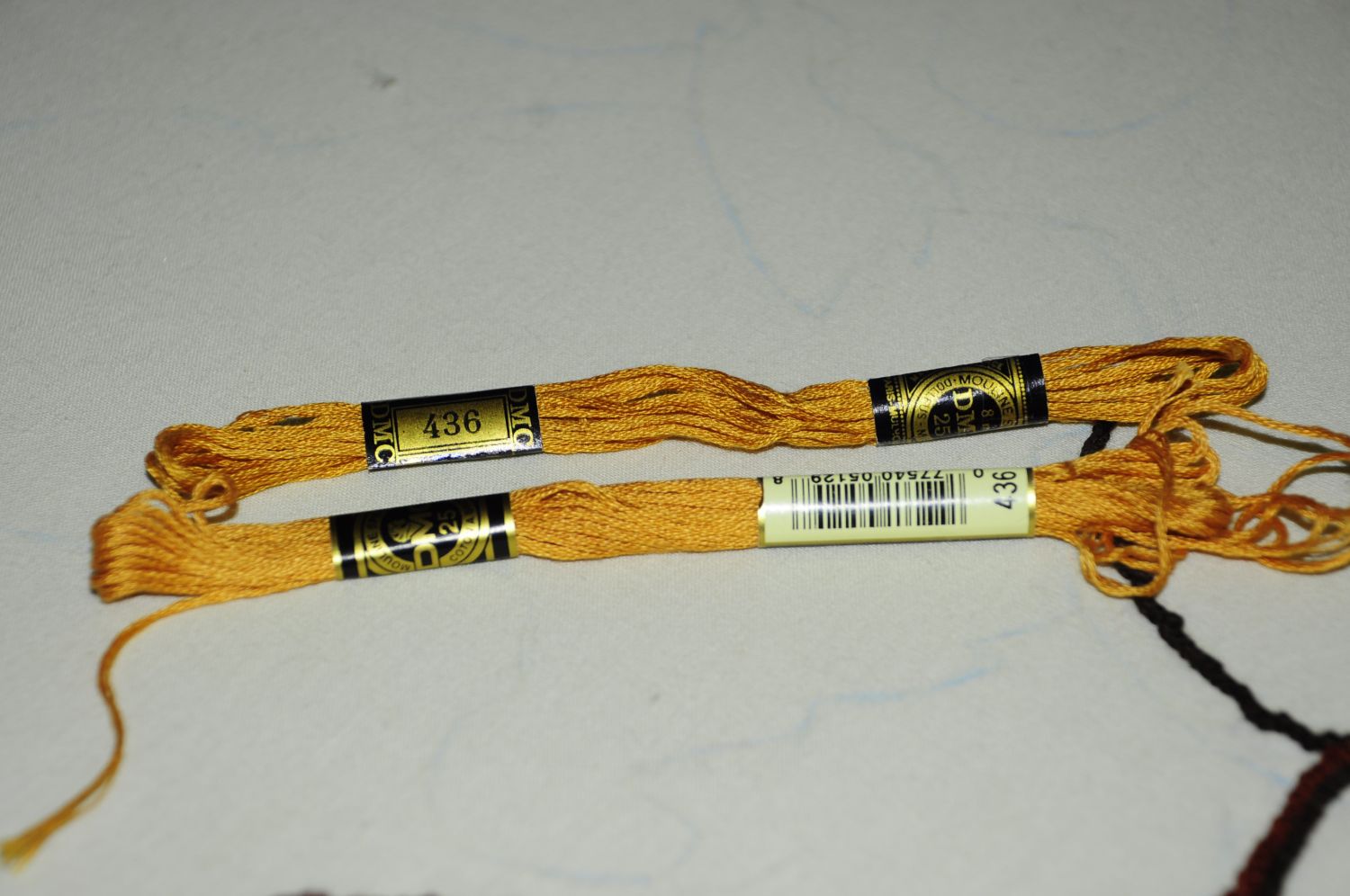
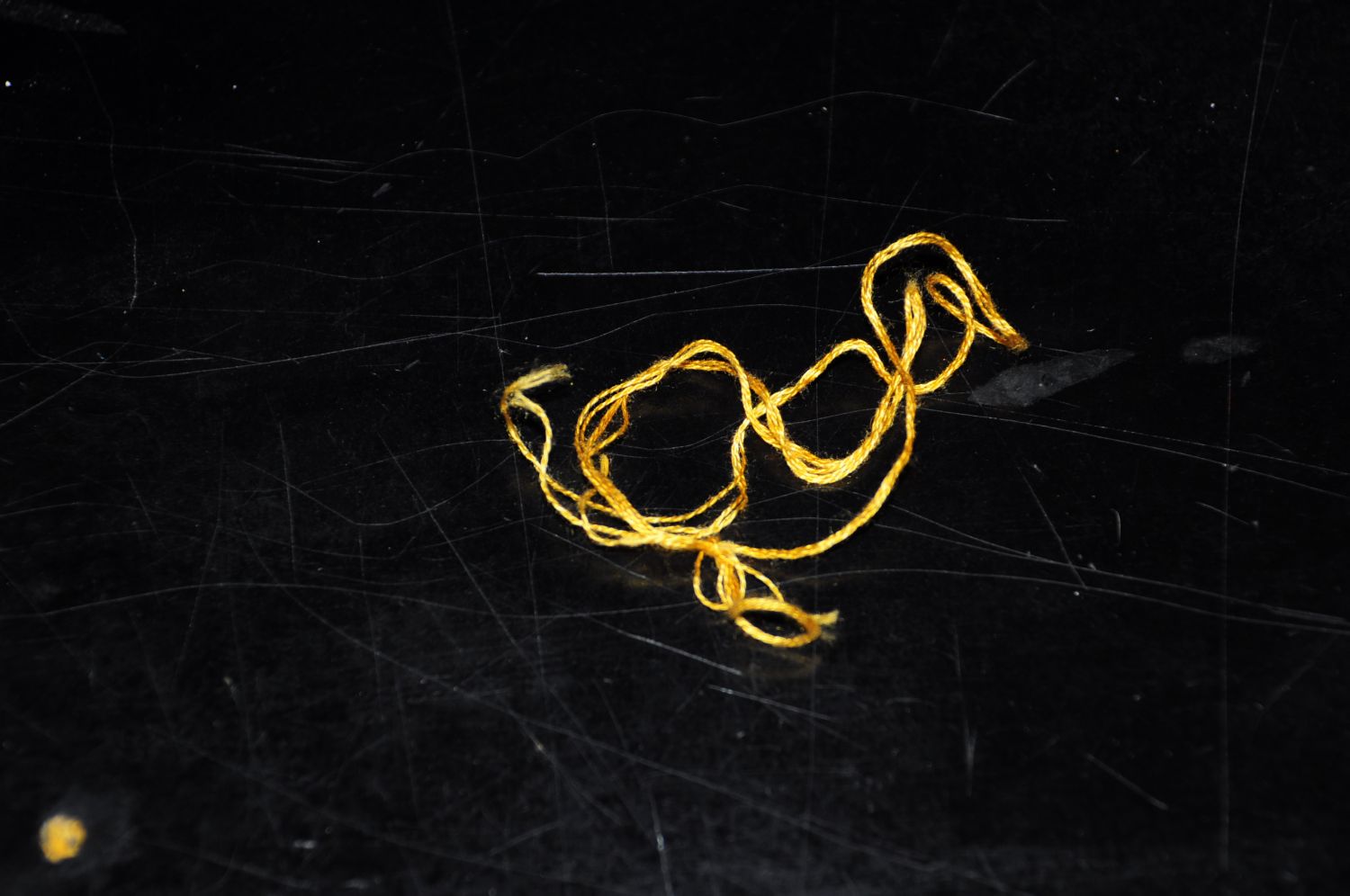
As I noted earlier, back into my stash of vintage thread (deliciously fat, fluffy threads, with such luster!), selected two DMC Mouliné Special, and a Star Six Strand, and look what someone did, decades ago! Oy. Treat your thread well, and don’t wrap wire around it, twisted all about in the strands. Auuugh. Oh gods, they put on cello tape too! Double Auuugh.

Oh, all that ill treatment was to secure this to the skein:

© C. Ford.

The Art of Whipped Cream.

Selected character studies, oil on board, dimesions variable. All images courtesy the artist and Paul Kassman Gallery. (Click for full size!)

In a performance at the Metropolitan Opera and a parallel gallery exhibit, artist Mark Ryden imbibes his sugary design aesthetic through costume and fashion prints. In his latest venture, the Portland-based artist creates classic, painterly pastel works with a childlike fantasy.

The art show, The Art of Whipped Cream, opening in May at Paul Kasmin Gallery in NYC, features the final realizations of each costume from the opera, Whipped Cream, a graceful choreographed feat by Alexei Ratmanksy. His illustrations encompass the bedtime dreams of prima ballerinas, pink, and lots of candy and pastries. Ryden’s merry band of misfits includes a smiling half-dragon, half-muppet creature, and tiny humans masquerading as multilayered cakes. The two-dimensional drawings at Paul Kasmin are rendered in oil on board and graphite on paper.

[…]

Mark Ryden’s solo art exhibit, The Art of Whipped Cream, shows  at Paul Kassman, May 20–July 21, 2017. Find more information about the show, here.  Purchase tickets for the ballet, Whipped Cream, taking place at the Metropolitan Opera House, here.

You can read and see much more at The Creators Project.

The Whipped Cream Curtain Call:

Nacreous Clouds and The Scream.

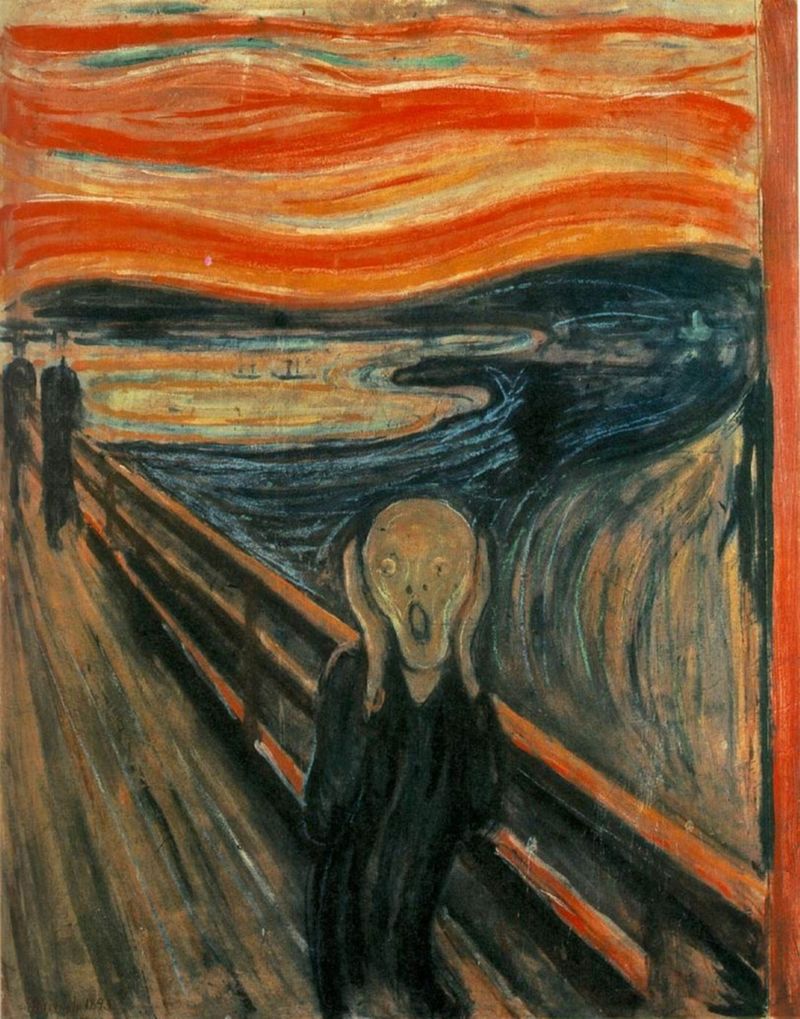
Edvard Munch’s The Scream.

Scientists are speculating that perhaps the inspiration for Munch’s The Scream may have been rare nacreous clouds, rather than a volcanic outburst. There is a definite resemblance, I must say. No one will ever really know, but I’m glad I got to learn about and look at nacreous clouds!

Via Raw Story.

165 Artists In The Haus!

Oh, this is something I wish I could see in person. If you have the chance, take it, because the building is slated to be destroyed in the beginning of June.

Base23 uses 3D installations in his room at THE HAUS. Image courtesy of Million Motions and the artist.

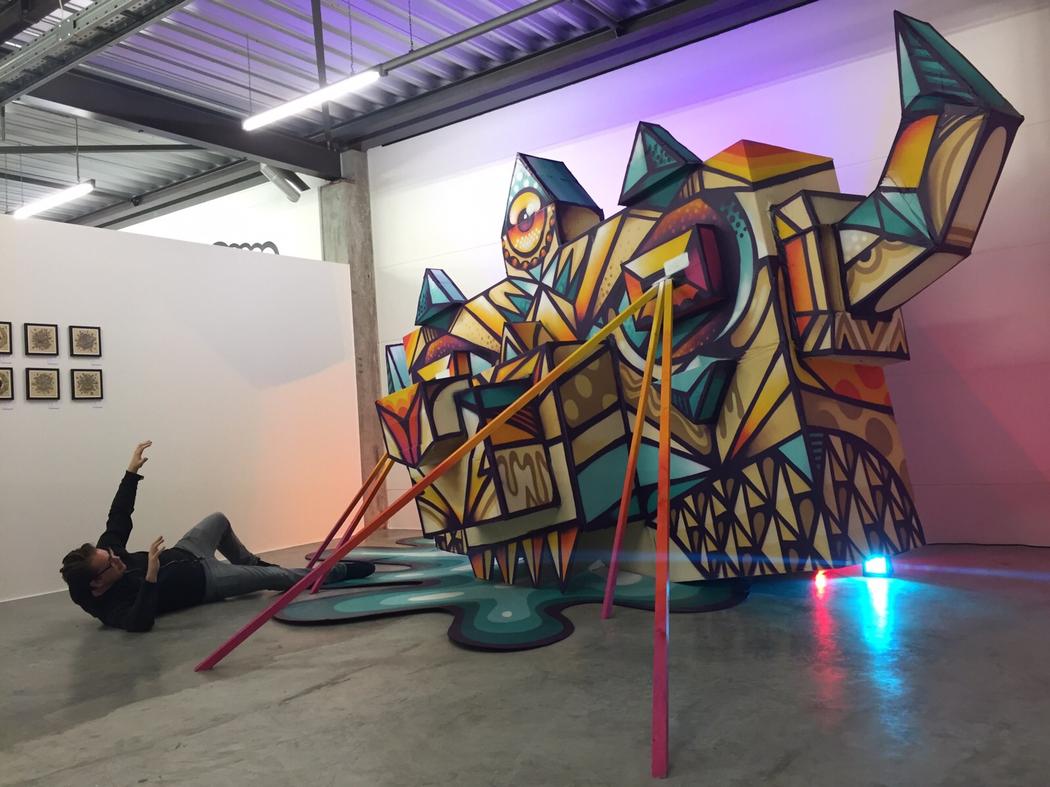
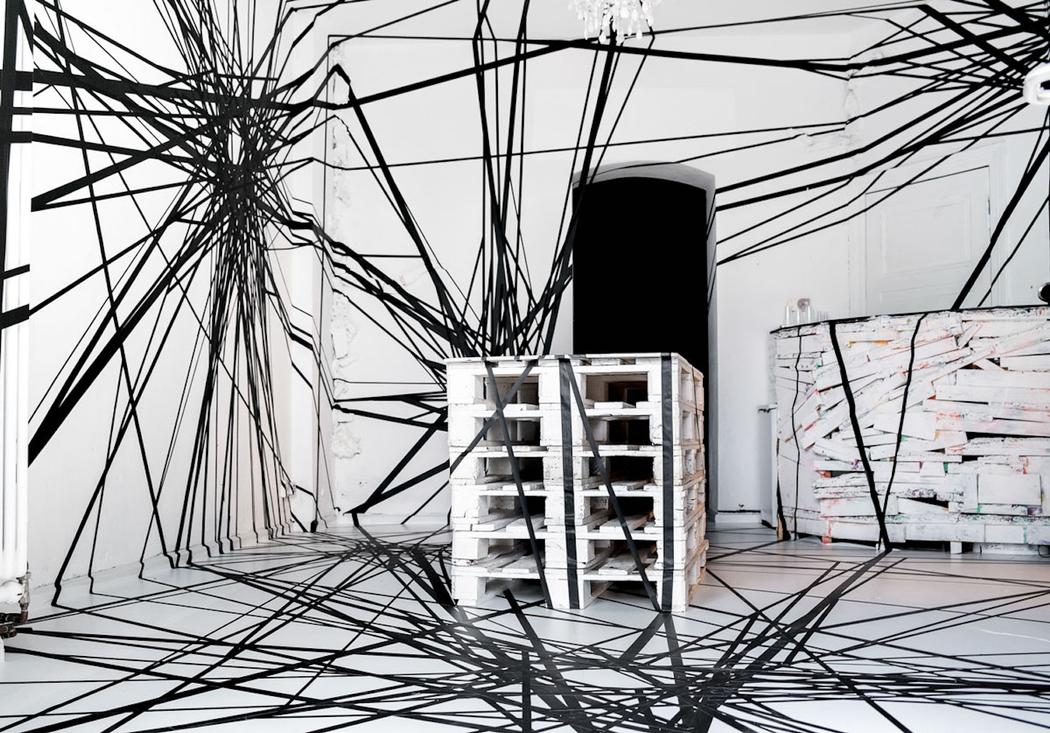
What happens when 165 street artists take over a single building in Berlin? The result is a five-floor urban art labyrinth boasting the work of creators from over 70 countries. There’s not a single canvas in sight. Filled with low-lights, sound effects, 3D casts, growing things, unnerving portraiture, tape, stickers, and smells, it feels as far from a traditional gallery as you can get.

This building was once an abandoned bank on the famous avenue Kurfürstendamm (colloquially “Ku’damm”). Now overflowing with indoor street art, it’s set to be demolished in June to make way for apartment buildings. But that’s part of the fun of it, according to the artists. And until then, anyone willing to brave the two-hour line outside is welcome inside, free of charge.

THE HAUS (tag-lined “Berlin Art Bang”) is a project kicked off by Kimo, Bolle and Jörni (all aliases), a trio of creators on the Berlin urban art scene for more than 20 years. While they operate Xi-Design, a hand-painted advertisements company, it’s their never-for-profit crew Die Dixons that built THE HAUS. After inviting their expansive network of artists to participate, they created the packed-out platform to put street art in the spotlight, offering a temporary, no-fee experience much like street art itself. “We have a huge network,” Kimo tells Creators, “and we’re very organized, but all this really came from the heart and from people’s willingness to do it.”

[…]

Artists range from Berlin natives to international activists, established crews to newbie collaborators, and individuals to nonprofit giants. Solo artist Urzula Amen constructed a fake grocery store-like room with graphic health-hazard labels in the style of cigarette warnings. Only rooms away, International Justice Mission created a room to look like an Indian brothel, complete with VR goggles to visualize the plight of a modern-day prostitute.

As for the no-phone zone, it’s there for audiences to “get back to the roots,” as Kimo puts it. “Use your eyes and feelings and emotions, standing in the rooms. Step back, look again, touch it. Stop looking at things through your phone, or on the internet. Experience it for yourself, and focus on the moment.”

[…]

Die Dixons are currently exploring new places to build another Haus. “We’re getting inquiries from Belgium, The Netherlands, and several other countries,” says Kimo. “They’re all saying ‘we have a building for you!’ This will not be the last Haus.”

Rotkäppchen Goliath is an agency for urban communication that was founded in 2014 in Vienna. Image courtesy of Million Motions and the artist.

THE HAUS will be destroyed at the beginning of June. For a floor plan and extensive artist overview, check out THE HAUS website. Follow them on Instagram @thehausberlin.

You can see more at The Creators Project.

Cool Stuff Friday: Octobot!

Harvard University Octobot.

Researchers at Harvard University have designed a soft 3D-printed robot that can move on its own, powered by a chemical reaction, instead of electricity or batteries.

Shaped like a cartoon octopus, the Octobot contains no electronics or other hard parts, relying instead on a silicone body that houses a fluid-filled circuit.

Previously, soft-bodied robots had needed to rely on rigid components for power. But the Octobot uses hydrogen peroxide as fuel.

The liquid flows around a network of pre-printed hollows in the robot’s body, and creates a reaction as it passes over platinum embedded inside. This produces gas that inflates and moves the arms, to propel the robot through water.

You can read and watch more here. Do I need to say I want one? I want one.

No-To-Scale Studio.

Malaysian design office No-To-Scale Studio has issued a satirical proposal to President Trump, suggesting a radical means of representing the US-Mexico border: a 1,954 mile-long dining table.

Citing “logistical, financial and nationality” limitations, the studio’s design claims to be cost-effective in taking a domestic item and scaling it to massive proportions.

While the proposed slab of “continuous polished marble” may prove costly, diners will bring their own chairs in order to participate.

You can see and read more here.

Neri Oxman, Lazarus Mask.

Neri Oxman and the MIT Mediated Matter group have unveiled their latest collection of 3D-printed death masks, designed to contain the wearer’s last breath.

The Lazarus masks, described by Oxman as “air urns”, are modelled on the facial features of the deceased individual.

Each 3D-printed structure encompasses colourful swirling patterns that have been informed by the physical flow of air emitted from their last breath.

“Traditionally made of a single material, such as wax or plaster, the death mask originated as a means of capturing a person’s visage, keeping the deceased alive through memory,” said the team.

You can read and see more here.