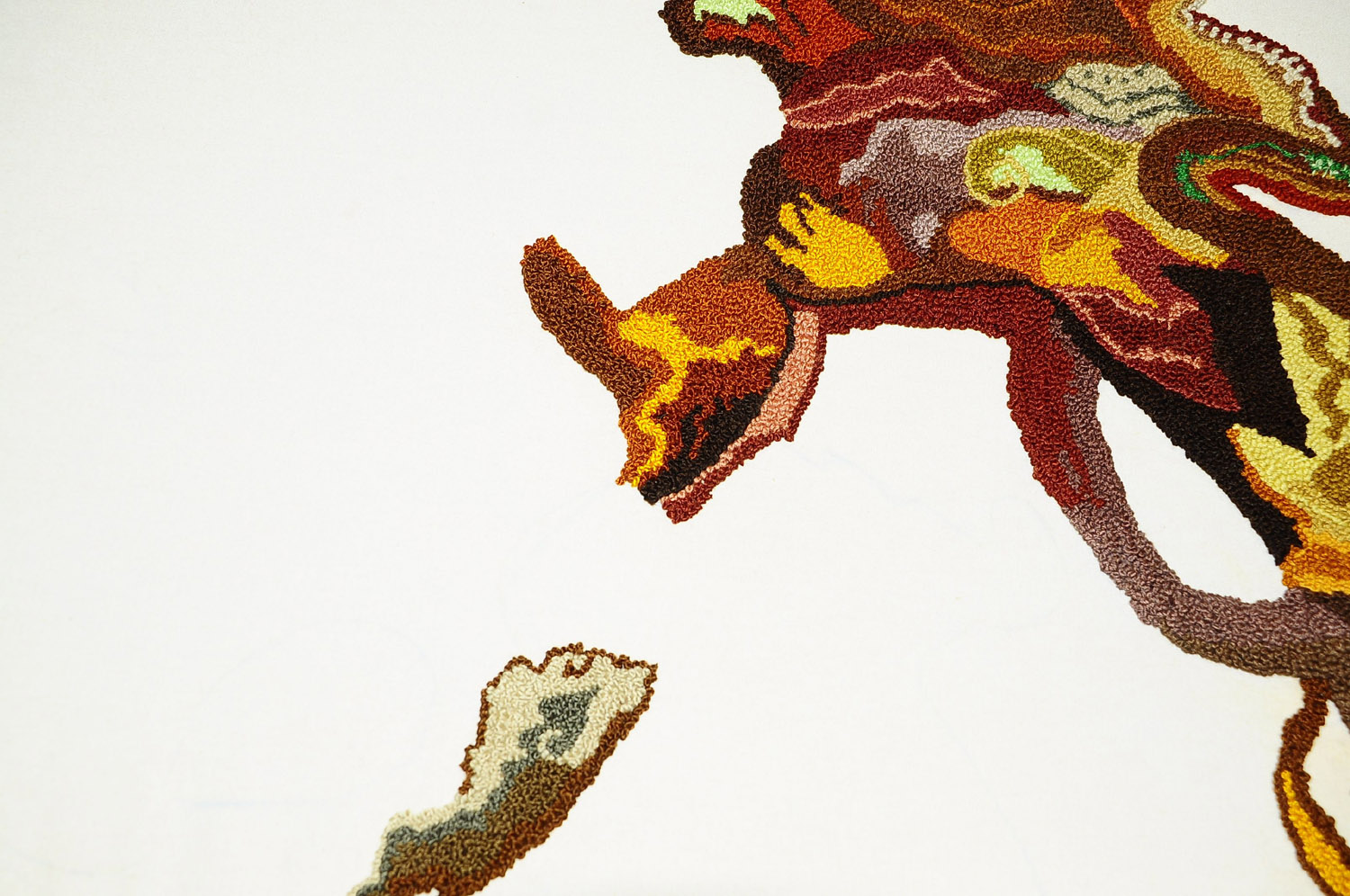
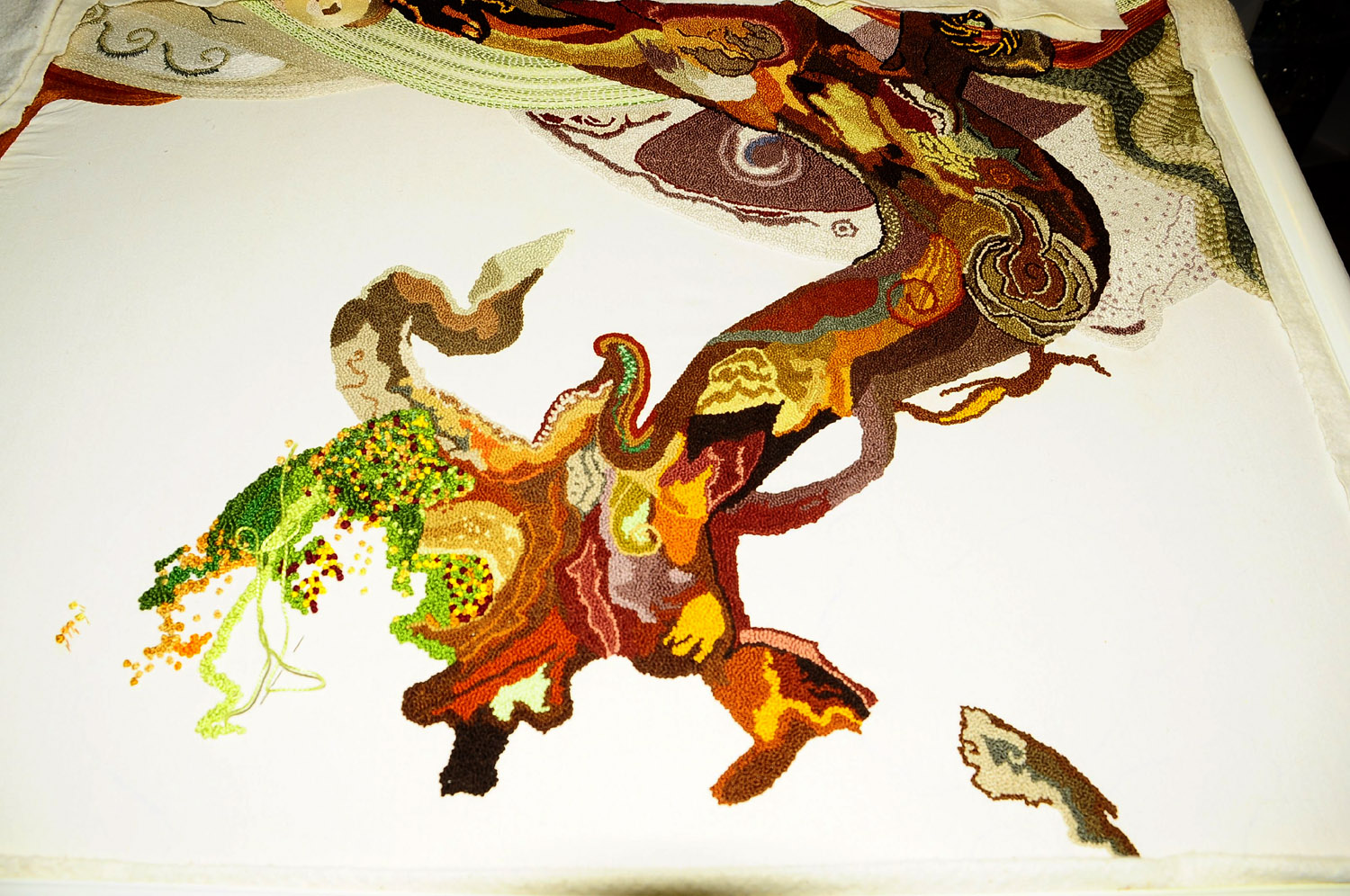
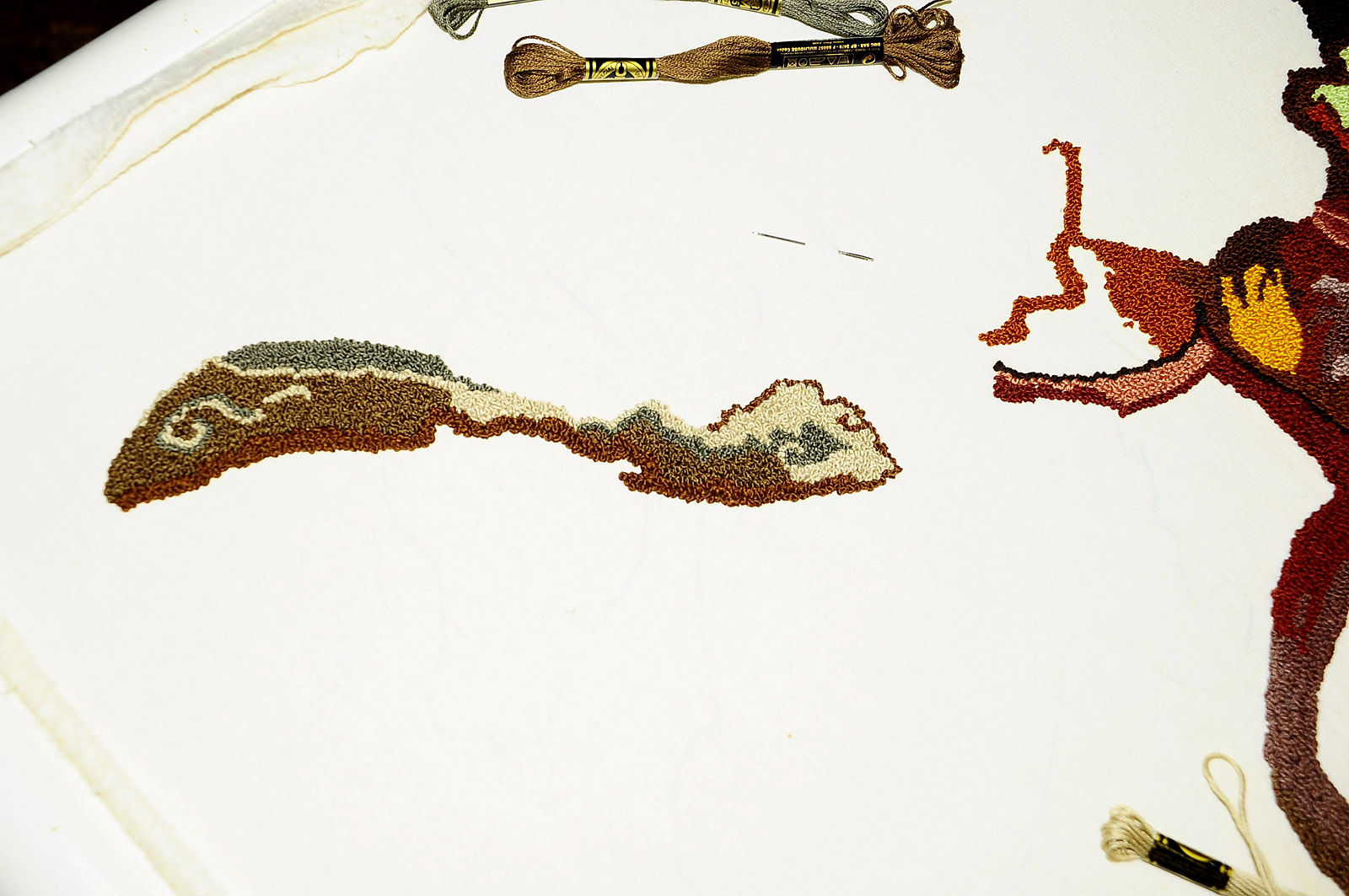
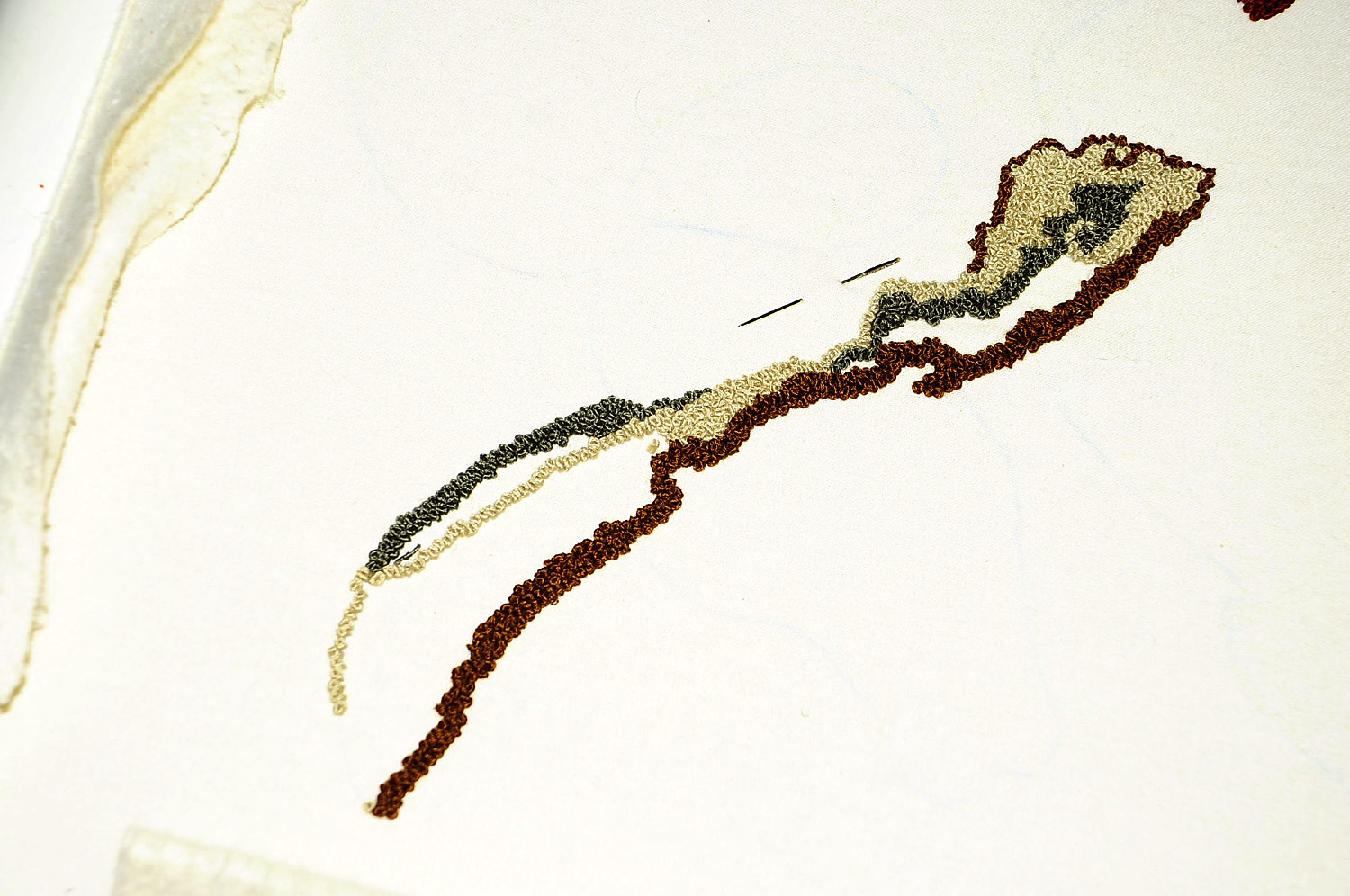
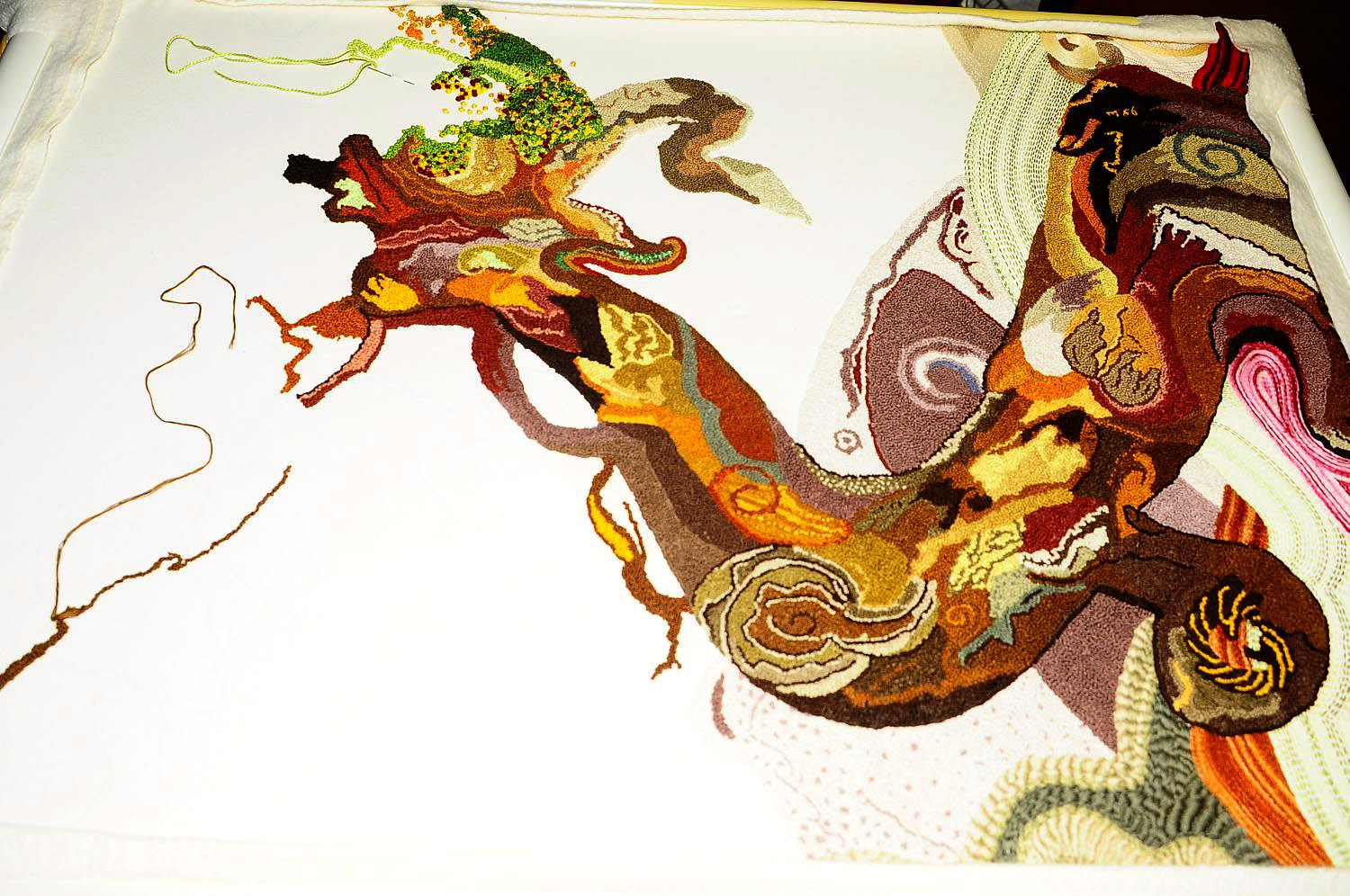
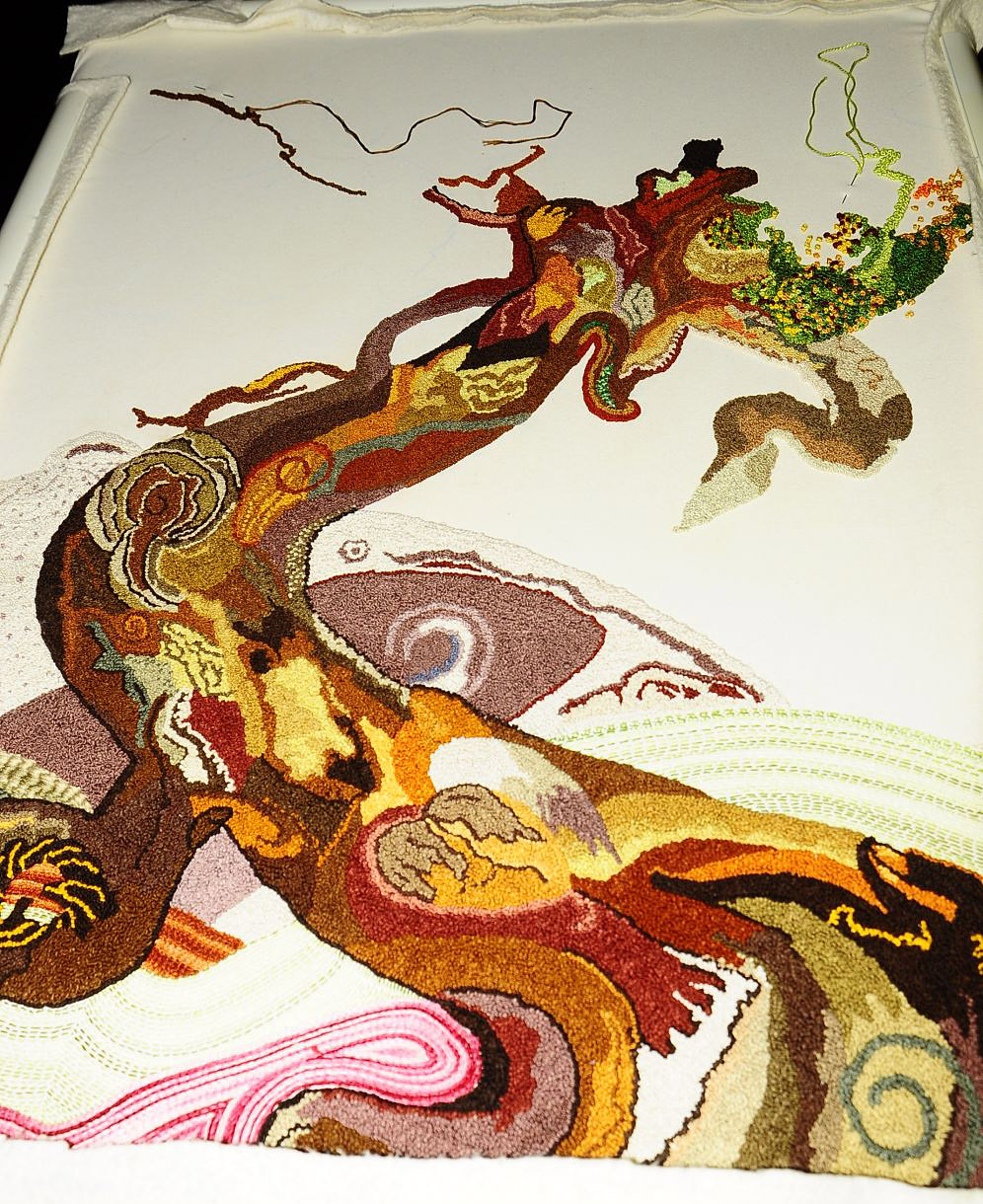
11.5 inches of trunk/branch done, 6 more to go. Current Hours: 1,163. Skeins Used: 181. Click for full size.
© C. Ford, all rights reserved.
The Library of Congress has made their collection of Japanese, pre-1915 Woodblock prints available for download, free! Go have a look, and get yours now.
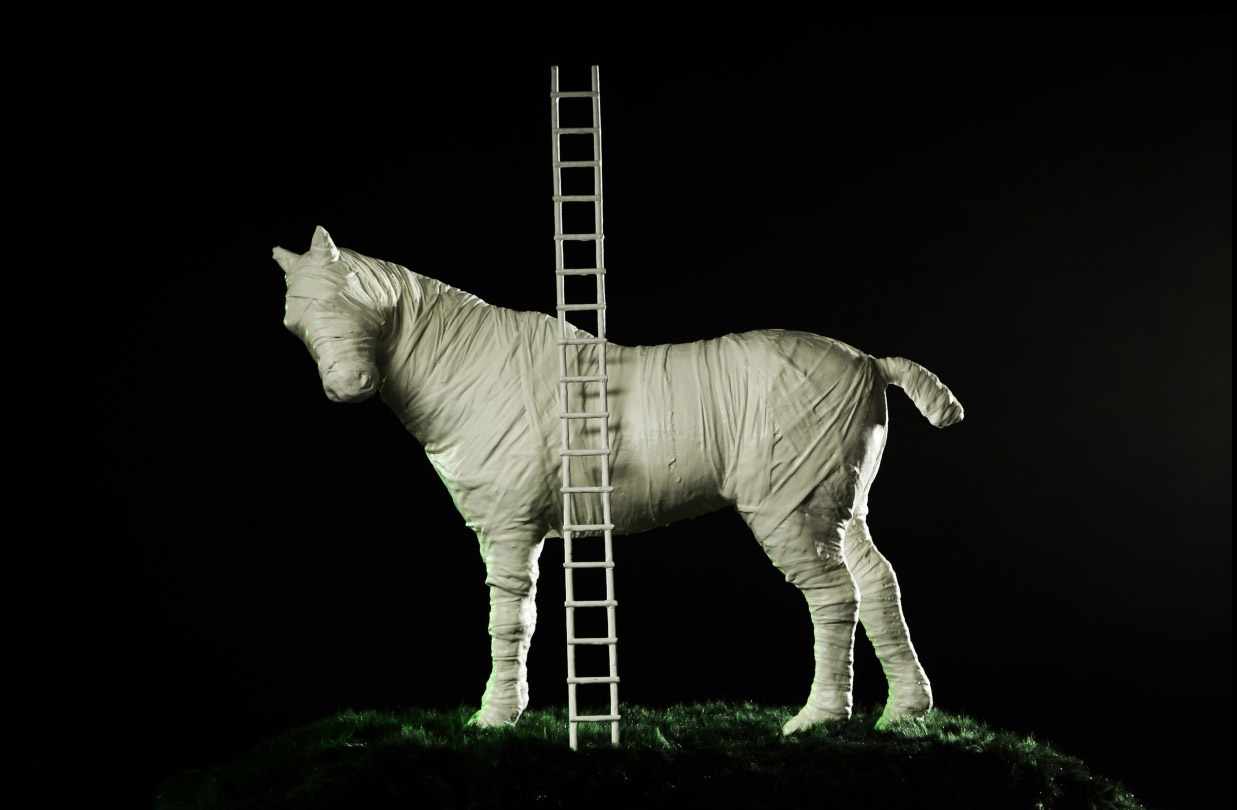
The Ghost of the Fortress has become a permanent fixture at the Mark Rothko Art Center and Gallery. Per rq: a sort of monument to warhorses (who quickly became obsolete with the advent of more modern technologies), and thus is wrapped in gauze as a symbol of the uneasy life and death these horses (and, by extension, soldiers who served with them) experienced. As the sculpture concept declares (and I translate loosely from the article): “Usually what remains after war is not medals or grand victories, but crippled and ruined lives.” And for this reason they shied away from a heroic depiction of the warhorse (no bared teeth, flailing hooves, free manes flying in the wind). The authors of the piece drew inspiration from photographs of the wounded from WWI, and as it’s probably the last war that saw active-duty warhorses on the premises, they produced this restless ghost.
Via Delfi Kultura.
Take a few moments from your day to get acquainted with Botanica, a blend of music, art, and science.
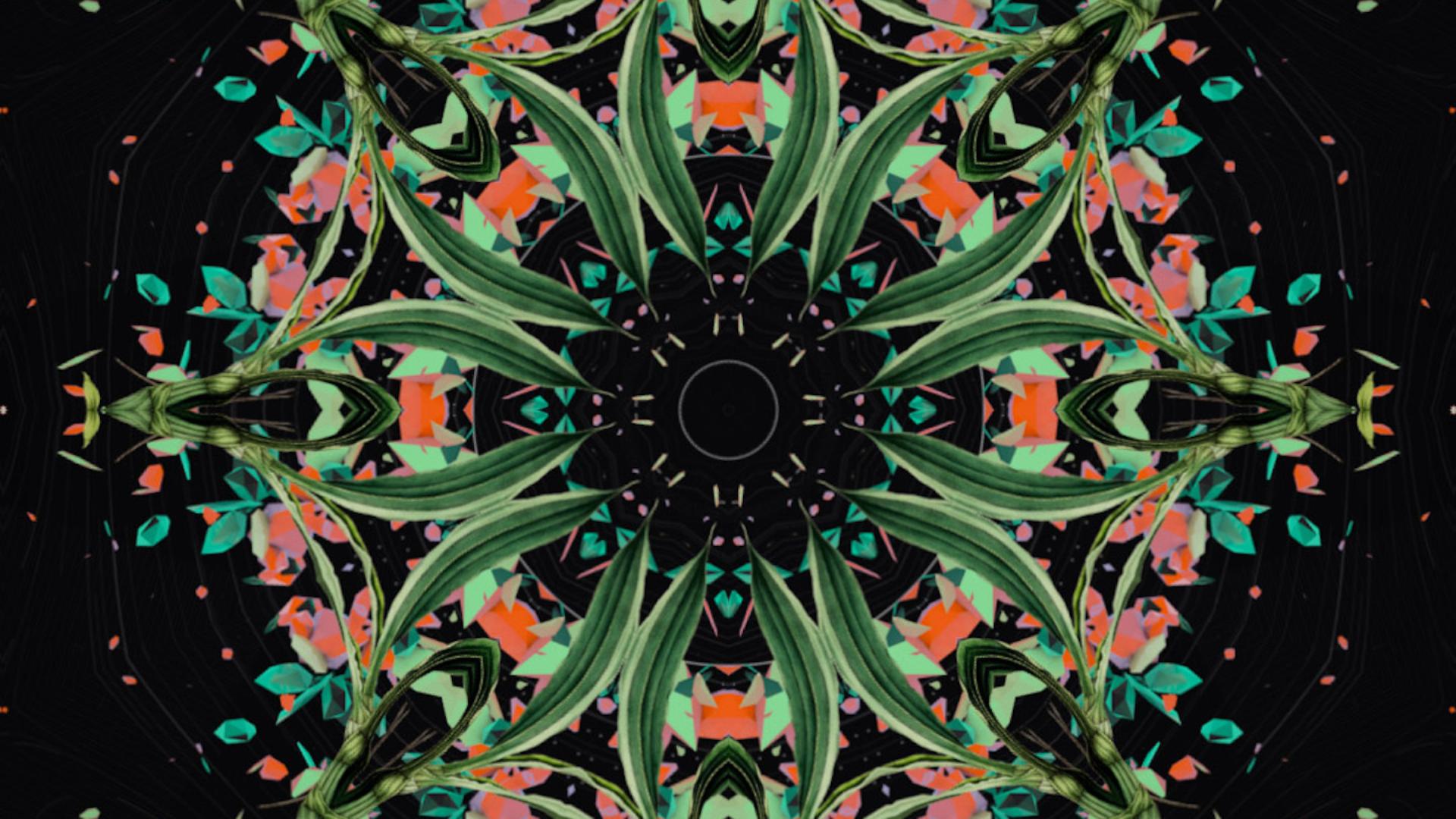
In 2012, Italian music group Deproducers launched a project of science-related albums, with the first, Planetario, exploring the topic of astrophysics. For their second musical science project, Botanica, Deproducers brought back the design studio Super Symmetry to create a multimedia live performance that highlights the beauty and artistic wonder of plants by merging music and scientific data. All told, there are 30 videos for Botanica, exploring things like plant roots, psychoactivity, and deforestation, amongst other topics, by way of grids, video footage, graphics, information, generative animation, and other visuals. Like Data Garden’s bio-reactive installation, Quartet, Botanica elevates the natural wonder of plants to a plane equal with human creativity.
While Planetario featured a collaboration with astrophysicist Fabio Peri, Botanica includes a collaboration with botanist Stefano Mancuso. During the live show, before the band begins to play, Mancuso gives a brief “science lesson” about the songs, and how each of the topics are interlinked. For each live show, Super Symmetry is tasked with visually integrating the musical and scientific aspects of the project.
There is much, much more at The Creators Project.
We could all use more Mr. Rogers.
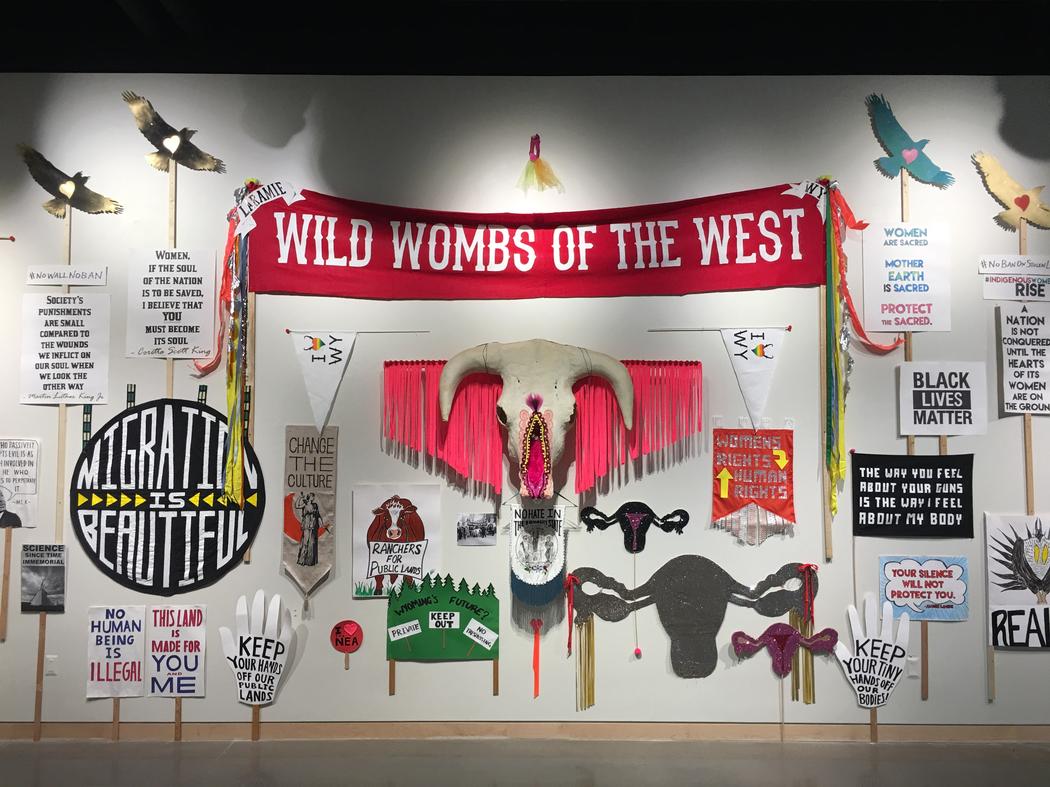
Check out the Wild Wombs of the West!
And don’t miss the art protest performance which took place at Trump Tower.
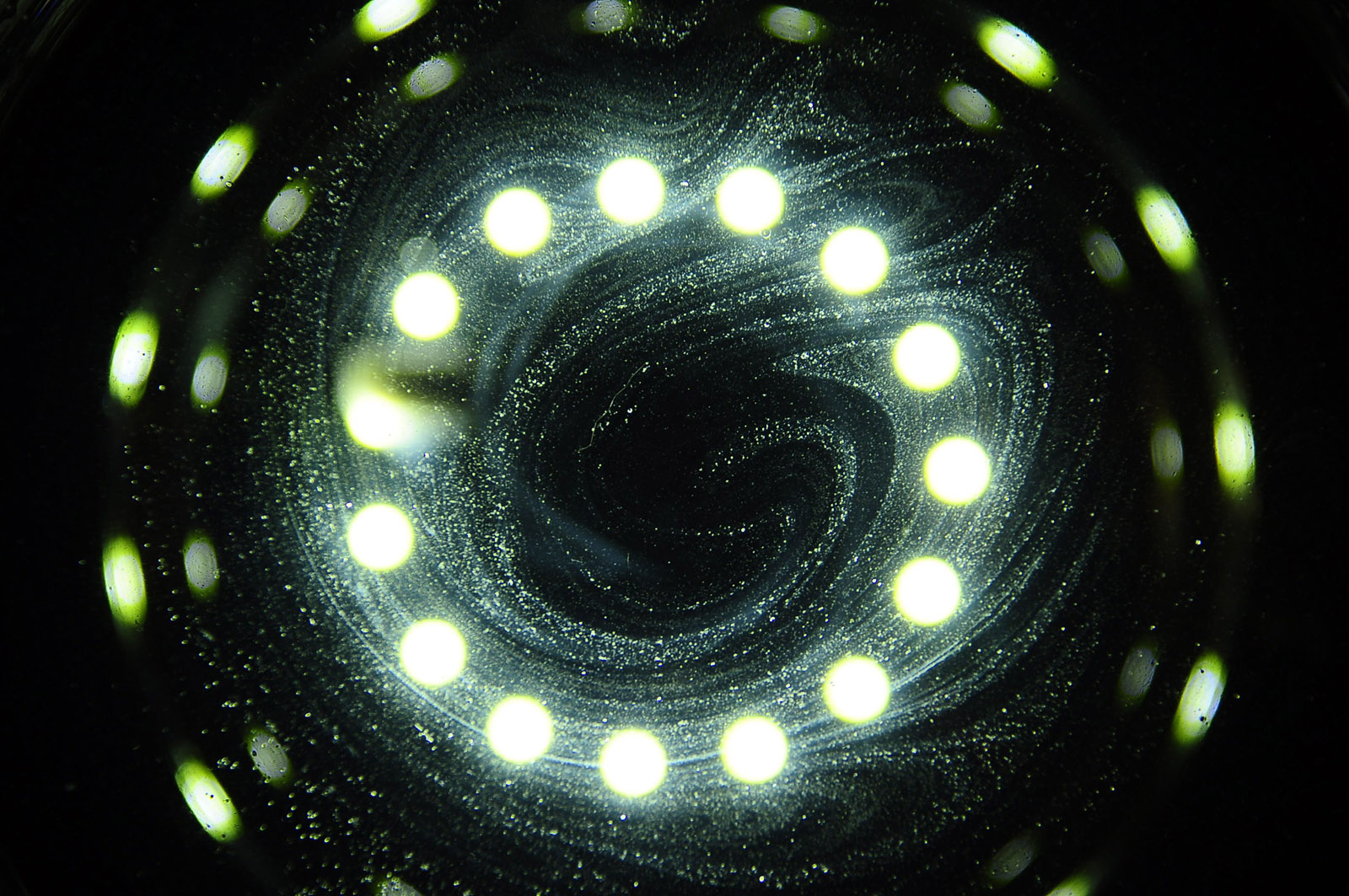
Marcus sends me the best things for play time, something I’ve been in desperate need of – in this case, a little LED light ring. Click for full size.
Nigerian-born and based photographer Lakin Ogunbanwo was commissioned by Galeries Lafayette to create a photo- and video– based window installation for the Parisian department store’s ‘Africa Now‘ season. Ogunbanwo’s concept centres around highlighting the multifaceted nature of his experience of Africa, which he realised with a cast of collaborators such as models Toyin Oyeneye and Uju Marshall and the stylist Oyinye Fafi Obi. Certain shots also depict a selection of objects that represent the spirit of his home city, Lagos. “Drawing from the colors and vibrancy of my city serves as a metaphor for the continent, where many people, cultures and realities all mix and interweave to make one beautiful whole,” he explains. The resulting series is cleanly composed, and at once energetic and peaceful, and notable for the sense of joy and exuberance they convey.”
Lakin Ogunbanwo x Galeries Lafayette from Nataal Media on Vimeo.
Via iGNANT. Lakin Ogunbanwo.

All images © Hung I-chen of Polluted Water Popsicles.
Initially appearing to be a new artisanal food trend, these popsicles are actually a creative approach to spreading awareness of Taiwan’s issue of water pollution. The project, entitled ‘Polluted Water Popsicles’, was initiated by Hung I-chen, Guo Yi-hui and Cheng Yu-ti–a group of art students from the National Taiwan University of the Arts. To create the popsicles, the young artists collected water samples from 100 locations in Taiwan, with each sewage specimen then frozen and set in polyester resin for preservation. The project is successful in its innovative and deceptive conceptual approach–each counterfeit ice treat contains waste and domestic refuse extracted from the samples, 90% of which was plastic. The students also designed wrappers for the popsicles, and their work has been recognised by the Young Pin Design Award, as well as being exhibited at Taipei World Trade Center’s Young Designers Exhibition 2017.

All images © Hung I-chen of Polluted Water Popsicles.
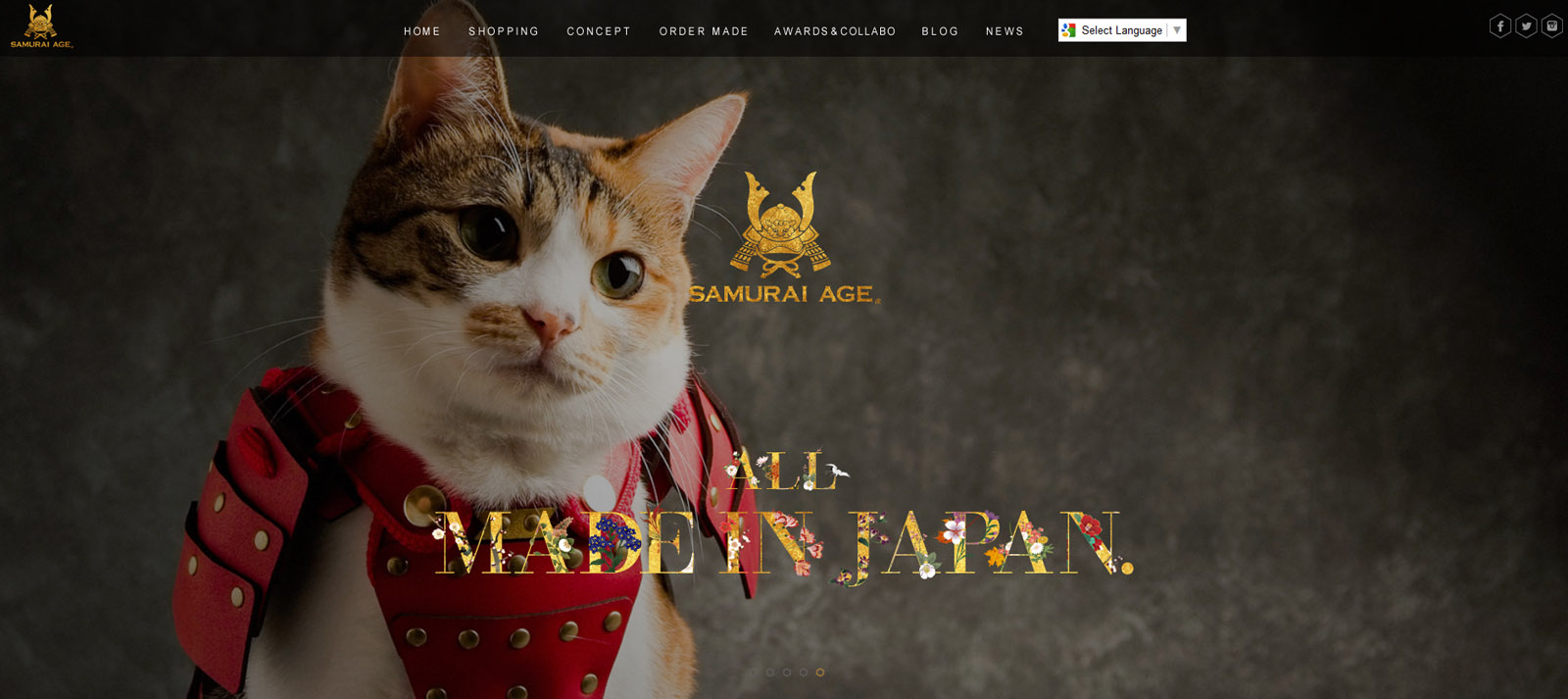
Have a craving to put Samurai armor on your cat? Dog? Child? Partner? That big bottle of Saké? Samurai Age has you covered.
While it’s been over 150 years since the heyday of the samurai class, the fascination with them lives on. The talented craftsmen at SAMURAI AGE are doing their part to honor samurai tradition with handmade, high-quality samurai armor for you and your pets.
One of the selling points of this Fukuoka-based brand’s armor is how lightweight it is. Unlike traditional samurai armor, which could sometimes weigh over 60 pounds, SAMURAI AGE’s pet armor is constructed from light plastic that they claim can be worn for long stretches of time without tiring out its wearer. So although your pet will probably not be protected from any katana strikes, they will at the very least feel both badass and comfortable.
Human-sized armor for adults and children is also available for purchase, as well as helmets and bottle covers. All items are made of the same materials as the pet armor. The website suggests wearing the armor for birthdays or special occasions, but given the stylish, lightweight material there’s no reason not to wear it on a regular basis, too.
For those interested in a more “casual” look, SAMURAI AGE offers samurai helmets fashioned from polyester baseball caps. Customers can choose helmet designs based on those worn by famous Japanese historical figures such as Tokugawa Ieyasu, Oda Nobunaga, and Toyotomi Hideyoshi.
You can see and read more at Spoon & Tamago.
Which is below the fold, because NSFW.
Well. That was interesting. :D I set up six more hearts the other day, very light on the textile medium, and extremely light on the India Ink, just a few drops to each, as they spread in interesting ways, given a bit of time. They were well on the way to drying yesterday, and I was on the way to taking them out to sit in the heat of the day, when for no discernible reason, I decided to stick them in a fair low oven (300 F). Then I remembered something I had to do on Affinity, and got well distracted. By the time I remembered, it had been maybe 15, 20 minutes. I pulled the tray out, and saw some rather alarming bubbles, warping, and solid white bits. This is the result. Textile medium does some interestin’ stuff when heated, so have a care. The cupcake/muffin tin I’m using is an old one I used to use for soap making. The half baked hearts which came up with colours – that was left over from the previous batch of hearts, which I hadn’t bothered to scrape clean. Prior to the oven, they weren’t getting into these hearts. Obviously, the baking changed that. Also, don’t try this with any pan you actually like, or want to use for something useful, like food, because – the peeling was particularly difficult this time around, and a fair amount of the ‘non-stick’ surface came up off the pan, and is a part of the Half Baked Hearts now.
The photo is for shit, because fucking ticks. Four of them. On me. While trying to take photos. Click for full size.
© C. Ford, all rights reserved.