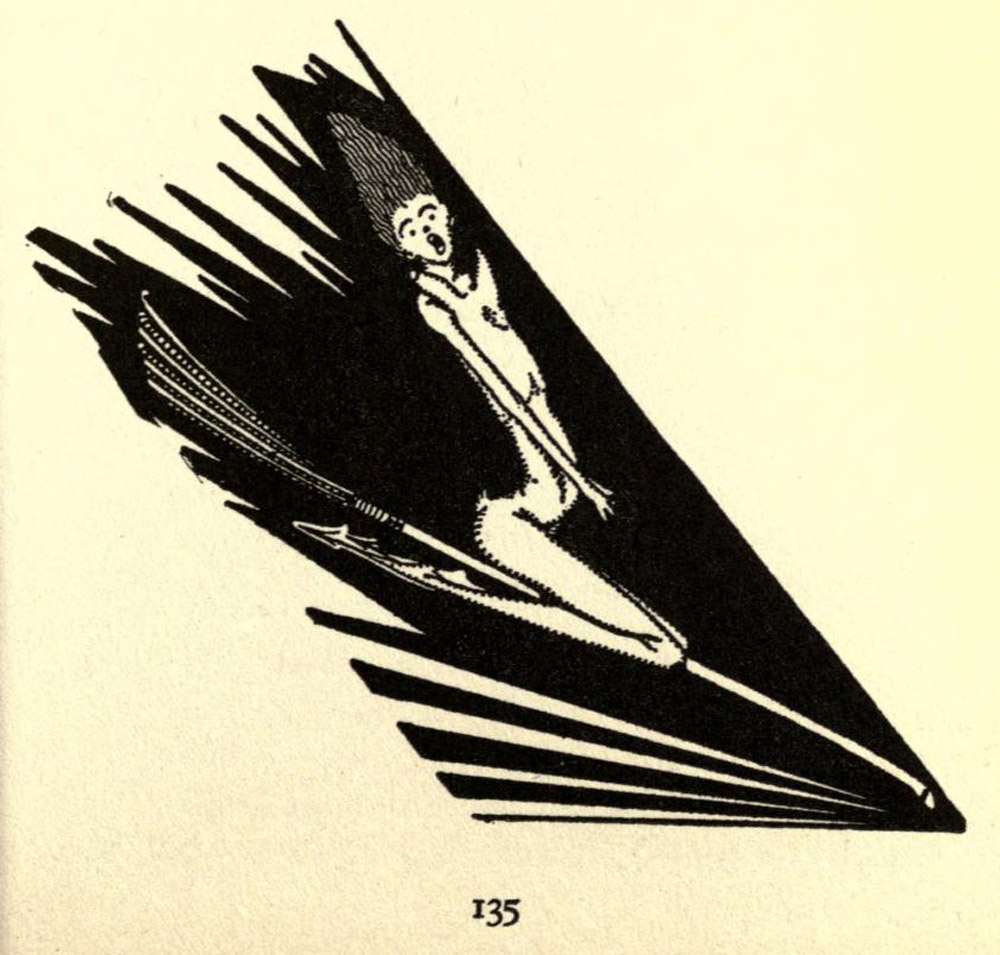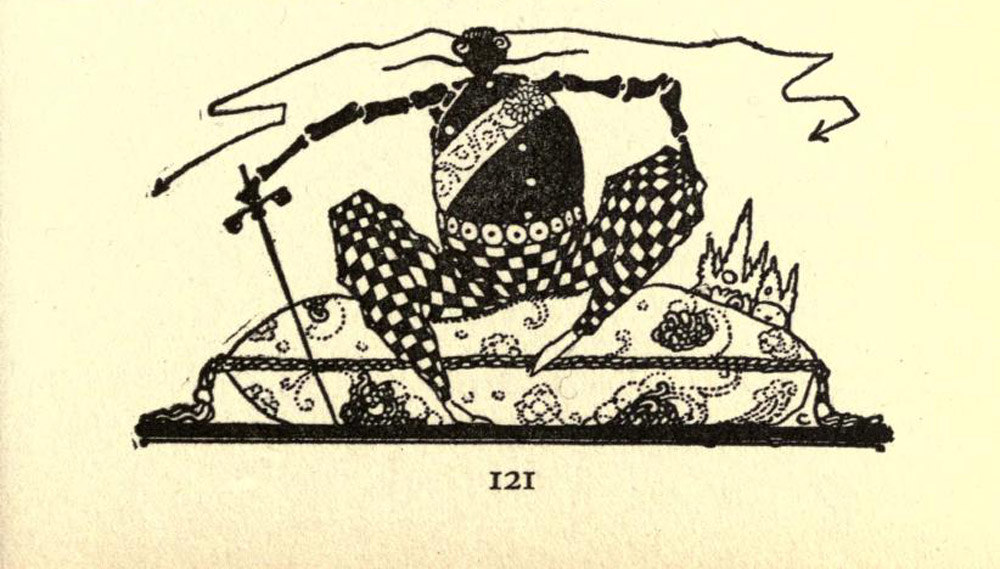
Art by Harry Clarke.
Absolutely stunning photography, many photos with their own stories, too. Just a few here, although I’d happily post each and every one of them!
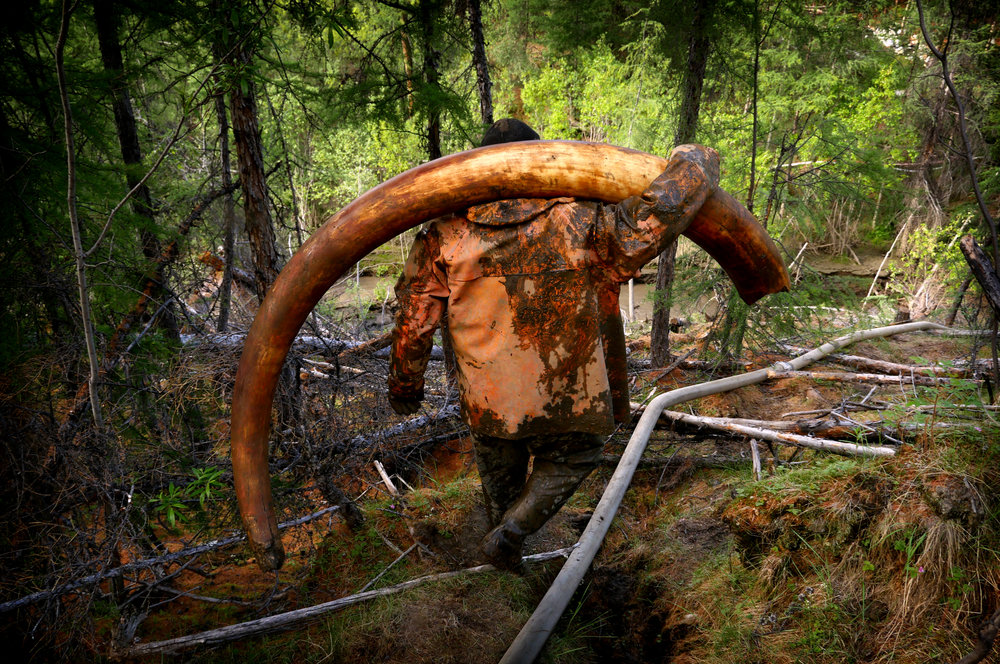
An illegal tusk hunter at a site where men extract mammoth tusks from the permafrost. Click here for my story on the Mammoth Pirates of Siberia.
For 61 years he’s sat here, legs dwindling to sticks as he thumps cooking pots into shape. His sons work beside him, three hammer blows occasionally falling together in synch, then scattering again into the random beat of the workshop.
I ask whether the girls admired his arms when he was young but he scolds me for rudeness. He’s more comfortable talking about the men with firebombs who drove his family out of their homeland. His father had made the decision to stay when Pakistan was formed around them, a Sikh clan in a new Muslim nation, but eventually the mob violence visited their neighbourhood and they fled.
Like so many who’ve lived through big history he’s nostalgic for the past. “Under the British we felt enormous pressure but we were innocent then. Now the people have freedom but we no longer love each other.”
But his old-testament face lights up when his grandchildren appear, they’re educated and will live a different life. He props a favourite onto his knee, “these little ones can choose their own lives and of course I’m happy for that”.
Finally, after the curious crowd have drifted away from us he leans in close, “you asked about my arms? My wife told me she always felt safe in these arms”. He rocks back and sweeps a hand over his children, his workshop, his little empire, “and she was, she always was”
These and so very much more can be seen at Amos Chapple Photography. Have a wander! And you won’t want to miss his feature on The Shepherds of the Tusheti Mountains, a gorgeous pictorial of a dangerous job:
Every autumn, a spectacular animal migration takes place in Georgia’s Tusheti region in the northern Caucasus Mountains. Radio Free Europe photographer Amos Chapple recently joined a group of shepherds and their dogs on what he refers to as a “deadly, boozy journey” from the steep mountains to the plains, as they brought their 1,200 sheep down to their winter pastures.
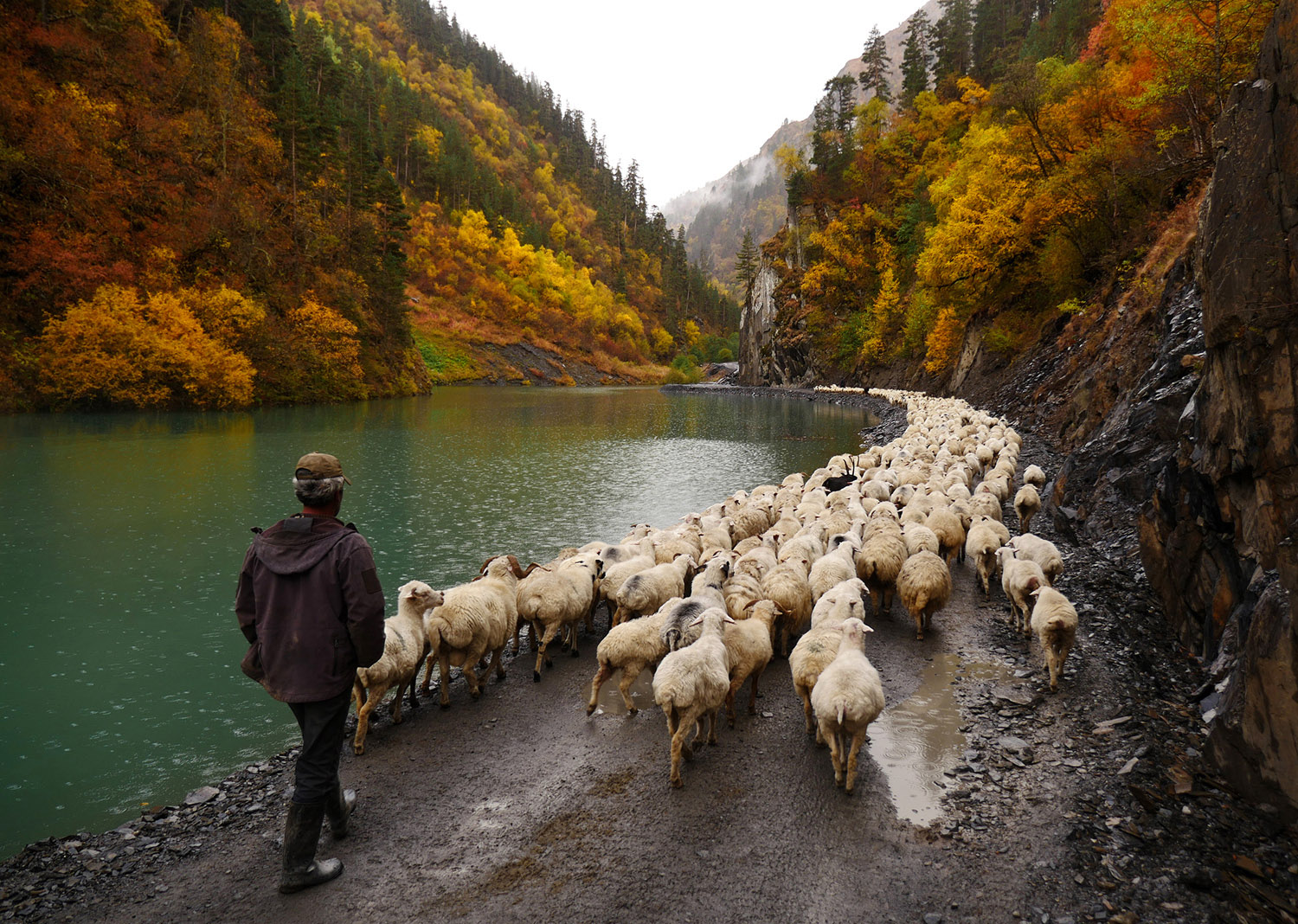
All images © Amos Chapple.
There’s a grasshopper in the van Gogh. The artist didn’t intend to embed the critter in his canvas when he was painting olive groves in the south of France, but the insect is there, buried in a swirl of paint. For over a century, it went unnoticed in the finished work, “Olive Trees” (1889), now owned by the Nelson-Atkins Museum of Art, but a recent study by the museum’s curators, conservators, and outside scientists has revealed its old, brown carcass. It’s a small but telling trace of van Gogh’s practice of painting outdoors, where conditions were often windy enough to send flies, dust, sand — and, apparently, crickets — blowing around the artist and his canvas.
You can read all about this at Hyperallergic.
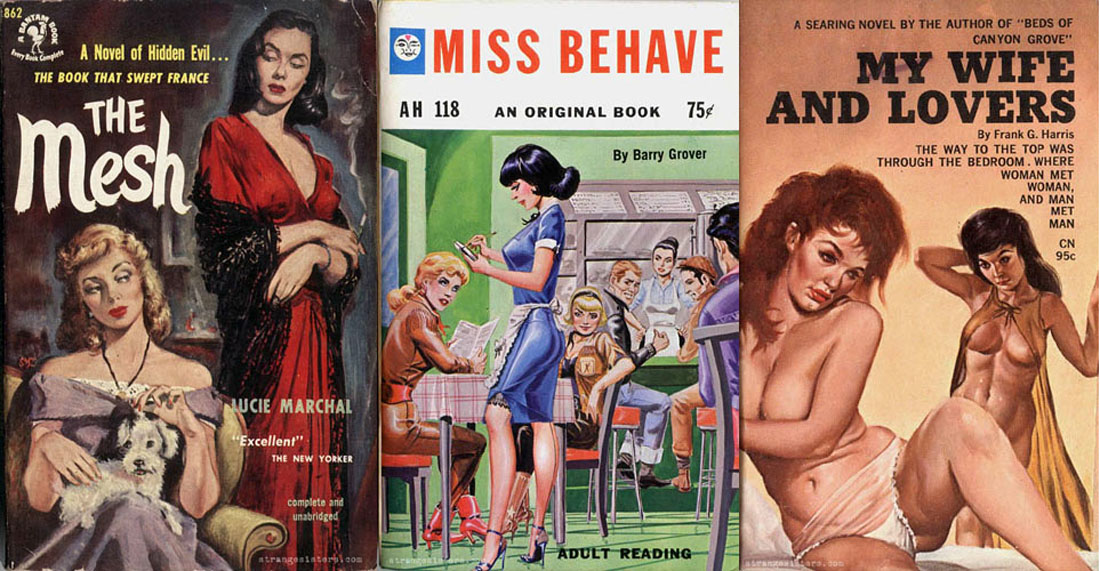
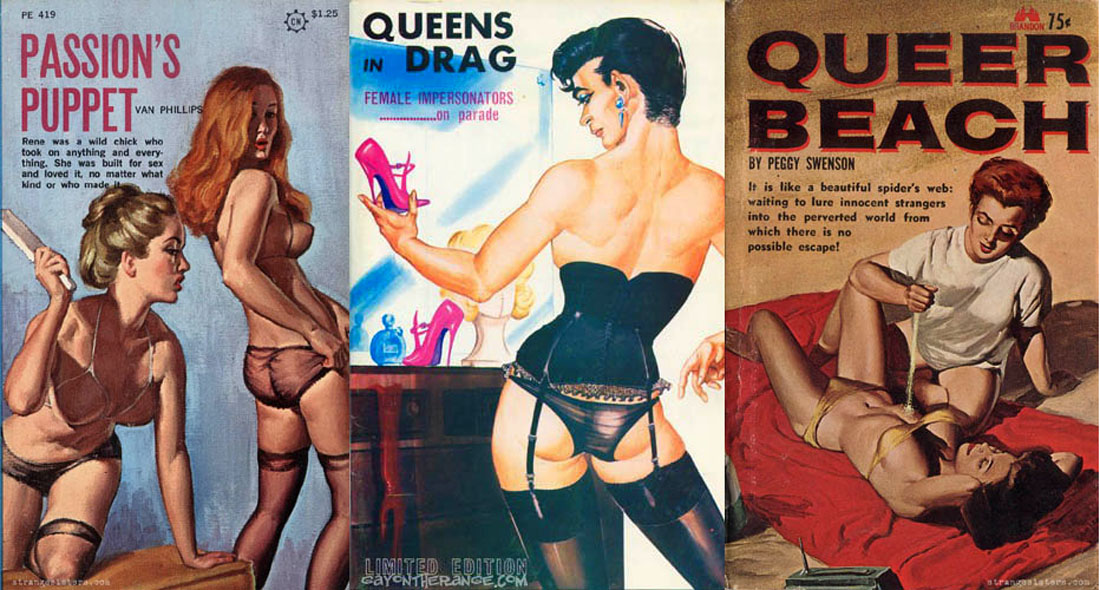
I think the seated blonde on Lesbian Jungle is a dead ringer for Nicole Sullivan. I’d also like some of the magic which holds her dress up.

Army Uniform Quilt from the Napoleonic Era by an unidentified artist (Region unknown, possibly Prussia, late 18th/early 19th century), wool, probably from military uniforms; Silesian pieced (photo by the author for Hyperallergic).

Artist unidentified, Soldier’s Hexagon Quilt (Crimea or United Kingdom, late 19th century), wool from military uniforms, 85 x 64 in (courtesy the Annette Gero Collection, photo by Tim Connolly, Shoot Studios).
…These wartime quilts are incredibly rare, and Gero states in the release that “there are fewer than one hundred of these quilts in the world, and no two are alike.” War and Pieced highlights their diversity, whether in the distinctive beadwork on quilts made by soldiers stationed in India in the 19th century, or the motifs of African shields and spears embroidered on a late 19th-century quilt, likely made in tribute to those killed in the Anglo-Zulu War. A quilt made in India between 1860 and 1870 has its beads connected to small circles of fabric, the discs probably left over from punching buttonholes into uniforms. Although the conflict may be unnamed on the quilt, the patterns, needlework, and, above all, uniform materials, can place these fabric works in time.
They’re moving relics of the bloody battles that stretched across the globe in the mid-18th to 19th centuries, from the Prussian and Napoleonic wars, when elaborate intarsia quilts featured pictorial inlays of soldiers, to the Crimean War with its dense geometries. One from that mid-19th-century engagement has a checkerboard at its center, an example of the boards made from scraps of military uniforms to fend off boredom. The spare fabric that formed the checkerboard may have been from uniforms of the dead or wounded, thus adding a somber memorial to an otherwise vibrant wool quilt.
Although there is a vision of hope in making something beautiful out of horror, there’s an eerie echo of the suturing of wounds in each stitch of the quilt. The intense labor of some of those made in convalescence — one from 1890 involves 25,000 blocks, hexagons, and diamonds — represents the incredible amount of time these men spent recovering. Viewed together, the quilts in War and Pieced are haunting reminders of the lives given and maimed in the British Empire’s global conquest, and those that continue to be lost to war.
Following the exhibition’s run in New York, it will travel to the Nebraska museum and open May 25, 2018. You can see and read much more at Hyperallergic.
These amazing works remind me of Ernest Thesiger’s effort, after World War I, to help disabled soldiers to make a living with embroidery.
You can read about that here. (Yes, that Ernest Thesiger, aka Dr. Pretorius.)