Sperm! Everywhere Sperm!

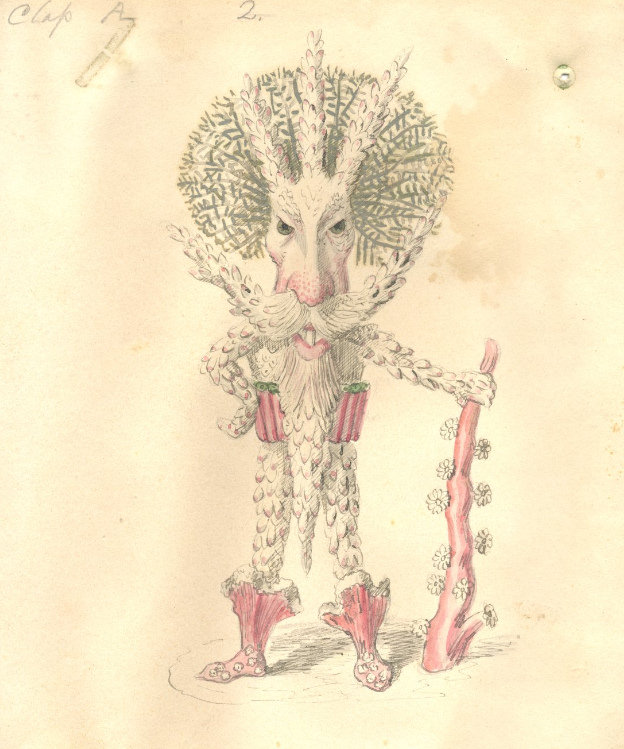
Kehinde Wiley’s portrait of President Obama.

The right wing lunatic fringe is going nuts over the portrait of President Obama. They seem to see sperm everywhere. And all other manner of evil. Don’t see it m’self.

…Corsi was online yesterday when the official portraits of Barack and Michelle Obama were released, and like so manyothers on the Right, he saw something nefarious in the paintings, asserting that the foliage and flowers in Barack Obama’s portrait were a symbol of “the pedophilia that they’re engaging in.”

“That is one of the weirdest presidential portraits I have ever seen,” Corsi said. “It’s a bizarre picture.”

“It’s a reference to the loss of virginity in terms of a physical sense,” he added. “It’s a very physical reference to loss of virginity … This whole elite globalist pedophilia is a major theme that Q continues to remind us underlies a lot of these globalists that we are dealing with. The fact that they are sitting on flowers and the deflowering could be easily an image of the pedophilia that they’re engaging in or the slavery pedophilia, you know, tend your gardens everybody, their slave gardens.”

Oh, now it’s “slavery pedophilia”. What the fuck? Do these people just sit around and do nothing all day except come up with this garbage? What a way to spend your life. Ugh.

Alex Jones, contributing to the second phase of the ongoing right-wing smear campaign against the artist who painted Barack Obama’s presidential portrait, claimed that the artist purposefully painted an image of sperm on Obama’s face to fulfill part of a globalist agenda to “have everything be a ritual of abomination.”

Today on Infowars, Jones claimed the artist Kehinde Wiley, who was hired to paint Obama, “is obsessed with sperm” and that “all of his paintings have sperm swimming all over everything.” For some reason, Jones also felt the need to clarify that the alleged sperm shape in question was a “GMO sperm” that was “fully formed.”

“You say, ‘But, it doesn’t make sense, it’s so degenerate.’ It’s a religion of degeneracy. It’s what globalism is. It’s what Satanism is,” Jones said. “So there you go, President Obama covered in sperm in new national portrait, and it’s all part of the joke in your face, because they don’t want upright strength. They want to have everything be a ritual of abomination.”

President Obama is covered in sperm. Uh huh. I think perhaps it’s someone other than Wiley who’s a tad obsessed with sperm, Mr. Jones.

You can read the full stories and more, at RWW: Corsi, Jones.

Colour In The Middle Ages.

The month of May from Très Riches Heures du Duc de Berry – three young women are dressed in green.

The month of May from Très Riches Heures du Duc de Berry – three young women are dressed in green.

Medievalists has a fun article up about colour. Me, I’m all about the red first. Black second. I was rather delighted to find out I’d be an evil knight. :D Some interestin’ bits:

Medieval scholars inherited the idea from ancient times that there were seven colors: white, yellow, red, green, blue, purple and black. Green was the middle color, which meant that it sat balanced between the extremes of white and black. It was also considered a soothing color, so much so that scribes often kept emeralds and other green objects beside them to look at when they needed to rest their eyes, while the poet Baudri de Bourgueil suggested writing on green tablets instead of white or black ones.

I wouldn’t mind keeping a few emeralds around…

Arthurian romances, one of the most popular forms of literature in the High Middle Ages, often made symbolic use of color, especially in the depiction of knights. Pastoureau writes:

The color code was recurrent and meaningful. A black knight was almost a character of primary importance (Tristan, Lancelot, Gawain) who wanted to hide his identity; he was generally motivated by good intentions and prepared to demonstrate his valor, especially by jousting or tournament. A red knight, on the other hand, was often hostile to the hero; this was a perfidious or evil knight, sometimes the devil’s envoy or a mysterious being from the Other World. Less prominent, a white knight was generally viewed as good; this was an older figure, a friend of protector or the hero, to who he gave wise council. Conversely, a green knight was a young knight, recently dubbed, whose audacious or insolent behavior was going to cause great disorder; he could be good or bad. Finally, yellow or gold knights were rare and blue knights nonexistent.

There’s also the mystery of why the colour blue took so very long to show up, and much more.

Michel Pastoureau has written extensively about symbolism and colors in the Middle Ages. His series A History of a Color, has four books that have been translated into English – Black, Blue, Green and Red.

I’ve already tracked these down at B&N and put my order in! :D Not only a lovely little history, but a nice read, and fun resource for artists. You can read everything at Medievalists.net.

Tatsuya Tanaka: Miniature Calendar.

© Tatsuya Tanaka.

Everyone must have had thoughts like these before:
Broccoli and parsley may sometimes look like a forest of trees, and tree leaves floating on the surface of water may sometimes look like little boats. Everyday occurrences seen from a miniature
perspective can bring us lots of fun thoughts.
I wanted to take this way of thinking and express it through photographs, so I started to put together a “MINIATURE CALENDAR.” These photographs primarily depict diorama-style figures surrounded by
daily necessities.
Just like a standard daily calendar, the photos are updated daily on my website and SNS page, earning it the name of “MINIATURE CALENDAR.”

It would be great if you could use it to add a little enjoyment to your everyday life.

Add a little enjoyment to your world, by visiting Tatsuya Tanaka’s worlds, they are wonderful! You can see the current month and all the archives at Miniature Calendar.

Mermecoleon.

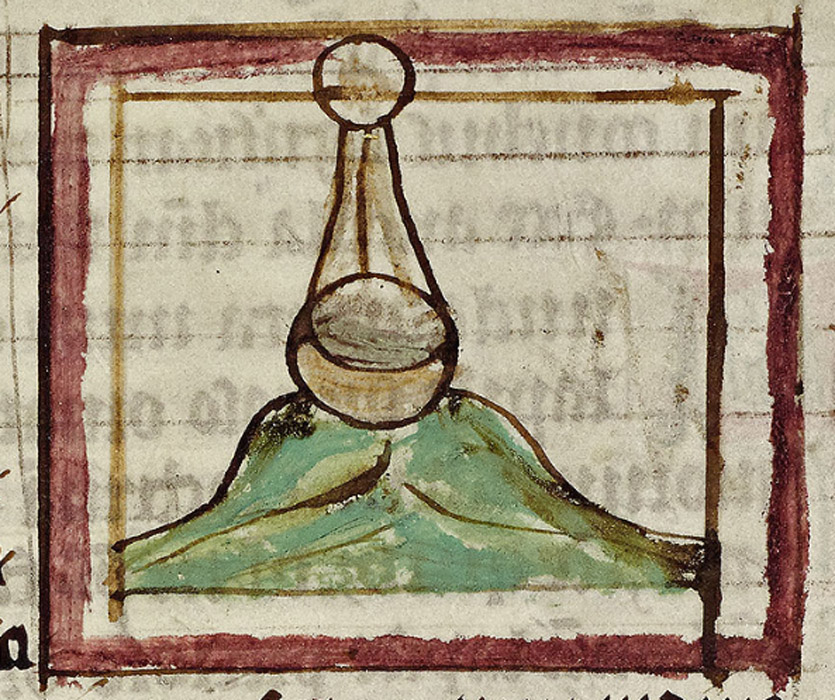
A poor sketch by the same hand as f.94r. The open stone, lying on green water, takes in the heavenly dew in order to grow a pearl.

A poor sketch by the same hand as f.94r. The open stone, lying on green water, takes in the heavenly dew in order to grow a pearl.

Nothing but preaching.

Text Translation:

Of the stone called mermecoleon. There is a stone in the sea which is called in Latin mermecoleon and in Greek concasabea, because it is both hollow and round. It is, moreover, divided into two parts, so that if it wants to, it can close up. The stone lies at the bottom of the sea and comes to life early in the morning. When it rises from its resting-place to the surface of the sea, it opens its mouth and takes in some heavenly dew, and the rays of the sun shine around it; thus there grows within the stone a most precious, shining pearl indeed, conceived from the heavenly dew and given lustre by the rays of the sun. The stone, therefore, is called conchus; it symbolizes Saint Mary, of whom Isaiah foretold, saying: ‘There shall come forth a rod out of the stem of Jesse’ (Isaiah, 11:1). And again: ‘Behold a virgin shall conceive and bear a son’ (Isaiah, 7:14). Of the rod and the virgin, Saint Mary, it is said: ‘A flower was born of Saint Mary, our Lord Jesus Christ’. For just as the stone rises from the sea, so Saint Mary went up from the house of her father to the temple of God and there received the dew from heaven. These are the words which were said to her by the archangel Gabriel: ‘The Holy Ghost shall come upon thee, and the power of the Highest shall overshadow thee; therefore also that holy thing which shall be born of thee shall be called the Son of God’ (Luke, 1:35). Behold these words are the heavenly dew, just as before her, the patriarch Isaac, blessing his son, signifying that Christ would be born from his seed, said to him: ‘God give thee of the dew of heaven and the fatness of the earth’ (Genesis, 27: 28), signifying the chaste, untouched virgin Mary. ‘Early in the morning’ refers to the time of prayer. The mussel opening its mouth signifies the occasion when Mary says to the angel: ‘Behold the handmaiden of the Lord; be it unto me according to thy word’ (Luke, 1:35).

Folio 96r – the adamas stone, continued. De lapide qui dicitur mermecoleon; Of the stone called mermecoleon.

Gay Bob: I Think It’s Time For A Comeback.

The Gay Bob doll in all his glory. Harvey Rosenberg/Gizmo/Museum of the City of New York/93.83.A-J

The Gay Bob doll in all his glory. Harvey Rosenberg/Gizmo/Museum of the City of New York/93.83.A-J

I can’t be the only one who remembers Gay Bob. If you don’t remember Gay Bob, perhaps you remember the lunatic reaction, starting in 1978, which Anita Bryant climbed on top of, screaming her hatred of all things queer to the skies.

A 1978 magazine advertisement for the Gay Bob doll. <a href="https://flic.kr/p/8Z6npF">Joe Wolf/CC BY-ND 2.0</a>

A 1978 magazine advertisement for the Gay Bob doll. Joe Wolf/CC BY-ND 2.0

I think it’s time for Gay Bob to come out of the closet again, along with his family, and some new additions, as well.

Gay Bob, who was meant to resemble a cross between Robert Redford and Paul Newman, was blond, with a flannel shirt, tight jeans, and one pierced ear. The doll gave anti-gay organizations plenty to fear; intrinsic within it was a celebration of gay identity, evidenced by Gay Bob’s programmed speech. “Gay people,” Bob said, “are no different than straight people… if everyone came ‘out of their closets’ there wouldn’t be so many angry, frustrated, frightened people.”

In a cheeky move, the box in which Gay Bob was packaged came in the outline of a closet, so that when he left his box, he was literally coming out of the closet. Gay Bob explained: “It’s not easy to be honest about what you are — in fact it takes a great deal of courage… But remember if Gay Bob has the courage to come out his closet, so can you.”

The affirming message was no accident. The doll’s creator, Harvey Rosenberg, a former advertising executive who developed marketing campaigns for various corporations, wanted Gay Bob to “liberate” men from “traditional sexual roles.” He created the doll soon after a series of shocks rocked his life: in quick succession, his marriage fell apart and his mother became seriously ill. He decided that his next projects would need to be of great personal significance.

[…]

Initially sold through mail-order ads in gay-themed magazines, Gay Bob soon expanded into boutique stores in New York and San Francisco. Rosenberg even pitched it to major department store chains, one of which liked the idea (but ultimately did not purchase it). And, it turns out, those consumers who feared the introduction of more “disgusting” dolls were partially correct—Rosenberg soon gave Gay Bob a family of his own, with brothers Marty Macho, Executive Eddie, Anxious Al, and Straight Steve (who lived in the suburbs and wore blue suits), and sisters Fashionable Fran, Liberated Libby, and Nervous Nelly.

If this is all new to you, you can read all about Gay Bob at Atlas Obscura.

Adamas Stone.

The adamas stone on a mountain.

The adamas stone on a mountain.

Whole lotta preachin’ going on. The last paragraph is about the stone.

Text Translation:

Of the adamas stone. Physiologus says: There is a stone called adamas found on a certain mountain in the east. Such is its nature, that you should search for it by night, not day, since it shines at night where it lies, but it does not shine by day, since the sun dulls its light. Against this stone, neither iron, fire or other stones can prevail. The prophet says of it: ‘I saw a man standing on a wall of adamant and in his hand was an adamant stone in the midst of the people of Israel’ (compare Amos, 7:7). But a creature cannot prevail against its creator, and for this reason Christ is the adamas stone. He stands on a wall of such stone, on the holy and living stones of which heavenly Jerusalem is built. These are the Apostles, the prophets and the martyrs, over whom neither fire, nor the sword nor the teeth of beasts could prevail.

[Read more…]

Firing Bearing Stones.

The tale is divided into two scenes. A naked man and woman stand apart above a fire, offering each other fire stones. In the lower image, they embrace.

The tale is divided into two scenes. A naked man and woman stand apart above a fire, offering each other fire stones. In the lower image, they embrace.

Commentary:

A literal illustration of the text only requires a picture of stones, as shown in London, B.L.Harley MS 3244, f. 60, but the arrangement of the figures and tree is intended to suggest the Fall in the Garden of Eden.Fire-bearing stones are male and female. When they are apart the fire does not ignite, when close together, the mountain burns. The warning is for men to stay clear of women and avoid kindling lust. Beside the painting are sketches which are a combination of the Ashmole and Aberdeen illuminations. Ashmole Bestiary, f.103v. Their comparisons are analysed here.

More misogyny ahead.

Text Translation:

Of fire-bearing stones. On a certain mountain in the east, there are fire-bearing stones which are called in Greek terrobolem; they are male and female. When they are far from each other, the fire within them does not ignite. But when by chance the female draws near to the male, the fire is at once kindled, with the result that everything around the mountain burns.

For this reason, men of God, you who follow this way of life, stay well clear of women, lest when you and they approach each other, the twin flame be kindled in you both and consume the good that Christ has bestowed upon you. For there are angels of Satan, always on the offensive against the righteous; not only holy men but chaste women too. Finally, Samson and Joseph were both were tempted by women. One triumphed; the other succumbed. Eve and Susanna were tempted; the latter held out; the former gave in. The heart, therefore, should be guarded and guided by all forms of divine teaching.

For the love of women, which has been the cause of sin from the beginning, that is from Adam to the present day, rages uncontrolled in the sons of disobedience.

Folio 93v – the age of man, continued. De lapidibus igniferis; Of fire-bearing stones.

Of The Age of Man.

Isidore sits on a chair, writing on a sloping desk the words '(ysid)oris (de) natu(ra) hominisI' Isidore, Concerning the Nature of Man.

Isidore sits on a chair, writing on a sloping desk the words ‘(ysid)oris (de) natu(ra) hominisI’ Isidore, Concerning the Nature of Man.

Quite the misogynistic treatise.

Text Translation:

Of the age of man There are six stages of life. Infancy, childhood, adolescence, youth, maturity and old age. The first age is infancy, which lasts from the time the child enters the light till it is seven. The second is childhood, that is, when the child is pure and not yet old enough to generate young; it extends to the fourteenth year. The third is adolescence, when the child is old enough to generate children; it lasts until the twenty-eighth year. The fourth is youth, the the most robust of all the ages; it ends in the fiftieth year. The fifth age is that of riper years, that is, of maturity, and represents the movement away from youth to old age; you are not yet ancient, but you are no longer young; the Greeks call someone at this age of maturity presbiteros, an elder; an old man they call geron. This age, beginning in the fiftieth year, ends in the seventieth. The sixth age is that of old age, which has no end-date; whatever of life is left after the five Previous ages is classed as ‘old age’. The final part of old age is senility, senium, so called because it marks the end of the sixth age, sexta etas.

Philosophers, therefore, have categorised human life in these six periods, during which it is changed and runs its race and comes to an end, which is death. So, let us proceed briefly through the above-mentioned categories of the ages, pointing out their etymology in the context of man.

[Read more…]

Facebook, Oh Facebook: L’Origine du monde. (NSFW)

L'Origine du monde, Gustave Courbet, 1866.

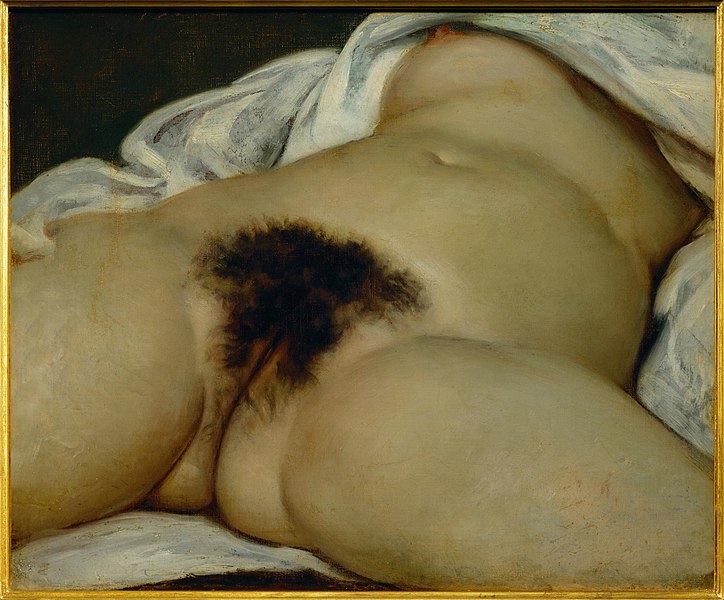
L’Origine du monde, Gustave Courbet, 1866.

L’Origine du Monde, The Origin of the World, is a famous and well known painting by Courbet. It’s a beautiful work, and housed at Musée d’Orsay, Paris. Facebook France decided that a small thumbnail of this work was deserving of censorship.

The dispute around Gustave Courbet‘s graphic 1866 oil painting “L’Origine du Monde” (The Origin of the World), has escalated with teacher is taking Facebook to a Parisian court over allegations of censorship. Frédéric Durand-Baïssas says the social media network blocked his account without notice when he posted a thumbnail with footage and information about the painting.

The incident took place in 2011 but it has taken years of wrangling to establish whether or not Facebook is liable to French law, as it regards itself as a U.S. company. The art-lover posted a clip of the Courbet work after the account of Danish sculptor Frode Steinicke went down for a similar violation of the website’s rules on nudity. The company reactivated Steinicke’s account, although without the allegedly offending piece.

“On the one hand, Facebook shows a total permissiveness regarding violence and ideas conveyed on the social network,” the teacher’s lawyer, Stéphane Cottineau, told the Associated Press in 2016. “And on the other hand, [it] shows an extreme prudishness regarding the body and nudity.”

I would think, at this point, with Facebook being up to their neck in unethical and questionable activities they refuse to do anything about might have given them a bit of a wake up call over their astonishing prudery. They don’t care about threats. They don’t care about people being harassed. They don’t care about people using their service to steal. They don’t care about fakery of any kind. Oh, but if there is even an implied nipple, they are on the case, you betcha! There isn’t even an attempt to understand that the rest of the world does not have such puritanical views. There is nothing wrong with the human body, and it’s past time Facebook stopped acting like it’s the biggest shame of all.

Via Raw Story.

Black Room.

The first landscape encountered in the Black Room interactive game (all images screenshots by the author for Hyperallergic).

The first landscape encountered in the Black Room interactive game (all images screenshots by the author for Hyperallergic).

The second landscape of Black Room.

The second landscape of Black Room.

Here’s an interesting game, Black Room:

The first few minutes of Black Room are a twist on my expectations. I know I’m not playing a traditional game. In fact, according the game’s homepage, I’m playing a “browser-based, narrative game about falling asleep while on your computer, on the internet,” where I play as “an insomniac on the verge of sleep, moving through shifting states of consciousness.”

Created and developed by Cassie McQuater, Black Room is free to play (with the option to donate money), and was “conceived as a feminist dungeon crawler, [and] features a majority female cast of video game sprites from the 1970s–current day.” After the game’s opening sequence — a blue light descends through a heron-filled sky before crashing to the ground and turning into a woman — my fingers are only allowed to do one thing: move my character to the right. As I do, the background comes alive with stars and fantastical birds. I’m moving through this dreamscape, alone. When I click on the “?” in the upper-right corner of the screen, I’m told, “The sky is vast. Yawning, you feel as though you’ve just woken from a long sleep. There is only one direction to travel.” Onward it is.

As a lifelong insomniac, I might have to give this one a try. You can read and see much more at Hyperallergic.

Design Crime: Art & Social Justice.

Stickers by Stuart Semple.

From spikes installed on window ledges to bars that divide benches into a set number of seats, examples of disciplinary architecture — otherwise known as hostile urban architecture — are all around us. Such designs deliberately restrict certain behaviors in public spaces, and while they affect everyone, they especially target homeless individuals, who cannot rest on these surfaces.

The UK-based artist Stuart Semple has created a campaign to try and raise awareness about these often subtle forms of social control. Today, he launched a website, Hostile Design, as a platform where people can easily and quickly spread word about these designs. It simply calls for anyone to photograph examples anywhere in the world, and share them on Instagram with the hashtag #hostiledesign. The website then aggregates these in a “design crime gallery.”

“Hostile design is design that intends to restrict freedom or somehow control a human being — be that homeless people, a skater or everyday humans congregating to enjoy themselves,” Semple told Hyperallergic. “The danger of hostile design is it’s so insidious. It’s so quiet, so camouflaged, that unless you know what it is, you accept it. And that blind acceptance makes things grow and spread.”

To further inform people beyond the digital sphere, he is also distributing stickers he created, which are available on the website. These “design crime” stickers are intended for pasting on offending surfaces and are available through pay-what-you-can pricing.

A bus stop in Bournemouth.

Living rural, I don’t see things like the above bus stop, which honestly shocked me. I’m about the size of a twig, and trying to sit on that “bench” would be very uncomfortable for me. Has it become so important to us to keep the afflicted and unfortunate out of sight that we willingly go along with being punished by this “disciplinary architecture”? This certainly strikes me as immoral and unethical, making every surrounding hostile because oh my, someone might actually find a place they could lie down and sleep, the horror! Par for the course, there’s zero effort to do anything about the problem of homeless people, but there’s a whole lot of effort going into driving them away from all public spaces. Certainly does not speak well of us. This isn’t just about driving the unfortunate out of sight, there’s also a public stair handrail, which has a block placed on it, just in case anyone had a fit of happy and wanted to slide on the railing.

I can’t say I’ve noticed anything like this in Bismarck, but I’m arming myself with stickers, and I’ll be looking.

There’s much more to read and see at Hyperallergic.

Abdominal Organs, Genitals, Semen, Menstrual Blood, Fetus, Heredity.

Isidore sits on a chair, writing on a sloping desk the words '(ysid)oris (de) natu(ra) hominisI' Isidore, Concerning the Nature of Man.

Isidore sits on a chair, writing on a sloping desk the words ‘(ysid)oris (de) natu(ra) hominisI’ Isidore, Concerning the Nature of Man.

Oh, I have to say that this entry is most entertaining, in a trainwreck sort of way.

Text Translation:

Only women have a womb; in it they conceive as in a small cup; but there are writers who assign a womb to either sex, often calling it venter, belly – and not just poets, but others also. The womb is called uterus because it is double and divides itself into two parts which bend in different and opposing directions like a ram’s horn; or because it is filled inside with a fetus. For this reason it is called uter, a bag, because it has something inside it, such as limbs and intestines. Paunch, aqualiculus, is properly the word for a pig’s belly. For this reason it is translated as venter, belly. It is called the matrix because the baby is generated in it. It fosters the semen it has received, and by cherishing it, turns it into flesh; and what it has turned into flesh, it separates into parts of the body. The vulva is so called as if it were a folding-door, that is, the door of the belly; either because it receives the semen or because the fetus goes forth from it.

[Read more…]