An Island

AnIsland_Painting

©Charly, all rights reserved.

This is a coloured sketch to one of my paintings. I cannot unfortunately make a picture of the final painting, because I gave it to my brother who now lives 400 km from me. All the paintings I gave him are at the moment not fulfilling their function, because my sister in law has stashed them away.  They “do not fit with the color scheme of their new appartment” which I did not take kindly, because they could keep the paintings during the renovations in mind if they wanted to. Click for full size.

A bummer – I have just reminded myself that a lot of my sketches are ruined or damaged. A few years ago I was reconstructing the roof and the workers have moved my stuff around without heeding my instructions. The impromptu cover was also built sloppily and my warnings that I live in very windy area were dismissed as needles worrying of an amateur. Inevitably the drawings were stashed under the impromptu cover which got ripped off in a gust of wind. And rain poured on them. I only found out a few months after they left, when everything was mouldy.

It would take a lot of time to airbrush it in Photoshop, so some of the pictures will unfortunately have maps on them.

Working On and Slobbery Dogs…

Lately, I’ve been working on the floor, so this is my fault, but slobbery dogs, aaaaauuuugh. One of the doors in my studio opens onto the lav, and the door was open. I go in for around 10 seconds, and Jayne promptly stands over the painting and drools. Now he’s sleeping the sleep of the innocent (What? I didn’t do anything! Why are you yelling? Can I have a treat?)

New Game: Foundation.

Foundation is a grid-less, sprawling medieval city building simulation with a heavy focus on organic development, monument construction and resource management.

The game features in-depth resource management akin to the Anno (Dawn of Discovery) series, expertly mixed with city building elements from SettlersSimCity, and Pharaoh all topped with narrative encounters inspired by Crusader Kings II to create the ultimate medieval ant-farm simulation!

In this strategy city-builder economy simulation game, players must create a prosperous settlement as the newly appointed lord of a region untouched by man.

Setting to redefine the city-builder genre, Foundation puts the emphasis on the organic aspects of urbanism in the cities of old, powered by Polymorph Games’ in-house game engine, Hurricane, which allows for full mod support and is optimized for the thousands of moving parts that come with building humongous cities.

Among other things, the engine provides the player with robust building tools to create countless unique monuments that can then integrated into your settlement.

With medieval architecture and urbanism at the forefront of its design, Foundation’s vision is to allow players to recreate cities of that period as they envision them or even as they really were.

You can read and see more about Foundation at Medievalists, or just head straight to the Kickstarter, which has garnered much more than the initial ask.

Banksy Blitz NYC.

One of the new Banksy murals in Midwood, Brooklyn. Benjamin Sutton.

One of the new Banksy murals in Midwood, Brooklyn. Benjamin Sutton.

Banksy’slatest series of interventions in the New York City streetscape continued apace today. This afternoon the artist revealed on Instagram that a mural in the Midwood section of Brooklyn that had come to widespread attention last week is in fact his doing.

The mural is a characteristically coy commentary on capitalism, although it is accompanied by a smaller piece that depicts a seal. The pair is located in Midwood, at Coney Island Avenue and Avenue I. The larger one features what looks like a real estate developer (equipped with both a briefcase and a hardhat) brandishing a whip in the shape a rising red line graph, while a procession of children, a woman, an elderly person, and a dog flee. Nearby, a smaller mural whose connection to the theme of gentrification is indecipherable, features a seal balancing a ball — formed by the unpainted circle where a sign used to hang — on its nose.

It’s always interesting, tracking Banksy, and this is no exception. Benjamin Sutton at Hyperallergic has the story.

2018 Sony World Photography Awards.

The Great wall of Namib. © Paranyu Pithayarungsarit, Thailand, Shortlist, Open, Landscape & Nature (2018 Open competition), 2018 Sony World Photography Awards.

The Great wall of Namib. © Paranyu Pithayarungsarit, Thailand, Shortlist, Open, Landscape & Nature (2018 Open competition), 2018 Sony World Photography Awards.

Oh, such amazing photography, glimpses of all the worlds within our world! I had to bookmark, because I have too much to do today and I have to be good and asleep early (5:30am wake up), but I’ll work my way through eventually. Have a wander and see wonders!

This was via Atlas Obscura, which highlighted twelve landscapes, including the one above.

Katastwóf Karavan.

Kara Walker with her “Katastwóf Karavan” at the Mississippi River Trail on February 23, 2018, in New Orleans. Josh Brasted/Getty Images.

Kara Walker with her “Katastwóf Karavan” at the Mississippi River Trail on February 23, 2018, in New Orleans. Josh Brasted/Getty Images.

[…] Walker titled the whole montage the Katastwóf Karavan, or Caravan of Catastrophe, the use of Haitian Creole signaling the mix of Caribbean and Southern histories that shaped New Orleans. Walker’s first public installation since the 2014 Marvelous Sugar Baby — the enormous Sphinx-like mammy figure that she built out of sugar in the now-demolished Domino factory in Williamsburg — the Karavan went up for the closing weekend of the Prospect.4 triennial, which ran for three months at multiple sites around New Orleans. The installation was freighted with layers of site-specific symbolism — none of it subtle if you knew a bit about local history, yet all of it obscured by years of avoidance or, at best, awkward notes in the narratives delivered by school curricula or tourist brochures.

Thus Algiers Point: Here, in the eighteenth century, traders warehoused disembarked captives — those who survived the Middle Passage — before selling them on the opposite bank in the markets that dotted the French Quarter and surroundings. This is where families were rent apart, humans assessed and packaged as commodities. Thus, too, Walker’s tableaux, relevant across the landscape of chattel slavery but especially here.

And thus the calliope, a direct retort to the one on the Natchez — “the OTHER calliope,” Walker called it on her handout for the event — and its sonic broadcast of a whitewashed history. Several times a day, the vessel’s instrument blares out to the city (there is no such thing as a quiet calliope) items from a hoary playlist such as “Old Man River,” “When the Saints Go Marching In,” “God Bless America,” and, yes, “Dixie’s Land.” […]

You can read and see much more about Kara Walker’s latest piece here.

And the siren sings…

© C. Ford, all rights reserved.

© C. Ford, all rights reserved.

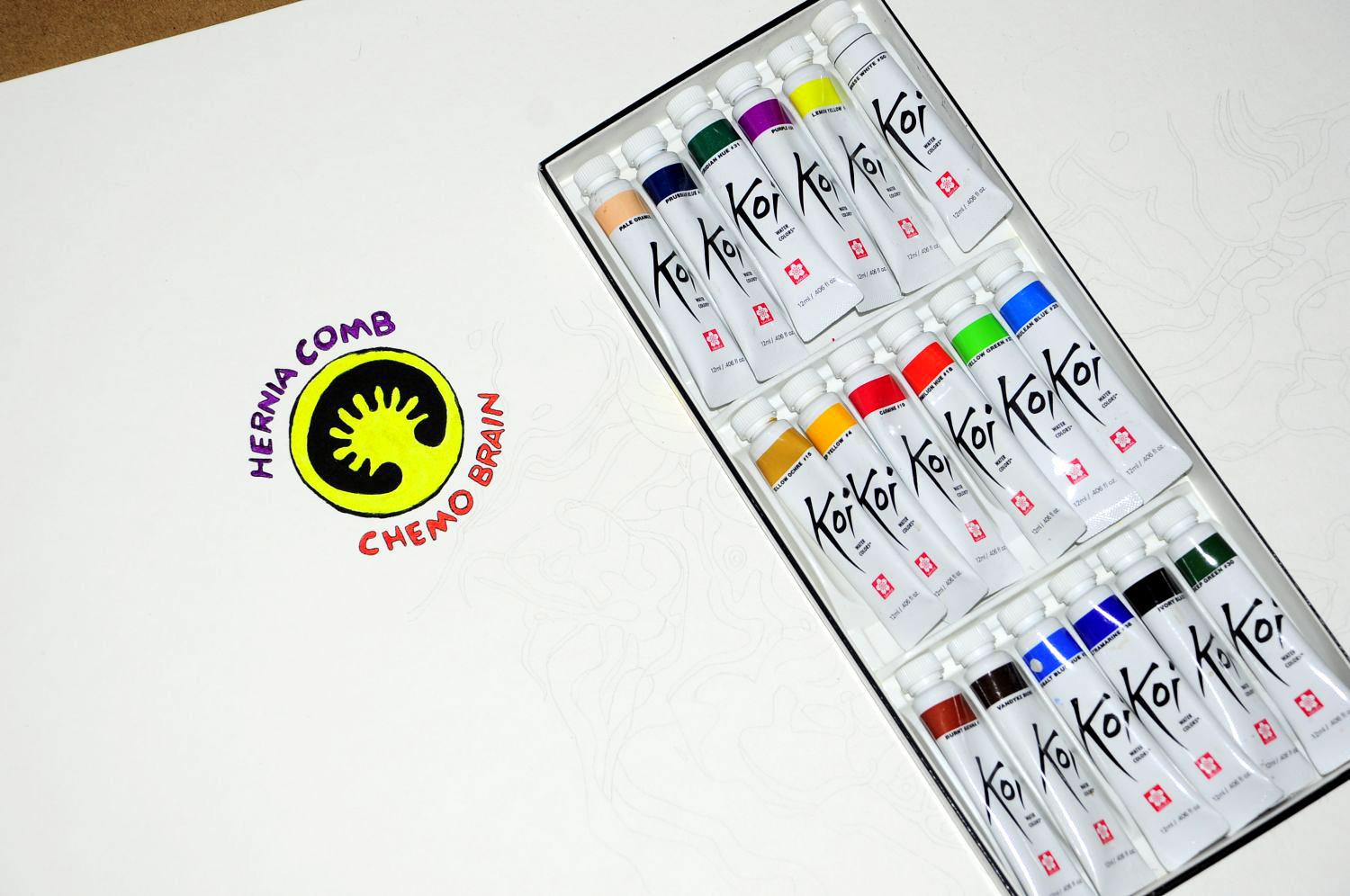
I’ve been working in pencil too long, does my head in. Pigments are my true love, and always will be. They’ve been singing to me lately, which leads me to the matter of paints. A while back, a friend was thoughtful enough to send me a whole bunch of watercolours they weren’t going to use (Hi, Kestrel!), and I about screamed with delight when I saw the Sakura Koi paints. I haven’t had those in ages, and I love them. Love them to pieces. I’m not impartial to Sakura; I have a whole lot of their markers in my studio, and their products have never disappointed.

I’ve written before about the sheer gougery in art products, everything costs a bloody fortune. Just trying to recoup your materials cost in any given piece can seriously hike the price you end up asking. There is, of course, a staggering amount of snobbery in the world of art supply. Many people end up convinced that name equals quality. Sometimes, it does. Other times, not so much. Some people are so convinced that name equals quality, they don’t pay any attention to the actual quality of the product. This is oh so true when it comes to paints. The best way to insure the quality you want is to make your own, but that does your wallet no favours. Back to the Sakura Koi – the set I bought ages ago, I did buy because of price. Sakura manages to attach a reasonable price to their products, which is not a crime, in spite of many people thinking so. I was pleasantly surprised by the quality of the pigments, clear, bright, and luminous. It’s very easy to get distracted by the ‘big’ names, and spurn the reasonably priced stuff, but it’s truly worth your while to give the reasonable stuff a try, there are many gems there which you won’t be disappointed in at all, and they’re a kindness to that wallet too. The 18 set shown runs around $27.00 these days, and the tubes are a very generous 12 ml, so they’ll last a long time.

Von Wright’s Scandinavian Birds.

All of the stunning paintings in Svenska Fåglar (Swedish Birds) by the von Wright brothers (1929 folio version) are in the public domain, and free to download and use in any way you wish. This is exquisite artwork, so even if you don’t want to use it, have a wander anyway, your day will be better for it. Also in the public domain are Birds of Australia, Ornithological volume by John Gould (1804-1881), illustrated by Elizabeth Gould (1804–1841), which introduced more than 300 new birds to the world.

The Fight.

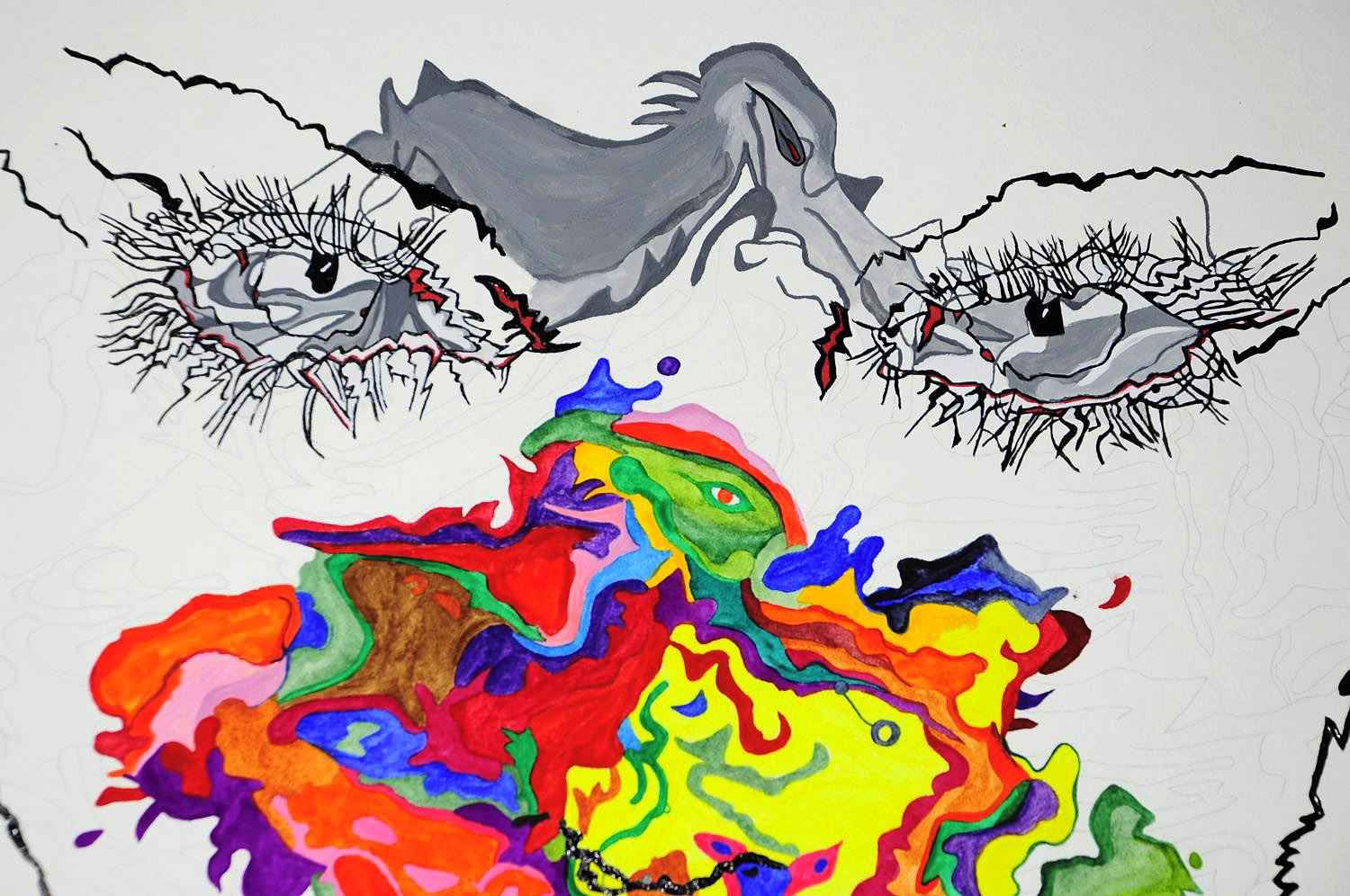
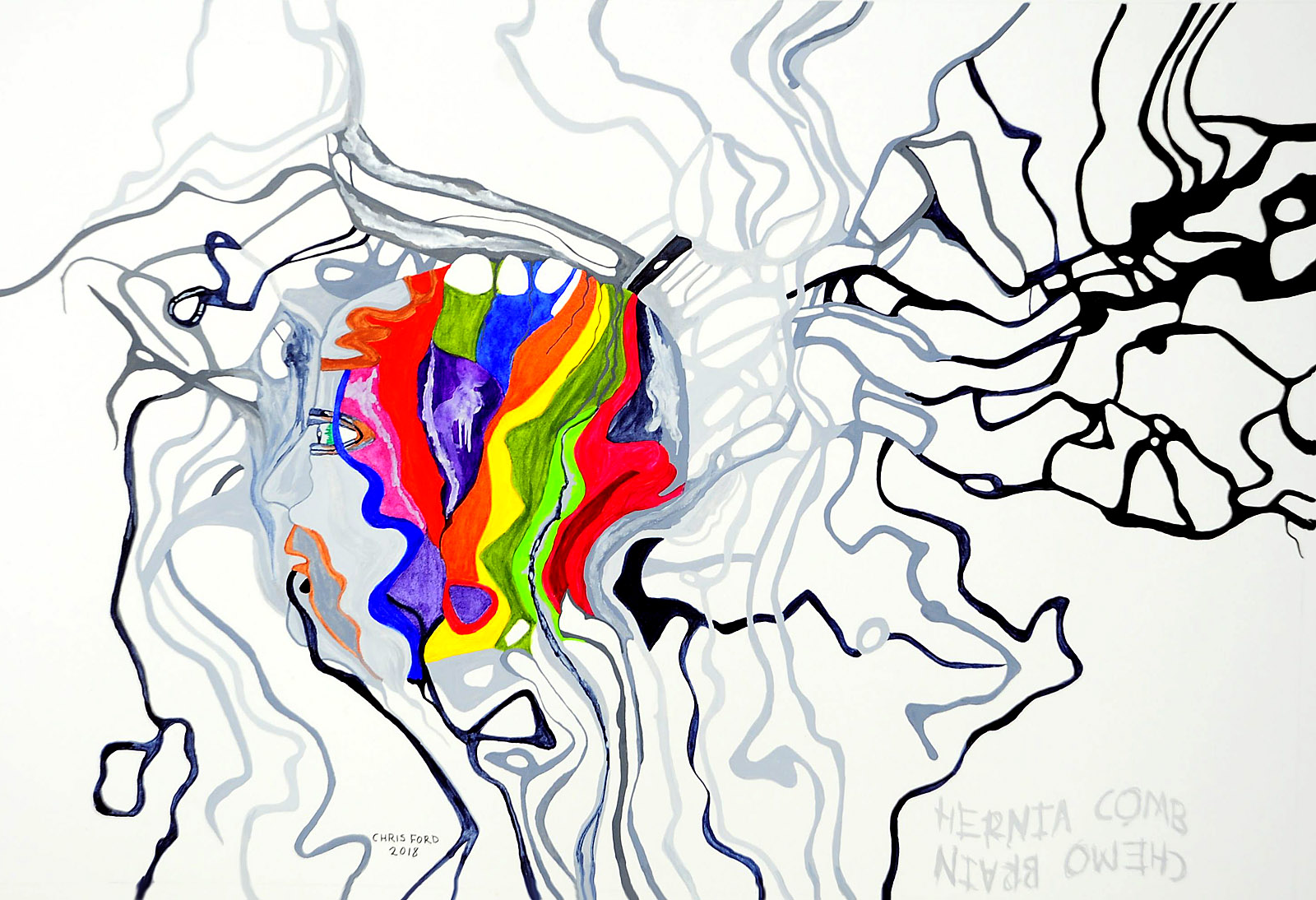
Finished! 18″ x 24″, pencil & marker on Bristol. Click for full size. I am so curious, so this is for everyone, not just fellow artists. For the artists, how would you depict cancer and chemotherapy? For all the non-artists, how do you picture things like cancer and chemotherapy? What shape do they take in your head? Prior to getting cancer, I can’t say I ever gave it any thought at all, and I’m not overly sure where the images in The Fight came from, they were just there. After trying to think about it for a bit, seems the main concepts in my head had to do with fluidity and a crackling electricity, mass power out of control.

© C. Ford, all rights reserved.

A Love Letter To Bolivia.

© Kevin Faingnaert.

© Kevin Faingnaert.

© Kevin Faingnaert.

© Kevin Faingnaert.

Belgian photographer Kevin Faingnaert spent a month capturing what he calls a love letter to Bolivia, penned to, “the land and to the generations of people and animals who have shaped it.”

Bolivia is a country of extremes: from the Andes to the Amazon, its landscape offers seemingly infinite horizons, each more spectacular than the next. Enchanted by both the topographic extremes and the cultural tradition of the country, Faingnaert photographed what he saw as he traveled from the famed Lake Titicaca, across the Salt Flats and to the wild-west of the country. In the interview below, we spoke to him about his month in Bolivia, the majesty of its landscape, and the traditions that still thrive there.

You can read and see so much more at iGNANT. Amazing photographs!

Seductive Sins: 100 Years of Ads.

In this catalog of twentieth-century advertisements, Taschen has drawn together examples of advertorial seduction that were employed by liquor and tobacco companies over the past 100 years.

This colorful tome showcases an undeniably vibrant chapter of advertising history: highlighting trends — from the kitsch to the cliché and the classy — in drinking and smoking in America. 20th Century Alcohol and Tobacco Ads is as much a lesson in popular culture and pseudo-science as it is in advertising: see the pages dedicated to doctors testifying that smoking soothes the throat and liquor bring social success! With contemporary legislation in many countries moving cigarettes to plain packaging and alcohol advertisements to after hours on TV, the images in this publication seem almost closer to caricature than they do to real life.

You can see several more ads at iGNANT, and buy the book here.

The Medieval Method of Cooking Octopus.

Grilled octopus – photo by Alpha / Flickr.

Grilled octopus – photo by Alpha / Flickr.

“This is a vile fish of no value; therefore cook it the way you want.” ~ Liber de Coquina, a 14th century cookbook.

I’ll admit upfront that I’m a fan of octopuses, when they are alive. I don’t care for them in the least when dead, regardless of the cooking method.

Platina’s Right Pleasure and Good Health, a 15th-century work from Italy, offers these thoughts:

On octopus – The polypus has been named because it has many feet. It uses its gills as feet and hands, and its tail, which is two-pronged and is pointed, while mating. They are very pleased with smell, and they eat the flesh of shellfish. They carry everything into their house and then separate the shells from the red meat. It hunts the small fish which are swimming near the shells. You season a cooked octopus with pepper and asafetida.

Platina also has this to add: Whatever way you cook it, you will say it is bad. Doesn’t seem to much point with such a conclusion.

Meanwhile, The Book of Sent Sovi, a 14th-century Catalan text, gives this recipe:

To Stuff Octopus – If you want to stuff octopus or squid, take the octopus and wash it well, boil it, cut off the arms, and take out what is inside. Chop the arms all together with parsley, mint, marjoram and other good herbs. You can chop another kind of fish if the tentacles are not enough. Put in the best spices that you can find. Make sure that the octopus is cleaned well. Put in the stuffing, and put in raisins and scalded garlic and fried onion. Then make almond milk with the broth that has boiled the fish, and put it in a bowl or a casserole together with the octopus; in the milk you can put a little verjuice and good spices, the best you might have, and oil. You can cook it in the oven or on iron trivet with live coals beneath.

If you’re just dying for medieval cooked octopus, that sounds like an interesting recipe to work out.

Via Medievalists.

In exciting news, the Newberry has opened up access to 1.7 million historical images!

The Newberry has announced a major revision to its policy regarding the re-use of collection images: images derived from collection items are now available to anyone for any lawful purpose, whether commercial or non-commercial, without licensing or permission fees to the library.

You can read much more here.

Medieval Courses Online.

There is now a unique range of medieval and Tudor courses which can be downloaded or followed online, complete with the full text from www.medievalcourses.com – once registered students have unlimited access to study at their own pace, and can complete online quizzes at the end of each module. The courses are professionally produced in thirty minute lessons and include up to 11 hours of teaching, plus bonus materials, reading lists and links to other resources. The tutors are all established experts in their field.

The courses are all very reasonably priced. You can read much more, including a summary of the offered courses here.