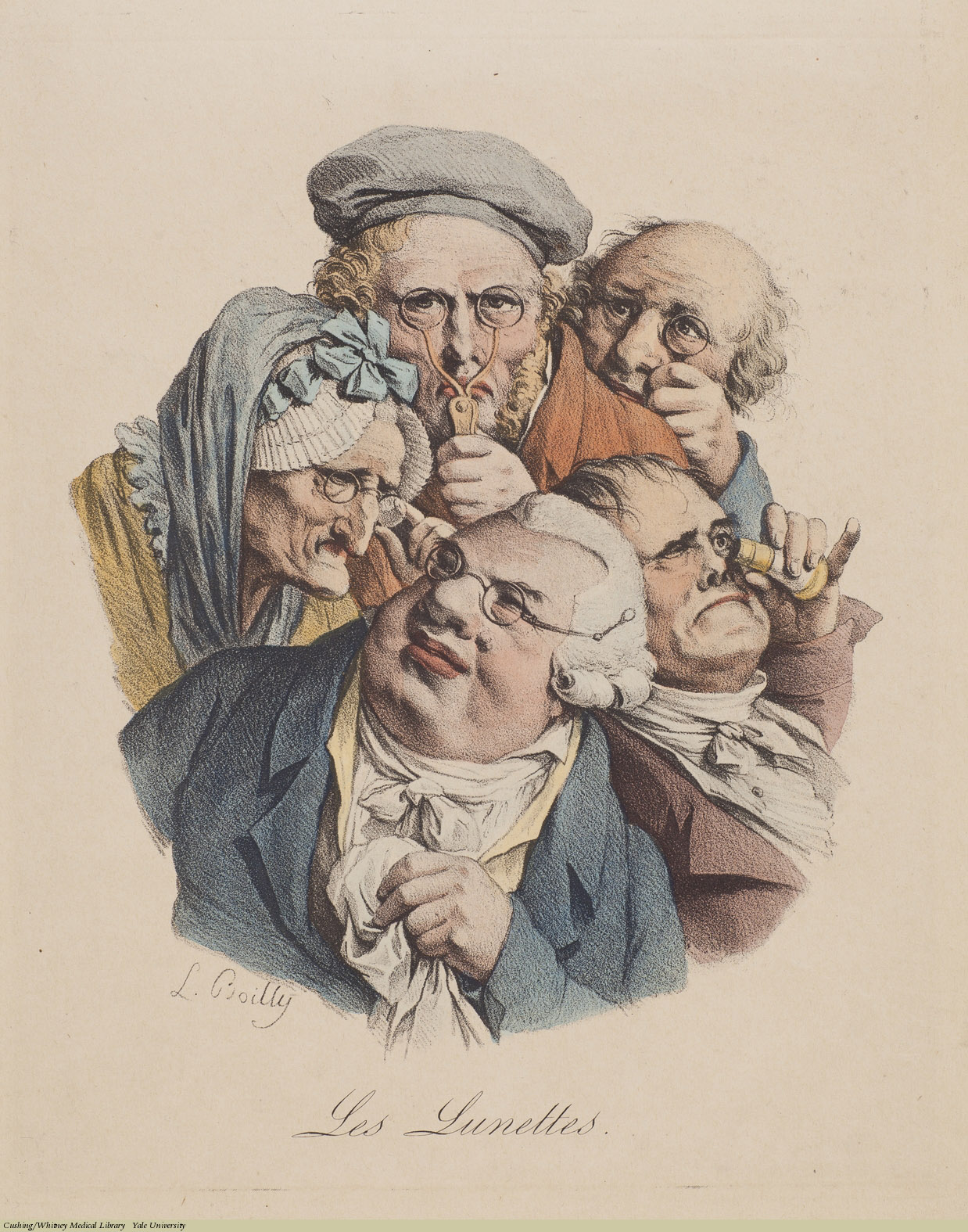
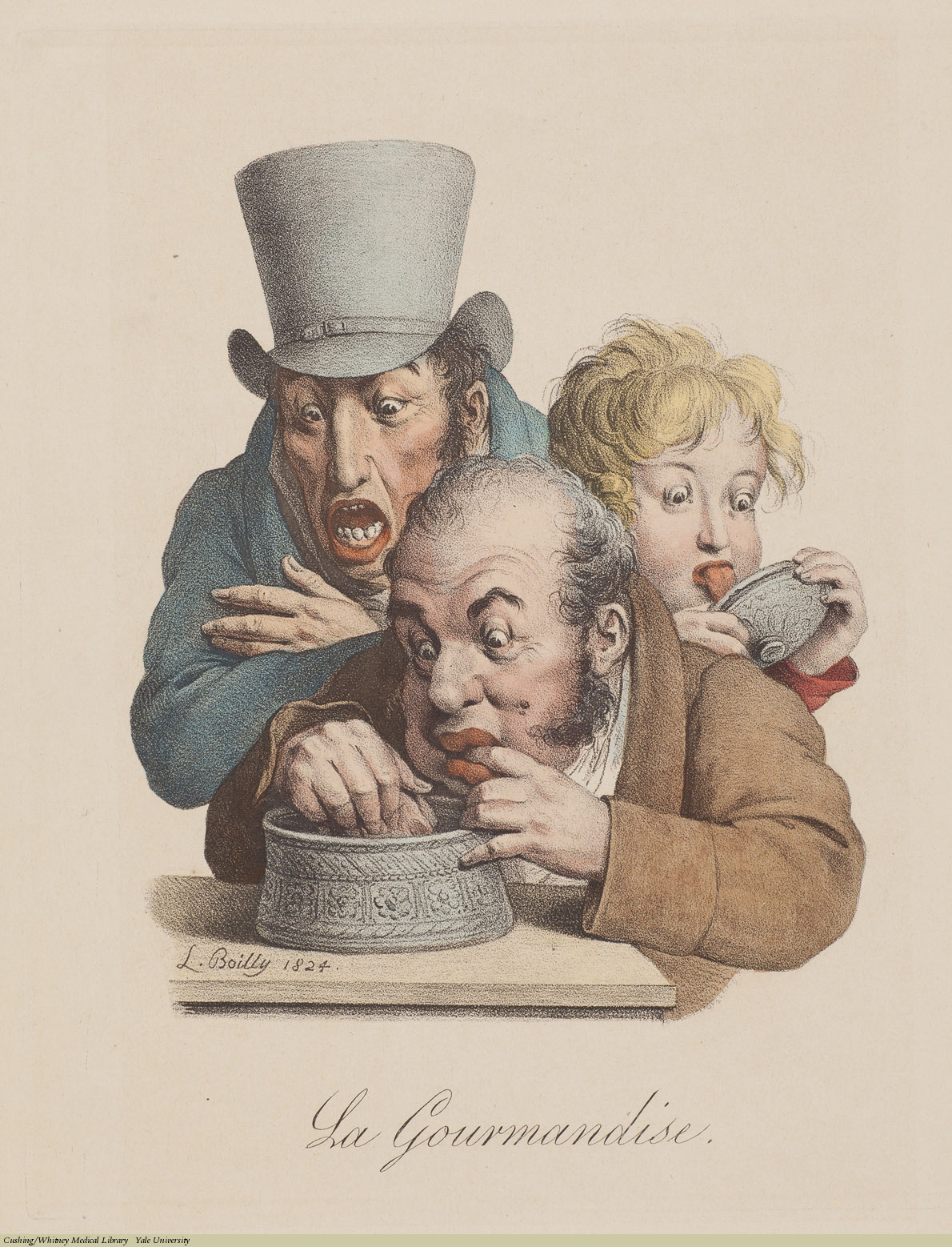
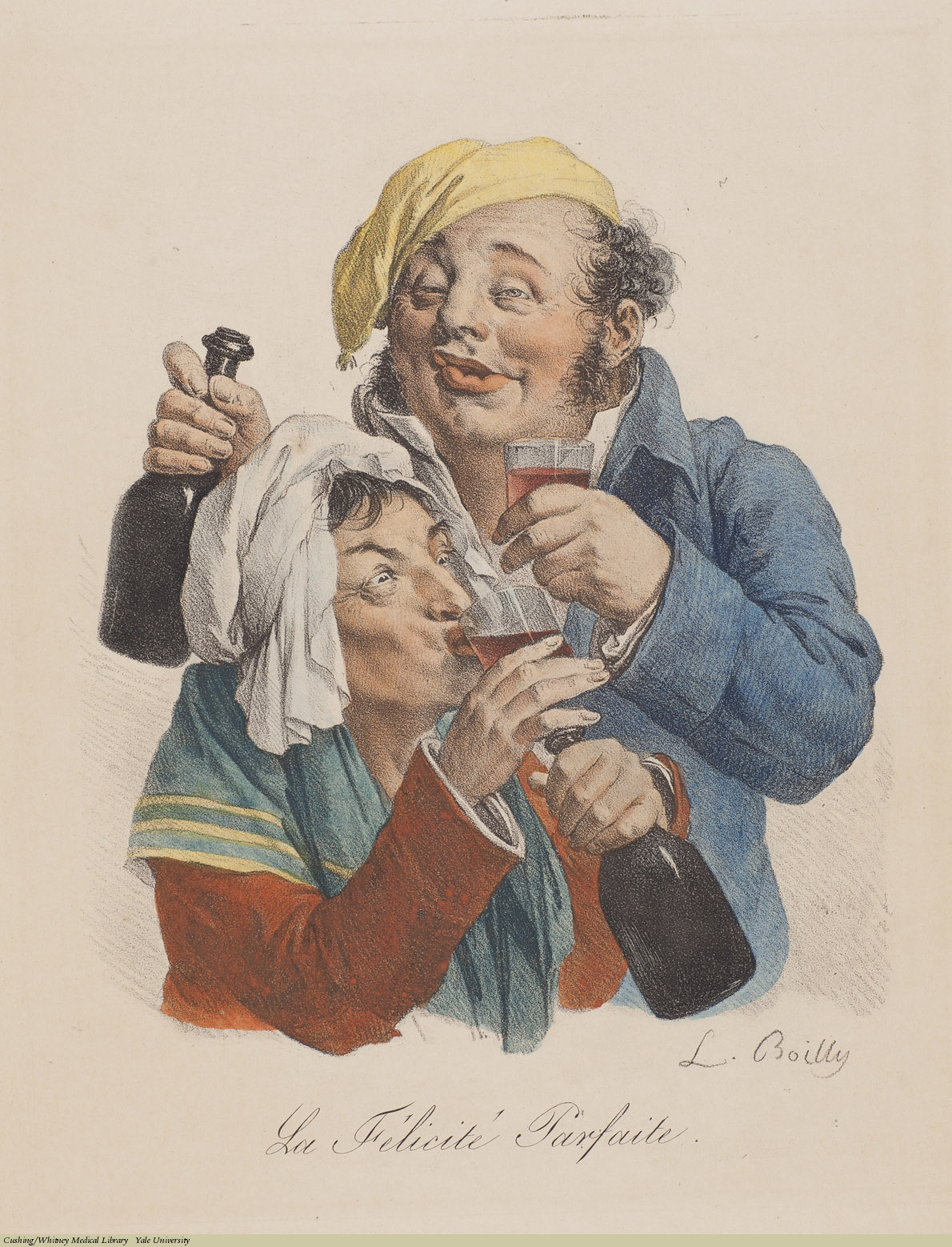
Still with Louis-Léopold Boilly. I know La Luxure is supposed to be creepy, but Boilly outdid himself there. :shudder: But I do love Le Lunettes. All images, click for full size.
I’ve had thorns in my head for well over a week, and finally got started on drawing yesterday, still not done on that front, but I had to play with colour a bit today. I’ve been working late, then falling into bed, not scheduling anything on Affinity, so if I’m late, or space out regular features, blame the thorns in my head. This one is going to take a long time, too. It’s large, filled with detail, and I’m going with pencil instead of paint, which is always slower for me. It’s been so long since I’ve been able to work, I’m now consumed with the need. Bad photo:
© C. Ford, all rights reserved.
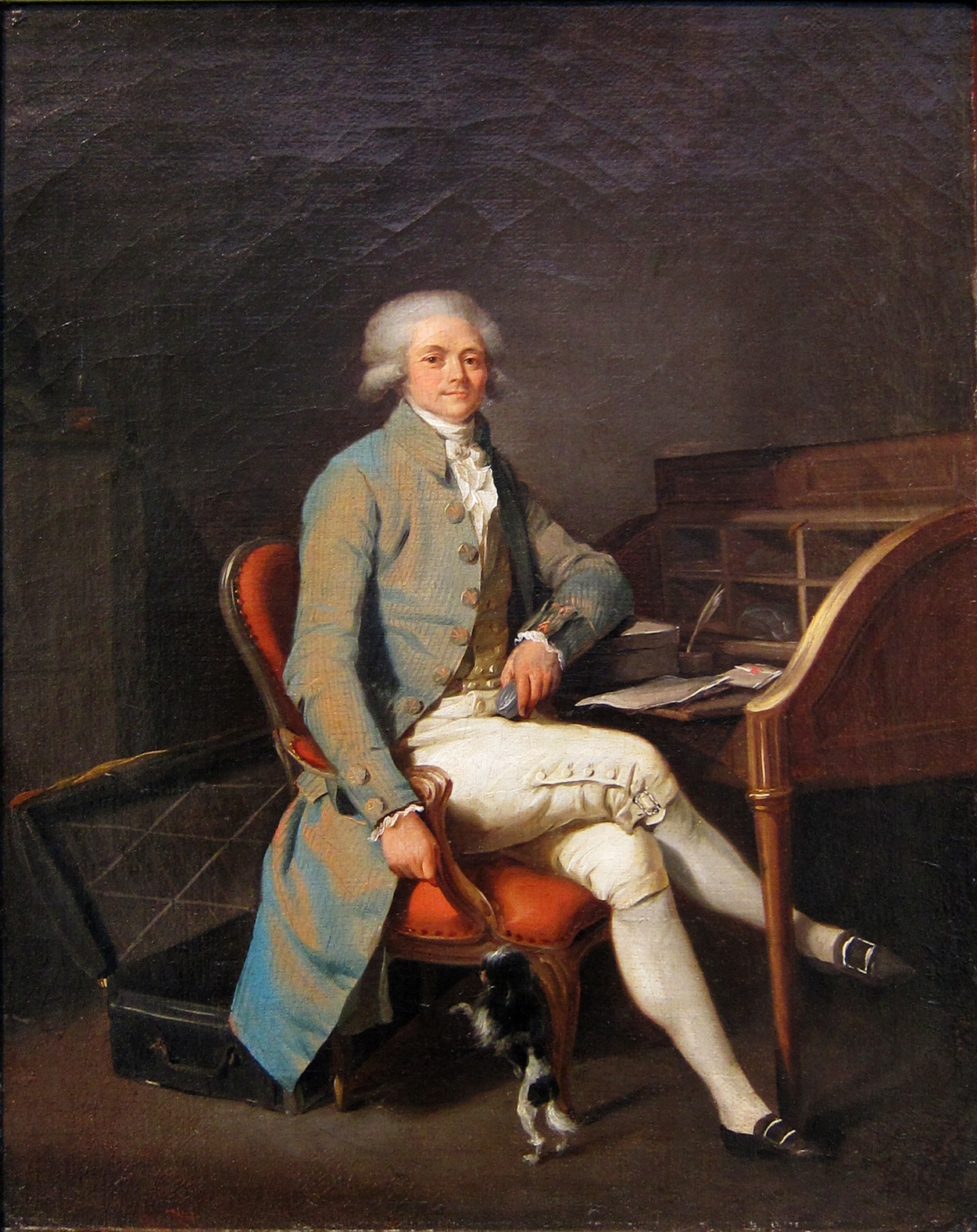
Still with Louis-Léopold Boilly. Click for full size!
I’ll be indulging in a highlight of Louis-Léopold Boilly the next day or three. Boilly was an incredibly talented artist, with an extraordinary gift for portraiture. Looking at his paintings, you get a strong sense that you should not be staring in the window, looking at these people, because there is a profound intimacy in his paintings. The Geography Lesson (Portrait of Monsieur Gaudry and His Daughter) is a good example of this intimacy. I also think his portrait of Robespierre is the absolute best. Boilly was a prolific painter, producing a great many small portraits as well as full scale paintings. When it comes to Les Grimaces, I like Les Grimaces 3 best. I think. All images, click for full size!

Feelings. This text in this picture describes how I feel about the House of Dreams, my work, and my artistic life journey. I sometimes don’t have a clue what I am doing and why. I only know it’s the right thing for me to do.
Take some time today to meet an extraordinary artist, Stephen Wright. His House of Dreams is amazing, to say the very least, and the story of his journey is both wondrous and terribly poignant. Vice has an in depth interview with Mr. Wright, and you can take a virtual tour of the House of Dreams, or book an actual visit.
I have a deep and abiding love of Medieval Manuscripts, there’s always more to discover and wonder over, and here’s a new and delightful discovery to me, the early repairs of manuscripts, where beautiful embroidery was utilised to repair flaws in the parchment.

A plain-colored stitch incorporated into a drawing. Gerald Raab/ Courtesy Staatsbibliothek Bamberg.
In the Cantonal and University Library in the ancient city of Fribourg, Switzerland, is a 14th-century manuscript with some gloriously beautiful defects. Scattered throughout the text are small tears and holes. And many of them have been carefully, intricately stitched together with colorful thread.
[…]
Holes in the parchment weren’t always dealt with, but when they were, any repairs needed to be done before it could be written on. This might include both patching over holes and evening out edges, explains Sciacca. The repair method could be crude or rudimentary—“Frankenstein” repairs, as Sciacca jokingly calls them—but, as writer Paul Cooper recently highlighted, sometimes they could be quite beautiful.
In that same 14th-century text in Fribourg, a single page is elegantly adorned with two sets of thin stitches, one pink, one green. Elsewhere in the same manuscript there are rainbow-hued repairs of different shapes and sizes. In a text held at the Engelberg Abbey library in Switzerland, stitches at the edge of the page create a “rope”, as Sciacca refers to it, to fill in the edge of the parchment. And from the same library, the missing side of one page has been patched with an additional square of parchment.

A series of repairs made in James of Voragine’s 14th-century Golden Legend. Courtesy Cantonal and University Library Fribourg, Switzerland, Ms. L 34.
As medieval book historian Erik Kwakkel points out, these repairs must have been common in certain monasteries. “Where I was finding a lot of these embellishments were in manuscripts that came from either nunneries, or from what they call in Germany, double cloisters,” Sciacca says. “So you have this paired male and female monastic community. They live separately, but they’re allied with each other, and they’re physically located next to each other. So it seems that this may be part of what was, in fact, women’s training, what was nuns’ training, which was to practice embroidery. And they were doing it not just on textiles, but also actually in manuscripts.”
Stitching wasn’t the only way to make the best of flawed parchment. There are instances of holes being incorporated into illustrations, or used to reveal an illustration on the following page. The stitches themselves could even be embellished. In a text in Germany’s Bamberg State Library, a curve of plain-colored stitching is surrounded with the drawing of a man so that the thread resembles his skeleton.
You can read much more, with lots of links, and see much more at Atlas Obscura. Fascinating!
Shoulder is the most mobile joint in the human body. The ball joint can rotate around 3 axes, so it alone provides our hands with almost 50% of their mobility. This is all the more impressive when one considers that all that movement must not impede blood flow through the appendage.
One of these bones is not like the others, one of these bones does not belong.
It is clavicle. Clavicle is dermal bone, so it develops by a different process than most other bones. This means it has different internal structure and is therefore more fragile. Broken clavicle is therefore a fairly common injury.

St Julianus Murdering his Parents, Spinello Aretino (1350-1410). Source.
The other day, I was looking up a fresco by Spinello, and my eye was caught by the painting of St. Julianus murdering his parents. I decided to dig a bit further, it’s an odd tale. Julianus the Murderer morphs into Julian the Hospitaller. To me, the painting is jarring, depicting Julianus as a saint while busy hacking his parents up, but apparently these things don’t bother religious people. His parents must have been very sound sleepers, too, they don’t look a bit disturbed.
According to de Varazze, on the night Julian was born, his father, a man of noble blood, saw pagan witches secretly lay a curse on the boy that would make him kill both his parents. His father wanted to get rid of the child, but his mother did not let him do so. As the boy grew into a handsome young man, his mother would often burst into tears because of the sin her son was destined to commit. When he finally found out the reason for her tears, he swore he “would never commit such a sin” and “with great belief in Christ went off full of courage” as far away from his parents as he could. Some versions say that it was his mother who told him at the age of 10, while others say it was a stag he met in the forest while hunting (a situation used in depicting St. Julian in statues and pictures). [Julian was of noble birth and while hunting one day, was reproached by a hart for hunting him and told that he would one day kill his mother and father.]
Everyone loves a tall tale, and this one seems happily tangled. The story about the stag reproaching Julianus and predicting his future as a murderer strikes me as more than happily pagan in nature, and it probably should have stayed there, because as soon as you start twisting this about to be christian, it becomes a very ugly story indeed.
After fifty days of walking he finally reached Galicia where he married a “good woman”, said to be a wealthy widow.
There’s good luck for you, and a damn fast move, too. ETA: yet another hallmark of christian tales, the wealthy, good woman isn’t deserving of a recorded name. Just window-dressing. She’s the only one in the story who doesn’t do something evil, but the murderer gets to be a saint. Aaand, she doesn’t even get a face in the creepy painting.
Twenty years later, his parents decided to go look for their now thirty-year-old son. When they arrived, they visited the altar of St. James, and “as soon as they came out of the church they met a woman sitting on a chair outside, whom the pilgrims greeted and asked, for Jesus’ love, whether she would host them for the night as they were tired.” She let them in and told them that her husband, Julian, was out hunting. (This is why he is also known as the patron of hunters.) The mother and father were overjoyed to have found their son, as was Julian’s wife. “She took care of them well and had them rest in her and Julian’s bed.” But the enemy went off seeking Julian and told him: ‘I have sour news for you. While you are here, hunting, your wife is in bed embracing another man. There they are right now, still sleeping.'”
The enemy. Right. I guess we all get to assume this would be Lucifer. Or maybe a lesser demon. Might have been a nasty gossip at the local. Who the fuck knows? Now, if it had been me, I would have wanted to check things out for myself, but it seems Julianus was a rather gullible man, who simply swallowed whatever someone said, with little thought involved.
De Verazze continues: “And Julian felt deep sadness and his face drew into a frown. He rode back home, went to his bed and found a man and a woman sleeping in it. He drew his sword and killed them both. He was about to take off and never again set foot in that land, but as he was leaving he saw his wife sitting among the other women. She told him: ‘There are your mother and father resting in your room.’ And so Julian knew, and fell into a rage. ‘The shrewd enemy lied to me when he said my wife was betraying me’, and while kissing their wounds he cried ‘Better had I never been born, for I am cursed in soul and body.’ And his good wife comforted him and said ‘Have faith in Christ Almighty, a stream of life and mercy.’ They had no children… Gold and silver they had a lot… And after seeking redemption in Rome, Julian built seven hospitals and twenty-five houses. And the poor started flowing to him, to Jesus’ Almighty’s love.”
Apparently, Julianus didn’t even bother to use his eyes before he set to murdering, and was quite the coward, to boot, ready to run away. There was no sense of offense, or self-righteousness on Julianus’s part, no passion, he acted more like a simpleton carrying out instructions, and after the murders, a sense of shame and self-preservation landed. “The shrewd enemy”! Oh my. Julianus wasn’t on the smart side at all, how long does it take to check out a couple of sleeping people, or to go find your spouse? Then this whole fucking thing goes south, with the ‘faith in Christ’ business.
Oh, it’s fine, so you murdered your parents, not to worry, let’s go build some hospitals. To end the tale, Jesus shows for the icing on the cake, and the reappearance of that oh so shrewd “enemy”:
De Verazze continues: “The enemy conspired again to ruin Julian—disguised as a weak pilgrim, he was let in by Julian with the others. At midnight he woke up and made a mess of the house.” The following morning Julian saw the damage and swore never to let in anyone else in his home. He was so furious he had everyone leave. “And Jesus went to him, again as a pilgrim, seeking rest. He asked humbly, in the name of God, for shelter. But Julian answered with contempt: ‘I shall not let you in. Go away, for the other night I had my home so vandalized that I shall never let you in.’ And Christ told him ‘Hold my walking-stick, please.’ Julian, embarrassed, went to take the stick, and it stuck to his hands. And Julian recognized him at once and said ‘He tricked me, the enemy who does not want me to be your faithful servant. But I shall embrace you, I do not care about him; and for your love I shall give shelter to whoever needs.’ He knelt and Jesus forgave him, and Julian asked, full of repentance, forgiveness for his wife and parents. Some versions skip the second mistake and tell of an angel visiting Julian and announcing to him that he is forgiven.
Some versions of the story have Julianus giving up his bed to a leper, and surprise, the leper is Jesus! I had no idea that a sticky walking stick was an easy way to recognise Jesus. Early christians never could be bothered to come up with their own stories, they built off much older stories, and generally failed to do any editing, so you end up with very sticky messes like this one. The one thing which always does stand out is the complete lack of morality on the part of the players. Personally, I could never have forgiven Julianus for being such a gullible dumbfuck. Let’s see, how does one avoid murdering their parents? Seems easy to me, you just don’t commit murder, especially sneaking into bedrooms and stabbing people in their sleep.
Most of this story is via Wiki, and of course, St. Julianus is revered to this day, all over the place. You can thank St. Agatha and her breasts for this saintly distraction.

Source: Atlas Obscura.
According to the story, not only did 15-year-old Saint Agatha of Sicily refuse to abandon her faith, she also rejected a Roman governor’s advances. As such, she was punished by having her breasts amputated, then died of her wounds in prison on February 5, 251 A.D. Frescoes of the mutilated martyr are easily recognizable. She’s often depicted holding her breasts on a platter.
Known as minne di Sant’ Agata in Italian, these sweet cheese and marzipan desserts are an edible reminder of Saint Agatha’s suffering. Bakers craft the perfectly round confections using a base of shortcrust pastry topped with ricotta. After adding in chocolate or a piece of boozy spongecake to accompany the filling, they blanket everything in pistachio marzipan and a thick, creamy glaze. A candied cherry on top completes the anatomically-correct aesthetic.
Each February, hundreds of thousands of people flock to Catania to honor Saint Agatha in a three-day celebration. The centuries-old festival features an all-night procession and delicious replicas of saintly, amputated breasts at every pastry shop.
You can read more at Atlas Obscura. A bit grisly, but I’ll admit they do look on the delicious side. Religions certainly do come with a side order of weird. There are many depictions of Agatha of Sicily, including ones of her holding her breasts on a platter, her breasts alone are carved in stone, and much more.
“Going to the Dogs” Workshop #2 brought together scholars from England, Scotland, and Poland to discuss the various and complex intersections of disability- and animal-studies research. Discussions centred on talks delivered by Rachael Gillibrand (Institute for Medieval Studies, University of Leeds), Dr Ryan Sweet (School of English, University of Leeds), Dr Andy Flack (Department of History, University of Bristol), Dr Neil Pemberton (Centre for the History of Science, Technology and Medicine, University of Manchester), and Dr Justyna Włodarczyk (Department of American Literature, University of Warsaw). The talks covered topics including the animal assistants of disabled people in the late-medieval West; nineteenth-century representations of animals with prostheses; connections between historical understandings of animals that live in darkness and vision-impaired people; the role of the caress in 1930s America human-guide-dog partnerships; and current controversies surrounding emotional-support animals in the US.
-Via Medievalists.
From Joseph: I’ve begun a series I call Fancy Bats. This one is the first in the series. It’s pen and ink on Bristol board.
I focus on bats because, well, bats are awesome. They’re such fascinating marvels of evolution, and they don’t get enough love in mainstream U.S. culture. Whether it’s the puppy-dog cuteness of large fruit bats or the otherworldly intricacy on the faces of echolocating microbats, I’m always drawn to the magnificent aesthetics of these creatures.
As for the style, it’s largely based on my idle doodling. When I’m bored and not focusing on any particular image or idea, I draw repeating patterns of curves and points, so this is an extension of my instinctual habits. Also, I’ve been intrigued with the stylized depictions of animals in ancient Mesopotamian and Persian sculpture, from bulls and lions to fantastic beasts like lamassus and manticores. It’s been a source of inspiration for years.
This is just the beginning, and I don’t know exactly which direction this series will go. I just know that this ties together several ideas that mean a lot to me, and I hope you all enjoy the results.
I’m with Joseph, I love bats and find them fascinating. Our local bats are Myotis lucifugus, and I love watching them. I also love Joseph’s beautiful drawing, be sure to click for full size!
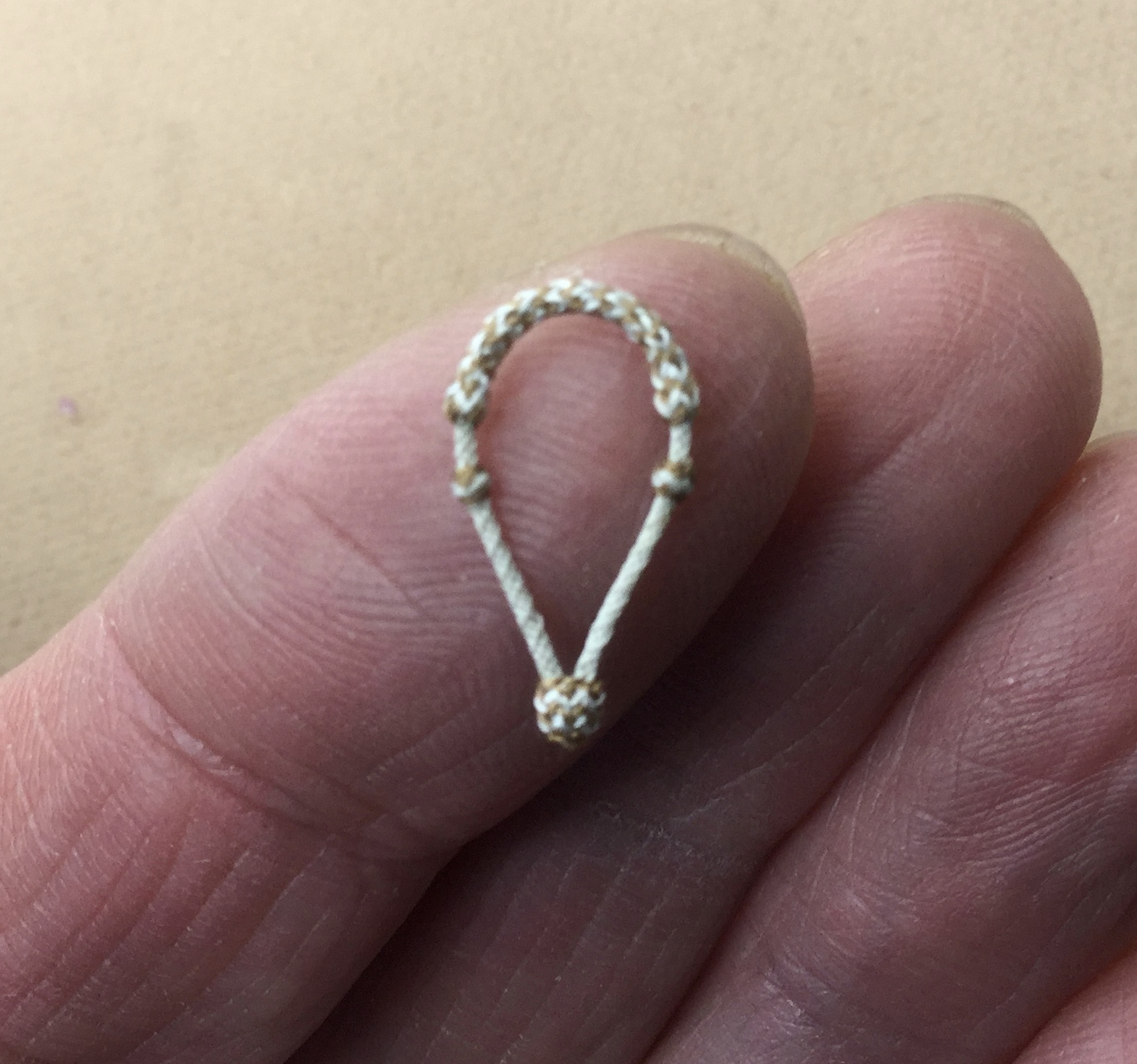
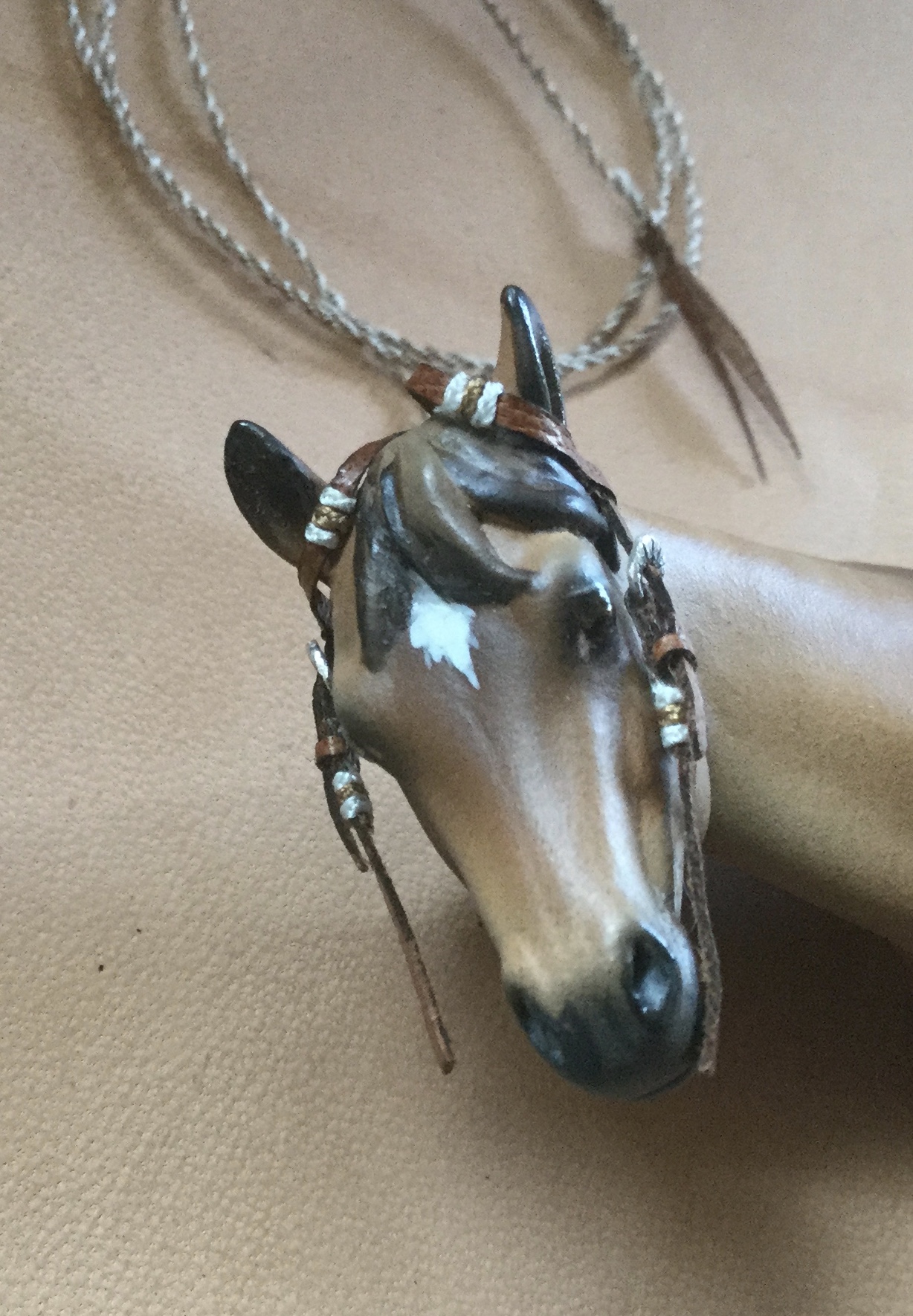
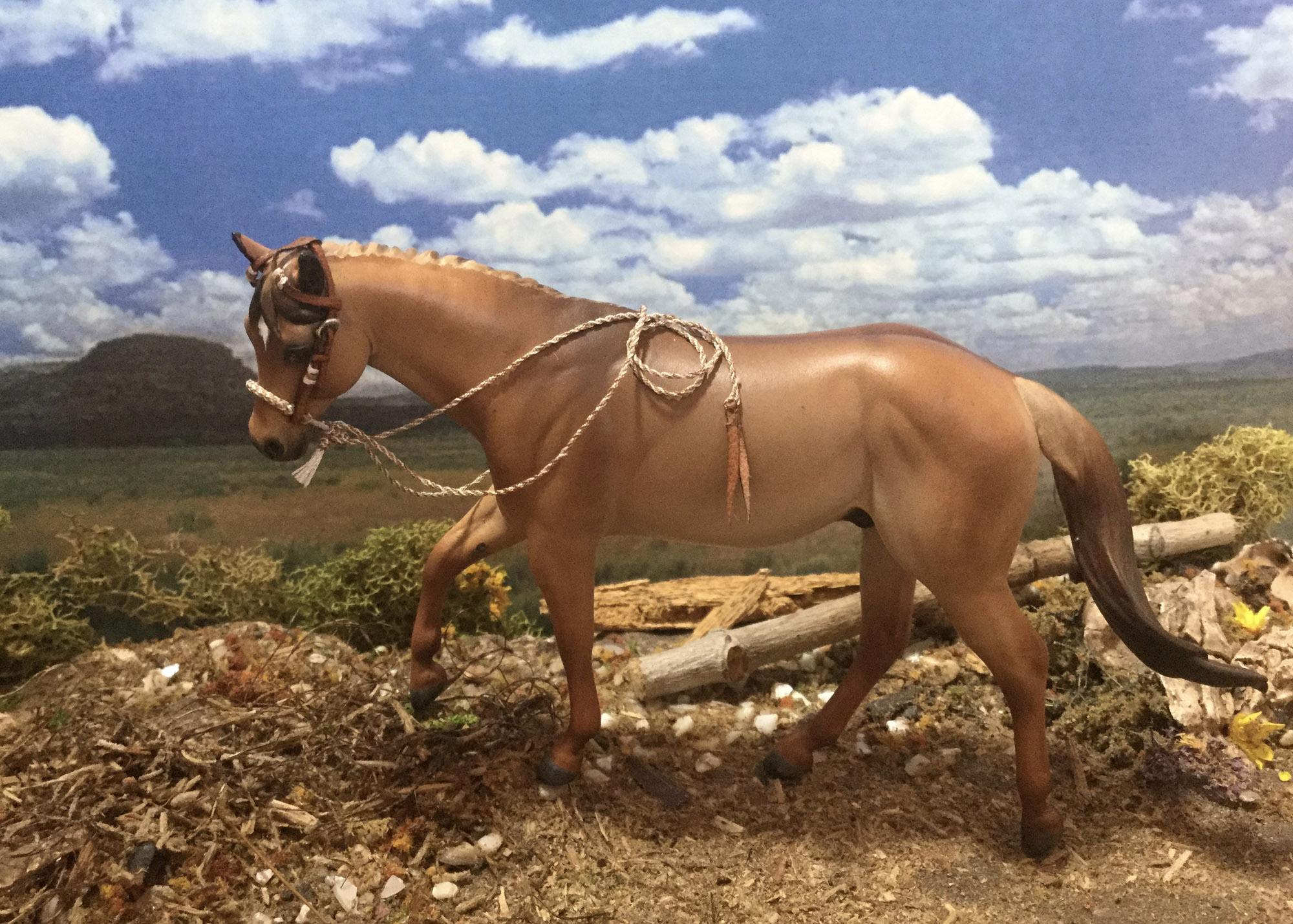
An astonishing work, from Kestrel: There is a group that issues a fun challenge to model horse tack makers: push your skill set and see if you can make a nice piece of tack in one month. For the project I chose to make a hackamore in 1:32 scale (normally I work at 1:9) and the goal is to make it look as much like a piece of tack for a living horse while being in scale and as detailed as possible. This was hard… it really was a challenge for me to go this small.
Click for full size!
It all started with a single white horsehair. I braided 8 strands of very fine silk over the hair, to create the base of the noseband (bosal) for the hackamore. I have to check to see if it will look in scale:
Then I tie a series of braided knots in the silk, to create the finished bosal, a very complicated little device:
We need some buckles for the headstall to hold the bosal on the horse’s head:
Next I have to make the headstall of leather, and why not tie a few more braided knots on it to make it decorative. Also I need to braid a long rope with a tassel at one end and a leather popper on the other (mecate) which is the traditional way of rigging reins and a lead rope:
The finished piece, which hopefully looks like it could be full-sized on a live horse:
The Dance of Death by the German artist Hans Holbein (1497–1543) is a great, grim triumph of Renaissance woodblock printing. In a series of action-packed scenes Death intrudes on the everyday lives of thirty-four people from various levels of society — from pope to physician to ploughman. Death gives each a special treatment: skewering a knight through the midriff with a lance; dragging a duchess by the feet out of her opulent bed; snapping a sailor’s mast in two. Death, the great leveller, lets no one escape. In fact it tends to treat the rich and powerful with extra force. As such the series is a forerunner to the satirical paintings and political cartoons of the eighteenth century and beyond. For example, Death sneaks up behind the judge, who is ignoring a poor man to help a rich one, and snaps his staff, the symbol of his power, in two. A chain around Death’s neck suggests he is taking revenge on corrupt judges on behalf of those they have wrongfully imprisoned. In contrast, Death seems to come to the aid of the poor ploughman, by driving his horses for him and releasing him from a life of toil; the glowing church in the background implies this old man is on his way to heaven.
Holbein drew the woodcuts between 1523 and 1525, while in his twenties and based in the Swiss town of Basel.
These woodcuts are beautiful and highly detailed. In Holbein’s hands, Death makes its feelings known; Death is quite gentle in the cases of the old woman and old man, poor folk, and those of the peasant class. On the other side, Death is more than a little rude, as in the violin playing as Death drags the Duchess out of her bed. Death is not kind when it comes to the abbot, the abbess, or the monk.
One notable thing makes these beautiful woodcuts all the more astonishing, the size of them:
Holbein’s achievement is the greater because of the miniature scale he was drawing in. Reproductions obscure just how tiny the wooden blocks were — no bigger than four postage stamps arranged in a rectangle. The blocks were cut by Hans Lützelburger, a frequent and highly skilled collaborator of Holbein’s. Lützelburger had cut forty-one blocks and had ten remaining when Death surprised him too. The blocks were then sold to creditors, and eventually printed and published for the first time in Lyons in 1538 as Les simulachres and historiees faces de la mort.
You can read and see much more at The Public Domain.