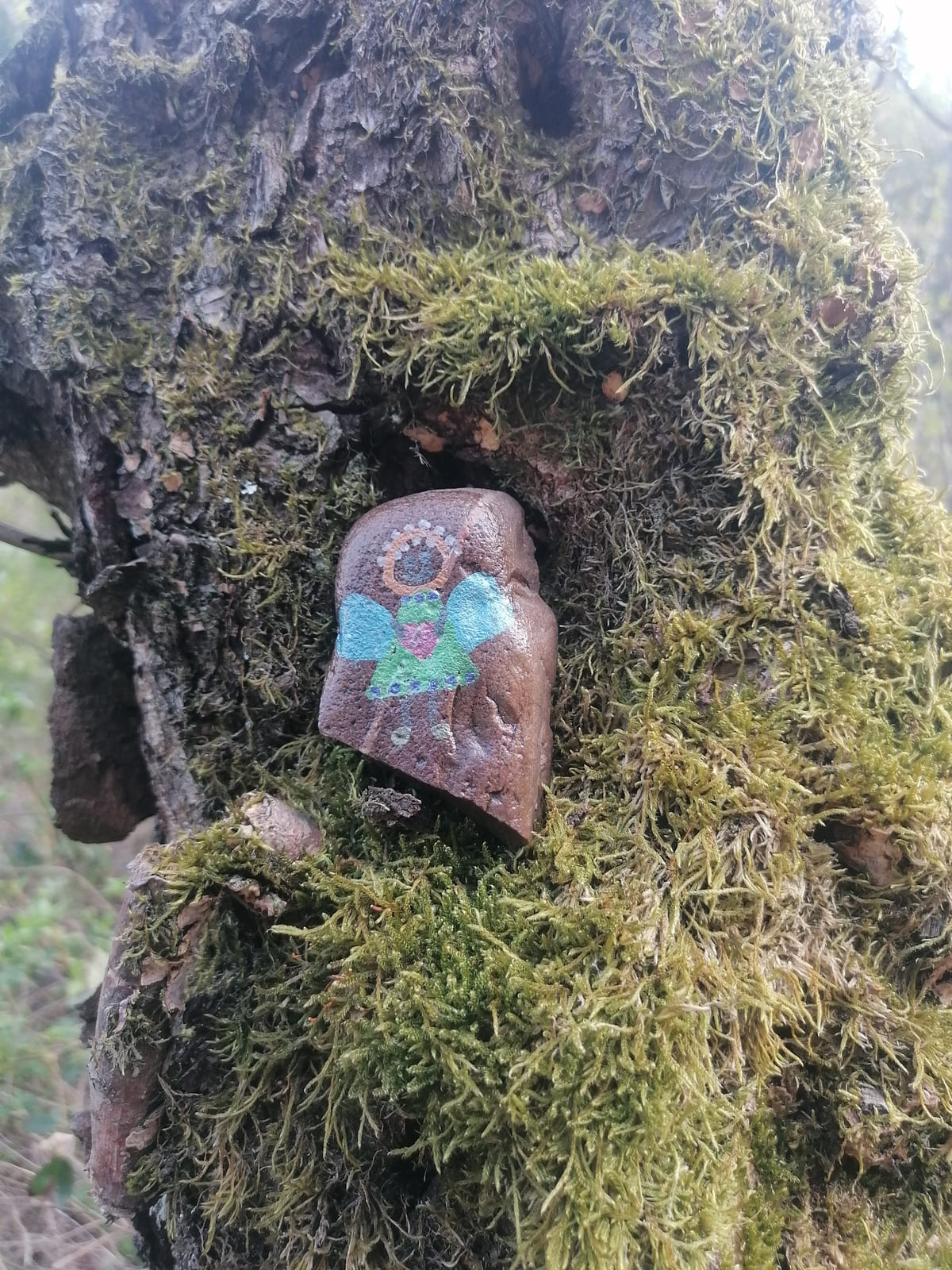
Jack’s Walk

The search begins. ©voyager, all rights reserved

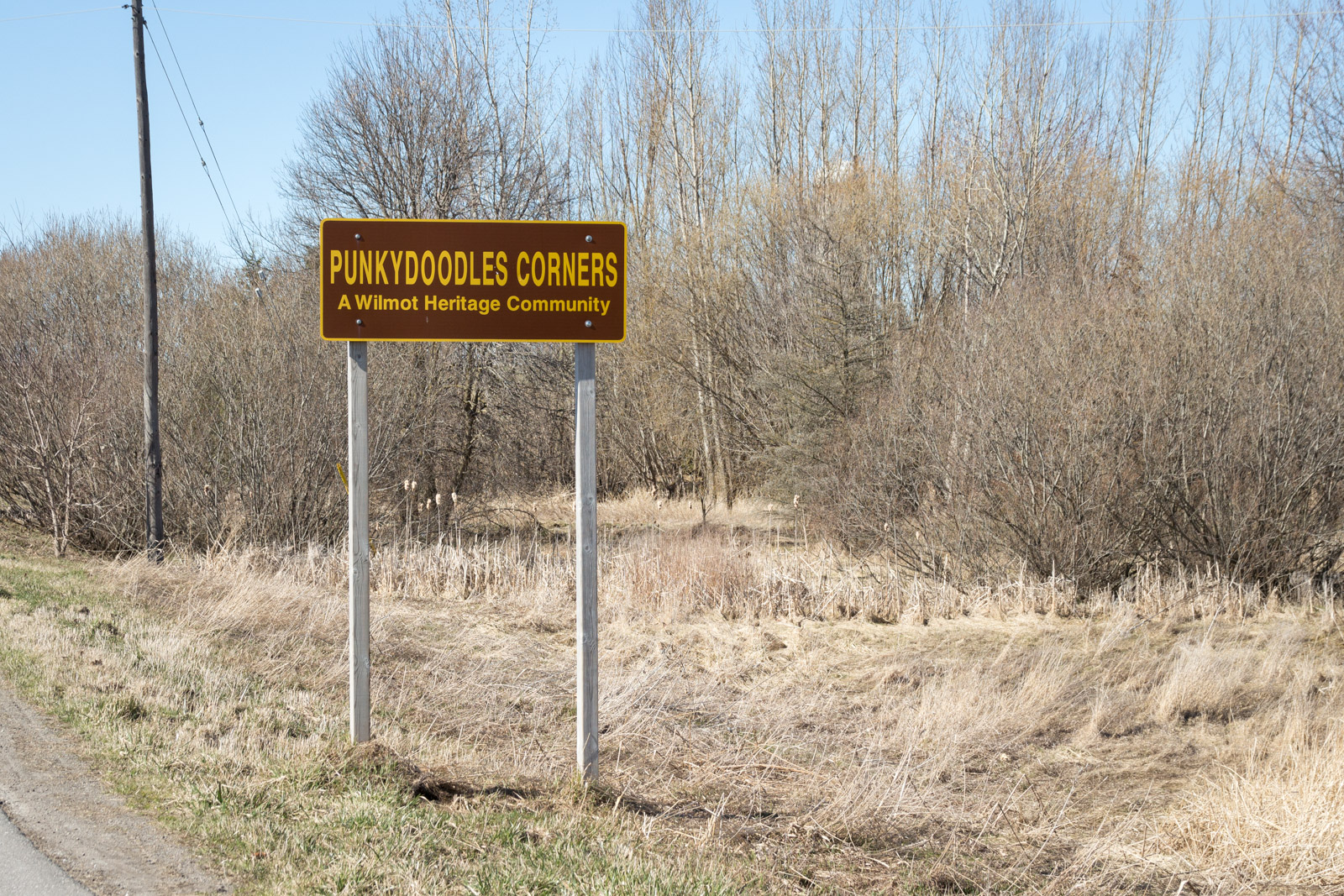
Jack and I made our way back to the car quickly but then sat for a moment or two, trying to figure out the quickest route to Punkydoodles Corner. We needed to go east, so taking the big highway 401 to the Drumbo exit seemed like the best way to go.
As I was pulling out, Jack said to me quietly,
“Are you stopping for another coffee, Mummy?”
“Do you think we can afford the time to stop, Bubba?”
“Well, Mummy, it’s going to be hard work looking for Oma, and I thought that we could share a breakfast sandwich. You know, for energy.”
“We’ve already had breakfast, Jack.”
“Maybe, we could call it early lunch, Mummy. I’m starving.”
“You’re always hungry, Jack, but alright we’ll stop at Tim’s. It’s on the way.”
We drove in silence, both of us lost in thought until we made it to Tim Horton’s drive-through.
“HI, I’ll have a large coffee with cream and a breakfast sandwich, please,” I said to the microphone.
“Don’t forget a Timbit, Mummy. I’ll want a treat after I find Oma.”
“And two plain Timbits, please,” I added.
Jack smiled, but I could see the worry in his eyes. We paid for our food and drove the two blocks to the park, where we sat and ate our first lunch.

“So Jack, do you think we can really find this fairy?” I asked.
Bubba was quiet for a moment and finally said, “It depends on Oma. If she’s touched a lot of things, it will be easier. I’m 99% sure I can find Freddy’s trail, but finding Oma will be harder.” Jack swallowed a bite of egg without chewing and then said, “We have to find her, Mummy. Everyone is counting on us.”
“Yes, they are Jack, and we’ll do our very best, but we might not find her.”
“Mummy, your attitude sucks. We are going to find her, even if it takes all day!” Jack exclaimed.
“Alright, well, let’s get going,” I said, mentally trying to plan for an all-day event. We made our way to the highway, and it wasn’t long before we reached the Drumbo exit. We turned south, and soon there it was… the sign for Punkydoodles Corners. I pulled over and helped Jack out of the car.
“Alright, Bubba. There’s the sign, and we’re a bit west, so let’s see what you can pick up.”
“This whole place stinks like fox, Mummy. It must be a route they use often.”
“Can you pick up Freddy,” I asked.
“Maybe. Let me sniff around a bit,” he said.

Jack took off, wandering up and down and back and forth, sniffing and occasionally sticking out his tongue to taste the grass. It seemed random at first, but then I saw the pattern. Jack was making smaller and smaller figure eights along the ditch. He was quiet and methodical, and time passed slowly. Thankfully, the day was bright and sunny, and so far, there hadn’t been traffic on this road. Finally, after about half an hour, Jack stopped and looked up at me and smiled.
“Got him, Mummy. This is definitely Freddy’s smell. It’s strong here. I think this is where he stopped to drink. There isn’t much water here now, but I’m sure this is the place. I don’t smell Oma, though.” Jack’s face grew solemn.
“Can you tell which direction he came from,” I asked. Jack looked up and said, ” north-west. Toward that field.”
“Alright,” I said, hoping the farmer who owned that field wouldn’t mind us wandering around it. “Let’s go.”
” I can go faster without you, Mummy,” Jack said, “You’re a bit slow.”
Me, slow! Huh, That’s rich coming from Mr. Heavybum. He was right, though, so I waved him away and admonished him to stay in my sights.
“Silly, Mummy. Of course, I will,” he said, trotting away.

He headed up the ditch and toward the eastern edge of the field. He began a zig-zaggy pass along the border when suddenly I heard him bark sharply and start dancing around.
“Ow, Ow, Ow,” he cried, dancing in place and snapping his jaws at the ground.
I hurried toward him and saw him standing at the edge of a rock pile, writhing with garter snakes. Yikes!… snakes. I’ve made peace with snakes one on one, but there were dozens of snakes all wriggling in a pile and hissing, and it made me hesitate. Another cry of “Ow, Ow, Ow,” from Jack finally got me moving, and I rushed forward and pulled Jack backwards by his collar.
Jack gave a final snapping of his jaws at the snakes and said, “they bit my toes, Mummy.’ I could see tiny spots of blood that Jack bent down and licked away. Turning back to the snakes, Jack said, “That wasn’t very nice. Biting is nasty. Why would you do that?”
One of the larger snakes slithered out of the pile and towards us.
“‘Causssssse you sssteped on usss, you clumsy beasst,” it hissed.
Jack was still licking tiny spots of blood on his toes.
“Sorry,’ he said. “I’m looking for a fairy, and I wasn’t paying attention. Even so, it’s very rude to bite someone.”

“There’sss no fairiess here.” said the big spokesnake. “It’s Ssspring wake up for usss.” The pile of snakes began to giggle while they wriggled, and he continued with a smile, “It’ss the ssseason of love. Sssoon it will be the ssseason of babiesss.”
I couldn’t stop watching the slithering pile even though they were making me feel nauseous. What a sight! Finally, I found my voice and weakly croaked, “have you seen a grey-haired fairy come this way?”
The giggling stopped for a moment, and a whisper passed among the group.
Finally, Mr. Spokesnake said, “Nopes. No fairiesss. You can passss over us if you wantsss to look down there.”
“Will you promise not to bite me again,” said Jack, who was still nursing his toes.
“Yesss, if you promise not to steps on usss again,” he hissed, moving forward.
“I can promise that,” I said. “We’ll go around you. In fact, we’ll take a wide berth around you. Come, Jack, let’s go this way,” I said, heading up and to my left.
Jack trotted toward me and looking back, said, “Sorry, snakes. Enjoy your season of love.”
Once we were well away from the garter snakes, Jack looked up at me and said, “You were very brave, Mummy, I know snakes make you nervous.”
I smiled back and told him, “No, Bubbs, you were the brave one. How are your toes?”
“A bit sore, but not bad. I still have my winter toe fur, so the bites aren’t deep.”
He put his nose to the ground again and began another zig-zag pass. A few meters into the field, he stopped and barked happily, “Mummy, I can smell the ocean. It must be Oma Troutchen!” He began to inhale deeply and headed for the far side of the field.

I sighed and followed slowly behind. Then I smelled it myself. The ocean. There was a faint whiff of salt air and seaweed, only a fragment, and then it was gone. Jack was almost to the east edge of the field and I hurried to catch up. Maybe we were going to find Oma Troutchen, after all.

Tree Tuesday

Today’s tree is one you should admire from afar. Really far. In fact, don’t go anywhere near it because contact with any part of this tree could be lethal. Just ask Ponce DeLeon. Oh, wait, you can’t. Because he’s dead, and this is the tree rumoured to have killed him. It’s a Manchineel Tree, known in Spanish as arbol de la Muerte, literally “tree of death.” Its fruits are called la manzanilla de la Muerte, “little apple of death.”

You might be tempted to eat the fruit. Do not eat the fruit. You might want to rest your hand on the trunk, or touch a branch. Do not touch the tree trunk or any branches. Do not stand under or even near the tree for any length of time whatsoever. Do not touch your eyes while near the tree. Do not pick up any of the ominously shiny, tropic-green leaves. If you want to slowly but firmly back away from this tree, you would not find any argument from any botanist who has studied it.

An unfortunate radiologist took a bite while in the Caribbean, and she describes the experience for us.

I rashly took a bite from this fruit and found it pleasantly sweet. My friend also partook (at my suggestion). Moments later we noticed a strange peppery feeling in our mouths, which gradually progressed to a burning, tearing sensation and tightness of the throat. The symptoms worsened over a couple of hours until we could barely swallow solid food because of the excruciating pain and the feeling of a huge obstructing pharyngeal lump. Sadly, the pain was exacerbated by most alcoholic beverages, although mildly appeased by pina coladas, but more so by milk alone.
Over the next eight hours our oral symptoms slowly began to subside, but our cervical lymph nodes became very tender and easily palpable. Recounting our experience to the locals elicited frank horror and incredulity, such was the fruit’s poisonous reputation.

The tree is found throughout the Caribbean, Central America and into the northern part of South America. They live in clusters in coastal areas, and they rely on the movement of water to disperse their seeds. The tree is also found in south Florida, making it America’s deadliest tree.

The sap, white and milky, is spectacularly toxic; it causes burn-like blisters upon any contact with skin, and if you’re unfortunate enough to get it in your eyes, temporary blindness is highly likely. This sap is found throughout the tree, including in the bark and leaves, so, you know, don’t touch any of it.The specific toxins found in this sap and in the fruits remain partially unknown, but not unused. The aboriginal peoples of the Caribbean were familiar with the tree and used it for many purposes; the sap, in particular, was used to tip arrows. “It is believed that the Calusa used it in that manner to kill Juan Ponce de Leon on his second trip to Florida in 1521,” says Hammer.

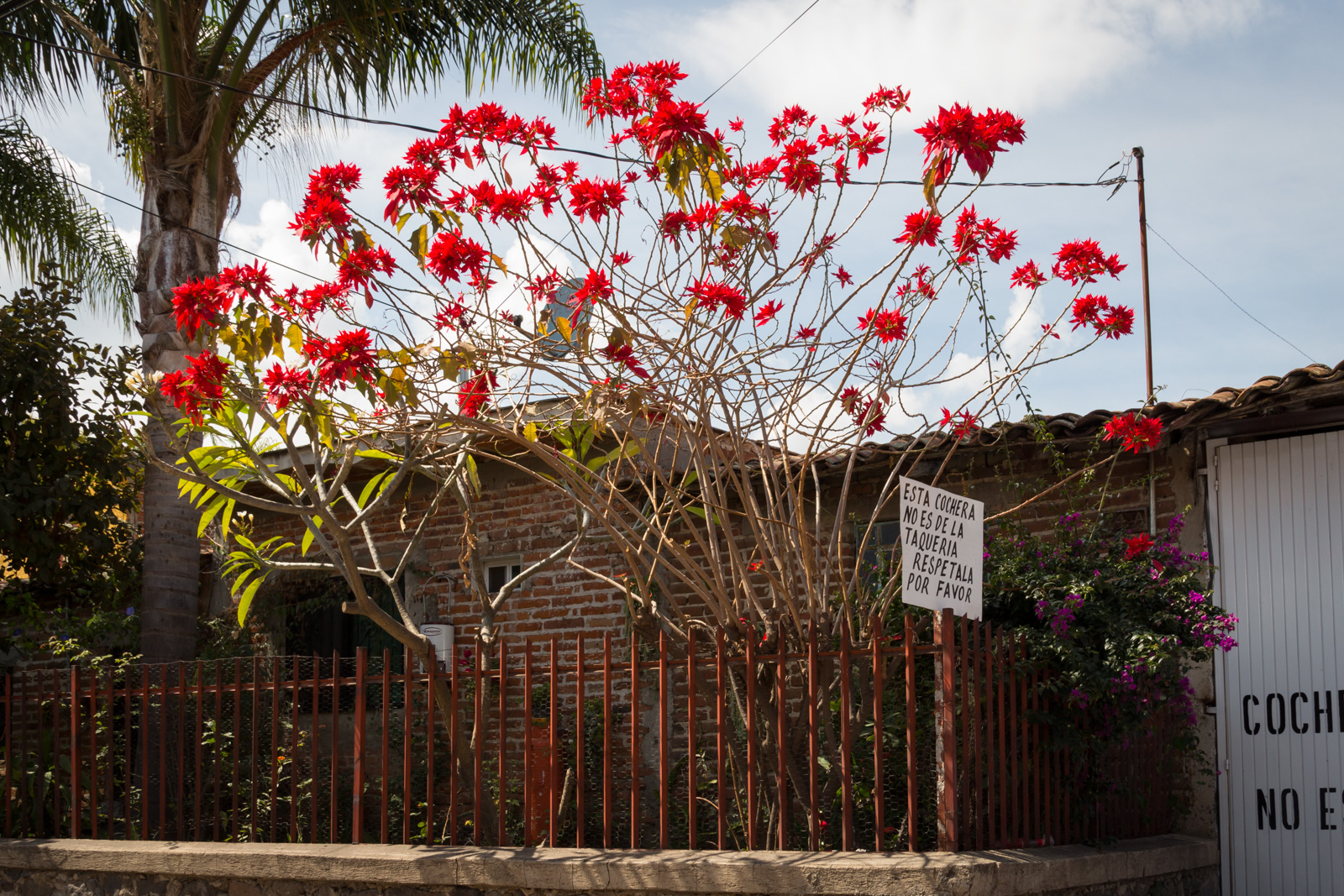
Manchineel is a member of a family of plants known as the spurges. (The name comes from “purge,” because, although all these plants have toxic sap, the toxicity varies, and some can be used as a laxative.) Spurges are found worldwide, in various forms, ranging from tiny herb-like plants to large bushes and trees. Manchineel is one of the largest, reaching up to 50 feet in height, but despite its dangerous reputation is not the most famous—that’d be the poinsettia, the manchineel’s more festive cousin.

Poinsettia, Ajijic, Mexico ©voyager, all rights reserved


Story via: Atlas Obscura

Here a Chick, There a Chick…

Kestrel has sent us an extra-special bit of adorableness.

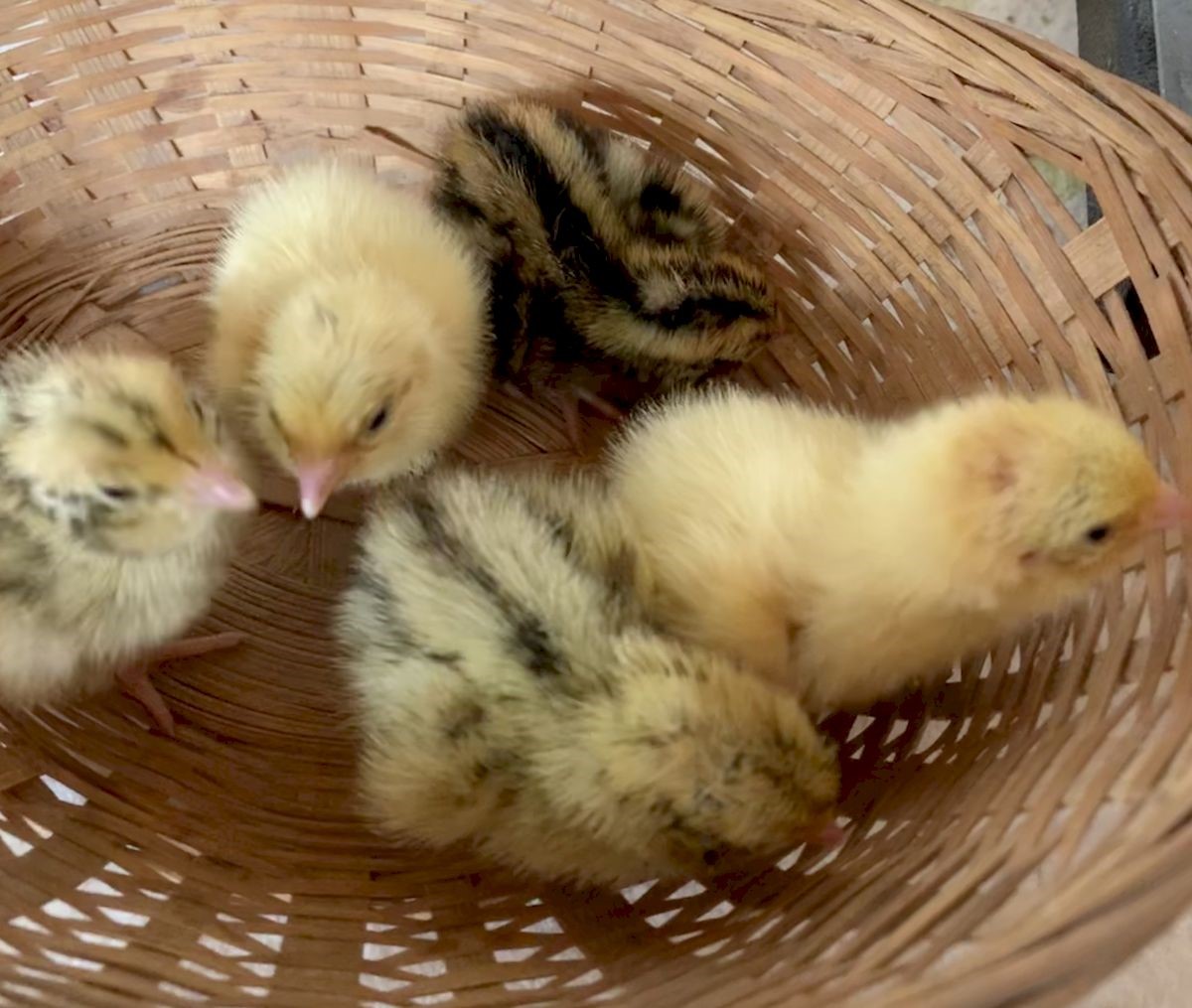
I raise quail – these are Japanese Coturnix quail. On Easter morning I woke up to this sight in my incubator: 

©kestrel, all rights reserved

After the main crush was out of the incubator, one little late-comer to the party hatched out right into my hand. 

©kestrel, all rights reserved

This was my Easter basket, but none of them ever turned into chocolate, or marshmallow.

©kestrel, all rights reserved

Hanging out at the water cooler in their new digs. The marbles are to stop the tiny little things from drowning themselves. Like all little babies they can get themselves into all sorts of trouble. Most of them are underneath the brooder plate, that black and yellow thing to the right. The underside of it stays warm, about 100F, but that is just not hot enough to start a fire, so these are much safer than heat lamps. The other benefit of the brooder plate, besides safety, is that since it does not work by a light, it gets dark at night, allowing the chicks to sleep like they naturally would. With a heat lamp you have to keep that light on all the time.

©kestrel, all rights reserved

Now they are one week old, and much bigger. They are even starting to get feathers, just like real grown-ups! The feeding frenzy is over very finely diced hard-boiled quail eggs, full of important nutrition

©kestrel, all rights reserved

This is the one that hatched into my hand on that first day a week ago. (I can tell, because this one has two white toes.) They grow very fast! By the time they are 3 weeks old they will be ready to leave the brooder and won’t need any heat to survive. These quail will be fully mature by the time they are 6 to 8 weeks old, at which time they will start laying eggs of their own and the whole thing will start all over again.

©kestrel, all rights reserved

The Art of Book Design: The Green Fairy Book

Andrew Lang. The Green Fairy Book. Illustrated by H. J. Ford. New York, Longmans, Green, 1902.

This week it’s the Green Fairy Book and I’ve plucked a few of my favourite illustrations to share with you. Most of the artwork that I’ve chosen involves animals. My absolute favourite drawings, though, are from the last story in the book, The Three Dogs. Enjoy!

[Read more…]

Bobbin Lace – an Orchid

My next bobbin lace project was a picture of an orchid. It was inspired by the orchids that my father grows on the windowsill in our living room, but it is not, of course, intended to be an accurate representation of any specific plant/species. This time I did not use paper and pencil at all, I started rightaway drawing on my PC with my tablet and I ended up with this coloured sketch.

© Charly, all rights reserved. Click for full size.

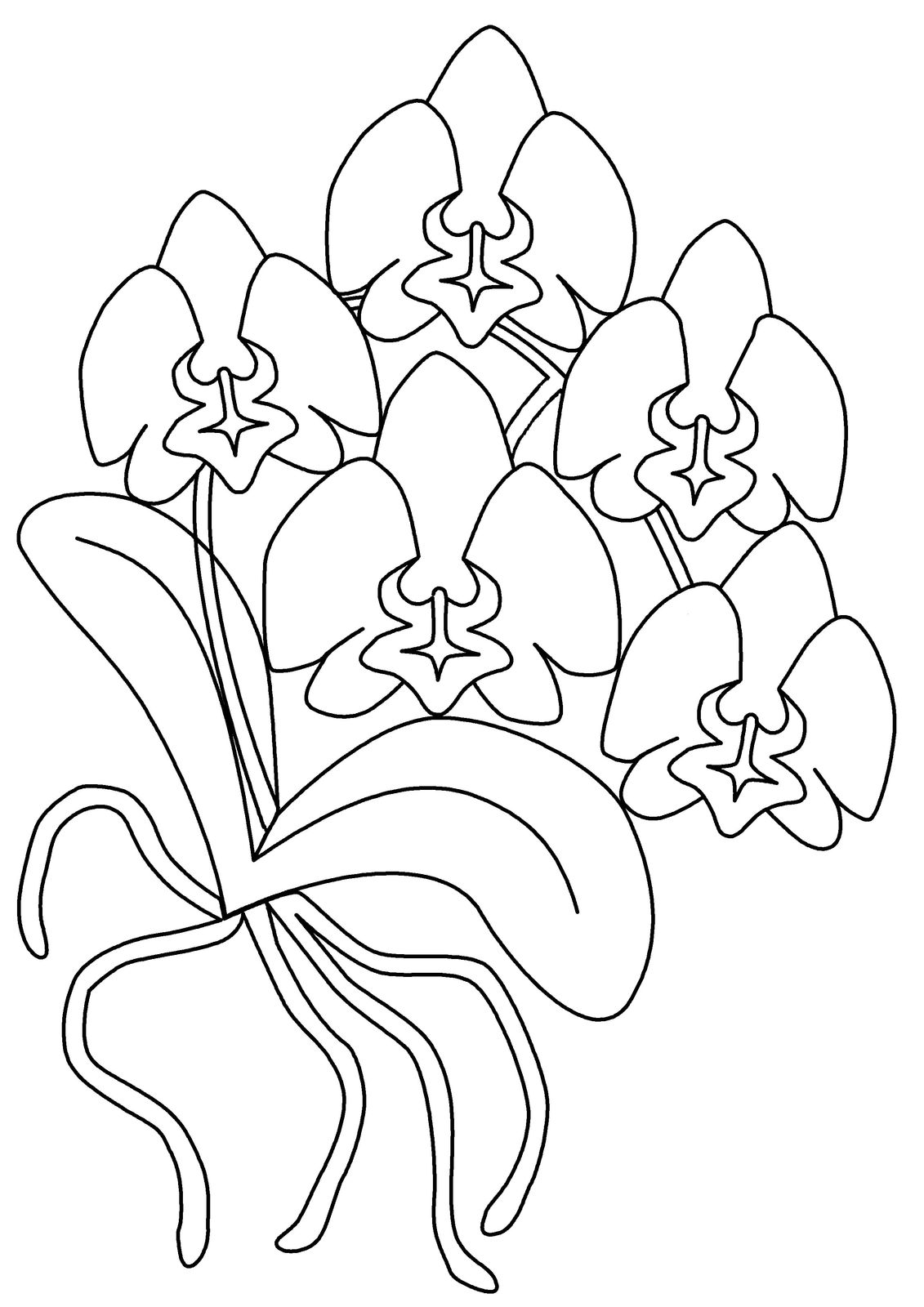
From the sketch, I have made a template that could be printed out. The important thing to not forget by an assymetrical design like this is to mirror the image – the lace has a front and back. In this case not only all the knots are on the back side, but important is also the stalk of the blossoms which is in front of the right leaf.

© Charly, all rights reserved. Click for full size.

The final step was, of course, making the actual lace. It took me circa 40 hours. you can look below the fold whether it was worth the effort.

[Read more…]