
Andrews Wilkinson. Boy Holidays in the Louisiana Wilds. Boston, Little, Brown, 1917.

Andrews Wilkinson. Boy Holidays in the Louisiana Wilds. Boston, Little, Brown, 1917.
While the knife handles were being covered in varnish, which is a few hours work a day followed by a whole day of waiting, I have designed and made another bobbin lace picture. This time a rose. It was a lot easier than the two previous designs because the blossom is de-facto just a spiral. And whilst the leaves are more complicated, they were just ten bobbins and could be made almost in one go.
We tried several backgrounds and the grey one worked best again. On a dark background, the thorns on the stem were not visible at all and on a light one, the blossom was poorly defined.

© Charly, all rights reserved. Click for full size.
To show you the difference in style between me and my mother, here is one of her roses, several decades old by now.

© Charly, all rights reserved. Click for full size.
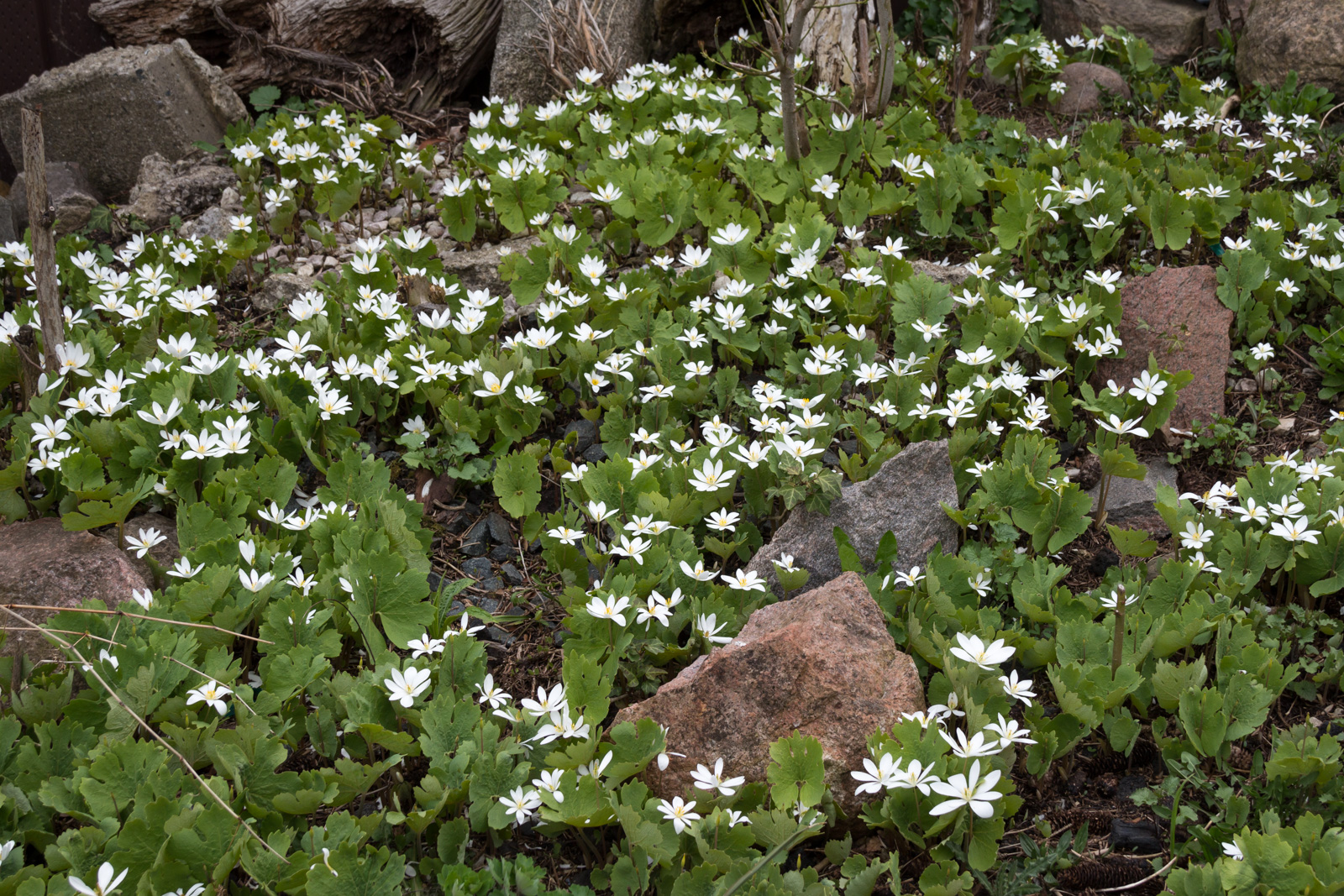
Bloodroot, ©voyager, all rights reserved
It’s been a while since Jack and I shared photos of the spring wildflowers. In part, that’s because our favourite trail has been closed due to the pandemic, and in part due to bad weather. It’s been cold and damp, with bursts of snow and freezing rain, and neither Jack nor I have felt much like going out. We did make it to a different forest a few days ago, though, and that’s when these photos were taken. We didn’t find as many flowers as we do on our usual trail, but our usual trail is through a wildflower preserve, so I’m not sure if it’s because of the weather or just the normal condition of this forest. Even though we didn’t find lots of flowers, we did find most of our favourites. The one flower I couldn’t find was the red trillium.
We’ll be back on Wednesday with the story of Oma Troutchen’s homecoming, accompanied by a wonderful picture of Oma sent to us by someone special.
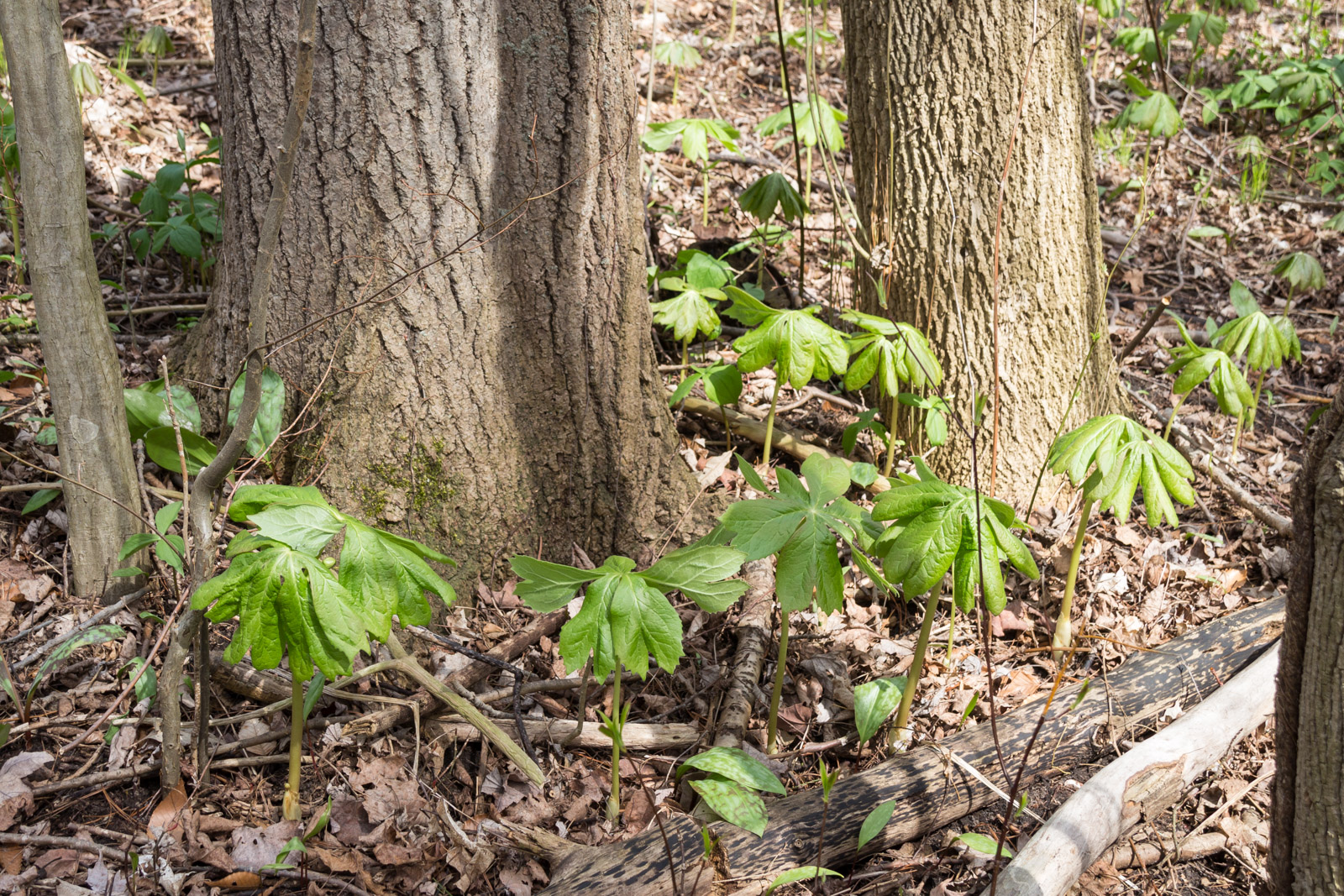
Mayapples, ©voyager, all rights reserved
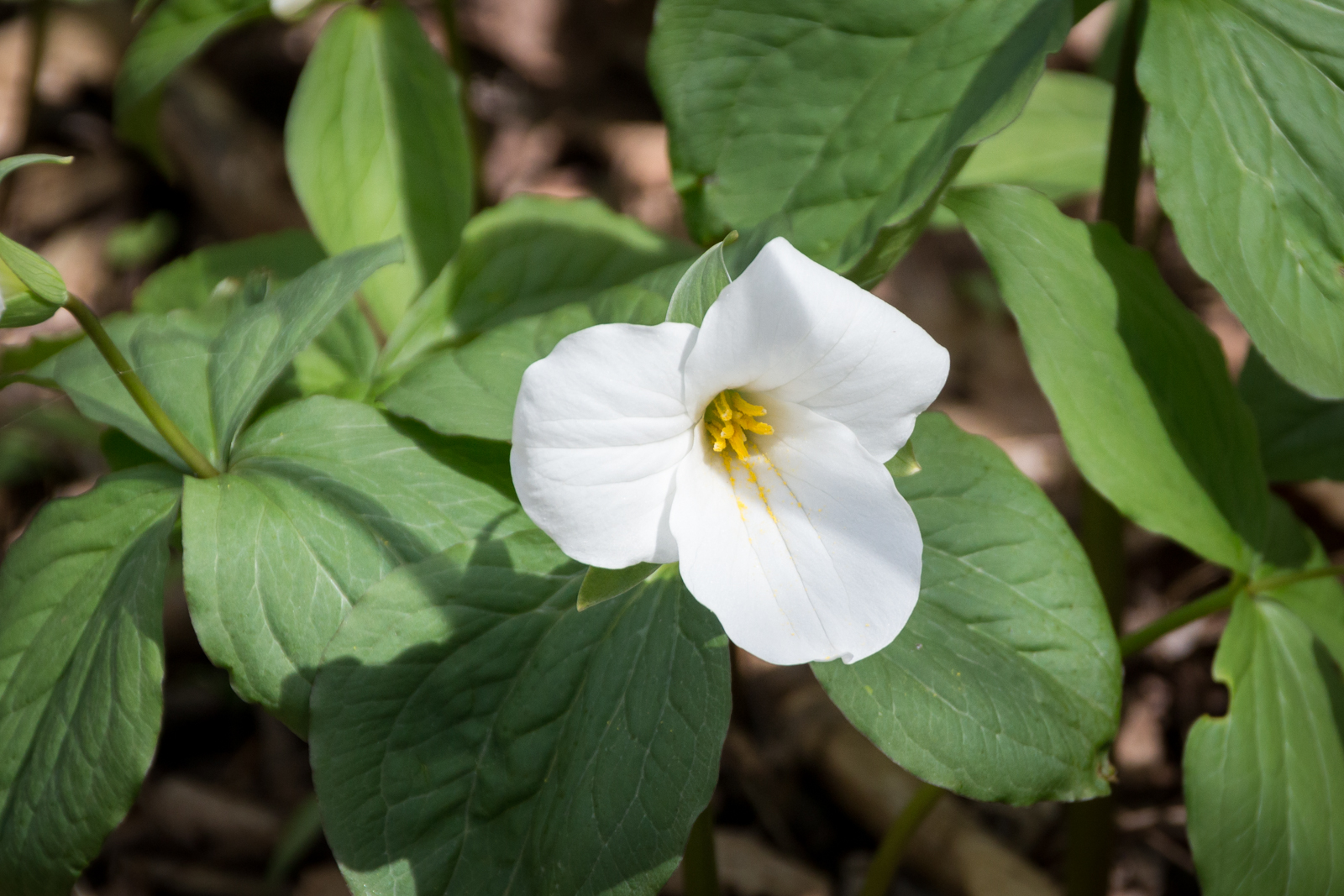
White Trillium, ©voyager, all rights reserved
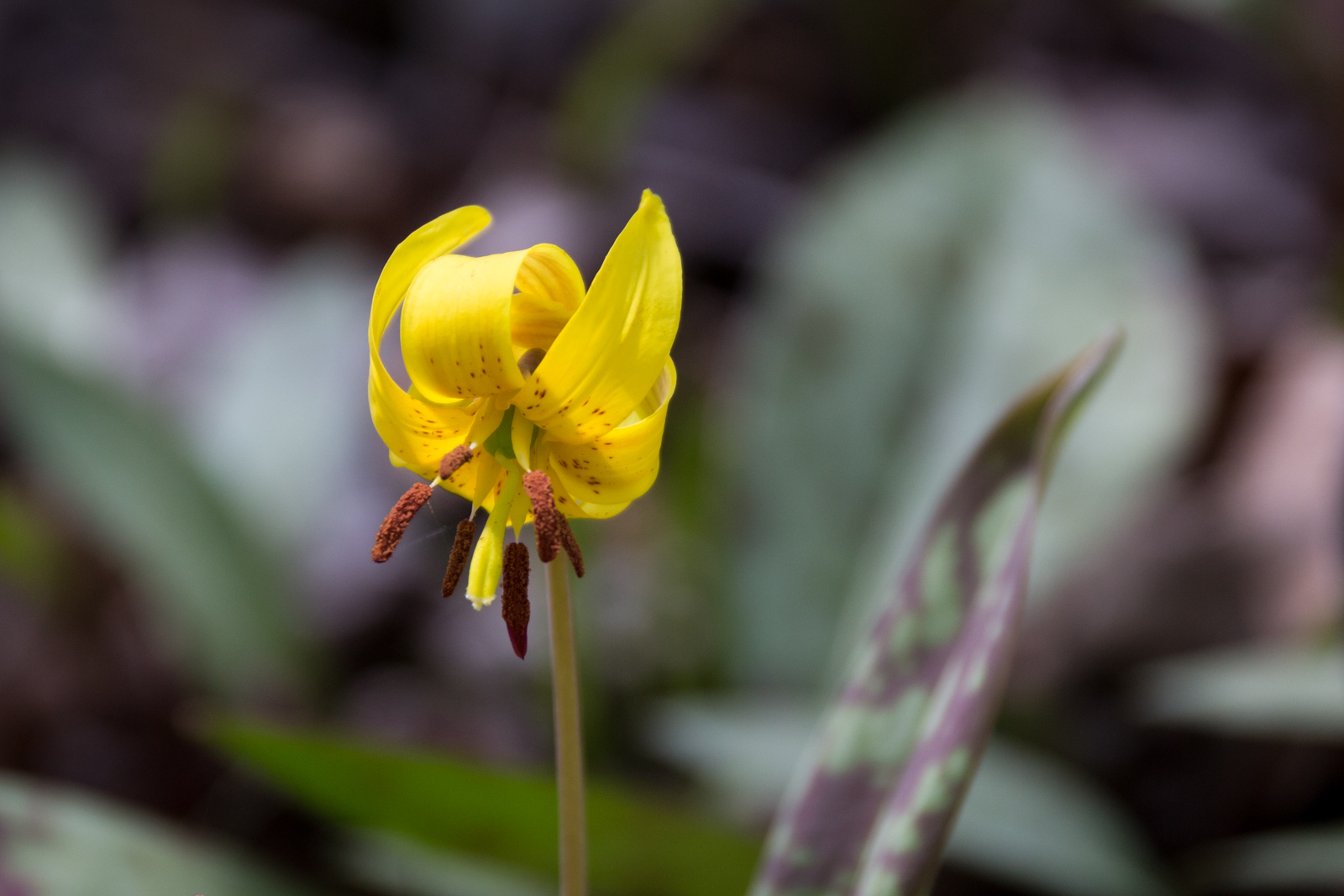
Trout Lily, ©voyager, all rights reserved
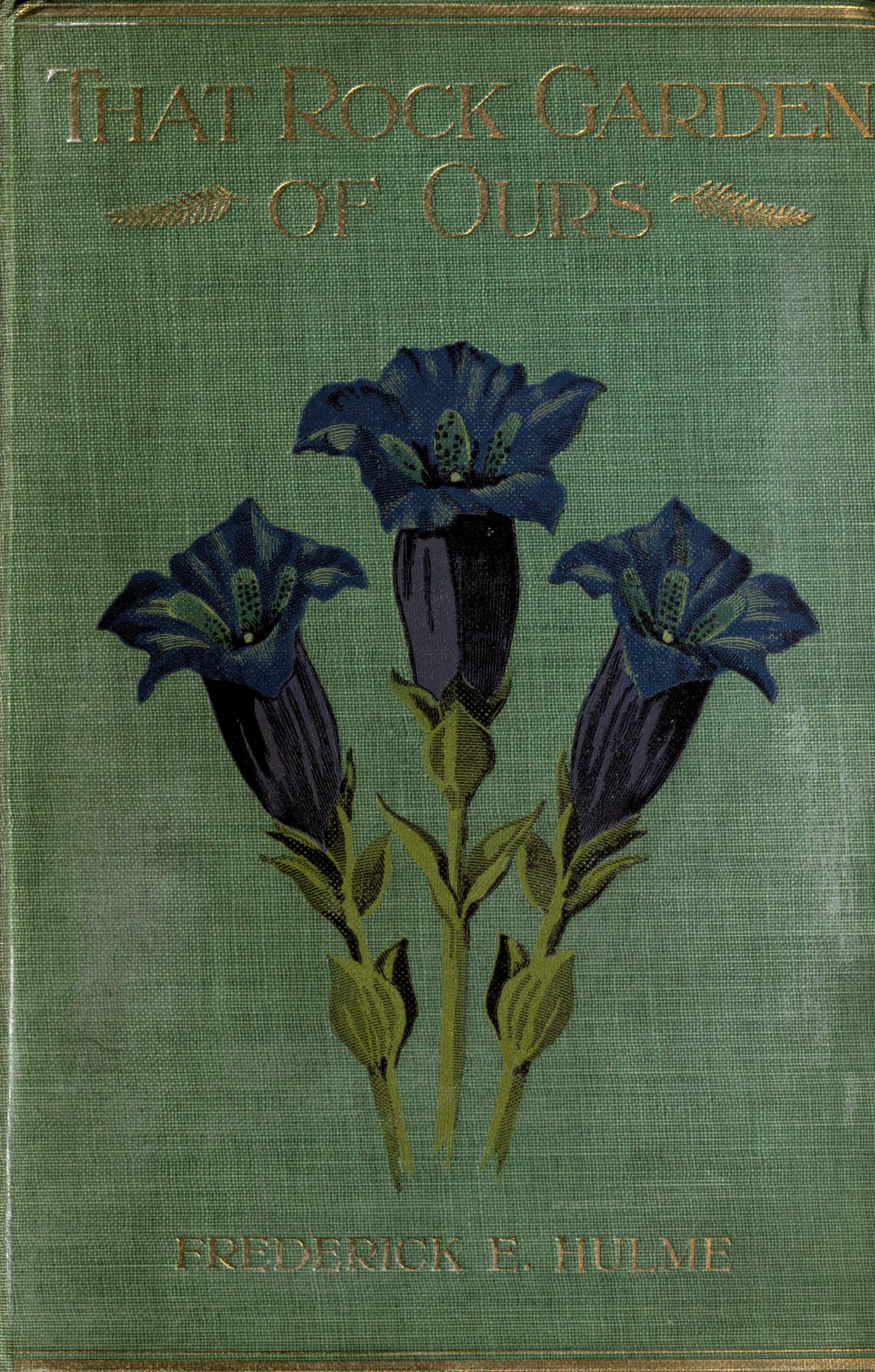
F. Edward Hulme. That Rock Garden of Ours. Philadelphia, Jacobs & Co., 1909.
via: The Internet Archive
Last time we saw the garden we had a new terrace and stairs, but were still far away from it being finished, which it still is. Since then I gave the old bench a new coat of paint and we got new garden furniture and somebody competent is working on a handrail. What we still need is a lamp. The easiest thing would be to screw one to the side of the house, but when has easy ever been an option? the plan is to put a lamp post in the upper corner of the slope, at the end of the terrace.

©Giliell, all rights reserved
In this pic that’s the upper right hand corner, basically where the wooden fence starts. This way it should give light to the small terrace, but also to the stairs. Also I want a small fountain there so we need electricity anyway. Therefore we spent most of Saturday doing what we’re good at: me telling Mr what he should do and him doing what I told him. Sounds pretty much like some sexist trope about the domineering wife and the poor hapless husband, but it links to the concept of the mental load: The fact that in heterosexual relationships the women are usually the ones who have to do the planning and coordination and sadly, our family is a poster child for this in most parts. Mr has gotten better over the years (often because I simply refused to to do it. If we agreed that it was his task then I would simply unburden myself. No more checking in, no more doing the thinking), but on the whole the mental load is still mine. It doesn’t help that he’s really not good at planning in several steps. He’s more of a Scrabble guy than a chess player and his plan was to start pouring a concrete base at the top where the lamp should go and worry about the slope later. Supposedly after the first heavy rain washed down the earth including the concrete base.
At my suggestion (haha) we started securing the upper part of the slope:

©Giliell, all rights reserved
What looks like just a couple of stones was the backbreaking work of several hours. The slope goes in two directions: into our garden and towards the neighbour’s garden. And we had to start somewhere in the middle, because that stone that looks like I had drunk the gin tonic before and not afterwards is turned over on purpose: It covers the drainage pipe from the terrace, making sure the water can exit freely. To prevent animals from getting in there we put in a tin with holes in the bottom. I’m curious at how this will work out, but it’s raining today so I’ll take a look later. This means that we had to start right there, that was our fixed point, and work our way up and to the sides and down as well. Every other stone has a steel bolt at least 30cm into the ground and a layer of concrete to secure it. And some drainage because I do want to plant something in those stones. The first row is always the hardest because it needs to be very level. Sure, the stones will always have their irregularities, they won’t all be the exact same height, but if you’re off there, you’ll be in a lot of trouble later. That means putting the stone (15kg) into position, checking, lifting it off, altering the ground, putting it back, checking… Yes, my arms are hurting, why do you ask? Especially since our ground is full of stones and pebbles that will just not give a millimetre, no matter how hard you push down. And the worst part: because the whole terrain is helter skelter it looks like they’re all askew because all the other supposedly “straight lines” you’re looking at are, in fact, not straight, which is probably a metaphor or something for my life but that’s off topic.
In the background you can see some boulders to further stabilize the slope. We still had these lying around, but we’ll need to get more of them to create a girdle on the lower edge to prevent the ground from being washed out. It will also create a nice habitat for lizards and insects, because with all the work we’re doing and all the alterations we’re making to suit our desires, that is always an important aspect. That’s the allotted “wildflowers” side of the slope anyway. I hope to get enough of the stones set in time to plant the pumpkins and courgettes. We’re not lazy, we’re environmentally friendly! We’ll spend a lot of time in the garden this year (I seriously cannot understand people who are planning their holidays this year. No, not even within Germany), so we better make it look inhabitable.
Companies want to sell you things. And of course, to run a business that isn’t money laundering, what you get from your customers needs to be more than what you pay for goods and services yourself. But of course they don’t just want to make some profit, they want to make as much profit as they want to and that’s where brands come into play, where they tell you stories to justify a much higher price, where a certain label means the shirt costs 150 bucks while still being made in the same sweat shop by the same people who make the 15 bucks shirts. Another trick is evoking that something is rare and exotic and therefore expensive.
Yesterday we went to the wholesale supermarket and one thing I needed was allspice. I absolutely love allspice, I was running low on allspice and I wanted to make some Jamaican jerk anyway, so I went to the spice section where I was presented with two options: the normal supermarket size packet with 19g of allspice, which would probably have been enough to make a small batch of jerk, and the restaurant wholesale packet, by the same company, with 500g.
The price difference? 2.80 vs 7.50. That’s a difference of 15 vs 150 € per kilogram for the same fucking allspice.
I think we’ll have a lot of Jamaican jerk this summer…

©Giliell, all rights reserved
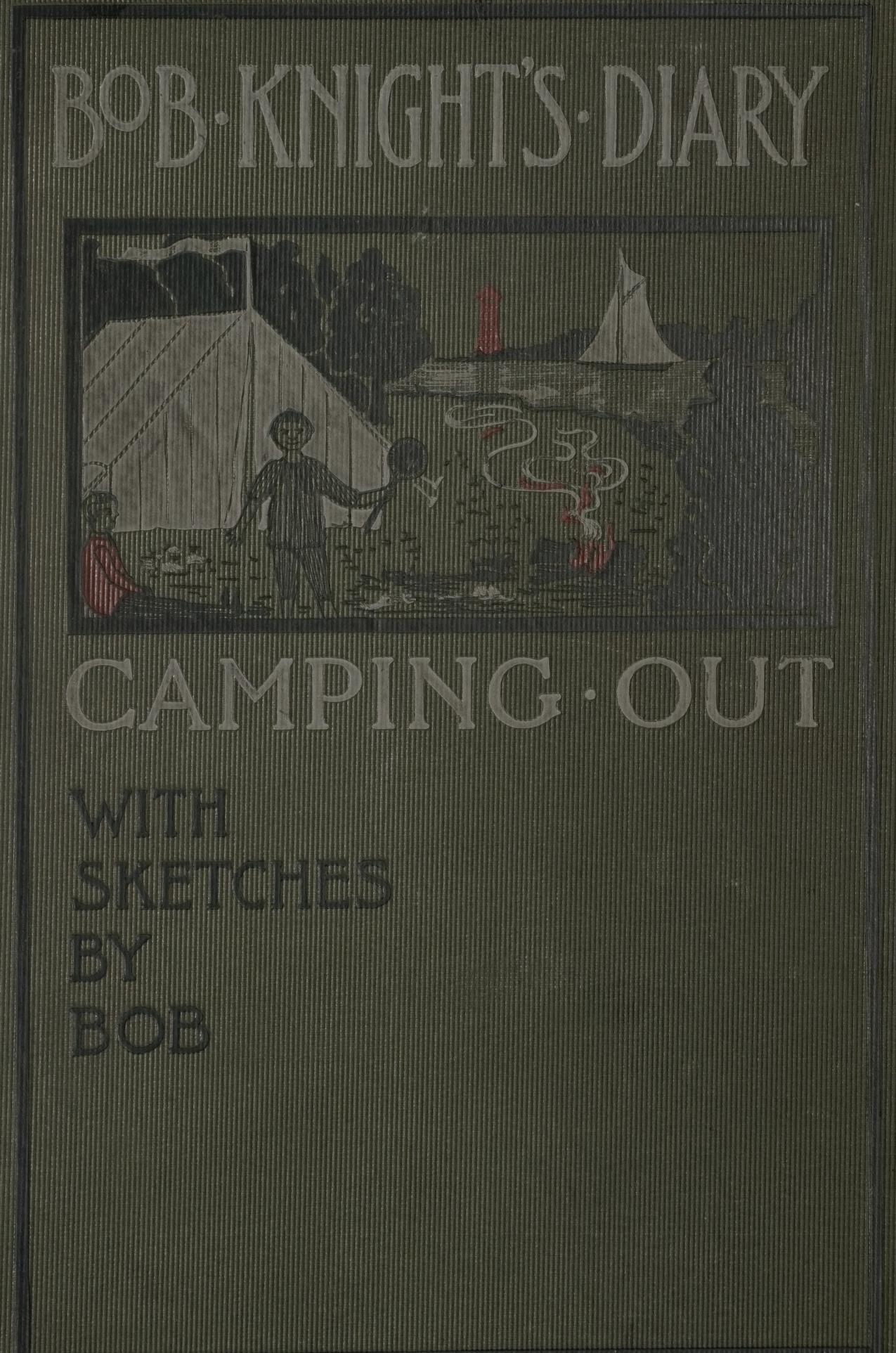
Charlotte Curtis Smith. Bob Knight’s Diary Camping Out. With sketches by Bob. New York, E.P. Dutton & Company, 1902.
via: The Internet Archive
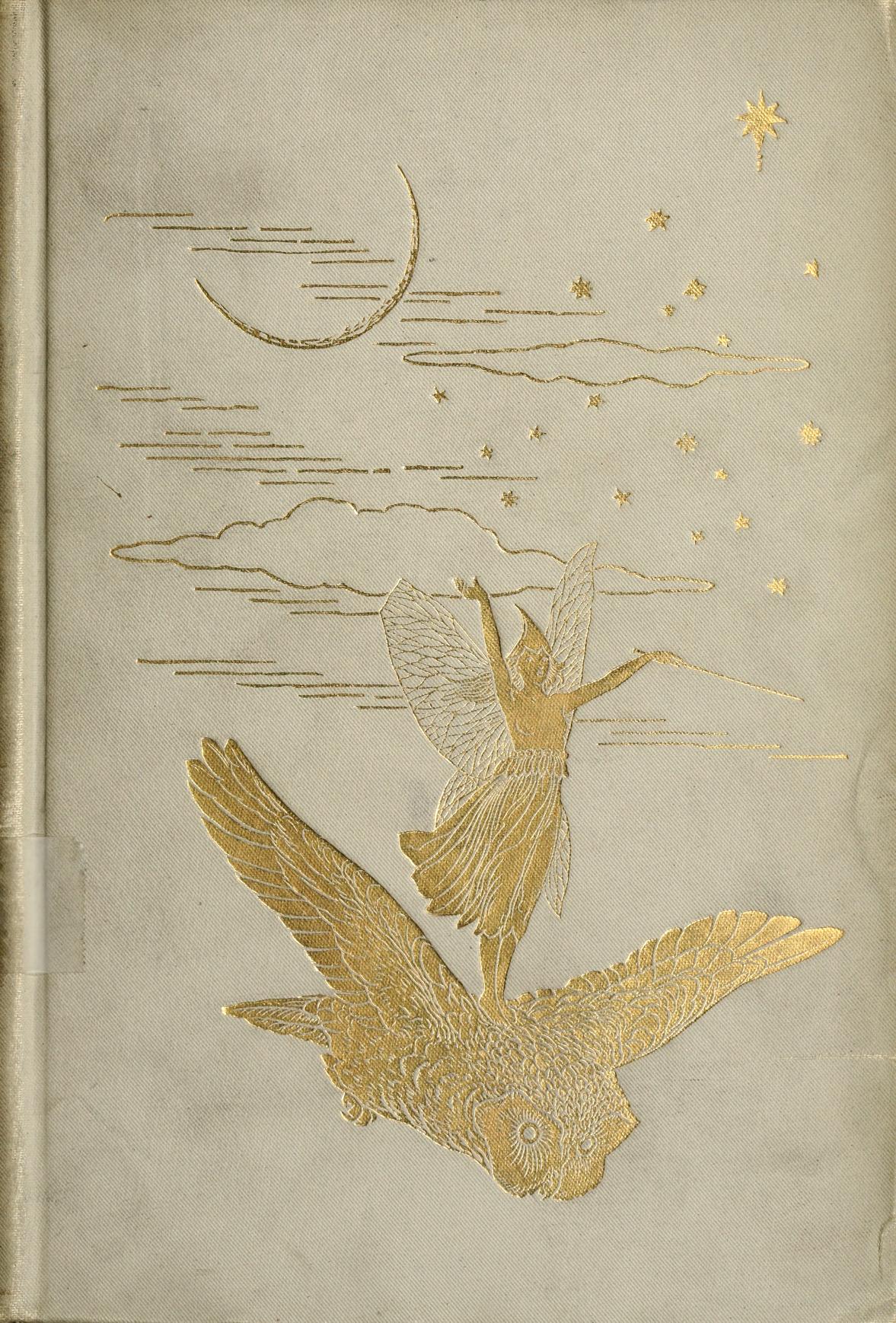
Andrew Lang. The Grey Fairy Book. Illustrations by H.J. Ford. New York, Longmans, Green, 1905.
Grey may not be the most exciting of colours, but the stories in this week’s Andrew Lang fairy book are full of adventure and most of the tales are new to me. The illustrations are the work of H.J. Ford again, and it was difficult to pull a few favourites because all the drawings are beautiful. Beginning next week, the remaining Andrew Lang coloured fairy books have actual coloured illustrations, so you won’t want to miss those. For today, let’s have a look at the lovely black and white drawings that accompany these stories.

E.W. Bullinger. The Witness of the Stars. London, published by the author, 1893.
A book of biblical astronomy, self-published by the Rev. Ethelbert Bullinger, D.D.
via: The Internet Archive
Schools here were closed about two months ago on a Friday. Thursday night the powers that be proclaimed they would stay open, driving to work on Friday morning I heard that we were closing on the news. Nevermind that the official announcement only came at 12:00 o’clock, we spent the whole morning frantically trying to put together lesson plans, material, information etc., while halve our kids hadn’t even come that morning anyway.
Since then we’ve been trying with more or less success to teach our kids remotely (not easy when some of them don’t even have a smartphone) and keep in contact. Which means a lot of communication. Believe me, I’ve never been as busy and with normal school days disbanded, there seems to be no point at which your work actually stops. All of this requires effort on all sides. These are just a few tales of how not to.
Parents:
Informing schools of your current phone number or even address is overrated. Complain loudly about not having been contacted once you bother to call school.
Call after two months of closure to inform us that your kid didn’t get the worksheets on the last day of classes (I do remember that I sent him home early. He’d threatened to beat me).
Calling back is overrated as well. Feel neglected at the same time.
Kids:
Play dumb. If you’re lucky your parents will believe you. Like when you’re supposed to hand in your work via WhatsApp and your mum texts the teacher on WhatsApp, telling her that the poor lad couldn’t find the teacher on WhatsApp.
The worksheet that is uploaded for your group has a different class label. Claim you had no idea that you were supposed to do that, even though it was uploaded under “Lessons for class XYZ”
Colleagues:
You’ve got quite some health conditions but you’d never say “can I please not have to come in for the risky work. Let your colleagues worry and arrange schedules around you.
Here I need to fill in a bit of background. A colleague, let’s call them L, has been on sick leave for quite a while now and they still will be for a time to come. They were the tutor of a very difficult class, a situation that wasn’t improved by the long absence of their main teacher. Said colleague was the German and English teacher and just before Corona hit we had finally put up a plan which colleagues were supposed to teach them for the rest of the year. I’m not one of them because I’m not a regular teacher, but with the colleagues not having met the class yet, I took over during the last weeks. It was little work for German because they’re doing a reading diary, and more for English. Now that we’re partially up again I have a lot on my plate already, and now the reading diaries have to be handed in and evaluated (there won’t be grades, but there should at east be feedback), so I called the colleague who was supposed to take over the class in German. They are still in home office with no actual class, because they are very vulnerable and have enough preexisting conditions for three more people to stay at home. If I bring them the diaries, could they please evaluate them? “Sure, of course”, they generously said. “Just drop them off”. “Oh, and by the way, who’s actually their German teacher?”
It was not a major revelation, but I did realize that all craft videos that I posted so far were about men. So for several weeks, I shall post videos of woman artisans who create just as beautiful things as the men do. Today a presentation that yes, a woman can swing a hammer and forge a sword.

Anthony H. Euwer. Christopher Cricket on Cats. New York, The Little Book Concern, 1909.
via: The Internet Archive
From Nightjar,
This is the last set of photos and it shows the olive plantations that are also an important part of the landscape, some wine cellars, and the Pinhão river, a Douro tributary. I hope you enjoyed this series. The Douro Valley is a magical place with a long tradition of wine and olive oil production. Its sustainability is currently threatened by an increase in intensive farming and tourism. In a way, it’s being a victim of its own beauty and of the quality of its products.

Olive plantations, ©Nightjar, all rights reserved