Still need the knee high boots, too. Click for full size.


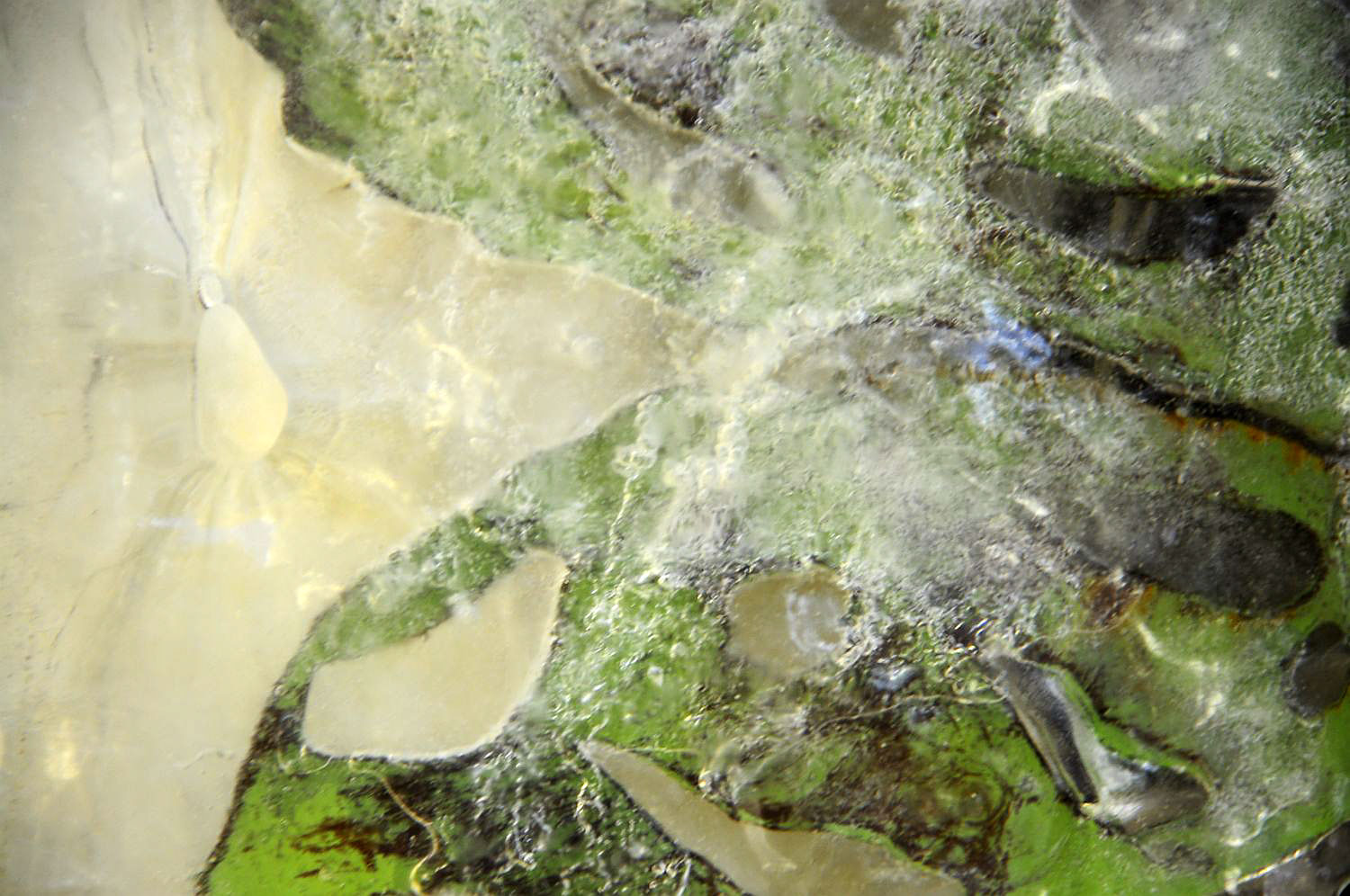
© C. Ford.

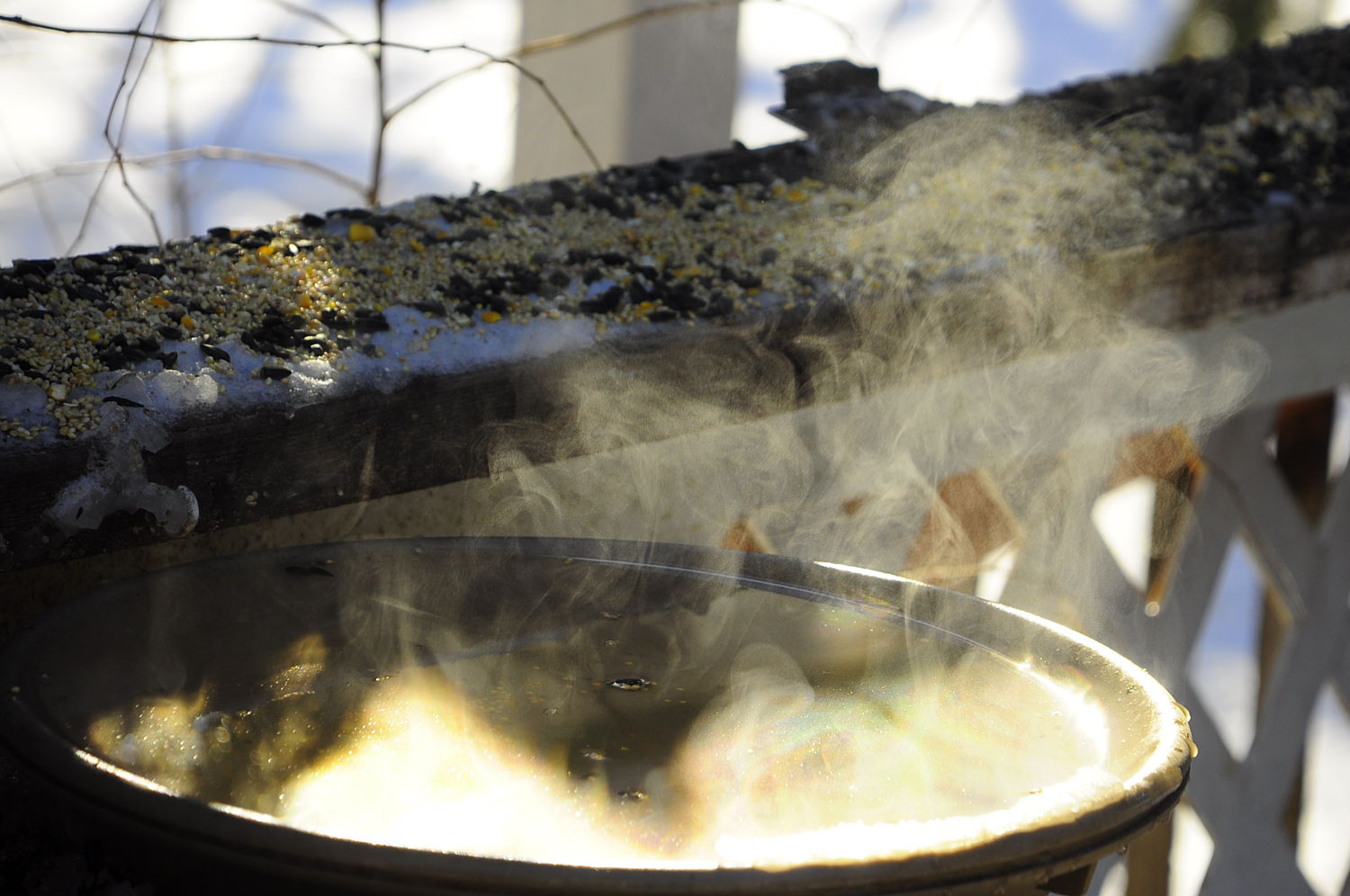
Still need the knee high boots, too. Click for full size.
© C. Ford.
Hairy Woodpecker, click for full size.

© C. Ford.
AP Photo/Kathy Willens.
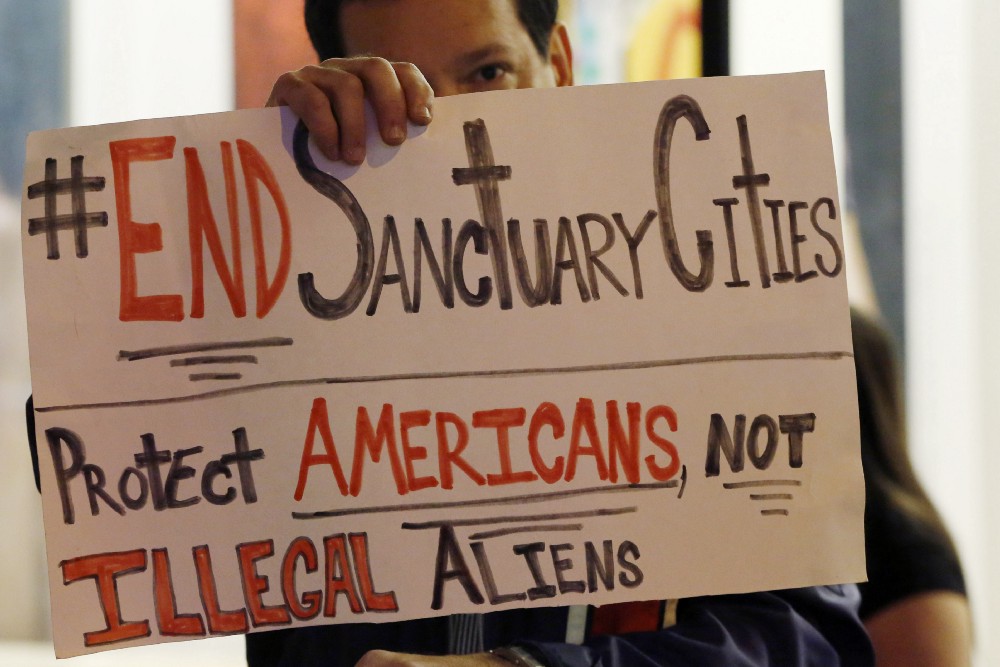
State’s rights? Oh, forget those. The ugly hypocrisy of republicans rears its collective head. Where they once never shut up about state’s rights, when attempting to foil every move by President Obama, they aren’t so concerned about them now. As a matter of fact, they are quite prepared to run them right over, in quite fascist manner – coercion. How do you force local cops to become your personal deportation goons? By tying federal monies to going along. It’s important to understand this current attempt at legislation.
Remember the Tenth Amendment?
The Constitution’s vague nod to states’ rights was a staple of Republican rhetoric for much of the Obama presidency, with many Republicans claiming that pretty much anything Obama supported violated this amendment. At its peak, “tentherism” seeped so deeply into the GOP’s bones that the party’s House leadership embraced a radical reading of the Constitution that individual GOP candidates used to argue Social Security or Medicare is unconstitutional (although, in fairness, it is far from clear that they understood the implications of their words at the time).
But all of that deep concern for the constitutional balance between federal and state power has fallen by the wayside, now that Republicans are set to control all three branches of the federal government. In a speech on the Senate floor last week, Sen. Pat Toomey (R-PA) urged his colleagues to pass the so called “Stop Dangerous Sanctuary Cities Act,” a plan to effectively conscript state and local police into President-elect Trump’s plans to crack down on undocumented immigrants.
[…]
Toomey’s legislation would prohibit cities from receiving certain grants, including Community Development Block Grants, if the city’s police has a policy of not cooperating with certain federal efforts to round up immigrants. These grants fund a diverse range of programs, many of which have little, if anything, to do with immigration. In Philadelphia, for example, which Toomey represents, these grants paid for a litter removal program and they contributed to an effort to renovate 12 storefronts.
Full story at Think Progress.
In Charlotte NC. Photo by Sean Rayford/Getty.
Christianity has played a central role in African-American life from the late 18th century to the present. Black churches raised funds for fugitive slaves, served as schoolhouses, and provided space for political meetings and activities, among other functions. Leaders of black congregations such as Richard Allen or Daniel Payne were often leaders of the broader black community. The spiritual messages of redemption and justice appealed to a people who experienced the brutality of slavery and the indignities of Jim Crow segregation laws. However, while many black churches were radical advocates for political and economic equality, others remained conservative institutions that failed to challenge the status quo. This conservatism helped give rise to an increasingly vocal and influential group of African Americans – the new black atheists.
Who are the new black atheists and what is behind their recent growth? First, let’s briefly look at the ‘old’ black atheists.
[…]
With women leading the contemporary freethought movement, the politics of respectability and its sometimes anti-feminist tendencies are being undermined. As Hutchinson notes in her book Moral Combat (2011), ‘for many black atheist women, atheism’s appeal lies in its deconstruction of the bankrupt mores, values and ideologies that prop up patriarchy, sexism, heterosexism, racism, white supremacy, imperialism and economic injustice’.
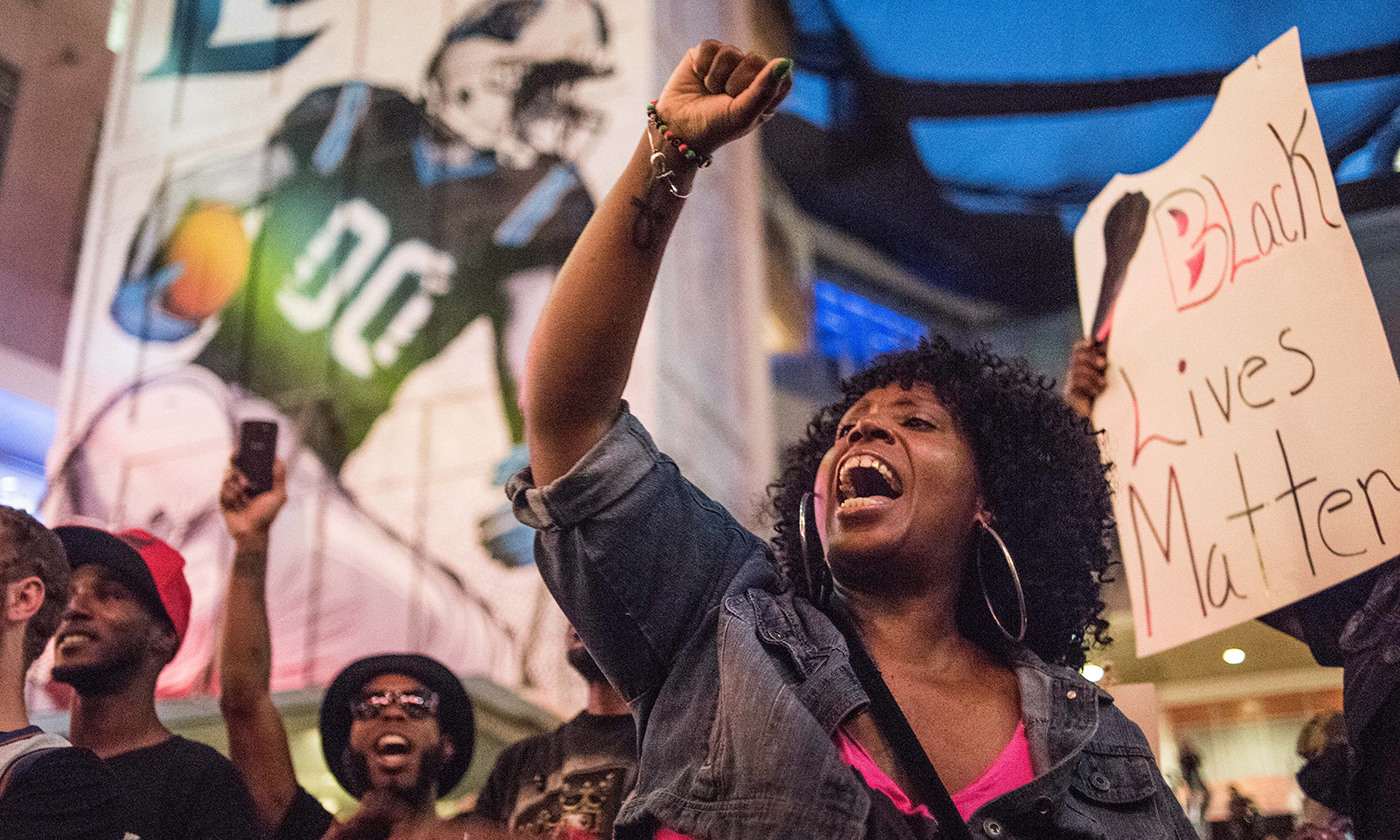
Feminism is an essential part of the new black atheists’ humanism. New black atheists think that it is not enough to deny the existence of God, teach evolution in schools or fight for the separation of church and state. They want to bring worldly solutions to practical problems. Many have embraced Black Lives Matter (BLM), a secular movement that is notably unaffiliated with black religious institutions and ideology. In doing so, they believe they will improve the lot of blacks in particular but also promote a more just, democratic and less racist American society.
As the black atheist Sincere Kirabo posits of BLM: ‘There’s a social activist movement underway continuing the unfinished business of the Civil Rights movement era. Want to make a difference? What we need is grit and involvement in the struggle, not a tribe satisfied with the empty promises of scriptural white noise. Please, for the sake and love of our own futures: abandon your fabled white messiah. Wake up. We are our own salvation.’
Black atheists matter: how women freethinkers take on religion. An excellent essay by Christopher Cameron, highly recommended. As history shows, attempting to to go along with white colonial doctrine doesn’t further people, as a group, or as individuals. It doesn’t decrease bigotry, either, because you’ll never be white enough, even if you manage the christian enough part. You only ever be an “oh, they are okay for a _____ person.”
Hail the Unconquered Sun, the reason for the season. Click for full size.
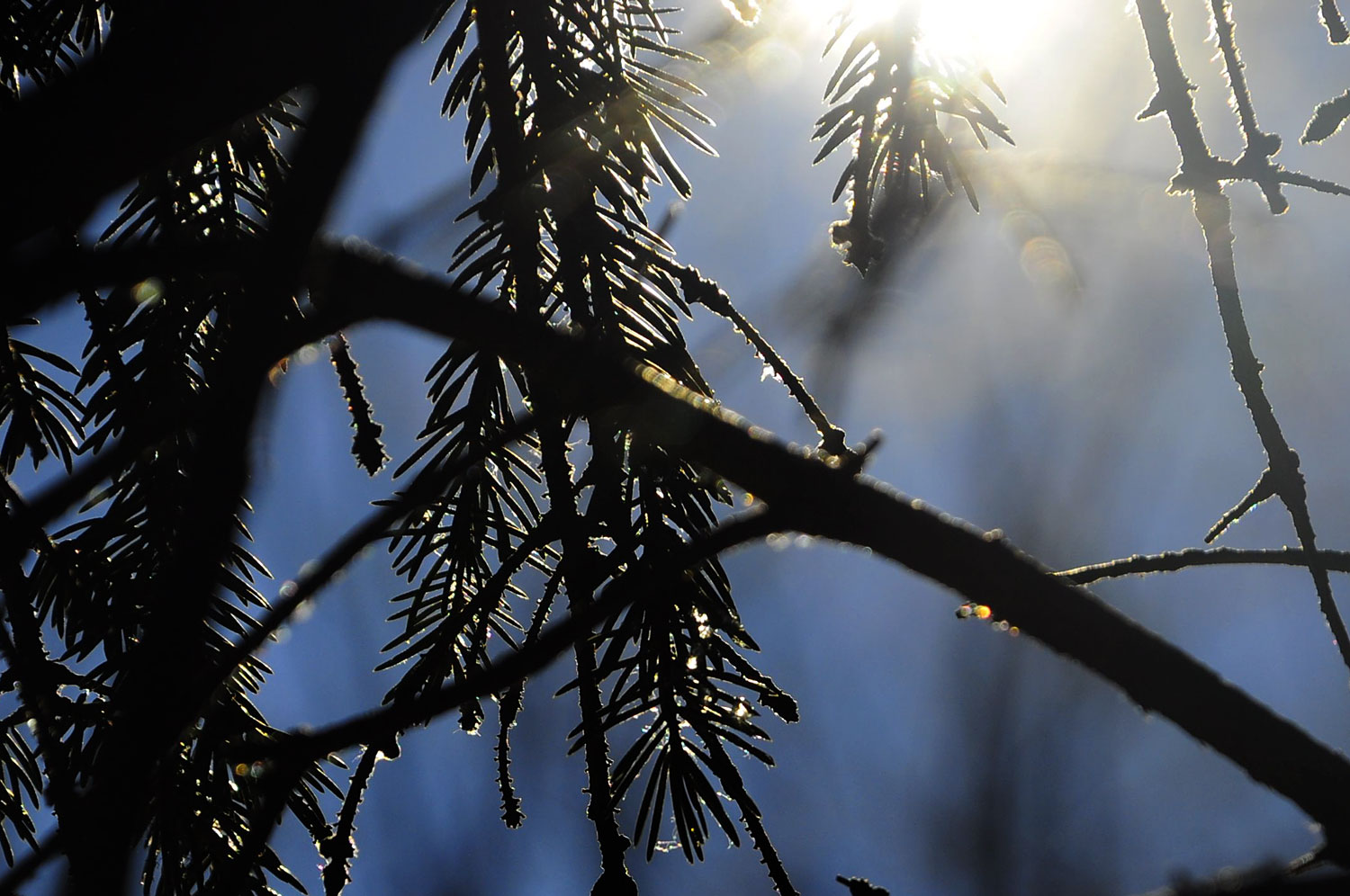


© C. Ford.

Before choosing Richmond, Va., real estate research firm CoStar Group was looking to take space at the 615 South College office tower (center) currently under construction in uptown. Rick Rothacker [email protected].
While that hateful bigot McCrory still attempts to hang onto his lost office, and refuses to admit all the damage done to NC by HB 2, it has come to light that HB 2 was the reason for a loss of a 732 job expansion. Odd, how the repubs refuse to address these reasons for job losses. Hate, bad for business!
Newly obtained North Carolina Commerce Department documents show House Bill 2 was the primary reason Charlotte lost a 732-job business expansion to Richmond, Va.
A day after real estate research firm CoStar Group announced plans to expand in Virginia, a North Carolina economic development official closed out the project file and listed the controversial LGBT legislation approved March 23 as the deciding factor.
In an Oct. 25 email to state officials, Garrett Wyckoff, senior manager of business recruitment for the Economic Development Partnership of North Carolina, said he changed the status of the CoStar project to “Closed Lost.”
“It is my understanding that we lost the project. I have selected the following reason for this status change: Local issues,” Wyckoff wrote in an email obtained by the Observer through a public records request fulfilled Thursday. For further explanation, Wyckoff added: “Spring 2016 Legislation.”
The Charlotte Observer has the full story.

Emerald City/Facebook.
I have never liked The Wizard of Oz. I didn’t like the book, and I hated the movie. I’ve avoided it in all incarnations ever since having to watch that mess on television when I was a young sprog. I’ll probably give this, um, take on Oz a miss too. It will be a visual feast, no question about that, given direction by Tarsem Singh. (The Cell was one of the most visually beautiful movies ever, but boy, was it stupid. If you want visually stunning and a good story, watch The Fall.) Tarsem Singh knows how to bring the stunningly beautiful, but he needs to be reigned in a tad by a good story and by a specific sense and style. Else it’s just a free for all, and that’s what happens here, going by the trailer at least.
This looks enjoyable enough, in a popcorn way, but the trailer exposes a terrible mishmashmush of, well, damn near everything, and some glaring admissions of “hey, went with bog standard norm boring.” A serious plus is Vincent D’Onofrio, because when isn’t he a plus? But I found the trailer troubling, on many levels.
Dorothy isn’t white. Well, that’s a start, I guess. I was initially heartened by the pride rainbow in the Kansas farmhouse window, but that gets quickly blown away, along with Dorothy. Could have been exciting if Dorothy were genderqueer, or lesbian (there’s no reason the scarecrow love interest couldn’t have been genderqueer or lesbian, right? But no, standard uber-hunky white British dude.) Well, it is on network teevee, so it’s probably best not to expect too much. The munchkins are gone, replaced by what looks to be some sort of semi-primitive tribe of Indians. There’s progress for ya. The rest of it looks like they tried to steal from every fricking culture and era ever, a bit Chronicles of Narnia here, a bit Game of Thrones there, and probably a bit of The Holy Grail somewhere, too. What it doesn’t seem to have is its own distinct style, and that’s enough to keep me away, even if I do want to watch just for the eye candy, and boy, is there a lot of that.
https://youtu.be/WKeRnyFIHWs

Paul Hair, co-author of Hating Jesus: The American Left’s War on Christianity, is a wee bit upset over some confederate statues being dismantled and moved.
Reuters reported on Nov. 19 that Louisville, Ky. began dismantling a Confederate monument for removal to a different location. The dismantling of the monument is part of the progressive campaign to destroy all reminders of the Confederacy. This campaign, in turn, is part of the larger effort to demonize and destroy all of U.S. culture.
Oh my, all of American culture is gonna disappear, oh no! Just once, I’d dearly like a specific, clear definition of what constitutes U.S. Culture. Genocidal Bigotry, check. Religious fanaticism, check. Religious terrorism, check. Slavery worshiped as a beloved tradition, check. White supremacy, check. Fanatical fetishisizing weaponry, check. Okay, what else?
None of those things are anything to be proud of, they should be national embarrassments, but noooo, those are the good things, the moral things, oh my yes! Ugh.
Demonizing and destroying American culture includes elevating evil. This is why the Obama regime honored sodomy by designating the Stonewall National Monument in June of this year.
I have never know anyone to obsess on genitalia and all the things one might do with said genitalia like hetro Christians. Isn’t it bad enough that you all have a massive porn consumption problem? Couldn’t you focus on the problems with your own genitals and leave everyone else’s alone? Or perhaps you could try actually having fun with your equipment, might loosen you up a bit, make you happy for five minutes or something. Queer people are not evil, sex is not evil, and saving Stonewall has absolutely nothing to do with sex, you dimwit. I expect you know that, too, it just burns like crazy though, doesn’t it, having a monument to a time of great social change, wherein the majority of people decided to elevate their minds and hearts, and become inclusive, better human beings. Christians just hate that sort of thing, I know. I shall squeeze a tear out for you, Paul. It won’t be genuine, mind, but I doubt you’d care.
There already is a movement urging the incoming Trump administration to undo the Obama regime’s massive land grab. That land grab included designating the Stonewall Inn and many other areas of land as parts of national monuments.
Oh, you’re one to talk about a land grab, you genocidal believer in Christian Dominionism. That wasn’t a “land grab” it was a desperate attempt to save some small portion of our mother, our source of life, y’know, the planet we’re on. We only get one, and it didn’t come from any god, and there sure as hell isn’t any god pointing a cosmic finger and healing all the damage idiots like you are doing, and intent on doing yet more. Some of us think that things like the richness of family, friends, community, and a healthy eco-system which sustains and gives life are more important than a select handful of white assholes who think there can never ever be enough money or power in their pocket.
As for a “regime”, no there hasn’t been one of those yet, but you’re fair dripping at the one looming on the horizon, aren’t you? Disgusting.
There’s no reason those objecting to America honoring sodomy couldn’t join the larger movement to undo all the national monuments Obama designated at large. And if that effort proves successful, it then would make it possible to destroy the Stonewall Inn and wipe out its stain on American history.
A stain on American history. I rather think that white Christian colonials were (and are) a stain on Turtle Island, and on Turtle Island history. Perhaps it’s time for a different movement, one to dismantle, bit by bit, every single fucking church on Turtle Island. All of them, gotta go. You stand for every evil, for every single one of your so-called sins. That’s a stain that needs scrubbing out.
This is a wonderful video, and contains one of best happy scritching grooming moments ever.
During 2016, the badger had the honor of being Latvia’s animal of the year. And what a year it has been for badgers, as the video below shows.
Produced by the Latvian Natural History Museum and Latvian State Forests, the video shows badgers frolicking, loving, playing, fighting and generally badgering about throughout the whole year.
With films of all sorts of nonsense all over the place these days, how simple and refreshing it is to just watch 20 minutes of badgers being badgers.
There are also special guest appearances by deer, foxes, and assorted other woodland associates of Old Brock himself.
Thank you, Latvian badgers everywhere. Enjoy!
Via LSM.LV.
Beautiful! From Ice Swimmer. Click for full size.



© Ice Swimmer, all rights reserved.
Sparrow. Click for full size.

© C. Ford.
https://www.facebook.com/ntvsclothing/photos/a.248774832000321.1073741828.245852668959204/527999037411231/?type=3
People being what they are, there are many who are more than willing to steal and scam from actual Native artists, and using the good-heartedness of people who want to do something to show their support for Standing Rock. Indigenous artists have a difficult enough time, there are always a host of people trying to rip off what they do, but this is not only out of control, but once again, FB won’t do shit about it. So, it’s up to you. The people doing the scamming are mostly based outside the U.S., and they have enough money to buy sponsored ads on FB, which are resulting in millions upon millions of views, and worse, shares. Most Native artists and small business owners cannot afford the same amount of sponsored ads, their attempts to alert people don’t get very far, and as Aaron Silva noted in comments in the above post, FB was not allowing him to boost it.
We all know how lax FB is about such matters, in spite of what they might say. If you’re someone who wants to support Standing Rock, and thinks doing a donation by way of getting a cool shirt is a good way to do things, then do that, but do everyone a big favor by putting on your thinking cap, and keeping those eyes sharp. Verify, verify, verify, because money you think is going to Standing Rock isn’t, it’s going into the pocket of a thief. Aaron Silva has some helpful tips on what to look for at NTVS Clothing.
BuzzFeed has an extensive article about the problem. If you see a fake site, please, report them. Warn others, all the things you do on FB when you know something is bad. Native artists and all those at Standing Rock thank you for doing whatever you can to combat this ongoing problem.
Edited to add: If you fell for one of these scams, don’t feel bad, but do get mad, and help take them down!