Affinity
Art, Fun, & Nonsense.

The long pause was no pause at all. I worked on the blade every evening and but I could not give it more than half an hour to one hour a day, so the progress at this stage was very, very slow.
After the hardening came tempering, which is rather easy and dull process. I wanted the blade to be primarily tough, not overtly hard, so I gave it two half hour courses at 200 °C in the baking oven. This has removed a lot of the hardness and almost all of the brittleness. It should be easy to sharpen and maintain sharp but it should not snap when hitting something hard. With a kitchen knife I would lower the temperature to 150 °C or perhaps perform differential tempering.
 Next step is polishing. This is by far the most time-consuming and dull part of making a knife. Here are all the belts on my belt hanger. Before hardening I went all the way from left where the pink ceramics belts are (P40-P120) through middle blue-green zircon-corund (P120-P320). After hardening I gave it one more pass with zircon-corund P320. Very thorough pass, because the blade was slightly pitted from the failed hardening attempts. After that came the last third of the belts, which are Trizact belts (A65-A6, which is equivalent of P300 to P2500). There are six Trizact belts, and each took approximately one hour. Had I more experience I could perhaps speed it up by 30-40%, but it would still be a lot of time – I want the blade to be as near perfect as I am able to make it. So at each stage it is important to remove absolutely all scratches made by previous belt.
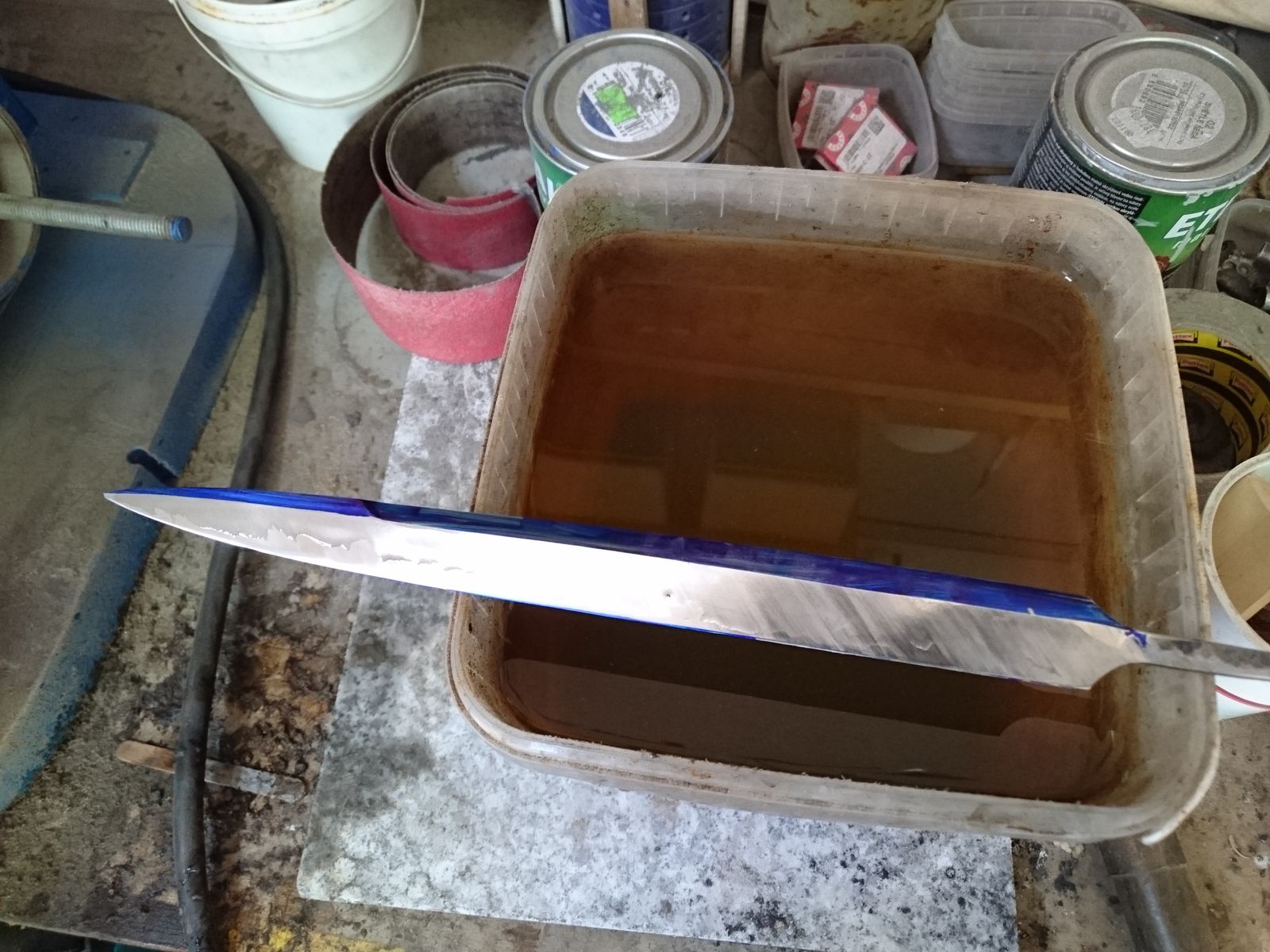 Of course thick blue marker helps here as well, because otherwise I could get easily confused about which facet I am working on. As I learned when doing my previous dagger. To be able to see the marks from previous grind, one does alternate the angle – that is for this facet for example I was grinding diagonally with the point down, so next step will be with point up. Were the facets perfectly straight and not wobbly at all from the beginning, the process would be fast. Alas they were wobbly and I made them wobbly in the process in decreasing degree of wobbliness untill I reached nearly straight towards the end. What I learned here is that I really, really need speed control for my belt grinder, because during polishing slower speed of the belt would speed up the work – I would get better control of the blade and most importantly, the edges of the belt would not make divets and scratches so fast as they do. However even as it is it is working well, but requires a lot of skill that I do not yet have. A lot of eyeballing was involved.
 Today I finished on the grinder but I am still not done. For a mirror-finish more work is needed. Kitchen knife would get a few passes on a buffing wheel at this point and that would be it. That would give it nice mirror finish but the scratches from the trizact belts would still be somewhat visible. For this one though now comes excessive use of elbow grease. I will work my way through a series of wet polishing papers P2500 all the way to P7000. For this I use my trusted gizmo that has seen me through multiple blades already. A piece of hardwood board held in a vice, with leather strap glued on it. On the leather I can lay a strip of sandpaper. Sometimes I rely on the adhesion between the wet leather and the sandpaper to hold it in place, sometimes I hold the paper in place with the help of two springs and something made from fence wire I cannot put a name to.
After that I will be done with this phase and I will be able to perform the last step in making a blade – signing it.
I still have not resolved how to do that. I used to have my own maker’s mark consisting of my stylized initials. It was very easy to etch or engrave and I would love to continue to use it. But by purest of coincidences that very same mark was a few years later independently designed as Bluetooth logo. We’ll see what I come up with.
My darling Chester, having fun in the button tin.


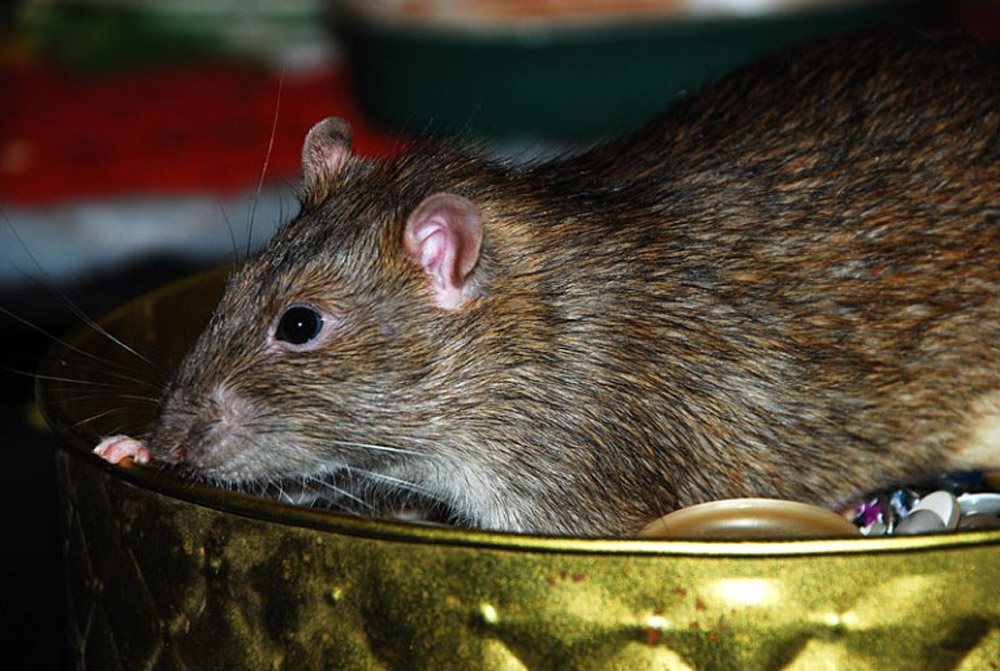
© C. Ford, all rights reserved.
Posing. Pisco, Portuguese for robin.
An European Robin, Erithacus rubecula, making a break from insect hunting to pose for the camera. The name “pisco” applies to several different insectivorous birds and is usually followed by a qualifier, redbreast in this case, but there are also the “bluebreast” (bluethroat, Luscinia svecica), “bluetail” (Tarsiger cyanurus) and “blacksmith” (redstart, Phoenicurus ochruros). However, if someone says only “pisco” and nothing else, they are almost certainly referring to this bird.
Click for full size!

© Nightjar, all rights reserved.
So delicate and beautiful, from Giliell, click for full size!


© Giliell, all rights reserved.
Chipping Sparrow, click for full size.
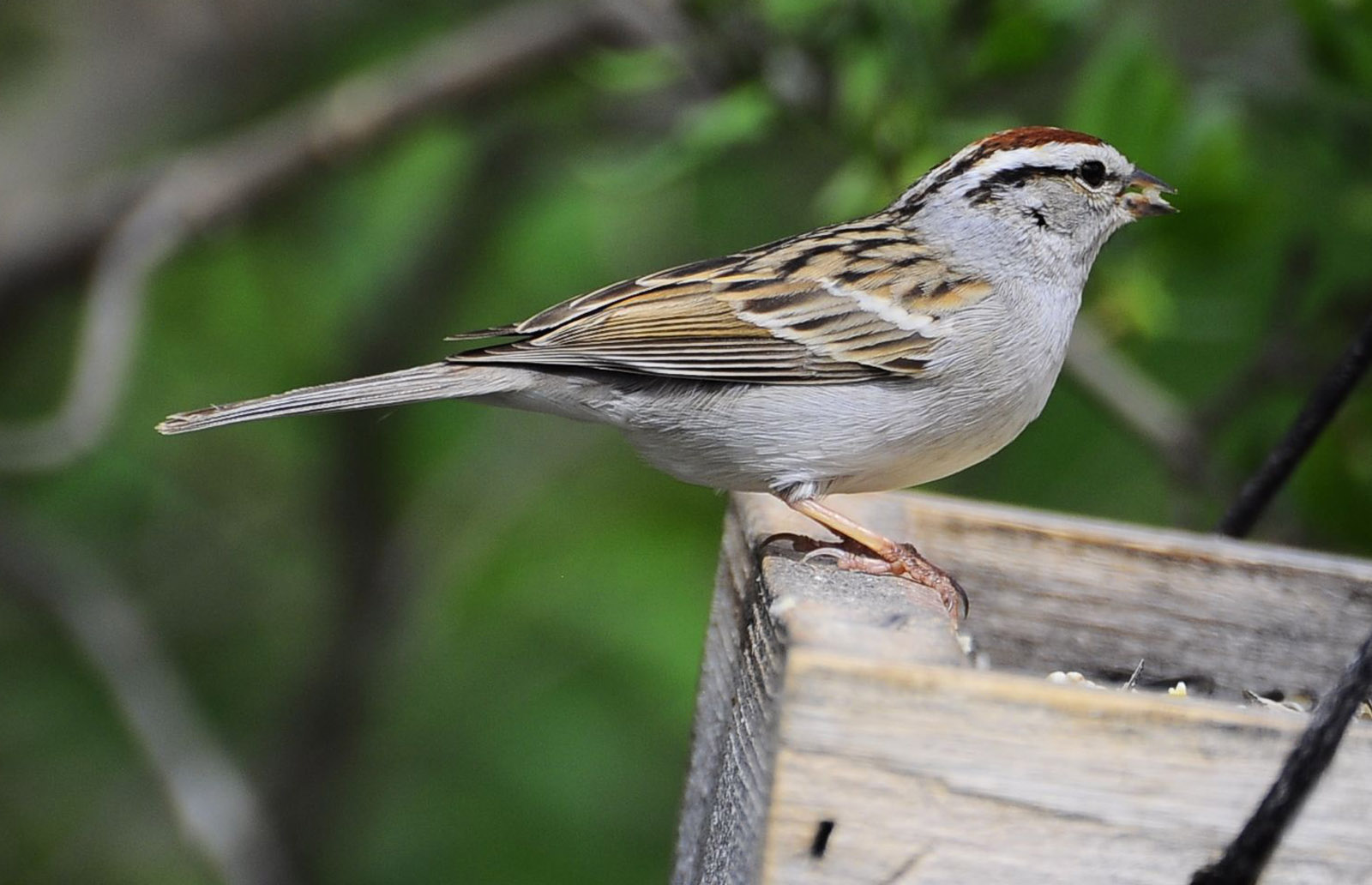
© C. Ford.
It’s been overcast most of the day, but the sun did come out just long enough for Jack and I to have a lovely wander around the park. For once, our timing was good.

©voyager, all rights reserved

The Philosophy of Beards: A Lecture Physiological, Artistic and Historical, by Thomas Gowing; 1875; Ipswich: J. Haddock.
Thomas Gowing felt the mighty yet fragile English Beard to be threatened with extinction by an invasive foreign species, the Razor. So he set out to defend the furry face mammal in every conceivable way. The resulting lecture was received so enthusiastically by a bushy-faced audience in Ipswich that it was soon turned into The Philosophy of Beards (1854) — the first book entirely devoted to this subject.
It is Gowing’s ardent belief that the bearded are better looking, better morally and better historically than the shaven.
[…]
In the last section, Gowing gambols through the ancient and modern past, attaching a beard or lack thereof to thousands of years of heroism and cowardice, honour and deceit. Viewing history through the prism of the beard makes things nice and simple: “The bold Barons outbearded King John, and Magna Charta was the result,” … “Henry the 7th shaved himself and fleeced his people”. Napoleon I only allowed men in his empire to have an “imperial”, an upturned triangle of a beard, as a way of letting them know “that they were to have the smallest possible share in the empire”.
[…]
Finally, he dismisses as “a foul libel” the idea that ladies don’t fancy a beard. He declares, presumably without much survey data to hand, that “Ladies, by their very nature, like everything manly, and cannot fail to be charmed by a fine flow of curling comeliness.”
You can read much more at The Public Domain Review, including the book itself. The book has also been recently republished by the British Library, for the first time since 1854. You’ll find a link at The Public Domain. I’d think the book would be a fine gift for anyone’s bearded friends and loved ones.
You might also be interested in Beards of Time:
Bumblebee buzzing around a comfrey Symphytum officinale.
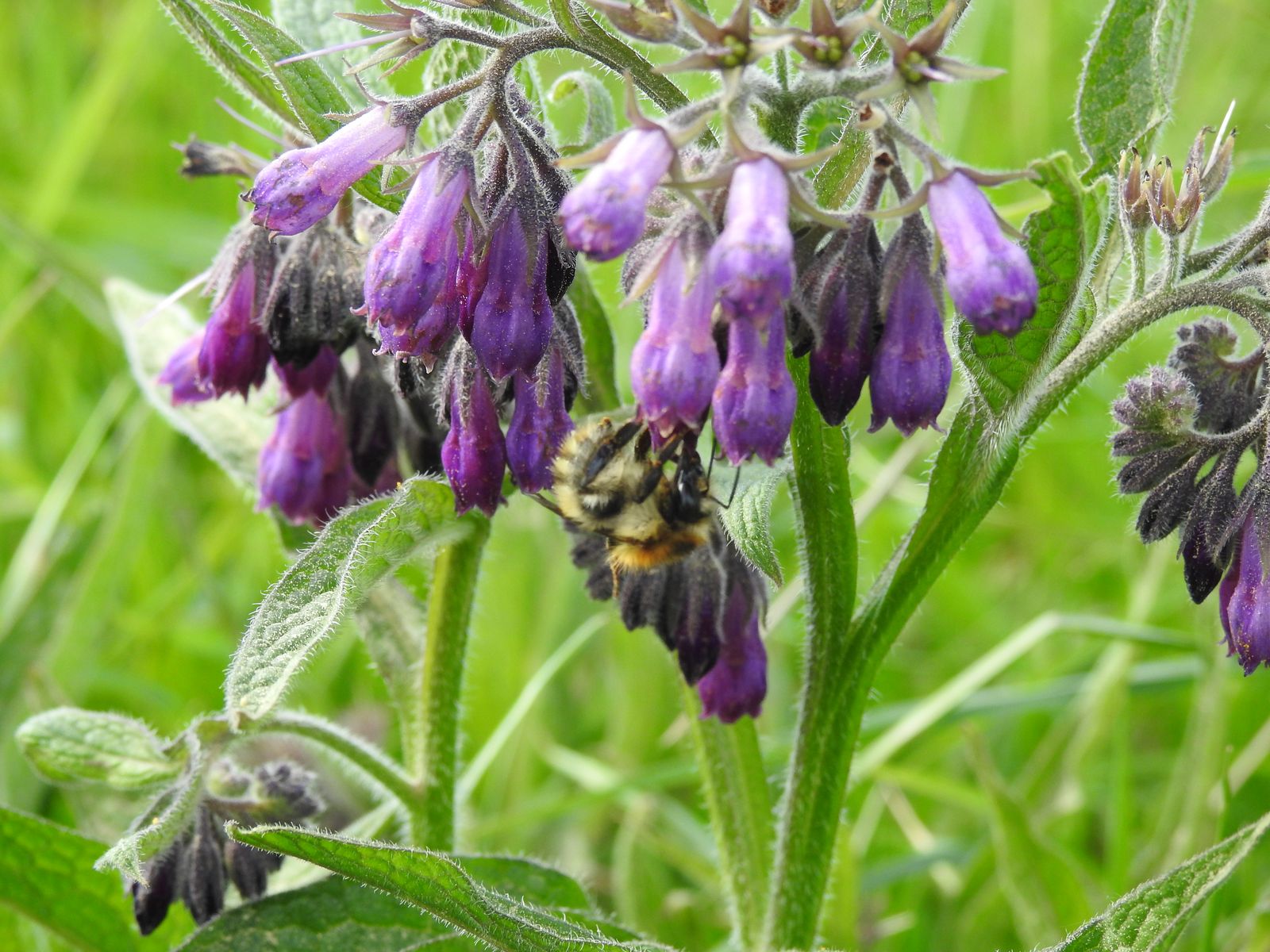
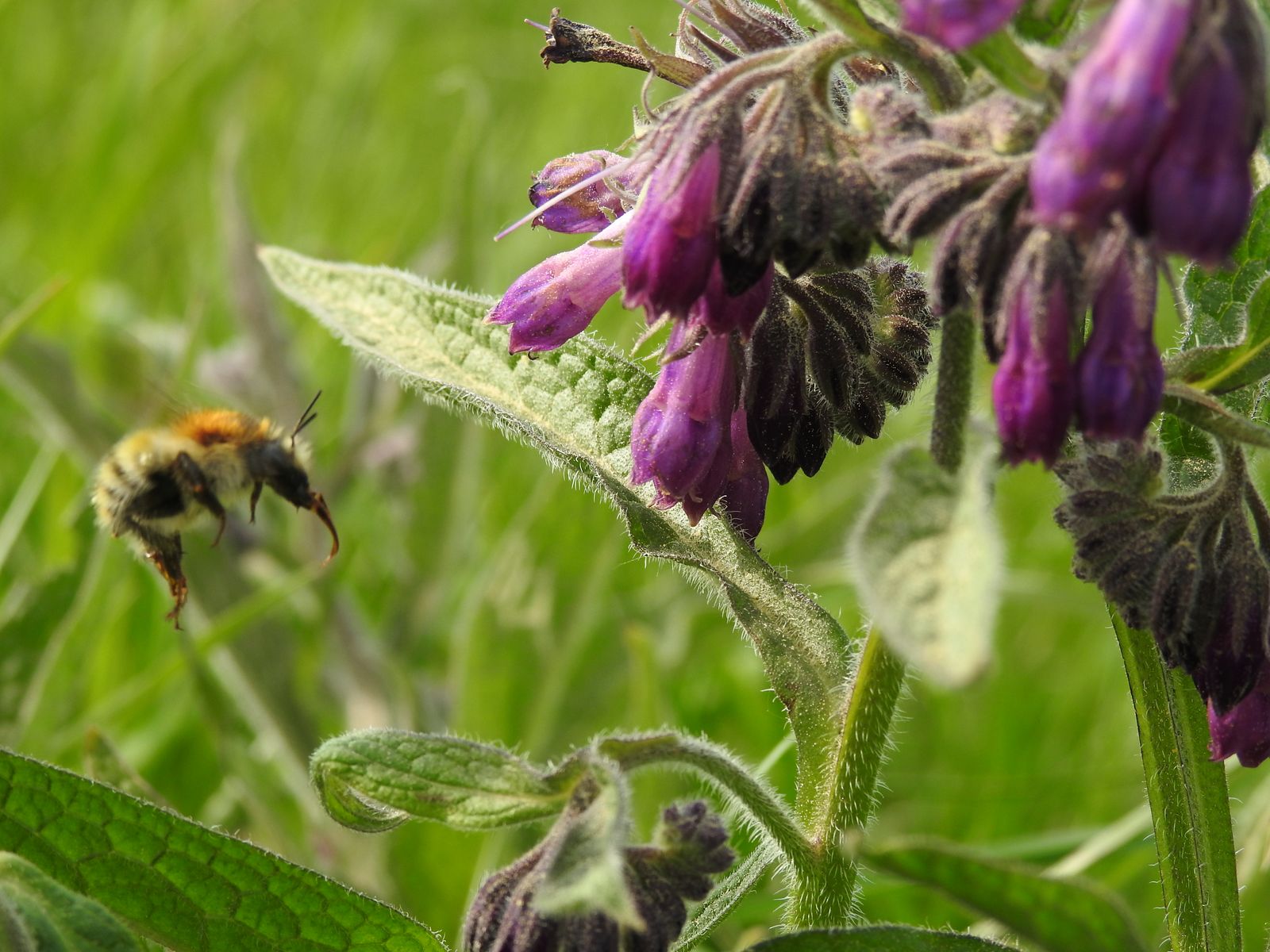
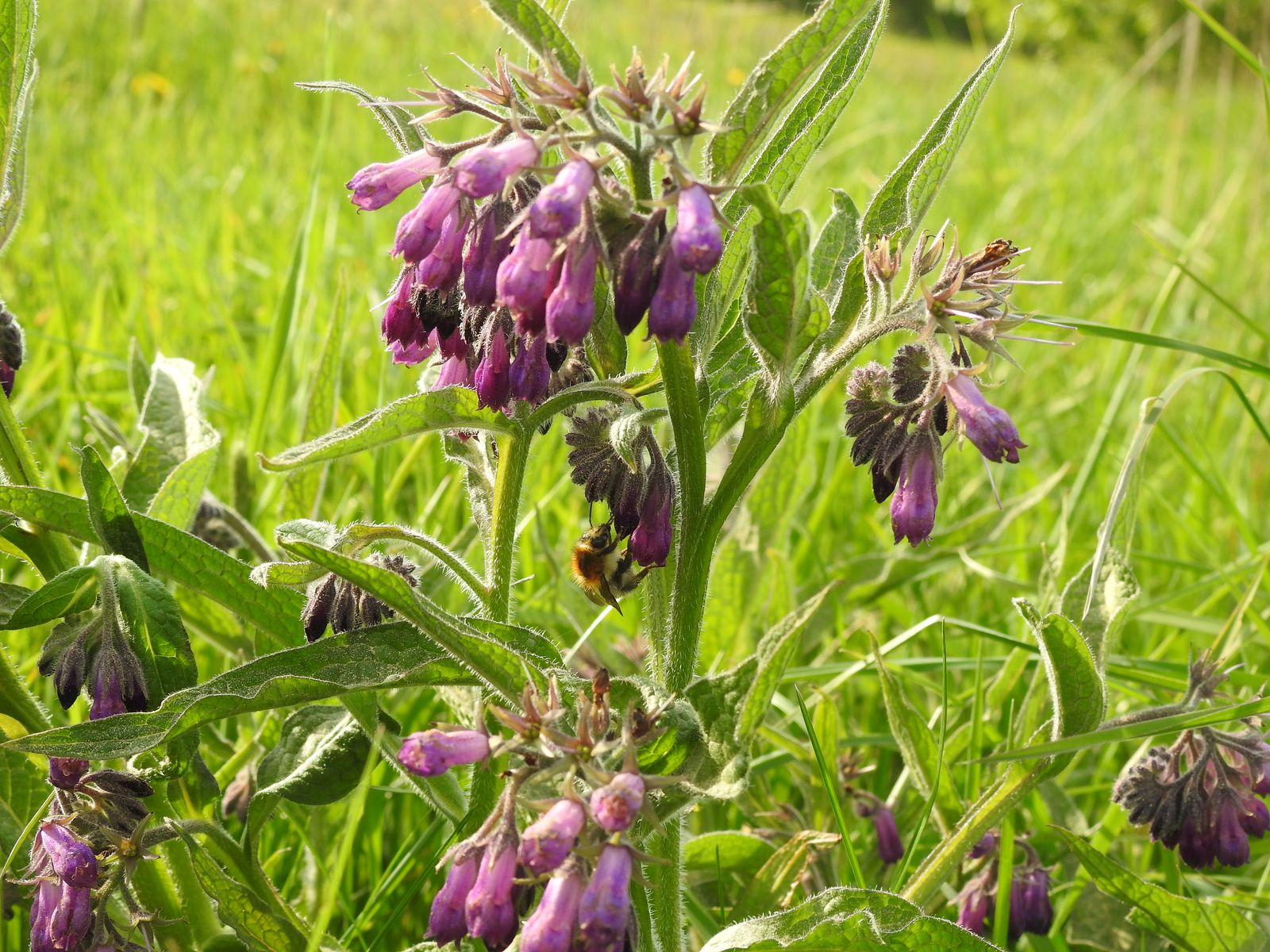
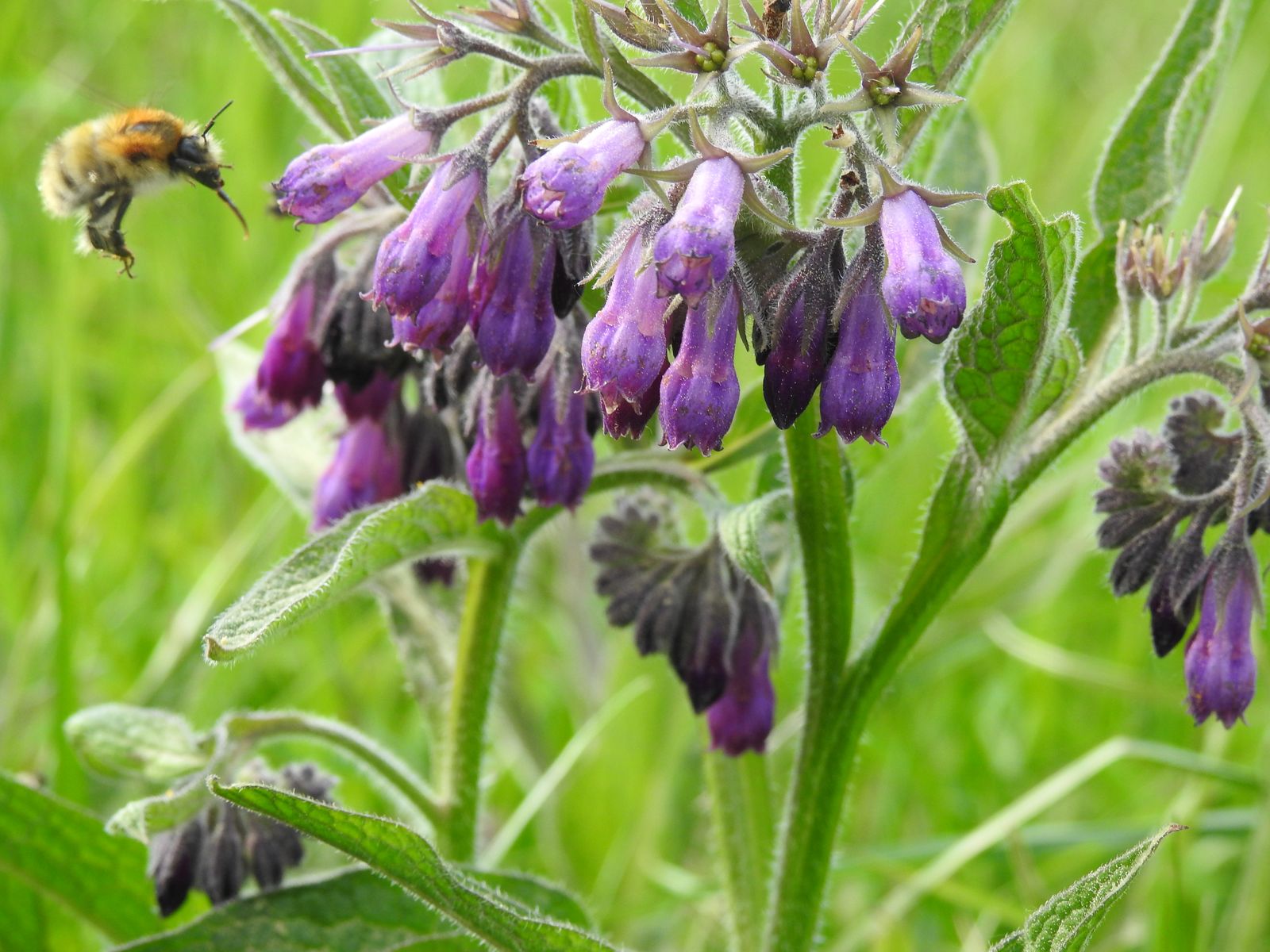
©Charly, all rights reserved. Click for full size.

Stephen Wright in the front room of the House of Dreams. Vice.

Feelings. This text in this picture describes how I feel about the House of Dreams, my work, and my artistic life journey. I sometimes don’t have a clue what I am doing and why. I only know it’s the right thing for me to do.
Take some time today to meet an extraordinary artist, Stephen Wright. His House of Dreams is amazing, to say the very least, and the story of his journey is both wondrous and terribly poignant. Vice has an in depth interview with Mr. Wright, and you can take a virtual tour of the House of Dreams, or book an actual visit.
Stems from ainslie henderson on Vimeo.
Open Thread. Don’t be an asshole, thanks. Previous Thread.
Faun – Walpurgisnacht. I should have posted this on April 30th, but between the tangle of doctor appointments and chemo brain, it got lost. If you’re unfamiliar with Walpurgisnacht, see here. Lyrics below the fold.
That’s the Atlantic Ocean at its best, telling you to admire it from a safe distance. The name of this beach is Cova Gala, in Figueira da Foz, and it is possible to swim in it when the water is calmer. This photo was taken in August with the red flag flying, so I just sat there watching the waves splash on the breakwater. That can be immensely relaxing.

