Jack’s Walk

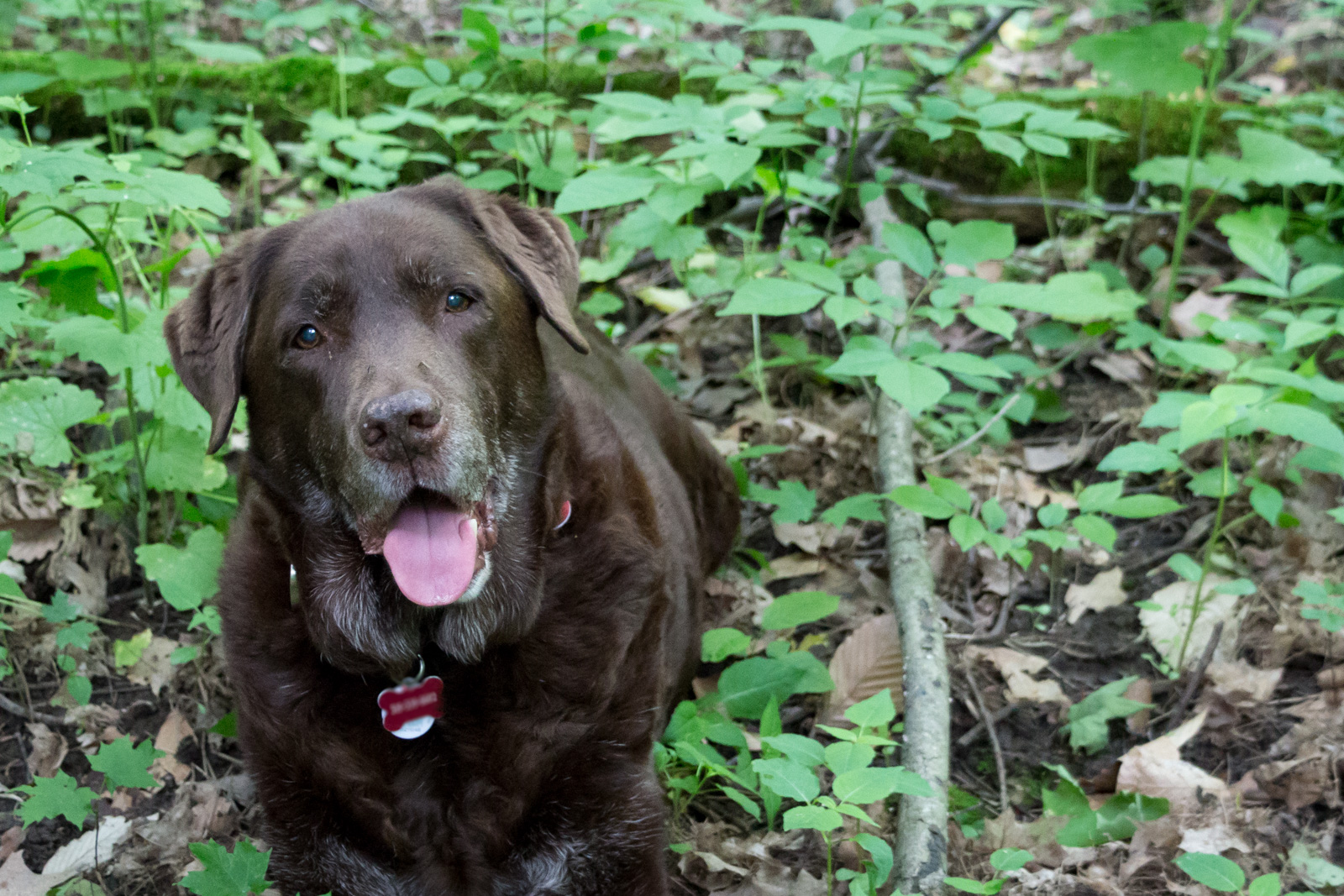
Here’s Jack to remind us that winter doesn’t last forever, even if it feels like it does. ©voyager, all rights reserved

Today you get just the photo of Jack, no story. That’s because I’m off on a bus trip to the big city of Toronto to see the play, Anastasia. I’m going with my friend Jane who took me to Russia in 2017. We toured the royal palaces when we were in St. Petersburg and saw many original dresses and suits from the period, so we’re both looking forward to seeing the sets and costumes. We also visited the graves of the Romanov family, and we’re both pretty curious to see how the story of the Russian Revolution and the execution of the entire Romanov family are handled in musical theatre. I  hope there aren’t too many dirges. Neither of us has seen the 20th Century Fox animated version of Anastasia, so we have no preconceived notions about what to expect.

I’ll let you know all about it tomorrow. In the meantime, Jack is home with his daddy, probably sitting in front of the fire and totally not contemplating political anarchy, revolution, nor the slaughter of an entire dynastic royal family.

The Russian Adventure Continues

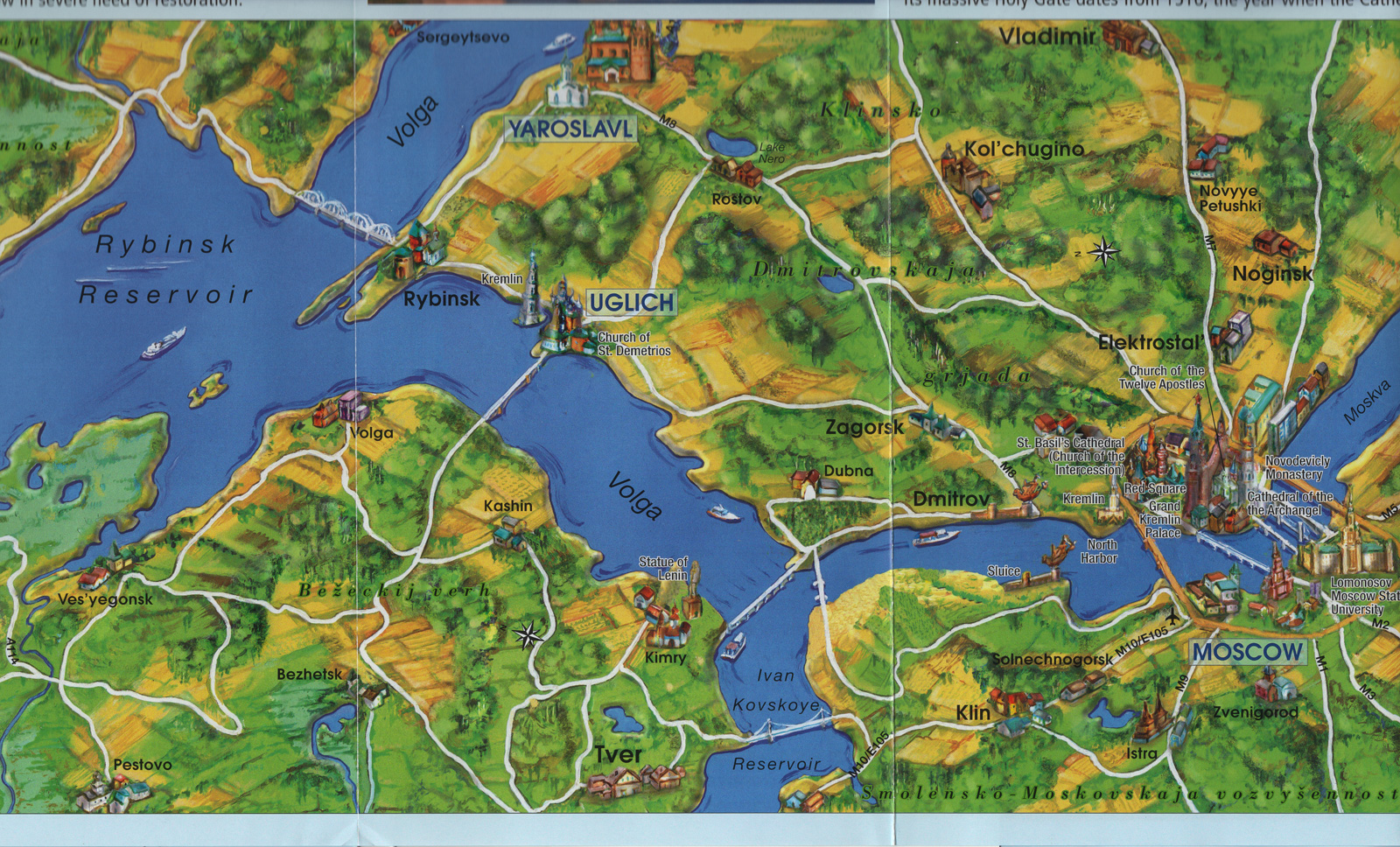
When I took on the blog full-time in September of 2018, I let my series about visiting Russia in September of 2017 fall by the wayside. I was overwhelmed at the time, and it was more than I could handle. A lot has changed since then, and I’ve been meaning to get back to the series and finish what I started. There is still a lot of Russia left to see and I hope you’ll travel along the route with me to have a look at some of the incredible sights. Viking runs their Russian cruises in both directions. I think Jane and I were lucky to go from Moscow to St. Petersburg instead of the other direction because St. Petersburg is gorgeous. It’s much prettier than Moscow for some very good reasons that I’ll explain when we get there. If we’d gone in the other direction we might have found Moscow lacking. Today, I’m going to go backwards a bit and show you the map of our voyage. I’ll be posting a more detailed map with each segment that we traverse, but this is a good overview of where we’re going.

Our travel route from Moscow to St. Petersburg.

So far, we’ve left the Moscow Canal and are on our way to Uglich via the Volga River.

Detail map of our current leg of the journey.

Uglich is one of Russia’s Golden Ring cities. What is a Golden Ring City?

The Golden Ring of Russia (Russian: Золото́е кольцо́ Росси́и) is a vast area in which old Russian cities are located in a ring-like arrangement and a well-known theme-route. The cities are located northeast of Moscow and were the north-eastern part of the ancient Rus’.[1] The Golden Ring of Russia formerly comprised the region known as Zalesye. The idea of the route and the term were created in 1967 by Soviet historian and essayist Yuri Bychkov, who published in the newspaper Sovetskaya Kultura in November–December 1967 a series of essays on the cities under the heading “Golden Ring”.[2] Bychkov was one of the founders of the All-Russian Society for the Protection of Monuments of History and Culture (Vserossiiskoe obshchestvo okhrany pamiatnikov istorii i kul’tury; VOOPIK).[3]
These ancient towns, which also played a significant role in the formation of the Russian Orthodox Church, preserve the memory of the most important and significant events in Russian history. The towns have been called “open-air museums” and feature unique monuments of Russian architecture of the 12th–18th centuries, including kremlins, monasteries, cathedrals, and churches. These towns are among the most picturesque in Russia and prominently feature Russia’s onion domes. – Wikipedia

Why “Ring?” According to the ship’s Viking Daily paper, the Muscovites were obsessed with Rings and when Soviet tourist bosses were looking for new attractions that were accessible from Moscow they drew a loop beginning and ending in Moscow, and called it the Golden Ring.

Ueglich is the first of the Golden Ring cities that we’ll be visiting, and when next we meet on the Viking river ship Ingvar we’ll take a walking tour around the place. In the meantime, if you’d like to reacquaint yourself with the tour to date here is the link to the previous post – Sailing into Uglich. I’ve gone back and added links to each previous post so that you can find your way back to the beginning.


Jack’s Walk

©voyager, all rights reserved

The past 4 days have been warm around here (6 – 8°c) and rainy. I don’t mind the unseasonable warming, but I do dislike the rain. It sets off my fibromyalgia and doubles the gravity for me. So, I’ve been wishing for the rain to stop. Well, I got my wish this morning when I opened the drapes to see that it was snowing. Great. No rain, but cold again and still precipitating. And the frozen, flakey version of rain needs to be shovelled. This isn’t exactly what I had in mind. Thankfully, the snow didn’t amount to much this morning, because Jack and I were out of the house at 7:30 for an appointment at the vet.

Jack had bloodwork taken back in the spring as part of his senior dog’s annual check-up, and one of his kidney values was a bit elevated. Not by much, but enough that a recheck was warranted. Jack needed to fast for this blood test, so after 8 pm last night, Jack was not allowed any food or treats. You can probably tell by looking at Jack that he carries a few extra pounds. Some of that poundage comes from the bedtime cookie or three that he has at night. Well, last night, no cookies, and it didn’t matter how many times I explained to him the reason why, he kept asking. And asking. And asking. When I finally turned out my light, Jack let loose a small whimper and heaved himself down with a thudding sigh. Yes, Bubba, I know. Now go to sleep, and in the morning you can have a cookie with your breakfast. I didn’t tell him that we’d be going out before breakfast. It seemed best.

So this morning, I wake Jack up at 6:30, and he didn’t want to get up. Good. It allowed me to get ready and have a coffee without any begging. When I was all set to go, I opened the front door and shook Jack’s leash, which brought him stumbling out to the kitchen where he stopped in front of his food bowl and then he looked up at me, asking for food before a walk. “Mommy,” he says, “I can’t go poop if I don’t put any new food in to push it through.” Not going out for poop Bubba, not yet. We’re going to see the nice woman who listens to your heart and gives you liver treats. He’s generally obedient, so he came with me, but he was still looking back at his food bowl as we exited the house. Then, as we were standing on the porch, it occurred to Jack that the nice woman who gives him liver treats also gives him needles in his bum, and he hesitated. I tell him he won’t be getting a needle in the bum, which is true. He’ll be getting the needle in his arm, but I’m a bad parent who just wants to get going so I don’t tell him that. The vet’s office is close by, and it’s all over quickly, and we’re soon on our way home. The first thing Jack did when we got in the door was to go stand in front of his food bowl again, and this time he gave me a hard look that said, “Food. Now.” You betcha, Bubba, but here have a cookie first. He smiled for the first time since supper last night, and I knew all was forgiven. Not forgotten, but forgiven.

The best news is that the vet called about an hour ago to tell me that Jack’s bloodwork has normalized, and all is well.  He’s in excellent condition for a nearly 12-year-old puppy. Good Boy, Bubba.

Teacher’s Corner: Fuck Childhood Poverty

Childhood poverty is something teachers get confronted with. Or some teachers get confronted with. The stratified German school system has long been linked to perpetuating social stratification. The high school I used to work at was a place that rather confronted you with childhood richness, despite being in one of the most downtrodden towns in Germany: Now at my comprehensive school the matter is a different issue. Many of the kids there are poor, and poverty has many aspects and layers. And some of the layers are more obvious than others. A lot of it is hidden. Nobody notices that a child never has any fruit because you don’t check all the food they’re eating. But you learn to notice the kids who either devour the free school fruit or look sceptically at pineapples because they have no clue what those are. And you learn to notice the kids whose clothing may be impeccably clean but is always the same. A kid tripped and tore her jacket. Now she has to tape it. The kids who will cry if some utensil breaks. Or those who are mysteriously ill just when there’s a class trip that is not free.

As a teacher you either get a heart of stone or you quitly spend a lot of money out of your own pocket. With a stash of stationery. With the winter coat that you kept for kid #2. With bake sales to raise funds for class trips.

For most kids*, childhood poverty in Germany may not be as bad as childhood poverty is in the US, at least they get more or less enough food, shelter and healthcare, but it’s devastating nonetheless. So if you want to support kids and do some good for the upcoming holidays: ask your local schools if they need anything. Here many schools have a “clothes shop” where kids can get stuff, ask if they need school supplies or maybe craft supplies from a hobby you no longer enjoy.


*A big exception here are EU migrants whose parents don’t have a job. I wrote about this before

Tree Tuesday

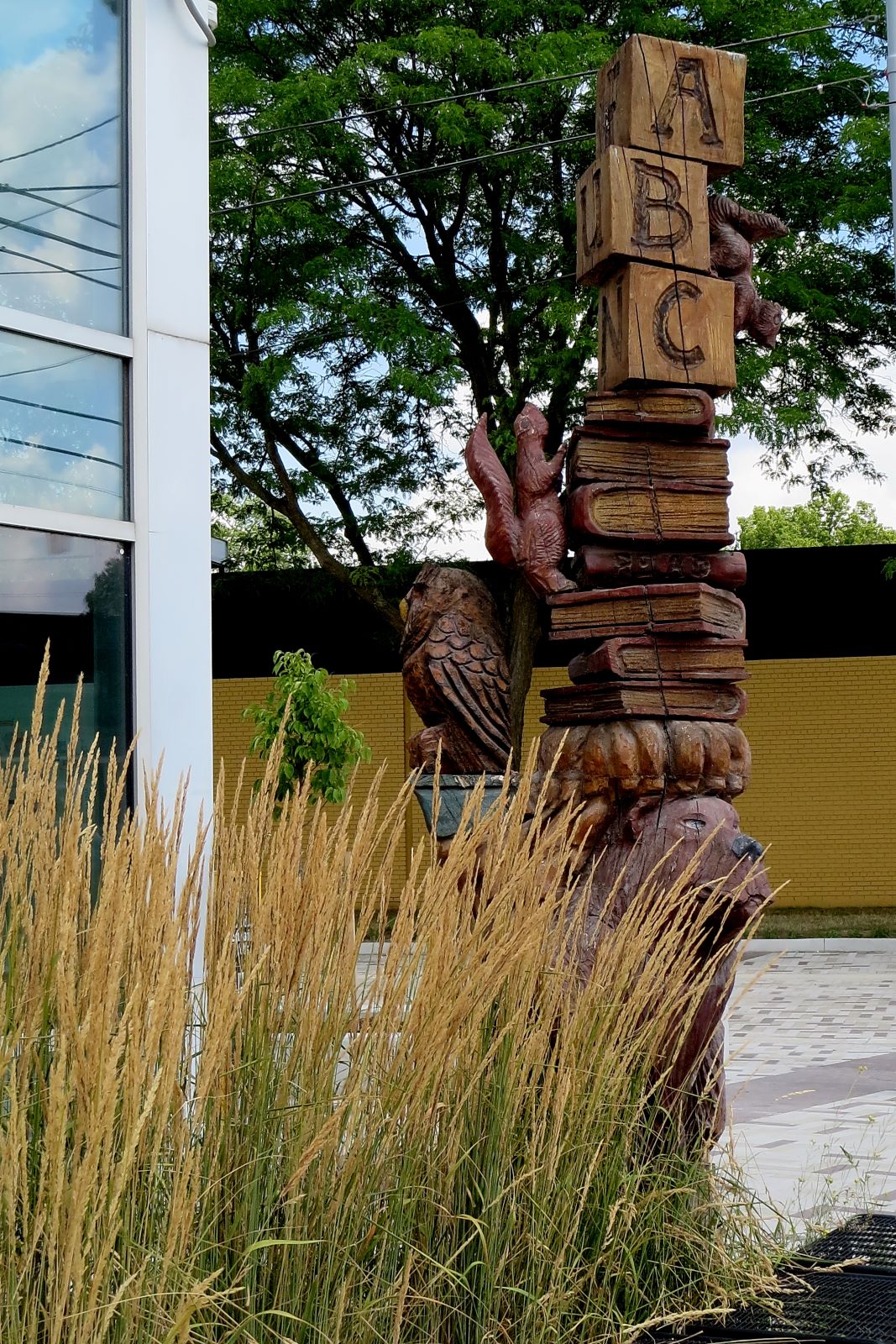
Earlier this year VBFF sent in a chainsaw sculpture from a nearby city tour she’d taken. Today, VBFF has sent us a couple of other chainsaw made sculptures from the same visit.  Most of the statues were carved in place around the community, hoping to draw shoppers to the area and promote tourism. Here’s the link to the Tree Trunk Tour in London, Ontario, if you’d like to know more about the sculptures and how they’re made.

©VBFF, all rights reserved

©VBFF, all rights reserved

Jack’s Walk

Sad little Minion and his faithful dog friend, ©voyager, all rights reserved

Can we talk about Christmas decorations?

I like seeing the houses in my neighbourhood all dolled up for the holidays. I find it cheerful, especially on gloomy days like today when Jack and I are dealing with bad weather (5°c with heavy rain.) Some decorations, though, are better than others, and I might be an old grump for complaining about this, but I don’t like inflatable lawn balloons. Most of them are powered by pumps and require hydro to run, and so most people who have them only run them in the evening, which seems smart and thrifty. The trouble is that these balloon decorations turn into limp puddles of plastic that look like shit when they’re not operating, which is most of the time. I think they look sad and messy.

I don’t do a lot of decorating, but I do did have a set of LED lights built into the railings when we rebuilt the porch 2 years ago. They were connected to a wi-fi controller inside the house and were operated by an app on my phone and tablet. I say were, not are because 2 nights ago someone disconnected them from the controller and tore them off one side of my porch. They’re no good to anyone without the controller, so it’s just vandalism, and it will be expensive to repair. It isn’t the first time we’ve had things stolen from our front yard. We live near a high school, and kids will be kids. Usually, we put the nice stuff in the fenced back yard, but I never suspected they would tear apart the housing and steal a built-in LED light strip that is of no use to someone else. Our guard dog (Jack) is older now and sleeps hard. I think it’s time to invest in a home camera system and a nice big sign that says, “Smile. You’re on Camera.”

I try to live in a state of gratitude and maintain a cheerful disposition. Some days it’s more complicated than others.

This Santa isn’t connected to hydro. I think he just needs a good blow and then insert the plug to keep the air in. No daily pumping required. Good Santa.

Ripples for Caine- Water is Life

I have something very special from Nightjar for this Monday morning.

We had a rainy November, in fact I can’t remember a month in the recent past when it rained so much. The rain completely flooded the fields behind our house and again, I can’t remember when this last happened. I’m told by older people that this is what November used to be like and how the fields used to look like this time of the year. Makes sense. Before “normal” and “drought” became synonymous. Today we had a bit of sun and I had to go for a walk with my camera. While taking these photos all I could think of was Caine, for reasons I don’t think I have to explain. Hopefully the photos speak for themselves. Came back home with tears in my eyes and had to share this with you all. Water is Life. ♥

Your photos are beautiful, and they also make me think about Caine. She enjoyed photographing water in its many forms. I know she would love these pictures. Thank you so much for sharing them, Nightjar.

©Nightjar,all rights reserved

[Read more…]

The Art of Book Design: Sneewittchen (Snow White)

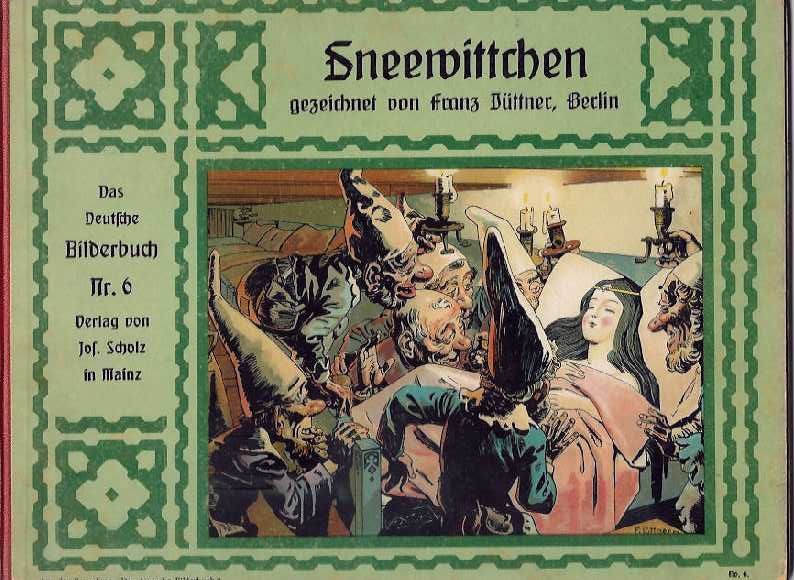
Grimm, Jakob / Grimm, Wilhelm: Sneewittchen / [Jakob und Wilhelm Grimm.] Gezeichnet von Franz Jüttner. – (Scholz’ Künstler-Bilderbücher ; 6). Mainz 1905. Scholz.

The first Saturday of December could belong to none other than the original frozen princess, Snow White. And I found her in her native German and well before Walt Disney put his big cartoon hands around her tiny little waist. The Brothers Grimm first told the tale of Snow White in 1812 as part of a collection of European folk stories. No-one is sure of its provenance, but according to a scholar from Lohr, Bavaria, there is evidence to suggest that Snow White is derived from the true story of Maria Sophia VonErthal. (via ancient origins.net/myths)

According to a study group in Lohr, Bavaria, Snow White is based on Maria Sophia von Erthal, born on 15 June, 1729 in Lohr am Main, Bavaria. She was the daughter of 18 th century landowner, Prince Philipp Christoph von Erthal and his wife, Baroness von Bettendorff.
After the death of the Baroness, Prince Philipp went onto marry Claudia Elisabeth Maria von Venningen, Countess of Reichenstein, who was said to dislike her stepchildren. The castle where they lived, now a museum, was home to a ‘talking mirror’, an acoustical toy that could speak (now housed in the Spessart Museum). The mirror, constructed in 1720 by the Mirror Manufacture of the Electorate of Mainz in Lohr, had been in the house during the time that Maria’s stepmother lived there.

The dwarfs in Maria’s story are also linked to a mining town, Bieber, located just west of Lohr and set among seven mountains. The smallest tunnels could only be accessed by very short miners, who often wore bright hoods, as the dwarfs have frequently been depicted over the years.
The Lohr study group maintain that the glass coffin may be linked to the region’s famous glassworks, while the poisoned apple, may be associated with the deadly nightshade poison that grows in abundance in Lohr.

A German historian has also postulated that it may be the true story of Margarete VonWaldeck. (via ancient origins.net/myths)

According to Sander, the character of Snow White was based on the life of Margarete von Waldeck, a German countess born to Philip IV in 1533. At the age of 16, Margarete was forced by her stepmother, Katharina of Hatzfeld to move away to Wildungen in Brussels. There, Margarete fell in love with a prince who would later become Phillip II of Spain.
Margarete’s father and stepmother disapproved of the relationship as it was ‘politically inconvenient’. Margarete mysteriously died at the age of 21, apparently having been poisoned. Historical accounts point to the King of Spain, who opposing the romance, may have dispatched Spanish agents to murder Margarete.
So what about the seven dwarfs? Margarete’s father owned several copper mines that employed children as quasi-slaves. The poor conditions caused many to die at a young age, but those that survived had severely stunted growth and deformed limbs from malnutrition and the hard physical labour. As a result, they were often referred to as the ‘poor dwarfs’.

Whether true or not, the story has persisted into modern times thanks to Walt Disney and his 1937 classic telling of the tale. I’ve included the artwork done by Franz Juttner, a German artist, in 1905 for the Sneewittchen book pictured above.

[Read more…]

Jack’s Walk

A new friend for Jack? ©voyager, all rights reserved

When we walk around our neighbourhood during the day, Jack and I have a regular route. We walk up to the high school, then down toward the park and then loop around back to the far end of our own street and then it’s a straight line to home again. This route is Jack’s choice because it gives him the best chance of getting a few love pats along the way. The walk takes us past his teenaged fan club and the home of his best dog friend, Leo. It also allows me to avoid problems because I know where all the other dogs live along the route. Most dogs are friendly and get along well with Jack, but there are one or two exceptions. There’s a Jack Russell at the end of our block who strains at his leash snarling and barking at Jack madly. We only know him as “Shut-up you bastard,” but I’m sure he has another name. I’d stop to ask except he won’t stop barking long enough to speak to his person, a frail elderly man who likes to holler. There’s also Izzy, a pug, who wants to challenge Jack. Jack picked him up once and spat him out again, without injury I should add, but it only made Izzy more determined to get Jack. So now, we always cross the street to avoid him. Izzy has a great person named Linda who Jack and I both like, but she understands that Izzy has issues and always controls him from her side of the street. Recently, though, neighbours a few blocks down have gotten a new dog, and it barks at us every day no matter what time we go by. It’s always at the window, I imagine because his people work and he is watching for them. The new dog not only barks, but he jumps around a lot, occasionally banging into the window. Jack says he wants to be friends and tells me that we should knock on their door one evening to meet him when his people are at home. I think we should wait until spring, when the new dog is more settled and we can meet casually outdoors. I tell Jack that not everyone wants a voyager at their door with an 85-pound hairy goofball, asking if their dog can come out to play. Jack says he can’t understand why, and furrow’s his brow at me. Sheesh, alright, Bubba! Maybe I’ll go alone to take them a few Christmas cookies and check the situation out. If they’re agreeable, perhaps I’ll take Jack for a playdate. I think the new dog does look like a fun sort of fellow, just look at that smile, and its barking and antics do seem more playful than aggressive. Who knows, maybe Leo has some competition for the title of Jack’s Best Friend?