From Giliell, click for full size!

© Giliell, all rights reserved.

From Giliell, click for full size!
© Giliell, all rights reserved.

Gate Church of the Transfiguration, Novodevichy Nunnery

Novodevichy, corner turret
Our tour of the Novodevichy Nunnery was like stepping into a fairy tale from long ago. The complex is beautifully built with white stone set against pink and red brick in what later came to be came known as the Moscow Baroque style. Its four corners are marked by richly decorated round turrets that tower above you. The convent has also been kept intact and unchanged since the 17th century. In 2004 Novodevichy became a Unesco world heritage site.

Main gate, Novodevichy Nunnery
Novodevichy was founded in 1524 by Grand Prince Vasily III, son of Ivan the Great. It was built to commemorate the victory of Russia over Polish and Lithuanian forces in 1514 for the town of Smolensk. The oldest building in the convent complex is the Smolensky Cathedral built in 1524 – 1525, and later renovated by Prince Vasily’s son Ivan the Terrible in the 1550’s. Smolensky cathedral was modeled after The Assumption Cathedral located at the Kremlin and because of this its architecture is different from that of any other building in the complex. Unfortunately, while we were there the building was undergoing restoration and was blanketed by scaffolding. Built at the same time as the cathedral is Prokhorov’s Chapel, which still receives prayers today.

Prokhorov’s Chapel, front view

Prokhorov’s Chapel, trim detail

Prokhorov’s Chapel, ceiling detail

Prokhorov’s Chapel, rear view
The remainder of the convent complex was built around the cathedral and was designed to also fully function as a military fort. The entire complex is surrounded by towering walls, in places up to 11 meters high and 3 meters thick, and it has a total of 12 watch towers surrounding the perimeter. The convent was strategically placed along the banks of the Moscow River and on the only southern access road into Moscow. Part of its mandate at the outset was to serve as a first defense post protecting Moscow, but because of its well situated location it also became a convenient military barracks and outpost. The nunnery has also seen battle. During Napoleon’s Russian campaign, French forces attempted to blow up the convent, but quick thinking nuns extinguished the fuses as soon as the soldiers left.

Novodevichy’s Protection of the Holy Virgin Temple

Church of the Dormition of the Mother of God and refectory, Novodevichy Nunnery

Chapel, Novodevichy Nunnery
Over the course of its history the convent had close ties to the Kremlin and was well favoured by the elites of Russia. Many of the nuns came from high ranking families, including the royals. This was often not the choice of the women themselves. In historic Russia, as with many other parts of the world, if a woman became troublesome it was often her fate to be sent to a nunnery. Looking around the complex I had occasional feelings that the walls were meant as much to keep some people in as they were to keep invaders out.

Residence, Novodevichy Nunnery
It has been suggested that Prince Vasily actually founded the convent in part as a way to exile his ex-wife Solomonia because she did not bear him an heir. Perhaps the most famous of Novodevichy’s unwilling residents is the half sister of Peter the Great, the Regent Sophia, who ruled Russia from 1682 – 1689. When Peter turned 17 he seized power and Sophia was arrested and forced into the nunnery. It is the Regent Sophia who ordered the construction of many of the buildings in the complex including the Church of the Transfiguration and the famous bell tower.

Novodevichy Bell Tower, undergoing restoration

Administration building, Novodevichy Nunnery
Novodevichy is still an operating convent, but the order is now small. The church maintains the convent mostly out of desire to preserve the site and the large number of important religious relics and icons which are housed here.

Present day nuns at Novodevichy
©voyager, all rights reserved
Link to previous post – Russia – The Kremlin
It’s winter around here again, complete with snow and ice. The temperature is well below zero and there is a bitter northeast wind. It’s so cold that I wore my long johns and two pairs of socks on our walk today and was still half-frozen by the time we got home. This photo is at one of Jack’s favorite stops. I call the tree Zelda the Messenger because this is where all the dogs in the neighbourhood choose to leave their pee-mail.

Zelda the Messenger
©voyager, all rights reserved
Tiili.
Tiili is Finnish for brick. I found this piece of red brick near Ursininkallio in Eiranranta, Helsinki, in November 2017. Waves and ice had worn it down to a shape similar to a pebble or a small, a bit flat potato. I put it back there after having taken the photos, because I felt that I shouldn’t take it. It wasn’t the only one there, but there weren’t that many of them either.
It’s possible that the brick comes from the sea bathing facilities that were at Ursininkallio (Ursin’s rock) until 1934. Nils Abraham af Ursin (1785 – 1851), after whom the rock and the bathing facility were named, was a Finnish physician, Professor of anatomy and physiology and the Rector of University of Helsinki (at the time the Imperial Alexander University in Finland).
Click for full size!


© Ice Swimmer, all rights reserved.
From Kestrel: We are discing a field preparatory to planting it (even though it does not look like a promising year for rain) and one of the horses, Tito, decided to “help”. You can see he’s not scared of tractors, but it’s still fun to run in the field anyway. At least until it’s time to go back to sleep.
Tito’s a beauty, click for full size!


© Kestrel, all rights reserved.
A Buzzard (Buteo buteo) from Charly, click for full size!

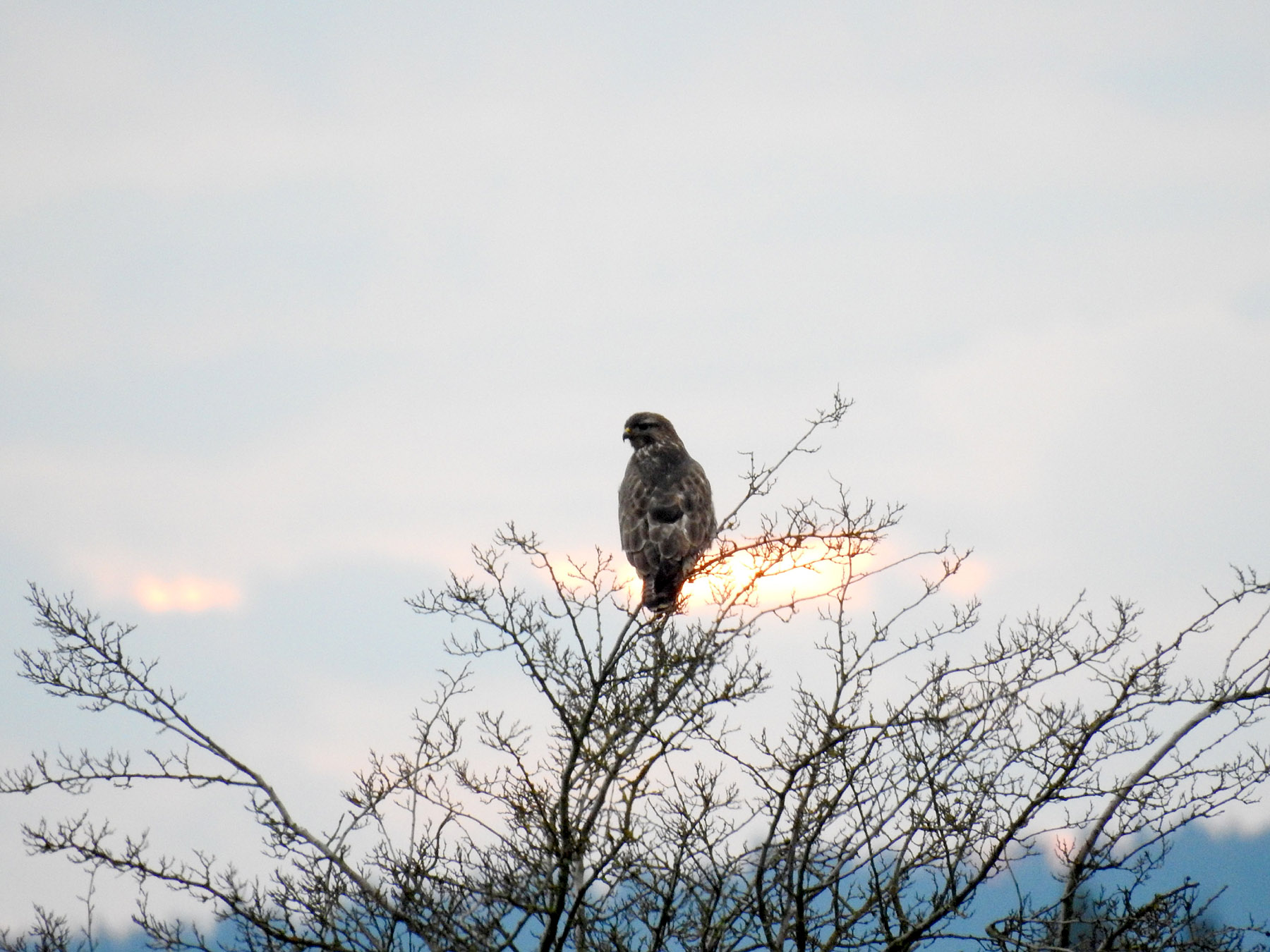


© Charly, all rights reserved.
For a rare change, today Jack and I have not gone for a walk. The weather has been awful. All morning we had high winds and rain which then turned to freezing rain and now the temperature has dropped to minus 2 c and it’s snowing. It’s also still really windy, making it feel like minus 9 c. Poor Jack had to brave the weather to use the yard, but I haven’t left the house all day. I have a few health problems that are affected by weather and on a day like this the old body starts to feel like an old body. So today instead of our daily photo I’ll give you a classic shot. This is Jack at 3 months old.

Jack as a puppy
©voyager, all rights reserved
Fishing for veg, a popular activity in the hot days of summer. Amelia and Gytha, then Amelia and Mallory.


© C. Ford, all rights reserved.
I think it is time to get out the macro lenses. There were a lot of these on the pond at the end of my sewage disposal facility. I also saw a first butterfly at work and a first toad. The toad was in the plant, on the road where forklifts are driving so I took it carefully outside, over the road and into a grove.

©Charly, all rights reserved. Click for full size.

©Charly, all rights reserved. Click for full size.
Sikinsokin.
Sikinsokin is Finnish for “all mixed up”. And the roots of the pine and the birch (see the white bark) seem to be just that and the erosion has revealed it.
This place is in Munkkiniemi, Helsinki and is by the sea, so at high water, waves and ice may have eroded the soil.
Click for full size!

© Ice Swimmer, all rights reserved.
Fabulous ice from Avalus, click for full size!
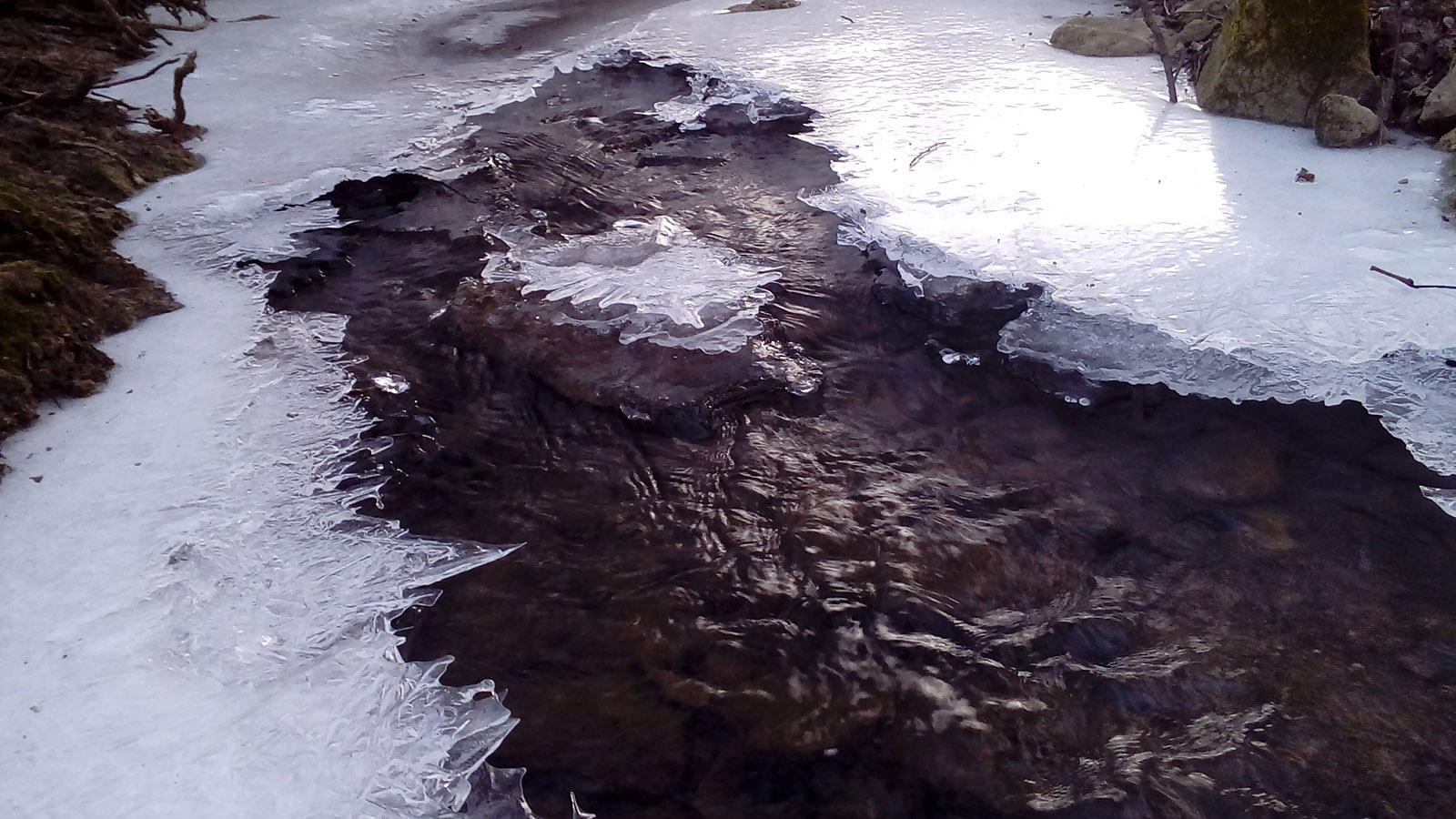


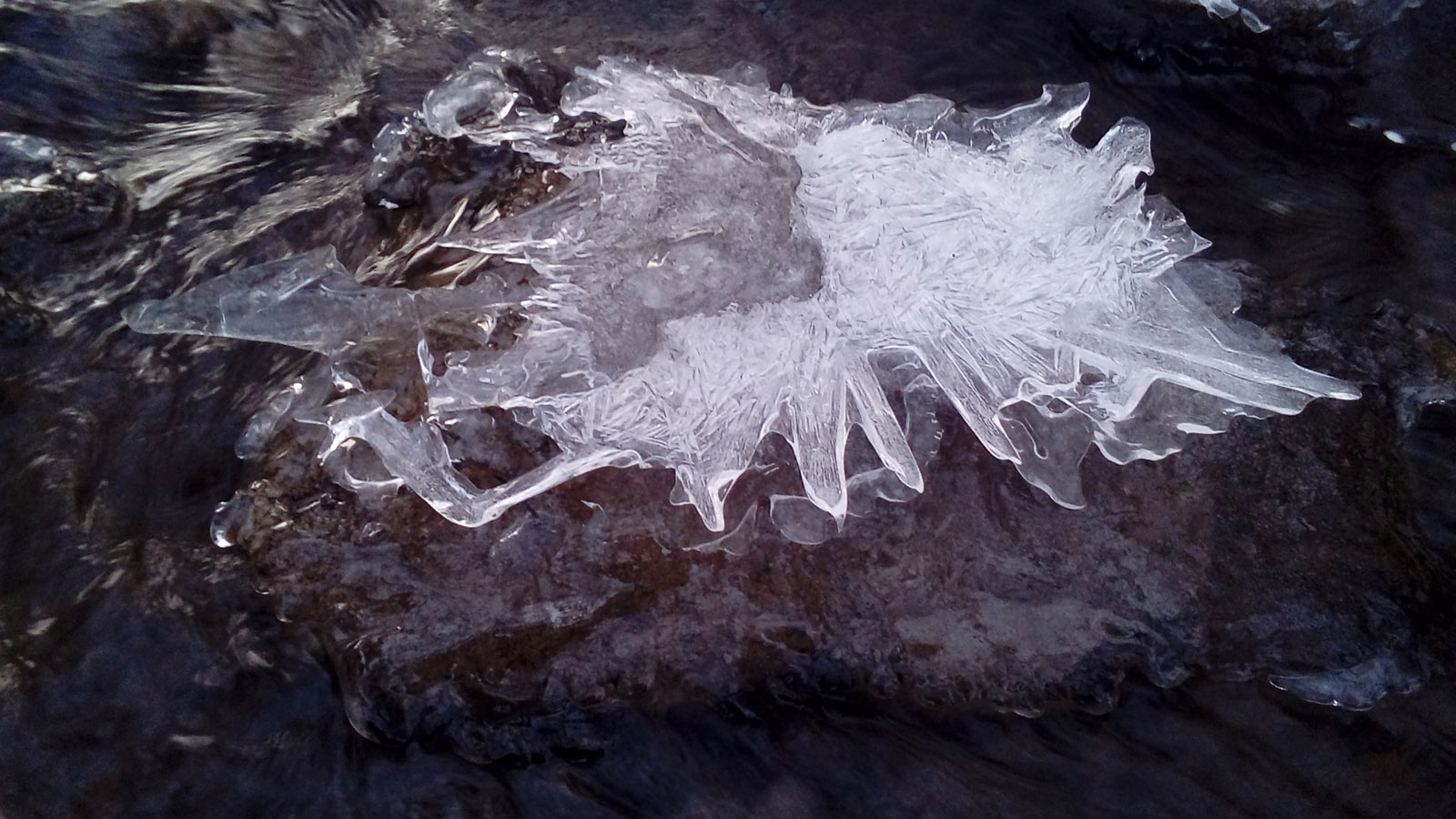
© Avalus, all rights reserved.
Stunning shots from Nightjar, click for full size!
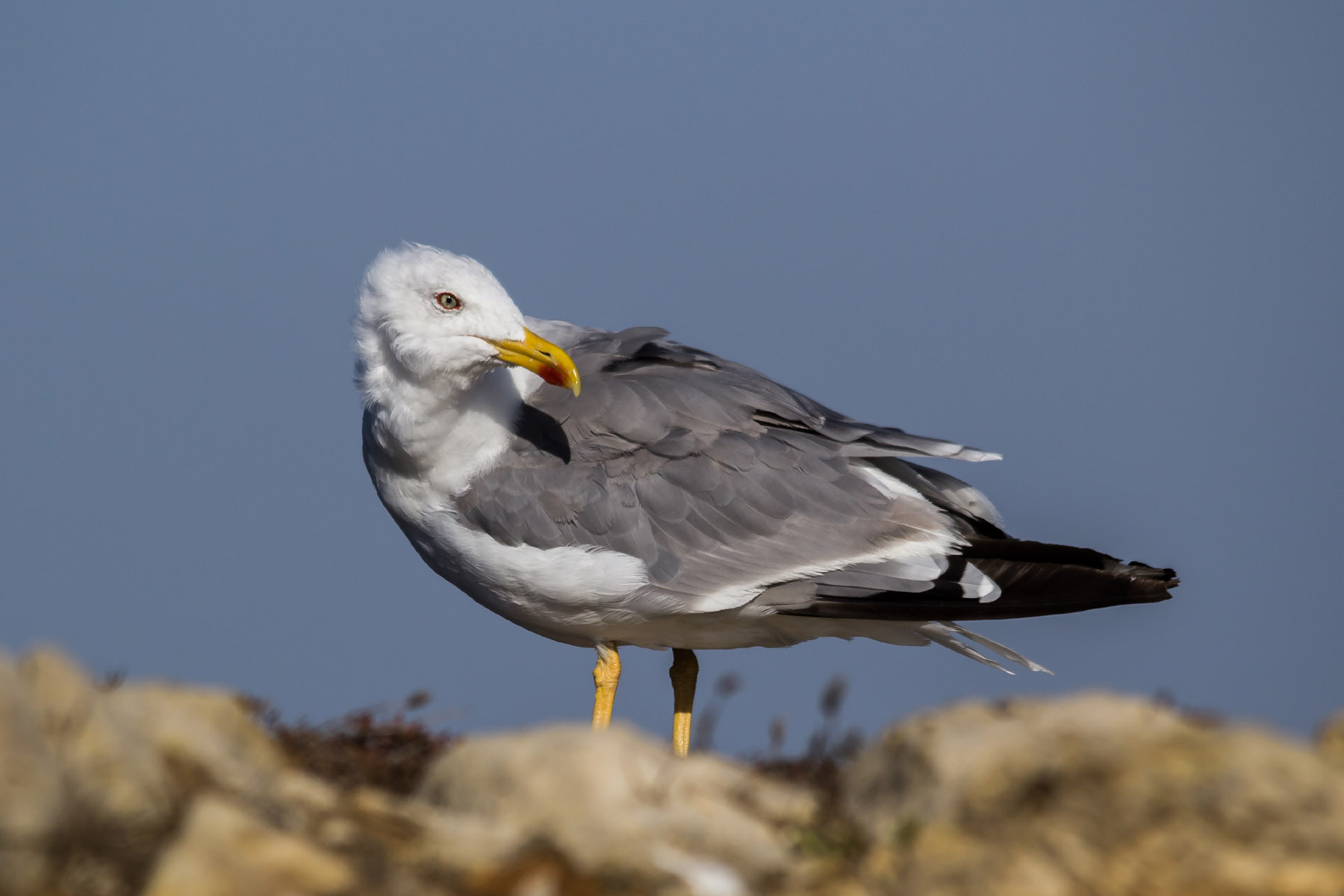


© Nightjar, all rights removed.
Jack’s been playing in a lot of mud lately and he needed a bath. Giving him one at home can be a bit of an ordeal, though, so instead I took him to the lake for a swim. It washes off most of the dirt and it’s definitely more fun than a bath. We met this friendly couple while we were there and Jack kept us all entertained with his goofy splashing around. He loves to be the center of attention. We had a good time and it was nice to see the water. It’s the only colour I could think to find in this dull, dreary, cold and barren landscape.

At the lake
©voyager, all rights reserved