From Giliell, click for full size! Such a serious looking cutiepuss. :D


© Giliell, all rights reserved.

From Giliell, click for full size! Such a serious looking cutiepuss. :D
© Giliell, all rights reserved.
A beautiful Chaffinch from Giliell, click for full size!

© Giliell, all rights reserved.
Our feet took us past the train station today.

At the station
©voyager, all rights reserved
White.
Birch bark is white. The contrast with the landscape not yet green and no longer white is stark. This was taken in early April 2017 in Helsinki, from the park behind the congress and event venue Finlandia Hall towards the Linnunlaulu cliffs.
As a bonus picture (taken mid-November 2017), another birch, in a less bright shade of white and one corner of Finlandia Hall (completed 1971), designed by the architect Alvar Aalto (1898–1976), who is still, over 40 years after his death held in a very high regard about the aesthetics of his work.
However his acoustics design and construction technical choices have been criticised. The façade of Finlandia Hall is made of white Carrara marble from Italy. The marble plates will bend with time because of the climate and they have to be replaced every 20–30 years. They’ve been replaced once so far, in 1998–1999.
Click for full size!


© Ice Swimmer, all rights reserved.
One of those moments of photographic serendipity, spotted by Opus on a walk through the botanical garden, red maple seed and luna moth wing. Click for full size!

© Opus, all rights reserved.
A gorgeous Great Tit from Giliell, click for full size!

© Giliell, all rights reserved.
We had a lot of freezing rain over the weekend and it caused some minor damage to the trees in my neighbourhood. A few small branches down here and there, but nothing serious. I wish I could say the same about our favorite trail in the woods. Today we found major storm damage there, including three large trees, each about 25 – 30 meters high, pulled up by the roots and laying across the path. There are also several smaller trees and lots of large branches down across the forest and over the path. We went around a lot of obstacles today and in places we had to scramble up and over. This will likely cause damage to the flowers as well because people are treading off the walking path and onto the beds where the trilliums and jack-in-the-pulpit grow. We also heard a few branches cracking overhead which gave the whole place quite an eerie feel. All in all not our usual walk today.

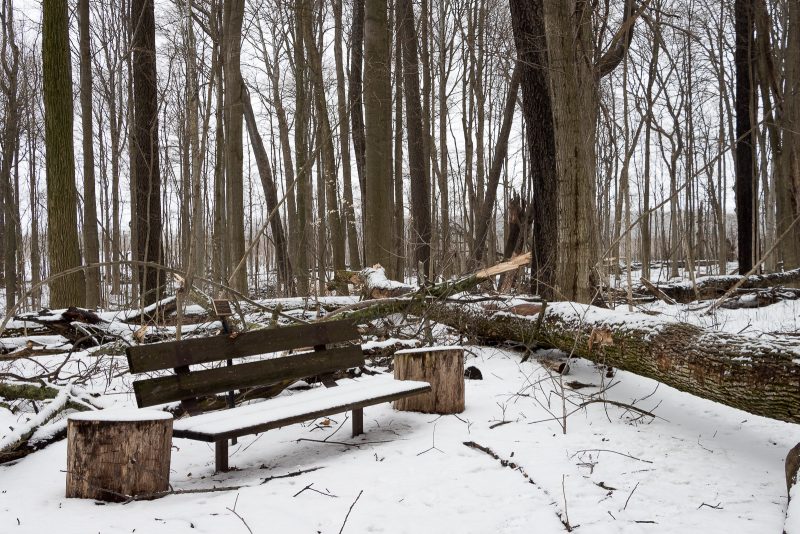


©voyager, all rights reserved
Vår.
Vår is Swedish for the season spring. In the South Coast of Finland, spring can start in March or in April and end in late May. The first two pictures are taken from Ursininkallio in late March 2018. The sea ice had started to melt. Bays and areas shielded by islands were still frozen apart from places with strong currents. However, spring progresses haltingly and some areas already thawed would refreeze and then melt again.
The third photo was taken on the eastern shore of Laajalahti in Munkkiniemi, Helsinki about one year earlier than the first pictures. The bay Laajalahti was frozen, but the ice was porous, rotten ice. There was little snow left on the ground.
The fourth photo was taken in mid-May 2017 in the park Kaivopuisto in Helsinki. Many deciduous trees were still bare but there was already green grass for barnacle geese to eat.
Click for full size!


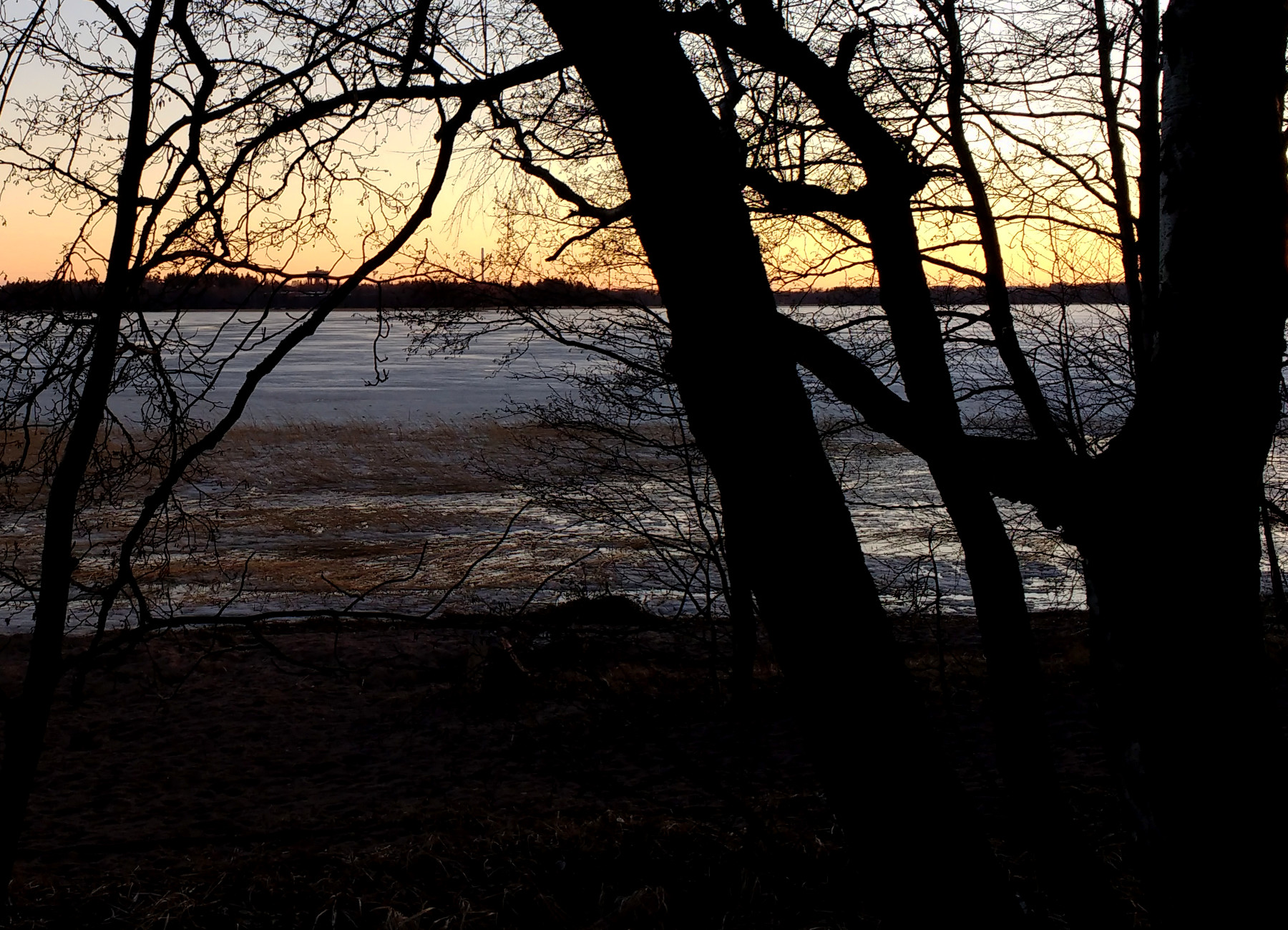

© Ice Swimmer, all rights reserved.
From Nightjar, click for full size! Tulips are so lovely on their way to being vanitas.
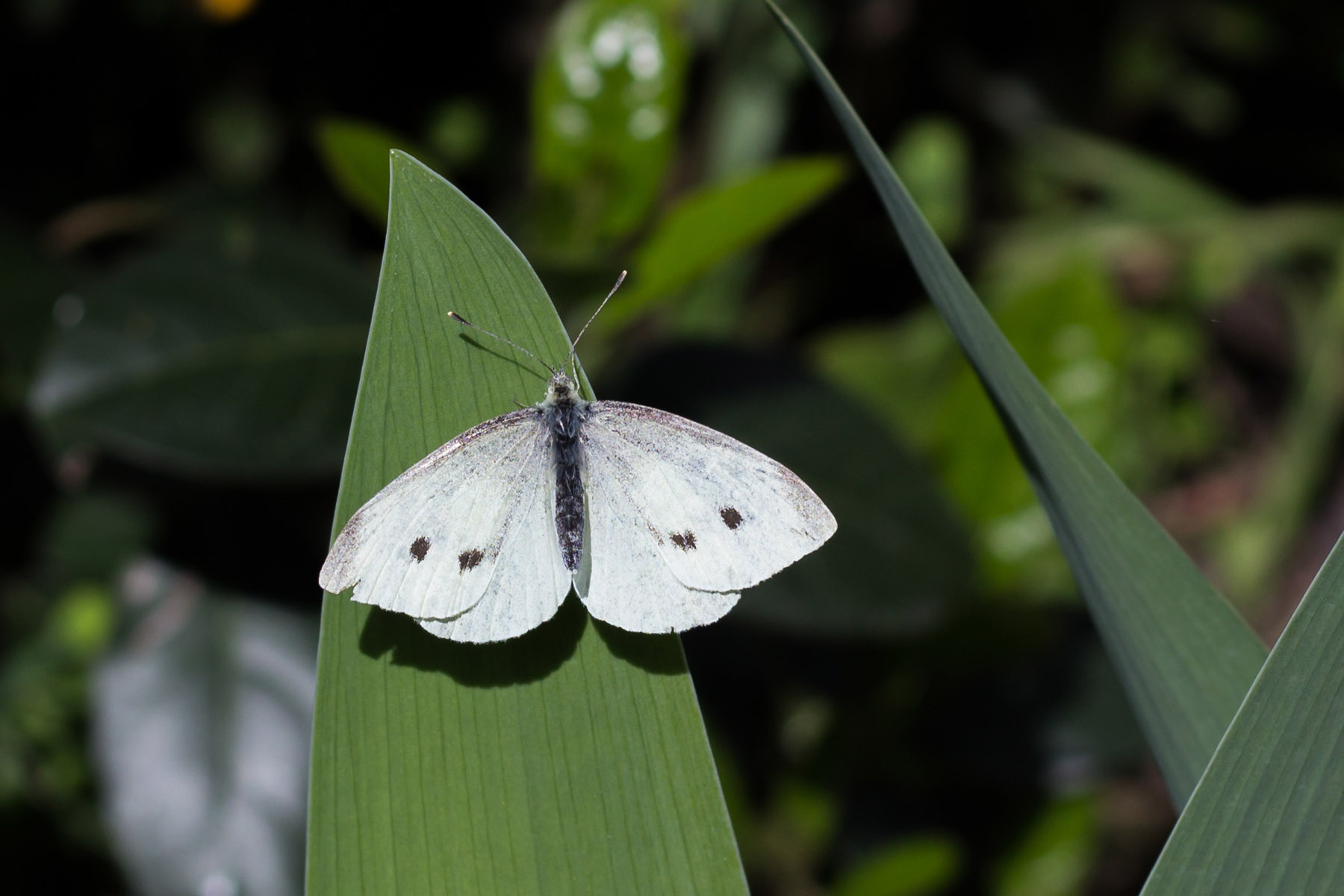

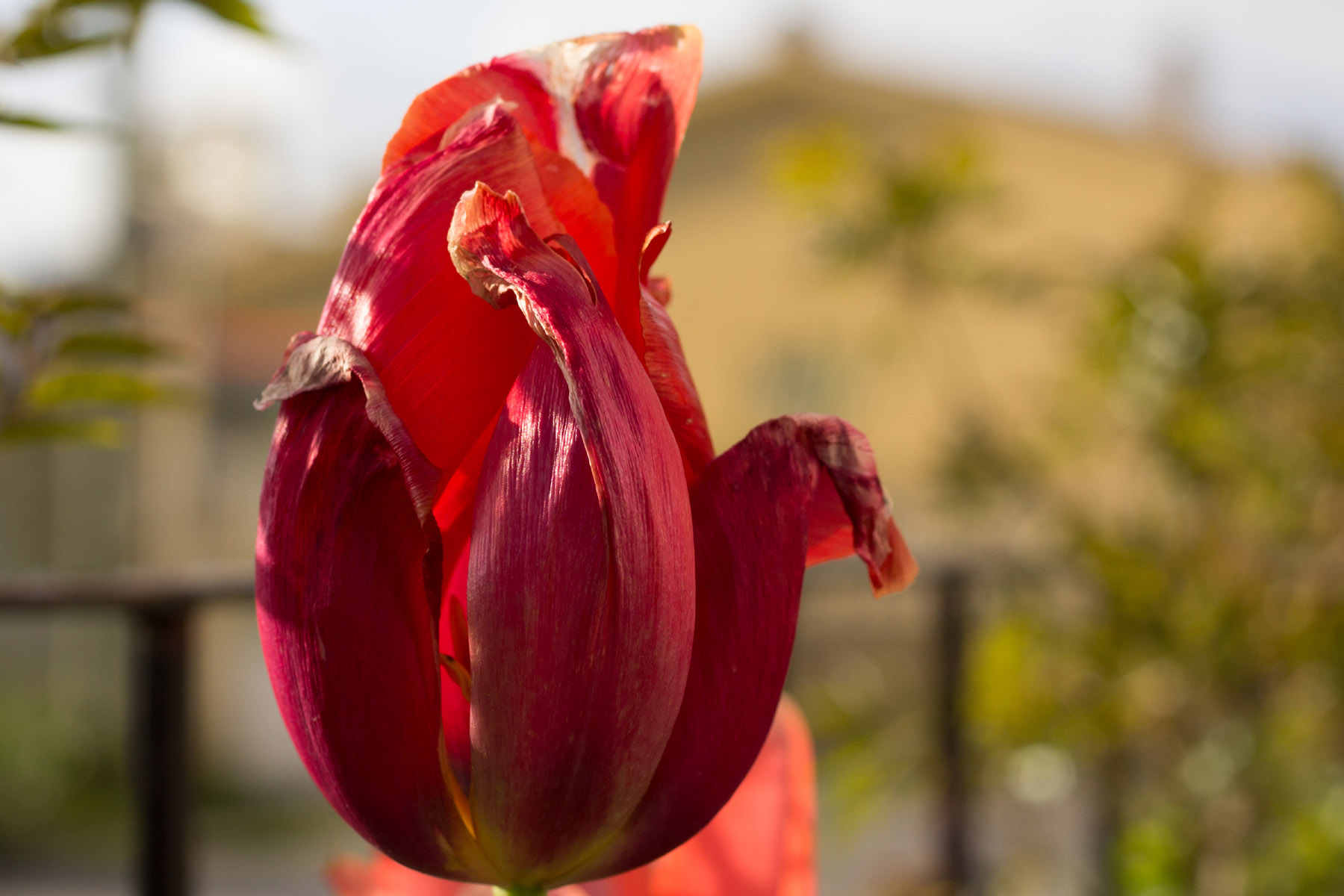

© Nightjar, all rights reserved.
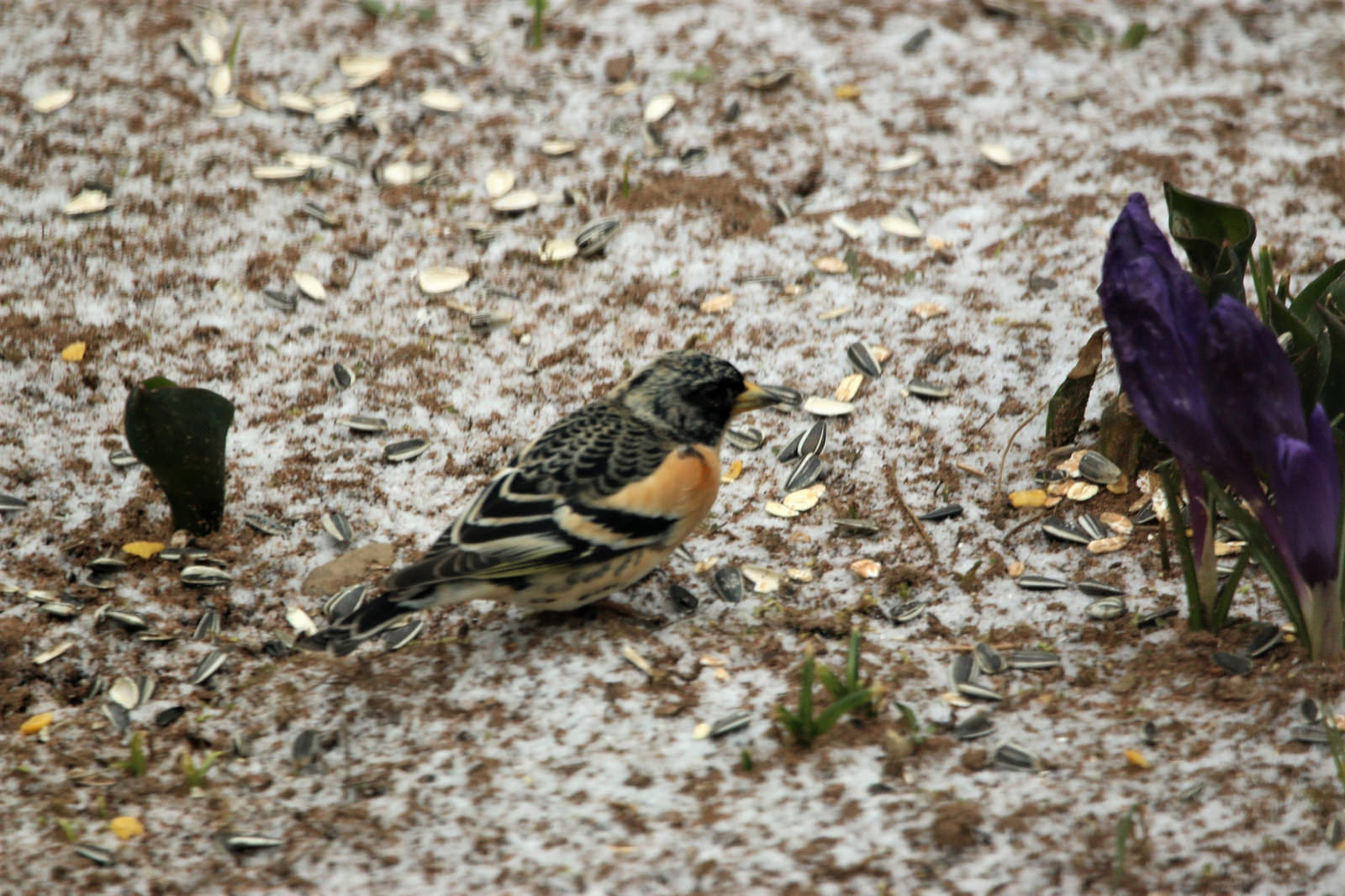
More Brambling from Giliell, such a gorgeous dinosaur, click for full size!

© Giliell, all rights reserved.
Today Jack and I drove out to the country so we could take our walk beside a pretty little river called the Thames. It’s named after England’s Thames river, but it’s much smaller, much slower, very shallow and not fit for boat travel of any kind. Even a canoe can only go a few feet before getting stuck on a sandbar. I know about that from experience. Today, though, the water was very high with a strong current and large areas of flooding. There’s also still a lot of ice.
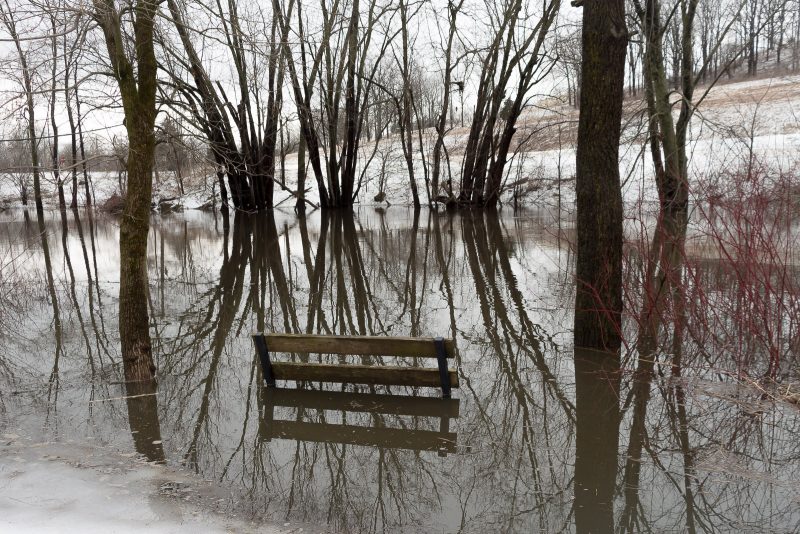
Thames River
©voyager, all rights reserved
Urban.
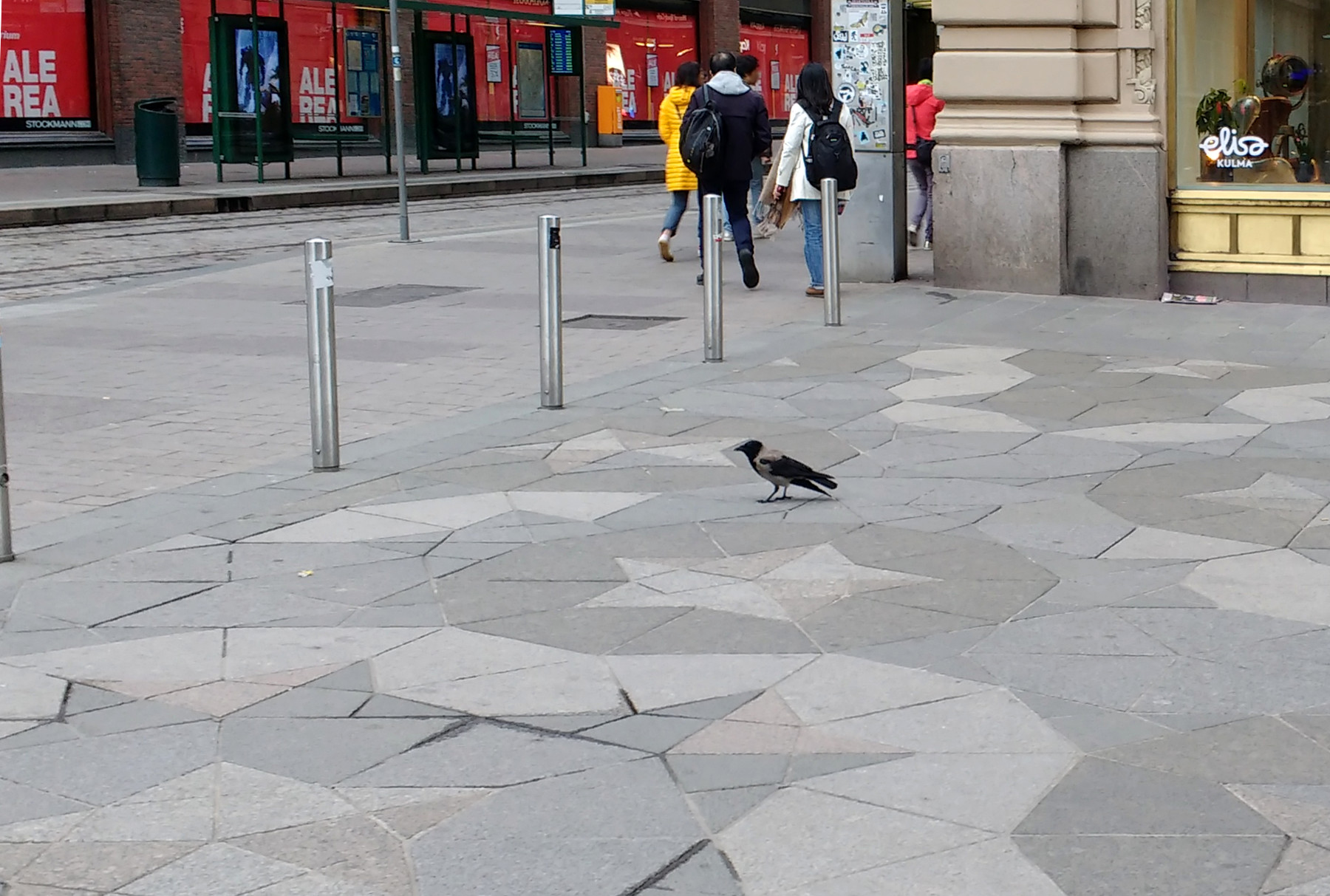
This crow is an urban dinosaur. It looks for snacks at a gastropub terrace and in the bonus pictures tries to figure out what the flightless mop-heads are up to and checks the door between the shoe shop and tech store.
The pictures were taken in Keskuskatu (translation Center Street) pedestrian zone in Helsinki Downtown in Midsummer Day 2017. Very few shops or restaurants were open as most people would be somewhere in the countryside eating, drinking or attending music festivals.
Keskuskatu is in other times a much more busy place. Keskuskatu and much of Aleksanterinkatu, which is the street crossing Keskuskatu in the pictures, are heated in the winter with the district heating water returning from the buildings to the power stations. This way, no snow ploughs or salting is needed most of the time.
Click for full size!


© Ice Swimmer, all rights reserved.
