My first Commission – Part 2 – Conjunction of Projects.

I did not expect to get a commission this early. I am not quite there yet to be able to make a good quality knife in a reasonable time. I am confident I can get the “quality” part right, but time – definitively not. My original plan was to perfect my manufacturing process with the kitchen knives, which, if you remember, I have left this spring at a phase where the outlines of the blades were established, but nothing else.

But I need to work on both projects now because apart from the time I also need to use my resources – electricity, propane gas and charcoal – in a more economically savvy manner. That means hardening multiple blades in one go for example. And that means I have to establish the primary bevel grind on the commissioned knife as well as on the kitchen knives so I can harden and temper all those blades together.

But the whole point of the kitchen knife project was to develop a viable manufacturing process, and establishing the primary bevel was the part where I knew I have to develop and build a fixture first. You have seen my very first attempt. It did work, but not very time-effectively, I wasted about a minute each time I needed to flip or change the blade. That is a lot, considering that for the basic grind I need to go through five belts on both sides. It was clear I need some way to hold the blade steady, but being able to dismount and re-mount it quickly.

The second attempt was this.

Failed fixture. © Charly, all rights reserved. Click for full size.

The idea was that the hinge and two screws will allow me to set the tilt, and the knife-blank can go into the slot where it will be held by the levered screw. It did and did not work. That is, it worked for one knife and then it broke. The problem was moisture which caused the wood to deform and split. But even without that, fixing and releasing the blade was still not as easy as I would like it to be. I got an idea on how to improve this design, and I already bought the materials to try it out, but then I got sick and everything got put on hold for a few months as you know. All I could do was to think about it.

And then my parent’s hard drive died and I got the idea to use those strong neodymium magnets. But for that, I need first to develop a system on how to switch them on/off, and that needs more time than I can spare right now for fooling around. The customer is not in a hurry to get the knife – they know I still have my day job and that I can only do this in my spare time – but still I think I should not strain their patience. So I needed a fixture, fast.

Luckily I got an idea utilizing things that I already have – the first attempted fixture and a few cheap, weak magnets. There is a way to make weak magnets a lot stronger, at the cost of reach – by concentrating the magnetic field to one side with two slabs of iron/mild steel. It is also possible to make longer arrays with this system.

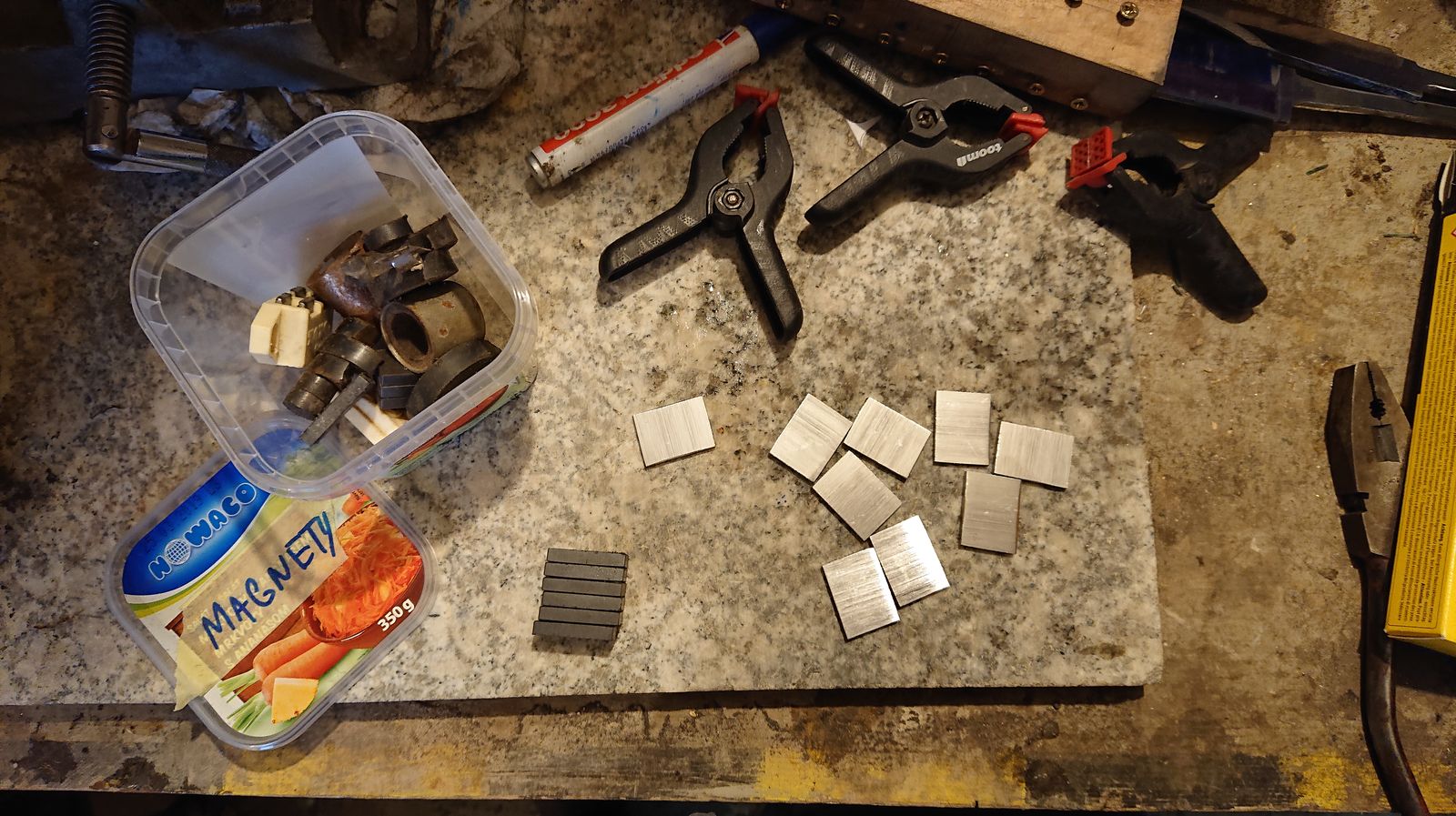
Magnets and pieces of steel. © Charly, all rights reserved. Click for full size.

So I took six of those cheap magnets and cut nine pieces of mild steel exactly as long as the magnets, but a few mm wider. Then I covered a piece of steel with masking tape and glued the magnets and steel together into three blocks, each consisting of two magnets and three pieces of steel, with the magnets facing each other with the same pole. That means the magnets oppose each other in the middle of the array, forcing the magnetic field of each magnet to the side.

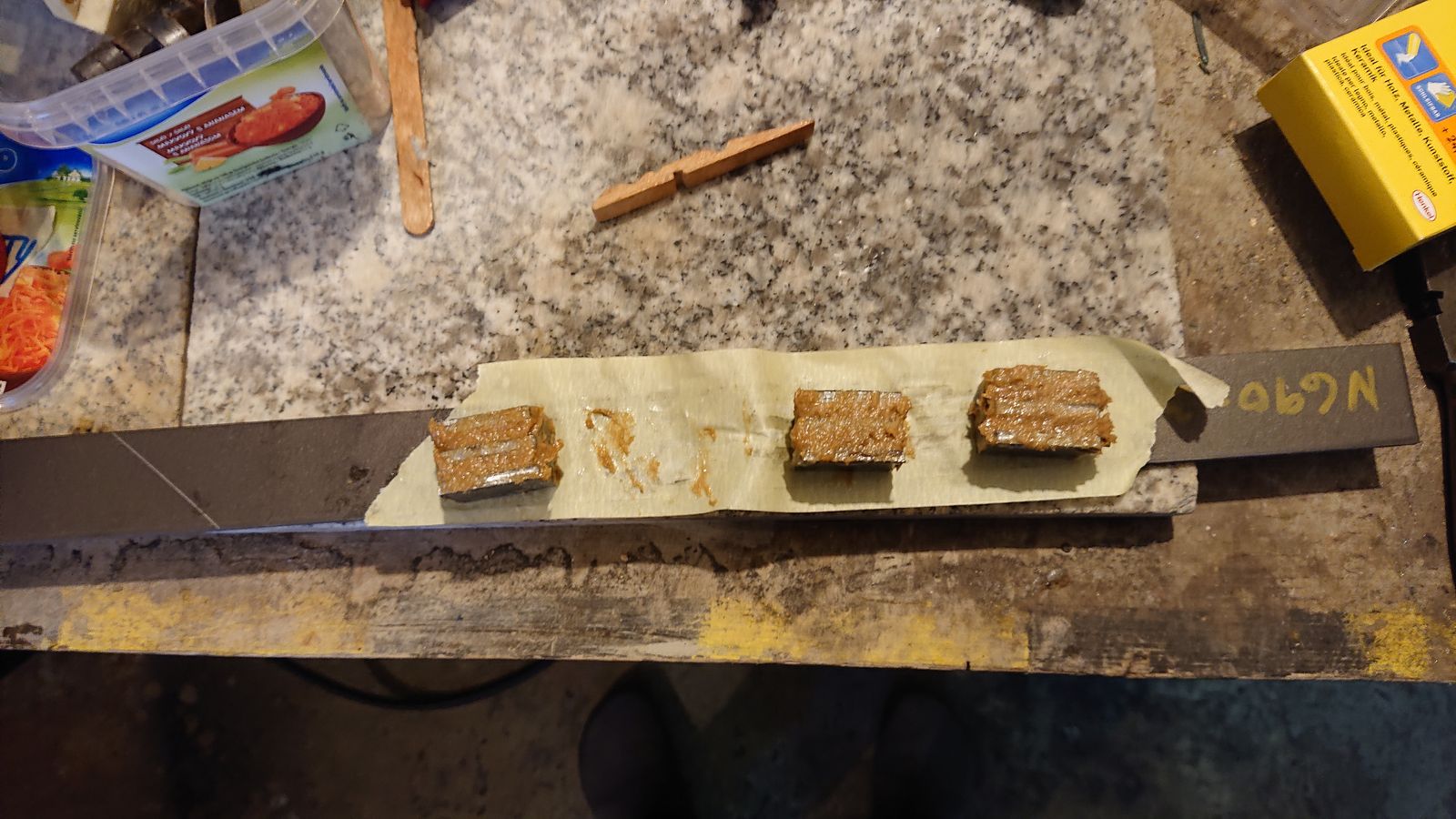
Magnets arrays stacked and glued together. © Charly, all rights reserved. Click for full

The masking tape has stopped the magnets from glueing onto the steel, and the steel was there to get nice alignment on the backside of the arrays. The frontside has the steel pieces overlap a bit, and the spaces were filled with epoxy and sawdust mixture.

Spaces filled with epoxy. © Charly, all rights reserved. Click for full size.

Whilst the epoxy was curing, I took the first wooden fixture and attached a long strip of aluminum to it for the spine of the knife to rest against, and I chiseled out three spaces for the magnet arrays to be glued into. After the epoxy has cured I ground the front faces nice and flat and glued the arrays into the wooden block, again with using a piece of steel covered with masking tape to hold all three on one plane. I used a lot of fast curing epoxy that day, all the while completely forgetting to take pictures of the process. So the next picture is the finished fixture with a knife blank attached to it.

The fixture with knife blank attached. © Charly, all rights reserved. Click for full size.

To get the tilt the fixture has four screws on the downside (up in the picture, not visible).

And the fixture works.  The magnet arrays are strong enough, but not as strong as neodymium magnet arrays, so it is still possible to comfortably detach the blade by hand. It allows me to apply a lot more even pressure on the blank, for a longer time without cooling it because I do not burn my fingers (temperature not being of concern at this stage). There is still room for improvement – the aluminium stop is a bit too fat for kitchen knives, the screws for tilting do not provide stable enough support and they are a bit finicky to get right. But you can see it allows for making nice, flat and even grind.

Established primary bevel. © Charly, all rights reserved. Click for full size.

Added bonus is, that after two hours of grinding not only did I do more work than before, but also my fingers hurt a lot less because the fixture gives my hands more material to hold onto. I am definitively going to use this a lot, and perhaps there will be other uses for this concept as well. I have an idea for sharpening gizmo in my head for about a year by now…

The Art of Book Design: Pasakas

It’s Fairy Tale Saturday and this week we have a very special book that comes to us from our very own rq. It’s Latvian and a real departure from the fairy tales we’ve looked at so far. The pictures are very bold and some are darkly intriguing. I know you’ll enjoy it.

I don’t know Latvian so I’m including the publishing details in a photograph. I would surely botch it up if I tried to translate.

©rq, all rights reserved

I’ve attached photos of a classic Latvian family book – a large (perhaps THE) comprehensive compilation of Latvian folktales. Some are quintessentially Latvian, some are older than others, some resemble your well-known fairy-tales, and some are quite distinct and individual.

The artist is Pāvels Šenhofs, born 1924, died in 2011.

In any case, it’s a classic, and they don’t publish like they used to!

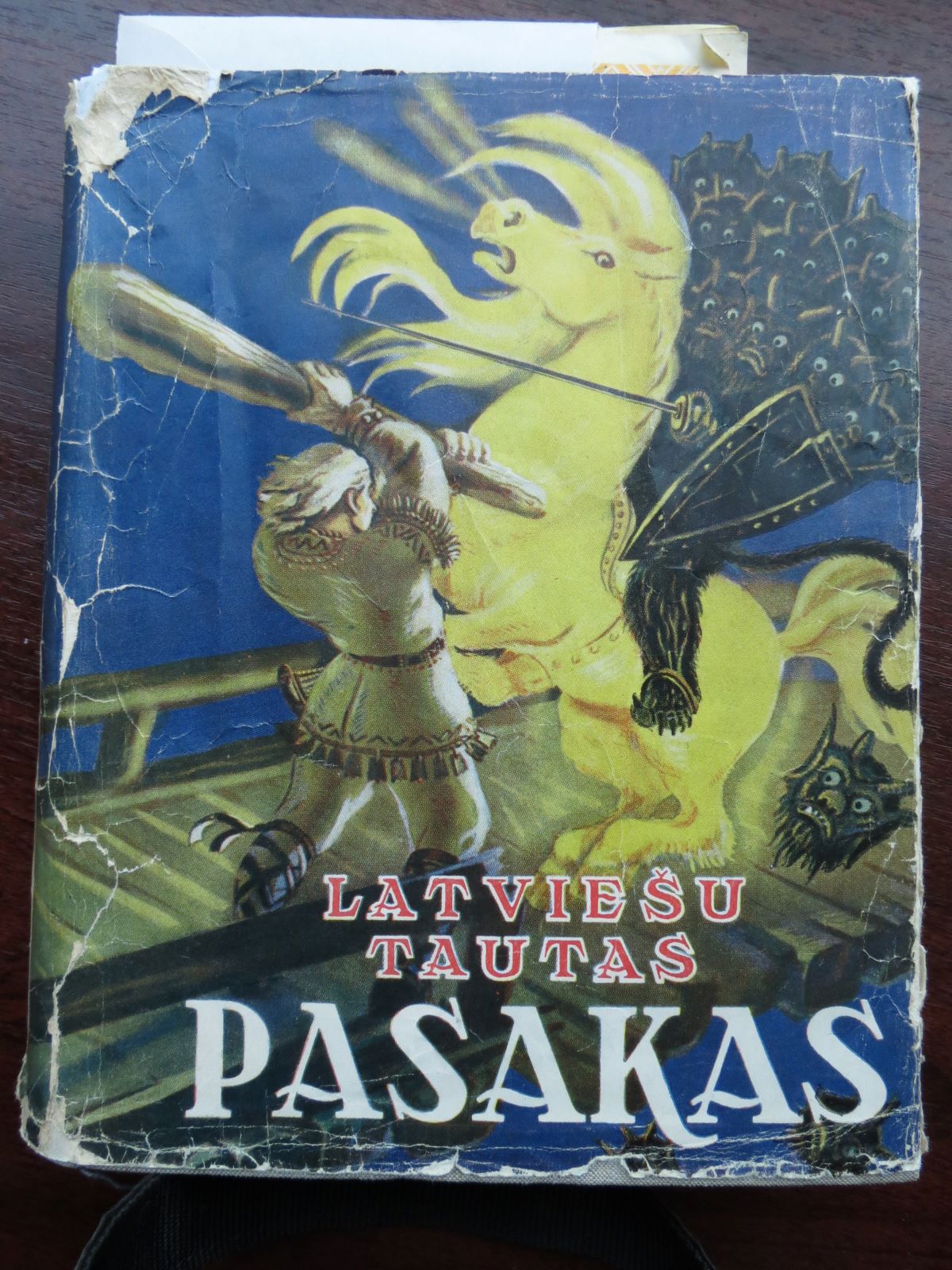
First, you have the book cover, which is a bit melodramatic.

Front cover, ©rq, all rights reserved

Back cover (with the price!) ©rq, all rights reserved

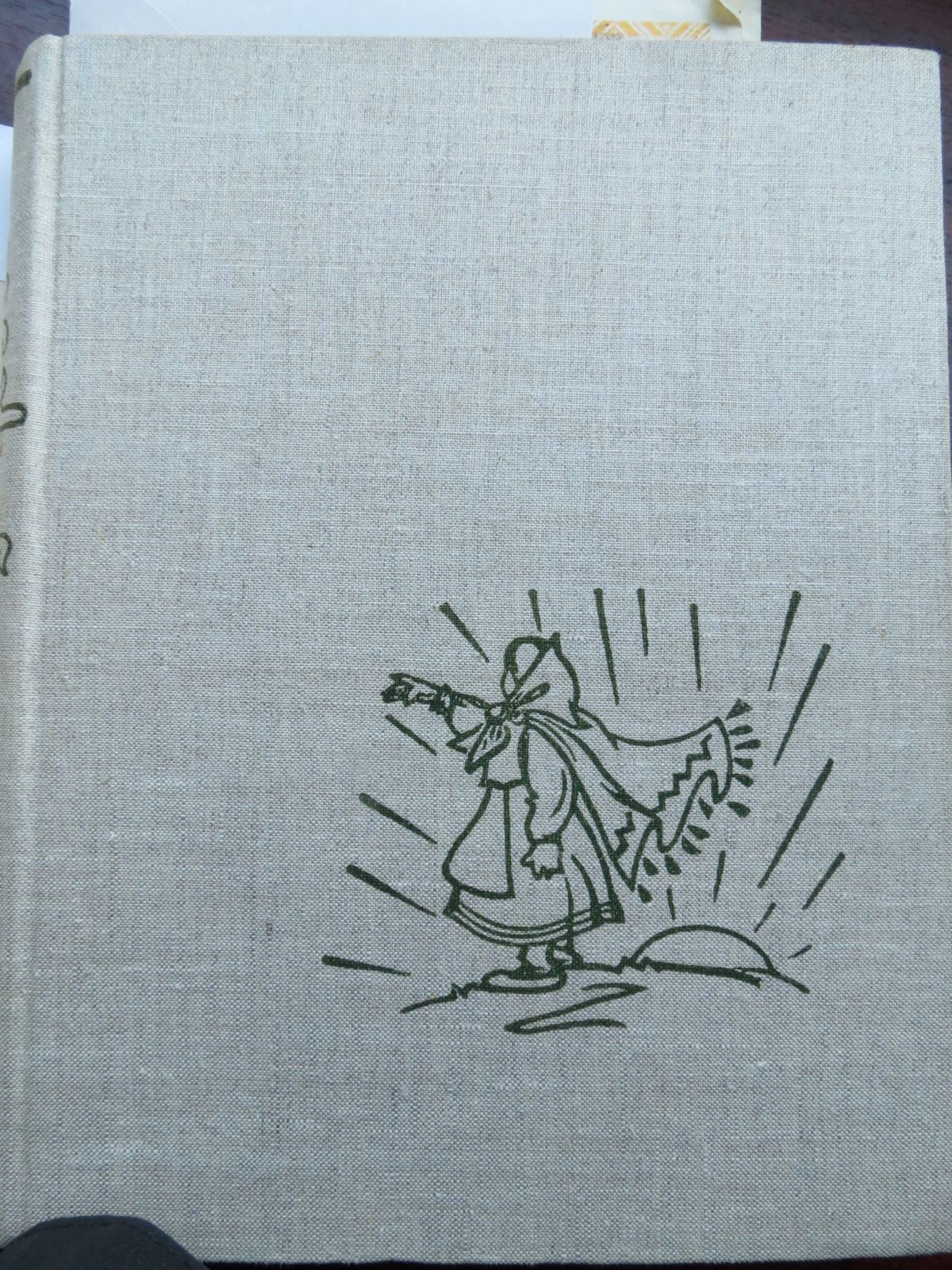
Then there is the fabric cover of the book itself-  how I knew it, as the copy we had when I was growing up did not have the cover anymore. It’s a dark green print on rough (almost canvas) textile, also the spine.

©rq, all rights reserved

©rq, all rights reserved

Then there is the inside covers, which are very traditional in style.

©rq, all rights reserved

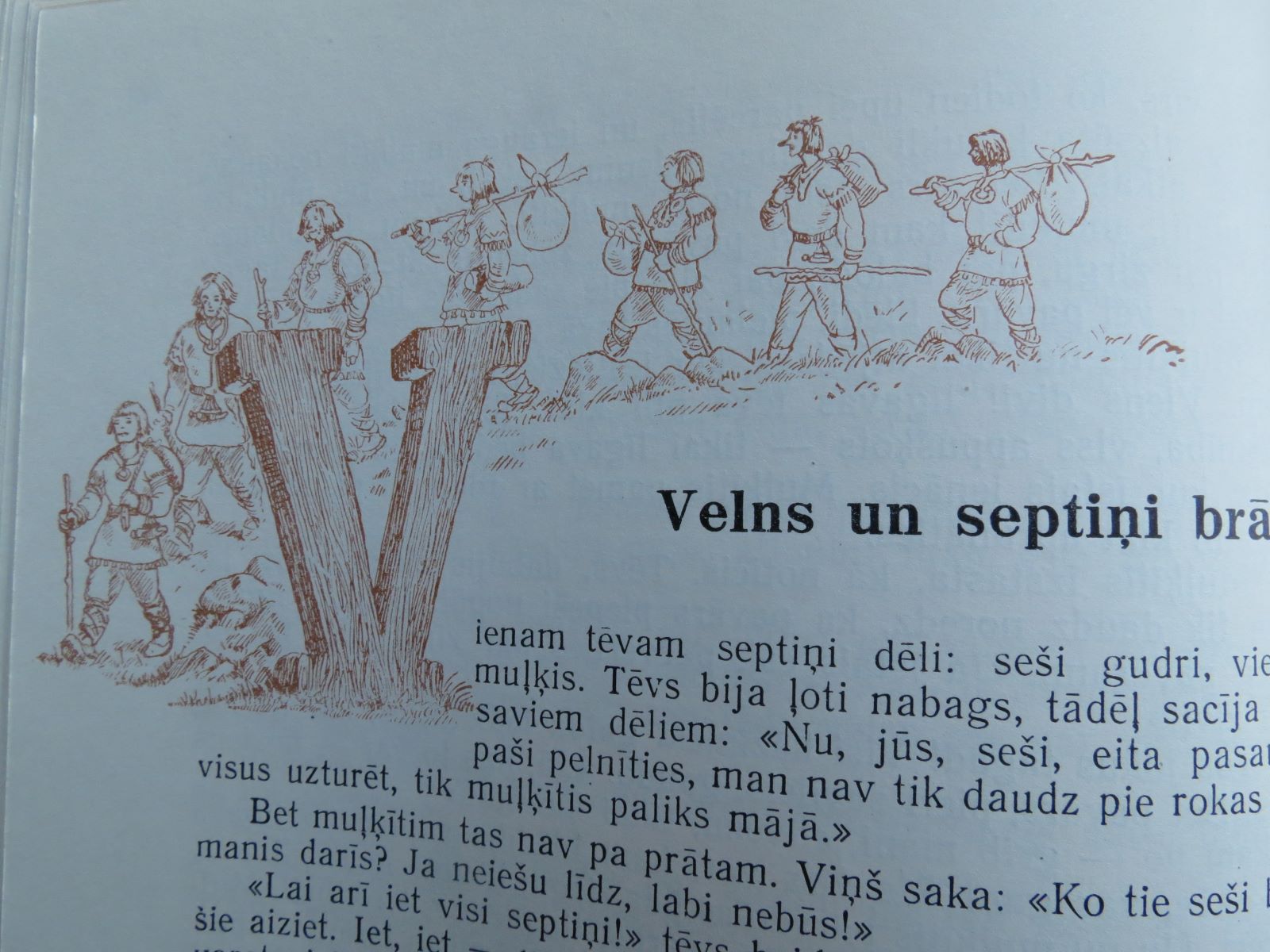
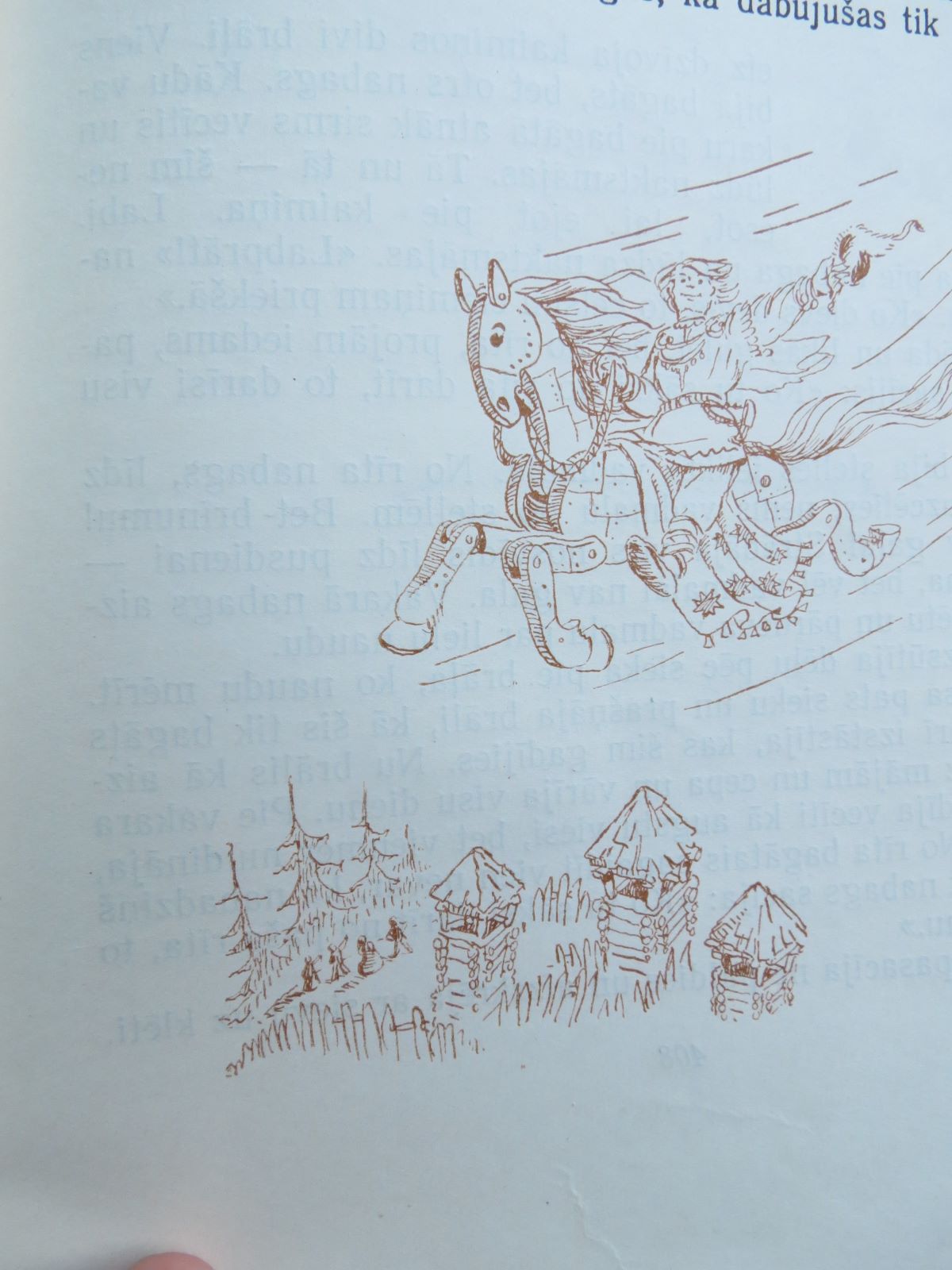
Then some samples of the inside art: each story begins with an “illuminated” letter, drawn to look like it’s carved from wood, along with a distinctive introductory illustration, and most stories also have other line illustrations along the margins or at the end.

©rq, all rights reserved

©rq, all rights reserved

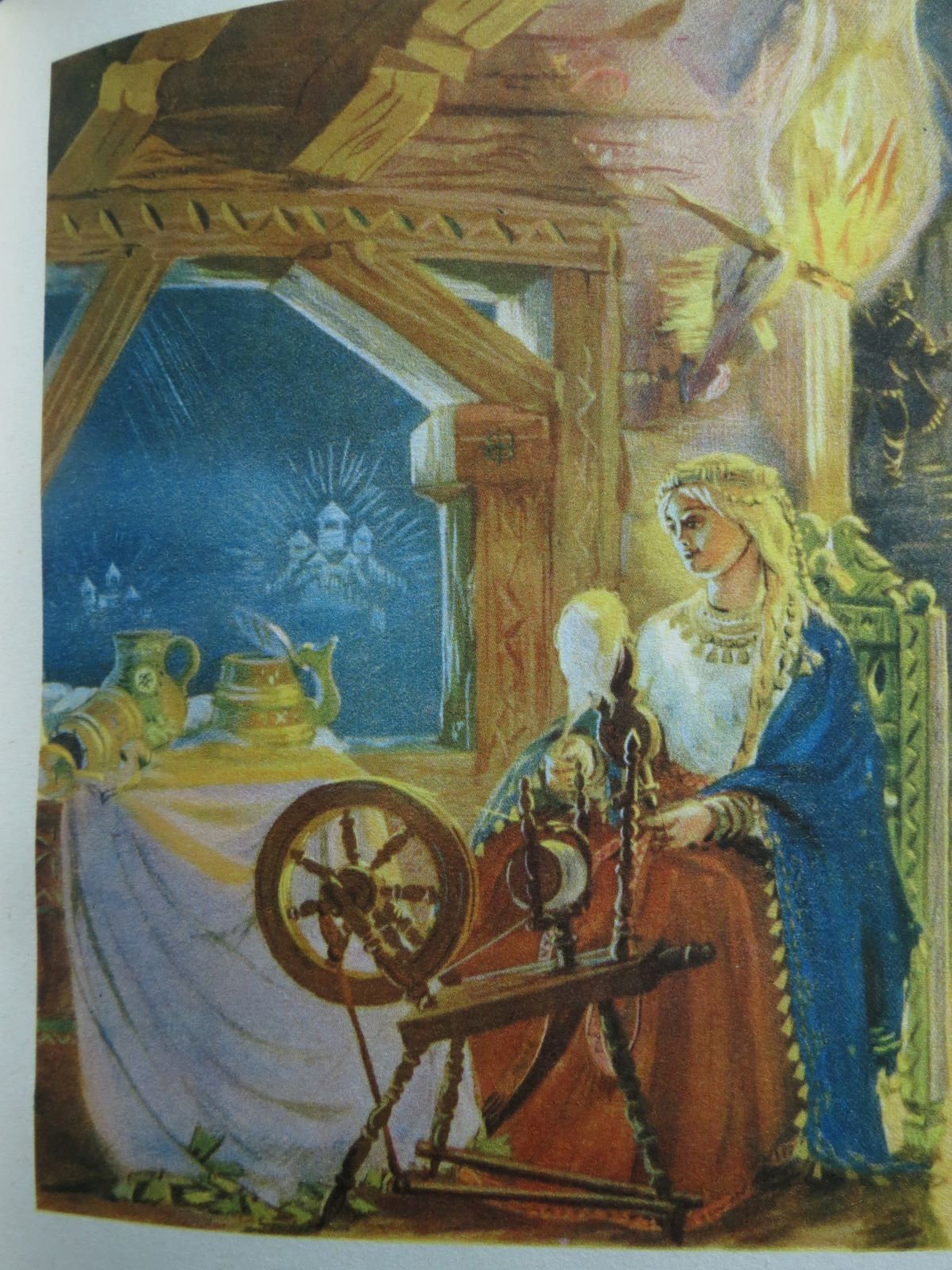
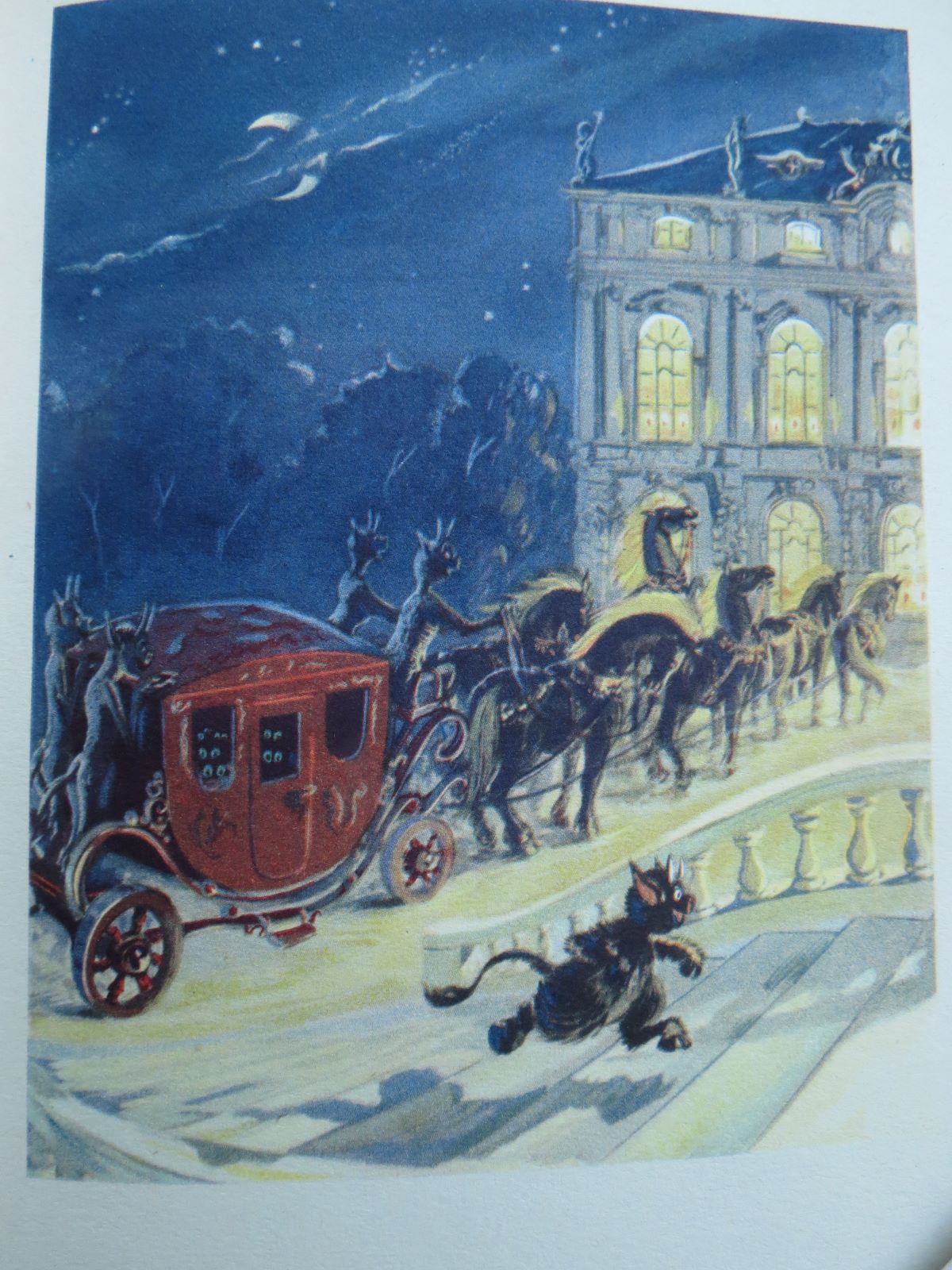
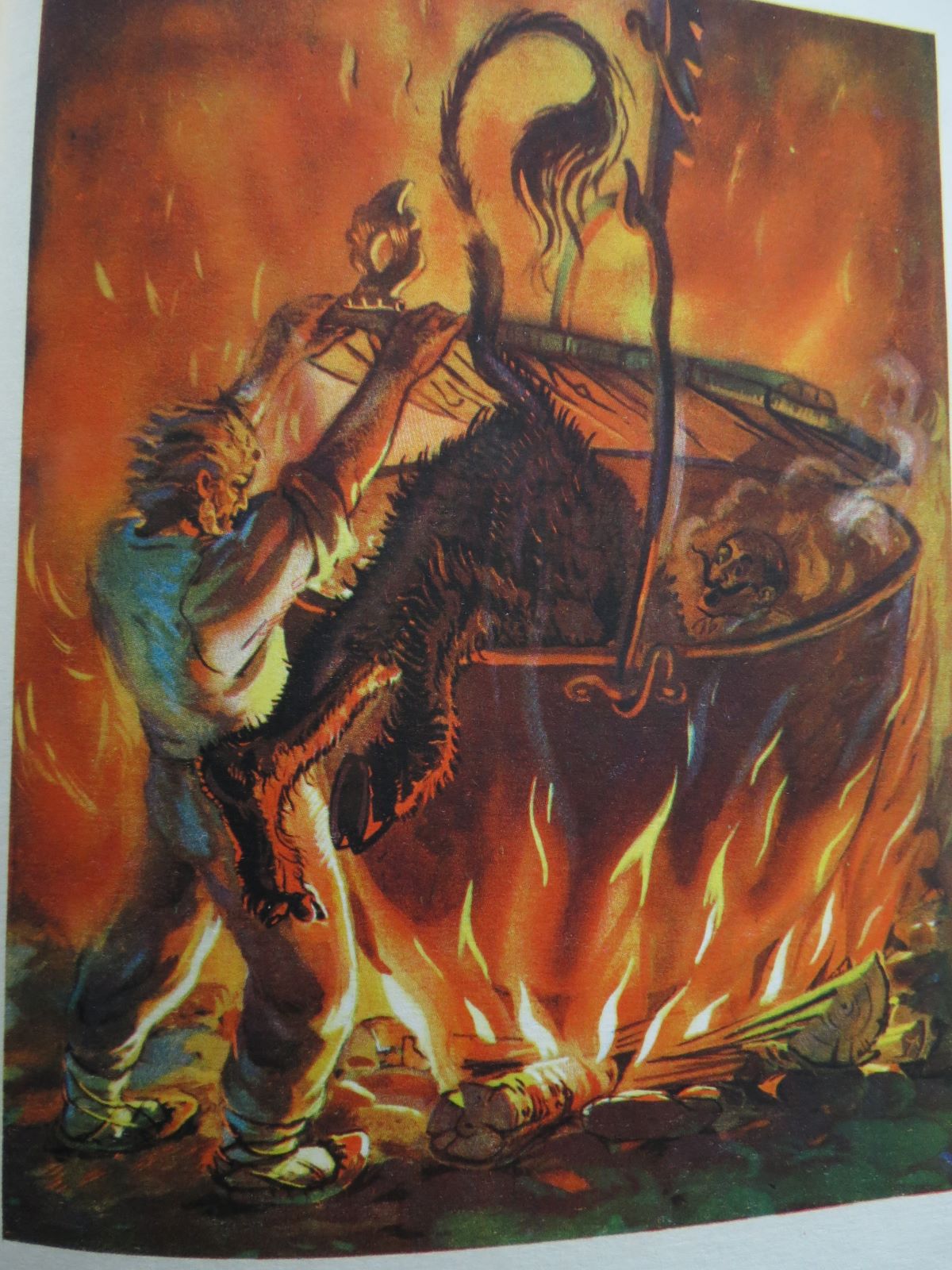
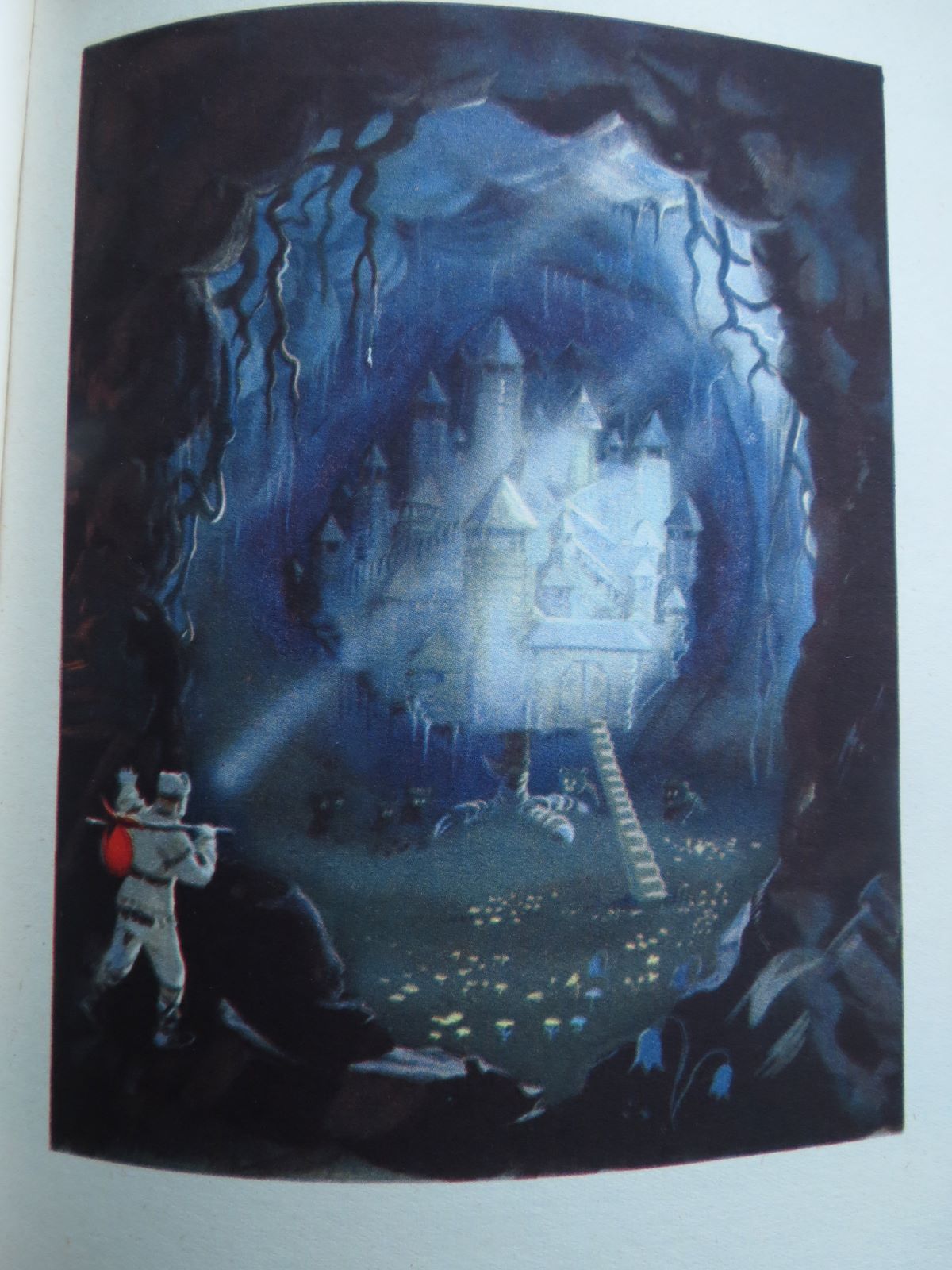
But the colour plates are simply fantastic. The stories are just as horrifyingly charming!

©rq, all rights reserved

©rq, all rights reserved

©rq, all rights reserved

©rq, all rights reserved

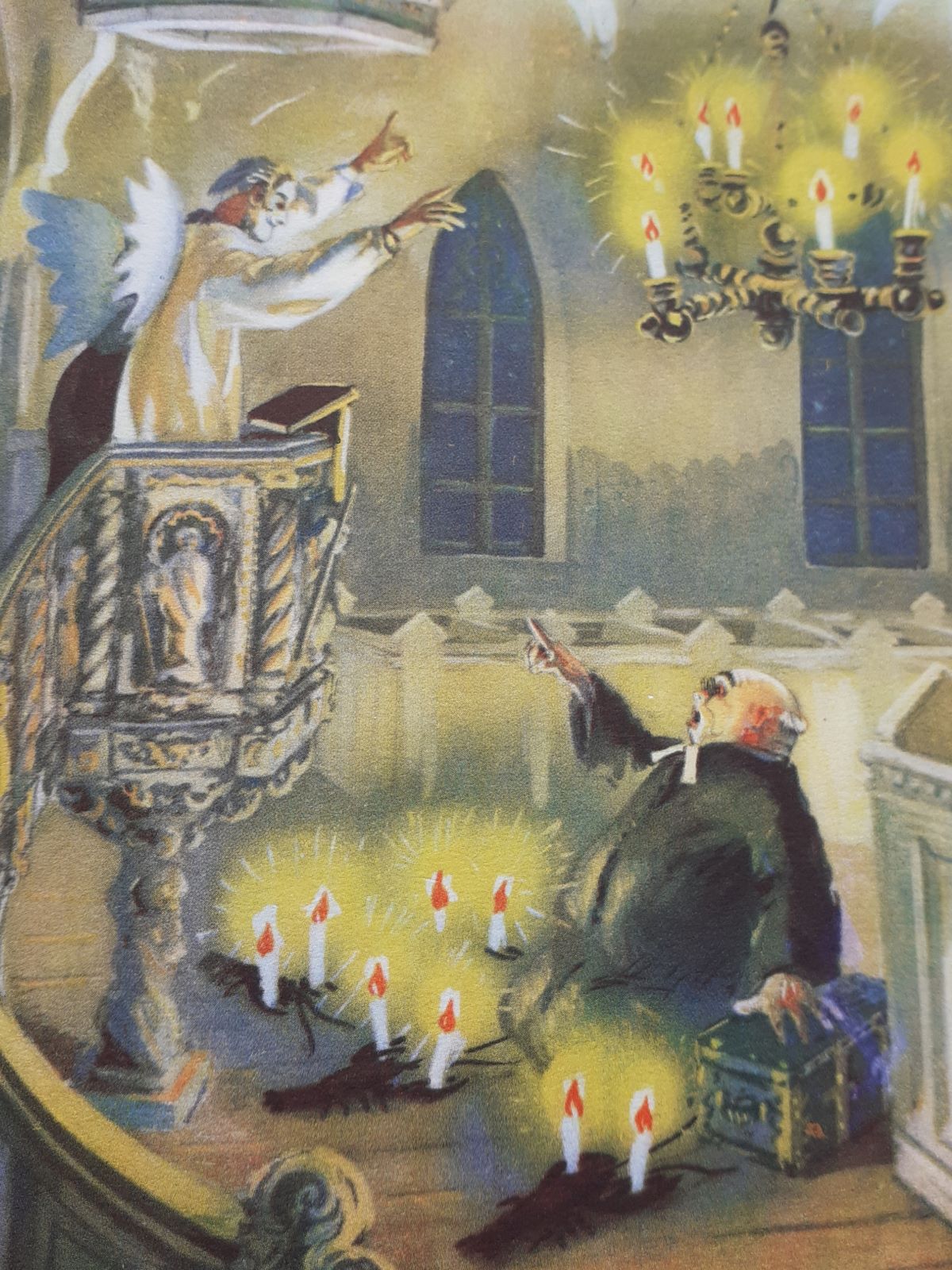
An extra picture for the antireligionists among us: the book has a whole series of stories about duping the local priest or pastor in a myriad of ways: as with German barons, if they’re not cast as the Devil himself, then they’re cast as the fool. And even the Devil can be tricked!

©rq, all rights reserved

L is for Lavender

L is for Lavender ©Nightjar, all rights reserved

Lavender.

A light purple representing the color of the flower with the same name. There were no lavender flowers anywhere to be seen when I got to the letter L in mid-November, but a trip to the village’s limestone formation revealed a nice surprise. Little lavender-colored crocus flowers (Crocus serotinus) work just as well.


Link to previous alphabet post

K is for Khaki

From Nightjar,

K is for Khaki ©Nightjar, all rights reserved

Khaki.

Telling apart tones of light brown is an exercise I find neither easy nor exciting, but the letter K doesn’t really afford many choices. I did learn that khaki is actually a RYB quinary color obtained by mixing equal parts of the quaternary colors sage and buff. Not that this piece of information helped me much, mind you. Hopefully some parts of this sheep’s portrait aren’t too far-off.

Link to previous alphabet post

Drought, Death, Despair.

So far the hottest year in the Czech Republic since the history of measurements was 2018. The rest of the top were years 2017, 2015 and now it seems 2019 will bump one of them off and three hottest years will be also three consecutive years. Right now we have a third consecutive year of not only abnormally hot but also abnormally dry weather. The area where I live is still relatively well off – and here it did not rain for eight weeks by now. Four of my bonsai trees have nearly died (and will probably die definitively) because I do not have as much water as I need to water them. I have managed to keep alive my freshly planted hornbeams in the coppice, but only just, and if no rain comes, they are toast. If I did not have my own sewage cleaning facility that allows me to use wastewater for watering trees they would be toast already. The well did not dry out yet, but it has merely 3 m of water now, which is not much.

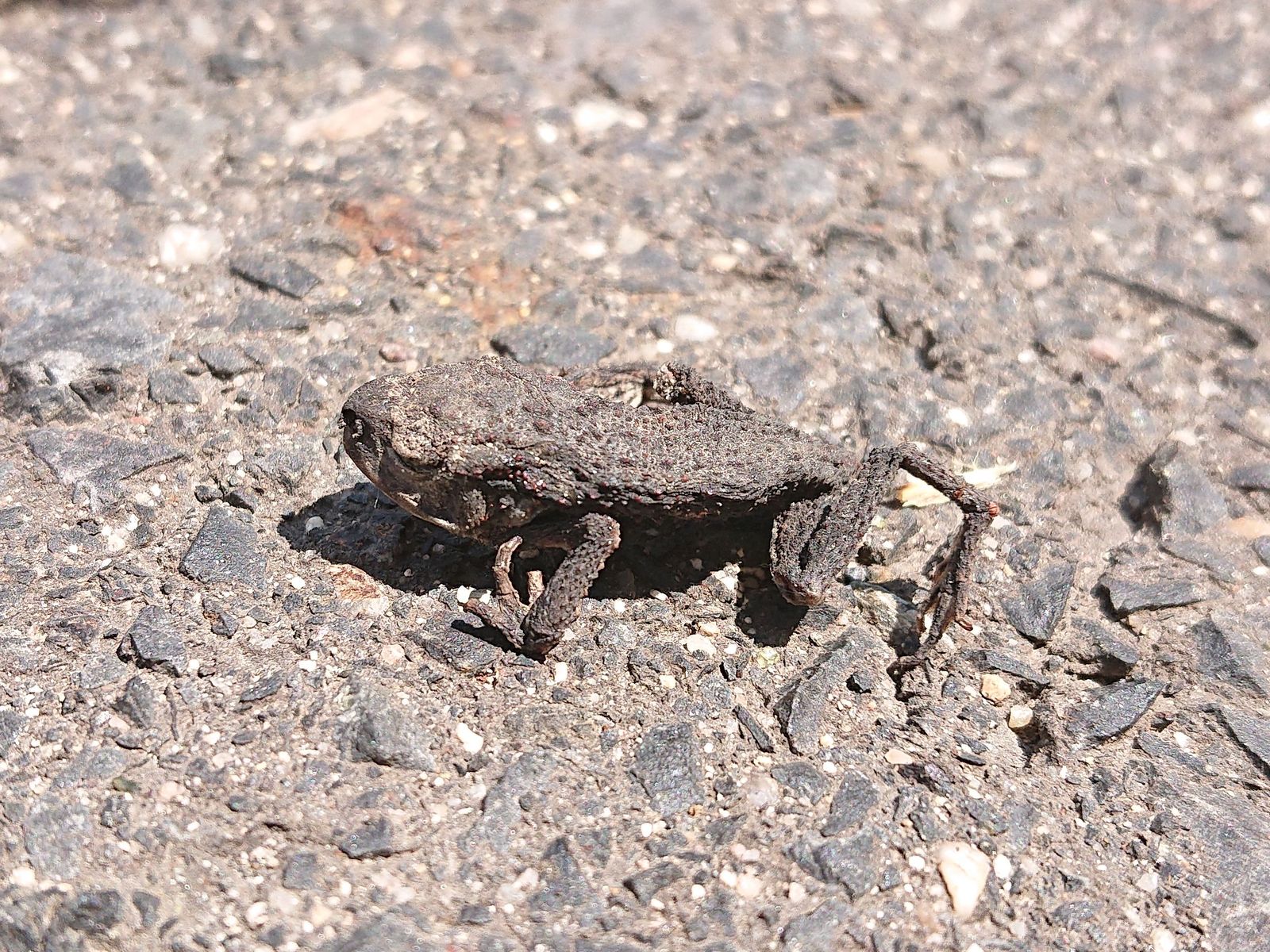
And to drive the point really home I encountered this at work during my lunch break walk – a tiny baby frog or (more probably) a toad, dried and mummified (the pictures were not taken on the same day btw, it is still there).

©Charly, all rights reserved. Click for full size.

©Charly, all rights reserved. Click for full size.

It is fairly common to find dead dry frogs/toads on the road, but they are usually squashed by a passing car prior to that. This poor little wee thing had dried mid-step.

I am not particularly squeamish, but this sight shook me. It is a warning of things to come.

The Art of Book Design: Jude the Obscure

Thomas Hardy. Jude the obscure. London, James R. Osgood, McIlvaine & Co., 1896. First edition.

I have a bit of bit of trivia to go with today’s book. According to Wikipedia,

Jude the Obscure, published in 1895, met with an even stronger negative response from the Victorian public because of its controversial treatment of sex, religion and marriage. Furthermore, its apparent attack on the institution of marriage caused further strain on Hardy’s already difficult marriage because Emma Hardy was concerned that Jude the Obscure would be read as autobiographical. Some booksellers sold the novel in brown paper bags, and the Bishop of WakefieldWalsham How, is reputed to have burnt his copy.[20] In his postscript of 1912, Hardy humorously referred to this incident as part of the career of the book: “After these [hostile] verdicts from the press its next misfortune was to be burnt by a bishop – probably in his despair at not being able to burn me”.[27]


via: Books and Art

Available to read at The Internet Archive