Eucalyptus Flowers

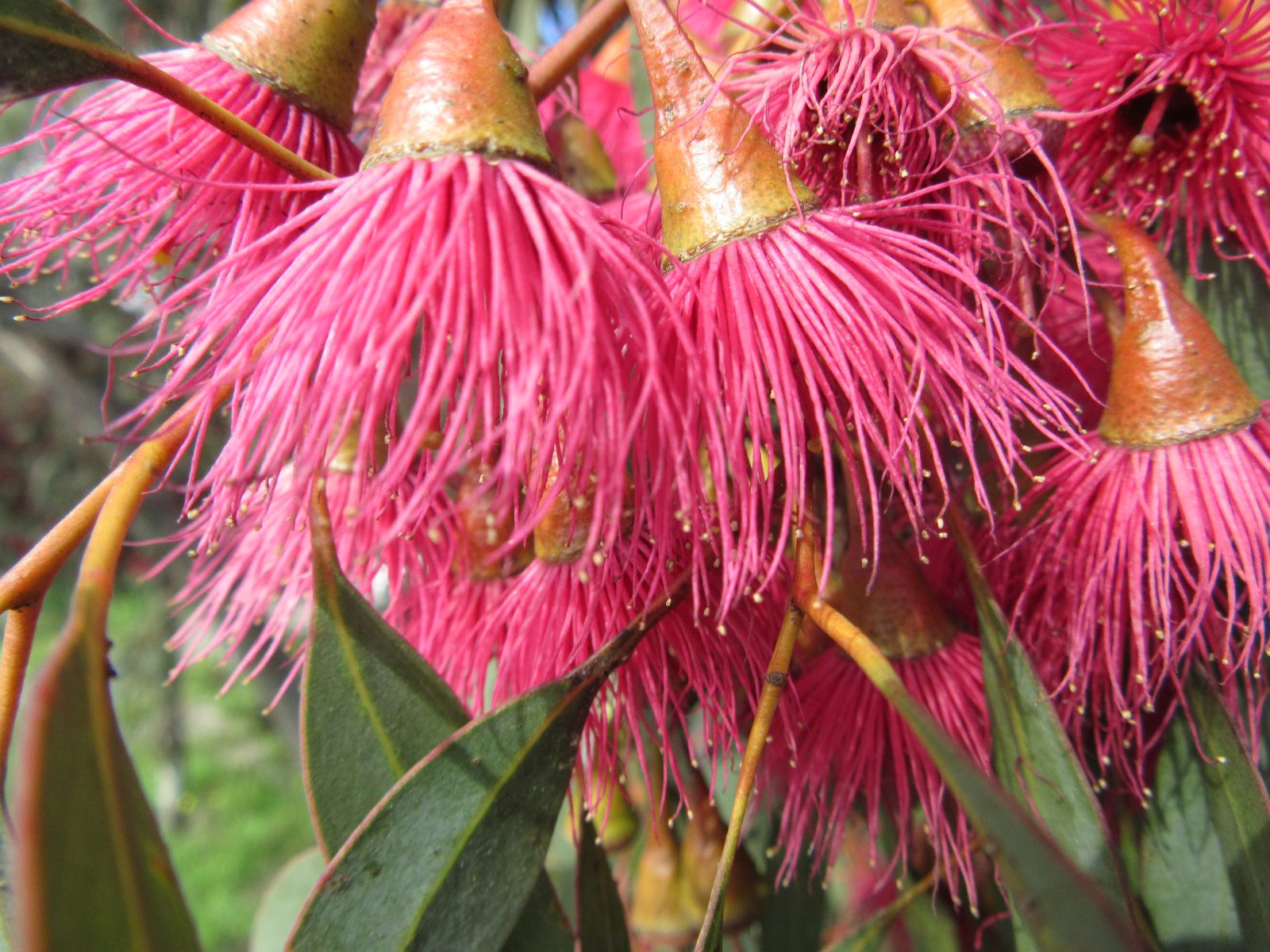
Lofty has sent us the happiest little flowers I’ve ever seen.

Winter is also the time for some of our eucalyptus to flower. Most do it way up in the sky and usually you only know by the carpet of spent pale yellow flowers on the ground underneath the tree. This one however (a street tree) offered its flowers at eye level for my camera to snap at. The size of the flowers is around 25mm or 1″ long.

Eucalyptus Flowers, ©Lofty, all rights reserved

The Art of Book Design: The Swedish Fairy Book

Klara Stroebe, ed. Translated by Frederick Martens. Illustrations by George W. Hood. The Swedish Fairy Book, New York, Frederick A. Stokes, 1921.

I really enjoyed Pasakas, the Latvian book of fairy tales sent in by rq, so I thought I’d check out some other foreign tales. There are a myriad of Swedish fairy tale books, but this edition caught  my eye. In the preface to the book the author tells us that,

 There has been no attempt to “rewrite” these charming folk-and fairy-tales in the translation. They have been faithfully narrated in the simple, naive manner which their traditional rendering demands.

The tales might be traditional, but the artwork isn’t. The cover art and interior plates are all rendered in soft, flowing watercolors more typical of the art nouveau period than the Medieval period. Enjoy! [Read more…]

Z is for Zaffre

From Nightjar,

Z is for Zaffre

Zaffre.

A deep blue pigment obtained from cobalt ore. I thought these Lithodora prostrata flowers were close enough.


Link to previous alphabet post

♦♦♦

It’s obvious that Nightjar put a lot of time and thought into this project and I thank her so much for sharing it with all of us. The series has been full of surprises and gorgeous photography and along the way I learned a few new colors and fell in love with a jet black cat, who is my final choice for favourite – B is for Black Mia with the soft green eyes.


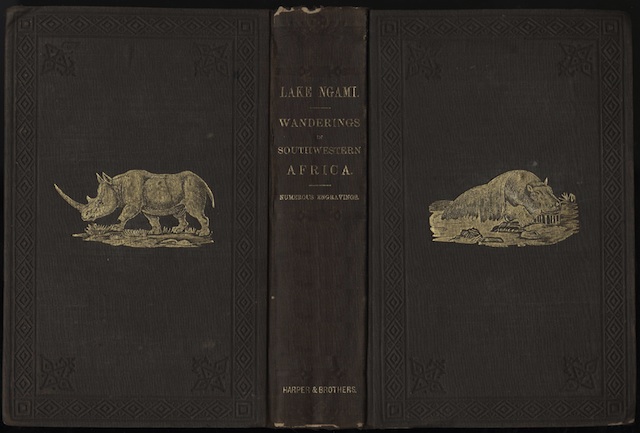
The Art of Book Design: Little Curiosity, The Story of a German Christmas

J.M. Callwell. Little Curiosity, The Story of a German Christmas. London (Glasgow, Edinburgh, Dublin), Blackie and Son, 1884.

Surprise! It’s July 25 –  the perfect day for mid-summer Christmas. I love that this cover has none of the usual trappings that appear on later books about the season. There’s no snow, no crèche, no tinseled tree and nary a gift in sight – just a happy little bird singing.


via: University of Florida Digital Collections, George A. Smathers Libraries


Making Kitchen Knives – Part 13 – Headscratching Curls

These are the three blades that were quenched by using protective stainless steel foil. The function of the foil is to prevent decarburization during the extremely high temperature at which this steel needs to be held at for prolonged time in order to get all carbides into solution.

My initial thoughts were that the blades warped because they are ground too thin. Well, that is not true. Today I have measured the thickness and they are indeed way thinner than I should have made them – all are just 0,35-0,45 mm thick at the cutting edge – but three of the remaining blades are even thinner, three are in the same range and only four are thicker. And of those thinner or just as thin as these, one has very, very slight bend towards the tip that should be possible to correct, and the rest is straight.

So the blade thickness is not the cause. I cannot imagine what else could it be, I do not believe that the foil could have such impact, not to mention that these blades were pulled out of the foil prior to quenching.

My second guess would be decarburization, maybe the experimental protective coating did not work as well as it should and the steel has lost some of its carbon, making it less prone to warping in the quench. But it should also leave it much softer post quench, and I just do not see that.

I have tried my hardness assessing gauges on bought kitchen knife – that big fat stainless steel overpriced junk to be precise – and I got the same result as for the softest one of these – that is, approx 52 HRC.

This means that the blades where my 62 gauge does not scratch are definitively the hardest blades and harder than the store-bought one. And the 62 gauge scratches all these three, but it does not scratch 3 of those where I used the experimental protective coating. And to add to the confusion, one of those three hardest ones is also one of the thinnest. This to me rules out decarburization as the deciding factor for the warping, although it might have caused the high variation in hardness.

I do not believe it is due to my grinding skill, because that should distribute the warping randomly and not only on the three blades that were quenched with foil.

Currently, I am just scratching my head. Any opinion is welcome.


My next step can be either to make these blades circa 5 mm narrower by grinding away the curly parts or trying to re-harden them with the protective coating and maeybe even trying plate-quenching instead of oil. I have never done plate quenching, maybe this could be a good opportunity to try it out…