
Helen Leah Reed. Brenda’s Summer at Rockley. Boston, Little, Brown and company, 1901.
Cover photo via: Pinterest
The book is available to read at The Internet Archive

Helen Leah Reed. Brenda’s Summer at Rockley. Boston, Little, Brown and company, 1901.
Cover photo via: Pinterest
The book is available to read at The Internet Archive

Henrietta R Eliot. Laura’s Holidays. Illustrated by Etheldred B. Barry. Boston, Lothrop Publishing Company 1898.
via: The George Smithers Library, University of Florida Digital Collections
Hell isn’t forever after all. Today I have finished both blades and for the second one, I opted for a satin finish. Not because it is easier – it is not – but because I wanted to see the difference and decide what I like more for the future. Well, I am still undecided, but I can see the difference. And so can you, although it was not easy to think of a way to photograph this.
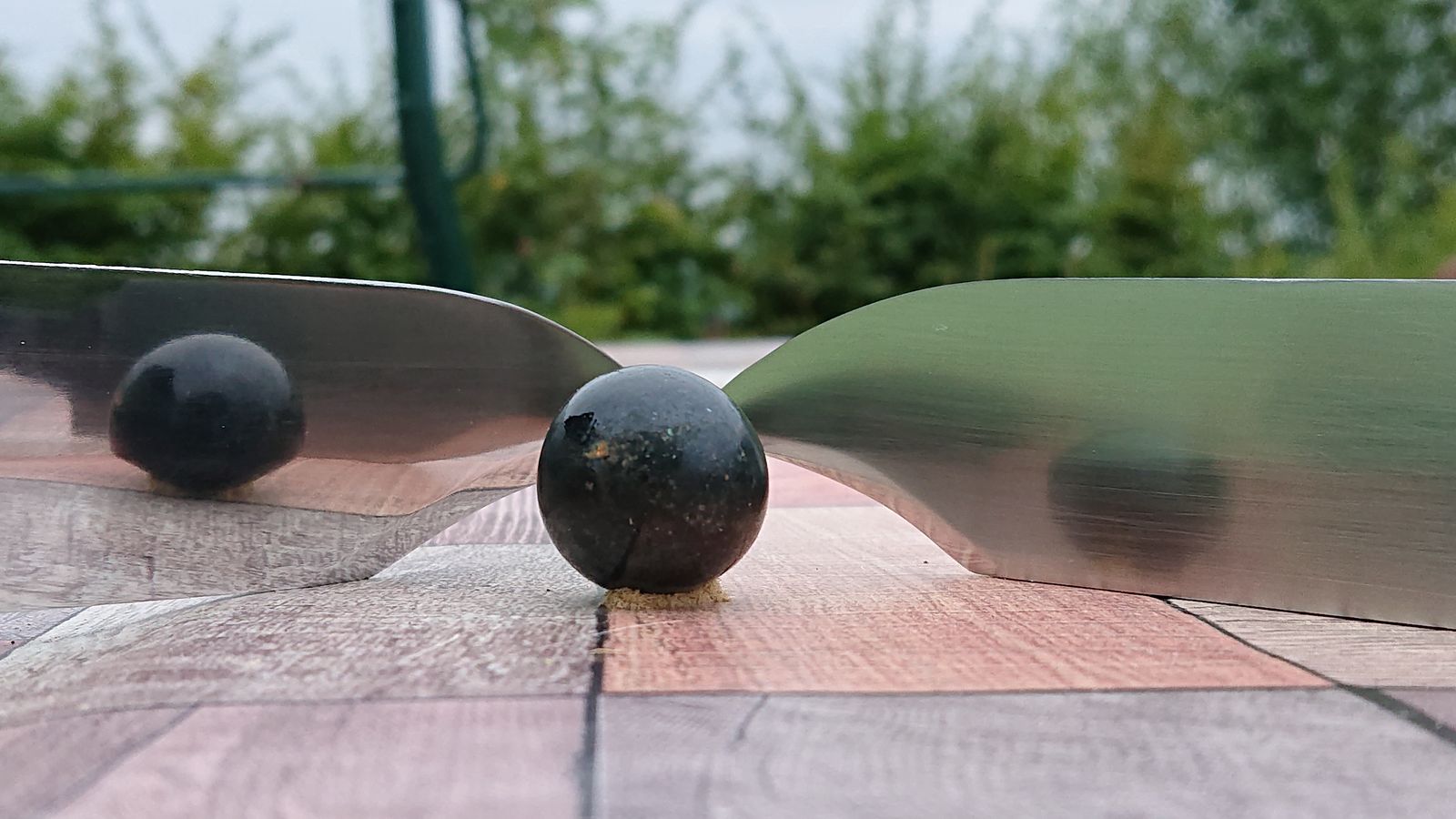
© Charly, all rights reserved. Click for full size.
The satin finish was made by me not going to the finest buffing compound. Instead of that, I went for a fine abrasive pad right after the medium buffing compound and I dragged it along the blade a few (hundred) times. And I probably will do some more.
After the blades were finished, I have decided to sharpen them. I probably will sharpen blades before assembly for several reasons. Firstly I like making apple seed (convex) edges, that give the blade look as if it does not have a secondary bevel at all. For that, I might need to re-buff the blade a bit, and that can only be done before the handle gets in the way. Secondly, should I scratch the blade by accident during the sharpening, it is easier to re-polish it before assembly. So whilst I do not necessarily sharpen the knives to shaving sharp at this stage, I do sharpen them to some 90%.
This steel (N690) should not be sharpened at an angle steeper than 15°, steeper than that and the fine edge allegedly tends to break off. I have no reason to doubt this since the blades are hard as hell. This time I have a way to get a really nice and consistent angle – I could use my magnetic jig. So I did. The N690 is steel with so-called “secondary hardening”, so it is basically nearly impossible to overheat and destroy the edge during sharpening. Nevertheless, I took care to take my time and not overheat it, it does not pay to get into bad habits.

© Charly, all rights reserved. Click for full size.
You may see that there is no platen behind the belt, so I am using a slack-belt setup here. That means the secondary bevel will be concave and the cutting edge itself will be sharpened in fact at an angle a bit higher than 15°, which is ideal for a hunting/camping knife of this type. Convex grinds are very durable – the knife that I have made for my mother needs sharpening only about two-three times a year despite being used and abused daily.
Speaking of that, when I was at it I also sharpened all her kitchen knives. Those took just one-two very quick passes on the slackbelt and then a few passes on my stropping wheel (made according to Walter Sorrell’s video)
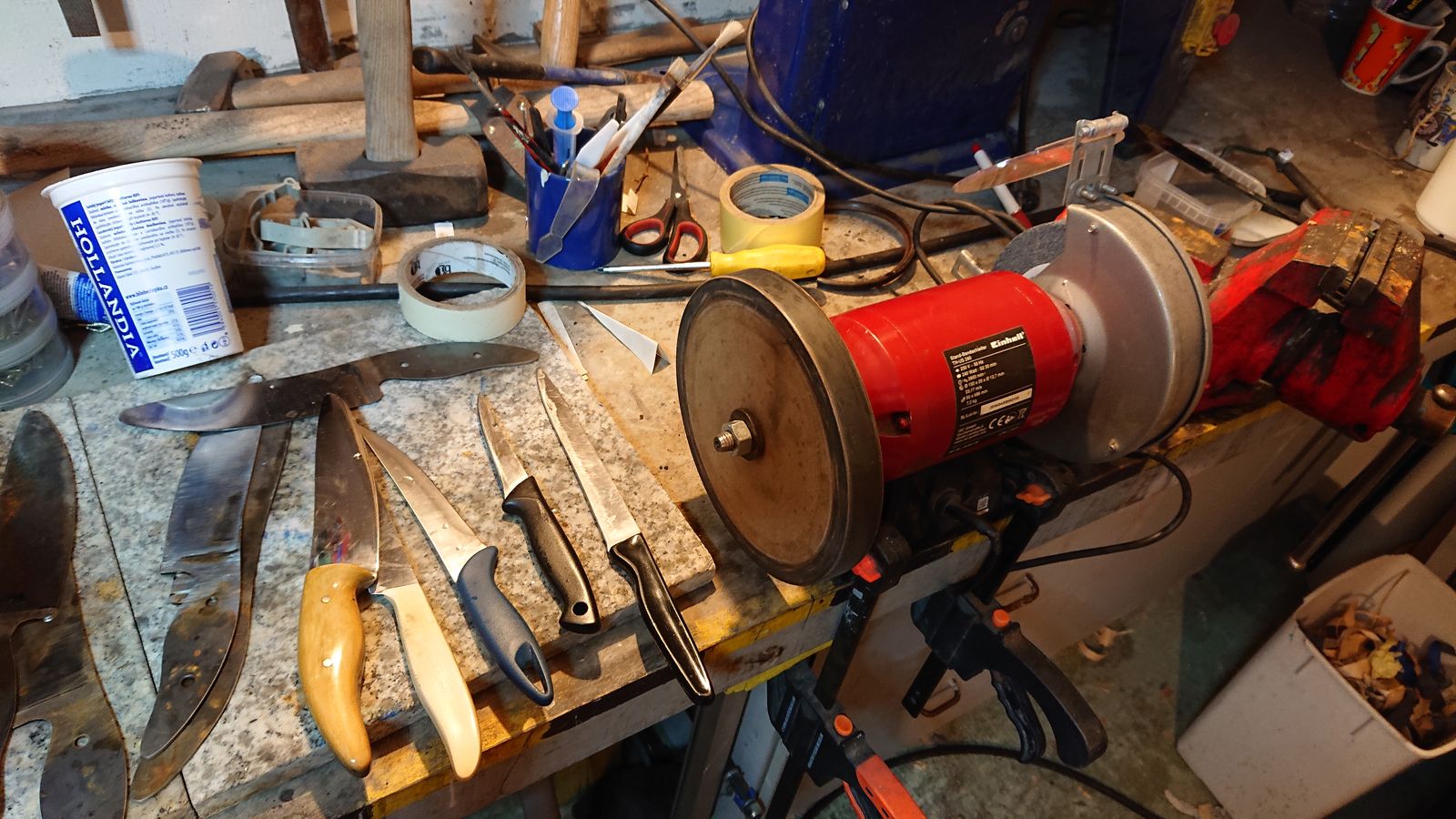
© Charly, all rights reserved. Click for full size.
Your eyes do not deceive you, that grinder with the stropping wheel is back-to-front. For stropping, the wheel must rotate in the direction of the edge, not against it, because it is softer than the blade and if you try stropping against the edge, the blade will bite into the fast-spinning wheel and dire consequences will follow. Having the grinder backward allows me to work on the upper side of the wheel, so should it grab the knife and throw it, it will hit the wall and not my leg or the concrete ground. I find it also a lot easier to strop the blades that way.
The stropping wheel gets the knives to scary-sharp in mere seconds. I am using the coarse stropping compound, in my opinion, it makes a better edge than the fine ones.
Now the blades are polished, nearly completely sharp and wrapped in masking tape. It took me three times more time than I think it should and about 30% more than I thought it will. But now the most time-consuming and nerve-wracking part is hopefully behind me and next steps will be free of trials and tribulations. Or at least with significantly shorter ones.

A.A. Milne. Winnie The Pooh. Illustrations by Ernest A. Shepherd. New York, E.P. Dutton, 1961.

A.A. Milne. Winnie The Pooh. Illustrations by Ernest A. Shepherd. New York, E.P. Dutton, 1961.
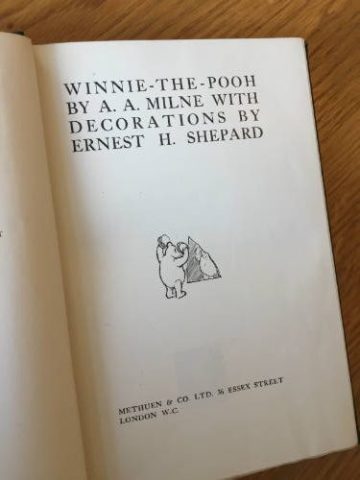
A.A. Milne. Winnie The Pooh. Illustrations by Ernest A. Shepherd. New York, E.P. Dutton, 1961.
It isn’t exactly a fairy tale, but I’m feeling nostalgic and this is one of my favourite books from childhood. My mother read to me every night until long after I could read for myself and this was the book that I most often asked for. I loved the gentle ways of Pooh and his friends and my mom had different voices for each of the characters that brought the book to life. The edition above is from 1961 and it’s the one that we had in our little library. I wish I could say that I still had it, but when my parents divorced it went missing along with a lot of other books that were likely passed down to another child in our neighbourhood. [Read more…]

Isabella Ingalese. Mata the Magician: A Romance of the New Era. London, New York, Montreal: The Abbey Press Publishers, [1901]. First edition.
Cover photo via: L.W. Currey Inc
A later edition is available to read at Google Books

L.M. Budgen. Episodes of Insect Life. London, Reeve, Benham, and Reeve, 1849.
via: The Internet Archive

Frances Emerson Judd. The Owls, Eve and Other Poems. Marshalltown, Webster and Burkart, 1888.
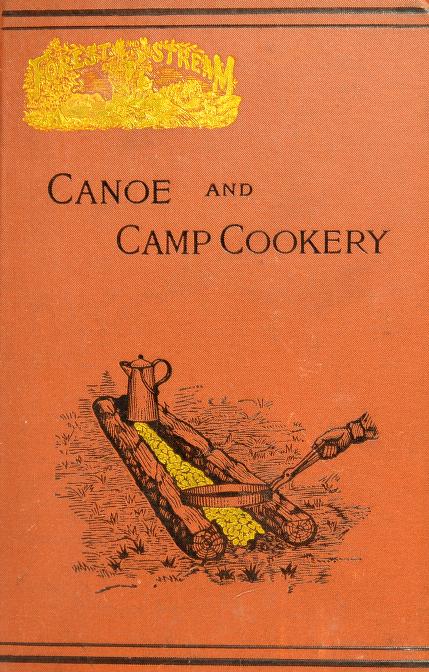
Canoe and Camp Cookery: A Practical Cookbook for Canoeists, Corinthian Sailors and outers. New York, Forest and Stream Pub. Co., 1885
via: The Internet Archive

John Harington Keene. Fishing Tackle. London, New York; Ward, Lock, 1886. First Edition.
Cover photo via: Abe Books
Available to read at The Internet Archive

© Charly, all rights reserved. Click for full size.
This weekend I only could work for about 4 hours on this project, but I have finally managed to finish one blade.
I am not happy with it. Like, at all. I could have done a better job, and I have done a better job in the past. I just could not get into the thing at all. I kept making mistakes, and whilst to make a mistake on belt grinder takes a split of a second, correcting it can take hours. After 400 grit I went to hand-sanding. It is more strain on the fingers than the belt grinder, but a lot less space for a mess-up. And therefore I was, paradoxically, suddenly a lot faster. I might switch to hand sanding on the other blade sooner.
After 1000 grit I went for buffing wheels. Buffing a blade like this is not optimal and if I did not mess up the grind on belt grinder so often as I did, I would not go for it and I would polish it up to 7000 grit sandpaper. However buffing has one advantage, besides being fast – it hides and smoothens slight imperfections on the bevels by ever so slightly rounding up the ridges. Which is also the reason why I normally would not go for buffing for a blade like this.
This is the blade that goes to the customer. Next weekend I will hopefully finish the second one and then I can start on the accessories.
But after I am done with currently started projects, I will definitively make a batch of these. It is a complicated shape, and thus an excellent exercise.

Richard Le Gallienne. The Romance of Zion Chapel. Cover designed by Will Bradley. London and New York; John Lane, The Bodley Head, 1898.
via: The Internet Archive

Nathaniel Hawthorne. Tanglewood Tales. Illustrated by Edmund Dulac. London, New York, Toronto; Hodder and Stoughton, 1919
This Fairy Tale Saturday we’re looking at Nathaniel Hawthorne’s Tanglewood Tales again. We’ve already looked at the 1921 edition of the book with artwork by Virginia Sterrett and today we’re looking at an earlier edition with artwork done by Edmund Dulac. Dulac was a master illustrator of books during the art nouveau period and he is considered to be one of the masters of the style.
This week we have another fine fungal photo from Opus, who makes magic happen with his detailed macro portraits. He’s also sent us a photo to give some perspective and scale to the close-up work.
Opus plans to nurse the garden along for a bit and then return it to the wild.

Moss Garden ©Opus, all rights reserved
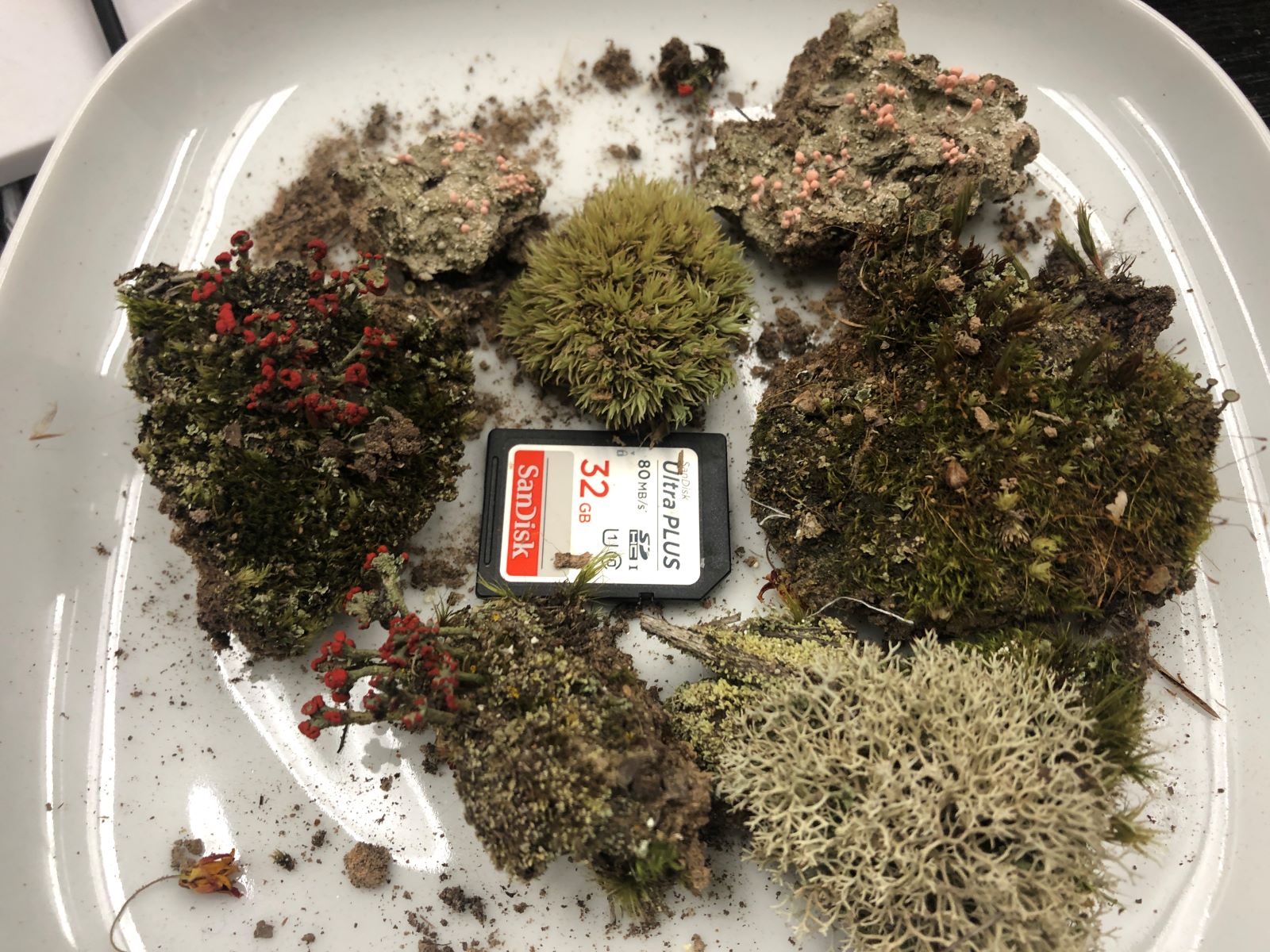
Moss Garden – overview ©Opus, all rights reserved