DOUBLE KING from Felix Colgrave on Vimeo.
Absolutely brilliant!

DOUBLE KING from Felix Colgrave on Vimeo.
Absolutely brilliant!
Current Hours: 1,142. Skeins Used: 173. Click for full size.

© C. Ford, all rights reserved.

Artist’s rendering – Flying Pigs on Parade over the Chicago River.
Last night, I posted about Flying Pigs on Parade, a great art project, and one which needs help from people! Marcus gave me another reason to spread the word:
Enjoy, and please, if you can, donate to Flying Pigs on Parade, so that pigs will fly in front of Trump everywhere.
Artist’s rendering – Flying Pigs on Parade over the Chicago River.
“Flying Pigs on Parade” is a visual response to the loud, illogical and frequently hateful expressions that polluted the presidential elections and that now define the actions of our U.S. leadership.
One hundred years ago the Russian Revolution launched a series of events that would drastically alter the world. George Orwell used these events as the basis for his 1946 novella Animal Farm. The poignancy of the text has reverberated with many generations. We feel the message, once again, seems sadly relevant.
In 1977 Pink Floyd rendered their musical interpretation of the allegory into the concept album Animals in response to social-political conditions in late-70’s Britain. Like Orwell’s book, the interpretive messages of Animals have unfortunately become highly relevant again.
[…]
Roger Waters (Pink Floyd) has given us approval to replicate the original iconic Battersea pig in gold. Since we will have invested in the balloons, we intend to deploy the folly in other cities.
Flying Pigs on Parade is intended to first deploy in Chicago as a single day art installation. Most of the technical bits have been resolved. We are currently progressing through requirements for municipal approval, negotiating a float date in late summer.
We will need financial assistance in implementing the project.
(please see “DONATE” at top of page or our GoFundMe.com page)
If you can, help to spread the pigs all over! Flying Pigs On Parade. Donate!
Click for full size.

© C. Ford.

© Dani Soon.

© Dani Soon.

© Dani Soon.
Dani Soon’s work is full of wonder and magic, all with a touch of mystery. Have a bit of a detour today, and have a wander through the world of Dani Soon, it’s more than a worthwhile trip!
THE FIRST EXHIBITION from Jonathan Djob Nkondo on Vimeo.
Abstract art and perception. Brilliant little film.

When the makers of the live-action remake of Kiki’s Delivery Service needed bicycles for the film they turned to one man: Nobuyuki Tani.
Beautiful, gorgeous bicycles! There are definitely three of them I’d like to have, if wishes were fishes and I had a net.
In his studio in Chigasaki, a coastal city in Kanagawa an hour Southwest of Tokyo, Tani hand-assembles all his bikes. With a careful attention to detail and an emphasis on materials, Tani sculpts his unique creations into functional, ridable works of art. He was commissioned to create all the bicycles for the live-action adaptation of Kiki’s Delivery Service (2014). Tani created the fantastical flying bicycle but also the bread maker’s bicycle and Tombo’s regular bicycle.
Tani also collaborated with Ishinokura Shoten to create 3 models that are produced at larger quantities. Vintage parts procured from around the world come together with custom-parts to create 3 distinct rides that are both beautiful to look at, but entirely functional. With just the right amount of whimsy, these bikes look like they’ve come right out of some imaginative fairy tale.

Pictured above is the “Matiere” model (158,000 yen). It’s a geographically neutral city bicycle that is all about materials: wood, leather and iron.
You can read and see more at Spoon & Tamago.
Ever wonder about soy sauce? Wonder no more!

screenshots from the film “The Birthplace of Soy Sauce”.
Soy Sauce is said to have originated in China and then brought over to Japan by a Buddhist monk who settled down in current-day Wakayama Prefecture in 1254. Using the abundance of clear, spring water from the town of Yuasa he began producing a type of miso that he had learned about on his travels that had been used to preserve vegetables. A byproduct from this process – a liquid that collected in the barrels of the miso paste – was soy sauce. And this is how the town of Yuasa became the birthplace of Soy Sauce.
In a masterfully-produced short film, Japanese filmmaker Mile Nagaoka walks us down the streets of Yuasa and into a traditional soy sauce manufacturer that’s still producing soy sauce almost exactly the same way it was made more than 750 years ago. You can almost smell the rich, fermenting flavors of soy sauce waft out of the screen.
After originating in Yuasa, Soy Sauce is thought to have made its way to Kansai, where it became popular. In fact, there is documentation of a large 18,000 liter (about 4800 gallons) shipment of soy sauce from Wakayama to Osaka in 1588. What is thought to be Japan’s first Soy Sauce manufacturer had opened shop just 8 years earlier and is actually still in business.
Via Spoon & Tamago.
Last Light from Colin Rich on Vimeo.

The NatGeo Travel Photographer of the Year comp is up and running! Get those photos in, people! The Grand Prize is a 10-day trip for two to the Galápagos Islands!
Work, Work, Work 84. Back to the trunk, it’s close to getting finished, and needs to be done. Click for full size.

© C. Ford, all rights reserved.
Look what Christoph did, my darling Rune! Click for full size. Oh, this just made my day.

© Christoph Zurnieden, all rights reserved.
This is the photo, from this post:

© C. Ford.
The first skein of the Perle 3 has been completely used (DMC 937, Medium Avocado Green). These vintage skeins are 15 meters, not the 25 of modern skeins. Current Hours: 1,127. Skeins Used: 167. Click for full size.
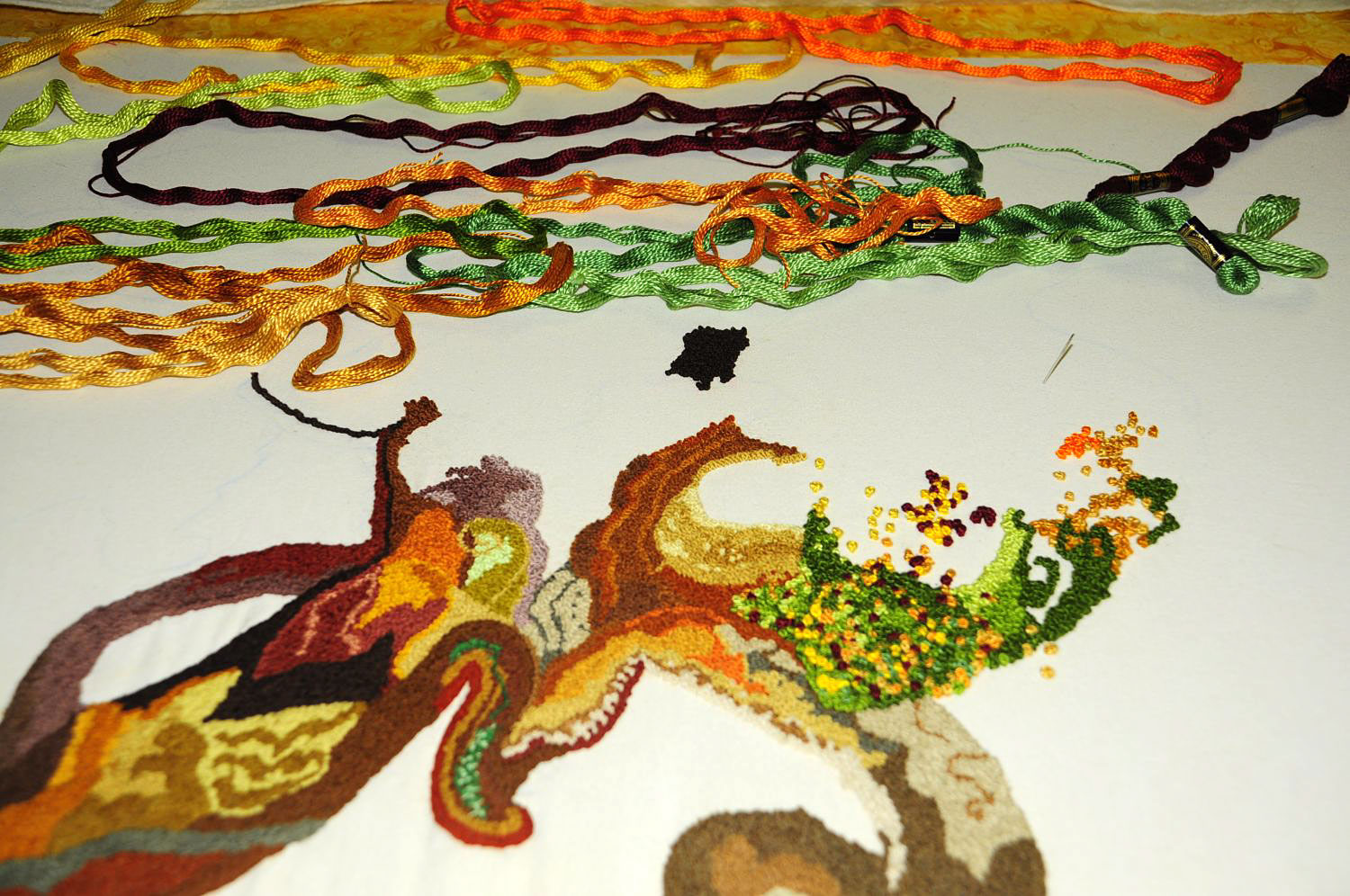

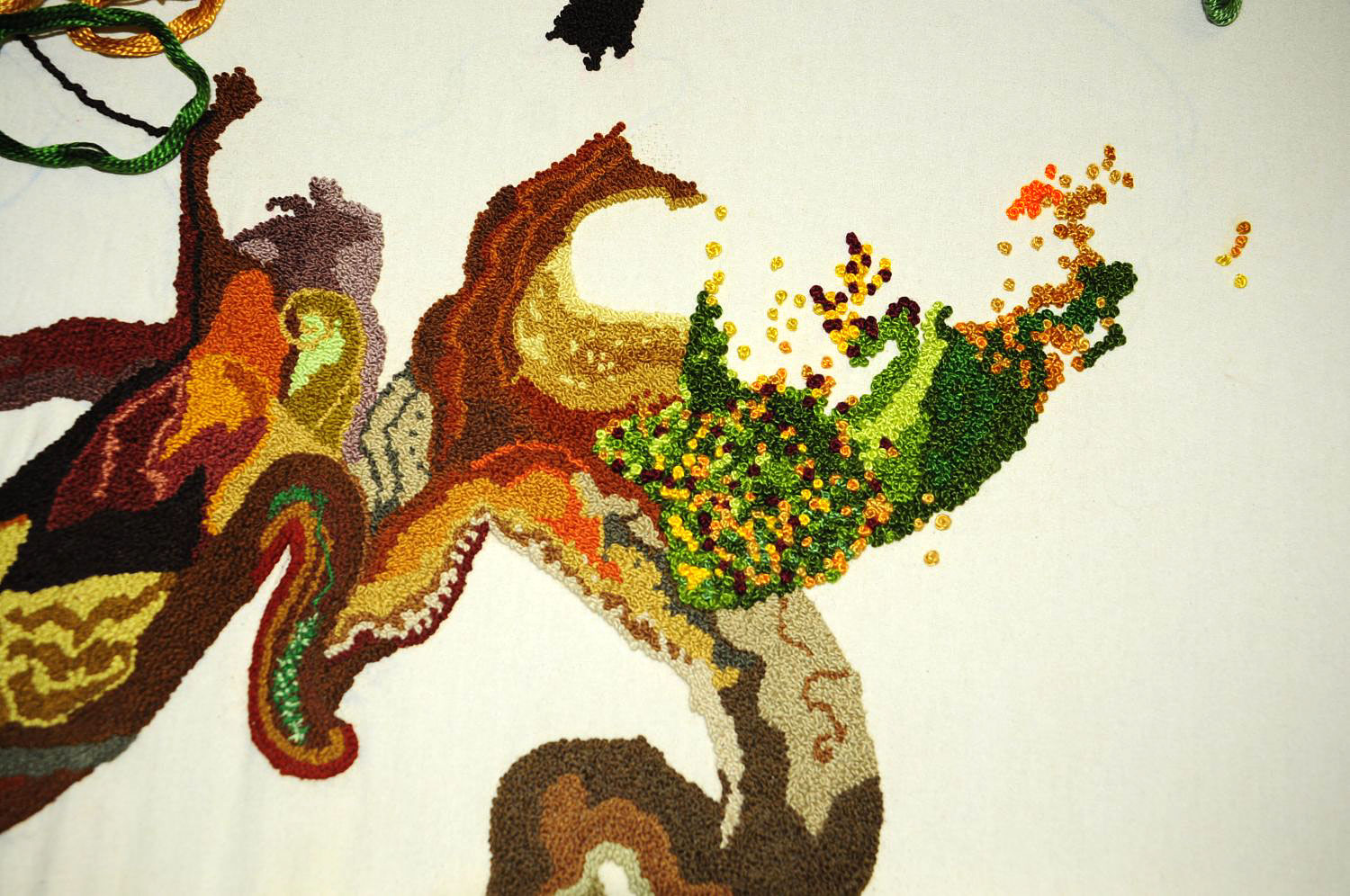
© C. Ford, all rights reserved.
Oh, digging into the big bag, which I have yet to organize, need a suitable container. Anyroad, digging, and continuing to find foliage treasure, like Dark Topaz and Light Old Gold. *Happy*
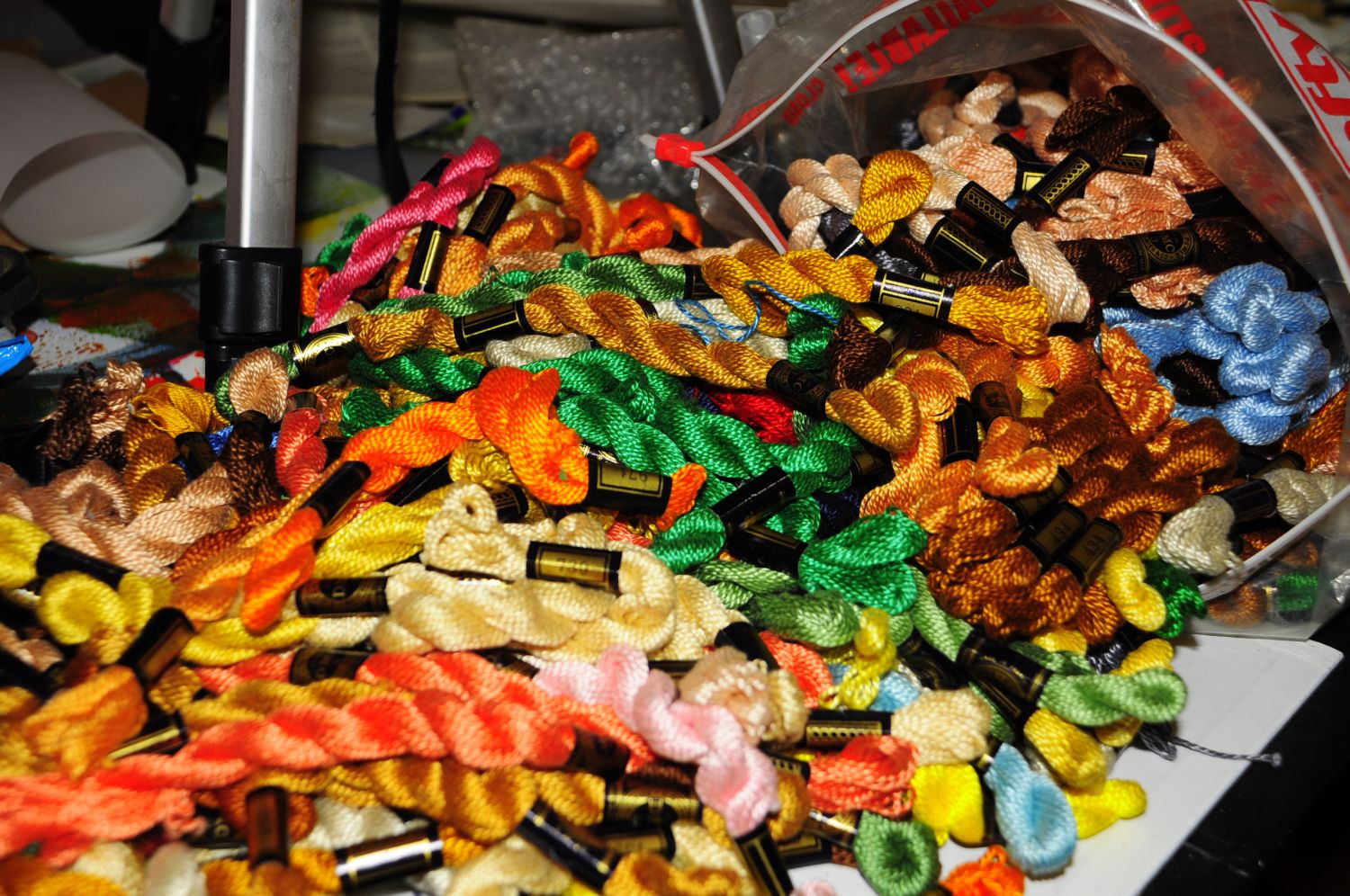
© C. Ford, all rights reserved.
Christoph has kindly given me permission to raid his flickr, and I’m so happy about that, because I think his paintings and photos are absolutely grand. Starting with Caffettiera, because I’m so drawn to this, there’s a great sense of comfort and homeliness here. Click for full size!
Stove-top coffee-machine. Mostly called “Moka” in Italy. Looks like this–and worse!–if used on a gas oven.

Caffettiera, Christoph Zurnieden.
© Christoph Zurnieden, all rights reserved.