about watercolours – tube failure doesn’t matter. :)

© C. Ford.

about watercolours – tube failure doesn’t matter. :)
© C. Ford.

Johan Olander, “President Pottymouth” (2017), inkjet on matte photo paper with hand-painted enamel additions, 8.5 x 11 inches.
President Donald J Trump’s official portrait is so rich in infantile machismo that mockery is inevitable. Look at it for minute and you can’t but help to want to distort it in order to show its true nature.
Via Hyperallergic.
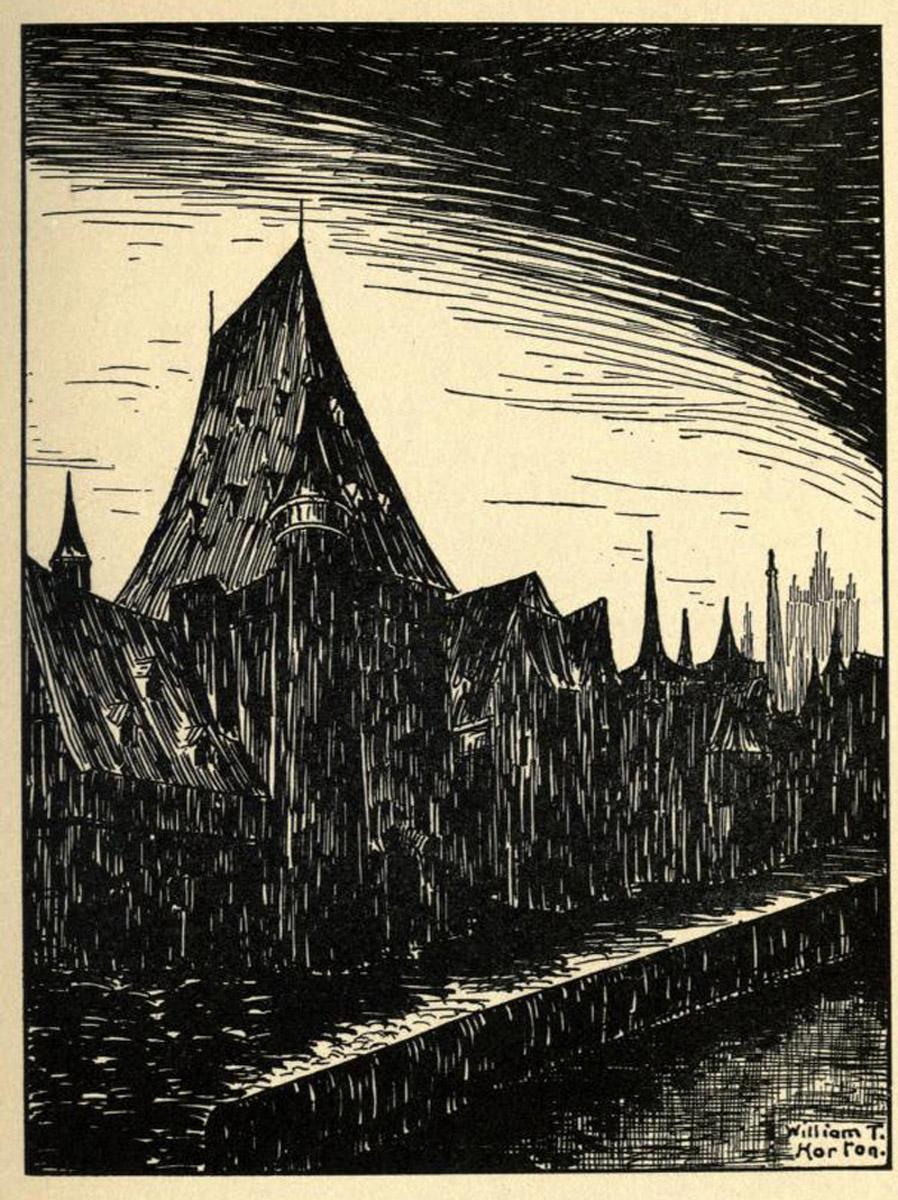
By The Canal, William T. Horton, A Book of Images.
Click for full size.
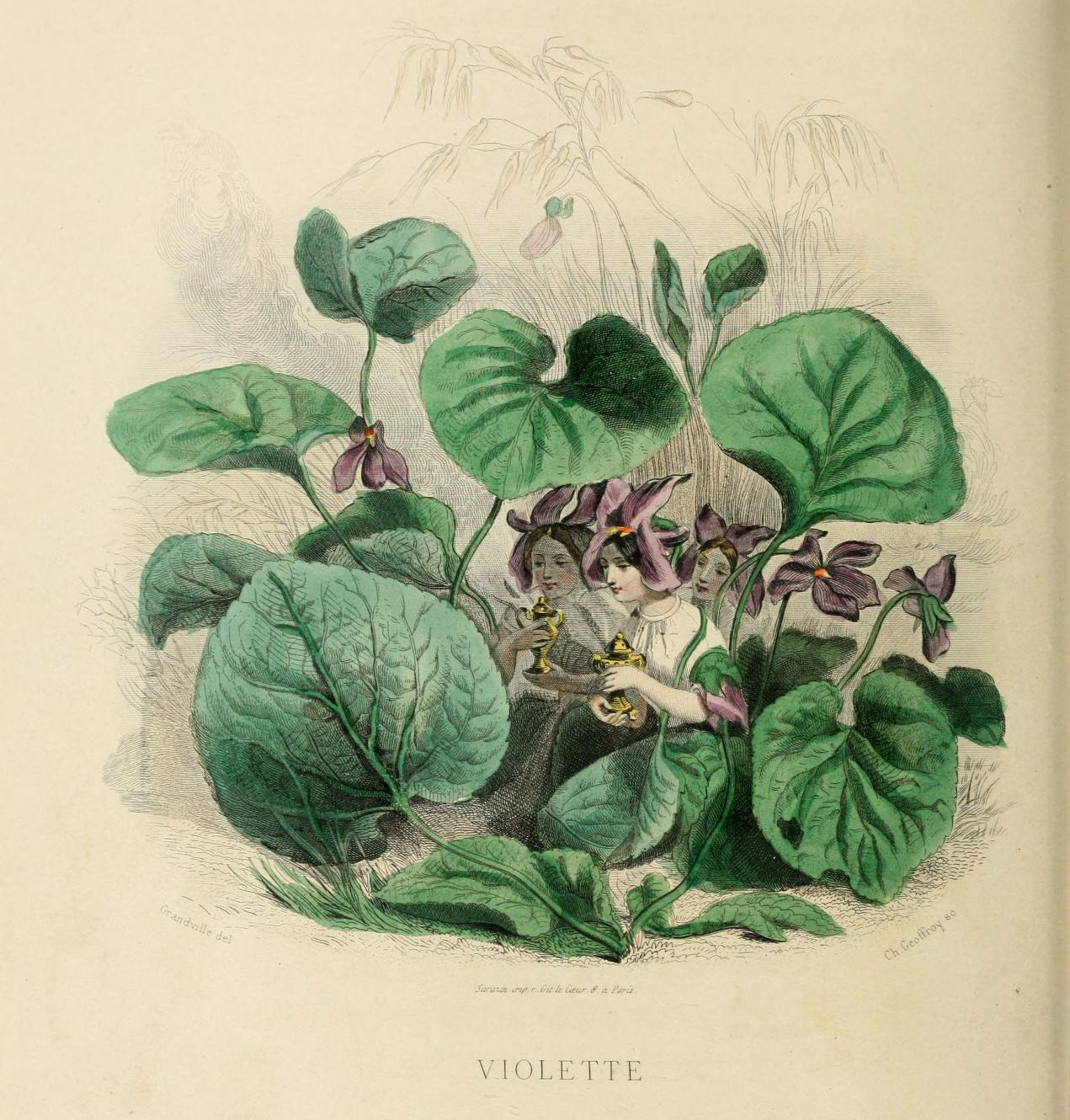
Violette (Violet). J.J. Grandville, Les fleurs animées. This is the last! Tomorrow begins William T. Horton.
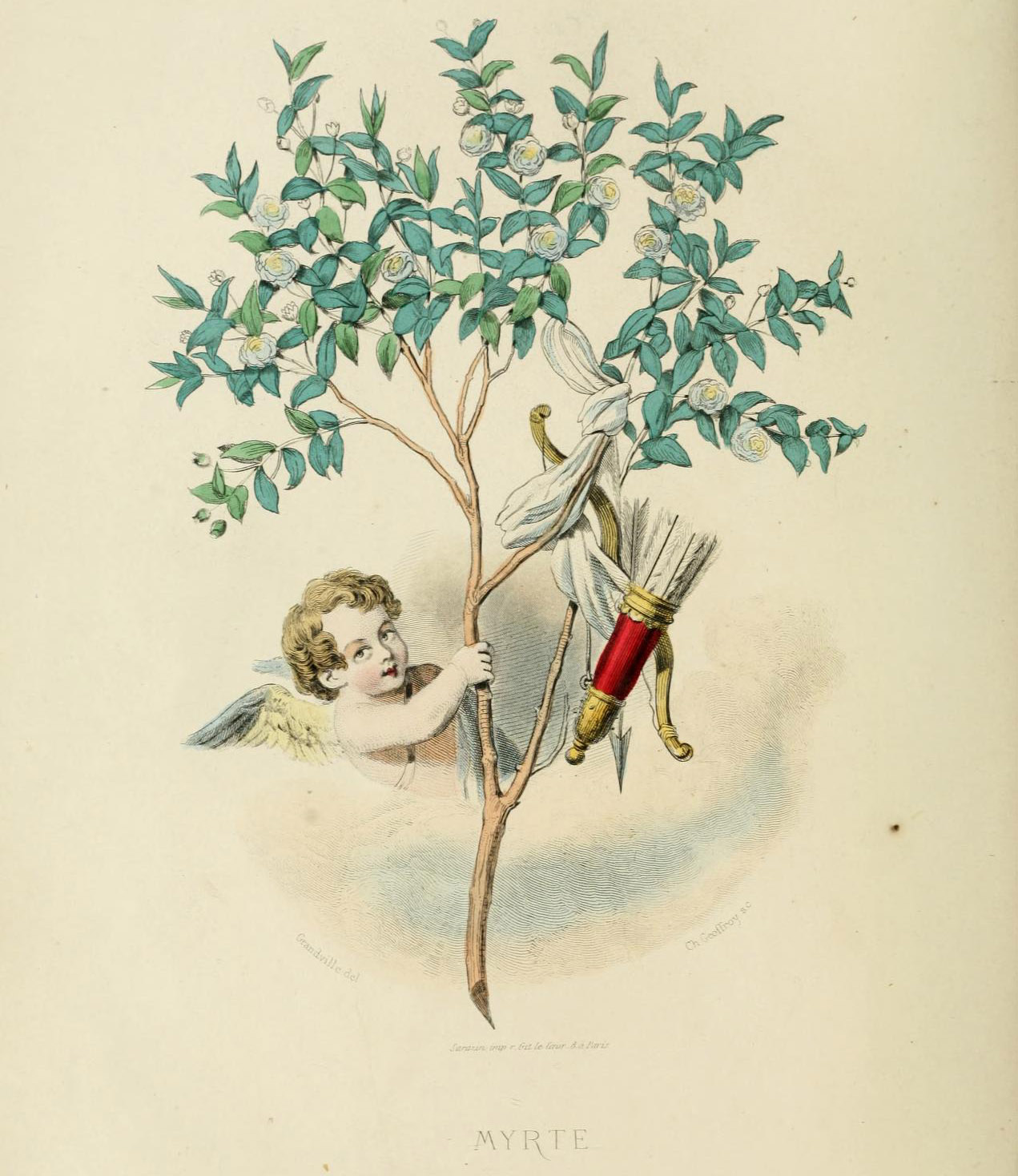
Myrte (Myrtle). J.J. Grandville, Les fleurs animées.
There’s yet another piece lodged in my brain, and it won’t let go. I am out of paper though. Eeesh. So, a first draft of I Have Seen The Moon will have to suffice for now, plus, painting! :D A good occupation for a wet, glaucous day. Click for full size.


© C. Ford, all rights reserved.

Jan Mandijn, “The Temptation of Saint Anthony” (circa 1550) oil on panel, height: 61.5 cm (24.2 in). Width: 83.5 cm (32.9 in). (image courtesy Wikimedia commons). [Note the ergot laden rye bursting through the roof.]
So why is St. Anthony associated with ergot? The devout will often look towards the legend of Anthony’s temptations when faced with mental or emotional anguish. This is because the devil is said to have tempted Anthony with mirages of jewels, and dressed up as seductive women to deter the hermit from his asceticism. As the devil was tormenting Anthony, the saint was said to be wandering through the Egyptian wilderness. The events of Anthony’s story as recounted by his original hagiographer, St. Athanasius of Alexandria, also read as hallucinatory, with a blend of imagery, ecstasy and madness. From Life of Saint Anthony by St. Athanasius:
For when they cannot deceive the heart openly with foul pleasures they approach in different guise, and thenceforth shaping displays they attempt to strike fear, changing their shapes, taking the forms of women, wild beasts, creeping things, gigantic bodies, and troops of soldiers. But not even then need ye fear their deceitful displays. For they are nothing and quickly disappear, especially if a man fortify himself beforehand.
The notion that the harmful hallucinations will cease if the subject is fortified beforehand, is a reoccurring theme not only in Life of Saint Anthony, but also in the instructions for tripping on LSD given in The Psychedelic Experience:
At this time you may see visions of mating couples. You are convinced that an orgy is about to take place. Desire and anticipation seize you, You wonder what sexual performance is expected of you. When these visions occur, Remember to withhold yourself from action or attachment. Humbly exercise your faith. Float with the stream. Trust the process with great fervency. Meditation and trust in the unity of life are the keys.
This simple comparison between the texts of a third-century hermit and the megalomaniacal ‘60s drop-out prototype, Timothy Leary, is not enough to clearly demonstrate a correlation between Anthony and psychedelia. What this investigation does make clear is why the hagiography became important to those in the 17th century suffering from symptoms similar to LSD effects in the time before modern medicine first discovered the cause of ergotism.
There’s also a compelling argument for ergotism being an influence on Bosch, not necessarily directly, but there are elements in many of his paintings which point to a definite knowledge of ergotism, and one of the primary cures for it, which involved the distillation of mandrake root. Ergotism was not at all uncommon, it had a high death toll, and when people managed to not die from it, they often found themselves minus one or more limbs, due to gangrene. The visions caused by ergotism would be well known, and would certainly lodge in the head of any artist, because these would be fantastical and amazing things to bring to life.
Myself, I’m not one who buys into the “Bosch had to be on drugs, man” argument. Much of Bosch’s work was subversive and sly, and seeing, hearing, and reading accounts of ergotism could well answer for much of the peculiarity of many of his works. Then again, artists haven’t always had a history of steering clear of altered states. In this case though, Bosch would have been well aware of the dangerousness of ergotism. I doubt many artists would risk their limbs for the sake of a painting or three.* The argument included in the Hyperallergic article also included a most wonderful link to the Bosch Project, allowing you to see his work very up close.
Back to St. Anthony, who was rather obviously under the influence of a powerful hallucinogen. What you may or may not see while under the influence of a hallucinogen is highly dependent on who you are and how you see things. St. Anthony had a very strong religious filter through which he perceived the world, so under the influence of a hallucinogen, naturally he saw seductive women, demons, and devilish beasties.
*A book about the 1951 outbreak in a French Village, The Day of Saint Anthony’s Fire, [John G. Fuller] describes some of the episodes:
…there is the afflicted man who thought he was an airplane and jumped out the asylum’s second floor window with outstretched arms expecting to fly, telescoped both his legs upon landing, and then ran 50 meters at full speed on shattered bones before being wrestled to the ground by eight other men.
That’s one hell of a price to pay, if you’re looking to an altered state for a bit of internal inspiration. I imagine most artists were onlookers, not users. And while ergotamine is still in use today as a migraine remedy, it is at miniscule doses, and often combined with caffeine, so a dual tab would be 1mg ergotamine with 100mg caffeine. Ergot’s effectiveness as a vasoconstrictor is what caused all the gangrene back in the day. It would be quite difficult, I think, to tread the line between happy hallucinations and deadly side effects.
It’s a fascinating read, and there’s more to see too, so click on over to Hyperallergic.

A “Coal Comforts” cupcake by Spencer Merolla (courtesy the artist).
Spencer Merolla is doing some great work, this time around, having a pop up bakery which has decidedly non-edible goodies, as they are made from ash. Just a bit here, the article is in-depth, with many links well worth following.
As the banks of Brooklyn’s Gowanus Canal continue to be developed, the legacy of pollution in its waters can be an uncomfortable narrative alongside gentrification. In conjunction with Gowanus Open Studios on October 21 and 22, artist Spencer Merolla is creating a pop-up bakery offering cupcakes, cookies, and other treats, all molded from coal ash. The inedible delicacies served from a mobile cart are meant to encourage conversation about the environment and climate change, especially on a weekend when many non-locals will be roaming the neighborhood.
“Gowanus is kind of a cautionary tale in terms of environmental degradation,” Merolla told Hyperallergic. “I love the work that is being done to clean up the canal and green the watershed, and it’s very exciting to think we can repair some of the damage we’ve inherited and be better stewards of this place in the future. But there is no putting the toothpaste back in the tube, here or anywhere. We have to do a better job of preventing these kinds of catastrophes in the first place. Because they are happening right now, all over.”
…Merolla’s work with molding ash emerged around that time, with a piece called “Ashes in Our Mouth (Baloney Sandwich Series)” that suggested the bad taste many were left with after Trump’s election, as well as his support for the coal industry over cleaner energy.
“I’d wanted to work with ash for some time, given its association with grief, but it was the presidential election of last year that turned me toward coal ash specifically,” she stated. “Trump’s campaign relied so heavily on nostalgia in general and for the coal industry in particular, and it got me thinking about the many ways in which that nostalgia is toxic. It persuades people that because something is old-fashioned and familiar, it’s also benign.”
[…]
It’s worth noting that among the developers of Gowanus is the Jared Kushner-led Kushner Companies. The Gowanus Canal was designated an Environmental Protection Agency (EPA) Superfund Site in 2010, thanks to its toxic cocktail of arsenic, radioactive material, and other pollutants. Lining the canal’s bottom is “black mayonnaise,” a concoction of coal tar, heavy metals, and other sludge from decades of industrial run-off. With rising tides of climate change, it remains vulnerable to flooding, even now pouring raw sewage into the streets in heavy rains.
During Gowanus Open Studios, Merolla plans to set up the “Coal Comforts” bakery cart outside the Gowanus Souvenir Shop at 567 Union Street. The tagline of the bakery is: “Can’t have your cake and eat it too.” By shaping the coal ash into food-like forms, Merolla references how much of the world’s population consumes poisonous air due to coal pollution, and the impossible balance between continuing the industry as it is and improving human life.
As she said, “The connection between food justice and environmental justice is only going to become clearer in the future — you can’t have one without the other.”
You can see and read much more at Hyperallergic, and you can watch a video by Ms. Merolla at the Kickstarter page for this show.
A couple of people chased the link I included for the artwork in this post. Those who didn’t really missed out. Don’t miss out today, Yehrin Tong’s artwork is amazing.
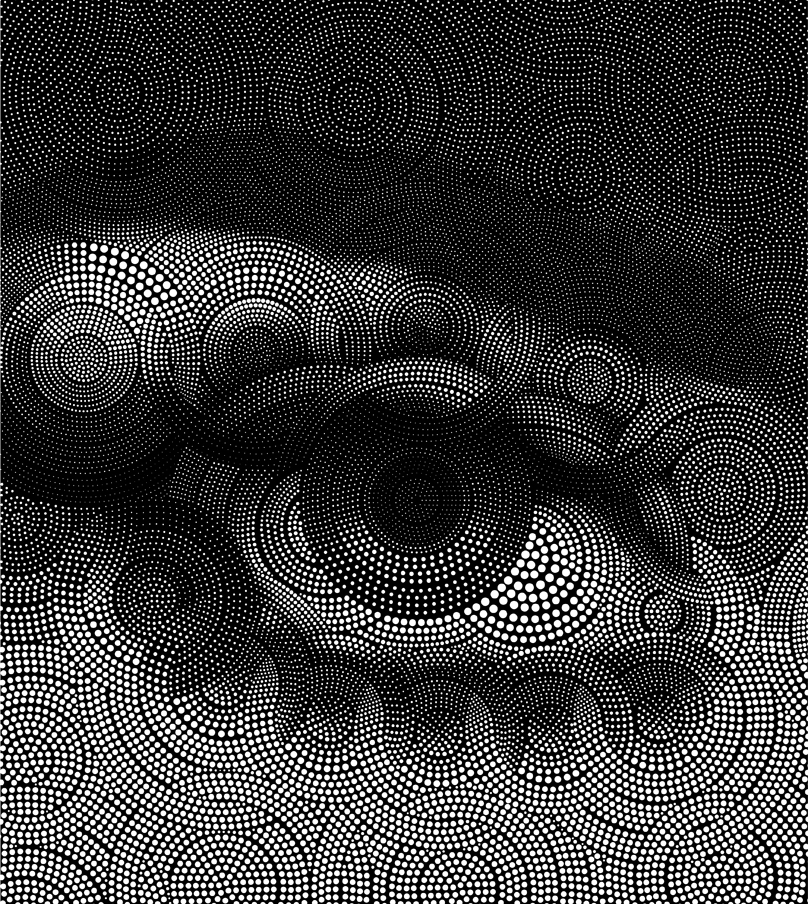
Invisible Eye, Yehrin Tong.
In case you can’t see it, here’s the thumbnail:
Invisible Eye, Yehrin Tong.
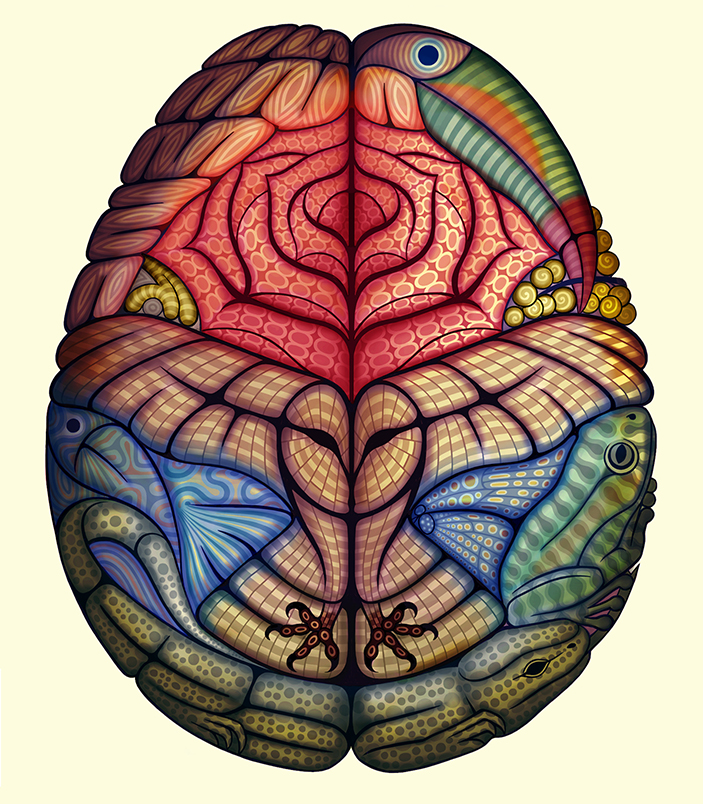
Intelligent Evolution, Yehrin Tong.

Psychedelic Snakes, Yehrin Tong.
Have a wander in Yehrin Tong’s world, it’s wonderful.

Fernando Baril, “Cruzando Jesus Cristo com Deusa Schiva” (1996) (photo by F.Zago Studio Z).
This is one of the pieces I used in the Movimento Brasil Livre Shuts Down Queer Art Exhibit post. It’s a fascinating and evocative work, as it all the rest of Fernando Baril’s work:

All of Baril’s work is of a teasing nature, challenging you to open your brain and think about what you’re seeing. There’s fun and seriousness there, all of it terribly evocative, and wonderfully surreal. Treat yourself, and visit the world of Fernando Baril!
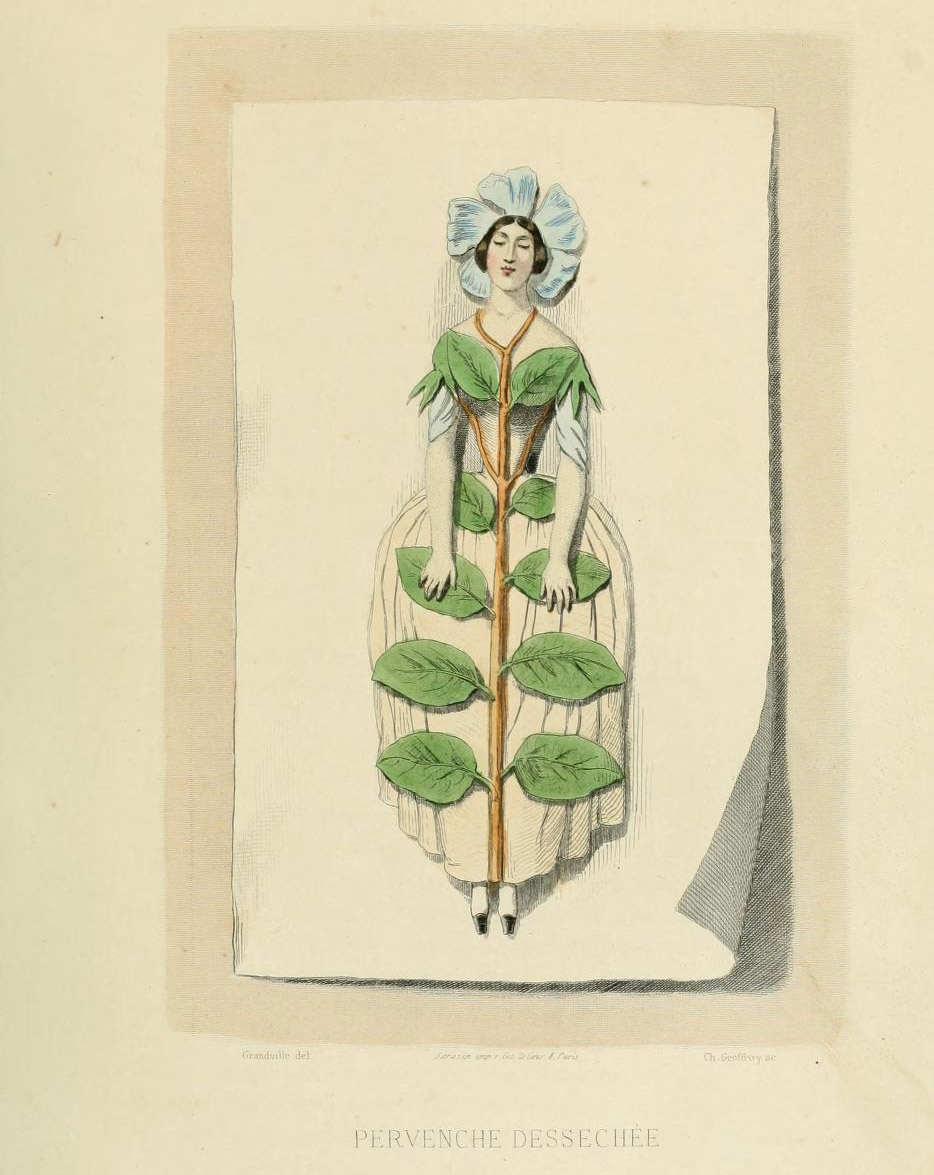
Pervenche Dessechée (Dried Periwinkle). J.J. Grandville, Les fleurs animées.

Lys (Lily). J.J. Grandville, Les fleurs animées.


