This is a fun one, because hedgehogs! We even have a video today.

The mole has no eyes.

The hedgehogs, covered in bristles, roll up in a ball, and carry grapes back to their young by impaling them on their spines.

This is a fun one, because hedgehogs! We even have a video today.
The mole has no eyes.
The hedgehogs, covered in bristles, roll up in a ball, and carry grapes back to their young by impaling them on their spines.
The illustrations to The Fairy Tales of Charles Perrault, 1922, by Harry Clarke. The last is a second moral to the story. Click for full size.


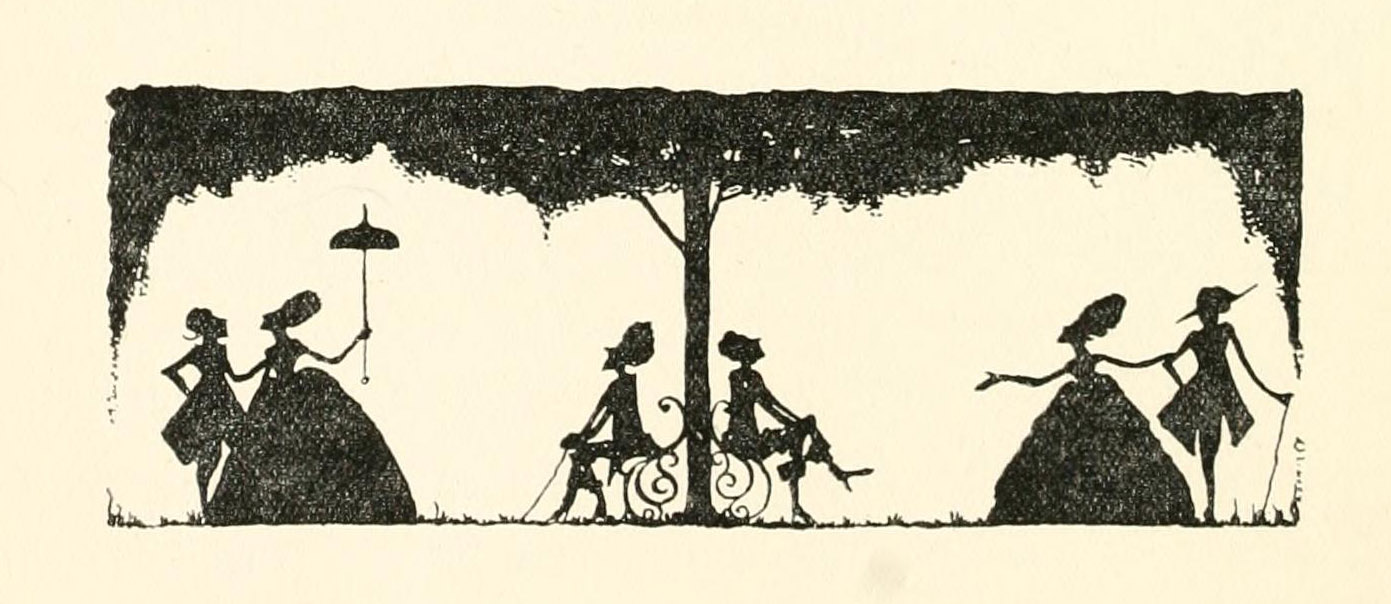


The cats gambol and hunt.
The mouse carries grain.

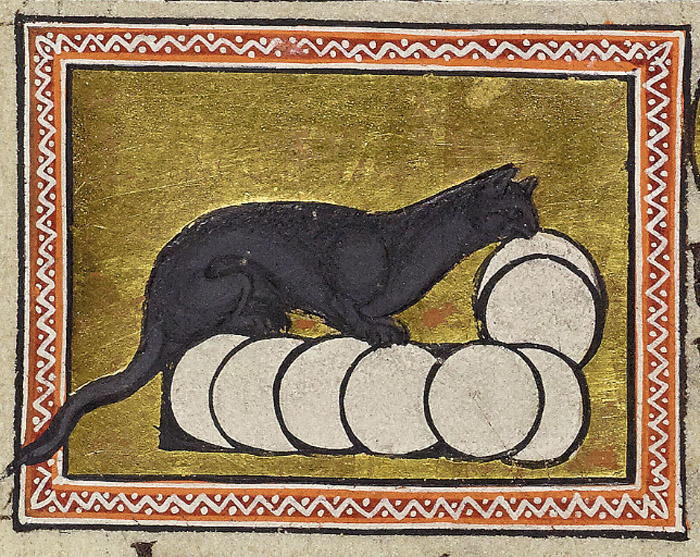
Portrait of weasel.
Text and Translation:
Of the cat The cat is called musio, mouse-catcher, because it is the enemy of mice. It is commonly called catus, cat, from captura, the act of catching. Others say it gets the name from capto, because it catches mice with its sharp eyes. For it has such piercing sight that it overcomes the dark of night with the gleam of light from its eyes. As a result, the Greek word catus means sharp, or cunning.
Of mice The mouse is a puny animal; its name, mus, comes from the Greek, the Latin word deriving from it. Others say mures, mice, because they are produced ex humore, from the damp soil, of the earth; for humus means earth and from that comes mus, mouse. Their liver grows bigger at full moon, like the tides rise then fall with the waning of the moon.
Of the weasel The weasel is called mustela, ‘a long mouse’, so to speak, for theon [telos] in Greek means ‘long’. It is cunning by nature; when it has produced its offspring in its nest, it carries them from place to place, settling them in a series of different locations.
It hunts snakes and mice. There are two kinds of weasel. One, of very different size from the other, lives in the forest. The Greeks call these ictidas; the other roams around in houses. Some say that weasels conceive through the ear and give birth through the mouth; others say, on the contrary, that they conceive through the mouth and give birth through the ear; it is said, also, that they are skilled in healing, so that if by chance their young are killed, and their parents succeed in finding them, they can bring their offspring back to life. Weasels signify the not inconsiderable number of people who listen willingly enough to the seed of the divine word but, caught up in their love of wordly things, ignore it and take no account of what they have heard.
Folio 23v – the horse continued. De musione; the cat. De muribus; mice. De mustela; the weasel.
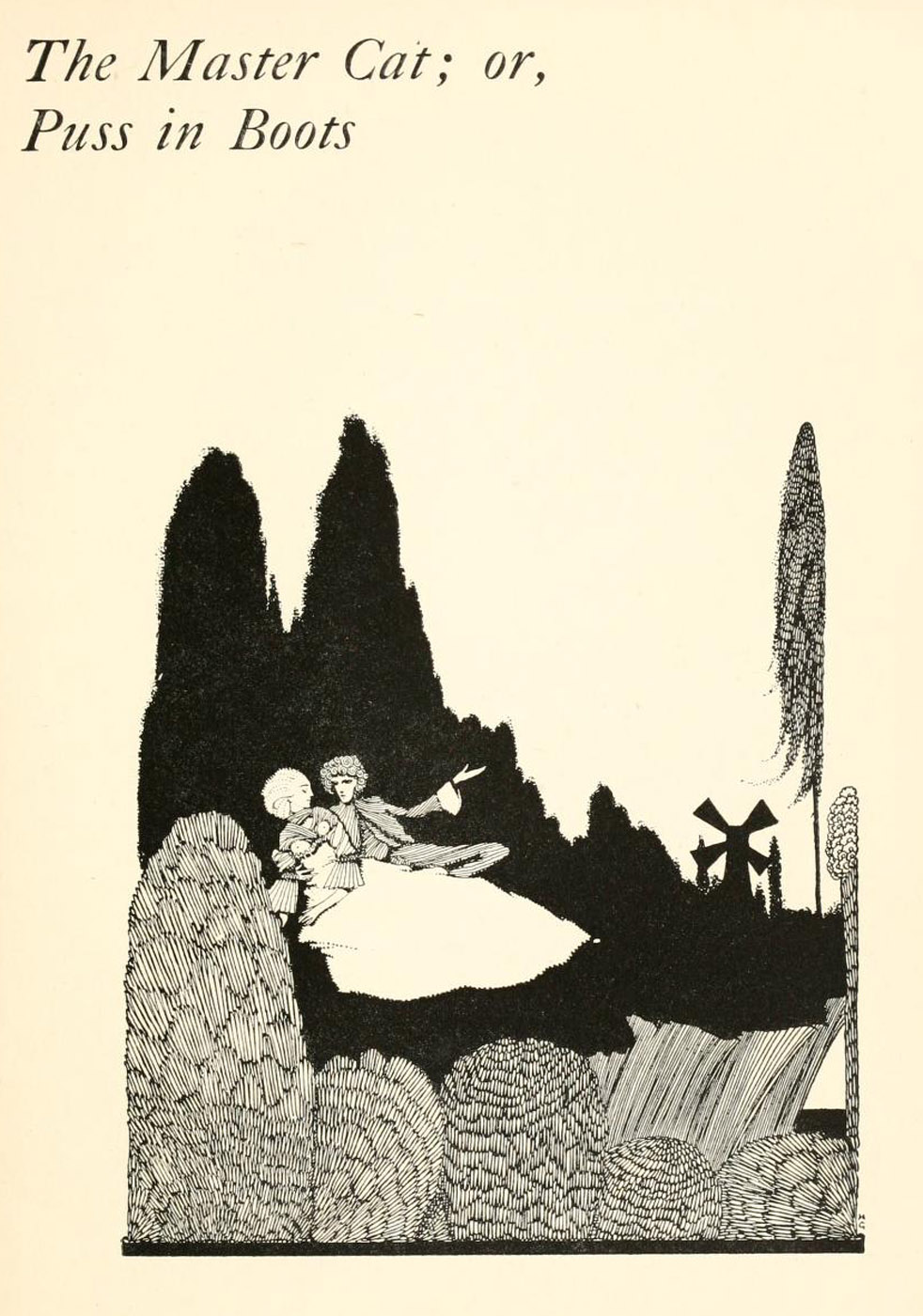
The illustrations to The Fairy Tales of Charles Perrault, 1922, by Harry Clarke. Click for full size.


William Powhida, “What The Fuck Is The Art World” (2017), acrylic on paper mounted on aluminum, 55 by 44 inches, Postmasters Gallery (photo by the author for Hyperallergic). Click for full size.

Elisabeth Masé, Amerika. Give me a reason to love you series (2013–2017), watercolor, Katharina Maria Raab (photo by the author).

Thiago Martins de Melo, “Deus Cortado” (2016–2017), site-specific mixed media installation featuring painting, sculpture and stop-motion video, dimensions variable, GAMMA GALERÍA (photo by the author).
…I came to Untitled hoping the art would have caught up with the times, because the times hurt.
And, as far as fairs go, Untitled does address the strange and painful quality of the world we’re inhabiting. Another special project, Thiago Martins de Melo’s, “Deus Cortado” — which translates from Portuguese to “severed God” — is a striking, brutal installation and animation that portrays the harsh realities of colonialism in bright colors: the rape, torture, decimation of whole belief systems, and destruction of landscapes.
[…]
In between all the swaths of pleasant colors, plenty of work at Untitled addresses dystopia, the reclamation of history and identity, and the absurdity of an art market that tries to address these topics, and thankfully does so with a great sense of humor.
You can read and see much more about Untitled at Hyperallergic.
As the first leaves to Horse are missing in the Aberdeen Bestiary, we’ll start with some general observations. Given the importance of horses in the Medieval Age, you won’t be surprised by the length of this entry.

Bodleian Library, MS. Ashmole 1511, Folio 32v.

Morgan Library, MS M.81, Folio 44r.

Bodleian Library, MS. Bodley 764, Folio 46r.
Pliny the Elder [1st century CE] (Natural History, Book 8, 64-67): Several stories are told of horses that would let only their master ride them, who defended their rider in battle, or who grieved at the death of their master. Horses are very intelligent. They may live up to 50 years, but mares die sooner. The mare loves her young more than any other animal does. At birth, horses have on their foreheads a love-poison called horse-frenzy; this is the size of a dried fig and is black. If the mare fails to eat this immediately, she will not suckle her foal. Is someone takes it before the mare can eat it, the scent of it drives him into a sort of love-madness. Near the town of Lisbon, mares stand facing a west wind and conceive a foal from it; such colts are very swift but only live three years. (Book 10,83): To make a mare willing to mate with an ass, her mane must first be clipped; a mare with a long mane is too proud and high-spirited. After mating, mares run either north or south, depending on the sex of the foal they have conceived.
Augustine [5th century CE] (City of God, Book 21, chapter 5): In Cappadocia the mares are impregnated by the wind, and their foals live only three years.
Isidore of Seville [7th century CE] (Etymologies, Book 12, 1:41-59): Horses exult in fields, can smell war, and are roused to battle by the sound of the trumpet; when provoked by a voice to race, the exult when they win but grieve when they lose. Some horses recognize enemies and attack them by biting. They recognize their own masters, and some will not allow anyone else to ride them. They weep for dead or dying masters, being the only animal to do so. [Isidore continues with tips on what makes a good horse and describes their various colors.] There are three kinds of horse: one is noble and good for war and work; the second is common and good only for carrying burdens, not for riding; and the third is a hybrid of the first two.
Bartholomaeus Anglicus [13th century CE] (De proprietatibus rerum, book 18): Horses be joyful in fields, and smell battles, and be comforted with noise of trumpets to battle and to fighting; and be excited to run with noise that they know, and be sorry when they be overcome, and glad when they have the mastery. And so feeleth and knoweth their enemies in battle so far forth that they a-rese on their enemies with biting and smiting, and also some know their own lords, and forget mildness, if their lords be overcome: and some horses suffer no man to ride on their backs, but only their own lords. And many horses weep when their lords be dead. And it is said that horses weep for sorrow, right as a man doth, and so the kind of horse and of man is medlied. Also oft men that shall fight take evidence and divine and guess what shall befall, by sorrow or by the joy that the horse maketh. Old men mean that in gentle horse, noble men take heed of four things, of shape, and of fairness, of wilfulness, and of colour. In his forehead when he is foaled is found Iconemor, a black skin of the quantity of a sedge, that hight also Amor’s Veneficium; and the mother licketh it off with her tongue, and taketh it away and hideth it or eateth it. For women that be witches use that skin in their sayings, when they will excite a man to love…. The colt is not littered with straw, nor curried with an horse comb, nor arrayed with trapping and gay harness, nor smitten with spurs, nor saddled with saddle, nor tamed with bridle, but he followeth his mother freely, and eateth grass, and his feet be not pierced with nails, but he is suffered to run hither and thither freely: but at the last he is set to work and to travail, and is held and tied and led with halters and reins, and taken from his mother, and may not suck his dam’s teats; but he is taught in many manner wise to go easily and soft. And he is set to carts, chariots, and cars, and to travel and bearing of horsemen in chivalry: and so the silly horse colt is foaled to divers hap of fortune. Isidore saith, that horses were sometime hallowed in divers usage of the gods.
You can find additional information about hippomanes (the love-poison) here, including how to preserve one, if you’re so inclined.
Text and Translation [from Aberdeen Bestiary]:
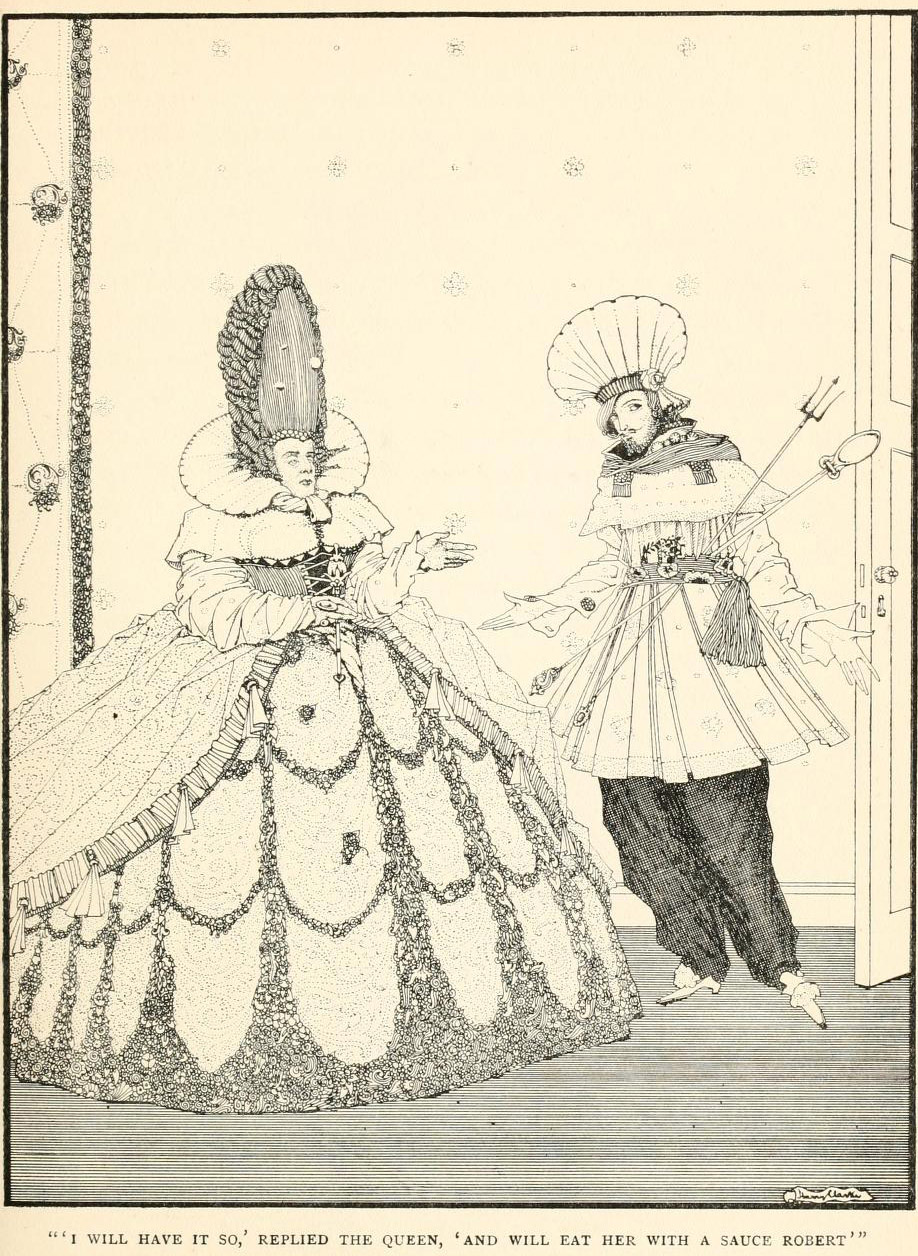
The illustrations to The Fairy Tales of Charles Perrault, 1922, by Harry Clarke. Two colour plates for this one! If you’re wondering about the Sauce Robert, here you go.


This is where two leaves, after f.21v are missing which should have contained ox, camel, dromedary, ass, wild ass, part of horse. Filling in from other sources today, and partly tomorrow, with horse.

Koninklijke Bibliotheek, KB, KA 16, Folio 47r.
Oxen can predict the weather, and knowing when it is about to rain, refuse to leave their stalls. They do not like to be separated from their kind; an ox wants to be with its usual partner when pulling a plow, and they will roar if separated. There are several kinds of ox: in India lives a particularly cruel sort with one horn, that cannot be tamed. Ox horns are used to make drinking cups.
The dung of an ox cures the bite of a water snake called hydros (Isidore, Etymologies, 12, 4, 22). [This is a hydrus, click image for full size.]
Pliny the Elder [1st century CE] (Natural History, Book 8, 70): Indian oxen are said to be as tall as camels and to have horns up to four feet wide. Among the Garamantes oxen only graze while walking backwards. A tale is told of an ox that is worshipped as a god in Egypt.
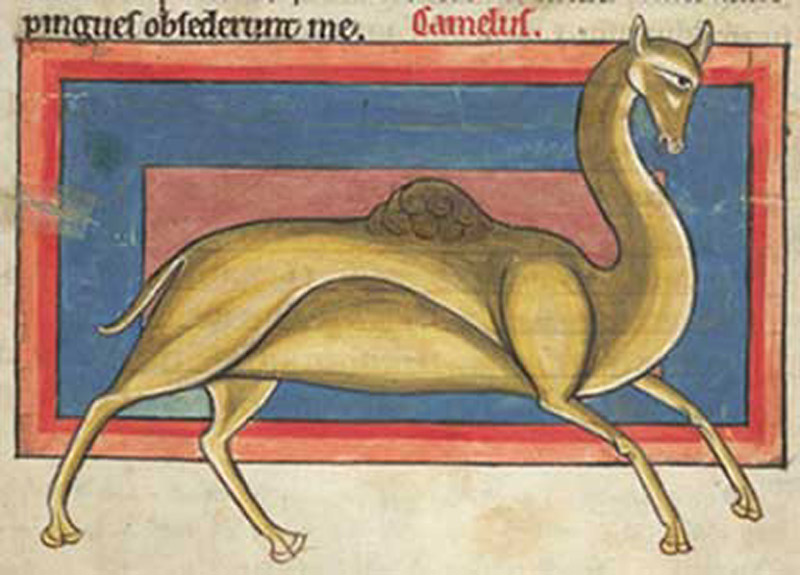
British Library, Harley MS 4751, Folio 24r.
There are two types of camels: Bactrian, which have two humps and are strong; and Arabian, which have one hump and are more numerous. They hate horses. Camels can endure thirst for three days and prefer to drink muddy water; if only clear water is available, they will stir it up with their feet to muddy it. When they drink, they fill up for both past thirst and for future needs. Some camels are good for carrying burdens, while others are better suited to traveling. Their hoofs do not wear down. They can live for one hundred years, unless they are taken to a foriegn country, where the change of air makes them ill. Female camels are used in war. Camels grow wild with the desire to mate; this desire can be destroyed by castration, which also makes the camel stronger.
Pliny the Elder [1st century CE] (Natural History, Book 8, 26): Camels are found in the East, and are of two kinds: Bactrian, with two humps, and Arabian, with one hump. Both kinds are like oxen in having no teeth in the upper jaw. They live fifty to one hundred years, but are vulnerable to rabies. They are used to carry burdens; they will refuse to carry more than the regulation load. They are also used in battles, but are slower than horses, for which they have an inate hatred. They can travel four days without water; when they find water they drink to quench their thirst and to provide for the future, first stirring up the water with their fore feet. Their strength is increased by denying them sexual intercourse; for this reason both males and females intended for war are gelded.
Isidore of Seville [7th century CE] (Etymologies, Book 12, 1:35): The camel gets its name either from the Greek chamai meaning low and short, because camels lie down while they are being loaded, so they are shorter or lower; or from the Greek chamai (meaning hump) because they have a hump on their back. Most camels come from Arabia. Camels from other lands have one hump, but Arabian camels have two.
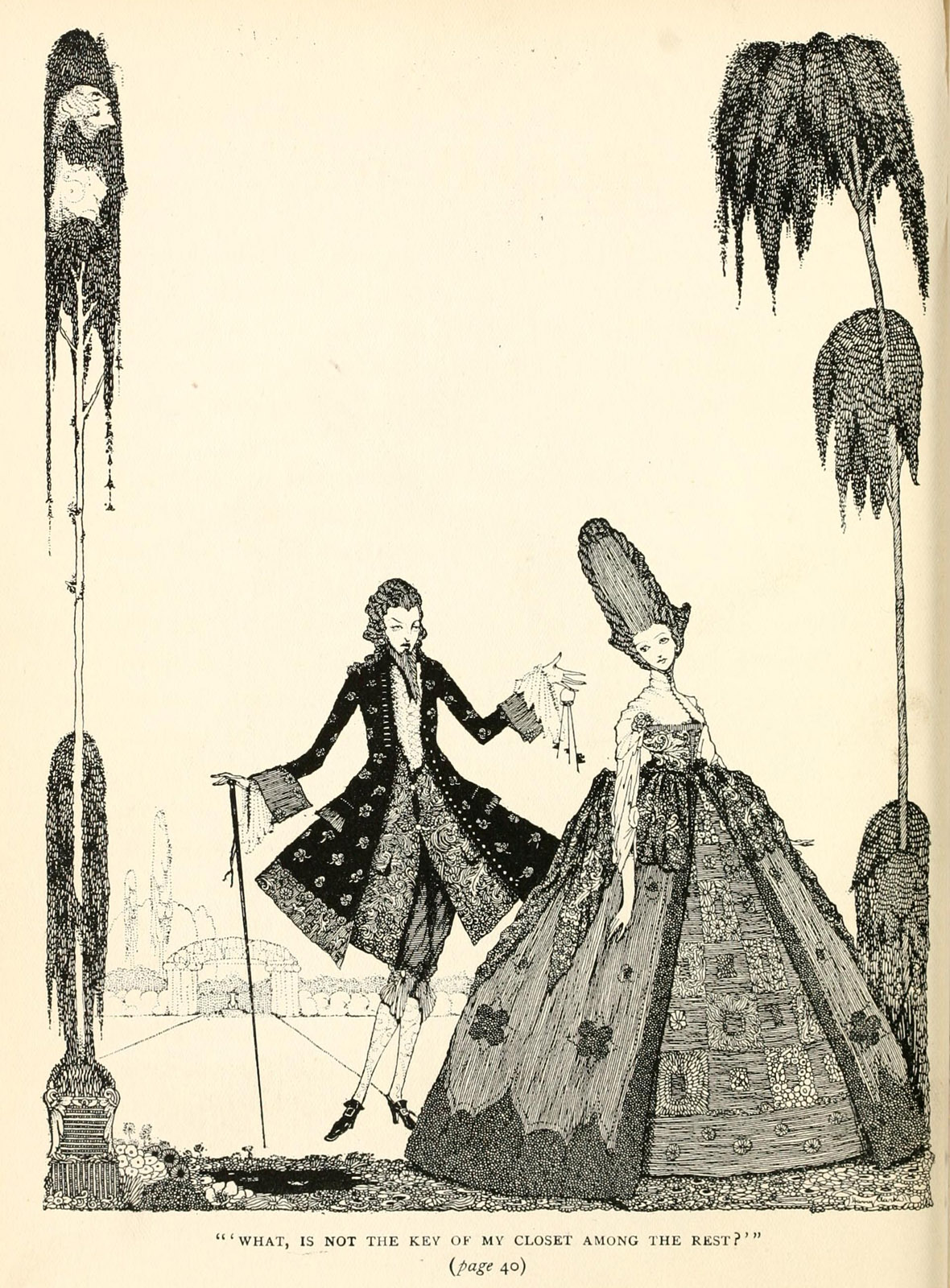
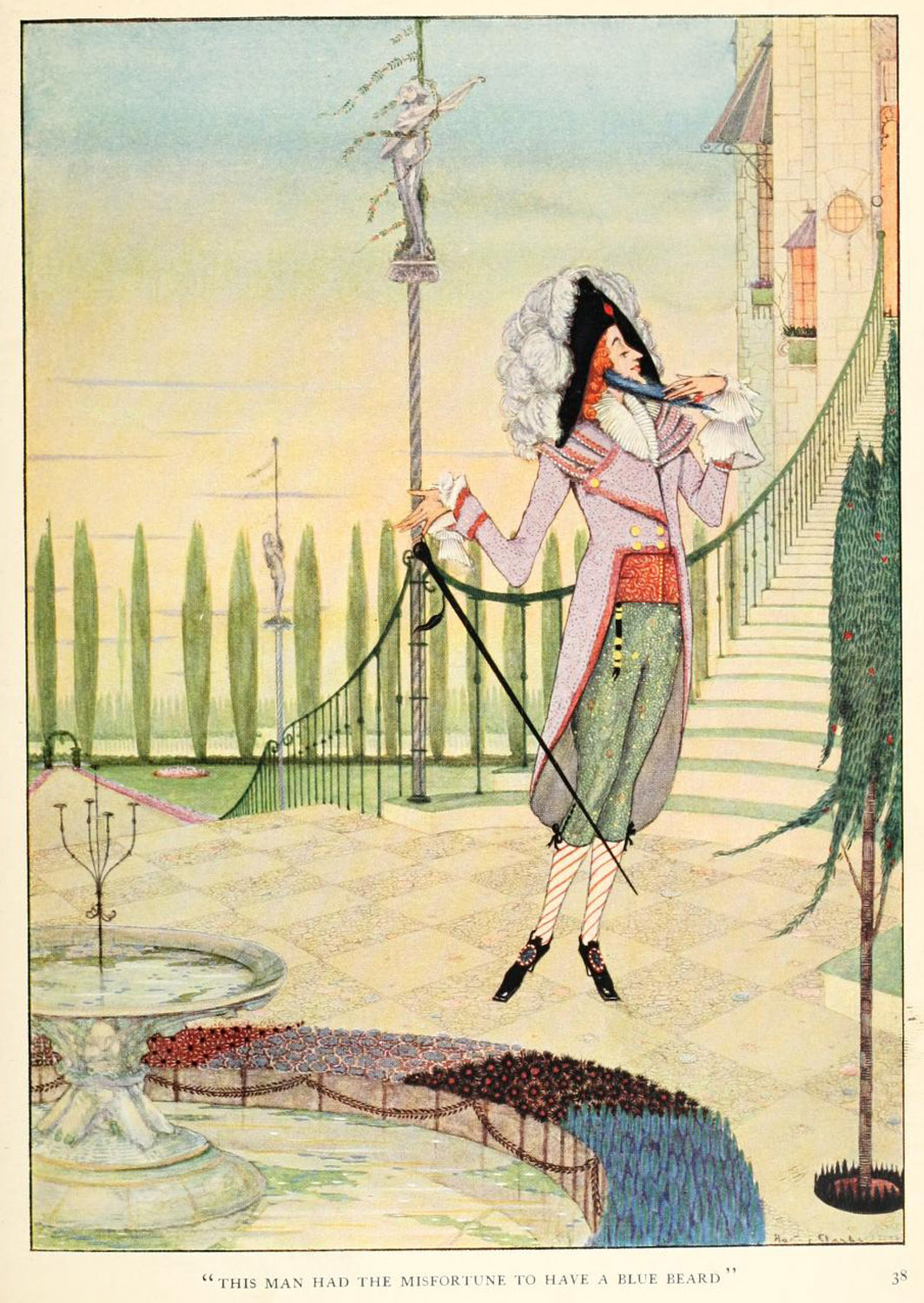
The illustrations to The Fairy Tales of Charles Perrault, 1922, by Harry Clarke. Click for full size. If you find yourself disappointed by the chaste apparel in the second image, have a look at the upper left corner.


Catching up with Marty Two Bulls, who always makes my world better.

© Marty Two Bulls.

© Marty Two Bulls.
You can catch up with Marty Two Bulls at Go Comics. Potushontas. State’s Rights.
My thanks to Fusilier.

Sheep, Bodleian Library, MS. Bodley 764, Folio 35v.
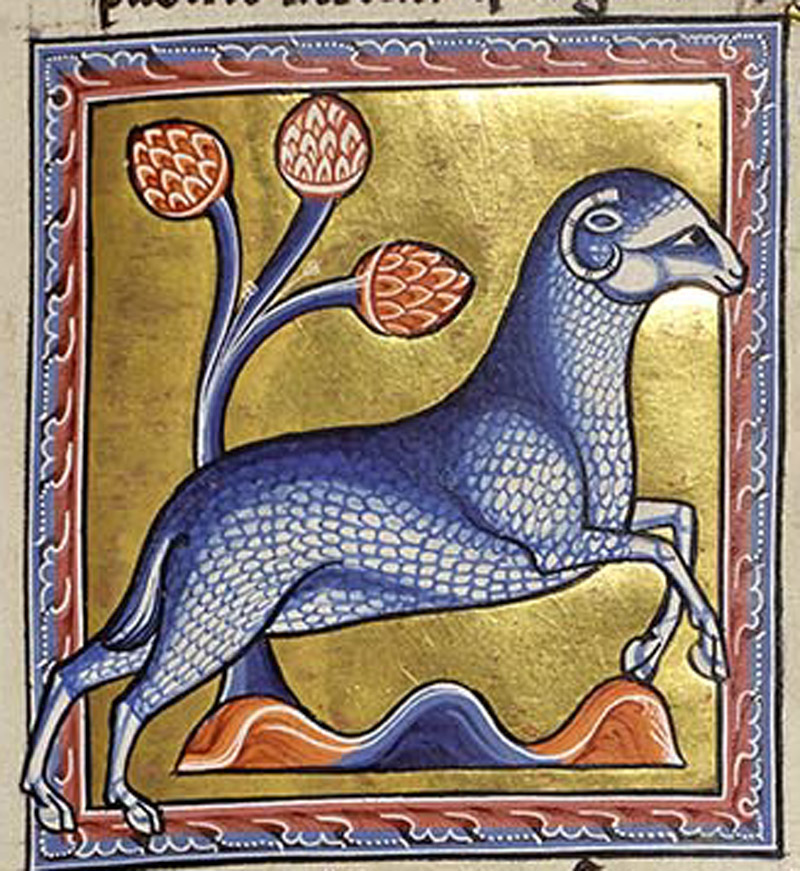
The virile ram is shown bounding through its frame.
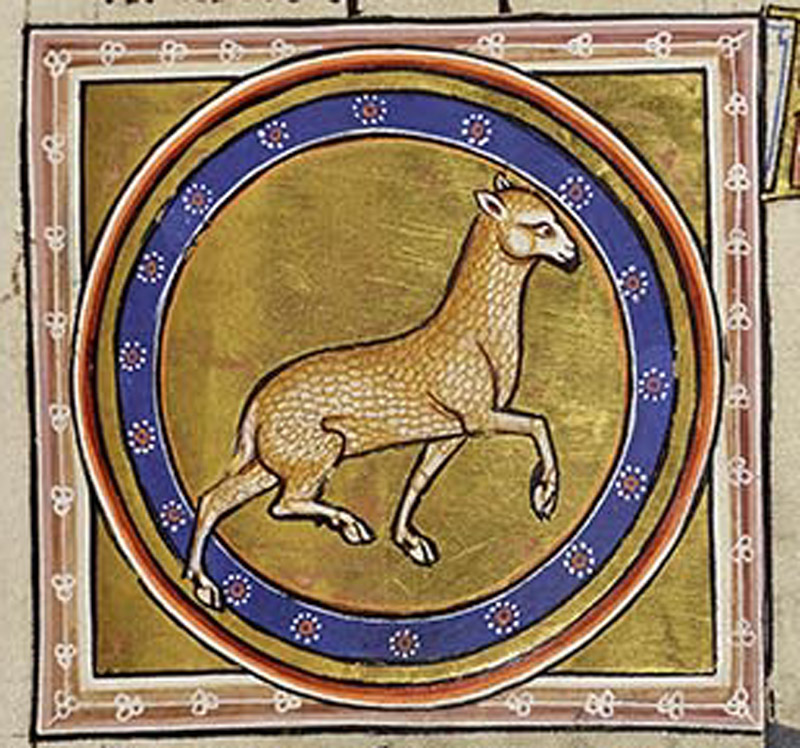
The delicate lamb skips within its roundel.
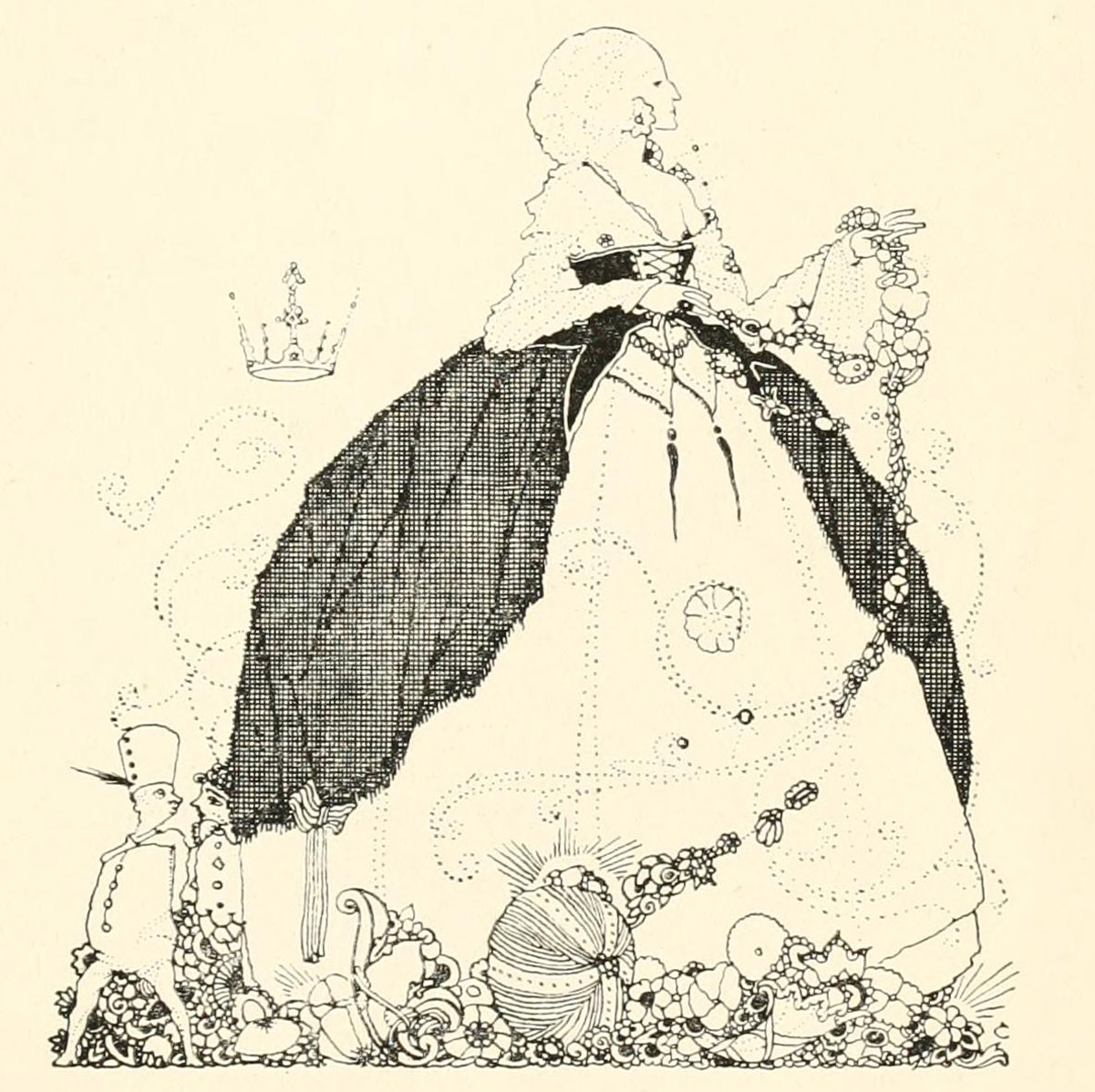
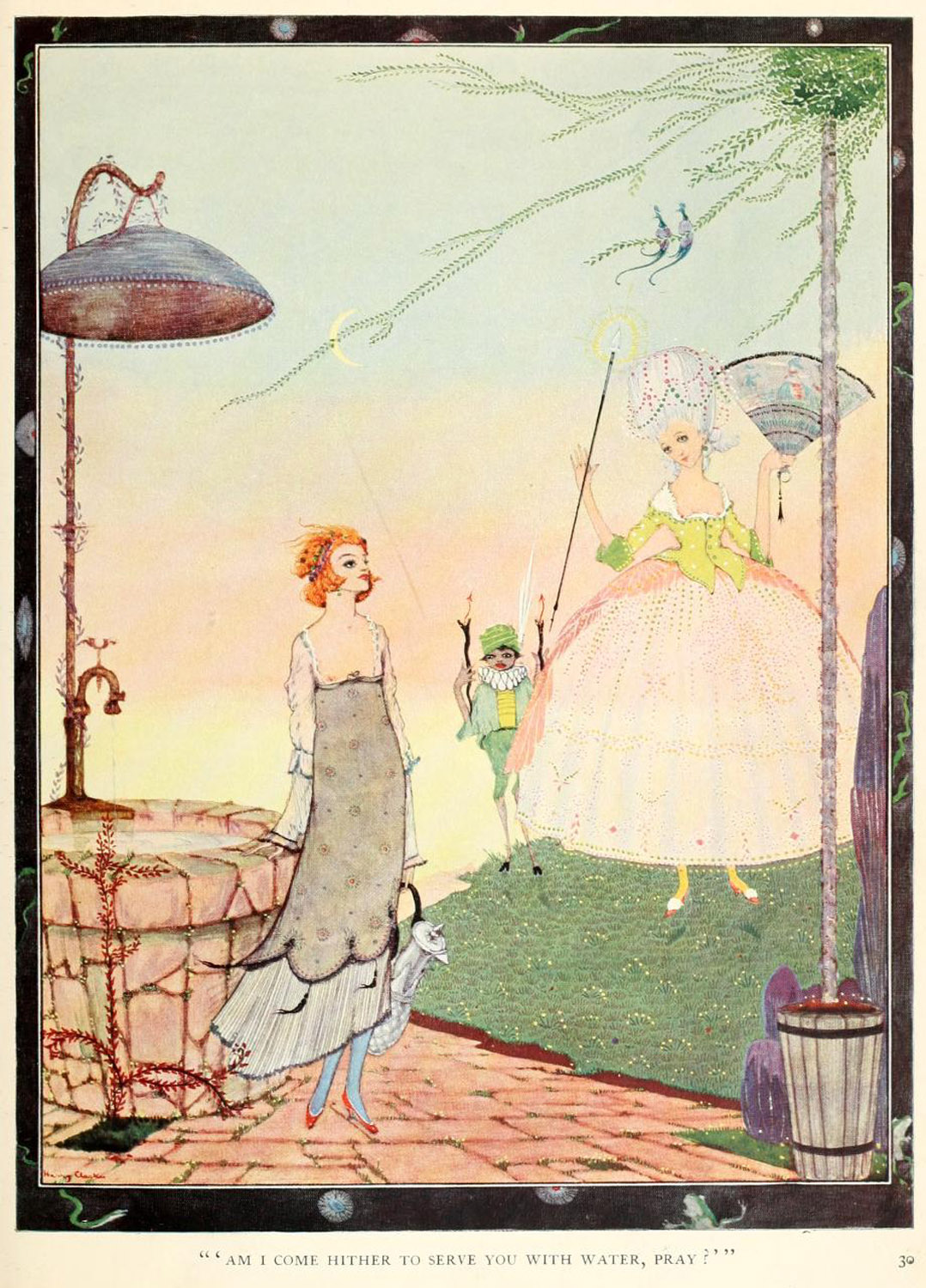
The illustrations to The Fairy Tales of Charles Perrault, 1922, by Harry Clarke. Clarke’s preference for exposed breasts (partial or full) was quite obvious in Faust, and as it turns out, pretty obvious in the Fairy Tales, too. Click for full size.



Here three attentive dogs are shown with collars and leads. They are the most intelligent of all animals and are devoted to humans. They can track down wild beasts, guard sheep and protect property.
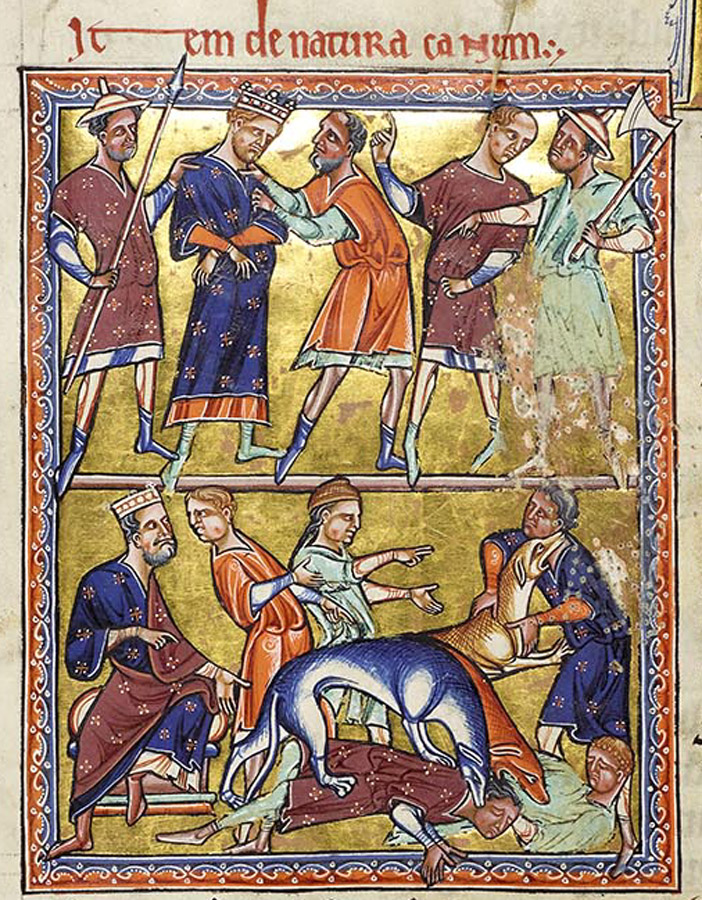
King Garamantes is captured by his enemies and rescued by his dogs.

The illustration refers to the stories overleaf on f.19v.It is divided into three panels, the top two referring to the dog who carries some meat over a bridge and seeing its own reflection in the water, drops the meat to seize the reflection. Below are two dogs licking their wounds with their healing tongues.
Text Translation:
Of the nature of dogs The Latin name for the dog, canis, seems to have a Greek origin. For in Greek it is called cenos, although some think that it is called after the musical sound, canor, of its barking, because when it howls, it is also said to sing, canere. No creature is more intelligent than the dog, for dogs have more understanding than other animals; they alone recognise their names and love their masters. There are many kinds of dogs: some track down the wild beasts of the forests to catch them; others by their vigilance guard flocks of sheep from the attacks of wolves; others as watch-dogs in the home guard the property of their masters lest it be stolen by thieves at night and sacrifice their lives for their master; they willingly go after game with their master; they guard his body even when he is dead and do not leave it. Finally, their nature is that they cannot exist without man.