Lunar Eclipse 2018

These are my pictures of the event. Unfortunately half the time I did not know what I was doing, half the time I knew that what I am doing is wrong, and half the time I could not even see what I am doing. That gives you one and half of a clueless dork. It was exciting nevertheless and I am happy I could see such a thing. I wanted to witness lunar eclipse ever since I was reading about them in books as a little boy.

I think a few pictures are worth sharing. Here is the first one, taken just after the sky finally cleared and I found the dim moon in the sky. Rest is bellow the fold. The pictures are in chronological order, also the last ones show the Moon emerging from the Earth’s shadow.

[Read more…]

A Sunflower Constelation

Nobody told our sunflower it is supposed to follow the sun with its main flower, and then stop facing east. It did not follow the sun at all and chose to face its main flower north the whole time instead.

And now it has developed a whole head of little suns facing in all possible directions.

There will be some pictures of its inhabitants in due course. That is, if I do not forget. There is a very interesting inhabitant in this picture too.

©Charly, all rights reserved. Click for full size.


Barcelona: the City 1

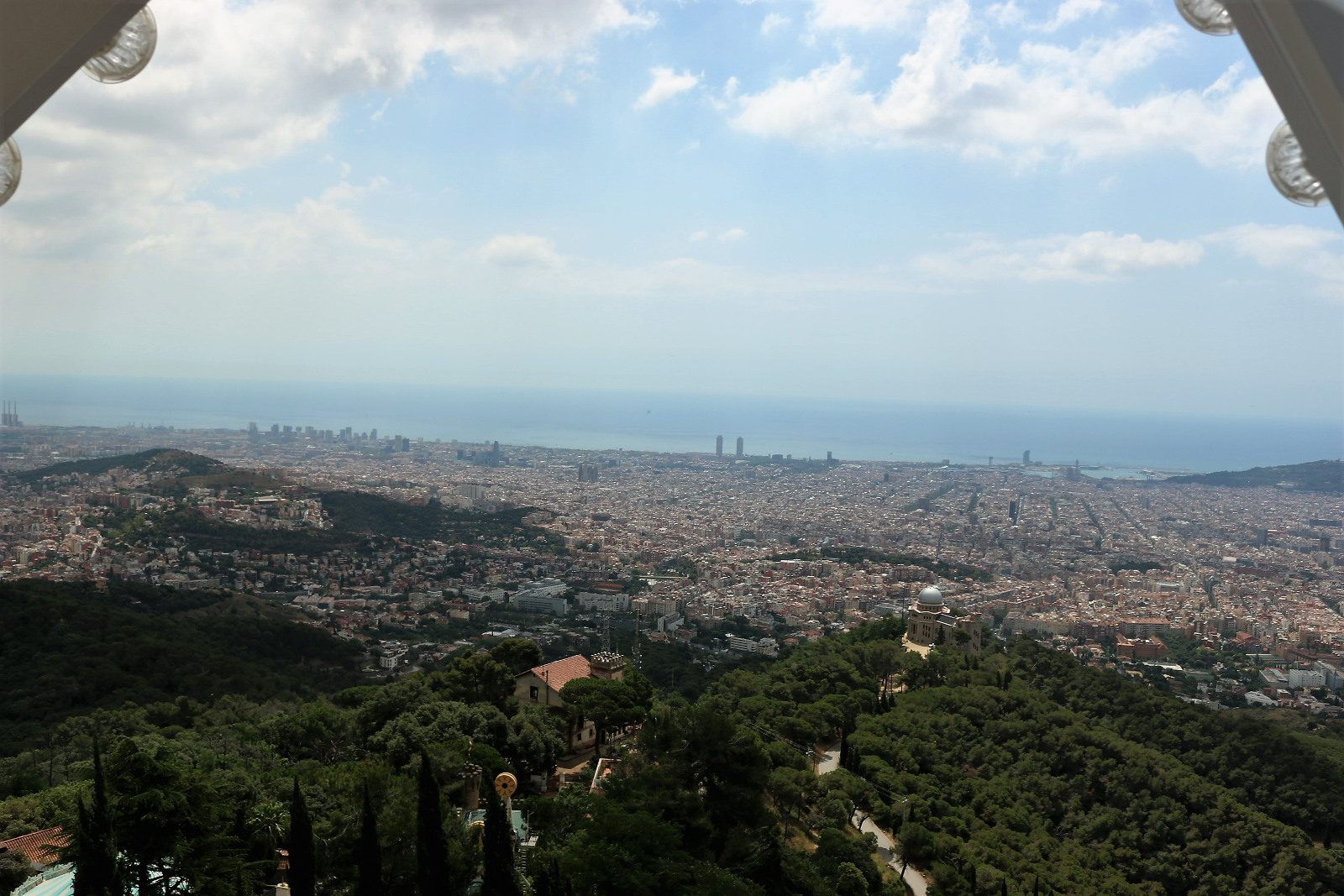
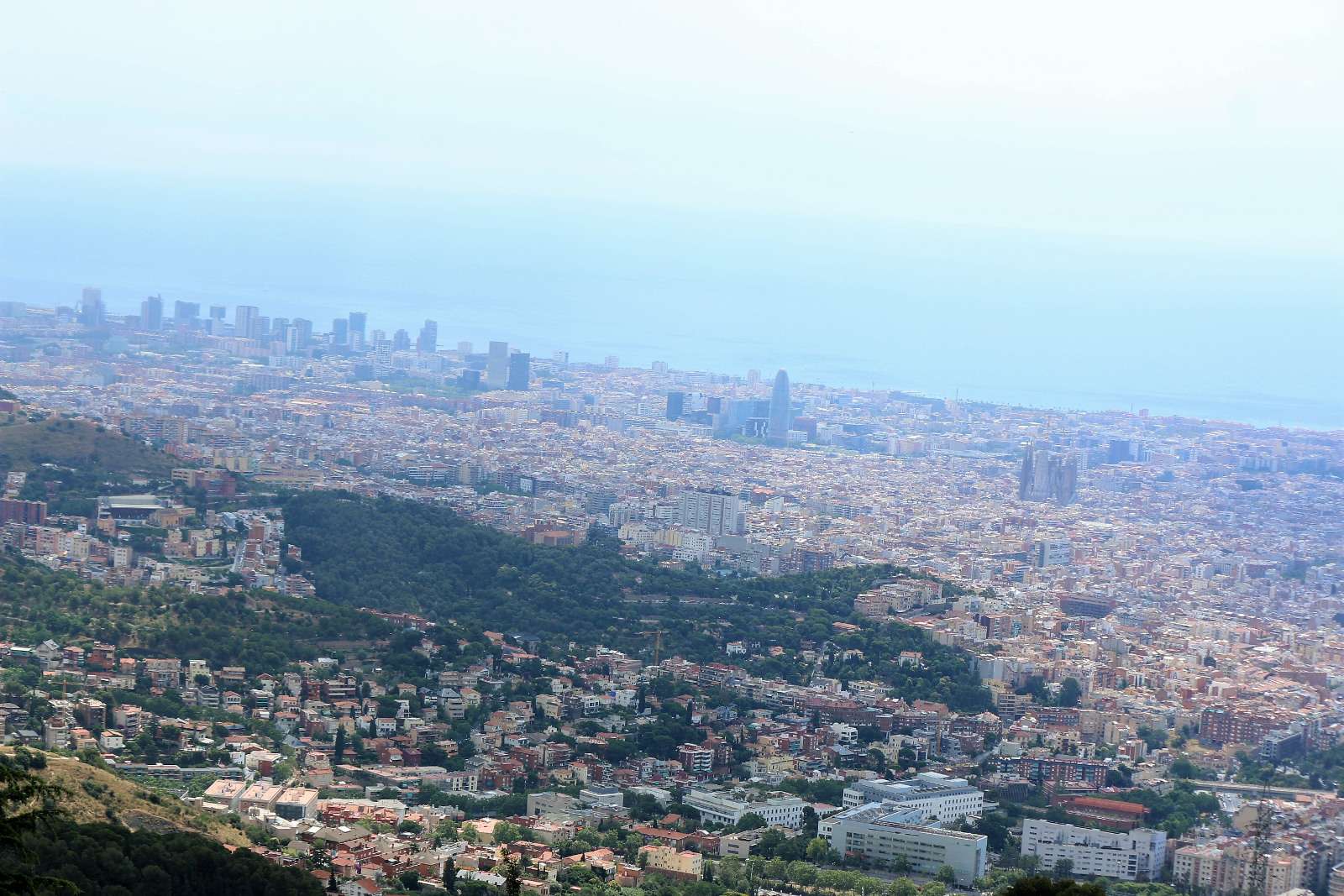
Barcelona is home to 1.65 million people, the travel destination of 7 million people a year and one of the most densely populated areas in Europe, second only to Paris. I’ll start my series on the city as such with a few panoramic shots to give you an idea. They were either shot from the Parc Güell or the Tibidabo, both which will get their own posts in the future.

Panoramic view of Barcelona

The city in full
© Giliell, all rights reserved.

Panoramic view of Barcelona

Shot from the ferris wheel in the Tibidabo.
© Giliell, all rights reserved.

Panoramic view of Barcelona

You can see the big parallel boulevards running down to the harbour. © Giliell, all rights reserved.

Panoramic view of the zoo.

The Zoo, one of the few green spaces. ©Giliell, all rights reserved

Panoramic view, with the Sagrada Familia in the centre.

Panoramic view, with the torre de Agbar and the Sagrada Familia in the centre.
© Giliell, all rights reserved.

In the middle you can see the Torre Agbar or Torre Glóries. I never gave much of the interpretation that all towers are phallic symbols, but this one takes the cake.

Panoramic view of the Torre Agbar.

A PG 18 rated tower…
©Giliell, all rights reserved

The Sagrada Familia, Gaudí’s unfinished masterpiece. The Catalan architect is all over Barcelona and we will visit one of his works, Parc Güell, later. Be advised to book your tickets in advance if you want to visit the place.

Panoramic view of the Sagrada Familia

The Sagrada Familia
©Giliell, all rights reserved


Youtube Video: I Smoke Armour

Metatron is not my favourite YouTuber, for some reason he rubs me the wrong way and on occasion he made me cringe when he opened his mouth about feminism (but to be clear, there was no obvious malice there, just cluelessness). But some of his videos are relatively good and I consider this to be one of them. Partly because my sister in law and her family are all heavy smokers who nevertheless looked at me in the past with derision for “wasting” money on books and time on bonsai trees.

Forest Path Statues – Part 2 – Owls

I can attest to an owl being a very good bird to carve out of wood – you need not remove as much material from the stock to get a good likeness and you do not need extra material for beaks and long legs and such like.

There were four statutes with owl theme along the path, and they were all cuteness distilled, especially the one with two of them cuddling atop a tower.

©Charly, all rights reserved. Click for full size.

Tree Tuesday

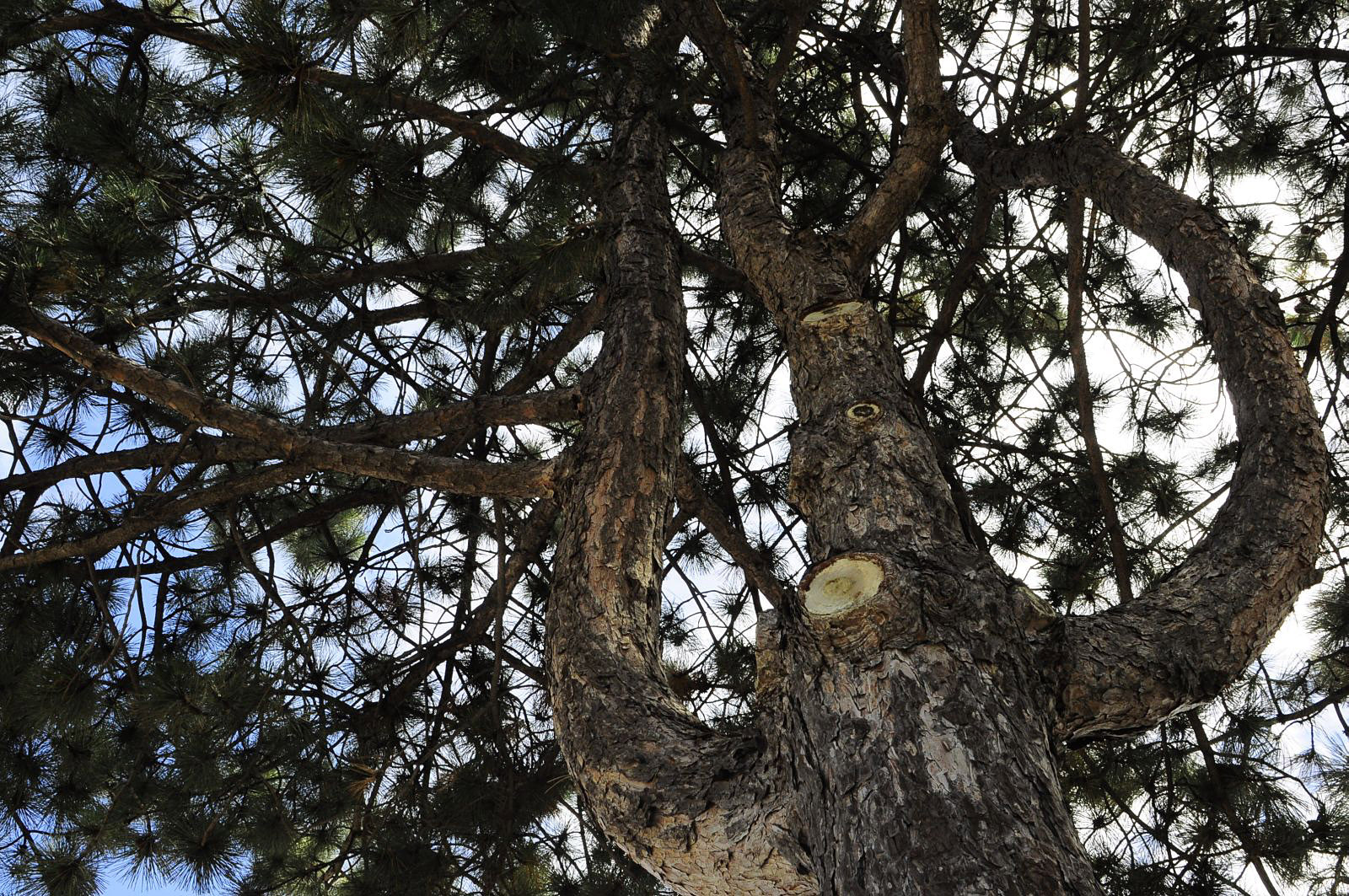
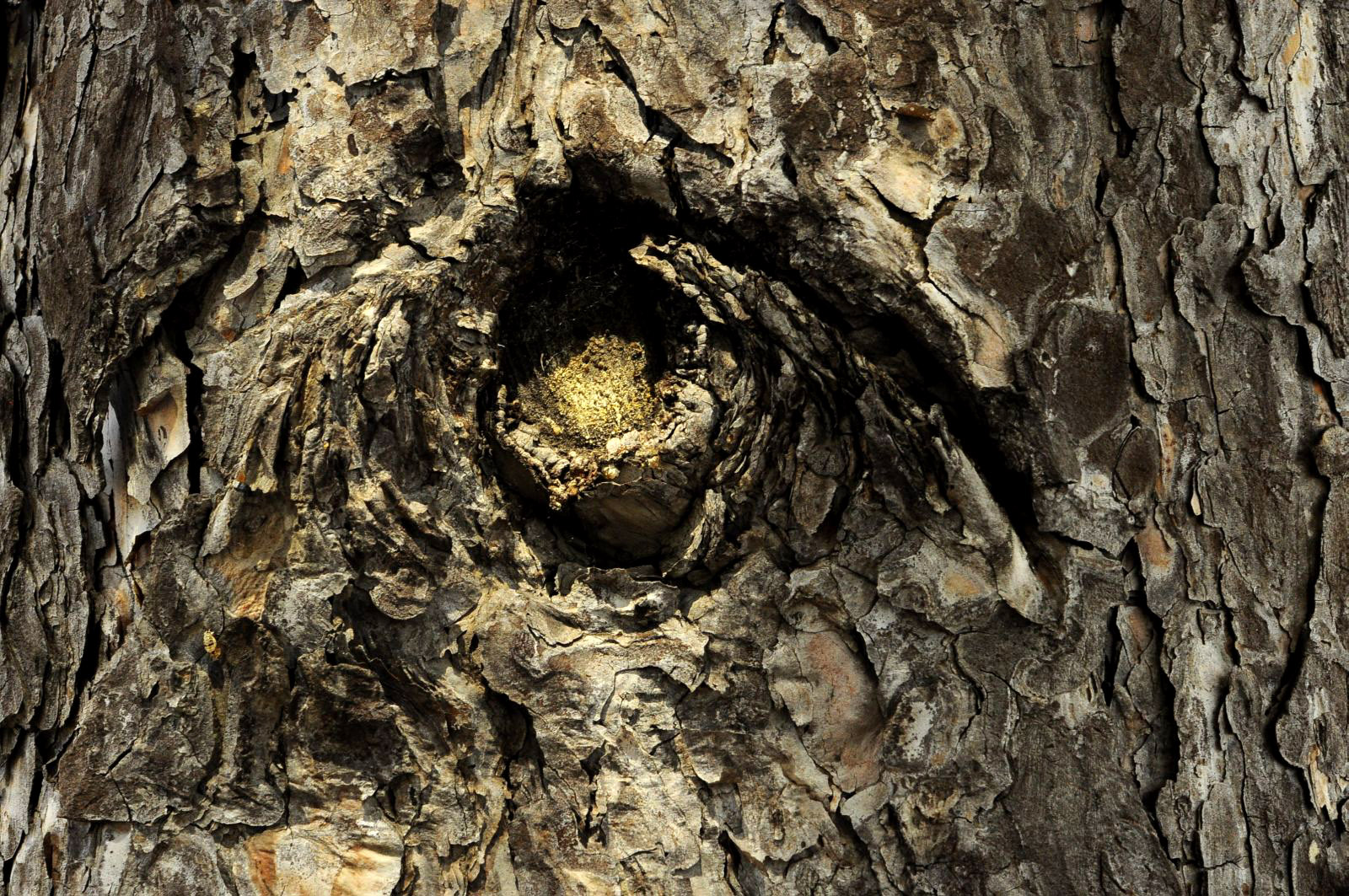
This week we have a majestic Ponderosa Pine in Bismark, North Dakota sent to us by the master of Affinity, Caine. It’s an intimate portrait of a big tree with big personality and it’s a fine addition to our catalog.

Thanks Caine.

Ponderosa Pine, © Caine, all rights reserved


Ponderosa Pine, © Caine, all rights reserved


Ponderosa Pine, © Caine, all rights reserved


Ponderosa Pine, © Caine, all rights reserved

Anatomy Atlas Part 17 – Leg Muscles

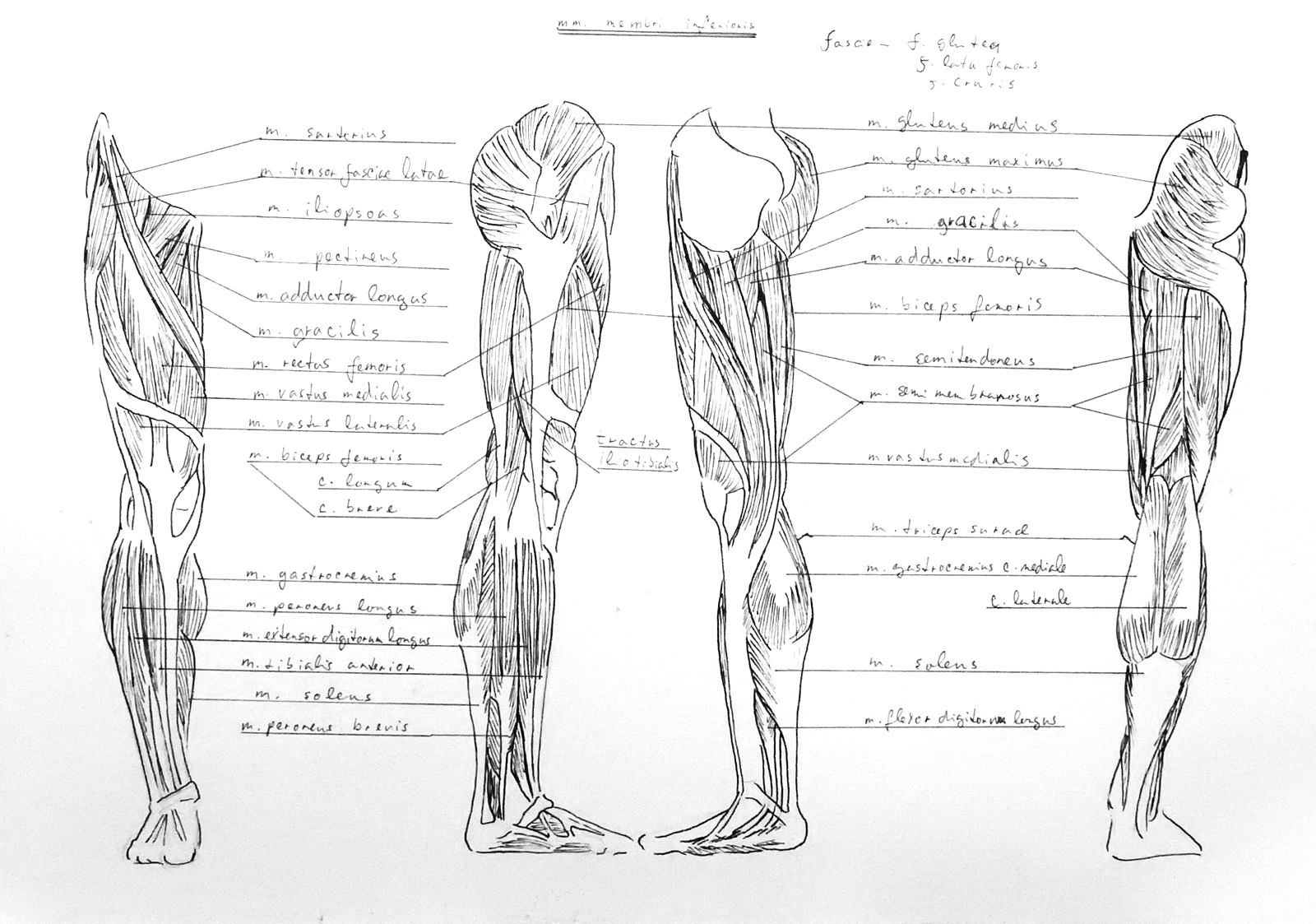
Legs. We have two of them to carry us around, and their musculature is very complex. This is due to the fact that despite appearances, only one joint – the knee – is (almost) simple flexing joint with one degree of freedom. Hip joints and ankles both have three degrees of freedom and therefore require accordingly complicated musculature to use them.

©Charly, all rights reserved. Click for full size.

Legs also have the biggest and strongest muscle in the human body – the musculus gluteus maximus. It has to be big and strong, because it is the main source of propulsion, the other muscles being more responsible for keeping balance and maneuvering.

Professor Kos remarked, in a slightly yet not entirely creepy way, how working of this muscle can be minutely observed with ease in modern times due to the fashion of young women wearing tight jeans. I admit that I like to observe the changes in curvature of such working musculus gluteus maximus, and from what I gather not only am I not alone in this, but it is not exclusive to my gender either.

However I am also aware that it is rude to stare at someone’s ass – and from what I gather ignorance of this unfortunately is almost exclusive to my gender, as demonstrated by a respectable elderly professor talking about oggling asses with lecherous grin to a bunch of students half of whom were young women quarter his age.

Making a Rondel Dagger – Part 14 – Covering the Scabbard

So whilst I am coating the dagger handle, scratching it with 600 grit paper and giving it each day a slight buff with acetone diluted linseed oil, I can continue to work on the scabbard. It will take a few weeks for the linseed oil to harden really properly, so there is no rush. However some of the works shown here were done in parallel with works already shown.

First thing to do is to properly shape the scabbard, leaving only about 1 mm thickness. Because the poplar wood that I have used is extremely soft, I was afraid to cut it for fear of taking away too much material. The most important rule in woodwork is – you can always cut, but you cannot ad. So I did not use chisels or a rasp, just an 80 grit sandpaper on a padded sanding block. My sanding block is a piece of wood with old carpet glued on the faces, and I am spanning on it endless belts that I used for my now dead small belt grinder. A wine cork is an excellent spanning device, allowing for quick change of belts and giving me the option of slack belt as well. When sanding around the throat of the scabbard I took care for the throat always face downward, so no loose grains fall into the scabbard and ruin the blade.

Next thing that I have done was to soak the whole surface with hot hide glue, priming it so other materials can be glued on. After the hide glue has dried, I have covered the scabbard with linen, which I have again thoroughly soaked in hot hide glue. I do not know whether this was actually done for scabbards (although from some of the images that Caine has posted it seems plausible), but I know for sure that the technique was known from early medieval times through to the modern times. Covering wood in fabric soaked in hide glue is very effective way to prevent the wood from splitting and twisting. Firstly it adds fibers that are perpendicular to those of the wood, secondly hide glue shrinks significantly as it dries, effectively pressing everything tightly together. This is one area where real hide glue has an irrefutable advantage over any modern glue. After the hide glue has dried up, I have again sanded the whole thing with 180 grit sandpaper to smoothen all knots and irregularities in the fabric.

To remain true to the game, I should use plain vegetable tanned leather, but this is one of the instances where I deliberately choose to stray away from my template and do something differently. For years I have a piece of dashing red leather that I wished to use for this project from the very beginning. It was of very irregular shape, but I was able to cut a piece big enough to cover the whole wooden scabbard from tip to throat. First I have cut a rough rectangle and then I continued to cut away tiny strips here and there until I had a piece that could be wrapped tightly around the scabbard with just about 1 mm space between the edges.
Then I had to make holes for stitching. This is fairly thin leather, so I had to make the holes very close to each other for fine stitching. I have made leather sheaths before, but I have never done this, so I did not know how exactly spaced the holes should be. I reasoned that about two-three times the thickness of the leather space between the holes and from the edge should be about right in order to be able to sew the edges together tightly without the leather ripping.

I could not find my awl, it seems that I have lost it. Luckily I had this super old knife whose blade was almost completely eaten away that could be quickly modified for the task of pokey-holey. About 200 holes. Oh boy.

For sewing I was going to use thick thread that is used for sewing jeans. For thicker leather I would have used thick linen thread, but that was a bit too thick for this job. Other threads we had at home on the other hand were too thin.

Before sewing, I have soaked the leather in lukewarm water (about 37 °C) for an hour so it becomes more stretchy and pliable. And I prepared the thread with the use of the unseemly mixture you see on the picture to the right. That mixture was made by boiling pine resin and beeswax and it was used by medieval shoemakers and saddlers to coat the thread before sewing. What are the advantages of that, you ask? Well it makes the thread bugger to work with as it becomes all sticky and latches onto everything – hair, pants, fingers, itself… Oh sorry, you asked about advantages. The thread does not split or fray during work, it is firmer and sleeker, despite the stickiness. If I coated the thread in advance and let it dry for some time It would not even be tacky, but I forgot about that. And I did not know how much thread I will need – it transpired that about ten times the length of the scabbard is about right.

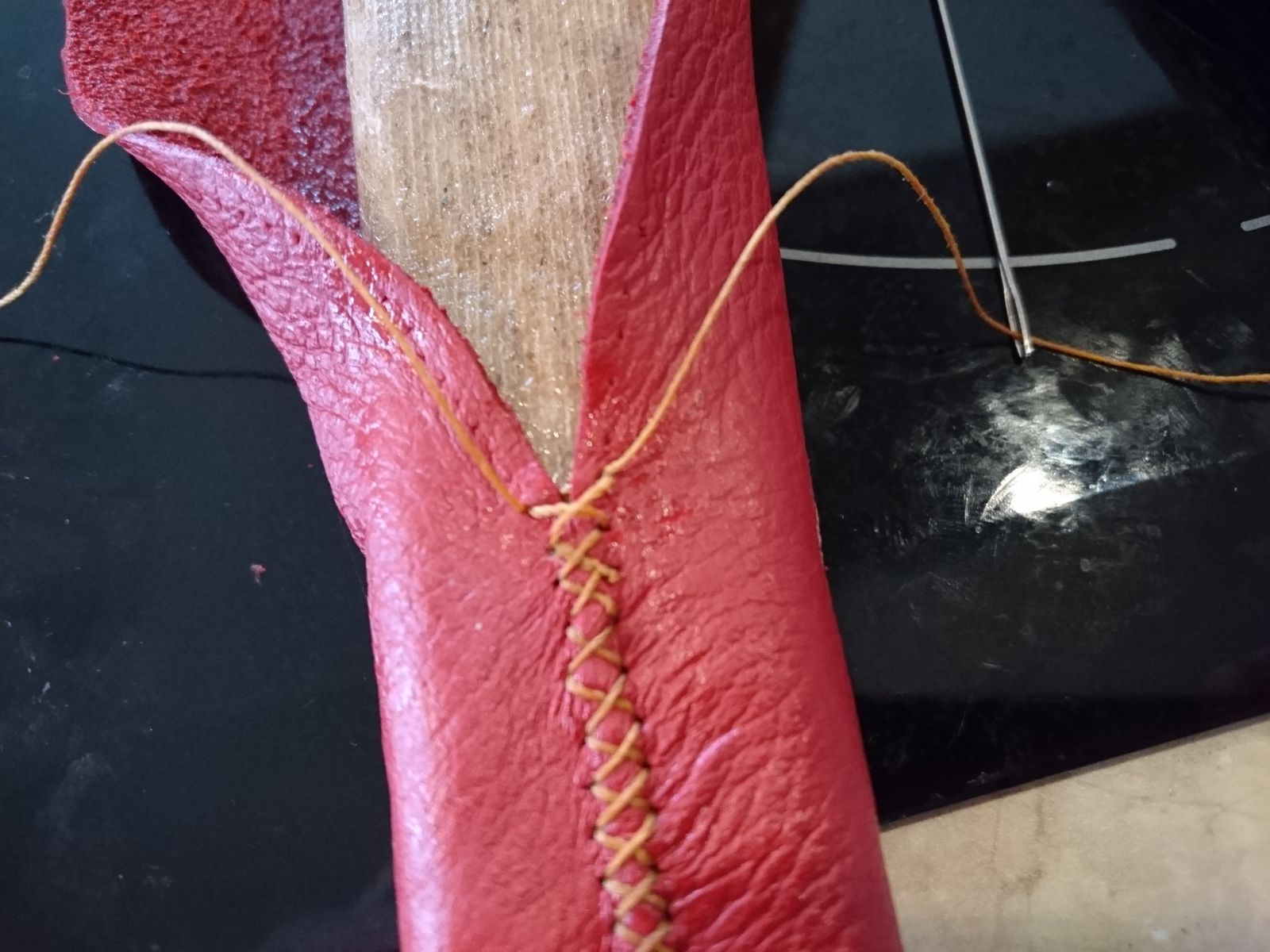
When the leather was all soaked, I have prepared a small batch of hide glue again and started covering the scabbard. First I have sewn together the tip and about 1 cm of the length. Then I painted that part and the whole face of the scabbard with hide glue and inserted it in the leather pocket and started sewing and adding hide glue all round for each sewn piece. I have used a two-needle technique that I have found on the internet. It has the advantage of pulling the edges together very regularly and equally on both sides, so it does not warp and zig-zag as it could had I used just one thread. I must be honest with you – my needle work leaves a lot to be desired. I was doing my best, but I was losing the holes in this very thin leather and I skipped a few here and there without wanting to. It took me two hours to sew the whole scabbard – about 100 stitches on 27 cm length. My back ached and I was happy when it was over.

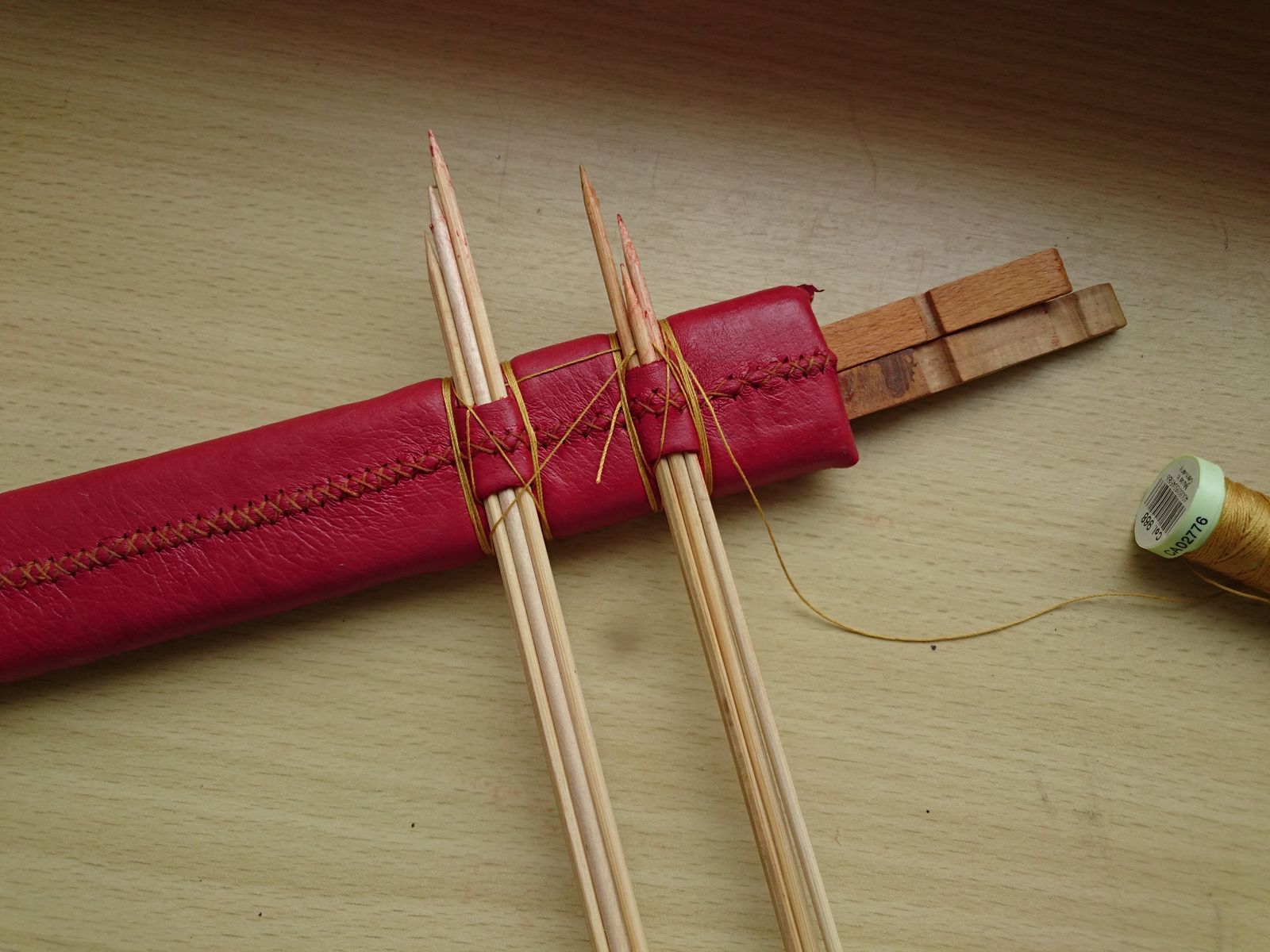
Last step was to poke and wrap holes for the straps. For these I have simply cut holes with a scalpel and inserted in the wet leather three skewers. The thread wrapped around will make visible grooves when it all dries up. If I wanted to, at this point I would also stamp and press the leather to decorate it. But I did not want to bite more than I can chew, for this project plain leather will have to do. I also formed the leather around the throat a bit, although I will have to get back at it once more – when it dries, I will have to cut all excess, wet it again with hot hide glue and form it better.

The scabbard is now nearly done, but the most challenging part is yet to come – I want to make metal chape and throating. And that is something I have never done and I will have to be really, really careful to not botch that up. And also think hard about how to do it, before I go cutting, bending, banging and soldering metal pieces together.

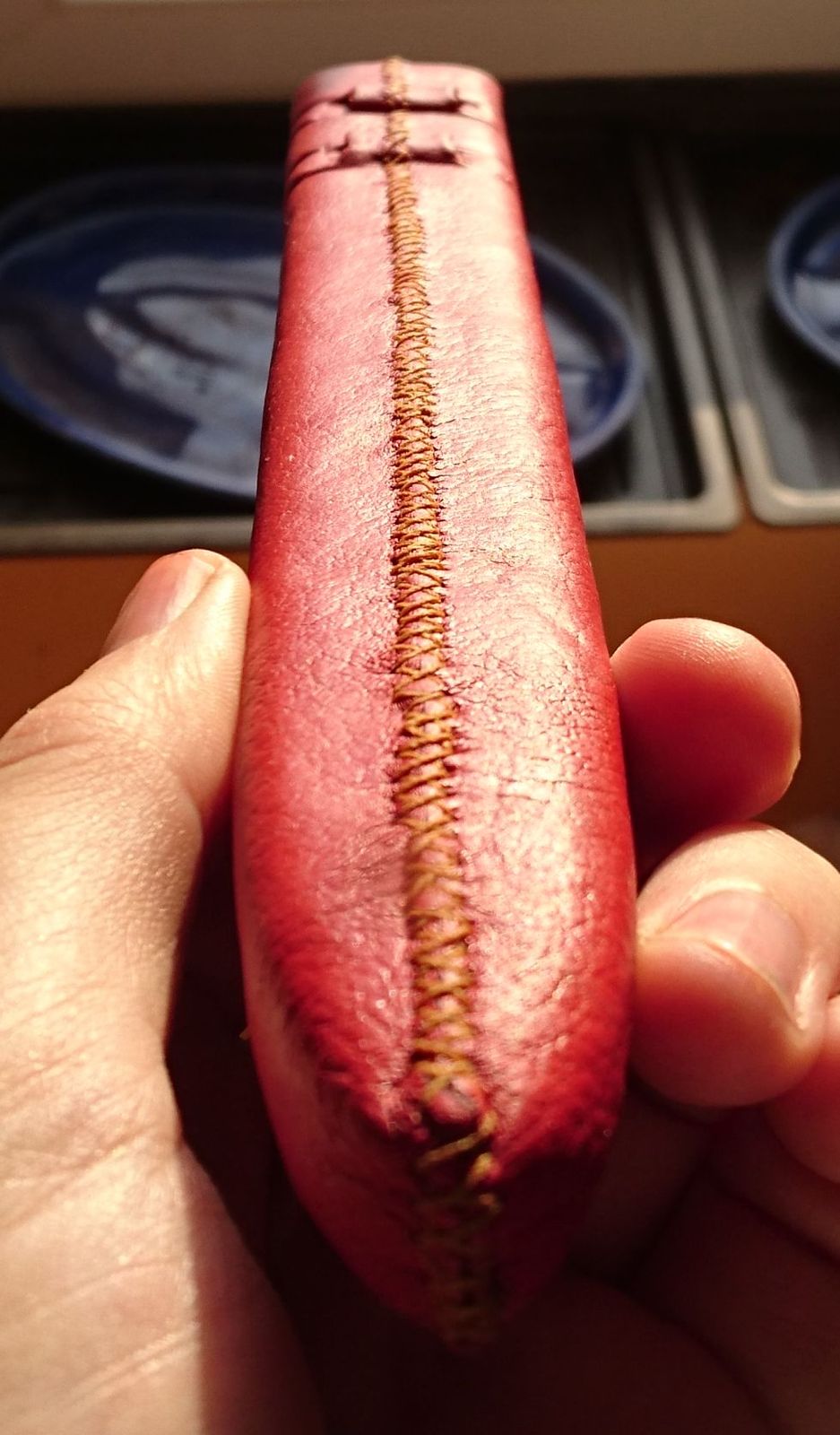
More about that next time. In the meantime you can admire my irregular stitches.