Youtube Video: Medieval ASSASSIN’S CROSSBOW (Balestrino) ASSEMBLED & TESTED!

I could not decide between multiple videos, as usual, and last-minute decision fell on this one. It is a nice piece of engineering and the video is reasonably short and packed with interesting information.

It might also be Halloween appropriate? I have no clue, since I originate from and live in a country with no Halloween tradition whatsoever and honestly I do not understand what Halloween is supposed to be about at all. But I read something about murderers and monsters the other day, so maybe an (alleged) assasin’s weapon might fit in.

I have a day off and I planned to do some knife-work, but I have to pass on that since I am still not well.

Jack’s Walk

They’re watching me, ©voyager, all rights reserved

Happy Halloween.

We had a trick today instead of a treat. Jack didn’t have his surgery because they found enlarged lymph nodes in his rear legs which they biopsied instead. Once we have the results back in a few days we’ll see what to do next. He had blood work done less than a month ago and everything was normal so that’s good. He’s also been happy and playful so I’ll try not to worry… too much. In the meantime these are photos from Jack’s evening walk last night. This is the best dressed house in the neighborhood. Click through to see where the eyeballs lead you.


[Read more…]

Tree Tuesday

Our tree this week is a pear tree in full fall flame from kestrel who says,

We have no idea how old this pear tree is but it’s pretty old. It does still bear fruit, but this is not a great climate for it, as there are often late frosts that kill the blossoms. Even when it does bear fruit the pears frequently drop off before they can ripen. I suppose we ought to cut it down but it’s quite lovely in the fall when the leaves change color; just recently it fired up and looks wonderful for such a very old tree. 

Old trees have a stateliness and grace and this old pear tree is putting on quite the show this year. All of the photos are bright and beautiful, but the last one of just the leaves in sunlight is gorgeous. Thanks so much for sharing, kestrel.

©kestrel, all rights reserved
[Read more…]

Yes, I’ve been having fun

This resin stuff is great for messing around. What follows are a few things that went well, some that didn’t go that wll and some that are still work in progress.

First of all, the globes


Resin globes

©Giliell, all rights reserved
On the left you have a light globe with a small string of embedded fairy lights. Although the blue resin all rose to the top, I quite like it. This one’s so big that it released a lot of heat while curing. On the right there is the next attempt at a snowglobe. I like the results a lot. Glueing the ornaments to the wood and then inserting them was a good idea. I still hate the moulds. They are way too thin and easily separate. More on that later.

That was the rest of the resin Marcus sent, btw.

[Read more…]

Jack’s Walk

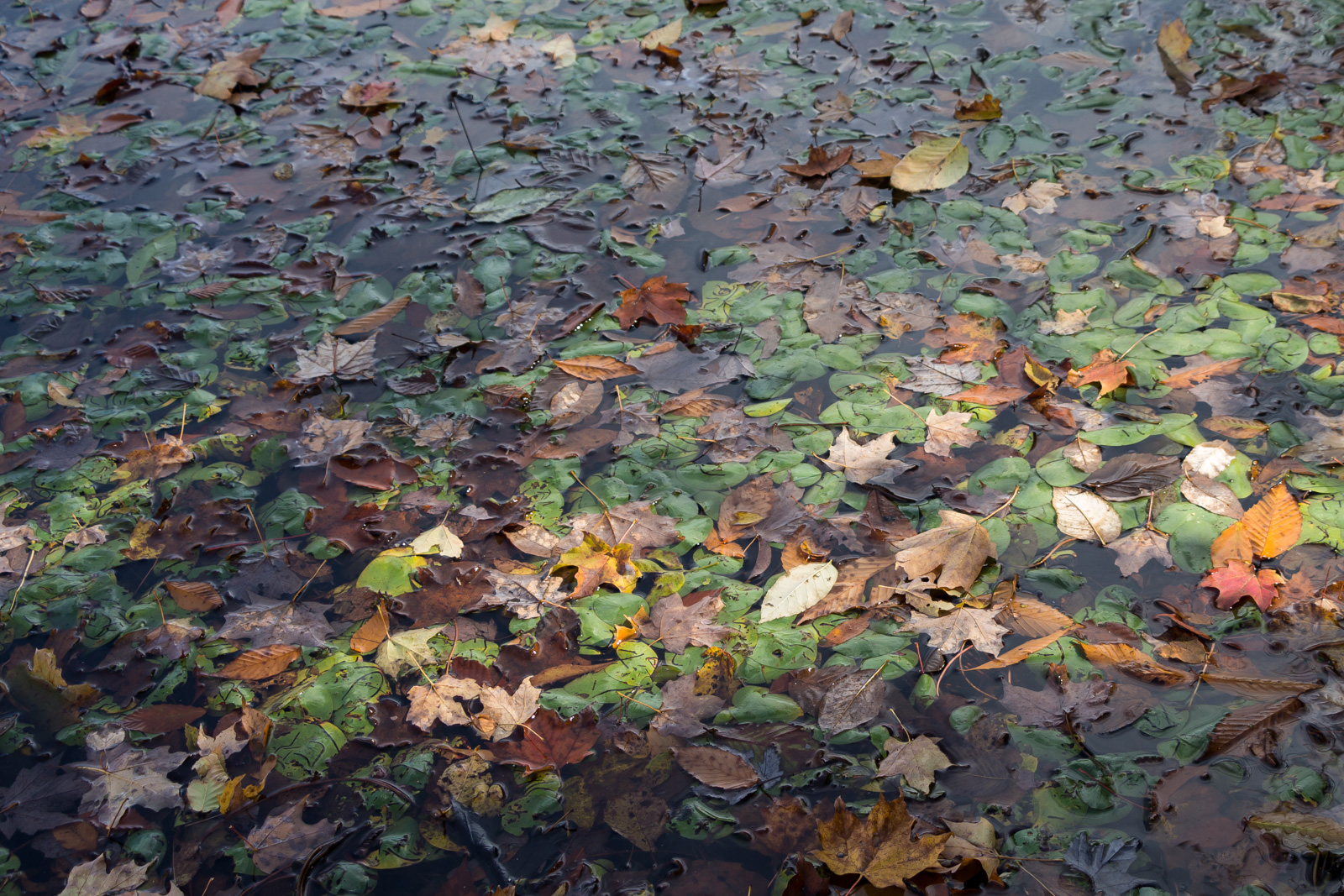
It has been raining here for days and even Jack is getting fed up. He doesn’t like the drops hitting his snout and he stops often to wipe his face on my pants. How special. The water does make some things look pretty, though. So here are some leaves on a pond.

©voyager, all rights reserved

©voyager, all rights reserved
Making Kitchen Knives – Part 8 – First Evaluation

First thing first – today I tested the very nearly finished knife when I was cooking shrimp for lunch.

©Charly, all rights reserved. Click for full size.

It handles well and cuts OK, but I really suspect it won’t hold an edge as well as it should. But the cheapo wood looks way more posh than I expected it, ammonia fuming really, really improved its looks.

And now to the boring stuff.

What I am doing here is actually a small-sized DMAIC project – an abbreviation for Define-Measure-Analyze-Improve-Control. It is a process used in industry to bring some logic and use of scientific method into improving manufacturing processes. Although as everything in today’s corporate culture it is used wrongly and heavily abused and misunderstood all over the place, because american-trained managers …. wheef, do not get me started on american-trained managers.

Aaaaanyway, in the first phase, Define, you should either define your problem or your goal or both. In my case, I have a specific goal – to get my manufacturing time of this type of knife under five hours of manual labor.

In the second phase you should acquire all measurements that you need in order to do something about it – in my case I have measured the manufacturing time of each distinct step in the process.

And now, in this post, I am performing the Analysis of said data. Total manufacturing time: 10:46, or 646 minutes.

A picture is worth a thousand words, so here is a picture.

©Charly, all rights reserved. Click for full size.

There are of course multiple approaches one might use, but in this specific case I think that this suffices ample enough – it is so-called Pareto Graph. The balks are actual times in minutes for each step, ordered from the highest to the lowest. The black line is a sum of the relative proportions of these times to the total as one progresses from left to right. As you can see, I have ten distinct manufacturing steps and from those five steps constitute 90% of manufacturing time. These are the steps where I have to concentrate on actually reducing said time, because here my efforts have the biggest payoff. That does not mean that improvements in the other five steps are not worthy pursuing at all, but they are not worth pursuing at this time.

I have done one thing that is not normally done, that is I sorted from get-go the steps into two categories – low hanging fruit, where I think I can do improvements without too much hassle and without obtaining expensive or complicated equipment, and high-hanging fruit, where I can save time only through acquiring new skill or new equipment or where I think saving time is not actually possible in a meaningful way.

Now comes the next phase, which is  to improve the process. I will try to implement some of the ideas for that I have expressed and make a batch of multiple (~10) knives with improved process. We will see how it turns out.

Macedonia 5 – Stillness

One impression that I was left with after my trip was a sense of… unfinished? The opposite of stillness. It’s hard to explain. The city of Skopje was such a mix of modern, ancient, renovated and decrepit, and through it all it was clear that Things were Happening, but… there was also a sense of organized chaos? I have a lot of question marks in my thoughts about the city, and the best I’ve been able to tell people is It was interesting. I think the one conclusion I will come away with is that there is no need for conclusions.

In any case, Skopje is full of statues – hollow statues – so many figures standing or sitting around or holding epic poses, it’s quite grand. And many of them are large! Immense! Makes you feel a bit small, to be honest. And the sort of grandiosity that puts me a bit on edge. Here’s a very, very, very tiny sample:

Alexander the Great, of course.
©rq, all rights reserved. Click for full size.

The view from under the arches of a medieval bridge… not even the oldest object around.
©rq, all rights reserved. Click for full size.

Upskirt photography at its finest.
©rq, all rights reserved. Click for full size.

The other side of the bottom of the previous statue – sitting around for ages!
©rq, all rights reserved. Click for full size.

A paeon to motherhood, I assumed – I might add that nobody was looking particularly thrilled.
©rq, all rights reserved. Click for full size.

I am frighteningly ignorant when it comes to good music from the region, though, so here’s Loreena McKennitt instead. I intend to work on my musical diversity.

Making Kitchen Knives – Interlude 1 – The Little Great Polishing Experiment

I will share with you a proper analysis of the acquired data, but I just finished a little experiment and I am too eager to share the results.

Without too big analyzing of anything, it is clear at even a casual glance that polishing is the most time-consuming part of the job. It is also the most boring part, in my opinion, because not much can be done and the opportunities for a mess-up are numerous. It is necessary to go through the laborious process for fancy knives, like Ciri’s dagger, but for a kitchen knife without any ribs or facets it is a waste of time.

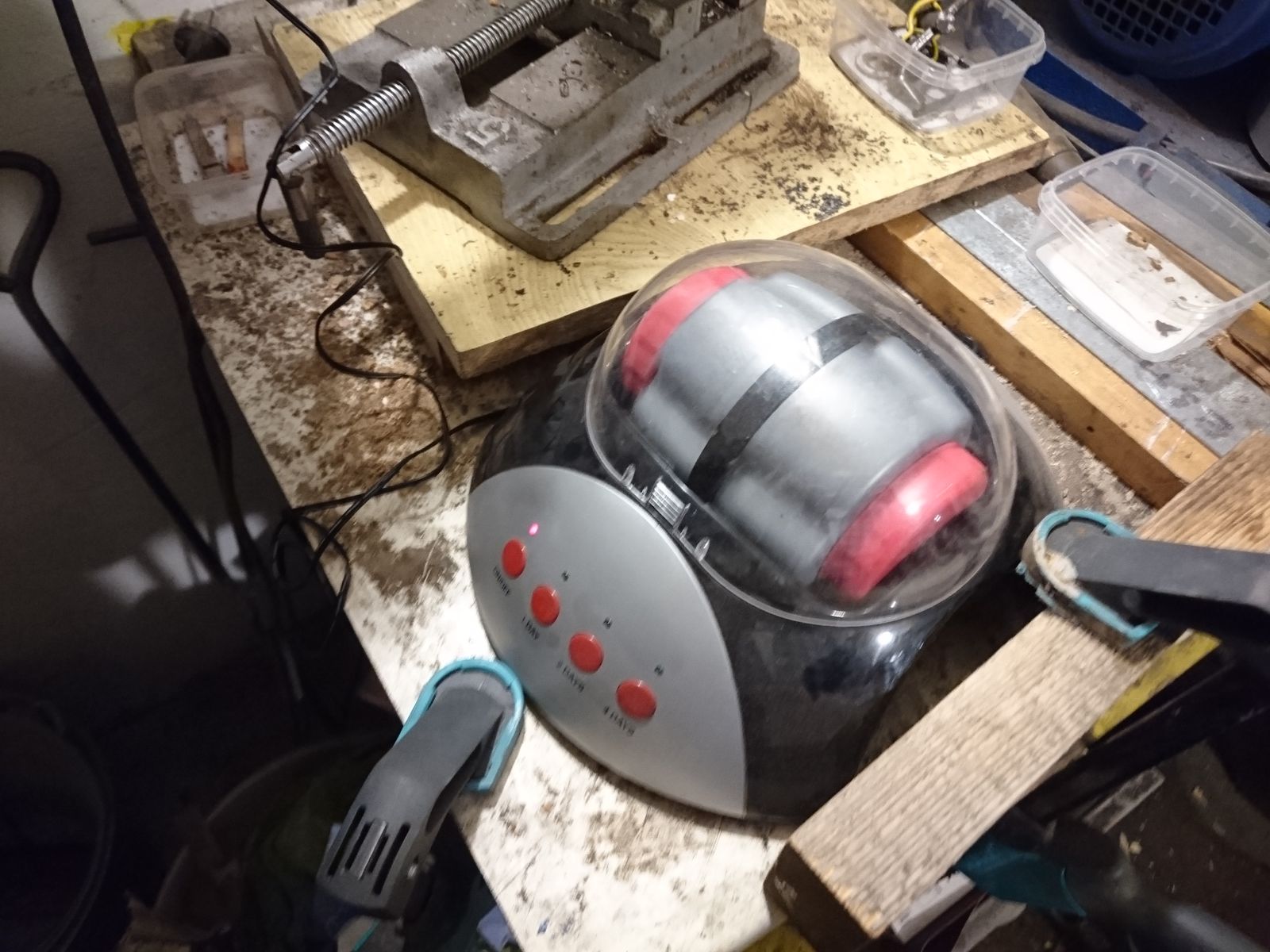
For over twenty-five years, ever since I read about the technique in ABC as a kid, I wanted to try a process that goes under many names, “tumbling”  being probably the most known one. I have even mentioned the device for it in the article “The Handmade Dilemma” as a “polishing drum”. It is a technique that has been in use for thousands of years, literally – for example Bohemian Crown Jewels contain precious stones that were polished this way. And it has been tried and used for knife finishing both on commercial and hobby scale. All that it takes is having the polished things in a rotating drum where they tumble over each other, sometimes with the help of a polishing medium, sometimes without. A very simple machine, and had I lived by a stream I would build a water powered one years ago. Unfortunately I do not live near a stream and wind is too unpredictable so I am stuck with using electricity, and I have not got my hands on a motor with the right properties yet.

But I got lucky, my colleague has bought small toy tumbler for his son when he was little and they do not need it anymore, so he lent it to me a few months ago. As you can see, it is not big enough to hold a knife, not even a small one, so after I let it run with a few pieces of unhardened steel with very mixed and generally unsatisfactory results, it has collected dust again.

©Charly, all rights reserved. Click for full size.

But here was the second stroke of luck – I have bought a slab of high-carbon tool steel and I started to make myself a set of better hardness measuring gauges than the impromptu ones I have made from an old saw blade. I have already ground and hardened these little chisels to HRc 62,  and I only cleaned the two big facets and sanded them up to 150 grit – that is the grit up to which the grinding and polishing is relatively quick and the blade does not heat up too much. I was not intending to high-polish these, since that would be silly. But I remembered the lent tumbler and checked if they fit in – and the did!

So I chucked the blades into the polishing drum with a spoon of jeweler’s rouge and half filled it wiht crushed walnut shells, mixed it all up and let it run for one day. Bugger – it got blocked after unknown time and I only found out next day. So I started it again for one day. And the change in surface was remarkable. It was not polished, but the perpendicular sandpaper scratches were no longer visible and the surface has got a very nice satin sheen to it. But I like my blades mirror-polished, so I started it for another day. I took another chisel out and subjectively there was no change against the first day, so I assumed that this is as good as it gets (but I will let it run for one more day). But I also assumed that since there are no visible perpendicular scratches anymore, I can quickly buff it to mirror polish with the three buffing wheels that I have  – and I was correct.

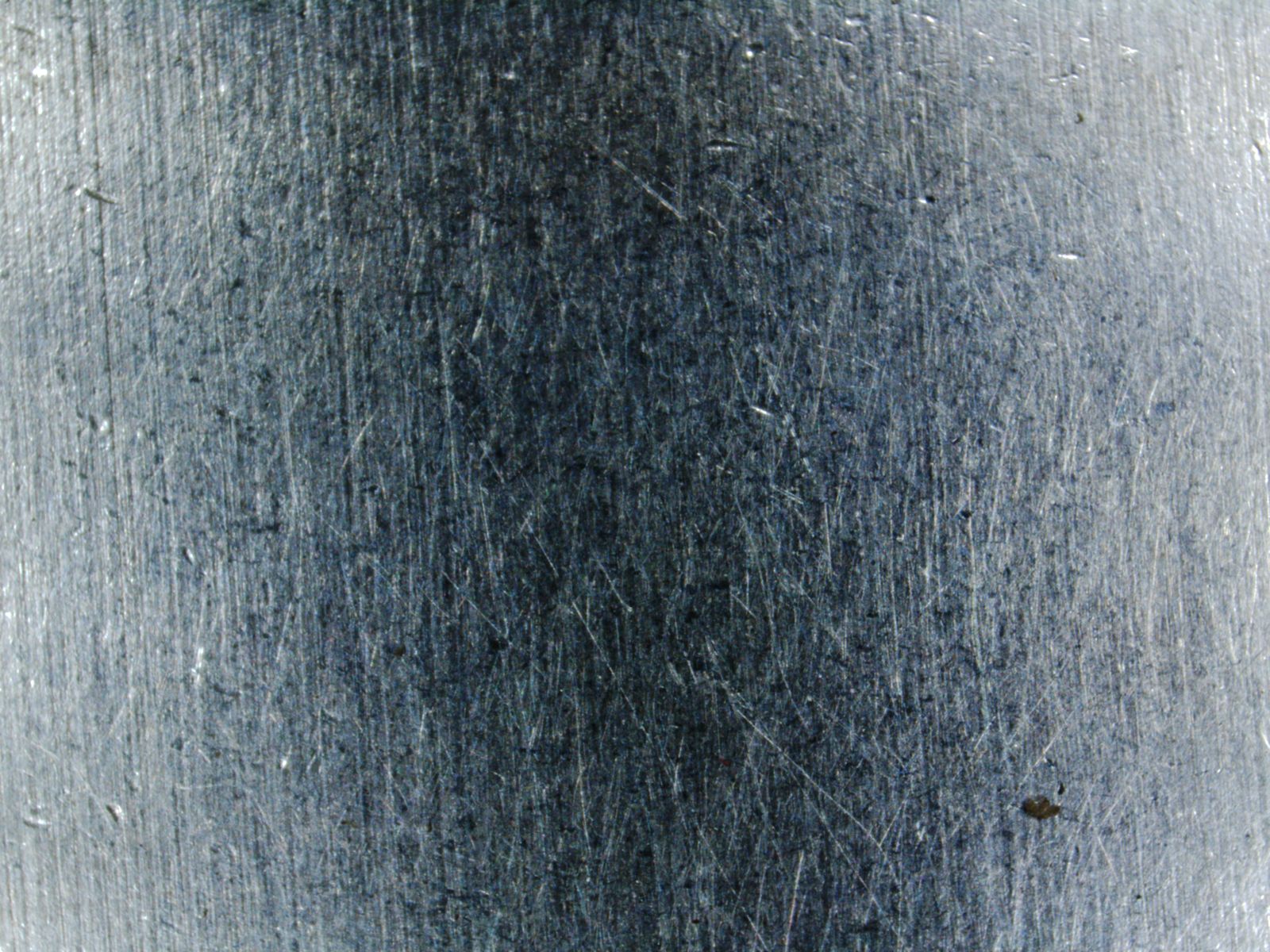
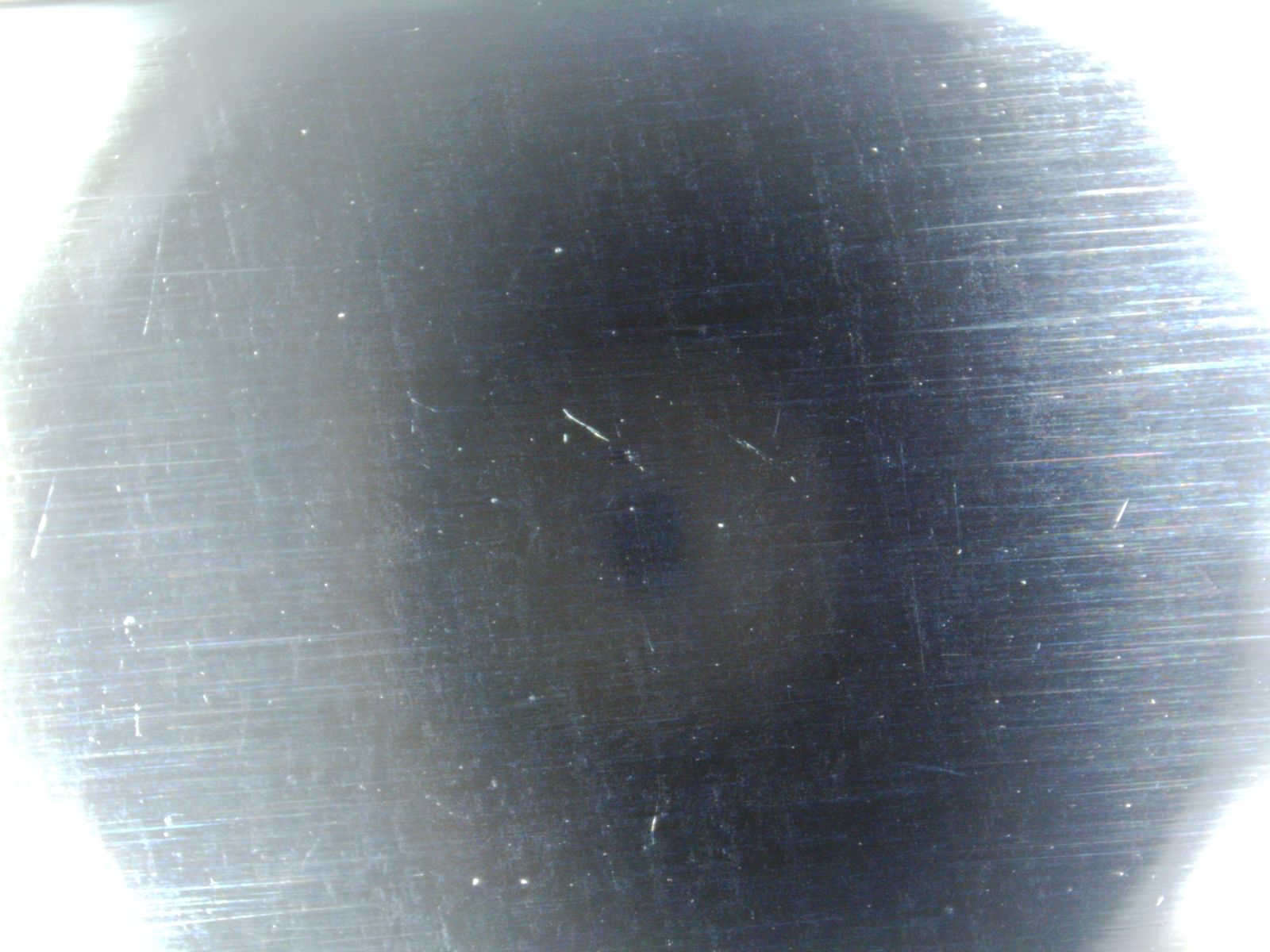
Here you can see four pictures taken with my digital microscope (courtesy of our quality department who tossed it away because they lost the installation CD – so I took it home and downloaded free software). Each picture represents a section approximately 10 mm wide in reality.

After 150 grit belt – parallel scratches perpendicular to the blade are very clearly visible.
©Charly, all rights reserved. Click for full size.


After one day, scratches from the sandpaper are no longer visible with the naked eye, but they are still visible under the microscope.
©Charly, all rights reserved. Click for full size.


After two days, the scratches from sandpaper are no longer visible even under the microscope unless you really look for them.
©Charly, all rights reserved. Click for full size.

And after just a few minutes with the set of buffing wheels the scratches are no longer visible and the surface is so polished that the microscope photographs itself.
©Charly, all rights reserved. Click for full size.

Theatre Project, part 3 – Stonemasonry Heritage

This is the last part of Nightjar’s series on her work with a local theatre company’s most recent play. I’ve enjoyed this series immensely. Nightjar has carefully chosen photographs that bring the play to life even for those of us who were not able to attend and her processing in antique tones lends an authentic feel to the material. I think she’s done an outstanding job helping to bring the script to life and I have no doubt that the troupe will call on her again. Thank you so much for sharing, Nightjar.

In the last part of the series Nightjar has focused in closely on the beautiful details of life that we see, but don’t see, everyday. I’ll let Nightjar explain.


photo 1, ©Nightjar, all rights reserved

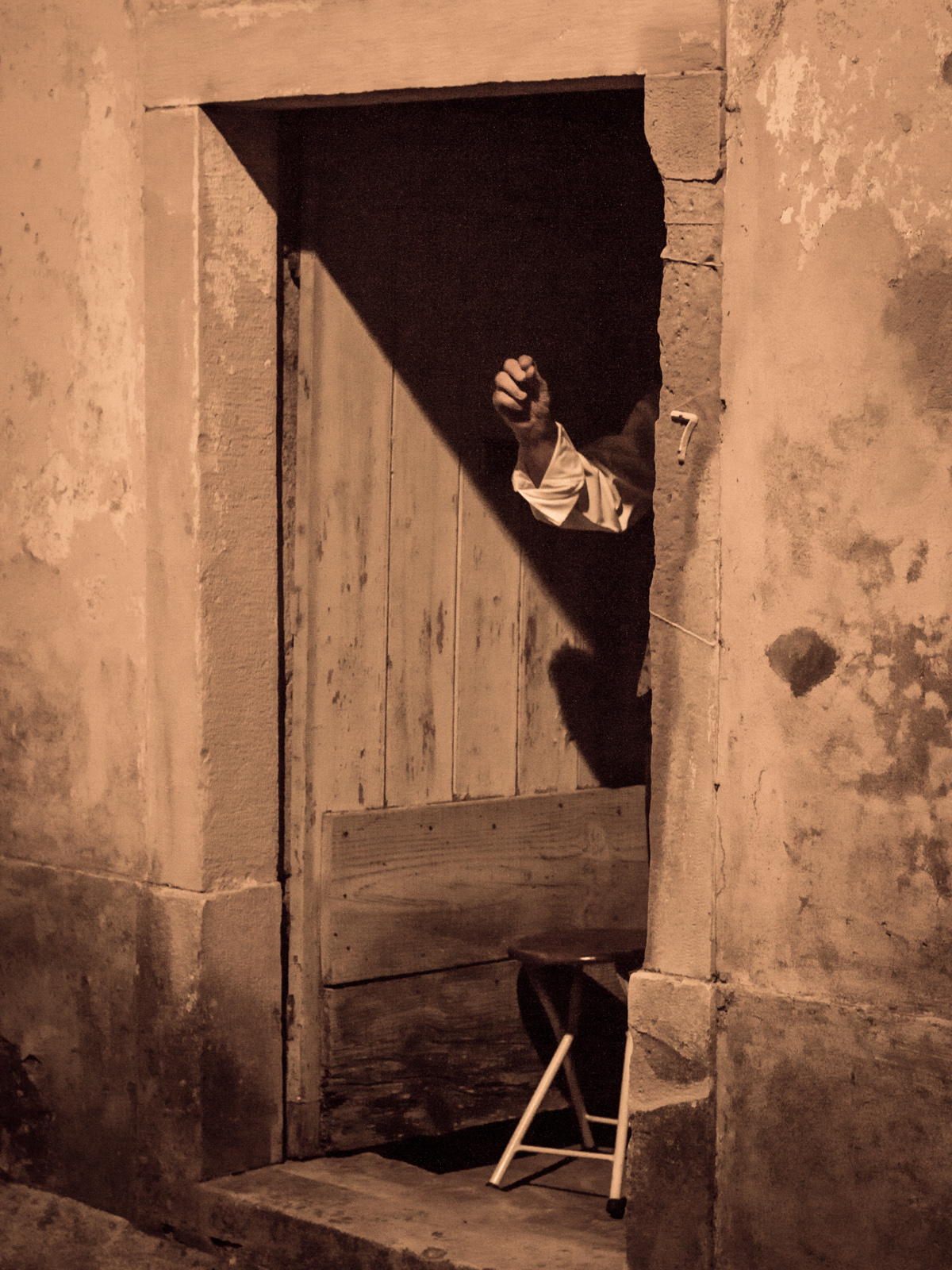
For the last part of this series I selected another of my favourite scenes. This may actually be my favourite part of the whole play. The audience is just strolling along one of the main streets in the center of the village when suddenly they hear the sound of a handbell. That makes them stop and notice it’s coming from the door of an old abandoned house. Sure enough, there’s someone in there.


Photo 2, ©Nightjar, all rights reserved

It’s a stonemason, carrying his set of tools. He has questions. What’s a window? Could it be more than just a hole in the wall to let air and light in?


Photo 3, ©Nightjar, all rights reserved

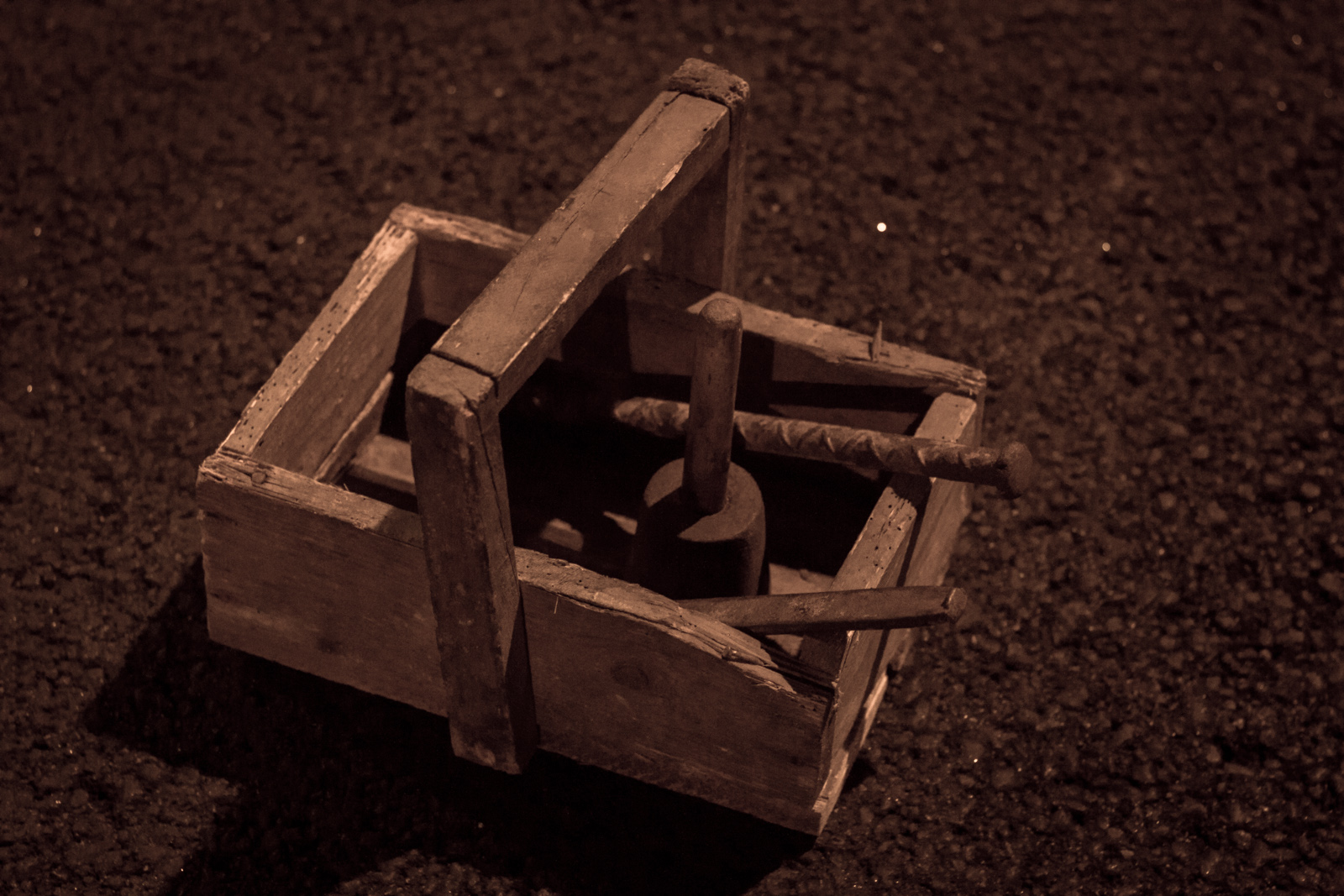
We are a limestone region and stonemasonry is an old tradition. That doorjamb you see in the first photo was sculpted with these tools. There’s a diary in the tool basket, the diary of a stonemason. He picks it up and goes inside the house, leaving the tools near the audience.

Photo 4, ©Nightjar, all rights reserved
The audience’s attention is drawn to the house’s first floor and to its beautifully crafted window. That’s the work of a talented stonemason without a doubt. The man reads a piece of his diary from there. He has a few thoughts to share on what windows mean to him.

A lot of people later admitted to us that they had never looked up to notice that window. And that the answer to the question they started with (see Part 1) was indeed “yes”: this place could still surprise and move them.

And that’s it for now. I enjoyed this exercise in non-nature photography a lot more than I expected.

Outdoor Theatre Project, part 2 – Streets, Houses, Families

I really like the idea of outdoor theatre where the audience moves from scene to scene and becomes a part of the play itself. In part 2 of the series, Nightjar’s photos are done in black, white and sepia tones and have an antiquated feel to them in keeping with the play. I’ll let Nightjar explain the artistic choices behind each photo:


Photo 1, ©Nightjar, all rights reserved

This is one of the most dynamic and beautiful scenes and took place in an old and narrow street filled with props, although the public can’t see everything right away because of all the hanged clothes blocking their vision.


photo 2, ©Nightjar, all rights reserved

White clothes and wooden clothespins gave the street a properly antique look. Plastic just wouldn’t have worked.


photo 3, ©Nightjar, all rights reserved
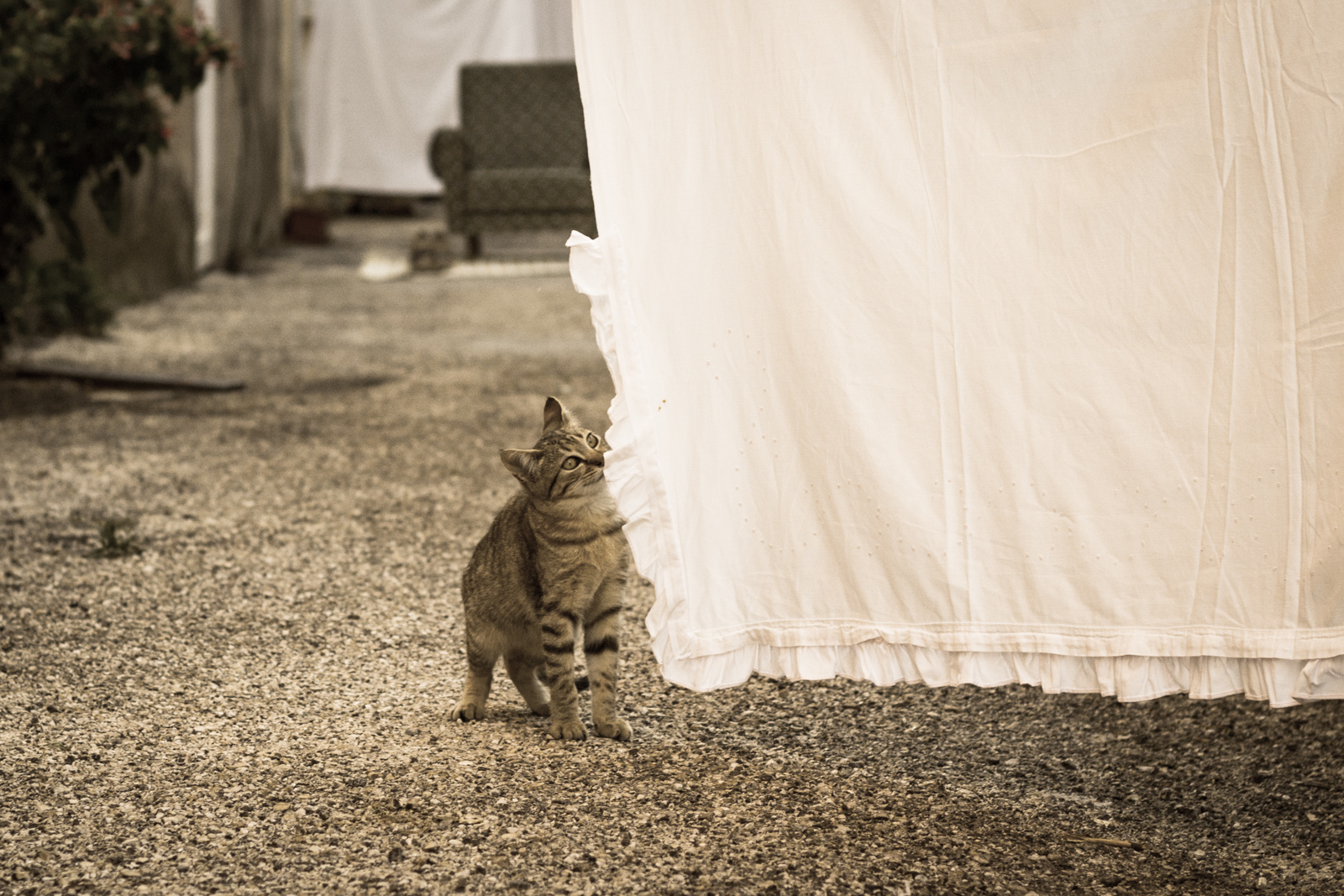
Not an actor and not part of the crew. Originally. I took this photo before one of the rehearsals, and I was convinced the public would scare the cats away. That was not the case. They even showed up in my recording of this scene, running along in front of the actress. Well, the scene is about houses and streets, I guess the cats concluded it could be about them as well.


photo 4, ©Nightjar, all rights reserved

Near the end of the street things get a bit more personal as you can see. Families are remembered and everyone gets a good laugh when we get to a list of family nicknames. Me, I am somehow still from the “pinenuts” family. I do not however belong to the “vinegars”, “onions” or “garlics”, definitely not to the “howevers”, “glories” or “fourteens”. I will admit to a bit of “turnip” blood and the “mouths” are still my distant cousins. I think for most of these silly nicknames no one has any idea how they came about, just that they have passed from generation to generation and when put together whole sentences can be made out of them.


Tree Tuesday

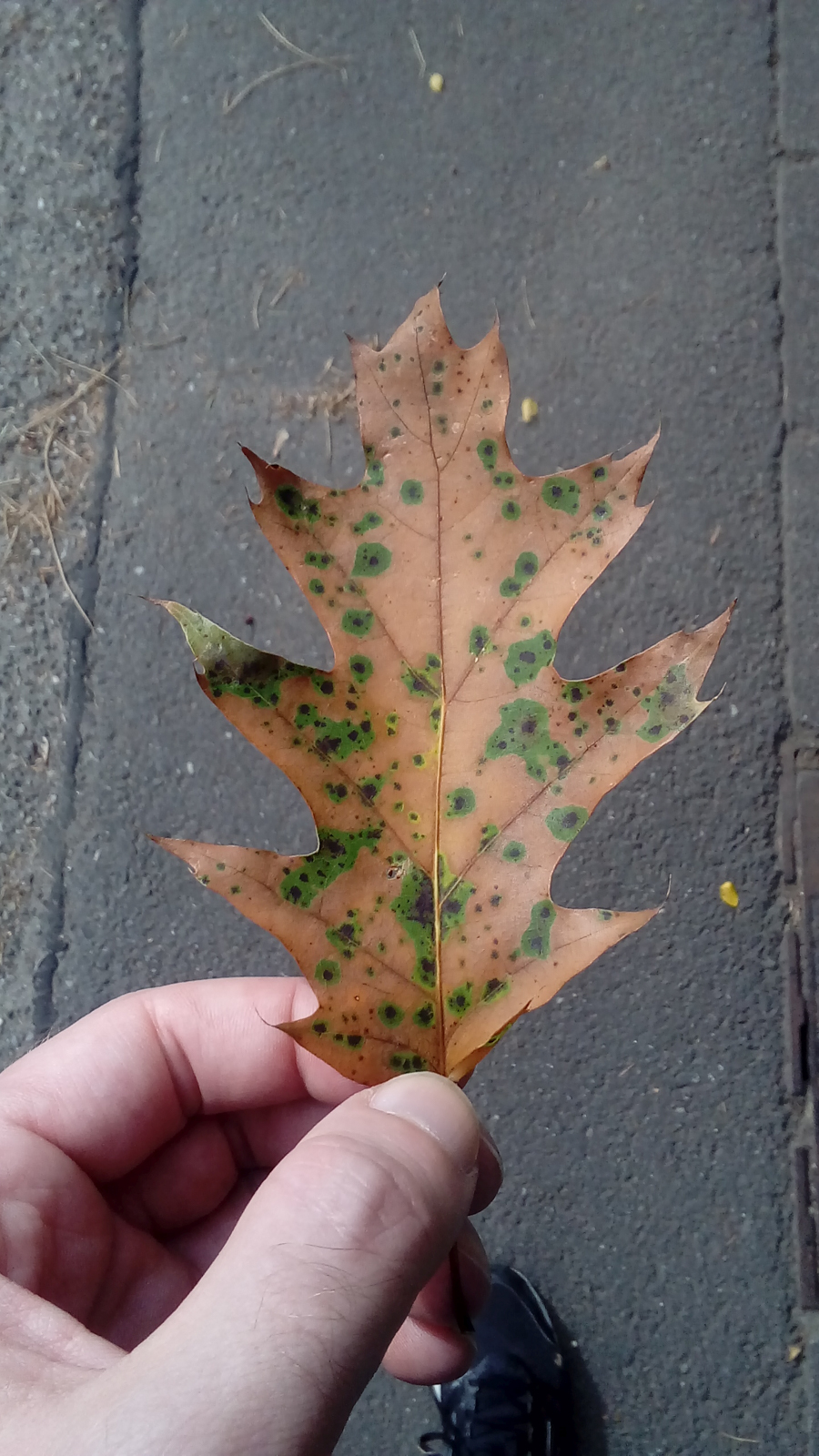
This week we have an autumn oak tree in its fieriest colours from Avalus. I love how bright the colours look against the grayish sky, almost as if the leaves are lit from within. The single oak leaf that follows, though, is seriously trippy. It’s instructions seem to read 1) lose all green colour 2) fall to the ground 3) get a fungal infection and 4) turn green again…in artistic little blobs. Thanks, Avalus, for this very interesting share.


Fall Oak, ©Avalus, all rights reserved

Fall oak leaf, ©Avalus, all rights reserved

Making Kitchen Knives – Part 7 – Assembly and Finishing

After leaving the handle scales in the ammonia overnight, I took them out the next day,  washed them in running water and quickly dried them. First by letting them for an hour above the stove in my workshop and when they were nearly dry, heating them carefully in 10 sec intervals in the microwave until there was no steam coming out. I do not count this time into the manufacturing time, because I have been doing it this way only to be able to proceed quickly and get the knife done this weekend. Normally I would let it  dry by itself.

©Charly, all rights reserved. Click for full size.

When dried, the scales had to be fitted to the handle – that is done by carefully sanding the faces that are glued on the tang on a flat stone as long as it takes to get them nicely flat. Then I screwed the handle scales without the blade together again and sanded and polished the two forward facing facets, because once the scales are on the tang, nothing can be done about them.

As far as the metal goes, I cleaned most of the scale from the tang with 80 grit sandpaper and then I cut two pins from 6 mm brass rod, hammered them through the holes in the tang and tried whether the whole assembly fits together without unseemly gaps. I was prepared to eventually sand a bit here and there, but it was not necessary, it fitted nicely. So I slathered generous amount of quick drying epoxy cement on all adjoining surfaces and squeezed the whole assembly gently in the vice. I cleaned the epoxy that got squeezed out, first by scraping of the excess with a piece of wood and second by washing the blade with paper towel soaked in alcohol. A piece of epoxy on the back and belly of the handle are not a problem, since those areas will be sanded anyway, but a real care must be taken in cleaning the blade and the forward facing facets of the scales thoroughly, because again, any mistake there cannot be easily corrected.

©Charly, all rights reserved. Click for full size.

The epoxy that I was using was hardening quicker than I was happy with, but our local Baumarkt has “optimized” its wares selection a few years ago and they are only selling quick-setting epoxies now and I will probably have to order some slowly setting epoxies over the internet. I got lucky and I managed to get everything important clean before the glue set, but it was a race with time. That means I could not make any pictures of that process, so what you see is status just before applying the glue.

After the epoxy has hardened – in this case about 15 minutes later – I have made final shaping and polishing of the handle. I did not go above 150 grit sandpaper though, because that would be a waste of time with this wood.

Because the used wood was extremely porous, I had to stabilize it. Marcus has already mentioned the recent fad in knifemaking that consists of infusing the wood with resin. That would be ideal here.

©Charly, all rights reserved. Click for full size.

Well, I lack the equipment to do that. But I wanted at least somewhat stabilise the wood even so. And I wanted to use the same finish that I have used on my mother’s knife, because it has proven itself to be very resistant. So I took the boat varnish and diluted it with acetone at a ratio approximately 1:4. You can see on the picture that the undiluted varnish is a lot thicker than acetone and it has sunk to the bottom of the jam-jar. However after mixing it did not separate again for a few days by now.

For the first dip I have put the handle in the heavily diluted varnish and I waited approximately 20 minutes until no visible bubbles were rising. Ideally It would be better to do this in a vaccuum-chamber, but acetone is very good wetting agent and this should be enough for at least a few mm penetration. After that I took the handle out and cleaned any varnish from the blade immediately with acetone. Then I have let it dry in a dust-free and well heated room. All that is left now is this week each evening after returning from work giving the handle a slight polishing with 150 or 180 grit sandpaper, dipping, cleaning, leaving it dry again until I am satisfied with the surface. I am not going to measure this time exactly because it is scattered a few minutes each evening over a few days. Lets say it is 30 minutes overall, including final signing of the blade.

©Charly, all rights reserved. Click for full size.

That makes it 1:30 or 90 minutes for all of the work described here. That also makes the knife done for the purpose of measuring the time of my actual manufacturing process, so next time we can look at the data and look what (if) can be done there to make it more efficient.