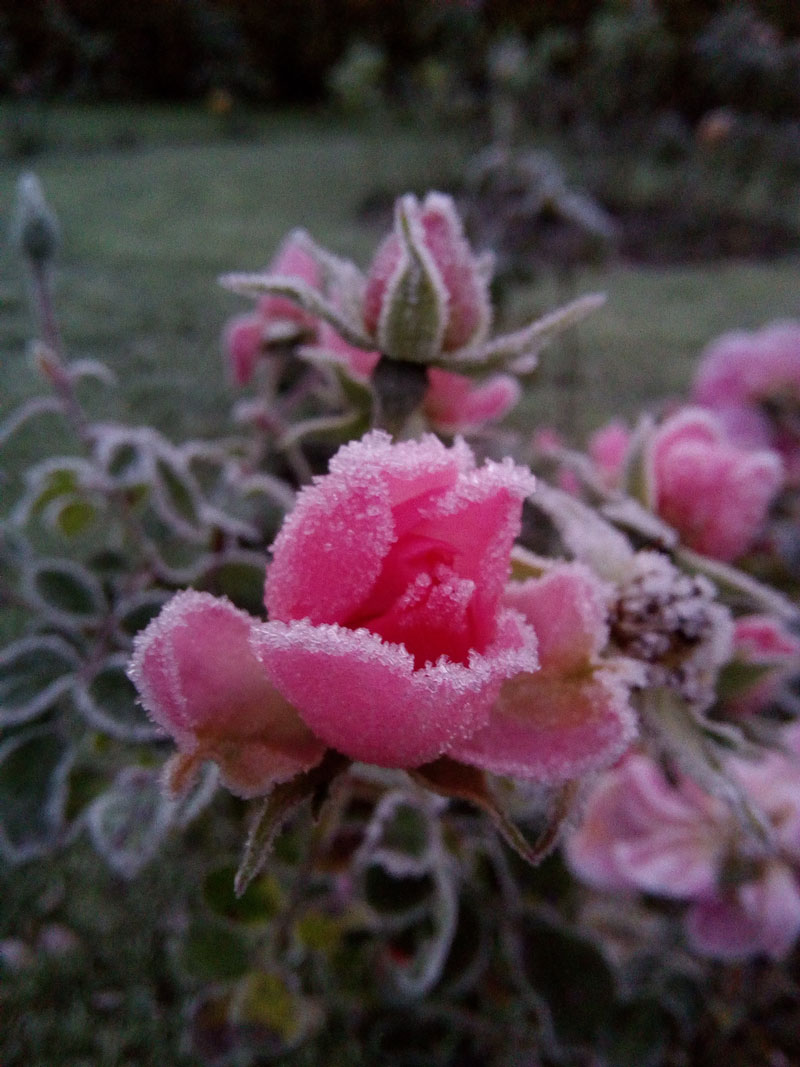
From rq, click for full size! Frosty. We haven’t had a frost yet.


© rq, all rights reserved.

From rq, click for full size! Frosty. We haven’t had a frost yet.
© rq, all rights reserved.
A girl Downy Woodpecker and a boy Downy Woodpecker. Click for full size.


© C. Ford.
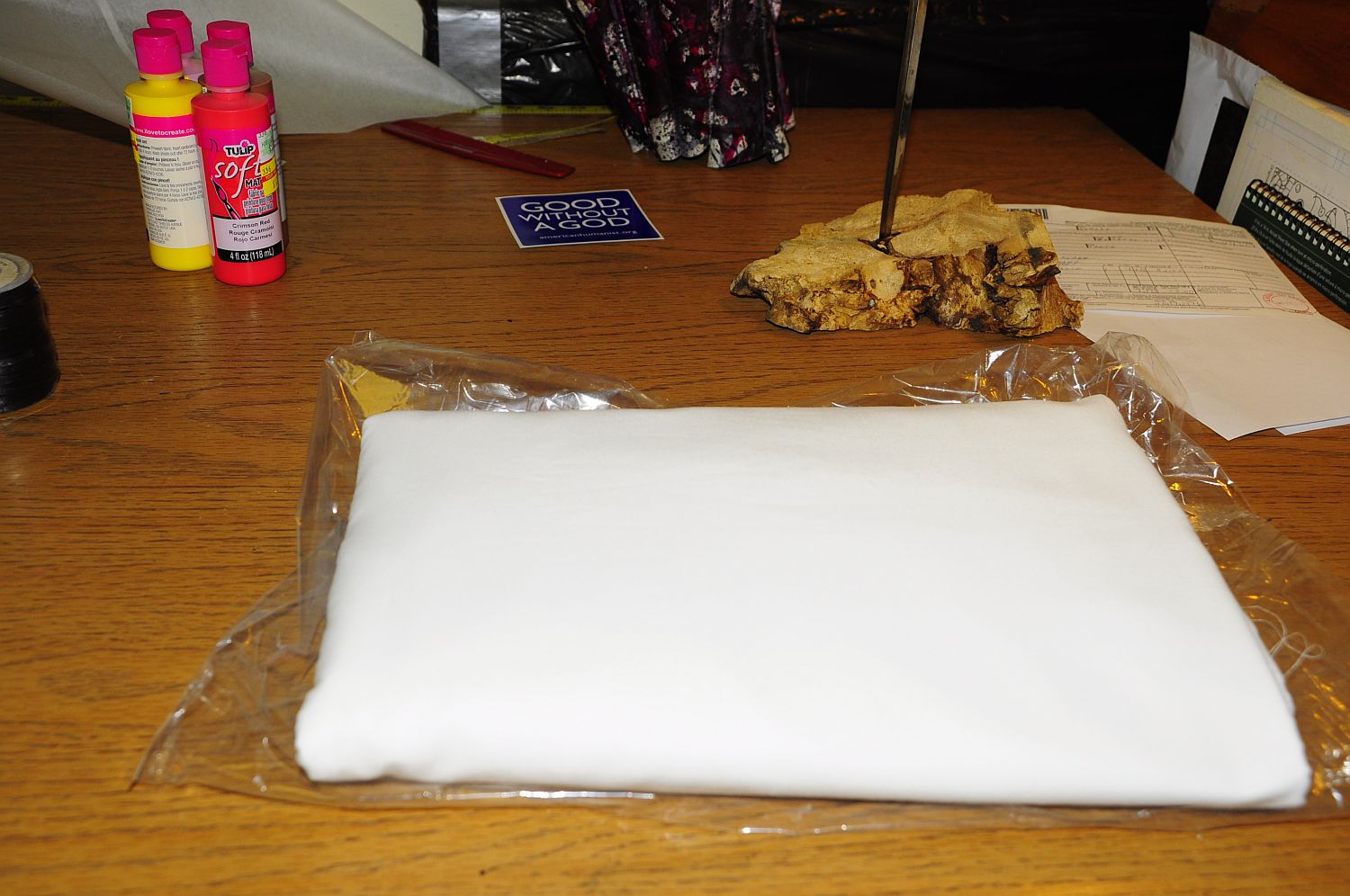
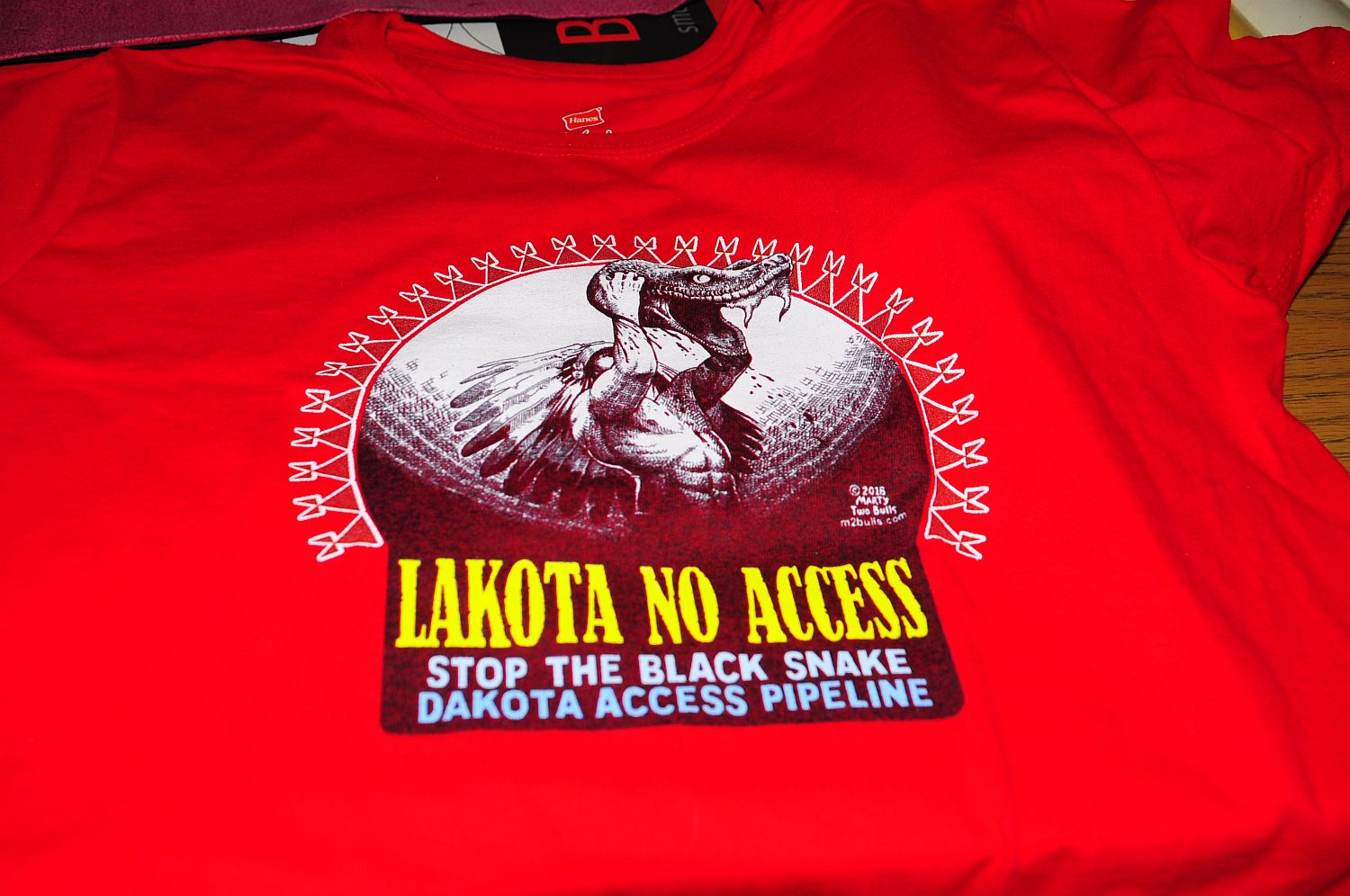
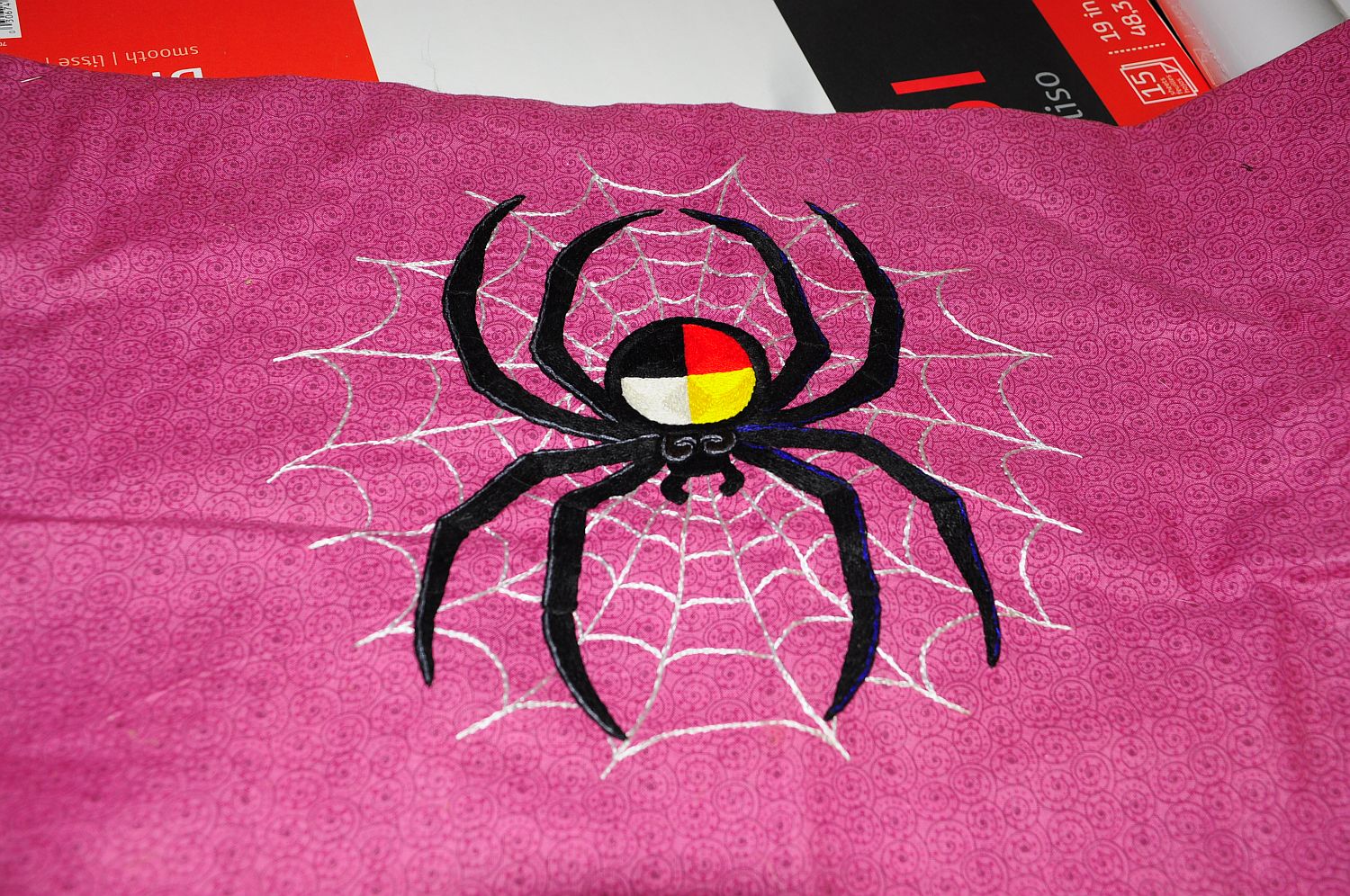
My beautiful fabric is here, so there will soon be much horse painting, and my Marty Two Bulls T-shirt has arrived, aaaaand, does anyone want a spider? I had made that as a computer cover, but it’s not needed anymore, so it’s up for grabs. Umm, it’s approx. 21″ x 13″. I have to wash it first, but then it will be ready to go. Also, Giliell, the horses are on their way to you!
© C. Ford.
Last Wednesday, a black man was walking down a street in suburban Edina, Minnesota, when a plain clothes officer grabbed him and refused to let go.
The officer’s conduct drew the attention of a bystander, who took out her phone and started filming.
As the officer forcibly pulls the man toward his police car, he yells, “For what?… You can’t just put your hands on me like this!”
The officer accuses the man of walking down a part of the street he shouldn’t have been walking on. The man insists he did nothing wrong. The man becomes agitated by the officer not letting go of him, repeatedly swears at the cop, and is arrested.
“You could’ve just shown him where to walk very kindly,” the bystander tells the officer as she continues to film. “You’re the one who incited this.”
“He’s scared,” she adds. “People die in these situations. It’s scary.”
On YouTube, the woman provided more context:
I witnessed and videoed this earlier today. I passed by a man who was walking on the white line of the shoulder of the street. There was construction and it was obvious that the sidewalk was not available right there so he was hugging the right side as far as he could go. I went around him and noticed in my rearview mirror that an unmarked SUV turned on police lights. The officer pulled in front of the pedestrian to cut him off and proceeded to accuse him of walking in the middle of the street.
Edina is about 18 miles from where Philando Castile was murdered by cops. The Edina cop shop has responded, but they have not done well in that regard “why of course that black man was wrong! Wrong, wrong, wrong, and we have all manner of justifications, and it’s not what it seemed!” The cop in this video was not in uniform, but apparently, he just could not cope with the sight a black man walking, and not walking in just the precise manner he wanted. If this cop just had to have a control freak moment here, all that was necessary was to briefly stop, identify himself, and say “okay, can you walk over there, because the way you are doing now isn’t safe, okay?” and then took off to do whatever it is cops do. But no, there had to serious man handling and full court asshole cop behaviour, down to a reprimand that certain language wasn’t allowed in that neighborhood. Really? I’d like to know where Officer Asshole lives. Is it that neighborhood? Can he provide evidence that that specific neighborhood in Edina has an ordinance which states that no one can say the word fuck? Yet more evidence that the only thing cops care about is just how far you can get down on your knees, in absolute compliance. Hey, Officer Asshole, have a fuck you! from me.
Think Progress has the full story.
It's incredible that our institutions of gov, WH, Congress, DOJ, and big media are corrupt & all we do is bitch. Pitchforks and torches time pic.twitter.com/8G5G0daGVN
— David A. Clarke, Jr. (@SheriffClarke) October 15, 2016
Yesterday, we took a look at the frightening views of Trump fanatics, who believe absolutely that every single journalism source is lying, that voter fraud is not just for real, but happening before any voting, and these believers are happily talking about assassination and bloodshed. This is a continuation of that story. Now that singular ass Sheriff Dave Clarke is on board, hollering for a mob. I am feeling physically stunned at this point, as if someone whacked me with a bat, attempting to recover my wits and make sense of the scene in front of me. How in the hell can most of us just be sitting here, an audience to this absolute insanity happening in front of our faces? No, I don’t know what to do either, but I am frightened. I grew up in the counter-culture, in a tumultuous time of great change, but for the most part, it was change for the better. The better of all people. The same cannot be said now. We have people who want to go backwards, and indulge in full scale colonial assault, again.
Most of the grumblings and musings of rebellion have come from everyday Trump voters, but on Saturday, Trump surrogate and Milwaukee Sheriff David A. Clarke, an elected law official, tweeted that it’s “pitchforks and torches time” with a (stock) photo of an angry mob.
I guess Clarke figures he’ll be one of the “good negroes” who will be happily accepted by Trump and the mob he’s trying to incite. A Sheriff calling for riots. Are we sure this isn’t 1984?
Via ThinkProgress.
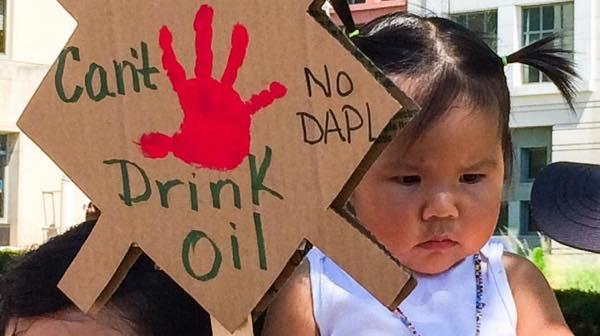
A youthful supporter of the campaign to stop the Dakota Access Pipeline. cool revolution via Flickr.
Chris Clarke has an excellent article at ICTMN, covering the broad scope of how Indigenous people pay when energy enters the picture. To be truly mindful, you need to understand the big picture, and you also need to be able to see and understand when cleaner and greener energy is as much of a problem as the dirty type.
Commentary: An energy company plans a project that would destroy land Native people hold as sacred. Despite Native protests, neither state nor federal agencies intervene to protect those cultural sites. The project proceeds. The land is forever altered. Hundreds of Native people and their supporters converge on the site to protest and to grieve their loss.
Given recent news, not to mention the choice of photo at the top of this story, you could be forgiven for assuming I’m describing current events at the Standing Rock reservation in North Dakota. That’s where the company Energy Transfer Partners is trying to push the new Dakota Access Pipeline through burial grounds and medicine wheels sacred to the Standing Rock Sioux Tribe. The project has already destroyed important sacred sites, and threatens to pollute the Missouri River and local groundwater if it’s built and the inevitable spills ensue.
But I’m actually describing a gathering four years ago in the southernmost parts of the California desert. There, near the little desert town of Ocotillo, hundreds of Native people from across the southwestern United States gathered on June 24, 2014. They were there to mark the destruction of ancient cremation sites, ceremonial locations and other important cultural resources by Pattern Energy, which built the Ocotillo Express wind power facility in Imperial County.
Click on over to ICTMN to read the full story.

Nineteen cities stand in solidarity with Standing Rock Sioux in opposing the Dakota Access oil pipeline.
Although more than 300 tribes have rallied in support of the Standing Rock Sioux’s stance against the routing of the Dakota Access oil pipeline under the Missouri River near their reservation, the support has not all been Native.
Nineteen U.S. city governments have passed resolutions or written letters opposing construction of the Dakota Access pipeline, the Standing Rock Sioux Tribe said in a statement on October 13.
From Seattle to Saint Paul and Minneapolis, to Cleveland, to Portland, Oregon, and all over Turtle Island, the resolutions have been streaming in for weeks. In California the cities of Berkeley, Santa Barbara and Oakland have sent in resolutions. So have Asheville, North Carolina; Sitka, Alaska, and Urbana, Illinois, the latter one of the four states that the pipeline will pass through.
The myriad resolutions being passed by city and municipal councils around the United States express solidarity with the Standing Rock Sioux and Indigenous Peoples in general. They reference everything from treaty rights and broken promises, to the common need for drinking water and the burgeoning of distrust in oil companies’ ability to ensure the safety of their pipelines.
This is good news, and I’m thankful to have such allies. Full story at ICTMN.

A photograph of a still at the IAIA Museum: Artist Annie Pootoogook. Alex Jacobs.
Annie was a very talented artist, and she will be most missed. This is a terrible loss, not only for all those who loved Annie, but for all those who love art as well. Annie has walked on at age 47, and hopefully, her death will be properly investigated now. Like too many women, Annie found herself in an abusive relationship, and tried to get out.
Annie Pootoogook – an artist well-known for her lively, in-the-moment, brave, often disturbing and ground-breaking artwork – was a major star in Canada and appreciated by the Inuit, First Nations and art communities, Canadian citizens and contemporary art lovers around the world.
On September 19, Pootoogook’s body was found in the Rideau River in Ottawa, off a park 2 kilometers from Parliament Hill. She was 47 years old. Although the police did not suspect foul play, the major crimes unit is currently investigating.
Though she was not as well-known in the United States including the mainstream American press and most art magazines or critical forums, Ms. Pootoogook won a major Canadian artist prize, was acclaimed by the post-modern art critics at Documenta 12 in Kassel, Germany, and had a show at the National Museum of the American Indian in New York City.
Within 10 years she was living on the streets in Ottawa and selling her drawings for survival. She had made several criticized choices regarding her male partners, the latest and last was William (Bill) Watt, who since 2010 tried to manage her, her celebrity and money-making capabilities.
Pootoogook told friends she feared for her safety and attempted to leave her situation. When she had left Watt and was going to a Shepherds of Good Hope shelter for assistance, she was later found in the Rideau River. Police have questioned Watt several times and continue with what has now become a high-profile case.
When she made art or engaged people over her art, she was very good and could light up a room. Although deeply shy, if given the occasion she could talk about her art to a room full of people for hours.
As it sometimes happens, she had removed herself from her support networks and ending up in Ottawa’s Inuit homeless community. Art, community and family situations were replaced with drinking, life on the streets and a series of abusive relationships..
To the media she was a celebrity and a story was expected. To the art community, there were many questions, few answers and a lot of speculation. The Native community added Annie to the missing and murdered indigenous women – #MMIW – and wanted answers, she was remembered at a MMIW rally where Canadian Prime Minister Justin Trudeau spoke.
The full story is here. Goodbye, Annie, and thank you for all your wonderful gifts to the world.

Johnny Bob, a spiritual leader from Yomba Shoshone Tribe, gathering pine cones in a mountain valley in central Nevada. (Photo by Joseph Zummo).
There’s a very good article at ICTMN about the Western Shoshone tribes and a staple of their diet, pine nuts. A staple, which is considered sacred, and is healthy, it also treated with utter disregard by non-natives, who have been using any excuse to destroy the trees.
“Everything depends on the water and the trees,” said spiritual leader Johnny Bob, from the Yomba Shoshone Tribe, as he prayed for the start of a Western Shoshone pine-nut gathering. In September, members of several bands came together in a steep-walled mountain valley in central Nevada to collect the protein- and nutrient-rich nuts that were once the mainstay of their diet.
Some people took hold of long sticks and began to knock the sticky green cones off the tops of the pinyon trees. Others gathered fallen branches to chop up for the fire in which they would later roast the cones to release the sweet, creamy nuts. These can be eaten out of hand, added to soups and stews or parched and ground for gravy or mush.
“As we collect, we are pruning the trees to ensure there are even more cones next year. We are also cleaning the forest,” explained Joseph Holley, former chairman and now council member of the Battle Mountain Band of Te-Moak Western Shoshone.
[…]
This critical food source, along with game living in the forest, began to disappear during the late 19th century, as newly arrived settlers chopped down trees for fuel over many square miles around towns and mining operations. Starting in the 20th century, these losses were amplified by the Bureau of Land Management and U.S. Forest Service, which together have uprooted more than 3 million acres of pinyon-plus-juniper woodlands.
To destroy the forests, the federal agencies use tractors to drag gargantuan chains through them, ripping up everything in their path. The ruined landscapes look like the aftermath of a nuclear holocaust. Sometimes, the agencies eliminate woodlands in order to increase rangeland for grazing, an activity that further damages the fragile arid lands where pinyons flourish. Scientists estimate that soil in an erosion-prone “chained” landscape may take 10,000 years to recover.
The full story is at ICTMN.
From Giliell, click for full size. Stunning shots all.


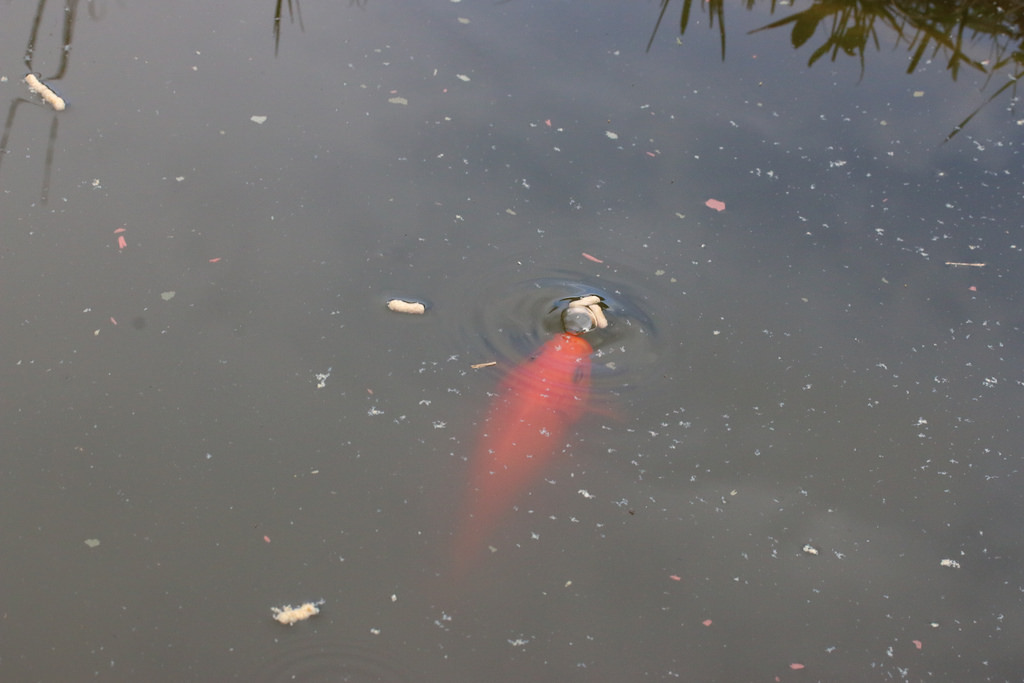



© Giliell, all rights reserved.
From rq, click for full size.


© rq, all rights reserved.
A young Collared Dove tries to get her groom on in high winds. Click for full size.

© C. Ford.

