House Sparrow, click for full size.

© C. Ford.

House Sparrow, click for full size.
© C. Ford.

Major General Donald Jackson. Mary Annette Pember.
As with most issues between Indian country and the federal government, the important bits are steeped in legalese and long numerical references to laws and regulations. The very stuff of life and its protection, however, is referenced and hidden within these dryly-worded documents.
A set of regulations created by the U.S. Army Corps of Engineers (USACE) called Appendix C is one such example, and it may determine the future of the Dakota Access Pipeline project as well as other projects for which the Army Corps is responsible for issuing federal permits.
It turns out that tribes have been complaining about the legality of Appendix C for a very long time, and with good reason. Appendix C spells out how the Corps will meet its obligation to fulfill Section 106 of the National Historic Preservation Act (NHPA), created to protect places of historic, architectural and/or cultural significance.
Part of the NPHA’s Section 106 requires that agencies carry out the process in consultation with Tribal Historic Preservation Officers (THPO) and identify and assess impacts to properties of traditional religious and cultural significance to tribes. Although all federal agencies are allowed to create their own means by which they fulfill the requirements of Section 106, the Army Corps chose to streamline the process by creating its own regulations that tribes and other federal agencies argue not only fail to meet the requirement of the NHPA’s Section 106, but are also in direct conflict with the law.
The Advisory Council on Historic Preservation (ACHP) is an independent federal agency charged by Congress with overseeing implementation of the NHPA. The Corps contradicts several of ACHP’s regulations through use of its own process spelled out under Appendix C.
The differences between Section 106 regulations and Appendix C are substantial. Chief among these differences includes the Corps’ decision in the Standing Rock case to review each river crossing of the Dakota Access pipeline as a separate project rather than consider the entire pipeline as one project.
“This allows the Corps to dismiss the potential for effects to historic properties that may be located within the broader project area of an undertaking,” according to an August 2, 2016 letter from the ACHP to the Corps.

The first baby was born at one of the Standing Rock camps earlier in the week. A woman’s healthcare center has been put together at the No DAPL camp, focusing on Indigenous ways regarding family, pregnancy, parenting, birthing, and childcare. There’s a video and transcript at Democracy Now.
I am sick to death of explaining to obnoxious assholes, most often found in a thread at Pharyngula, that yes, Indians use Indian, and I often go to fair length to explain why, but that’s just never good enough, oh no. So, here’s Simon Moya-Smith to explain, and say the exact same thing I do, but maybe some of the obnoxious assholes will get it now, because it’s coming from a man:
We say "Indian" b/c when we say Oglala or Osage or Diné or Ojibwe or Choctaw or Ute or Tulalip ppl (Americans) respond, "What's that? …"
— Simon Moya-Smith (@SimonMoyaSmith) October 19, 2016
That’s all, folks.
Via Twitter.
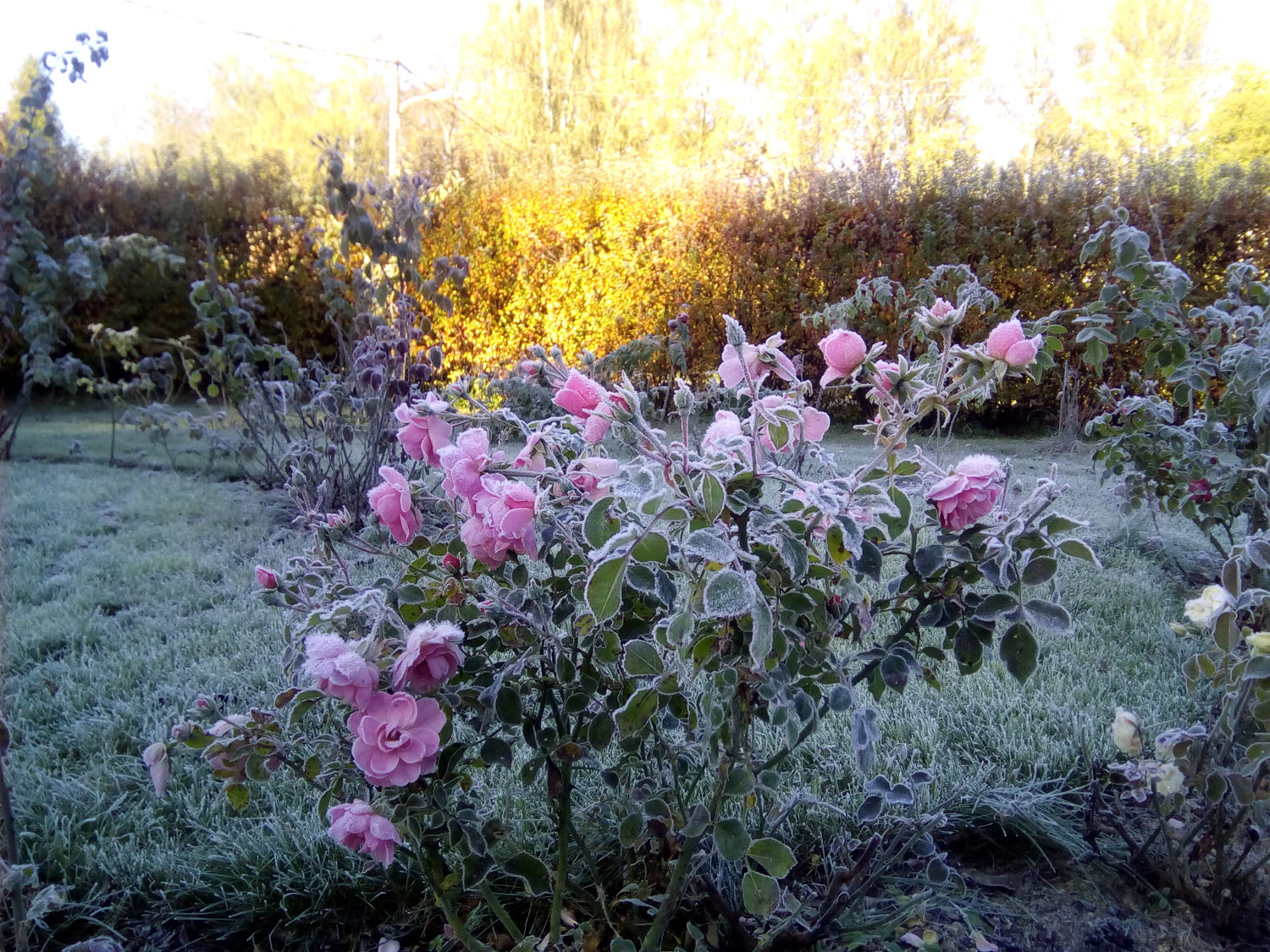
From rq, click for full size.



© rq, all rights reserved.
Click for full size.

© C. Ford.
Grackle, click for full size.

© C. Ford.

© C. Ford.
Must work today. I have caught all the wild wrinkles, and now I must slay them. Then, maybe painting.

© C. Ford.

Courtesy KCET.
Indigenous Peoples are increasingly being seen as having the keys to save our habitat from human-induced destruction.
A new series on KCET explores several aspects of Traditional Knowledge and the ways in which the most effective methods of caretaking this land we call Turtle Island originated with those who originally inhabited these lands. Tending the Wild began airing on Monday October 3 with “Fire” and had its second episode, “Salmon,” on October 17.
The series centers on tribes based in what is today California. Episode 1, subtitled “Cultural Burning,” explores “how Native California communities use fire as a natural resource to promote a healthy ecosystem and how plants and animals have evolved to need fire disturbances to survive,” according to a KCET statement. “Additionally, this episode will explore how fire is used in various cultures; and the negative effects of fire suppression, a western concept initially promoted by National Parks and Forest Services.”
Indeed, the theme of not only restoring but also
The second episode, subtitled “Keeping the River,” became available online on October 18 at KCET.org and LinkTV.org. This segment looks at dam removals, fishing restrictions and the controlling of runoff from agriculture and industry into the waters. Key members of the Yurok, Karuk and Hupa tribes appear in this one, KCET said.
Basketry takes up the third episode, set to air on October 31, in a story about using “Plants as Materials” and what that entails by viewing the process of basket weaving from the cultivation of the proper plants, to the end product.
Viewers will learn about the “decolonized diet” in Episode 4, “Plants as Medicine” in Episode 5, and how to love the desert in Episode 6. The series continues through mid-December.
Oh, I want to watch everything right now, but work calls. The importance of traditional ecological knowledge can’t be emphasised enough. Via ICTMN. Tending the Wild at KCET.

Tip left for SC waitress. (Source: Friend of waitress)
In Greenville, SC, a couple left a poison pill note for their server. They did note her service was excellent, but apparently all her hard work and excellence merited nothing more than a self-righteous helping of shit. Christians. Seriously, this sort of crap – every single one of you Christians knows people who commit this banal act of evil, and do you do anything about it? No. Gosh, you just add so much positivity to the world, don’t ya?
GREENVILLE, SC (FOX Carolina) –
A South Carolina server said she feels heartbroken and mortified after the tip she received from a couple she had served told her that her place is in the home.
The server who asked not to be identified said she had just finished clearing off the couple’s table after serving them when the couple walked back in and left her a note on a napkin and darted out the door.
What the napkin said angered her friend so much she submitted a picture of the napkin to FOX Carolina. The napkin read in its entirety:

(AFP Photo/Justin Sullivan).
Officers with assault rifles, backed by a huge armored grenade launcher, square up to a crowd furiously denouncing the killing of a young black neighbor.
It is a scene which could have been taken from archive footage of Mogadishu in 1990s Somalia or countless other battles, but this conflict is closer to home — the streets of small-town America.
The images, captured in Ferguson, Missouri in 2014, open “Do Not Resist” — a disturbing documentary charting the transformation of police across the US into forces that look like military units.
The explosive film is set to fuel an already bitter debate raging in America over heavy-handed law enforcement, following a litany of police killings of black men that have sparked protests from Ferguson and Charlotte to Chicago.
Director Craig Atkinson, whose movie is opening across the US having won best documentary feature at the Tribeca Film Festival, says the American law enforcement ethos has changed “from a mentality of peacekeepers to that of an occupying army.”
Another eye-opening scene shows officers in black fatigues firing volley after volley of automatic rounds at cardboard targets, as if they were preparing for war rather than to “protect and serve.”
A khaki-clad instructor explains that security forces must prepare for all kinds of attacks, “including the Islamic State.”
MRAPs, the armored trucks that protect troops from roadside bombs planted along the dusty roads of Iraq and Afghanistan, are now ubiquitous across the US.
[…]
In another shocking scene, a SWAT team arrives in an MRAP at a tree-lined street in Columbia, South Carolina, to execute a search warrant in a drug case.
The officers, whose equipment looks barely distinguishable from that of an infantry division, end up badly damaging a family home in a raid that nets a small amount of loose cannabis.
Atkinson’s father, a retired policeman from Detroit, Michigan, spent over a decade in one such SWAT team, the New York-based filmmaker explains.
“In his time, his team intervened 29 times in 13 years. Now they are taking part in 200 raids a year,” Atkinson tells AFP.
[…]
Campaigners against police militarization accept that SWAT teams and their heavy-duty hardware have a vital role in combatting the rare instances of terrorism in the US.
But they point out that, due to prolonged mission creep, this is no longer how these resources are used.
Peter Kraska, a criminology professor at the University of Eastern Kentucky, says there are now at least 50,000 SWAT raids a year, up from 3,000 in the 1980s.
Most of the activities of these highly specialized units have little to do with the reasons for their inception, such as dealing with hostage situations, terrorist attacks and drug cartels.
According to Atkinson, one of the architects of the “warrior culture” is a hugely successful police trainer named Dave Grossman, head of a consulting firm called the Killology Research Group.
“We are at war and you are the frontline troops in this war. What do you fight violence with? Superior violence,” Grossman hollers at an audience of mesmerized police in one session filmed for the documentary.
The retired army lieutenant colonel has lectured throughout the US, according to his website, and Atkinson believes his influence has spread to every American law enforcement agency.
For those who are woke, none of this will come as a surprise, but I’d say this is necessary viewing for us all, and this ongoing militarization not only must be stopped, it needs to be revoked. It’s time to take all those shiny toys away from all the bully boys out there. If cops want to continue playing military, I suggest they quit being a cop, and join up.
Via Raw Story.
While there is endless, pointless arguing here in uStates over whether or not some people are people enough to use a public lav, and whether or not it’s okey dokey to try and scope out whether or not someone has an approved set of genitals, with regressive assholes intent on doing damage, and making everyone feel unsafe, squabbling like fucking four year olds over who gets to be the dominant one, Japan get its oh so right. I’m ready to run away from home.
What does Japan care about? Utility, of course, but also comfort, design, and the sheer artistry that can be a public lav. The Japanese government awards a highly coveted Toilet of the Year award to spaces deemed worthy. And boy, do they have a whole lot of worthy.
After all, the government estimates that in our lifetime we spend up to 11 months in a bathroom. So why shouldn’t they be spaces that are clean, soothing and relaxing?
So, officials created a pamphlet (PDF) of public toilets they deemed exemplary, and distributed it earlier this year in hopes of elevating the entire public toilet industry. Here are a selection of government-approved public toilets.
And there are a lot of them! You’ll need to click over to Spoon & Tamago to see and read about them all, or hit the pdf. Here are some examples, and it sure would be nice if uStates could grow up and start focusing on what really matters, like grown up Japan:

Gallery Toto at Narita Airport Terminal 2 (Chiba)
At Narita Airport, Japan’s gateway to the world, an art installation-like lineup of toilets greet travelers. Here you’ll find iconic toilet-maker Toto’s latest toilet technology, which is of course available for public usage. We wrote about this project here.

Haneda Airport International Terminal (Tokyo)
At Haneda you’ll find a public bathroom that’s been specifically designed to aid and assist disabled travelers. Universal signage, wide passageways and even a toilet for service dogs makes this bathroom user-friendly for absolutely anyone.

Neopasa Shimizu Service Area (Tomei Expressway, Shizuoka)
Highway service areas usually have the grossest toilets. But not at Neopasa, where an oasis of clean and beautiful toilets await tired drivers and passengers. There are more than twice as many stalls in the ladies’ room, compared to the men’s, to combat longer lines. And a large monitor screen at the entrance even tells you which stalls are unoccupied.

Neopasa Surugawan Numazu Service Area (Tomei Expressway, Shizuoka)
This is the only service area along the Tomei Expressway that has views of the sea. So the operator decided to build their bathroom on the 2nd floor near the terrace and create a space where people want to go, not just because they have to go.
Via Spoon & Tamago, go look! Maybe we can all plan to run away together. I want to live in Hokkaido, though.