Apocalyptica, Hall of the Mountain King.
Affinity
Art, Fun, & Nonsense.

Apocalyptica, Hall of the Mountain King.

Arturo Di Modica holds a model of his Charging Bull sculpture during a news conference Wednesday, April 12, 2017, in New York. CREDIT: AP Photo/Craig Ruttle.
The artist of the Charging Bull sculpture wants the ‘fearless girl’ removed, and so do I.
At a press conference on Wednesday, Di Modica’s attorney Norman Siegel argued that Fearless Girl infringes on Di Modica’s artistic copyright by “changing the creative dynamic” of his original work and ask that it be removed and placed elsewhere in the city:
“Very simply, we request, respectfully, that the Fearless Girl statue be removed. We’re not asking it to be banned… Gender equality is a very serious, substantial issue. It’s permeated throughout our society. For years, civil rights people have fought for gender equality… So that’s a real issue. None of us here today are in any way not proponents of gender equality. But there are issues of copyright and trademark that needed to be and still need to be addressed. So, remove her and place her somewhere else in the city.”
[…]
Fearless Girl is cloying, corporate feminism sponsored by a company that only has three women on its fourteen person board of directors. Only 28 percent of State Street’s senior vice-presidents are women, as are a measly 23 percent of executive vice-presidents. In defense of those stats, the company’s head of public relations told the Huffington Post that those numbers are “better than zero.” Can’t argue with that kind of logic. Who says women are bad at math?
So Fearless Girl is a cutesy signifier that signifies nothing, an accessory for selfies. She doesn’t challenge any preconceived notions about what girls can do or be; girls have long worn skirts and ponytails and played outside. Fearless girls are adored and celebrated in literature, popular culture, and life. It’s once girls become women that all their ambition scans as irritating instead of spunky, as off-putting instead of endearing. The same society that roots for ambition in girls is one that that socially, professionally, and politically punishes ambition in the women those girls will become. It’s women, not girls, who have pesky needs and opinions and goals and sex drives and reproductive organs that make their ambition too problematic to accept.
Oh, I could not possibly agree more. That girl irritated the hell out of me from the start. What, exactly is radical about a young girl in a dress? The image itself is stock straight out of the 1950s, ponytail and flared skirt. Might as well have done her up in a poodle skirt. That aside, my major problem with it was that it was a girl. The protests, the marches, they were about women. Adult women, who in the United States, are still treated as barely above chattel, and who every single day, face a fight over their right to live with the full rights accorded to men. Do we have bodily autonomy? No. Are we paid equal wages? No. Is violence against women taken seriously? No. Is there widespread parental leave and accommodation? No. Are male parents treated the same as female parents? No. Is harassment taken seriously? No. And on it goes. You can idealize girls all you like, you can tell girls they can do anything they like, but what is the point of that when they run smack into the reality of being a woman? And what about the actual reality of growing up girl? It’s not all sweet, rosy, and flying high with ambition as represented. Young girls hit the wall of rooted misogyny very early. Just ask any parent. Parents of boys are just as challenged, as they watch their sons absorbing deep rooted toxic sexism and toxic masculinity. It’s a constant fight, and it’s not one which will get any easier unless we tackle these issues head on, clear-eyed, with a focus on reality.
I don’t really care why the “fearless” girl is removed, as long as she is, and I do take Mr. Di Modica’s point. His art work should not have to suffer at the whim of a piece of marketing fluff straight out of the 1950s. Go away, fearless girl. Give me a call when you’re all grown up.
Full story at Think Progress.
A ballet about the plight of refugees, commissioned for the Royal Opera House, has been showered with five star reviews and described with words like potent and sombre. It’s the work of the Canadian Crystal Pite who has built a reputation as one of the most respected choreographers of her generation – and who is the first woman to have created a new work for the Royal Ballet in almost two decades. It’s titled ‘Flight Pattern’ and Kirsty Wark went to speak to her about using dance to engage in a difficult harrowing subject.
Beautiful and so very poignant. I wish I could see this in person.
From Ice Swimmer, click for full size! Still and gorgeous.


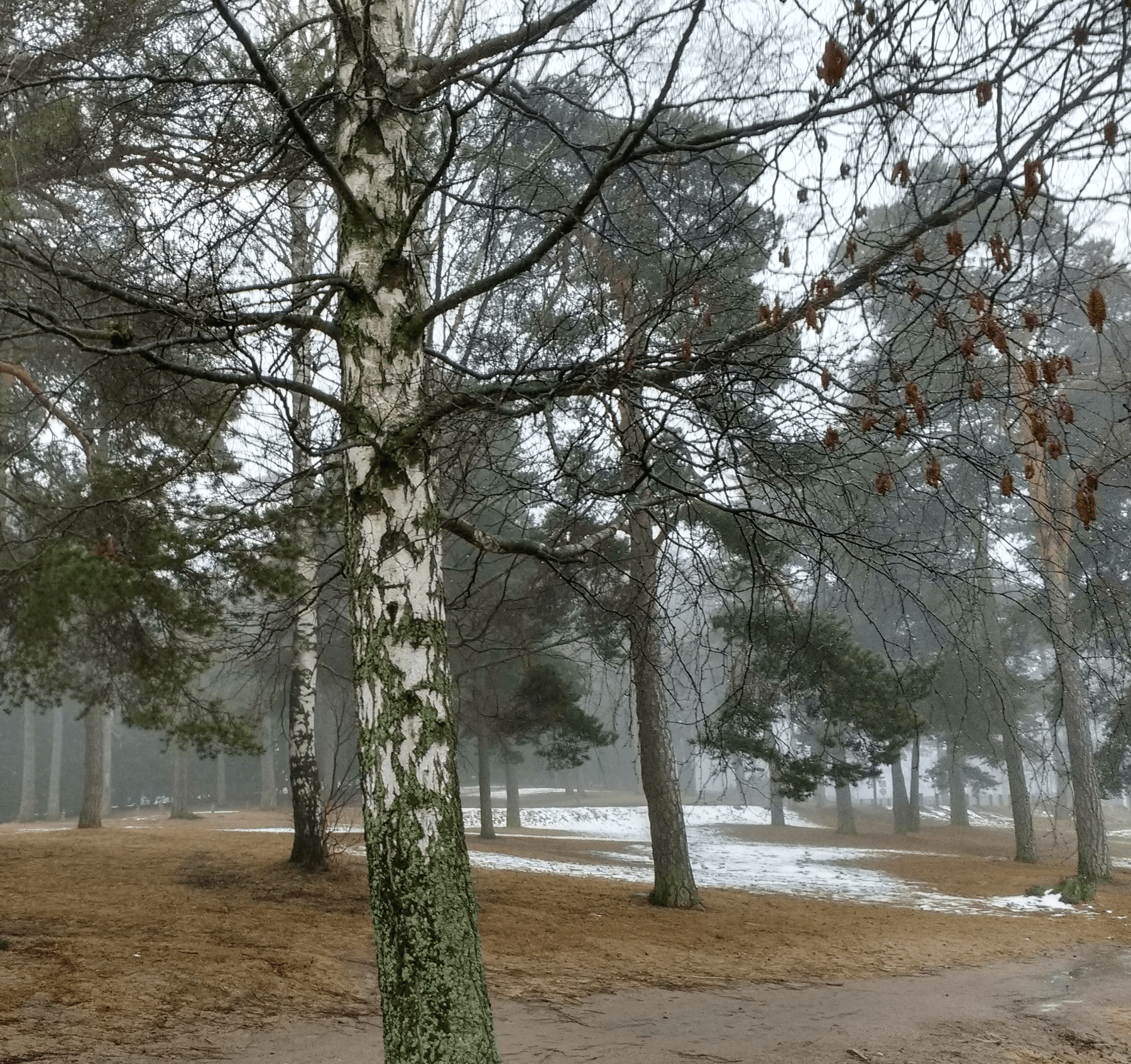
© Ice Swimmer, all rights reserved.
From Giliell, click for full size!


© Giliell, all rights reserved.
From rq, little wild Hyacinths, click for full size!



© rq, all rights reserved.
A Downy Woodpecker, reacting to shutter noise.

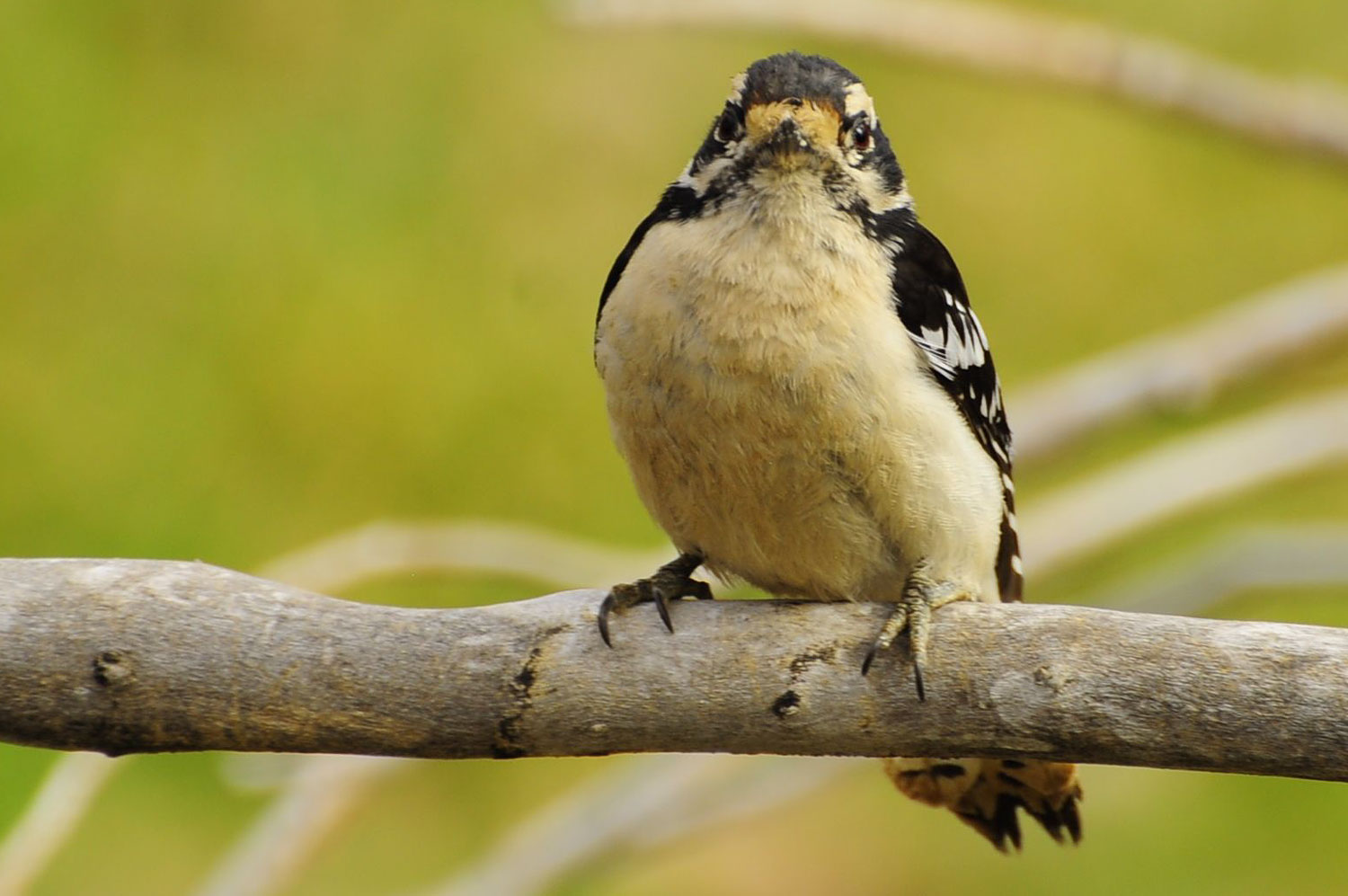

© C. Ford.

I just realized that Akismet is going a bit over zealous again, so as I rarely look at the spam filter, if you find you commented, and it doesn’t show up, please, don’t hesitate to drop me an email (see sidebar) and holler at me to check the thing. Thanks.

Michael Ian Black and Marc Rosenthal, A Child’s First Book of Trump.
Unfortunately, when it comes to history, there’s a long, ugly history in the U.S. of lying to children. Books are filled with euphemisms and omissions, desperate to find any way to praise past politicians and their acts. This is quite the problem with presidential bios, going all the way back. People were considered courageous to mention that the oh so holy Saint Jefferson was a slaveholder. They omitted the rapes, subsequent pregnancies, and those inconvenient little slaves Jefferson fathered. You don’t find sections or books on just how genocidal presidents were when it came to Indians, or how they spent time and money on being devious bastards, making promises they fully intended to break. Nothing about the rapes, murders, and stealing of children, no. There’s very little action across uStates to undo all the whitewash. That much has not changed, but even in an industry well practiced in the art of whitewash, Trump is presenting special problems.
…Rosman catches the Scholastic folks red-handed as they rewrite history to try to prettify Trump for their audience. In a prepublication draft of the book, under the heading “Troubling Statements,” its authors initially explained: “Some of Trump’s biggest supporters were white nationalists. Their comments and actions during and after the campaign were racist and often dangerous. Trump did little to speak against them.” But in the final version, we get, instead, a page called “Campaign Statements,” which explains that, “Some of Trump’s critics felt he did not speak out against prejudicial people and groups strongly enough.”
[…]
The problem with Trump is not that he did not denounce the racism, much less the fact that some people might have felt this way. It’s that he actively encouraged not merely racism but a particularly violent strain of it; one that helped create an atmosphere of menace toward almost all people of color among his most virulent supporters. What’s more, this racism, according to the best data we can find, was central to his appeal both in the Republican primaries and in the general election. The fact that he is now president of the United States presents an additional ideological problem for children’s book publishers. Not only must they find a way around the fact that their subject is a racist, sexist, ethnocentric, McCarthyite, lying con man, but also that nearly half the country’s voters knew all this and picked him anyway.
To be honest about Trump is to be honest about America, and right now, that is just not the kind of thing children’s publishers are set up to do. It’s not even the kind of thing The New York Times or The Washington Post is set up to do — at least not without blaming “both sides” for whatever crime against democracy, decency or common sense Trump has most recently committed. Joana Costa Knufinke, group editor for nonfiction books in Scholastic’s library publishing division, uses this time-honored excuse when she explains to Rosman, “We make an effort to show both points of view.”
[…]
The challenge regarding Trump, however, is not that he has flaws, as men and all presidents do. The problem is that he is all flaws and that it was these flaws that got him elected president. Without those flaws — the racism, sexism, jingoism, dishonesty, incompetence, ignorance and belligerence — there is nothing left to say about Trump… except perhaps to make fun of his hair. This puts the nice people in the children’s book business in the uncomfortable position of either ignoring the new president or running interference of his destructive qualities and teaching our children to, at best, ignore them, or at worst, emulate them.
An incisive look at how the children’s publishing industry is going to be very busy orange-washing and filtering all information about the current unpresident of uStates. Highly recommended reading.
Full article here.

Wow, that will bring in the dollars, won’t it? These are the replacements for all those national brands who fled Bill O’Reilly’s no longer erect ship. It’s sounding more and more likely that Bill’s vacation is going to be permanent, and all I have to say about that is Good Riddance.
Sherman also reports that James Murdoch, the CEO of 21st Century Fox, wants O’Reilly gone. Murdoch forced out longtime Fox News CEO Roger Ailes last summer over allegations of sexual misconduct.
O’Reilly has not addressed the new allegations of sexual harassment on his show. Fox News, with the exception of a lukewarm statement to the New York Times, has also largely remained silent. Silence, however, has not stemmed the controversy.
So far, at least 77 advertisers have publicly announced they will no longer air commercials during O’Reilly’s show. The number of ads on the show has dramatically declined and large national brands have been replaced with ads for Elvis gospel albums and catheters.
Think Progress has the full run down.
Moving on to a remarkable bit of language twisting by none other than Oscar Munoz, who should perhaps hand over the public speaking to someone with more than pieces of silver in their brain:
“We’re not going to put a law enforcement official… to remove a booked, paid, seated passenger,” United Continental Holdings Inc Chief Executive Officer Oscar Munoz told ABC News on Wednesday morning. “We can’t do that.”
You did do that.
Munoz said the problem resulted from a “system failure” that prevented employees from using “common sense” in the situation and that Dr. David Dao, whom security officers dragged by his hands, on his back, from the cabin before takeoff, was not at fault.
A system failure that prevented employees from using common sense. Right. Perhaps if your corporateness would allow employees to think and problem solve, this little public relations nightmare of yours wouldn’t have happened in the first place. I think everyone knows where to place the blame, Mr. Munoz, and it appears that the only “system” which failed is you.
Via Raw Story.
I spliced together footage and music from HBO’s Veep, about a fictional administration full of incompetent, tone-deaf, narcissists, with footage of an actual administrations full of incompetent, tone-deaf, narcissists.
Julia Louis-Dreyfus tweeted this, saying This feels like an Emmy winning episode to me.

Jonathan Ernst | Reuters
U.S. Office of Management and Budget (OMB) Director Mick Mulvaney (R) listens as U.S. President Donald Trump meets with members of the Republican Study Committee at the White House in Washington, U.S. March 17, 2017.
John Harwood at CNBC has an enlightening interview with Mick Mulvaney, the person who is going to decide just how many programs and people can be screwed over by the regime.
MULVANEY: I’ll tell how I wrote it. And then you can decide for yourself. We looked at the speeches to try and figure out where he wanted to spend more money. And then we also had instructions not to add to the deficit. I laid to him the options that Mick Mulvaney would put on a piece of paper. And he looked at one and said, “What is that?” And I said, “Well, that’s a change to part of Social Security.” He said, “No. No.” He said, “I told people I wouldn’t change that when I ran. And I’m not going to change that. Take that off the list.” So I get a chance to be Mick Mulvaney. I get a chance to have those same principles. And I give ’em to the president, and he makes the final decisions.
HARWOOD: He over and over went to West Virginia, went to rural parts of Kentucky and Ohio, said, “I’m going to take care of you guys.” He didn’t say, “I’m going to get rid of the Appalachian Regional Commission.”
MULVANEY: Yeah, and my guess is he probably didn’t know what the Appalachian Regional Commission did. I was able to convince him, “Mr. President, this is not an efficient use of the taxpayer dollars. This is not the best way to help the people in West Virginia.” He goes, “Okay, that’s great. Is there a way to get those folks the money in a more efficient way?” And the answer is yes. And that’s what’s we’re going focus on doing.
“More efficient.” In the current regime, that equals nothing at all.
HARWOOD: How cognizant is he of the fact that many of the people who supported him would be hurt by cuts that you proposed in the budget?
MULVANEY: The president is certainly conscious of the people who voted for him, right. But he cares about more than just the Trump voters. So when you say you know, people that voted for him are hurt, that’s not the issue. He wants to know, “Are the folks in Appalachia, are the coal miners in West Virginia going to be better off under my presidency whether or not they voted for me?” He doesn’t care if they voted for him. I think what the president will tell you is, “The best thing I can do for those folks, whether or not they voted for me, is to figure out a way to get 3.5 percent economic growth.”
Well, there was a lot of Newspeak, translating to “nope, no one gives a shit about them, because hey, they aren’t the issue!”
HARWOOD: I’ve had interviews with Republicans from Paul Ryan to John Thune who have been making the case that, “We are going to persuade the president that we have to do something about entitlements.” How are you going to manage that?
MULVANEY: We’re working on it right now. He went through the list and said, “No, that’s Social Security. That violates my promise. Take that off. That’s Medicare. That violates my promise. Take that off.”
HARWOOD: Is Social Security Disability on that list?
MULVANEY: I don’t think we’ve settled yet. But I continue to look forward to talking to the president about ways to fix that program. Because that is one of the fastest growing programs that we have. It’s become effectively a long-term unemployment, permanent unemployment program.
Oh look, about the last social safety net, going to be shredded. There’s much more at CNBC, along with the requisite “oh hey, we all golf together, we’re great cronies, everyone is happy, happy, happy, no KAOS* regime at all, nope!
*My current image of the U.S. “Government”:
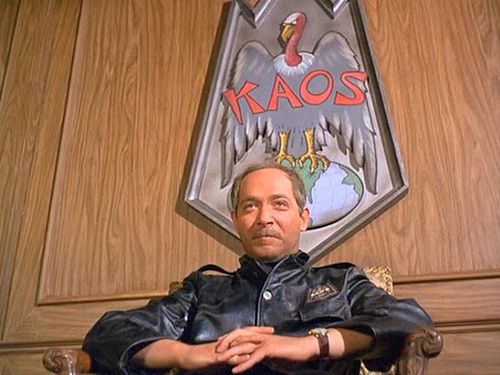
Conrad Siegfried, Head of KAOS, Get Smart.