

© C. Ford.

© C. Ford.

Jim Bakker, the disgraced former televangelist who reinvented himself as an End Times prepper pitchman following his time in prison, was among the dozens of evangelical leaders who were brought to the White House recently to meet with members of President Trump’s administration.
Bakker revealed on his program today that he and his wife Lori were in the White House on the day that Anthony Scaramucci was fired from his short stint as White House communications director, noting that it was not a coincidence that Scaramucci was let go at the moment when George O. Wood, who heads the General Council of the Assemblies of God, spoke out against “unnecessary swearing” during a meeting with White House staff.
Not a coincidence. Right. In any other facet of life, magical thinking is a symptom which notes that your mental health may be in decline. But not in religion, oh no. That gets a free pass. I’m damn tired of it, too. There isn’t one small thing these assholes won’t manage to hook up to their mythical psychopath.
According to the Bakkers, Trump is eager to hear from right-wing Christian leaders and hopes to use them to spread his message to their audiences.
“The president has asked for the pastors, the leaders of Christianity, to come and advise them,” Baker said, as Lori explained that “the reason for the meeting was so that he can get the group of Christian leaders that have a platform to share the truth of what’s really going on that you don’t get to hear in the media.”
Media doesn’t need to report this fucking nonsense, you all never shut the fuck up.
Lori noted that the members of the meeting they attended were able to write a letter to Trump that was hand delivered to him by his primary spiritual adviser, Paula White, and they were told by White House staff how much receiving letters means to the president.
“People think that their letters aren’t going to get to the president,” she said. “Well, guess what? They get to this president … so leaders need to say thank you.”
Actually, the letters got to Minister Money Grubber. I have no doubt they did make it to Donny, though, where he could pore over the praise and use it as a balm for that massive ego.
Bakker said that pastors and Christian leaders must send letters of support to Trump, who “will read every word of it because he’s looking for the pulse of what God is doing in our country.”
Well, no, that’s not what the Tiny Tyrant is looking for, Jim. He’s looking for food for that endless black hole of an ego. Food which you relentless assholes never tire of shoveling into the maw.
Via RWW.
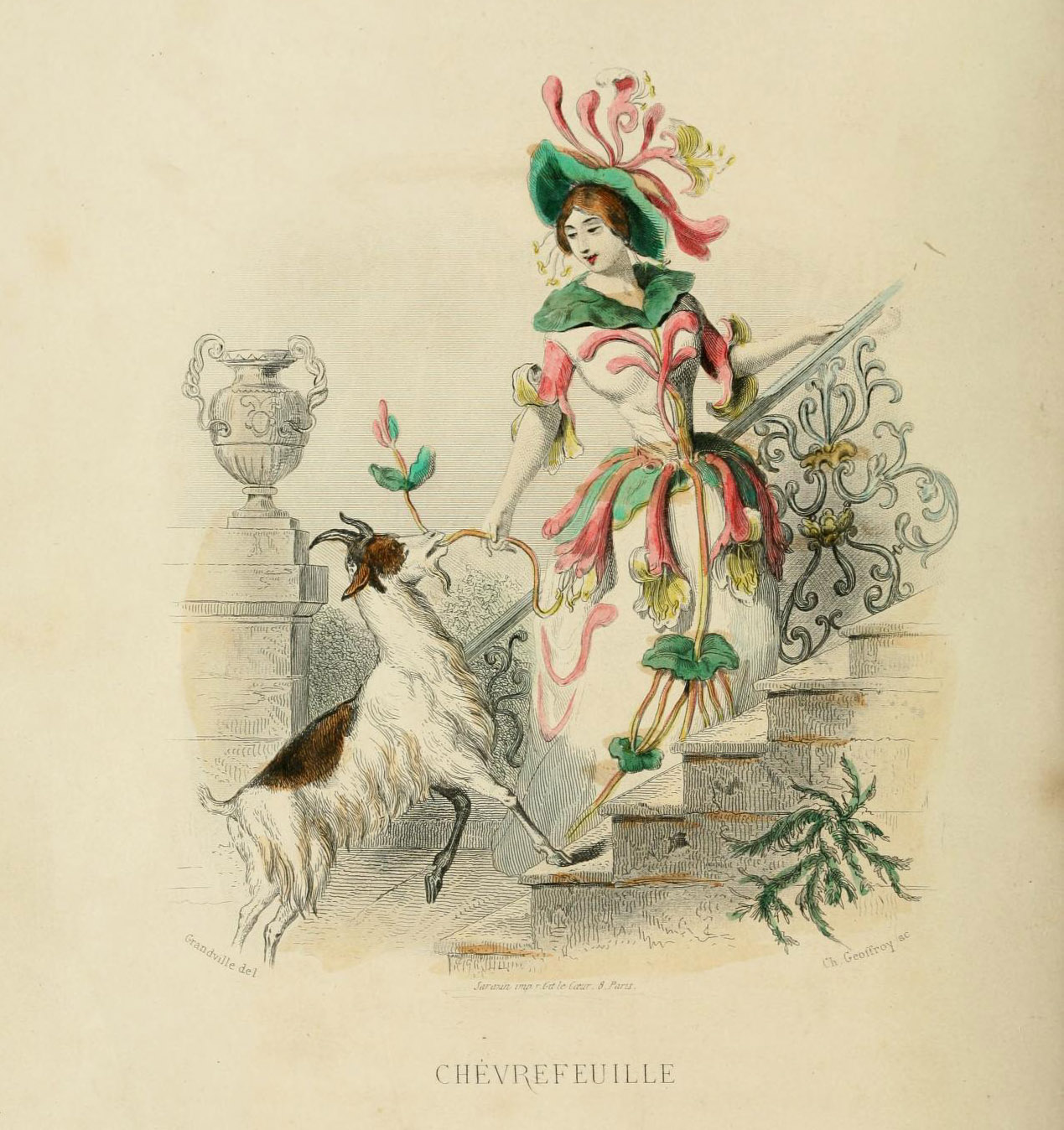
Chevrefeuille (Honeysuckle). J.J. Grandville, Les fleurs animées.
Fox Squirrel, click for full size.


© C. Ford.
I don’t know what these are, but I love them. Click for full size.

© C. Ford.
These are wonderful! From Kestrel, click for full size.
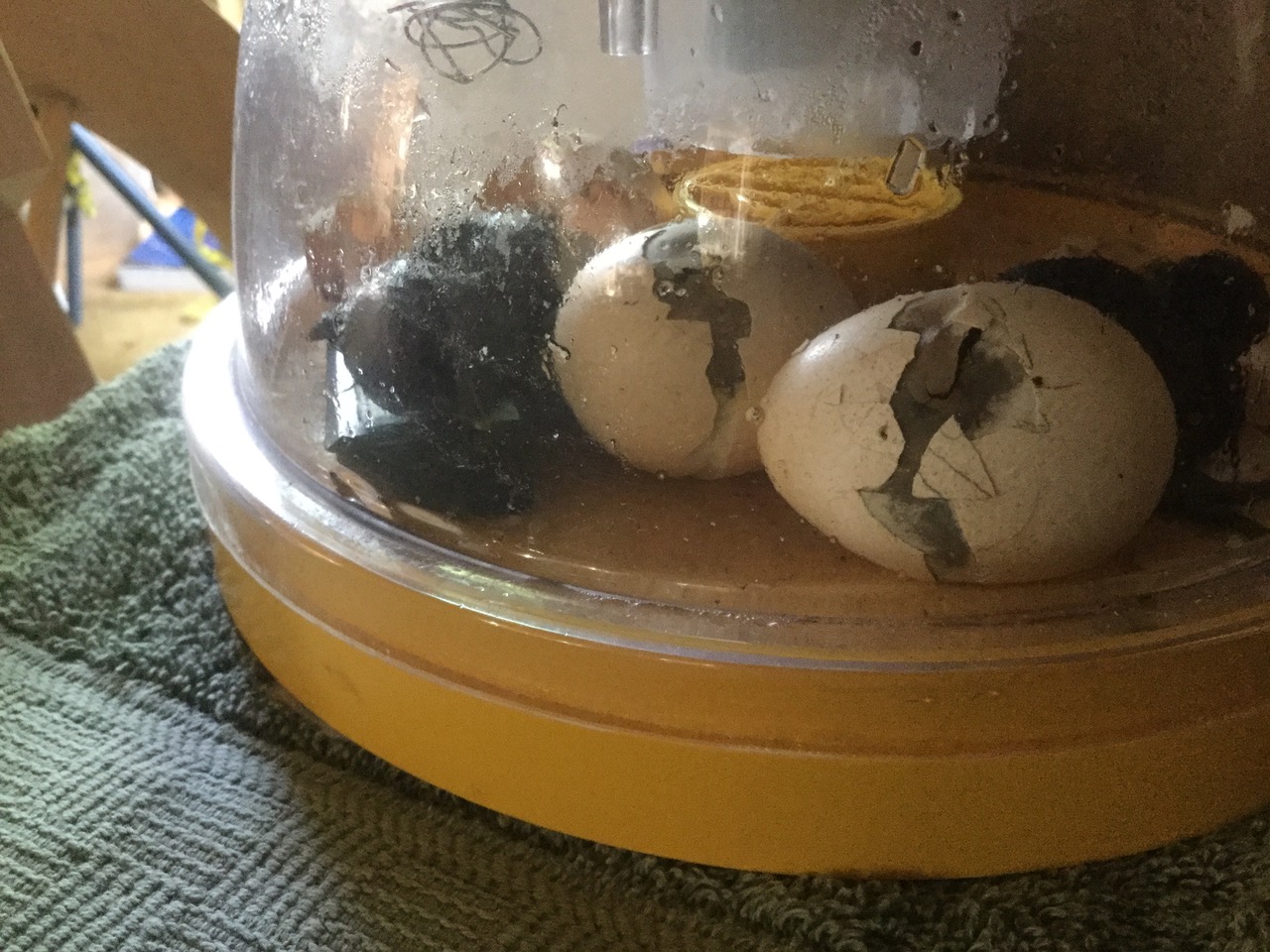
So, first pic: the eggs, which has been pipped, and some sections of the shell have broken away. The inmate has made a little tear in the membrane. The other items you can see in there are hatched chicks, and in the left lower part of the incubator, that square thing is the hygrometer.
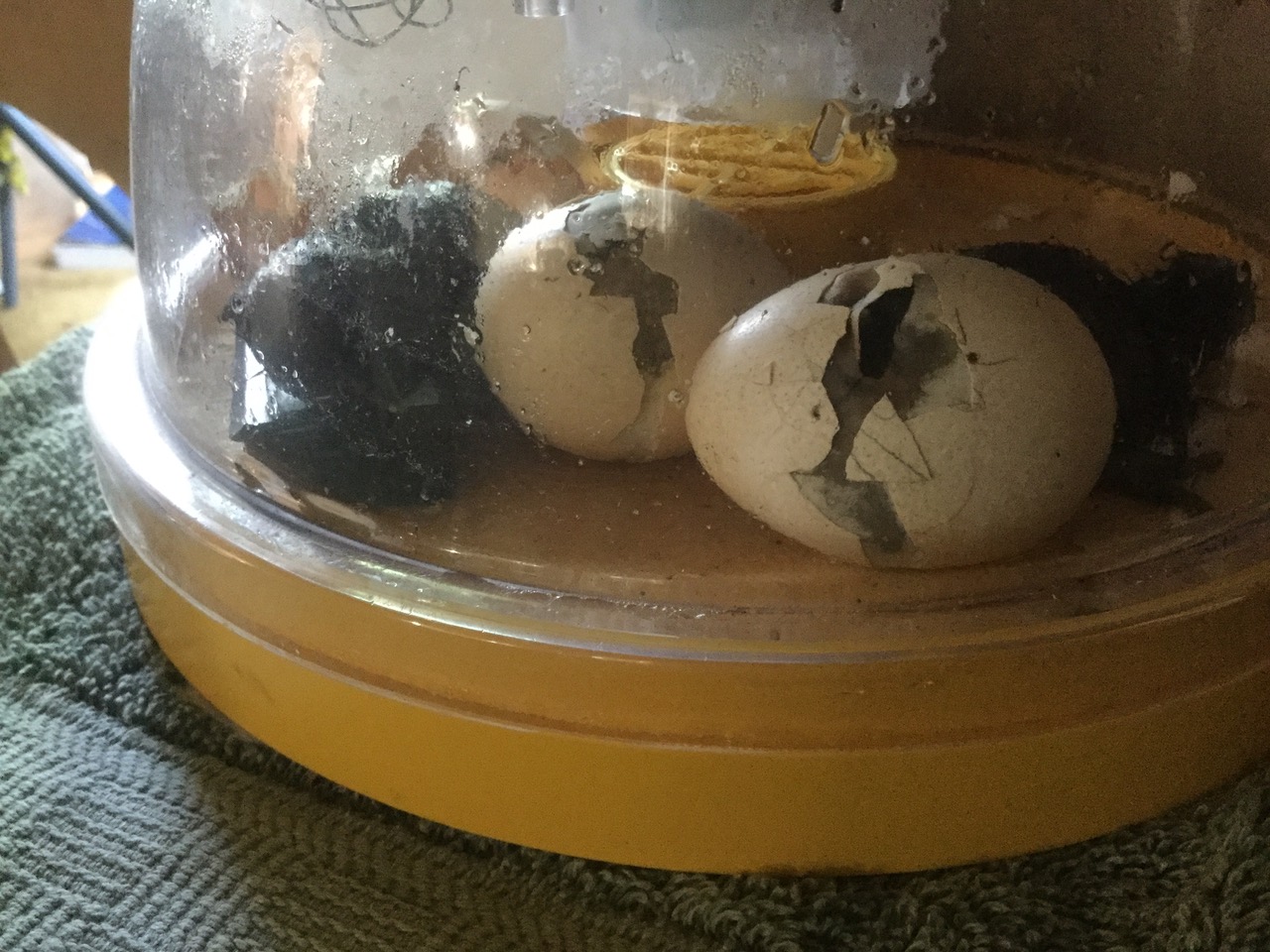
Now the beak emerges from the tear.

One of the siblings has come by and is about to trip and fall over the new hatchling, and then fall asleep, delaying things a bit.


Almost out, after the sibling has staggered off somewhere else!
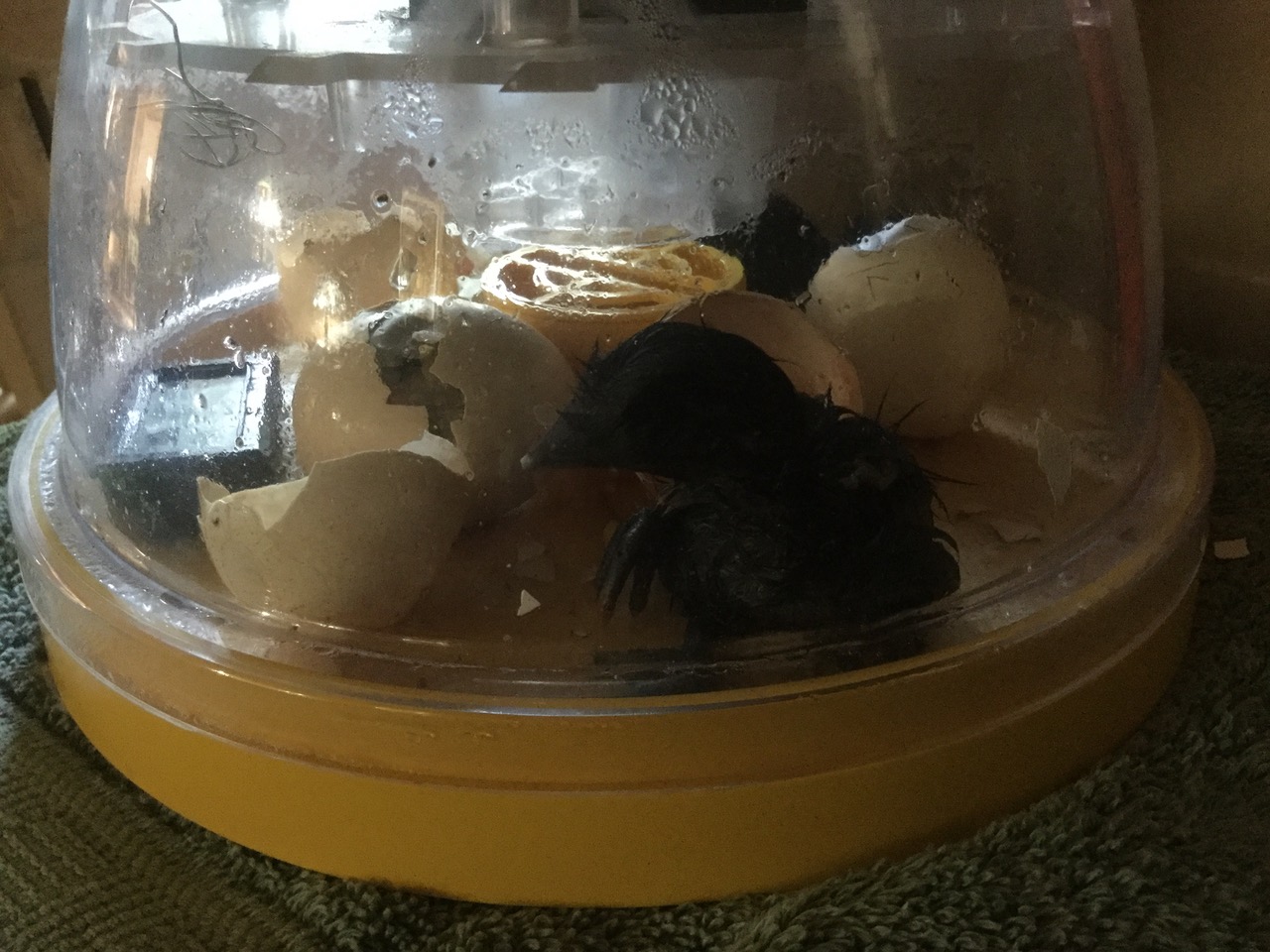
Finally the creature emerges, ready to eat Tokyo. Or some chick crumbles, anyway.
© Kestrel, all rights reserved.
A magpie, fresh from an exploratory dig, from Lofty. Click for full size!
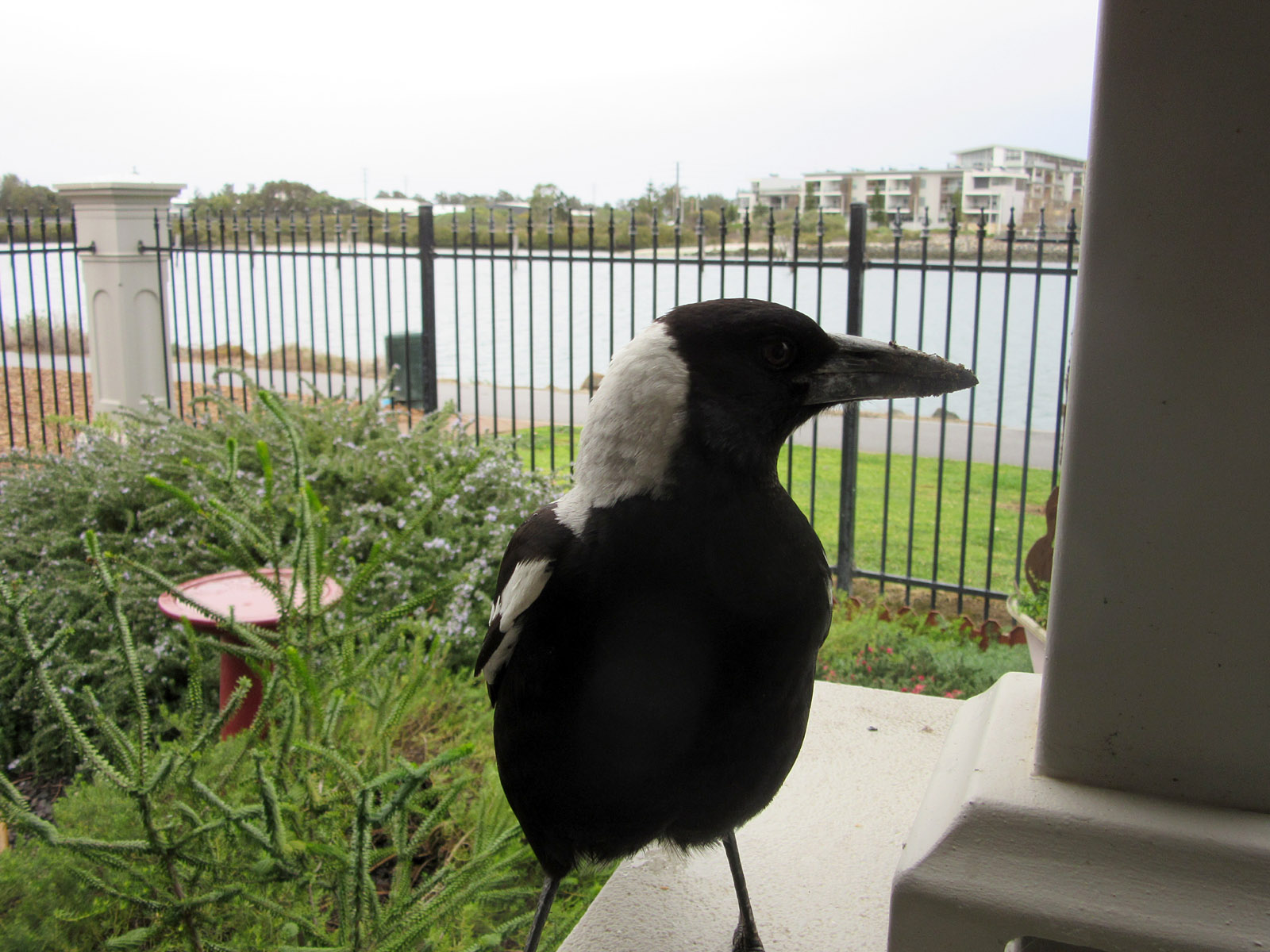
© Lofty, all rights reserved.
Okay, got it outside for photos. All 1800 x, click for full size.

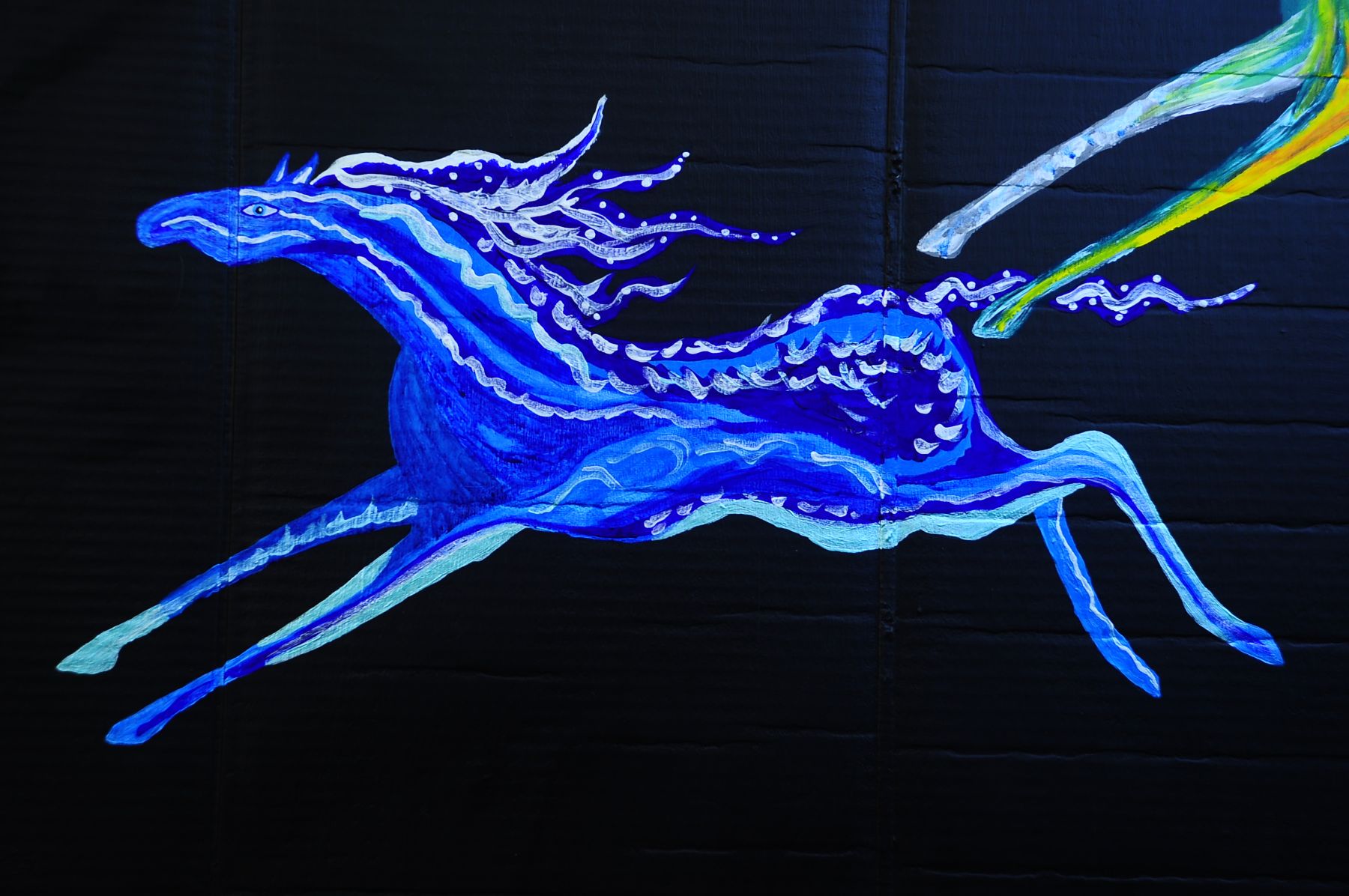

© C. Ford, all rights reserved.
Christ, these shots suck. Going to have to get this thing outside. Anyroad, first, the stinkhorror of gesso, then on to the fun stuff. Time to make salad for the rats, then I’ll get finished up. If there’s time, I’ll try to get it outside for better. Clickety for full and all that. Oh, forgot earlier, the first horse is 29″ x 18″, second is 23″ x 14″.
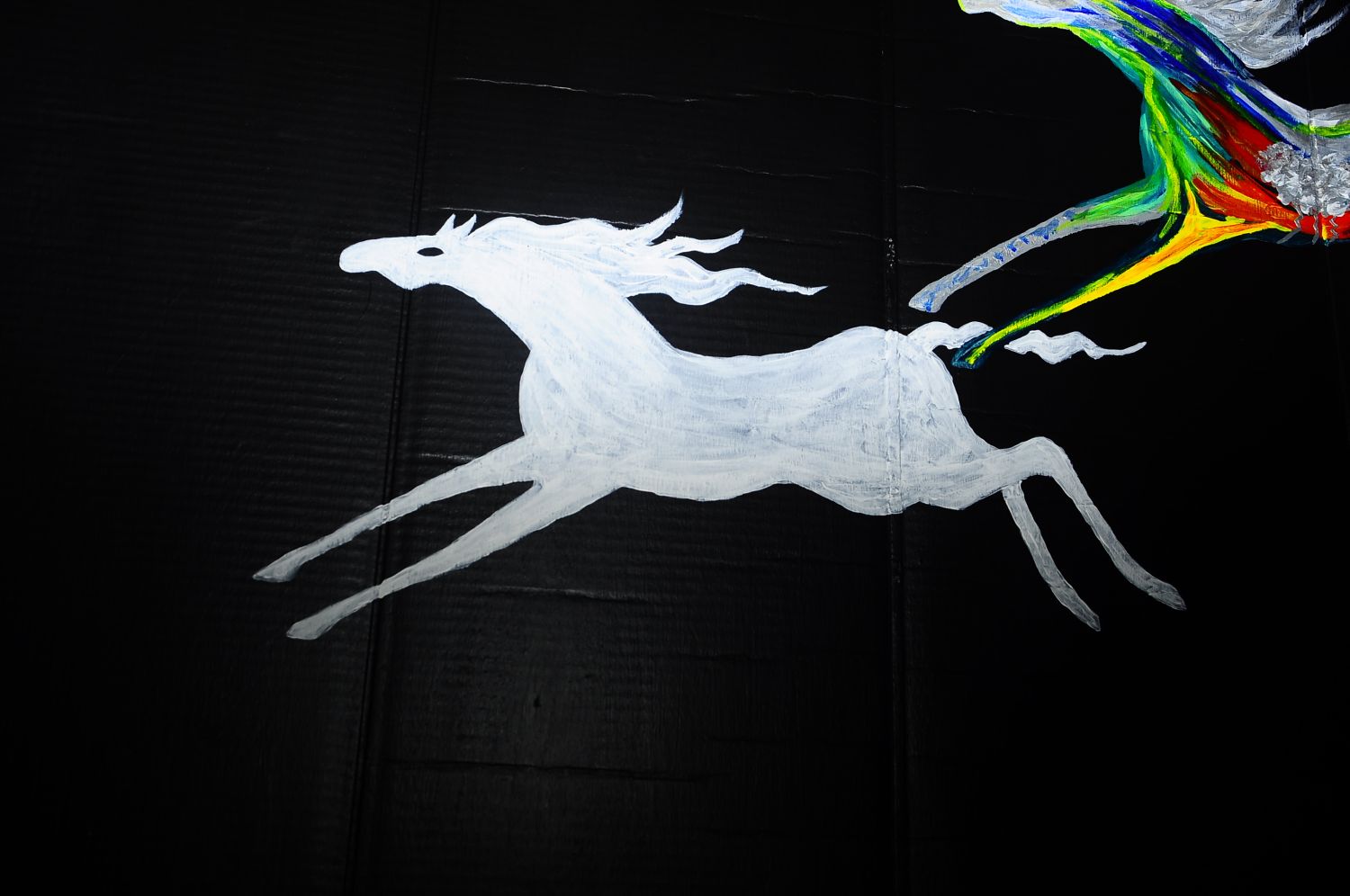


© C. Ford, all rights reserved.

Aiming for a bee plus in maths. DonaldJusa/Getty.
In line with Marcus’s Monday Meslier.
Bees seem to understand the idea of zero – the first invertebrate shown to do so. When the insects were encouraged to fly towards a platform carrying fewer shapes than another one, they apparently recognised “no shapes” as a smaller value than “some shapes”.
Zero is not an easy concept to comprehend, even for us. Young children learn the number zero later than other numbers, and often have trouble identifying whether it is less than or more than 1.
Apart from ourselves, some other animals grasp the concept of zero, though. Chimpanzees and monkeys, for instance, have been able to consider zero as a quantity when taught.
With their tiny brains, bees may seem an unlikely candidate to join the zero club. But they have surprisingly well-developed number skills: a previous study found that they can count to 4.
To see whether honeybees are able to understand zero, Scarlett Howard at RMIT University in Melbourne and her colleagues first trained bees to differentiate between two numbers. They set up two platforms, each with between one and four shapes on it.
On one platform, bees were given a sweet sucrose solution, and on the other a nasty-tasting quinine solution. Previous research has found that bees learn more quickly if they are not merely rewarded for correct choices, but also punished for wrong ones.
The researchers trained the bees to associate a platform that had fewer shapes on it with the sweet reward, until they made the right choice 80 per cent of the time. The bees were put through further tests with differently shaped objects to confirm that they were responding to the number of shapes and not their appearance.
Next, when given a choice between two or three shapes and “zero” shapes, bees picked zero most of the time.
Most people are at least somewhat familiar with the Medieval Wound Man, but I expect Zodiac Man is not as well known. Physicians had to consult a lunar calendar, to make sure they didn’t bleed someone in the wrong part of the body, as it was thought the zodiac also ruled over the physical body.

Zodiac Man, 1522 Courtesy of The New York Academy of Medicine Library.
In medieval Europe, bleeding was thought to be the most effective cure around. Medical practitioners believed no disease could withstand a nick in the neck from a small blade, otherwise known as a fleam. Have smallpox? No problem. Epilepsy? Easy. Gout? Cured.
But there was a catch.
Before operating on a patient, medieval physicians needed to consult the stars. The success of the procedure depended on it.
A foundational tenet of medieval medicine was the connection between astrology and human anatomy. The idea—which originated in Ancient Babylonian mythology—was that humans are microcosms of the Ptolemaic universe; the human body was divided into specific regions governed by Zodiac signs, analogous to the way the Earth was divided and ruled by planets.
The moon lay at the center of this theory. The moon’s alignment with a certain constellation signaled that a Zodiac sign was active—Libra, for instance, occurred when the moon blocked out the constellation Libra. Unlike their solar counterparts, lunar signs last only two or three days, rather than an entire month. (If you’re curious, you can find your moon sign here.)
Heh, I hold no hidden mysteries. Sign is scorpio, and so is my moon sign. Guess I’m scorpions all the way down. :D
[…]
When a Zodiac sign was active, it was considered dangerous to operate on the associated body parts. Cutting into the neck during Taurus, for instance, could spell death. Because of these dangers, medieval physicians needed to pay special attention the stars.
To determine whether a Zodiac sign was active, they consulted volvelles, or rotating lunar calendars.
They then cross-referenced the active Zodiac sign with its corresponding body parts. To do this, they turned to the Zodiac Man.
The Zodiac Man is an illustration of the human body divided into twelve sections based on astrological signs. It guides physicians as to which body parts present a danger in which months. Before bleeding their patients—or performing any kind of medical operation—physicians relied on the Zodiac Man to tell them whether a body part could be safely cut.
[…]
The moon even helped physicians make diagnoses. Diseases, it was believed, appeared cyclically with the alignment of the moon and the planets. The moon’s positioning with Jupiter often signaled the presence of liver disorders, while its alignment Venus usually triggered urinary problems.
You can see a version of the Fasciculus medicinae in its entirety here, and you can determine—per the Zodiac Man—which body parts your lunar sign puts at risk here.
You can read more and see more, too, at Atlas Obscura. Never thought I’d be quite so grateful to be stuffed into an MRI as often as I am.

Photo of Frank E. Buttolph, c. 1917–21 New York Public Library.
Frank Buttolph collected menus. A lot of menus.
…Buttolph’s commitment to collecting menus came, she said, from her desire to preserve early 1900s culinary history for future scholars. Confirming this, The New York Times once wrote that “she does not care two pins for the food lists on her menus, but their historic interest means everything.”
She was a meticulous collector—not only in transcribing, dating, and organizing her menus with a detailed card catalog, but also about how they should be stored. When the director of the Astor Library tried to rubber-band menus together, she pushed back out of worry that it would leave marks.

Click for full size.
Oh gods. Now I want proper mac ‘n’ cheese, and peach fritters.

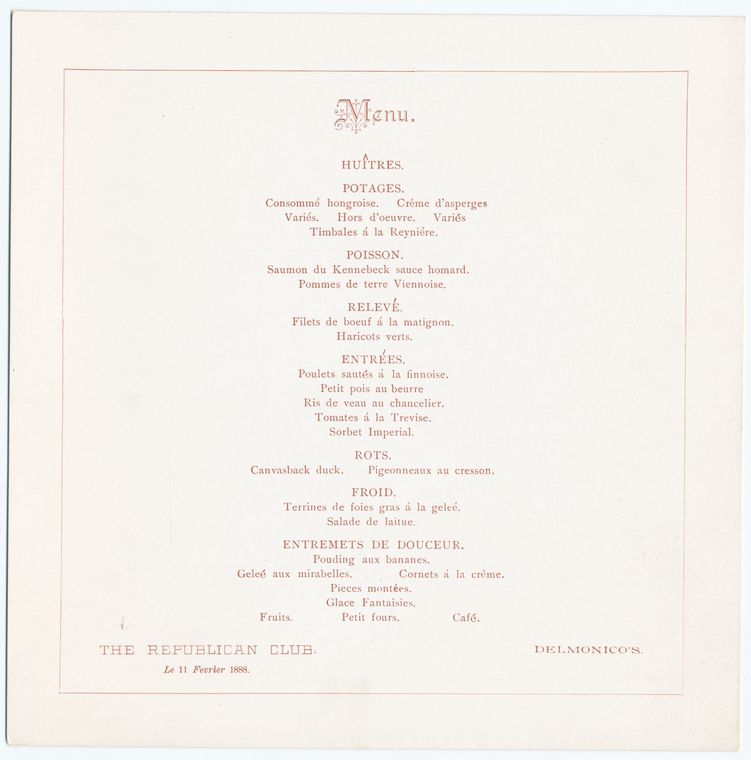

Atlas Obscura has a delightful article about Ms. Buttolph and her quest to preserve dining habits, and you can see pages and pages and pages and of her collection here. Gad, what a time sink! There’s an Astor menu printed on linen! The menus are not limited to the U.S. The artwork on many of them is fascinating, especially those for dinners being held by individuals. The Norddeutscher Lloyd Bremen-Amerika has a menu with gorgeous artwork, and the menu itself is handwritten.