Affinity
Art, Fun, & Nonsense.

Click for full size.

© C. Ford, all rights reserved.
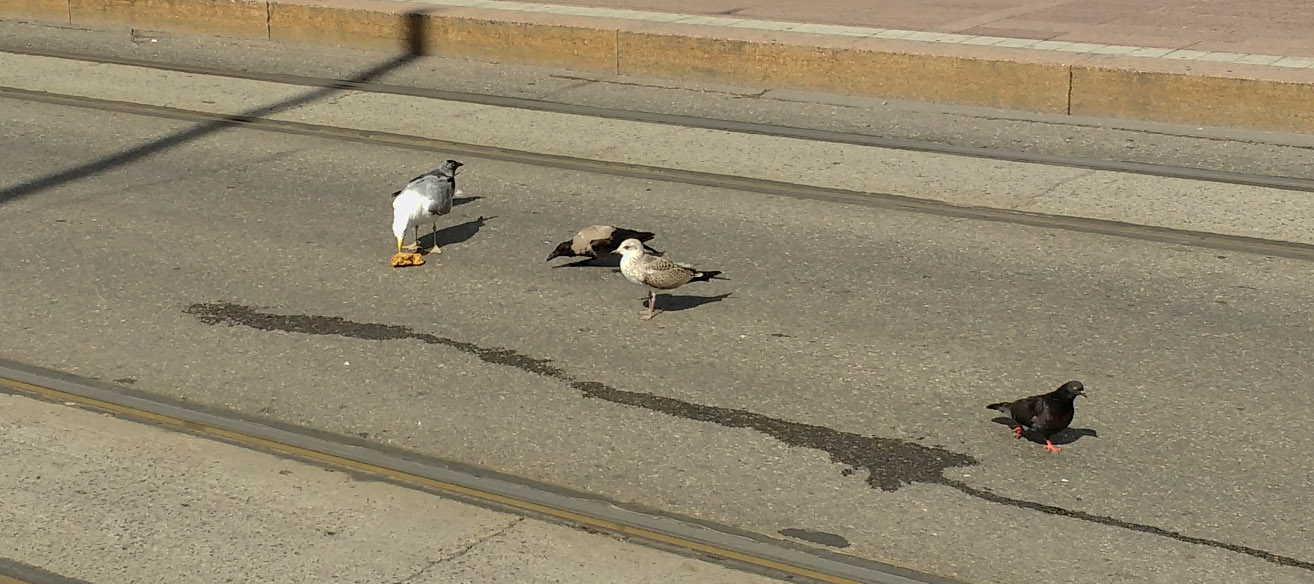
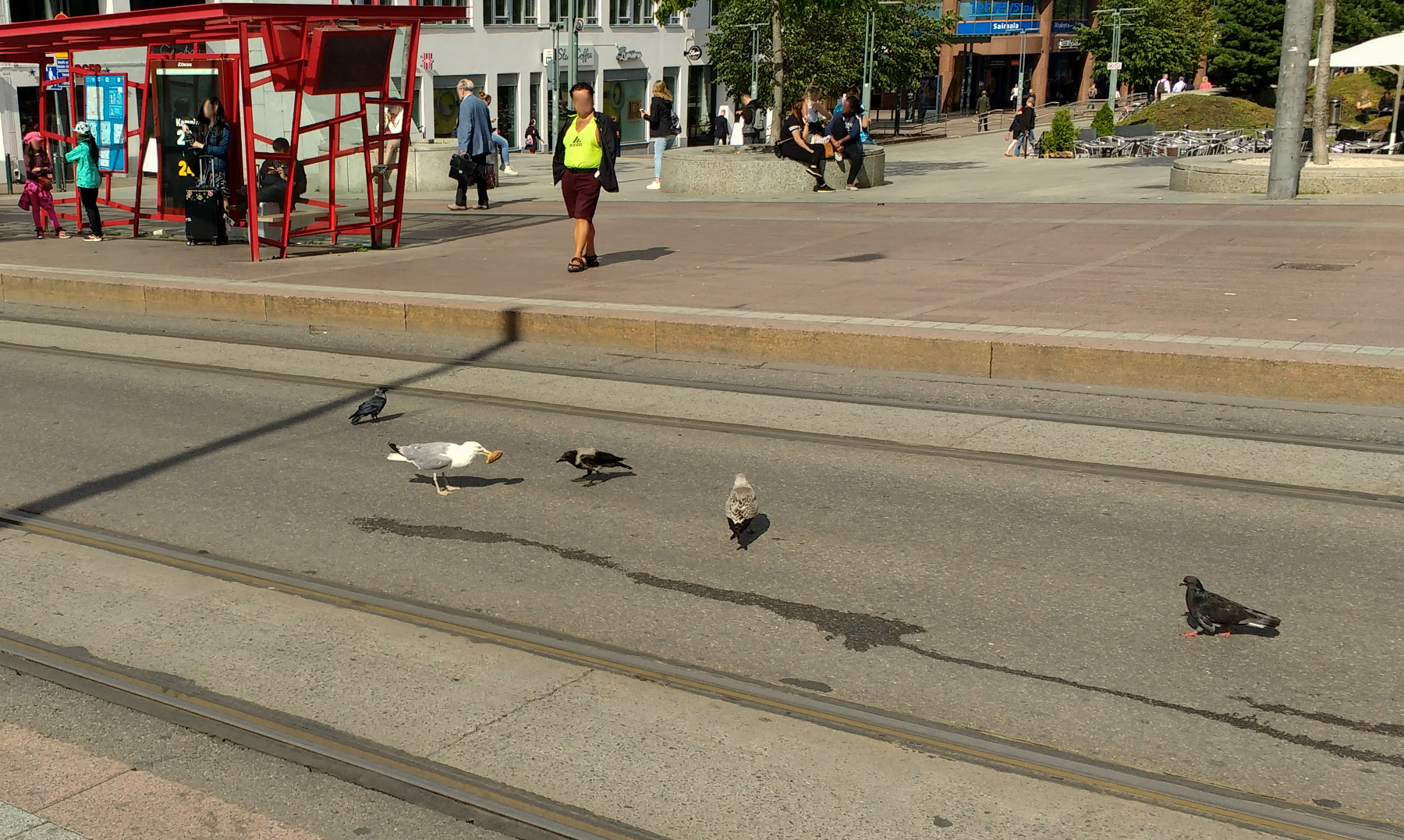
From Ice Swimmer: Any way, in a tram stop in Downtown Helsinki, these urban dinosaurs are disputing whose piece of bread that is. The adult European herring gull (white with gray wings) took it in the end and flew away. The hooded crow, jackdaw, pigeon and the juvenile gull were left empty-beaked. The pigeon and the jackdaw were quite careful to not get too much attention from the big ones. Multiple buses, cabs and a tram interrupted their dispute, but no-one got run over and they resumed multiple times after each vehicle was gone.
I have no idea who dropped the bread or how this thing started. Click for full size!


© Ice Swimmer, all rights reserved.
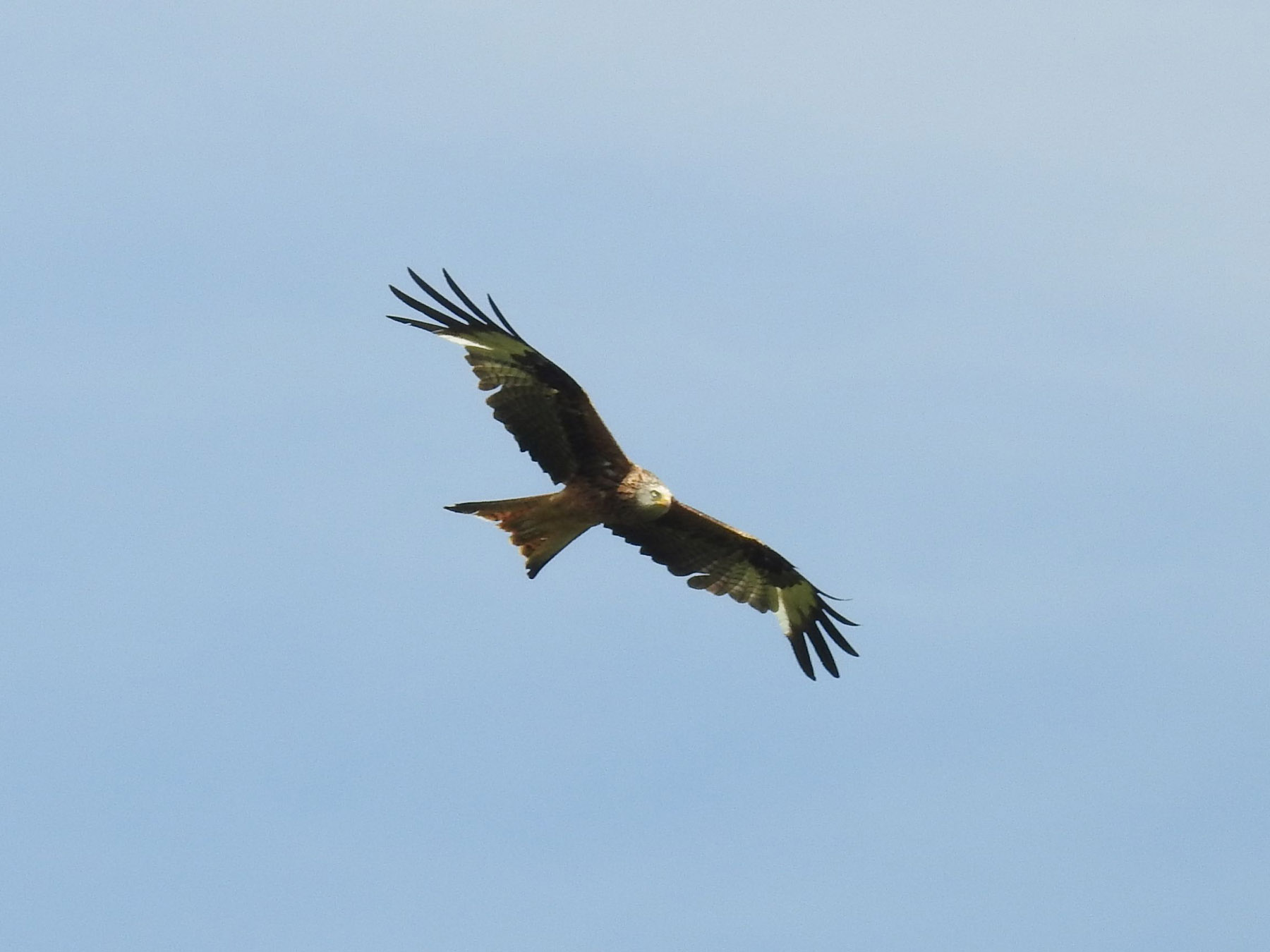
A Kite, from Charly. Click for full size!
© Charly, all rights reserved.
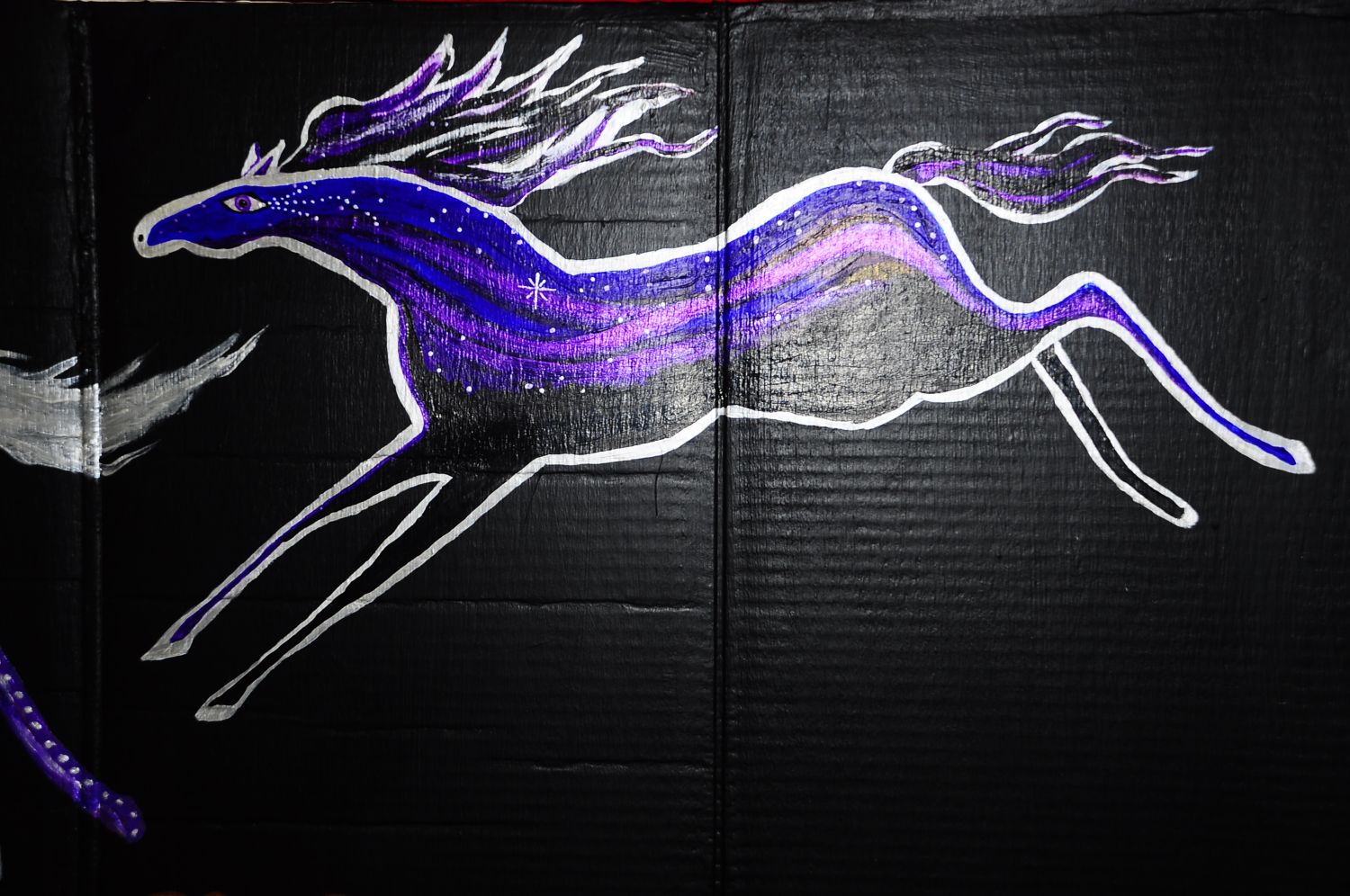
Click for full size.

© C. Ford, all rights reserved.

Pacific Press/Getty Images.
Back in June, I posted about LeVar Burton’s new podcast, LeVar Burton Reads. Seems some soreheads are very unhappy with Burton’s success, and that random people are using the phrase “Reading Rainbow for Adults”.
In today’s episode of Black People Can’t Have a Damn Thing, Not Even if We Played a Major Role in Building It From the Ground Up, actor LeVar Burton is being personally sued by a Buffalo, N.Y., public broadcasting station that wants to stop him from using a Reading Rainbow catchphrase on his new podcast.
According to the Hollywood Reporter, WNED filed a “wide-ranging” lawsuit Friday that includes the demands that Burton’s company, RRKidz, hand over access to various websites and social media accounts, and that Burton himself cease using the Reading Rainbow catchphrase “But you don’t have to take my word for it” on his podcast, LeVar Burton Reads.
Although Friday’s lawsuit is new, THR reports that Burton and WNED have been tied up in court for years over a 2011 licensing deal that granted Burton the use of intellectual property related to the beloved PBS show, which ran from 1983 to 2006 with Burton as host.
You can read all about this nonsense at The Root. Me, I’m rooting for LeVar.

Republican. A synonym for every evil thing.
A chilling new poll conducted by scholars Ariel Malka and Yphtach Lelkes, which they write about in the Washington Post’s Monkey Cage blog today, finds that not only do nearly half of Republicans falsely believe that President Trump won the popular vote in 2016 and that nearly 70 percent believe that “millions of illegal immigrants voted” in the election, but that more than half would support postponing the 2020 presidential election “until the country can make sure that only eligible American citizens can vote” if Trump were to propose it.
Malka and Lelkes caution that this whole situation is hypothetical and that people’s views might be different if faced with the situation in reality. But they write that their findings, at a minimum “show that a substantial number of Republicans are amenable to violations of democratic norms that are more flagrant than what is typically proposed (or studied).”
It’s worth remembering that one of the many conspiracy theories that the right-wing media propagated about President Obama was that he would invent some kind of crisis in order to justify staying in office for a second term, or even indefinitely.
Just in case Trump doesn’t nuke us all to death, we can look forward to this shit. RWW has the full rundown on all the conspiracies which were rife when an actual President was in office.
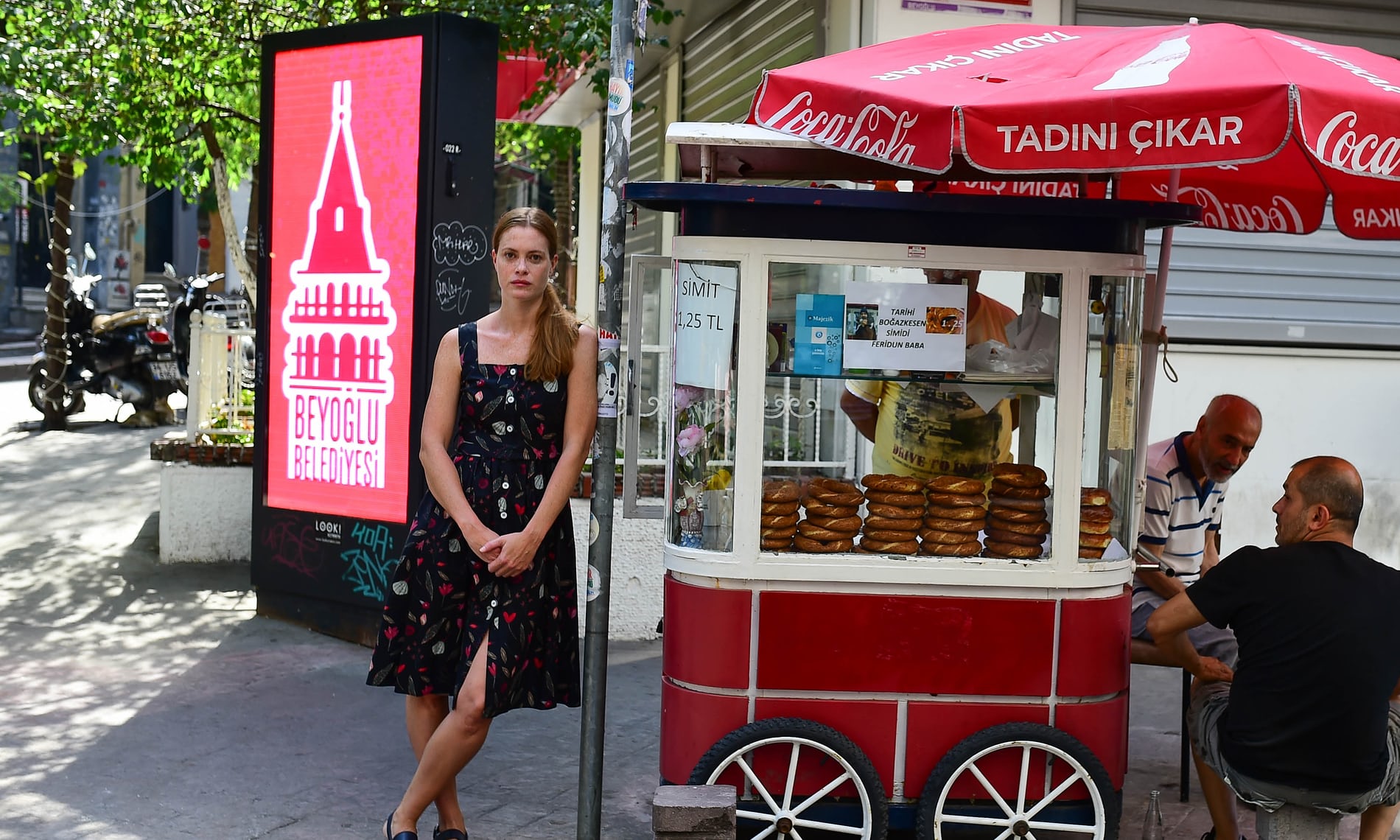
Burak Kara/Getty Images for the Guardian.
My mother recently found piles of my notebooks from when I was a small child that were filled with plans for my future. I was very ambitious. I wrote out what I would do at every age: when I would get married and when I would have kids and when I would open a dance studio.
When I left my small hometown for college, this sort of planning stopped. The experience of going to a radically new place, as college was to me, upended my sense of the world and its possibilities. The same thing happened when I moved to New York after college, and a few years later when I moved to Istanbul. All change is dramatic for provincial people. But the last move was the hardest. In Turkey, the upheaval was far more unsettling: after a while, I began to feel that the entire foundation of my consciousness was a lie.
For all their patriotism, Americans rarely think about how their national identities relate to their personal ones. This indifference is particular to the psychology of white Americans and has a history unique to the US. In recent years, however, this national identity has become more difficult to ignore. Americans can no longer travel in foreign countries without noticing the strange weight we carry with us. In these years after the wars in Iraq and Afghanistan, and the many wars that followed, it has become more difficult to gallivant across the world absorbing its wisdom and resources for one’s own personal use. Americans abroad now do not have the same swagger, the easy, enormous smiles. You no longer want to speak so loud. There is always the vague risk of breaking something.
Some years after I moved to Istanbul, I bought a notebook, and unlike that confident child, I wrote down not plans but a question: who do we become if we don’t become Americans? If we discover that our identity as we understood it had been a myth? I asked it because my years as an American abroad in the 21st century were not a joyous romp of self-discovery and romance. Mine were more of a shattering and a shame, and even now, I still don’t know myself.
[…]
But for me there was also an intervention – a chance experience in the basement of Penn’s library. I came across a line in a book in which a historian argued that, long ago, during the slavery era, black people and white people had defined their identities in opposition to each other. The revelation to me was not that black people had conceived of their identities in response to ours, but that our white identities had been composed in conscious objection to theirs. I’d had no idea that we had ever had to define our identities at all, because to me, white Americans were born fully formed, completely detached from any sort of complicated past. Even now, I can remember that shiver of recognition that only comes when you learn something that expands, just a tiny bit, your sense of reality. What made me angry was that this revelation was something about who I was. How much more did I not know about myself?
It was because of this text that I picked up the books of James Baldwin, who gave me the sense of meeting someone who knew me better, and with a far more sophisticated critical arsenal than I had myself. There was this line:
But I have always been struck, in America, by an emotional poverty so bottomless, and a terror of human life, of human touch, so deep, that virtually no American appears able to achieve any viable, organic connection between his public stance and his private life.
And this one:
All of the western nations have been caught in a lie, the lie of their pretended humanism; this means that their history has no moral justification, and that the west has no moral authority.
And this one:
White Americans are probably the sickest and certainly the most dangerous people, of any colour, to be found in the world today.
I know why this came as a shock to me then, at the age of 22, and it wasn’t necessarily because he said I was sick, though that was part of it. It was because he kept calling me that thing: “white American”. In my reaction I justified his accusation. I knew I was white, and I knew I was American, but it was not what I understood to be my identity. For me, self-definition was about gender, personality, religion, education, dreams. I only thought about finding myself, becoming myself, discovering myself – and this, I hadn’t known, was the most white American thing of all.
I still did not think about my place in the larger world, or that perhaps an entire history – the history of white Americans – had something to do with who I was. My lack of consciousness allowed me to believe I was innocent, or that white American was not an identity like Muslim or Turk.
Very good reading from Suzy Hansen, recommended.
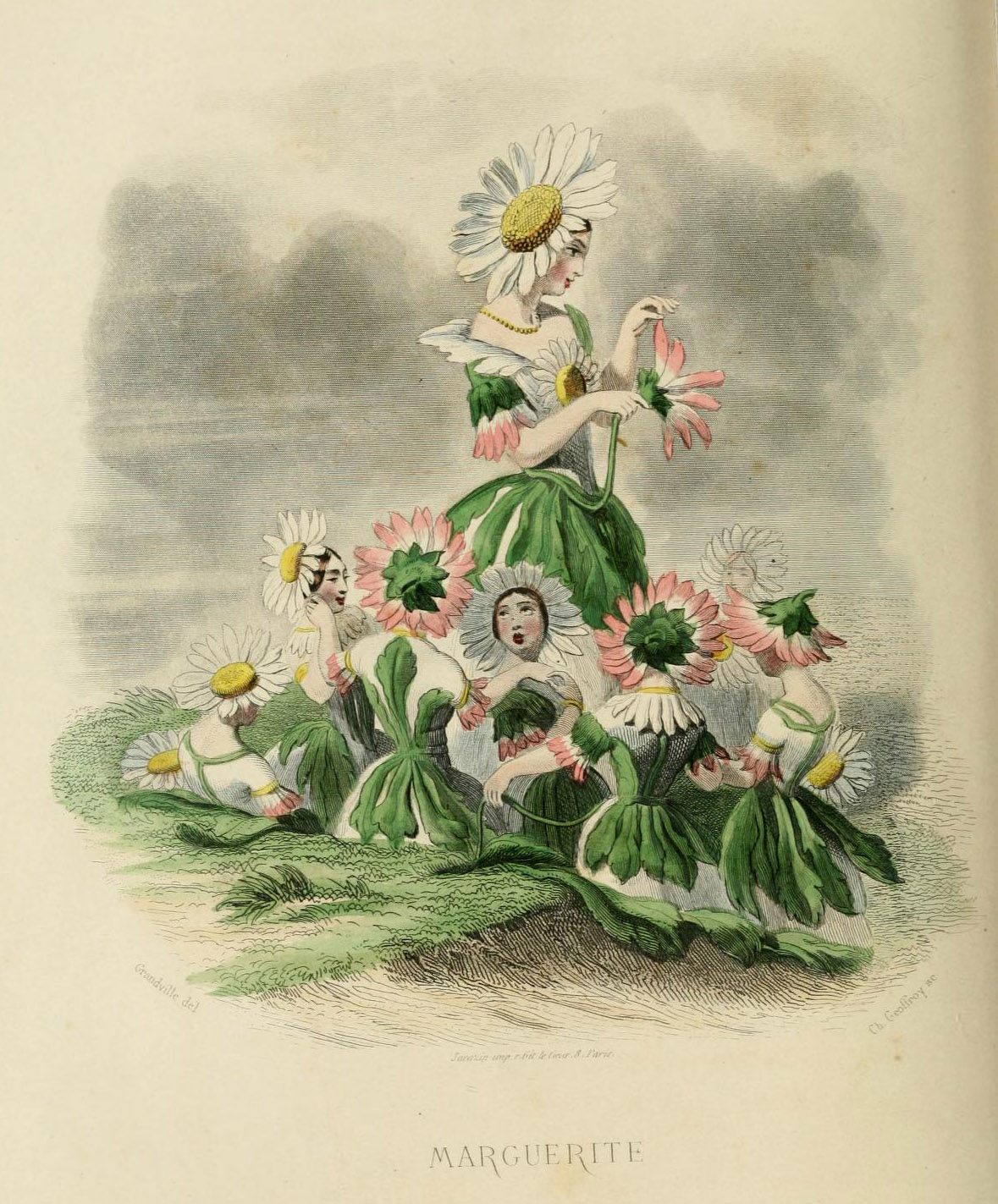
Marguerite (Daisy). My favourite flower. J.J. Grandville, Les fleurs animées.
Millions of photos, documenting Australian life from the 1920s to the 1990s, were stranded and lost in Arkansas, of all places. A bank ended up owning them, but had no interest. Fortunately Daniel Miller, a gallery owner, bought them, and the process of sorting and trying to repatriate them is ongoing. You can read all about this project, see more, and be able to help with the repatriation at smhphotographs.
Click for full size.

© C. Ford.
This is one of the best things I have ever seen, an Ibis making off with an omelette. From Gobi, absolutely click for full size!

© Gobi, all rights reserved.