Most Liked.

Barack Obama: “No one is born hating another person because of the color of his skin or his background or his religion…”

Barack Obama: “People must learn to hate, and if they can learn to hate, they can be taught to love…”

Barack Obama: “…For love comes more naturally to the human heart than its opposite.” – Nelson Mandela

Here’s a great example of the stark difference between this current presidency and the last: in the wake of Trump’s horrific response to the Charlottesville tragedy, Barack Obama tweeted a three-part quote from Nelson Mandela, the first tweet of which has become the most liked post in the site’s entire history.

Via Out.
What A Soul Looks Like.

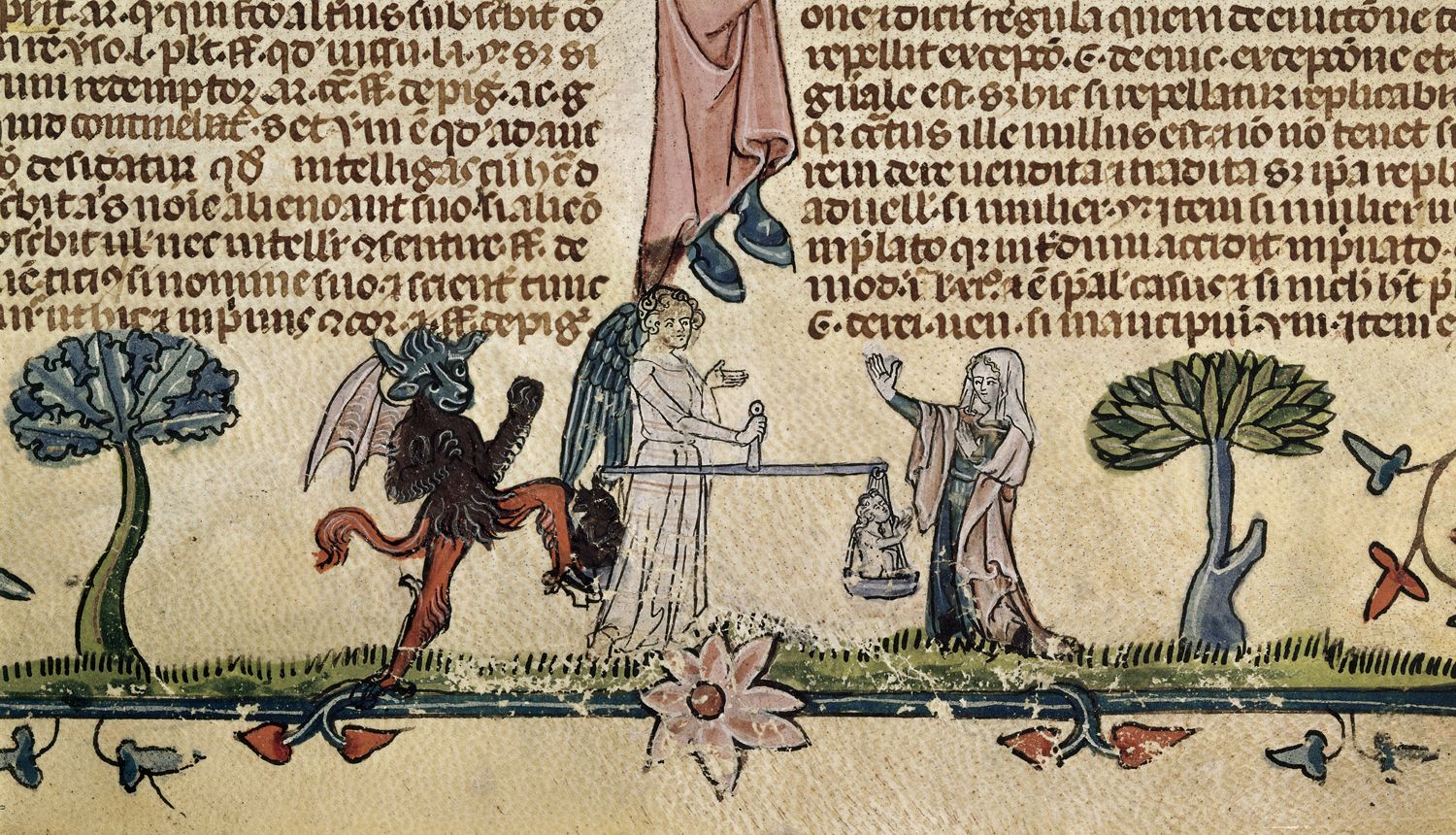
Oh, souls. There are those who are insistent that souls are real, in spite of them being intangible and invisible. They have much in common with the invisible pink unicorn. I’ve been immersed in Medieval manuscripts again, and came across a depiction of the weighing of a soul, and a woman carrying a soul. Click images for full size!

The weighing of a soul.

A woman carrying a soul.

There’s one mystery cleared up, eh? :D

Via The British Library.

The Intertwining of Trees and Crime.

Screencapture.

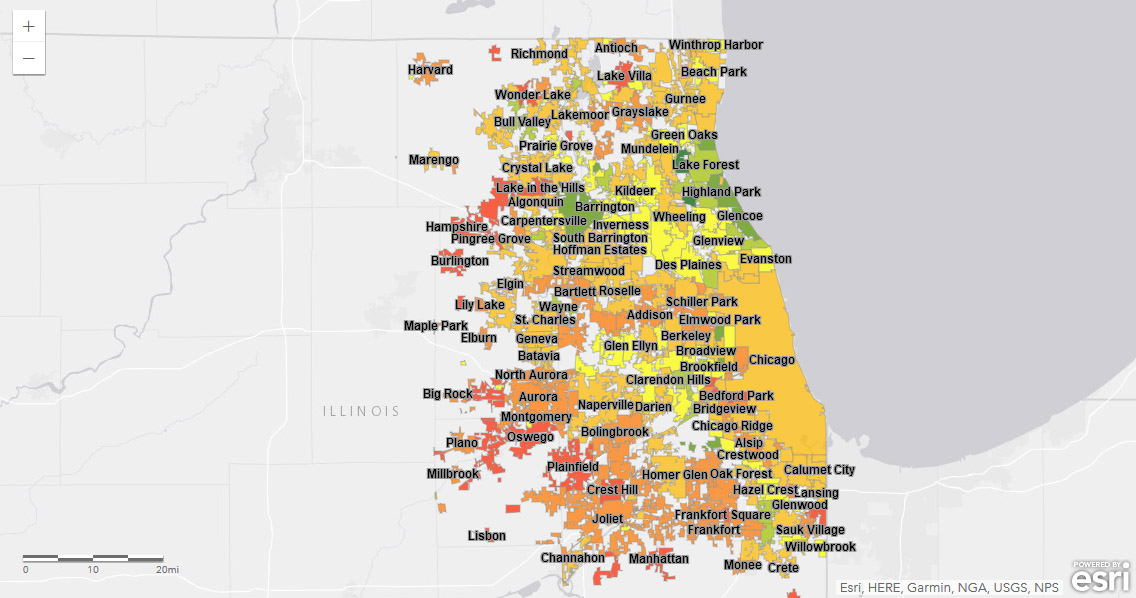
There’s been some very interesting research happening in Chicago, and it turns out that trees reduce crime. I don’t find this surprising at all, but I’m a “must be attached to the land” person. When your environment is bleak and desolate, you end up with bleak, desolate, desperate people. We need to be aware of our earth, we need to be connected to our planet. In urban environments, the best way to restore that connection is with trees. Yes, they are a long-term investment, but that’s good, because it means people are thinking the right way, generations ahead of themselves.

In June, the Chicago Regional Tree Initiative and Morton Arboretum released what they say is the most comprehensive tree canopy data set of any region in the U.S., covering 284 municipalities in the Chicago area. Now, that data is helping neighborhoods improve their environments and assist their communities.

“When we go to talk to communities,” says Lydia Scott, director of the CRTI, “We say ‘trees reduce crime.’ And then they go, ‘Explain to me how that could possibly be, because that’s the most bizarre thing I’ve ever heard.’”

In Chicago, where more than 2,000 people have been shot this year, scientists are looking at physical features of neighborhoods for solutions. “We started to look at where we have heavy crime, and whether there was a correlation with tree canopy, and often, there is,” says Scott. “Communities that have higher tree population have lower crime. Areas where trees are prevalent, people tend to be outside, mingling, enjoying their community.”

The map revealed that poorer neighborhoods are often “tree deserts,” areas with little or no tree canopy. Trees reduce flooding, improve property values, prevent heat islands, promote feelings of safety, reduce mortality, and provide other significant social and health benefits. This means that when you live in, for example, the South Side, where trees are scarcer, you lose more than just green leaves overhead.

Never before have researchers been able to look so widely and deeply at this sort of data. The map is huge—it covers seven counties—and extremely detailed. That has allowed Scott and her colleagues to notice some startling patterns. For example, in the North Shore community—an affluent, lakeside, suburban area—canopy cover tends to be 40 percent or higher. On the economically depressed South Side, canopy can be as low as 7 percent.

That last is no surprise, either. As it goes with people, the poorer you are, the less of everything you get, including trees. There’s much more to the article, all the research, how it was conducted, and information about Blacks in Green, who are doing stellar work. Click on over to Atlas Obscura for the full story. Then see if you could help plant a tree. Or just hug one.

Guerilla-style spiritual warfare.

Self-styled “prophet” Mark Taylor is at it again, this time loaded with all kinds of war vernacular, made to appeal to asshole christians. This time, it’s the, um, tactic of stealth prayer, which is rather like the texting version of prayer. Shorthand prayer, mumbled here, there, and everywhere. Christians seem to be under the impressing this idiocy works, and stealth prayer is often combined with war terms, like bombing and bombers. Or one could say its often combined with the vocabulary of terrorism.

Taylor revealed that God had recently given him a prayer that allows him to “jam the enemy’s radar” so that the prayer campaign being waged by his team of spiritual warriors cannot be detected while they repent on behalf off all the states that voted for Hillary Clinton in the last election.

“We want to ambush the enemy,” he said. “We’re trying to do guerilla-style spiritual warfare.”

Y’know, there are actual wars going on, if you want to be a patriot warrior so badly, Mr. Taylor. Perhaps you should pitch your idea to the pentagon, and they could send you and your crack team of prayer bombers to a strategic place in an ongoing war zone. Best to be where the action is, right? You’d get cool costumes and everything!

Trump’s election was the result of a national prayer and repentance effort, Taylor said,

Oh the fuck it was. It was the result of meddling in the election by interested parties, you dipshit doucheweasel.

but now God has given him a “blueprint” to guide the effort to remove the demonic “territorial spirits” that control all the states that voted for Clinton.

I really have to wonder if idiots like Mr. Taylor think the blue/red business means that actual states voted, or that every single inhabitant of any given state voted exactly the same way.

“If you want to know the territories where you can go after the enemy, get the electoral map,” he said, explaining that the states that voted for Trump in 2016 had repented but those that went for Clinton had not and are therefore still being controlled by demonic spirits.

Uh huh. Going by that, I’m safe from you idiots because I live in a red state. That did not stop me from voting blue. Bluuuuue.

“This is not about Republican or Democrat,” Taylor claimed, “this is about globalism versus patriotism, it’s about stopping the New World Order, this is about stopping the Enemy’s timeline. That’s why the Enemy is so angry right now, because his timeline has been stopped. God is saying, ‘No, I’m denying the Enemy’s timeline and we’re going by my timeline.’ And right now, it’s time for us to push back the Enemy through this generational repentance on the land, on the people and you will see, as we push the Enemy back, the Gospel will go forth.”

Repentance on the land, eh? Here’s a thought, Mr. Taylor: how about you dumbfucks repent enough to get the hell out of Turtle Island, and give it back to its rightful people? I’m good with that one.

“The blue zones represent depressed areas, the red zones represent the blood of Jesus,” he concluded. “So what we want to do is take those depressed areas, so to speak, and turn them into the blood of Christ.”

:Snort: Boy, do you ever have that one wrong. It’s most of the red states which are seriously depressed economically, and in most other ways, too. Living in a lake of blood sounds messy. And sticky. I’ll pass.

Via RWW.

The Comfort of Cover.

A depiction of a 15th-century bed. Public Domain.

Blankets, sheets. Most people have trouble sleeping without them. I have a love/hate thing for them outside of the winter months, when I can’t pile enough of them on.

[…] Blankets are common, but not universal, to humans during sleep, at least in the modern day. But historically, the effort involved in weaving large sheets put blankets at much too high a price point for most to afford. From the linen bedsheets of Egypt around 3500 B.C. to wool sheets during the Roman empire straight through to cotton in medieval Europe, bed coverings were for the wealthy.

By the Early Modern period in Europe, which followed the Middle Ages, production had increased enough so that more middle-class people could afford bedding, though not easily. “The bed, throughout Western Europe at this time, was the most expensive item in the house,” says Roger Ekirch, a historian at Virginia Tech who has written extensively about sleep. “It was the first major item that a newly married couple, if they had the wherewithal, would invest in.” The bed and bedding could make up about a third of the total value of an entire household’s possessions, which explains why bedsheets frequently showed up in wills.

In place of blankets and sheets, other sources of heat were common at night, usually from multiple people sharing a bed, or often livestock.

You can read all about this fascinating need shared by most people, and the reasons why, at Atlas Obscura.