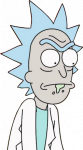
Some people don’t get it. They watch Goodfellas and want to grow up to be Henry Hill. They read Lolita and think Humbert Humbert was unjustly condemned. They watch Breaking Bad and believe that Walter White, especially in his Heisenberg persona, was awesome. Isn’t anyone familiar with the concept of the anti-hero anymore?
Here’s another one: people who watch Rick and Morty and come away from it wanting to be just like Rick. I love that show, but jebus…no one in their right mind should admire Rick. He’s the most brilliant scientist in the multiverse, but he’s also a totally messed-up, broken dude, and everyone in his family is damaged, and every week, the show goes out of its way to highlight that fact.
If we’re to believe Rick is admirable for being a cold, misanthropic know-it-all, the show doesn’t do a very good job of selling it. He’s too rich in his emotions, too human in his failings; the show repeatedly finds him dealing with moments of vague tenderness and regret that he then undermines, contributing to the overall tragic arc of his character. Harmon’s much-scrutinized writing ethos involves richly drawn emotional journeys for every character, and as he said, in the recent response to Entertainment Weekly, “I don’t want the show to have a political stance.” It doesn’t. Rick And Morty’s concern is ambiguous, flawed, relatable characters, slowly changing and slowly staying the same. To assume that Rick—or any of them—represents Harmon’s idea of some ethos to aspire to is to misread his intent.
You can only admire Rick if you ignore all the two-by-fours the show repeatedly slams into your face.
However, it’s absurd to claim the show has no political stance. Writing about “ambiguous, flawed, relatable characters, slowly changing and slowly staying the same” at a time when way too many people are latching onto imaginary paragons (even the show’s oblivious fans!) is a political stance. It’s hard to argue against the idea that everything is political.