
I’m up early, I look out the window, and what do I see? Snow.
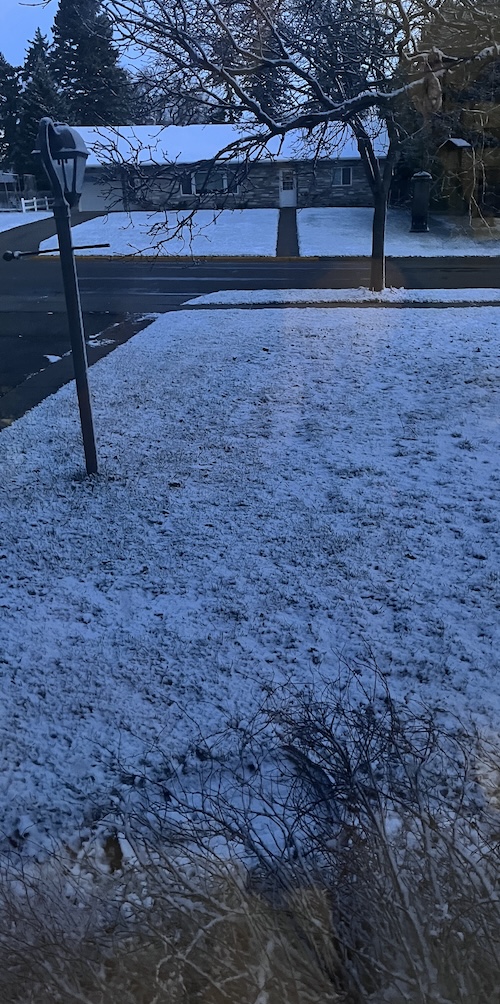
It has been warm and pleasant, except for the last few days, which have been chilly and windy. I was starting to see spiders around the yard again, but now — they’re probably huddled deep in crevices and whatever shelter they can find, waiting out this doggedly persistent winter.
They won’t have long to wait. The forecast is for 31°C on Wednesday.

I know!
The hummingbirds are starting to arrive, but it’s supposed to be -4C tonight and I don’t want to chance my glass feeder shattering.
I am really ready for some warmth.
It has been rainy and cool here in Houston, Texas. Definitely not spider friendly weather. In nearby Webster, Texas, my sister and her daughter have been taking early morning hikes on the hiking trail along a nearby bayou. They have seen a number of cute baby alligators.
I was reading something recently about snow storage or farming. It was a way for ski resorts to have snow on hand to lengthen the ever shorter winters. It was basically a huge pile of snow under a blanket.
Maybe there will be a commercial market for snow in the future.
Here on the west coast, in a lot of places the snow pack in all but nonexistent.
Rainfall has been normal and the reservoirs are mostly full.
The snowpack is near a record low though. It was a warm winter.
One area in the mountains that I’m familiar with has a snowpack of 6% of normal for this time of year.
A remote camera shows a few inches of snow when sometimes this time of year the snow is 5 feet deep.