The Probability Broach: Shame, shame

Whiskey Insurrection in Pennsylvania - A man being tarred and feathered

The Probability Broach, chapter 14

In the last chapter, Win received some bad news. The explosion that hurled him into the North American Confederacy, caused by a government goon shorting out the portal while halfway through, was much bigger on the other side. Depending on how big, it could have been civilization-ending for Win’s world.

There’s only one way to know for sure. Win and his friends go to the university’s caved-in research shed in the park, where Win made his explosive arrival, and start digging to find out how much of his assailant’s body was left behind.

Ed, Win and Deejay, the scientist, take turns digging. Ed’s friends turn up while they work: Clarissa, because she’s a doctor and can help identify the body, and Lucy, Ed’s elderly war-hero neighbor, because she’s just nosy and wants to see what’s going on.

Eventually, they hit paydirt—the charred body of the thug who was chasing Win:

It wasn’t really so bad. I peeked through my fingers. From what the worms had left, we figured he’d been chopped off just below the knees. Oolorie, counting on her flippers, informed us that Bealls’s entire building was now a pile of secondhand cinder blocks. At any rate, we hadn’t destroyed the planet or invited it to be blown up by Strategic Air Command. I still had a place to go home to.

Tired and blistered from their exertions, they call it a day. Ed and Clarissa go home to rest, but Lucy persuades Win and Deejay to go out to dinner, where she spends her time making jokes and suggestive remarks:

“Great Albert’s Ghost, Winnie, it’s good to see you up and doing! Think of it: fresh outa sickbed, in as foreign a country as they come, and already you’re out with a pair of good-lookin’ women!” She winked at Deejay.

“Win, now that you know your world’s still in one piece, will you be going back? If we can get another Broach running, I mean.”

I thought about it. “Not until we’ve straightened this mess out. We’ve got to find whoever’s trying to kill me, and I hate to think of this beautiful place plastered with nuclear weapons. After that? I have a career back home, and nothing much to do here except get in the way and mooch off my friends.”

As previously established, they know the gang of bad guys chasing Win are “Federalists”—people who want to take over this anarcho-capitalist society and create a centralized government. But they have few leads to go on:

“Well, we need to find out more about these Federalists. How about it, Lucy, are they as dangerous as you all seem to think?”

Dangerouser! No one with all his marbles’d listen to ’em, but they seem to find enough power-greedy dummies each generation to cause the rest of us a lot of trouble.”

This passage is notable because it’s one of the very few places that L. Neil Smith acknowledges something he otherwise ignores.

In an earlier chapter, we saw that—in spite of the author insisting the NAC is a utopia of freedom—some people are willing to join a terrorist organization that wants to overthrow it. Smith never explains why they’re so radically disgruntled (did they suffer some kind of grave injustice?). This is the closest he comes to addressing the subject, saying that there are always “power-greedy dummies” who crave rule over others.

This is ironic because Smith is confirming my argument about “free-market mafiosi“. The most probable failure mode of an anarchist society is that psychopaths, thugs and wannabe dictators would band together, form an army of their own, and take over a world which has no organized force capable of resisting them.

He acknowledges that this is a serious problem in the North American Confederacy. Moreover, it’s not just a fluke but a perennial threat which keeps recurring (“each generation”).

I’m sure this was entirely inadvertent. Smith just didn’t think through the implications of that line when he wrote it. Still, it’s ironic to see him admit that his anarcho-capitalist world is constantly endangered in exactly the way critics would say it is.

“If we find them, what can we do about it?”

“Depends on what they’re up to. Gonna be hard, ‘less we catch ’em settin’ fuses. It’s a free world: you can’t shoot people for havin’ stupid ideas.”

But, like… you can?

To repeat myself for the hundredth time, there’s no justice system in the North American Confederacy. You don’t need to prove anything to anyone, and even if you wanted to, there’s no official body where you can bring a case. (There are private arbitrators who hear disputes between parties, but it’s unclear what would happen if you tried to sue someone in that system and they refused to participate.)

You don’t need a search warrant or a smoking gun. If you know someone is planning something bad, even if you have no proof, you can just roll up and shoot them. There’s no third party you need to convince. Granted, their heirs might seek revenge on you, but they could do that in any case.

Lucy’s dialogue implies that the NAC has unwritten customs or guidelines which are similar to our notion of legally protected rights, and which the vast majority of people respect, even though nothing compels them to. That’s a very tolerant attitude, but how long would it last if the “Federalists” are as big a threat as she says?

Wouldn’t there eventually come a point where people get fed up with anyone espousing Federalist rhetoric? Even if killing them was seen as too extreme, it seems likely that angry mobs would tar and feather them on sight, or run them out of town on a rail, or do something else intimidating, painful and/or humiliating to shut them up or chase them away.

These kinds of public shaming rituals were very common in the past, and they’re still practiced in some places. They’re how small communities kept their residents in line (in both good and bad ways) in the absence of a formalized legal system. In an anarchist society with no laws, it’s very likely they’d become more prevalent, not less.

It’s a recent and modern innovation in ethics to hold that you can’t punish people for their opinions, no matter how offensive. Arguably, the U.S. Constitution’s First Amendment helped establish this idea—but Smith rejects the Constitution!

In his timeline, America rebelled against the Constitution and overthrew it violently. That being the case, wouldn’t they logically also reject everything that came with it? Why wouldn’t they adopt the older, colonial idea that speech can be censored to preserve public order? What court is going to tell them otherwise?

New reviews of The Probability Broach will go up every Friday on my Patreon page. Sign up to see new posts early and other bonus stuff!

Other posts in this series:

The Probability Broach: Backyard WMDs

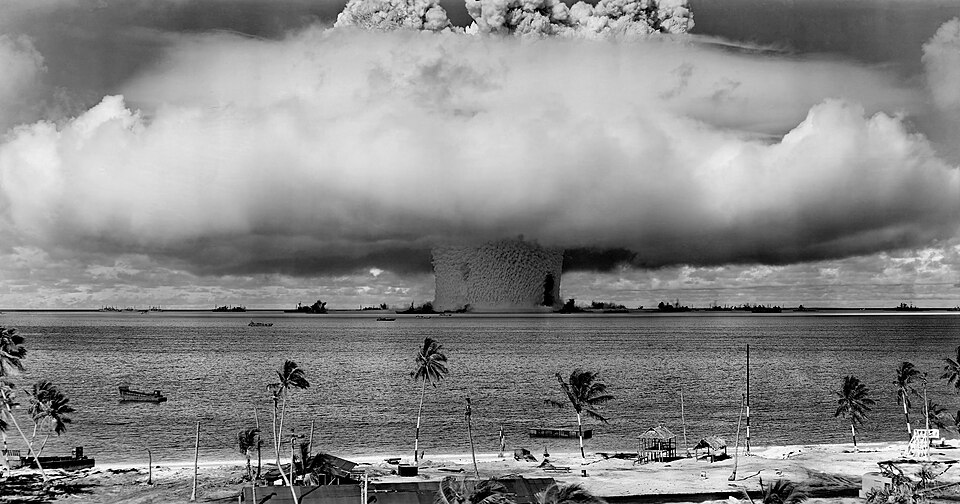
A mushroom cloud on a tropical island

The Probability Broach, chapter 13

Deejay and Ooloorie, the human and dolphin (respectively) scientists who built the Probability Broach, fill in the details that Win Bear was seeking about how they came to be in contact with Vaughn Meiss, the murdered scientist from his own universe.

They explain that they wanted to establish contact with Win’s world. They needed help from someone on the other side to do it, because (obligatory technobabble!) “power consumption would fall ten thousandfold if we could establish a resonant field”.

However, they had some misgivings about this. From their perspective, Win’s world was populated by “primitives [who] will gladly murder anyone desiring independence from a coercive state”. Worse, as Oolorie says, “Your culture is ahead of ours only in its ability to wage nuclear war”.

The only exceptions they came across were Vaughn Meiss and his allies in the Propertarian Party, whom Win met early on in the book. Recognizing Meiss as a kindred spirit, they sent him a manuscript explaining the basics of the Probability Broach. Meiss, who’s a libertarian and therefore a supergenius, began constructing his own version.

There was one other thing that Deejay and Ooloorie worried about: namely, what happens if “the field collaps[es] on an occlusion”. To show Win and his friends what they mean, they demonstrate with a desktop-sized classroom model:

POP! A blue flash at the center of the contraption reminded me of high-school tricks with hydrogen. “What you saw,” Ooloorie lectured, “was a few air molecules interpenetrating the theoretical junction between two worlds. When the interface ceases to exist so do they—or try to.”

In other words, if the portal closes while something is halfway through, you don’t get a portal cut, as is common in sci-fi. You get an explosion. And the more mass there is in the portal, the bigger the bang. (Obligatory foreshadowing!)

But, again, they set safety considerations aside and continued their work. Meiss progressed with his experiments, and they were expecting to hear from him—until their side of the portal unexpectedly blew up.

That was due to Win’s interference, as they figure out. While he was examining Meiss’ lab as part of investigating his murder, the (obligatory!) jackbooted government thugs burst in with guns blazing. In the struggle, Win accidentally switched on the machine and stumbled through the portal. But when the goons tried to come after him, the field overloaded and collapsed.

That was the explosion that flung Win into the North American Confederacy, bloody and concussed. But Deejay and Oolorie have unwelcome news for him:

“And recall, my brilliant colleague,” said the fishbowl in the wheelchair, “that the effect is not symmetrical!”

Deejay paled. “Ooloorie, I hadn’t thought of that at all!”

“What are you talking about?” I demanded…

“Oh, Win, you were afraid your world might not still exist. Ooloorie’s saying that the force of the explosion isn’t symmetrical, it depends on the distribution of the interrupting mass… the little bang that tossed you over the hedge was part of a much bigger bang on the other side!”

Win, reasonably, demands to know just how much bigger. They do the math on what would happen if the Broach closed while a person was midway through. They say it depends on how much of his body was on which side of the portal:

“Suppose… it was just his feet?”

“About the same as our explosion here, one to five microtons—about two ounces of pistol powder,” Ooloorie estimated.

“And—uh—if only his head made it through?”

“A thousand megatons, possibly more.” Perhaps her thrashing was a sign that she was upset, too. If the original explosion hadn’t done the job, certainly NORAD would have interpreted it as an attack: World War III, the end of the Earth I knew.

A thousand megatons. For reference, Tsar Bomba, the biggest thermonuclear bomb ever detonated, had a yield of fifty megatons.

The Probability Broach isn’t a bridge for traveling between worlds. It’s a weapon of mass destruction.

The Manhattan Project to enrich uranium for the first atomic bomb was the biggest industrial operation in human history up till that point. It cost billions of dollars and required the labor of over 100,000 people. Even today, coordinated industrial effort on this scale is beyond the capabilities of most countries.

For purposes of his fiction, L. Neil Smith is postulating a far more destructive weapon. And not only is it one that a single individual can build by himself, it’s one that’s easily set off by accident.

This begs a question which Smith never considers: Shouldn’t there be someone whose job it is to be concerned about stuff like this?

Deejay and Ooloorie have built a civilization-ending doomsday device in their lab with zero oversight. Whoever’s funding their research either doesn’t know or doesn’t care. No one asks any questions about what they’re doing, no one raises any concerns, no one tries to stop them. No board of ethics is convened to decide what should or shouldn’t be done with this technology. No safety inspector checks if they’re being appropriately cautious, or if they’re cutting corners. (The only thing that does concern the higher-ups, apparently, is how much it costs to run.)

In our world, if you try to build a homebrew nuclear reactor in your backyard, very serious people are going to show up and ask some questions. In the NAC, there’s no government, so there’s no federal agency that can swoop in to shut you down if you’re doing an unacceptably dangerous experiment. Nor are there any laws dictating how something so destructive should be handled.

Apparently, the Broach is considered the property of the scientists who built it, and they can dispose of it how they see fit. If they want to sell it to the highest bidder, they can. If they want to hand out the blueprints to hobbyists and dilettantes who may or may not be able to copy it safely (which is essentially what they did), they can do that too.

I suspect L. Neil Smith just didn’t think through the implications of this, but it’s unintentionally fitting for his anarcho-capitalist world. In the North American Confederacy, anyone can build a WMD and do whatever they please with it. You can cook up chemical weapons, brew biological warfare agents, assemble pocket nukes, or cobble together mad-science superweapons.

Because there’s no oversight and no law enforcement, you just have to trust that everyone has only good intentions, knows what they’re doing, won’t compromise their ethics, and won’t make any serious mistakes. To which I say, have you met humans? It’s only by the grace of the author that this society hasn’t blown itself back to the stone age.

New reviews of The Probability Broach will go up every Friday on my Patreon page. Sign up to see new posts early and other bonus stuff!

Other posts in this series:
New on OnlySky: Why the rent is too damn high

I have a new column this week on OnlySky. It’s about why the cost of living keeps rising, and a cause that may go deeper than simple greed, mismanagement or inefficiency.

In the last few decades, and especially the last few years, the cost of living in America and other developed countries has been rising faster and faster. In what seems like an especially cruel paradox, luxuries like electronics and fast fashion are cheaper than necessities, like rent, health care and education.

Is it because of capitalists hoarding all the wealth for themselves? Well, yes, but there’s another factor at work. It’s called “cost disease,” and it says that as our economy gets more automated and more efficient, the jobs remaining for humans to do should be getting more and more expensive. The question is what, if anything, we can do about it.

Read the excerpt below, then click through to see the full piece. This column is free to read, but members of OnlySky also get special benefits, like member-only posts and a subscriber newsletter:

Imagine the world before the Industrial Revolution. If you wanted to listen to music, you had to buy a ticket to hear a symphony. If you wanted new clothes, you had to pay a tailor or seamstress to sew them. If you wanted a new shovel, you had to pay a blacksmith to make it for you.

When everything was made by hand, there was fairly little difference in productivity, and therefore earning power, among these industries. One person could only produce one person-hour of work per hour, no matter what job they held.

But the march of technology has given rise to a divergence. Assembly lines, robotics, and other innovations have made some industries more efficient, meaning they can crank out more stuff faster for less money. With the rise of the internet, software companies can offer valuable products that aren’t made of anything physical at all. As we consume more and more, outsize rewards flow to these industries—mostly the owners of capital, but the workers as well.

However, jobs that require a human touch haven’t followed this trajectory…

Continue reading on OnlySky…

The Probability Broach: Non-state violence

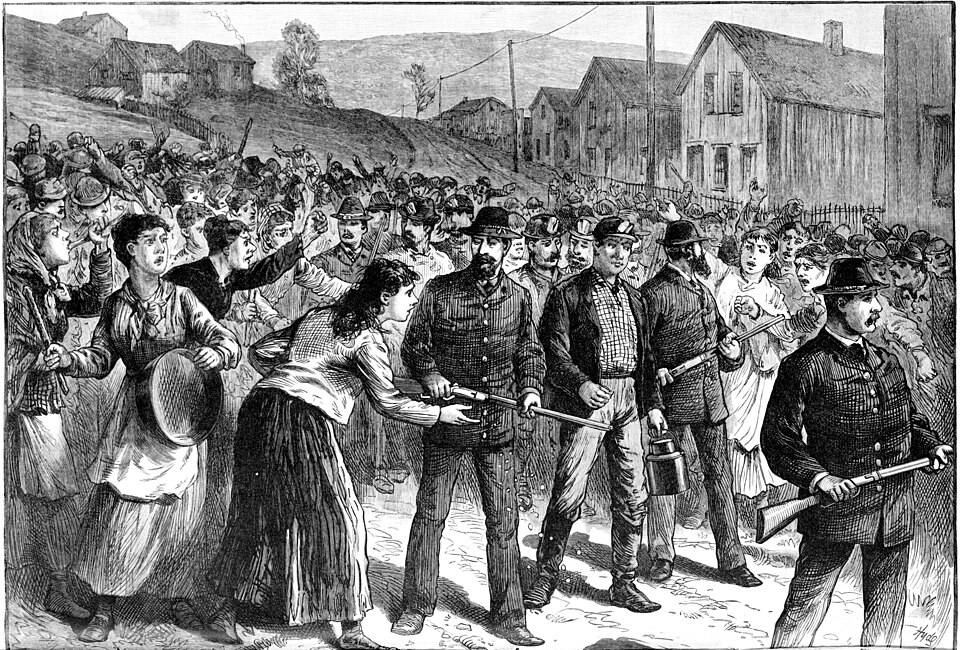
Strikebreaking miners being escorted to work by Pinkerton agents, 1884

The Probability Broach, chapter 13

Having discovered a parallel universe (“our” universe), the North American Confederacy expands their efforts to learn about it:

In 198 A.L., Paratronics shelled out for a new reactor. Now a relatively stable hole could be punched through, and larger samples taken, but they told the same depressing story: an unknown, exclusively human, English-speaking people, wearing uniformly drab, tubular clothing, riding in poisonously primitive vehicles. A culture inexplicably bleak and impoverished.

Just as a note, this book was written in the 1970s—the height of disco and punk rock. Say what you will about that era, I don’t think everyone wore “uniformly drab” clothing.

While exploring this alternate Earth, the NAC researchers spot a newsstand that sells a “World Almanac & Book of Facts”:

They deposited a half-ounce silver disk on the counter one midnight, reached with carefully sterilized tongs through the newly widened Broach, remembering the wisdom of Poor Richard before he’d gone Federalist. They learned a great deal, none of it encouraging: the Revolution; the Whiskey Rebellion: a War of 1812?; Mexico; and, horror of horrors, a civil war—three-quarters of a million dead. Financial crises alternated with war, and no one seemed to notice the pattern. World War I; the Great Depression; World War II and the atomic bomb, Korea; Vietnam. And towering above it all, power politics: a state growing larger, more demanding every year, swallowing lives, fortunes, destroying sacred honor, screaming in its bloatedness for more, capable of any deed—no matter how corrupt and repulsive, swollen, crazed—staggering toward extinction.

Don’t hold back, man! Let us know how you really feel.

L. Neil Smith treats history as a catalogue of atrocities, and I can’t disagree with that. Where we clash is his belief that it’s simple and straightforward to put an end to all this bloodshed. Just get rid of the state, and a thousand flowers of peace bloom.

He insists, implausibly, that a lawless anarcho-capitalist society where everyone is heavily armed would be more peaceful than what we have now. It would have no large-scale conflicts and almost no crime or violence.

This is an extreme case of simplistic thinking. To his mind, states wage war—so if we get rid of the state, there’ll be no war, by definition.

Let’s consider a counterexample from American history.

In the early 20th century, coal powered the American industrial economy, and West Virginia was the heartland of coal production. But the miners who dug it out of the ground didn’t share in the prosperity. The mine owners forced workers to labor long hours, for little pay, in horrendously dangerous conditions where deadly accidents like explosions and cave-ins were constant occurrences.

Making it worse, workers in remote regions had little choice but to buy necessities from company stores, which faced no competition and could charge extortionate prices that dragged them down into debt slavery. They also had to live in company housing, where they could be immediately kicked out and made homeless if they didn’t obey orders from their bosses.

These conditions, by any reasonable accounting, were little better than slavery. It’s no surprise that coal miners sought to unionize so they could bargain for better pay and working conditions. (Mary Harris Jones, better known as Mother Jones, was one of the labor movement’s most indomitable organizers.)

When the mine owners got wind of this, they launched a brutal crackdown. They hired armed private guards from the Baldwin-Felts detective agency to serve as spies and strikebreakers. These hired goons forced striking miners and their families from their homes at gunpoint. There were beatings, armed skirmishes and shootouts. Most infamously, they rolled out the “Bull Moose Special“, an armored train with machine guns which they fired into a tent colony of striking miners, killing at least one.

The conflict between workers and owners kept on escalating until the point of open warfare, at the 1921 Battle of Blair Mountain—the largest armed uprising on American soil since the Civil War. Over ten thousand miners clashed with a private force of two thousand private militiamen. They exchanged gunfire for days, racking up dozens of casualties on both sides. The strikebreakers even hired private planes to drop bombs on the advancing miners.

The battle ended in a defeat for the unions when the U.S. government sent in federal troops to dispel the insurrection. But it wasn’t the state that forced the mine owners to treat their workers so cruelly in the first place. It was the predictable outcome of unchecked selfishness.

Smith doesn’t even gesture at an explanation for why this kind of violence doesn’t occur in the NAC all the time. Even if it were true, as he insists, that abolishing government makes us much wealthier… why wouldn’t the property-owning capitalist classes of that world just capture all that surplus for themselves while continuing to pay their workers poverty wages? Was it out of the goodness of their hearts?

Even more baffling is his claim that only our world, and not his anarcho-capitalist utopia, suffers “financial crises alternat[ing] with war”. There are no financial crises in a completely unregulated economy? No recessions? No depressions? No Ponzi schemes? No bubbles that inflate and burst? Does Smith think the state causes bank failures?

In reality, a laissez-faire market would regularly see bank runs, panics, busts and crashes. That’s supposed to be how it works in a free market—the good actors thrive and the bad ones go out of business. It’s just that, when you’re dealing with banks, “go out of business” means that people lose their life savings. That’s what the Great Depression was, so it’s puzzling that Smith treats it as something unique to our world.

The Battle of Blair Mountain and other anti-union violence (like the Ludlow Massacre) shows that not all violence can be blamed on the state. The capitalist class through history has been equally willing to shed blood in service of their real or perceived interests: working their employees to exhaustion and breakdown, forcing them to labor in deadly conditions without relief, and when they protest, hiring other men to kill them.

Even when it would be a trivial expense to treat their workforce better, they’ve repeatedly shown that their greed is limitless, and they’re willing to commit any evil to keep feeding it. As Smith puts it: “swallowing lives, fortunes, destroying sacred honor, screaming in its bloatedness for more, capable of any deed—no matter how corrupt and repulsive”.

Image: Pinkerton detectives escorting strikebreaking scab miners to work, via Wikimedia Commons

New reviews of The Probability Broach will go up every Friday on my Patreon page. Sign up to see new posts early and other bonus stuff!

Other posts in this series:
New on OnlySky: Will you be immortal by 2039?

I have a new column this week on OnlySky. It’s about the human desire for immortality, as embodied in one man’s obsession.

Bryan Johnson, an ex-Mormon entrepreneur turned biohacker, believes we’re on the brink of inventing medical technologies that will halt or reverse aging. To ensure he stays alive until that day comes, he’s living by a strict diet, exercise and sleep protocol he invented himself. The benefits of those practices are hard to argue with, but he’s not stopping there. In a bid to bring the advent of immortality that much closer, he’s using his own wealth to fund a bewildering variety of medical treatments – from blood transfusions to genetic engineering – which he’s willingly testing on himself as the guinea pig.

Is there any scientific validity to any of this? Is Johnson advancing the cause of anti-aging research, or just making himself a laughingstock for no discernible benefit? Or, worse, is he putting his own health at risk in the service of a foolhardy quest?

Read the excerpt below, then click through to see the full piece. This column is free to read, but members of OnlySky also get special benefits, like member-only posts and a subscriber newsletter:

The base of Johnson’s protocol is a strict diet, sleep and exercise regimen which he follows with religious exactitude, like a medieval monk who abides by a book of hours.

He wakes up at 4:30 AM and completes a vigorous hour-long exercise routine. He eats a vegan diet (the same meals at the same times every day, with barely any variation), consuming his last meal of the day at 11 AM. He avoids alcohol, caffeine and other recreational drugs. He goes to sleep promptly at 8:30 PM every night.

He undergoes a battery of regular medical tests and measurements—from weight and body composition, to grip strength and VO2 max, to regular MRIs and blood tests—aimed at assessing his overall health and gauging his biological age, as opposed to his chronological age.

Johnson’s intention is to buy time through a stepping-stone method (and I do mean buy; reportedly, he spends $2 million a year on all of these treatments). Even if none of the therapies he’s currently using will prolong his life indefinitely, the idea is that they’ll extend it enough that other, more effective anti-aging therapies will be invented in his lifetime, which he can use to extend his life still further, and so on.

Continue reading on OnlySky…

Blood sacrifice as forgiveness: Who made that rule?

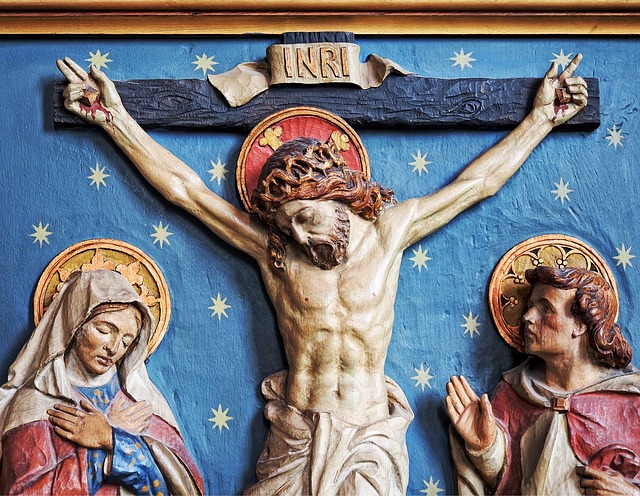
Art of the Crucifixion

“Under the law almost everything is purified with blood, and without the shedding of blood there is no forgiveness of sins.”
—Hebrews 9:22

I’ve been an atheist for a quarter-century, and there’s something I’ve never understood about Christianity: Why is the crucifixion so important to them? Why do they believe it’s needed for God to forgive sin?

Is there a rule that says so? If so, who made that rule and why?

If someone wrongs me and regrets it, I can simply forgive them. I don’t need anyone’s blood to be spilled: not mine, not theirs, and certainly not the blood of an unrelated third person. It makes no sense to demand such a gory ritual as the precondition of accepting an apology. That doesn’t undo the misdeed; it just creates a new, separate harm.

So why does it work differently in Christianity? How do Christians justify this cruel doctrine, when no ordinary, decent, moral person would ask or expect this in objective reality?

It’s not that Christians never address this question—it’s that they act as if they’ve answered it, when they haven’t. Many Christian apologists claim to have an explanation, but end up merely reiterating the idea as if it were self-explanatory. Here’s an example:

Why did the sacrificial system require a blood sacrifice?

…A “sacrifice” is defined as the offering up of something precious for a cause or a reason. Making atonement is satisfying someone or something for an offense committed. The Leviticus verse can be read more clearly now: God said, “I have given it to you (the creature’s life, which is in its blood) to make atonement for yourselves (covering the offense you have committed against Me).” In other words, those who are covered by the blood sacrifice are set free from the consequences of sin.

But again—why blood? They don’t come anywhere near justifying this. Why does God want blood to be spilled, rather than some peaceful means of atonement?

This article starts off better. It gives a clear statement of the problem, pointing out that blood sacrifice is violent and irrational:

For example, I forgive people all the time without requiring that they shed blood for me. And I’m really glad that people forgive me all the time without asking that I open a vein or kill my cat for them.

So if I can offer forgiveness without the shedding of blood, and so can other people, what is going on with God? …I mean, if God is the one making the rules, and sin is a serious affront to His holiness, then why did He decide that blood would appease Him? Why not require … I don’t know … spit? Or hair? Yes, I like the hair idea.

Why didn’t God simply say “Without the cutting of hair, there can be no forgiveness of sins”?

This author at least tries to give an explanation:

Instead, the blood was for the enactment of the Mosaic Covenant. The author of Hebrews could not be more clear. He says that a testament, or will, is not put into effect until the one who wrote it dies (Hebrews 9:16-17). My wife and I have Wills, and as is the case with all Wills, they do not go into effect until we die. A “Last Will and Testament” has no power while we live.

…Whose “Last Will and Testament” was this? It was God’s! It was God’s covenant to the people.

It’s true that the Bible proposes this answer, in the referenced verse of Hebrews 9:16-17: God made a “testament” with humanity, and a last will and testament only goes into effect upon the creator’s death. However, this is just a play on words. It doesn’t reflect any underlying principle or rule.

A will is a species of legal document, but in general, legal documents only require mutual agreement. If I sign a contract with someone, no blood needs to be spilled and no one needs to die. It goes into effect when we both sign on the dotted line, that’s all.

My “last will and testament” isn’t anything special or different than any of the other choices I make during my lifespan. There’s nothing about my death that gives it special force or added power. It’s called that because it’s the last choice I can make that goes into effect; that’s all.

The author goes on to suggest a second explanation, that death is the gateway to freedom from a past life of sin:

So the redemption enacted as part of the Mosaic covenant was the redemption of the slaves from Egypt. The death of the calves and goats symbolized the death of the Israelite people to their former life of slavery in Egypt.

Through the Mosaic covenant, the people of Israel died to their old identification as slaves to the household of Pharaoh (i.e., Egypt), and were raised again to a new identification as members of the household of God. This is why the water and the blood was sprinkled not just on the book of the covenant, but also on all the people (Hebrews 9:19).

…God’s holiness did not demand that Jesus be put to death. No, it was the devil that demanded death and blood (cf. Hebrews 2:14-15). Sin was the certificate of ownership which the devil held over the heads of humanity.

By dying, Jesus cancelled this debt of sin so that the devil could no longer have any claim upon us. This happened because just as all sinned in Adam, and so became slaves to death and the devil, so all died and were raised to new life in Jesus, and so were liberated and redeemed from our slavery to death and the devil.

This explanation has the same basic problem. It treats a metaphor as if it were a binding rule.

You can speak of a momentous change in metaphorical terms, by saying the old person is “dead” and someone new has taken their place. But to claim this requires a literal blood sacrifice is stretching the metaphor to hyperliteral absurdity. You can also describe a change by saying you’ve turned over a new leaf, but that doesn’t mean you have to go out into a forest and flip over fallen leaves to make that change effective in your own life.

A person doesn’t have to die, either symbolically or literally, to be freed from slavery. No one died because of Abraham Lincoln’s issuing the Emancipation Proclamation, but it was still effective. Obviously Union soldiers did die to make those words a reality, but that bloodshed wasn’t a necessary ingredient of the proclamation itself. It was only required because the South resisted and had to be subdued by force. If the Confederacy had peacefully surrendered and freed its slaves voluntarily, the result would be the same.

Neither slavery nor debt is a fundamental aspect of a person that requires radical surgery to remove. It’s a status imposed on them by others, and it can be removed the same way. If God is more powerful than Satan, he could have just cancelled that “debt of sin” without any death or bloodshed, the same way a president might cancel student loan debt. So why didn’t he?

It’s obvious where this idea actually comes from. It’s derived from the ancient religious notion of the scapegoat.

In this primitive theology, God is a hot-tempered tyrant who’s enraged by human disobedience. Once he’s angered, he has to take that anger out on someone—and his punishments are so indiscriminate, there’s often collateral damage.

To protect themselves from God’s wrath, ancient societies believed that they could perform a ritual to magically transfer the guilt from wrongdoers into an animal. That animal was either slaughtered or driven out into the wilderness, taking the punishment on people’s behalf and satisfying God’s hunger for vengeance (as in Leviticus 16:21-22).

Because of moral progress, we now understand that scapegoat theology makes no sense. Guilt isn’t a substance that can be moved from one being to another. However, Christianity is frozen in place as a derivation of this idea. All the philosophical ink spilled by theologians is an attempt to put a rational gloss on that ancient and bloody superstition. They’re casting about for a sophisticated explanation where there isn’t one. They’re seeking profundity that doesn’t exist.

The Probability Broach: Blue sky

Blue sky with clouds

The Probability Broach, chapter 13

The North American Confederacy’s scientists explain to Win Bear how their breakthrough came about. Like many great scientific achievements, they stumbled across it by accident, while they were trying to create wormholes for space travel:

In 194 A.L., Paratronics, Ltd., attempting to reach beyond the limited range of ion-drive spaceships, stumbled upon the Probability Broach. Peering through a microscopic hole in the fabric of reality, they expected to view deep space from some vantage point other than their own solar system.

Instead, their first photograph showed:

NO PARKING

Reorienting themselves ninety degrees produced:

THE SILVER GRILL
FINE EATS SINCE 1935

This was not Alpha Centauri. Nor could it be the Confederacy, which hadn’t used a Christian calendar for two centuries.

Realizing that they’ve stumbled upon a parallel universe, the Confederacy’s scientists study this strange new world:

Microprobes went into the hole: air, soil, and a few tiny insects came back for analysis. The atmosphere on the other side was filthy with hydrocarbons and other chemicals, the water similarly dirtied. One source was quickly identified as crude internal combustion vehicles. But why didn’t anyone drag their owners into court?

This is one of those passages that raises more questions than it solves.

It’s Smith’s attempt to show that his anarcho-capitalist society can deal with commons problems like pollution. No EPA needed—if someone is pumping toxic chemicals into your water or air, just sue them!

However, he still hasn’t dealt with the fact that in an anarchist society without laws or government, all legal systems have to be voluntary, by definition. What if the polluter just ignores your attempt to sue them? What if they’re a major employer in the region and the judge is in their pocket?

Or what if the source of the pollution is hundreds of miles away—do you have to pay out of your own pocket for a full scientific study to track down the source and identify the guilty party? What if you can’t afford that?

Also, what can’t you sue for? Any fire that burns wood, charcoal or natural gas releases lung-damaging particulates and toxic chemical compounds; that’s not scientifically controversial.

If you can sue your neighbor for driving a polluting car, can you also sue them for lighting a bonfire or a barbecue grill in their backyard—or even for cooking inside their own house? How far could someone with a grudge take this? Could they drag their neighbor into court every time he so much as looks in their direction?

Something Smith doesn’t appreciate is that laws can increase your freedom from harassment, by defining what is and isn’t a valid cause for complaint. Rather than the utopia of freedom he wants us to envision, a no-rules world where everyone has an unlimited right to sue for anything, no matter how trivial, might be more like a neighborhood with an oppressive, overbearing HOA.

Investigations proceeded slowly. Boring holes through reality is expensive: the university’s lights didn’t quite dim whenever they switched on the Broach; the comptrollers just felt that way. Even thermonuclear fusion had theoretical limits, and the Probability Broach approached them.

This chapter raises a vital question which Smith barely glances at: who pays for blue sky research in the North American Confederacy?

Is “scientist” a career in this world? If so, where does the funding come from that makes it possible? Who pays for basic research that’s often expensive, that comes with no guarantee of success, and that doesn’t have an immediate practical benefit in sight at the outset?

In our world, most basic research is funded by governments. There are good reasons for that. Governments, because they channel the productive power of an entire society, can fund science on a scale that a single wealthy individual or even a corporation couldn’t afford.

More importantly, governments aren’t commercial enterprises. They’re not constrained to make money in everything they do (and shouldn’t be!). They can afford to take the long view, funding research that doesn’t turn an immediate profit, but that ultimately benefits all society by expanding the knowledge base that makes further discoveries possible.

Thermonuclear fusion, which Smith mentions in this paragraph, is a classic example. Smith doesn’t explain how the North American Confederacy invented it or who funded the research, but it will never happen because of someone tinkering in a backyard shed. Building a working fusion reactor is a colossal project. If the real world ever manages it, it will be thanks to the efforts of an international alliance of nations that contributed billions of dollars for its construction and was willing to plug away at the problem for decades.

In general, a for-profit entity will only support research that serves a commercial purpose. A corporation might invent new pharmaceuticals or research better materials, but they’d never build something like the Large Hadron Collider, just on the off chance that a useful discovery might come from it.

But the paradox is that we owe many of our most valuable breakthroughs to pure curiosity-driven research that wasn’t undertaken to serve a commercial purpose.

Marie Curie didn’t envision nuclear reactors when she studied rocks that emitted a mysterious glow. Antonie van Leeuwenhoek didn’t anticipate germ theory, antibiotics or vaccines when he looked at pond water through a microscope. The scientists who studied unusual repeating DNA sequences in obscure bacteria didn’t know initially that it would turn out to be the most flexible and powerful gene editor ever found.

In fact, a purely capitalist society wouldn’t just lack the motivation to do fundamental research, they’d be positively disincentivized. Scientific progress depends on openness—on scientists freely sharing their methods and their results with each other, so they know what’s been tried and what doesn’t work, and so they can replicate, build on and refine other people’s discoveries. This would never happen in a world where competition and profit are supreme. For-profit corporations don’t help their competitors design better products. Their incentive is to hoard knowledge, not to share it.

This is why it’s important to organize a society where not everything needs to serve the profit motive. Antibiotics, space travel, nuclear power, GPS, the internet and CRISPR, among others, all came about because some people had the time and the freedom to imagine, to think, and to engineer without expectations of an immediate return.

Smith wants us to believe that the whole infrastructure of discovery can be easily replicated in a world where every university is for-profit and every scientific lab has to turn a quarterly profit. This is debatable, to say the least. If every scientist had to justify their research activities to shareholders, it’s extremely likely that most experiments would never be run, and the few that were would be forced down narrow, predictable channels. Imagine how many crucial discoveries would never be made if all science answered to the money men.

New reviews of The Probability Broach will go up every Friday on my Patreon page. Sign up to see new posts early and other bonus stuff!

Other posts in this series: