That indie game money

If a game is on Steam, it’s possible for a public observer to estimate how much money it made. The thing to look at is the number of reviews. There’s a fairly predictable ratio between the number of sales to the number of Steam reviews, about 30:1. Then you can multiply by the game price (accounting for discounts). Subtract 30% for Steam’s cut (or a smaller cut if the game was profitable enough). And if the game made under $1000, subtract $100 for Steam’s listing fee.

Let’s go through an example. Hollow Knight: Silksong currently has 394,000 reviews. That implies about 12M sales on Steam alone. Each sale is $20, and we’ll assume an average discount of 15%. In total that’s $200M revenue. For such a large game, Steam only takes a 20% cut, leaving the developers with $160M. Now, divide that among three developers over the course of 7 years of development, and the implied annual salary of each dev is $7.7M.
[Read more…]

Selling out as a game dev

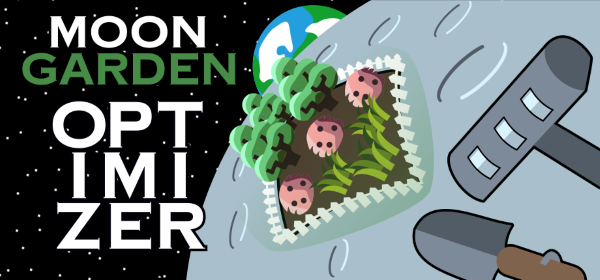
Moon Garden Optimizer is now listed on Steam. You can still play the game in browser for free on Itch.io, but the Steam version will be paid and have expanded content.

Moon Garden Optimizer is a puzzle strategy game about growing a garden while conserving water. It’s the only strategy game I’ve seen that lets you undo as much as you like. Wishlist on Steam!

Moon Garden Optimizer capsule

Ahem.

So I’d like to discuss the decision to put the game on Steam, and also sell it for money. Selling out, as it were.

[Read more…]

Why loans cost money

Boots theory

Boots theory is the idea that being poor is expensive. It comes from a Discworld novel, where a character observes that being poor, he can’t afford a good pair of boots. Instead he buys cheap boots that don’t last nearly as long. The cheap boots cost less money upfront, but are ultimately more expensive since they frequently need replacement.

Taken literally, I’m not sure how accurate the story is. Is it really true that cheap boots are less efficient in durability than expensive boots? It could be, but the cost of boots might also be driven by characteristics besides durability, such as comfort or appearance. Hard to say, since I don’t wear boots.

But if we forget about the boots, then boots theory is obviously true. The boots represent capital. Capital is anything that costs resources now, and provides value later. Capital costs money. If you can’t afford to buy capital, then you ultimately lose out on the value of capital. Being unable to afford capital is therefore expensive.

[Read more…]

FIRE

Sorry if this is obnoxious, but I have some rich people thoughts. I think a lot about retiring early. I figure it’s a ways off, but it seems eventually correct. I’m a tech worker, married to a tech worker, no kids, with fairly frugal interests and habits. I live a very savings-positive lifestyle.

On the internet, this often goes under the heading FIRE (Financial Independence / Retire Early). I’ve read a bit about it, although a lot of it is financial advice, which I haven’t found too helpful. My biggest concerns are not financial.

[Read more…]

Pour one out for the CFPB

Working in the finance industry has given me a great deal of appreciation for the Consumer Financial Protection Bureau (CFPB). Created in response to the 2008 recession, it protects consumers from unfair, deceptive, and abusive practices by financial institutions.

Recently, the Trump administration ordered the CFPB to halt all work, and cease its own funding. It’s a disaster, but more low key and less visible than all the other disasters. So, in mourning the CFPB, I’d like to review what it actually did.

The general case for the CFPB

The finance industry is fairly opaque to the average consumer. This creates an information asymmetry, where consumers can’t tell if a financial institution is being fair and honest. So, if consumers can’t even see when an institution is being fair and honest, it’s a competitive disadvantage to even bother.

[Read more…]

The Trump memestock

I don’t usually cover news, but I want to highlight some recent finance shenanigans. Much of what I’m doing here is recapping the Wikipedia article, with some additional context.

Trump Media & Technology Group (TMTG) is a company that owns Truth Social—Donald Trump’s alternative to X. TMTG recently merged with Digital World Acquisition Corp. (DWAC). DWAC is a type of company known as special-purpose acquisition company (SPAC). A SPAC is basically an empty shell company, whose entire purpose is to go public (meaning, publicly traded on the stock market), and then merge with a private company so that the private company can be public. SPACs are a method of skipping the usual bureaucracy required to take a company public. (See: educational video on SPACs.)

In other words, thanks to this merger, it’s now possible to buy and sell shares of Donald Trump’s Twitter clone.

[Read more…]

The Friedman Doctrine and alternatives

One of the big criticisms of capitalism is that corporations are purely profit-seeking. If there’s ever an opportunity for a large corporation to work towards a social good, or to benefit the environment, the corporation won’t do it, except insofar as it benefits their stockholders. The corporation is practically obligated to be as greedy as possible. There’s a name for this: the Friedman Doctrine.

The Friedman Doctrine was coined by a 1970 article by economist Milton Friedman. Friedman argued that the social responsibility of a business executive is solely to increase the business’ profits. To prioritize anything else is to unilaterally take money from stockholders, employees, and/or customers, and spend the proceeds on whatever the business executive thinks is good. As a business philosophy, the Friedman Doctrine is considered to have been dominant from the 1980s to today.

[Read more…]