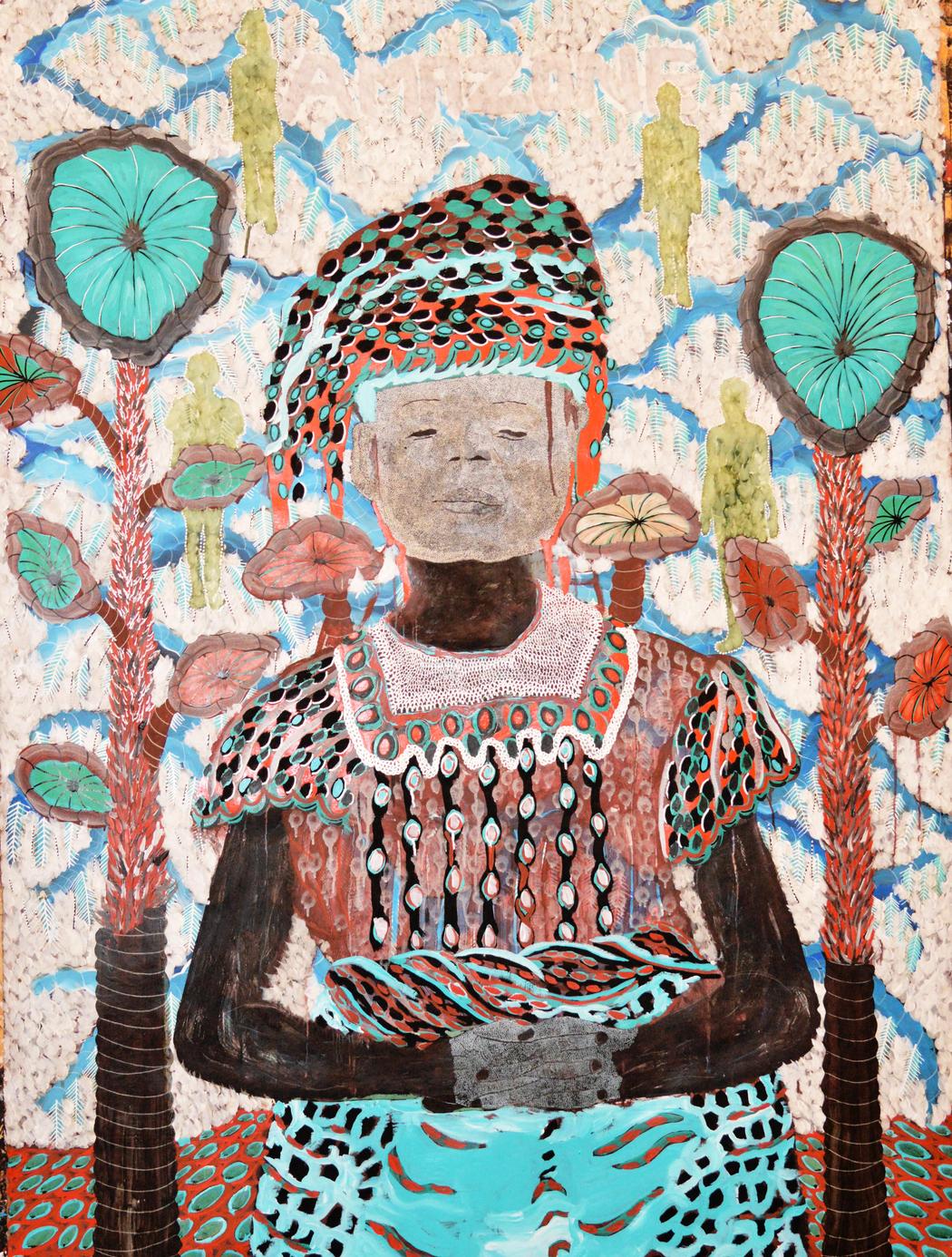
Victor Ehikhamenor / Kehinde Wiley / Omer Ba.

Victor Ehikhamenor, I am Queen Idia, the Angel of Kings, 2017. Copyright the artist, courtesy of Tyburn Gallery.

Kehinde Wiley, Fishermen Upon a Lee-shore, in Squally Weather (Zakary Antoine), 2017.

Omer Ba, Amazone-Behanzin, 2017. Courtesy of Hales Gallery.

From a European perspective, the affirmation of cultural identities on display in these shows is important in London as it is anywhere in the world. There’s a dangerous lack of strong political opposition to the rhetoric of the far right just now, and the contribution of artists is vital to broadening and enriching the context in which significant debate and action can occur. Ba, Ehikhamonor, and Wiley aren’t interested in sloganeering, or in producing pre-digested protest art; instead they’re asserting their presence and cultural sovereignty, and reminding us that the climate of xenophobia in Europe is nothing new.

Kehinde Wiley: In Search of the Miraculous  is on view at Stephen Friedman Gallery, London, through January 27, 2018.  Omer Ba: Supernova is on view at Hales Gallery, London, though December 9, 2017.  Victor Ehikhamenor: In the Kingdom of this World is on view at Tyburn Gallery, London, though January 20, 2018.

You can read much more about these artists at Garage.

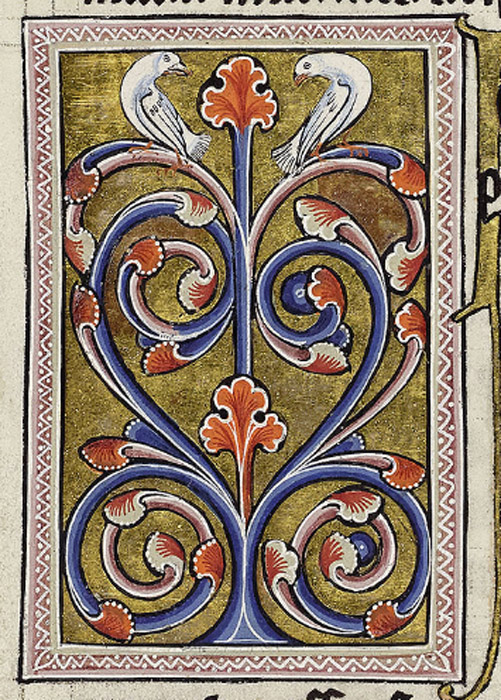
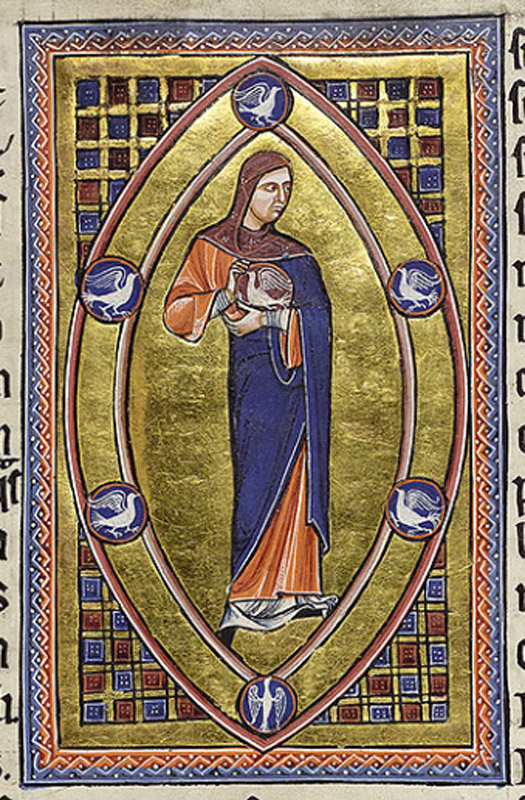
Turtle Dove and Palm Tree.

A pair of turtle doves on top of a symmetrical tree is placed beside the heading of dove and sparrow. The text on f.32r refers to the female turtle dove’s chaste devotion to her mate, even when widowed. So, the illustration refers to the birds’ faithful marriage.

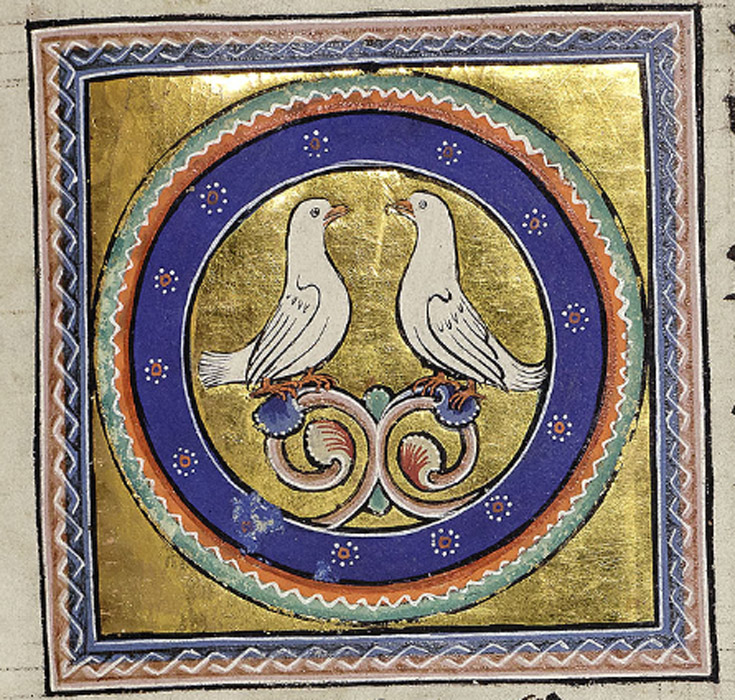
A pair of facing turtle doves in a roundel.

This dominating image shows the usual bland white turtle dove in its roundel and square perched in the arms of a cross. The cross represents the tree which conceals the nest, according to the rubric. There is a long commentary on this image.

Text Translation:

The beginning of the account of the turtle dove and the sparrow. After the mournful note of the dove and the plaintive call of the hawk, lest I linger too long, I shall write more speedily of the lament of the turtle-dove and the cry of the sparrow – and not only write of them, but also portray them. My purpose is to show how the turtle-dove cherishes the solitude of the wilderness, and the sparrow cries ceaselessly, alone on the roof; so that, following the example of the turtle dove, you may cleave to the purity that comes of chastity, and following that of the sparrow, you may take pleasure in acting shrewdly and prudently; living chastely and going your way with caution. Of the turtle dove The turtle dove, so called from the sound it makes, turtur, is a shy bird, and stays all the time on mountain summits and in deserted, lonely places. It shuns the houses and society of men and keeps to the woods.

Even in the winter time, when it has lost its plumage, it is said to to live in the hollow trunks of trees. The turtle dove also overlays its nest with squill leaves, in case a wolf should attack its young. [There’s more interesting history on Squill here.] For it knows that wolves usually run from leaves of this kind. It is said that when the she-bird is widowed by the loss of her mate, she holds the name and rite of marriage in such esteem, that because her first experience of love has deceived her, cheating her with the death of her beloved, since he has become permanently unfaithful and a bitter memory, causing her more grief by his death than he gave her pleasure from his affection, for this reason she refuses to marry again, and will not relax the oaths of propriety or the contract made with the man who pleased her. She reserves her love for her dead mate alone and keeps the name of wife for him. Learn, you women, how great is the grace of widowhood, when it is proclaimed even among the birds. Who, therefore, gave these laws to the turtle dove? If I look for a man as law-giver, I cannot find him. For there is no man who would dare – not even Paul dared – to prescribe laws for observing widowhood. He said only:’I will therefore that the younger women marry, bear children, guide the house, give none occasion to the adversary to speak reproachfully'(1 Timothy, 5:14). And elsewhere: ‘It is good for them if they abide even as I. But if they cannot contain, let them marry; for it is better to marry than to burn’ (1 Corinthians, 7:8,9). Paul desires in women what in turtle doves is an enduring characteristic. And elsewhere he urges the young to marry, because it is only with difficulty that our women achieve the virtue of turtle doves. Therefore it was God who infused the turtle doves with this grace or capacity for affection, giving them the virtue of continence; God, who alone can set forth the law which all should follow. The turtle dove is not inflamed by the flower of youth and is not affected by chance temptation. It cannot go back on its first pledge of love because it knows how to preserve the chastity which it plighted as the first duty of marriage.

[Read more…]

The North and South Wind, The Hawk.

This spread-eagled bird is usually referred to as a hawk, preceding its chapter on ff.30r-30v. It may depict the hawk spreading its wings to the south wind to facilitate moulting. However it is placed next to a text referring the the devil uplifted on wings of pride. It might be alternatively an eagle (aquila), a pun on aquilo the north wind, and a tangible image for the invisible wind.

This spread-eagled bird is usually referred to as a hawk, preceding its chapter on ff.30r-30v. It may depict the hawk spreading its wings to the south wind to facilitate moulting. However it is placed next to a text referring the the devil uplifted on wings of pride. It might be alternatively an eagle (aquila), a pun on aquilo the north wind, and a tangible image for the invisible wind.

The hawk grips its frame and twists backwards aggressively.

The hawk grips its frame and twists backwards aggressively.

Text Translation:

[Of the north wind and the south wind] The north wind is a very cold wind. ‘Out of the north an evil shall break forth’ (Jeremiah, 1:14). There Satan dwells; and thence is the source of ruin. The north wind represents the weight of temptation; the breath of the wind is the first intimation of temptation; its coldness, the numbing effect of moral negligence. The north wind comes, therefore, when serious temptation possesses the mind. It rises when temptation withdraws from the soul. ‘From the north,’ says Isaiah, ‘and from the sea…’ (see 49:12). The north wind represents temptation; the sea, the world. Therefore Christ gathers his followers away from north wind and from the sea, since he keeps not only the righteous but also sinners away from the moral torment of temptation. ‘I will set my throne in the north,’ says Satan, ‘and I will be like the Most High’ (see Isaiah, 14: 13, 14). Uplifted on the wings of pride, he wishes to set his throne in the north; he longs to be like the Most High, presumptuously making himself the equal of one to whom he should be subject. And more than that, I say, he not only compares himself with his master but also thinks himself better. The Devil fell because he sought to exalt himself; man is humbled when he desires to rise in the world. The south wind is a very hot wind. God, it is said, will come from the south (see BSV, NEB, Habakkuk,3:3). There is the seat of the Most High. There is the flame of love. From there comes the purity of truth. The south wind blows from a tranquil quarter, because God reposes in tranquility of character. There he finds nourishment; there he finds rest. There is to be found peace of mind; there, too, the refreshment of contemplation. The south wind signifies the grace of the Holy Spirit. The breath of the wind represents the beneficence of the Holy Spirit; its heat represents love. It comes therefore, whenever the grace of the Holy Spirit grows within in a man’s mind. It rises whenever that grace withdraws from the mind. God, it is said, will come from the south. The Devil from the north; God from the south. The Devil lives in the darkness of ignorance; God delights in the tranquility born of love of one’s fellow-man. The cold of the north wind causes the pores of the flesh to close tightly; the heat of the south wind opens them up again. For what cold avarice holds back in a tight fist, bountiful charity offers as alms in open hands. If old wings carry the soul down to hell, new wings carry it up to the heavenly things it longs for. For the sins of the soul weigh it down; its virtues raise it up.

Next, of the hawk The hawk is a bird armed rather with spirit than with claws, having great courage in its small body. It gets its name, accipiter, from accipiendo, accepting – that is, a capiendo, taking to itself. For it greedily seizes other birds. For that reason it is called accipite, meaning one who seizes by force. Therefore Paul says: ‘You suffer if a man take of you’ (Corinthians 2, 11:20); but while he means to say ‘siquis rapit, if any man seizes something from you by force’, he says ‘siquis accipit, if any man take’. It is said that the hawk is lacking in parental care towards its young, for when it sees that they are able and trying to fly, it does not feed them but beats them with its wings, throws them from the nest and forces them from a tender age to catch prey for themselves lest, when they are fully grown, they should become lazy. It takes care lest in their childhood they grow idle, or are given up to pleasure, or grow weak from inactivity, or learn to expect food rather than to seek it for themselves, or abandon their natural vigour. Hawks stop bothering to feed their young in order to make them bold enough to seize food for themselves. The blessed Gregory on the hawk and how it moults.

Doth the hawk fly by thy wisdom and stretch her wings toward the south?’ (Job 39:26). On which the blessed Gregory Commentarys: It is the custom of hawks in the wild to spread their wings when the south wind blows, so that their limbs are warmed by the wind to release their old feathers. When there is no wind, they create a breeze by spreading their wings to face the rays of the sun and beating them; and thus, as the pores of their body open, either their old plumage falls out, or new feathers grow in. What does it signify, therefore, that the hawk moults in the south wind, if not that every saint is warmed by the touch of the breath of the Holy Spirit and, casting aside his old way of life, takes on the form of a new man? As the Apostle admonishes us, saying: ‘Ye have put off the old man with his needs; and have put on the new man’ (Colossians, 3:9). And again: ‘But though our outward man perish, yet the inward man is renewed day by day’ (Corinthians 2, 4:16). To throw off the old plumage is to abandon a long-standing attachment to a deceitful way of life. To assume new plumage is to hold to a way of life that is gentle and simple. For the plumage of the old way of life weighs you down, while that of the new growth raises you up, so that the newer the plumage, the lighter it is for flight. The phrase ‘stretching its wings to the south’ is well chosen. ‘To stretch’ here means to reveal our thoughts by confessing them through the influence of the Holy Spirit, so that we no longer choose to conceal our sins by defending them but choose to reveal them openly by accusing ourselves of them. So, therefore, the hawk moults when it spreads its wings to the south wind, as we each clothe ourselves in the plumage of virtue when we lay our thoughts open to the Holy Spirit by confessing them. For if you do not reveal your old sins by confessing them, you will by no means accomplish the works of the new life. If you cannot bewail the sins that weigh you down, you will not have the strength to accomplish the works that can raise you up. For the power of remorse alone opens the pores of the heart and causes the plumage of virtue to grow. When the mind zealously convinces itself that it has been neglectful in the past, it becomes renewed, eager and refreshed. Therefore let the blessed Job be told: ‘Doth the hawk fly by thy wisdom and stretch her wings toward the south?’ that is, you, O God, have conferred on all the elect the insight so that by the inspiration of the Holy Spirit, they may spread the wings of their thoughts in order to cast off the weight of their old way of life, and take on the plumage of virtue to fly anew. From this, evidently, Job is to infer that the man has no alertness of perception within himself, who can by no means transfer it from himself to others.

Of domestic and wild hawks There are two kinds of hawk, domestic and wild. It is the same bird, however, but at different times it can be wild or domestic. The wild hawk is accustomed to prey on tame birds; the domestic hawk on wild. The wild hawk eats the prey it catches immediately; the domestic hawk keeps what it catches to leave for its master. Furthermore, its master opens the stomachs of the captured birds and takes their hearts to give them as food to his hawk. He throws away the intestines with the ordure, which produces putrefaction of the flesh with a stench if it remains inside. In a moral sense, the wild hawk seizes and devours the birds it catches as an evil man ceaselessly frustrates the actions and thoughts of ordinary people. The domestic hawk, in contrast, is like a spiritual father. As the hawk seizes wild birds, so the spiritual father leads worldly men to conversion by his preaching. As the hawk kills what it captures, so the spiritual father forces worldly men die to the world, through mortification of the flesh. The master of the domestic hawk, that is, the Lord Almighty, opens the stomachs of its prey when he cleanses weakness of the flesh by rebuking it through the Scriptures. He takes out the hearts when he exposes the thoughts of worldly men through confession. He throws out the intestines and ordure of the stomach when he makes the memory of sin offensive to us. As birds taken by the hawk come in this way to its master’s table, so sinners, ground by the teeth of teachers, turn into the body of the Church. How the hawk should moult To allow domestic hawks to moult more easily, you need a mew that is secure and warm. Secure mews are like cloisters. When a wild hawk is placed there, in order to be tamed, it must be locked up. There it lets fall its old feathers and acquires new ones, as anyone entering the cloister is deprived of his former vices and adorned with the virtues of a new man. The hawk is not released from the mew until its old feathers have been cast off and the new ones are firmly in place. But when it is strong enough to fly and is released outside, it comes to settle on the hand. Likewise, if a convert leaves the cloister, he must settle on a virtuous way of life, and when he is flown from that perch he should soar with all his will to heavenly things, the object of his desires. Why the hawk is carried on the left hand The hawk is customarily carried on the left hand, so that when it has been let off the leash to catch something, it should fly back onto the right. ‘His left hand’, it is written, ‘is under my head, and his right hand doth embrace me’ (Song of Solomon, 2:6). The left hand represents temporal possessions; the right, eternal life. Those who manage temporal possessions sit on the left. Those who desire eternal life with all their heart fly on the right. It is there that the hawk will catch the dove – that is, anyone who has changed for the better will receive the grace of the Holy Spirit. The end of the account of the dove and the hawk.

Folio 29v – [PL, De aquilone et austro ventis]; [Of the north wind and the south wind].

John Bisbee.

Tesselation Phage, Twisted, 12-inch, Welded Spikes, “Only Nails, Always Different”, Pennsylvania College of Art and Design Gallery, Lancaster, PA, Curated by Heidi Leitzki, 10’x 21’, 2015. Photo: Tom Bejgrowicz.

© 2016 by John Bisbee.

Seed in Progress. Photo: Luc Demers.

For nearly three decades, John Bisbee has welded and forged 12-inch spikes under the mantra, “Only nails, always different.”

Wondrous sculptures by John Bisbee. Have a wander today.

The More Things Change…

The More They Stay The Same. This is particularly true when it comes to women’s rights. There were some comments on the anti-suffrage card used in Nag, Nag, Naggin’ into Government. A common theme heard now is that women don’t want equality, they want dominance. A lot of people seem to be of the opinion that equality is simply not achievable, it must be case of domination, and the thought of women being the ones on top is particularly terrifying to many men. This was a very common theme in anti-suffrage postcards, one could say it was the dominant theme. Men are pictured doing housework, and horror of horrors, taking care of their children. This nonsense is still bandied about, and all too often you’ll see or hear a reference to a man babysitting for a day – yet the children being cared for are his own. Parents are supposed to take care of their children, and this does apply to men too. Really. Another common theme was just how gosh darn ugly those suffragists were. Unfortunately, that anti-feminism sentiment is still alive and well.

So, in the category of yep, still happening, a sampling of anti-suffrage cards, most under the fold. There are many more to be seen at all the given links.

[Read more…]

The Account of the Birds, Dove.

All of the text will be below the fold, because it carries on like you would not believe, most of it about doves.

The dove and hawk sit on a perch under a twin-domed edicule. They represent the clergy and the military, converted and sharing a monastic life together.

Dove.

Dove.

Three Doves, white, multi-coloured, and black. Franco-Flemish Bestiary, 1270.

Three Doves, white, multi-coloured, and black. Franco-Flemish Bestiary, 1270.

[Read more…]