… animals, by Paul Gauguin

Still Life With Three Puppies, 1888, Paul Gauguin. Image from My Modern Met

… animals, by Paul Gauguin
Still Life With Three Puppies, 1888, Paul Gauguin. Image from My Modern Met
My older kid got a graphic design tablet for Christmas and has been trying it out ever since*. And of course she’s mightily drawn between being very proud and very embarrassed, but I got her permission to post some of her artwork under the name “Shivia”. So welcome to the Sinnoh region in Pokémon.

©Shivia, all rights reserved
*Setting the thing up was not user friendly, but once I got it running I told her “look, there are some tutorials, maybe you should watch those”, and she replied “oh mum, I already know that stuff!”. I left her in the living room and went to the kitchen, but before I could sit down she called: “Muuuuuum, what am I supposed to do now???”. Digital natives my ass…
… landscape, by Franklin Carmichael

Wabajisi Drowned Land, 1929, Franklin Carmichael. Image from The Group of Seven.
In the last post I covered some of the more obvious problems with the world building. This one will focus on some of the ethical problems. I will focus on issues with sex and gender, not only because that’s generally my beat, but also because Rowling is being hailed as some sort of feminist icon, when her works don’t even show what I would call “house and garden” feminism that you can see in many so called “gender critical feminists”. In fact, the politics of sex and gender in Harry Potter are deeply troubled.
One:
Strong women: When Harry Potter was first published, it was lauded for its inclusion of so many “strong women”. “Strong women” are seen as the opposite of the “Damsel in distress” and sure, we got lots of capable women or girls showing agency: McGonagall, Hermione, Ginny, ehm, did I say “lots”? Yes, those women are shown as capable, more than equal to their male counterparts, yet they are also absolutely exceptional. We don’t get a female Ron, let alone a female Neville, a girl who is just average in about all aspects and who is still an important member of the group.
Two:
Women are either mothers, nuns, or evil: If we look at the women in the Harry Potter universe, there seem to be just two types. Mothers and evil women. Let’s start with Harry’s own mum. She is portrayed as the best person we could ever meet. She stood up to bullies at school, and she loved her son so much that she sacrificed herself for his sake, as a mother’s proper role demands. I could go on and on about dead mothers in fiction, but that’s probably for another day. Her role was not that of Harry’s dad, who valiantly defends himself and his family, but that of a sacrifice, who dies so her son could live. This is seen as an especially motherly deed. It is a mother’s love that protects Harry, not a parent’s love.
The next woman we get is Molly Weasley, who is the archetypical SAHM. She’s got seven kids and is the perfect homemaker, who keeps everything tidy for her husband and children and makes ends meet with very little money. She is being portrayed as a wholesome character whose only little flaws is that she’s a bit overbearing and overprotective. In other words, she’s an ideal mother. Yet, you got to wonder: what is that woman doing all day? When we first meet the Weasleys she’s got exactly one kid left at home, by book two that number comes down to zero. Most household chores can be done by waving a wand (and still she longs for an enslaved creature to do them for her) and in line with the upper class boarding school setting of the novels, large parts of raising the kids has been passed off onto other people. From the first book on we know that money is more than tight (5 underage kids do cost a lot of money), yet working outside of the home is apparently considered a no go. This is repeated in Ginny, who we learn has a great career as a Quidditch player until she ends her career to raise her family.
The only mother who is somewhere in between is Narcissa Malfoy, but even with her, her motherly instincts are her redeeming feature. Her childfree sisters gets no such chance. She is just pure evil, with a flavour of madness to it (well, she’s been tortured by the “good guys” for over a decade, so madness seems kind of understandable). Aunt Petunia would feature somewhere in between as well, but I’m limiting myself here to the wizarding world.
The nuns are, of course, the teachers. Because teachers (did I mention that the numbers don’t add up again? That’s not enough people to teach in a school the size of Hogwarts. Even with only two classes each year, no teacher can teach ALL classes in a certain subject) need to be pure beings without their own family or lives. While this holds true for all teachers in Hogwarts, there’s no denial of the gendered history of female teachers being expected to be chaste and celibate. Many countries had laws that banned married women from teaching, while married men were, of course, ok.
And then there’s the evil women. They are not necessarily evil as in working for Voldemort, but they are clearly portrayed as bad characters. The two most prominent ones are Rita Skeeter and Dolores Umbridge. There have been speculations about whether Rita Skeeter is supposed to be a trans woman, as she’s described as having “mannish hands”, but I’ll leave that in the realm of speculation. What is true is that Rita Skeeter is an ambitious woman who is also apparently single. The same holds true for Dolores Umbridge: the thing she wants most in life is power over others. There seems to be no other motivation to her actions. She sells her work to the highest bidder and enjoys abusing her power. It’s important to mention that this sadistic person was first allowed to mistreat kids under the “good guys”. There’s another thing both of them have in common: They are coded as extremely feminine. I don’t think any other character’s attire gets mentioned that often. Rita is portrayed as trying to be attractive, probably trying to finally get herself a man, while Umbridge is trying to look cute and sweet. She likes kittens and bows. Clearly that makes her evil. Let me say it clear and loud here: shaming women for being feminine isn’t feminism, but patriarchy in a feminist wrapper.
There’s one more important woman, Merope, but I’ll come to her in a separate point.
Three:
Women are prizes to be won. I must say, the struggles through adolescence were some of the more enjoyable parts of the books. Especially in book 4, where Harry is such a self-centred prick as only adolescents can be, and with adolescence comes the awakening of romantic and sexual interests and that’s completely ok. Only that of course it’s all damn heteronormative, with the girls being passive creatures that need to be pursued by the boys. In book 5 we get the feeling that Hermione fancies Ron, yet she is unable to ask him to the Yule Ball. Harry pursues Ginny, yet he makes the decision to drop her for her own good. But in the end, both boys get their girls for having bravely defeated Voldemort. They can now start the nice domestic life of a heterosexual couple where mum raises kids, because those women are what they deserve. Though the question of domestic bliss leads me to the next point:
Four:
Wizards marrying Muggles is miscegenation. While the “good guys” consider Muggle born wizards and witches to be ok, it is made pretty clear that a relationship between a wizard and a Muggle is bad. There are no working Muggle-wizard couples in the Harry Potter universe. We get Voldemort’s parents (more on this later), we got Snape’s parents. Snape’s family life is described as pretty bad. His mother married a Muggle and the relationship is described as unhealthy and bad. Basically Snape’s nastiness (and no, I don’t care about his redemptive arc, he’s a nasty bully and should never have been allowed to teach kids) is explained by his home story. He is an outsider wherever he goes. The other one is Dean Thomas, whose father was probably a wizard who abandoned him and his mother. Now, how nobody in a community so small ever guessed who his father was is another question, but again we get the idea: You must not fuck a Muggle. And that’s from a book that apparently teaches that “judging people by their bloodlines is bad”. Can you think of any happy Muggle-wizard couple?
Five:
Rape is ok (if done by women). This is probably the worst of all. Rape is treated as no big deal. It is stark to see how a world where using the unforgivable “Imperius” curse to make somebody eat a worm will earn you a life sentence in a torture institution, but drugging somebody and make them have sex with you is such a minor thing that underage kids can buy those drugs in a joke store. The treatment of this reveals why Rowling’s descend into Terfdom shouldn’t have come as a surprise. Like many “gender critical” people she apparently believes that all women (only cis women are women to her, of course) are delicate creatures who need to be protected and who cannot commit rape because they don’t have a penis. The first time we encounter a love potion is when Ron eats some chocolates that were meant for Harry and now is madly in love with some girl. This is funny, haha. We’re meant to laugh at Ron, who is obviously out of his senses (and also at the girl, because isn’t the thought that somebody could be in love with that girl funny, haha). We are not supposed to be abhorred at the fact that somebody just drugged him to the point that he would do things with that girl he’d never consent to if he were sober. There are no consequences for the girl who drugged him and it’s no problem that the Weasley brothers sell their potions to whoever can pay for them (except for Ginny, cause their own sister needs to be chaste). However, if you think this is horrible, look at the most important use of love potions in the books: Voldemort’s story of origin.
I’ve hinted at this several times already, but Merope and Tom Riddle Senior are about the most fucked up story line in the whole books. When we first meet the two, it’s pretty clear with whom our sympathies are supposed to lie. Tom Riddle Senior is an arrogant ass. Some rich bastard’s son who looks down on his poor neighbours, not knowing that they are actually wizards. Merope on the other hand is the poor abused girl who has to care for her violent father and brother (somehow the wizarding world is ok with that as well). When those two get thrown into prison, Merope uses her shot at freedom by drugging and raping Tom Riddle. Of course, it’s never described like that. The way we learn about it in the books is a very sanitised version.
(Dumbledore) “Can you not think of any measure Merope could have taken to make Tom Riddle … fall in love with her…?” “The Imperius Curse?”, Harry suggested. “Or a love potion?” “Very good. Personally I am inclined to think that she used a love potion. I am sure it would have seemed more romantic to her…”
Then we learn that Riddle returned to his parents with talks of having been “hoodwinked” by Merope. The tale in his village was that he had married because he thought she was pregnant.
“But she did have have his baby.” (Harry) “Yes, but not until a year after they were married. Tom Riddle left her while she was still pregnant.” “What went wrong?”, asked Harry. “Why did the love potion stop working?”
Dumbledore speculates that Merope, whom he describes as deeply in love with Riddle, stopped giving him the potion, hoping that he’d stay for her sake and the baby’s, but:
“He left her, never saw her again, and never troubled to discover what became of his son.”
This is perhaps one of the worst passages in the whole books. A man is drugged over months, repeatedly raped, and when he finally escapes he is the bad guy for leaving his pregnant “wife”. There is no sympathy here for Tom Riddle. There is no horror conveyed. The use of the love potion gets described as “romantic”. Harry thinks that Riddle no longer being drugged is a sign that something went wrong, and Dumbledore immediately offers an explanation that paints Merope in a good light.
The next time we hear about Merope is that she sold her family heirloom after Riddle left her, or as Dumbledore calls it “when her husband abandoned her”. Now we come to Merope’s one and only crime: dying. While Dumbledore still tries to be sympathetic, finding reasons and excuses while Merope gave up, Harry is indignant.
(Dumbledore) “Of course, it is also possible that her unrequited love and the attendant despair sapped her of her powers. Merope refused to raise her wand even to save her own life.” “She wouldn’t even stay alive for her son?” Dumbledore raised his eyebrows. “Could you possibly be feeling sorry for Lord Voldemort?” “No”, said Harry quickly, “but she had a choice, didn’t she…”
Now I’d like to raise the question why we shouldn’t feel sorry for baby Tom Riddle, conceived through rape, born to a rapist mother who did not want him if she couldn’t have his father, and who was absolutely abandoned by his own community, although they absolutely knew about him, since “his name has been down for our school (Hogwarts) since birth”. But again, we’re meant to sympathise with Merope. The wizarding community only gives a fuck about Tom Riddle once he’s old enough to attend Hogwarts. Dumbledore doesn’t give a fuck before that. And Riddle is described as a bad person even from the time he was a wee baby. Again, see the point about miscegenation. We are meant to believe that Tom Riddle was bad because of his blood (and not, maybe, because he was dumped in a non magical orphanage without any loving person around), yet somehow even this isn’t meant to raise some sympathy. It is hard not to see the gendered aspect here: Merope is always the victim, always somewhat less responsible for her own actions than others, while the man she raped and the boy she birthed are to be judged. We are meant to believe that an abandoned and mistreated 11 years old boy is just inherently bad, while a mistreated 18 years old woman is just “in love” or “heartbroken”.
There are many other ethical problems in Harry Potter’s world. You can find more examples in Charly’s comment on the last post, or Andreas’ post on interspecies relationships. I’ll leave it at this for now.
Let’s have some posts about things we can just lightheartedly hate on.
When Andreas talked about the problems of interspecies relations in Pokémon, he also touched on the Harry Potter universe. I have talked about the world building problems in Harry Potter before though mostly in comments, so this is a nice opportunity to put those thoughts into a stand alone piece.
I’ll start by saying that most fictional worlds, whether low fantasy settings (such as Harry Potter, which plays in our world where magical beings are hidden) or high fantasy settings (say Lord of the Rings or Discworld, where the world is definitely not Earth) have some major issues with their world building. This is kind of natural and stems from several problems:
Number one: people want to tell stories, not histories. Unless you’re a freak like Tolkien, who invented a language first and then built a world to serve that language, authors often don’t start out building a logical and consistent world. Instead they build a world around their stories. As the stories grow, the world grows, things are added to serve the story, earlier features are in conflict with later points. This is often closely linked to –
Number two: the longer a series, the more troublesome the worldbuilding gets. Especially when the author didn’t expect a series to run that long, and the series doesn’t have a fixed end point, but more of an episodic character. I think the Discworld novels are a really good example of that. When you read the first ones, there are many things that just disappear in the later ones. In Equal Rites a powerful female wizard is established, yet we never hear of her again.
Number three: authors make use of their bad knowledge of our own world. This is often the case in medievalist fantasy: People have some really shoddy ideas of the middle ages, they fill the gaps with “knowledge” from other fantasy or from our own world, thus creating impossible trade relationships, unsustainable farming, etc. I always cringe when the poor part of town is characterised by “food and old barrels rotting in the street”. No medieval person would have let a barrel gone to rot. There was iron in that thing. And they would have used all the food. If it was truly inedible they’d have fed it to some animal to eat the animal.
Number four: authors don’t know how to wrap up loose endings. Sure, life doesn’t work backwards, so when something happens, it doesn’t have a specific and in mind. Life also doesn’t have a last page by which all major stories should come to an end. Life just goes on. Books don’t. If a story had several story lines going on, and only one of them comes to a satisfying end, readers and viewers are disappointed. Sometimes when authors notice those loose ends, they just put something in the world that makes them end.
These issues are often less pronounced in works where the whole series has been thought out before the first book was published. Notable examples are N.K. Jeminsin’s Broken Earth trilogy, or Seanan Macguire’s October Daye series. They are very different series, with one being a trilogy that works from start to end on one story, and the other one being a many novel series where different stand alone stories are connected with a longer story.
So, how do these issues apply to Harry Potter? The problems in the Harry Potter universe are two-fold: One is a very shoddy world building from the pure standpoint of “does it work”? the other one is a moral issue: “Are the things depicted as moral and heroic actually moral?”. I’ll add that I come from a perspective of having loved Harry Potter, been immersed in the fandom, and then having first sobered and then soured on the novels, long before their author revealed herself as a racist Queen Terf.
Let’s start with the first part: Why the Harry Potter universe doesn’t work.
Harry Potter play in Britain, where a parallel magic world exists that is kept secret from the non-magical people, although it keeps interacting with it. The major issue here is size. Let’s start with the central location for the novels: Hogwarts. Hogwarts is the one and only boarding school in Britain and Ireland where almost all wizards and witches send their kids to, plus the kids from non-magical families who show magical abilities. This means we have all children of the magical population in one school. This should give us an idea about the size of the magical population. If you look at Harry Potter’s year, this comes down to around 40 kids, give or take a few. We know most of Harry’s housemates by name (Harry, Ron, Neville, Hermione, Dean, Seamus, Padme, Parvati, Lavender,…), and a few from the other houses. Always two houses a year share one class, which means that two houses have about 20 kids together, so it’s 40 in a year. If we suppose that each year is about 1% of the total population (wizards live in general longer, but some still die young, and it’s a ballpark figure anyway) that leaves you with a total wizarding population of about 4000 people.
That’s not much. That in and on itself isn’t the problem. the problem is the rest of the world, because it’s a world with really huge specialisation in work. The ministry alone has several highly specialised branches with their own training and prerequisites. How many Aurors are there? The Mystery department? Then there’s several competing companies that just specialise in brooms much like there are car brands. It’s made clear that they are luxury items that are often handed down within families. Unlike cars they aren’t even useful for your everyday life, since public transport works in less prominent ways, for example via the chimneys (another major part in the wizarding world we only learn about in book 4 or so, presumably because the author needed a plot device). Even if broommakers were just family businesses, there’s not enough demand to actually sustain them, especially with a new model being developed and going on the market every year or so. Not to mention that there are apparently several companies that produce sweets and clothing, let alone magical artifacts. Even if they source all their material from the muggle world, where does stuff come from?
And where do people come from? In a community of a few thousand people, everybody will be related to everybody else. Yet strangely, people don’t seem to have relatives. There’s Narcissa Malfoy and Bellatrix Lestrange and that’s about it. The Weasleys have a hell lot of kids, but no cousins? Come on, my town is much larger than all the wizarding world combined and even I went to school with my cousin. One explanation given is that wizards tend to marry Muggles, but that only gets you a whole other bunch of problems: Where do they meet? The wizards are so oblivious of non-wizarding world, they hardly manage to take public transport, but they manage to engage in meaningful relationships with Muggles*?
Another area where numbers don’t add up is Quidditch. Now, the game as such doesn’t make much sense apart from establishing Harry’s status as super hero, but even if we accept the ridiculous premise, who’s playing the game? We know that all kids are in Hogwarts. Hogwarts has 4 houses, 7 kids play in a house team. That makes 28 junior players at any given time, yet for some reason, outside of Hogwarts there’s a whole league outside of school. And the Captain of the school’s most successful team can only get a job as an extra once he leaves school?
Now, all of these things can be dismissed as “nitpicking”. They don’t distract from the magic world, you can simply ignore them, and indeed, it took me some time to spot them, and I am after all somebody who studied literature and is therefore trained to view such things with a critical eye. What I found far more annoying was the deus ex machina called the Deathly Hallows. Somehow, the Deathly Hallows are a fundamental part of wizarding folklore, yet they never appear within six books. The Horcruxes, they make sense. They felt natural within the world. Throughout the books it was hinted that Voldemort had done things that made him basically immortal, enchanted artifacts make sense within the world, and, well, that’s also knowledge you wouldn’t throw at preteens and young teens.
But the Deathly Hallows? How did they never come up, even as some figure of speech? Just think about how our fairly tales influence our world, how we will casually call somebody “Sleeping Beauty” or “Cinderella”. Hoe my husband will use Harry Potter’s own “Lumos” while turning on the lights, or how we have taken to call somebody naive “my sweet summer child” from GoT. Yet, nothing. Six books and not even Ron ever mentions how Harry’s invisibility cloak is damn special, just like the one in the fairy tale. Indeed, the cloak isn’t treated as extraordinary throughout those books. Ron, who is our wizarding encyclopedia, treats it as another luxury item his friend got, but not as beyond attainable. In the end, the Hallows feel like an easy way to finish up the story without giving it too much thought.
I could go on and on about the problems with the world, not just in HP, but the other works like Magical Beasts (please explain a Jewish wizarding girl in New York to me), but I’ll leave it at this. I’ll write about the ethical problems another day , since the post got long already.
*How those relationships are portrayed is a different matter for the “Ethics” post.

Source: Pokemongolive.com
Well, let’s not do a usual “end of year” review, shall we? We all know what happened this year. Instead I want to focus on something that really helped me through the struggles of this year, and like many other people I turned to video games. Now, while I played too much Animal Crossing in spring, to the point that the kids were upset with me digging out all the fossils and catching all the rare fishes, Pokémon Go made me happy all year long.
For one thing, it regularly gets me out of the house. I don’t have a dog for good reasons, so there’s no wet nose that makes me get off my ass, and like for many people, “I should go on a walk because the movement in the fresh air will do me good” just isn’t enough for me. But “I should go outside to catch Pokémon” amazingly is. And since Mr plays as well, we go on walks together, spend time together on our hobby and get some mild exercise outdoors.
For another thing, it keeps me connected. The social aspects of the game are carefully crafted. There is competition, and trainer battles, but they tend to be anonymous over the internet. Real life encounters tend to focus on cooperation, as all players focus on battling the same boss together. Just last week we met a family on our walk who had mostly just started playing and the little kid of some 8 years or so was super happy to find some advanced players to play with and get the big bad monster. Those little things make me happy.
Of course it’s also something we do with our friends, as restrictions allow, so we plan whole weekends around Pokémon events, with food and drink and everything. Even when we cannot play together, we have something to talk about via video chats or messenger services, so we keep talking with each other, having some light hearted chats or rants about some thing or other that isn’t working (what, did you think the game didn’t have glitches?) without having to talk about serious matters.
And finally there’s the people we met via Pokémon Go who have become friends. Sometimes life puts somebody in your way and then you notice that it “clicks”. About a year ago we met a woman who was hoping for others to join her in a Raid, and we did, and we connected on social media, and we noticed that we actually like each other and now I’m looking forward to our Wednesday night raids and chatting for a while with her and her husband. So much for the people who say that video games make you lonely.
Oh, and as an addendum: It also provides and outlet for all the judgemental people who have nothing better to do than getting upset at other people playing some harmless game on their phones in public. I wouldn’t want to disappoint them, would I?
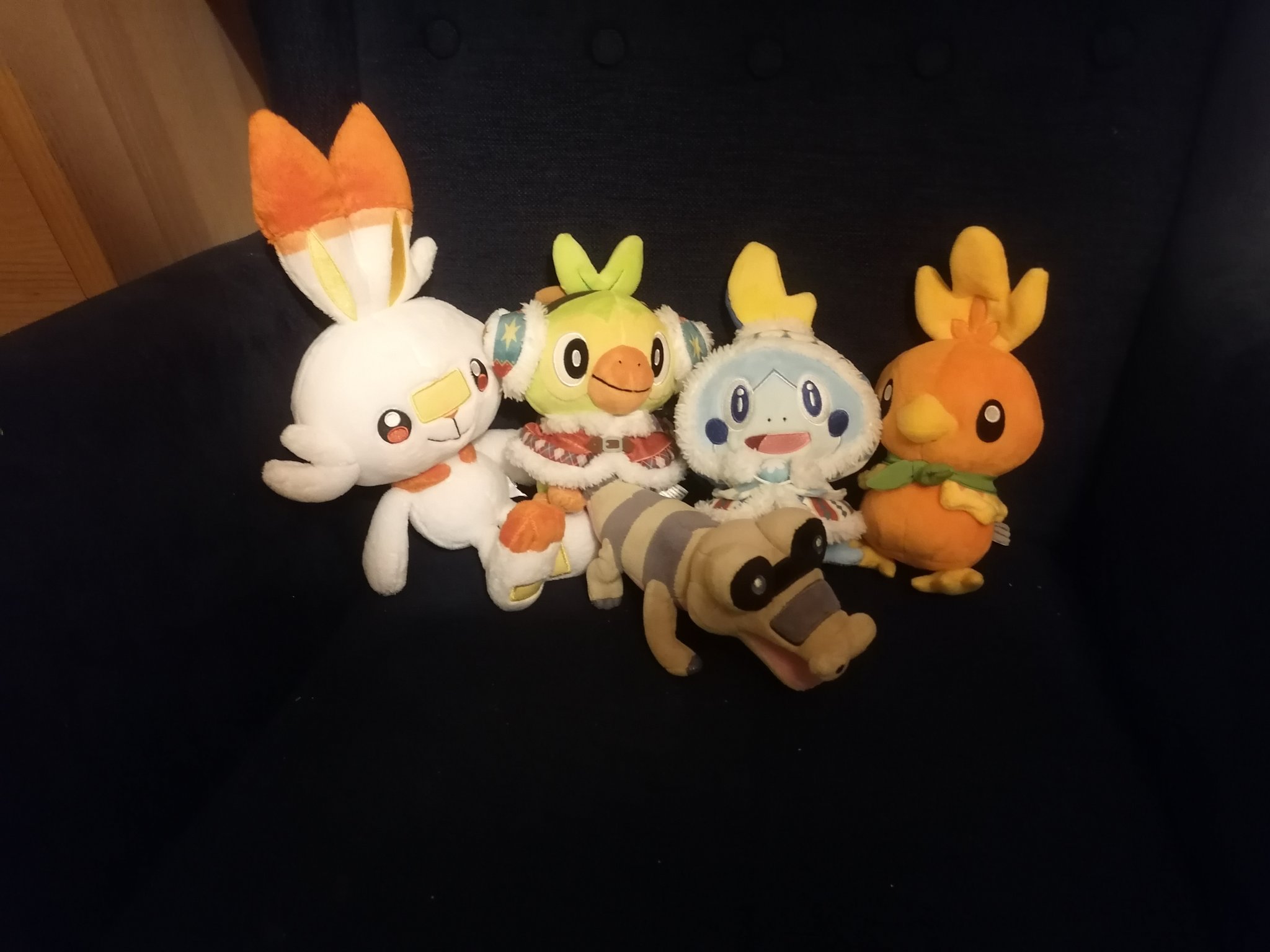
©Giliell, all rights reserved
Look at what we got for Christmas!
So, what is your favourite (video) game and why?
… Victorian Christmas Cards
Commercially produced greeting cards hit the market in 1840, and by the 1860s, they had become very popular. The Christmas cards sent during the Victorian years had a much different sensibility than those we send nowadays. Hyperallergic put together a good selection with many featuring animals doing some unusual things, and I’ve chosen a few of my favourites to share with you. There are more to see at the above link.
Let’s start with a few just plain cute cards.

“A happy Christmas” (1908) (via NYPL) Christmas Card, from Hyperallergic.

“In silvery accents, whispering low – A happy, happy Christmastide!” (England, 1880) (courtesy Toronto Public Library) Christmas Card, from Hyperallergic.

An example of one of the first Australian Christmas cards, collected by Bessie Rouse (via Sydney Living Museums) Christmas Card, from Hyperallergic.

“Wishing you a Merry Christmas,” featuring a goldfinch, bee, and cricket (via University of Glasgow Library/Flickr) Christmas Card, from Hyperallergic.

“A happy Christmas to you” (via TuckDB Ephemera) Christmas Card, from Hyperallergic.

“Every good wish for your Christmas,” with frogs! (via the Library of Birmingham) Christmas Card, from Hyperallergic.

“A joyful Christmas to you” (via Derbyshire County Council Record Office) Christmas card, from Hyperallergic

“I have come to greet you” (inside it says: “Loving Christmas greetings, may smiling faces ring around your glowing hearth this Christmas day, may fun and merriment abound, and all your world be glad and gay” (via TuckDB Ephemera) Christmas Card, from Hyperallergic.
And now, a few more unusual cards.

“May Christmas be Merry” (19th-century Christmas card) (via Lilly Library at Indiana University, Bloomington) Christmas Card, from Hyperallergic.

Christmas card by Wilhelm Larsen (1890-92) (via National Library of Norway/Flickr) Christmas Card, from Hyperallergic.

“May all jollity ‘lighten’ your Christmas hours” (via Lilly Library at Indiana University, Bloomington) Christmas Card, from Hyperallergic.

“Now dance and jump and make good cheer for Christmas comes but once a year” (L. Prang & Co., Boston, 1888)(via Special Collections Department, Postcard Collection, Enoch Pratt Free Library) Christmas Card, from Hyperallergic.
and finally, a few cards that I consider downright frightening.

“A hearty Christmas greeting: Four jovial froggies / a skating would go; / They asked their mamma, / but she’d sternly said, ‘No!’ / And they all came to grief in a beautiful row. / There’s a sweet Christmas moral for one not too slow. / Just so!” (via Nova Scotia Archives/Flickr) Christmas Card, from Hyperallergic.

“A Merry Christmas to you” (via Horrible Sanity) Christmas Card, from Hyperallergic.

“A happy Christmas” (via Boston Public Library) Christmas Card, from Hyperallergic.

The red ants have a flag that reads: “The compliments of the season” (via University of Glasgow Library/Flickr) Christmas Card, from Hyperallergic.

“A Merry Christmas and Happy New Year” (1876) (via National Library of Ireland/Flickr) Christmas Card, from Hyperallergic.

“May yours be a Joyful Christmas” (via Tea Tree Gully Library) Christmas Card, from Hyperallergic.

“With many merry Christmas greetings” (via TuckDB Ephemera) Christmas Card, from Hyperallergic.

“A Happy Christmas” (1900) (via Missouri History Museum/Wikimedia) Christmas Card, from Hyperallergic.

A Krampus Christmas card (via Tea Tree Gully Library) Christmas Card, from Hyperallergic.
My thanks to Hyperallergic for putting together this interesting assortment of antique Christmas cards. There are a few more to be seen if you click the link.
Merry whatever you celebrate. I personally would not mind a little war on Christmas, I hate the holiday and everything it officially stands for (hint- it does not stand for love and family, that is most people’s personal addition). But I love the winter solstice and the promise of longer days and shorter nights again. We had an extremely warm bud muddy and gloomy fall so far, but today, finally, winter has begun for real – we had our first real snowfall of this year. That has cheered me up ever so slightly.

© Charly, all rights reserved. Click for full size.
I might have to dust off the snow of the bonsai trees, if it gets wet, it could break them.
… simplicity, by Nailia Schwarz
Nailia is a German photographer, originally from Russia, and this is from her series “Simple Things.” More of her work can be seen at Fine Art America or on her Facebook page.

Simple Things – Christmas, by Nalia Schwarz.Image from Fine Art America
… love, by Briton Riviere

The Long Sleep, 1868, Briton Riviere. Image from Wikiart.
… winter, by Ivan Shiskin
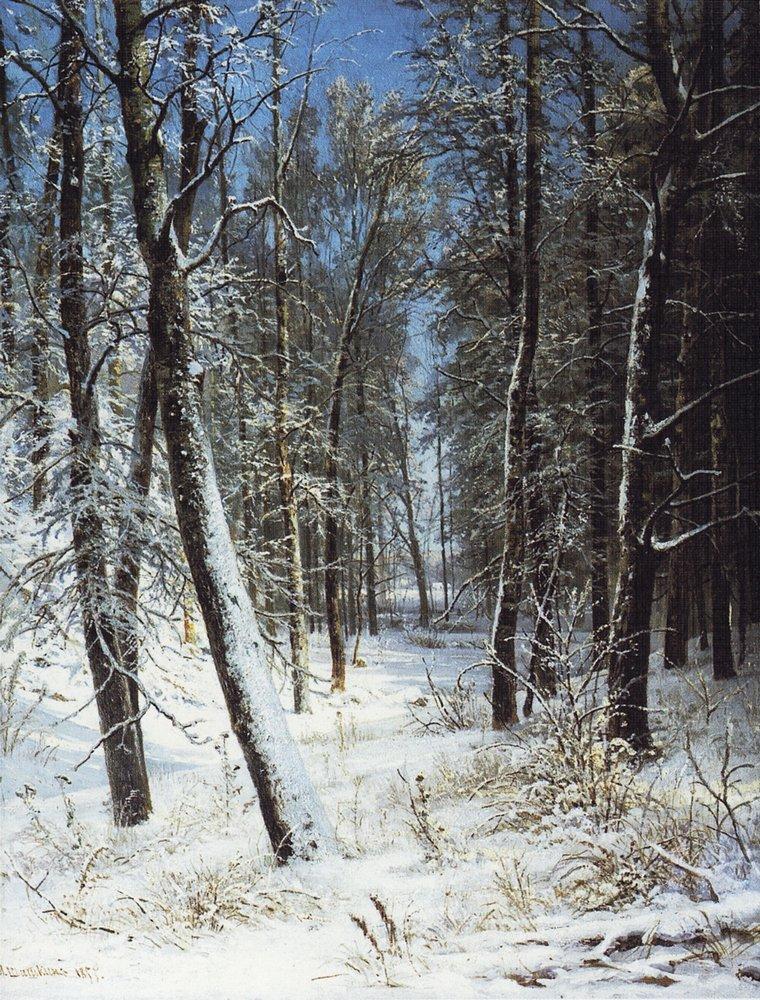
Winter in a Forest (Rime), 1877, Ivan Shishkin. Image from Wikiart.
The UK is supposed to leave the EU finally and definitively at the end of this year and as each week some deadline is being set only to be ignored/postponed again, it is like watching a train wreck in slow motion. I will not pretend to be very well informed on the negotiations and everything with them, but I would like to shortly muse about one phenomenon that I see online.
Before and after the vote for Brexit, the Brexiteers with Farage, Rees-Mogg, Johnson and similar upper-class twits were all saying how easy it will be to close a comprehensive trade deal with EU and how after being freed from the EU restrictions they will be able to also negotiate much, much, much better deals with everyone else. After all, the UK is the fifth-largest economy in the world and the EU needs the UK much more than vice versa, so negotiations will be easy because the UK holds the longer end of the stick, etc. And even if no-deal happens, no biggie, cuz everyone else will clamor to fill the gap in business with the EU.
So far the UK has closed several trade deals with other countries, and most of them are just copy-pasted trade deals that those countries have with the EU. The trade deal with Japan is worse (for the UK) than the one the EU has. And the trade deal with the EU does not go so well so far. In fact, it seems that hard Brexit is creeping ever closer.
And the rhetoric of online brexiteer experts is suddenly concentrated on how the EU bullies the UK and tries to punish it for leaving. The EU is the bad guy, of course, refusing to back down and give the UK everything it wants. To which I would say – so what?
Those brexiteers who will inevitably blame the EU for any negatives that befall the UK due to this mess seem to me to fail to grasp a blatant contradiction in their own reasoning. Not only in claiming that the UK is bullied by someone who, supposedly, was supposed to have a weaker negotiating position. But also they are often hardline libertarian capitalists, for whom negotiating from the position of power with the intent of screwing the other party completely over is a good thing. So by their own logic, even if the EU is the bully (which I do not think it is) and is just trying to screw the UK over to teach it a lesson (which I do not think it is) they should just admire the business acumen and negotiating strength of the EU instead of whining how persecuted they are, shouldn’t they?
It looks like the British Brexiteers do show here one common characteristic of conservatives the world over. They fire the sweepers, then the drop banana peels on the floor willy-nilly and when they inevitably slip and fall flat on their arse, they blame everyone else.
I’m sorry for not having been very active, and please forgive me for not being very active during the next few days.
Last week we had to deal with the news that one of our bunnies, who lived with my parents was killed by a marten, today sweet Gracie died during our attempt to socialise them, apparently from a heart attack, and I just can’t anymore.
I hope you’re all having a better time, as much as it is possible right now.
Luv
Giliell.