Remembrance: The 1917 Silent Protest Parade.

Photograph of the 1917 NAACP Silent Protest Parade by Underwood and Underwood (courtesy James Weldon Johnson Memorial Collection of African American Arts and Letters, Yale Collection of American Literature, Beinecke Rare Book and Manuscript Library).

The call to the march by the organizing committee of the 1917 NAACP Silent Protest Parade (courtesy James Weldon Johnson Memorial Collection of African American Arts and Letters, Yale Collection of American Literature, Beinecke Rare Book and Manuscript Library).

In a petition to the White House, the marchers called on President Woodrow Wilson to take action, stating that in the “last thirty-one years 2,867 colored men and women have been lynched by mobs without trial. … We believe that this spirit of lawlessness is doing untold injury to our country and we submit that the record proves that the States are either unwilling or unable to put down lynching and mob violence.”

The organizers ended their list of “why do we march” reasons with:

We march because the growing consciousness and solidarity of race coupled with sorrow and discrimination have made us one: a union that may never be dissolved in spite of shallow-brained agitators, scheming pundits and political tricksters who secure a fleeting popularity and uncertain financial support by promoting the disunion of a people who ought to consider themselves as one.

It’s not possible to read about this march, or look at the images without seeing all the terrible parallels from 1917 to 2017. Lynch mobs may not roam at will now, but murderous cops are allowed to roam, and they are not punished for the thousands, every single year, of killings of Indigenous, Black, and Hispanic people. People are still marching. People are still taking a stand. And it’s beyond sadness that in all this time, these things are still needed.

You can see and read much more at Hyperallergic.
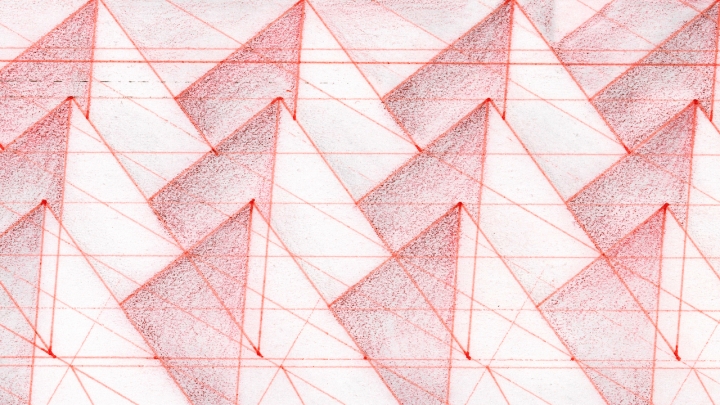
Doug Wheeler: PSAD Synthetic Desert III.

Doug Wheeler, “PSAD Synthetic Desert III” (1971) (detail), ink on paper, 61.1 x 91.4 cm.

Wheeler’s groundbreaking experiments with perception make him one of the best-known artists of the Light and Space movement that originated in Southern California in the 1960s. He grew up in the mountains of Arizona and, following in the footsteps of his parents, earned his pilot’s license.

The inspiration for Synthetic Desert came in the early 1970s, when he landed a plane on a dry lake bed in the Mojave Desert. Once the sounds of the engine were extinguished, an all-encompassing auditory experience began. “I began to hear sounds that came very disembodied,” he said, “so that there was no kind of definitive way to say what that was and how it got to you, because it came in such an unusual way. For me it was really profound, because it was like I’m hearing distance. I’m seeing distance.”

Wheeler created a series of drawings at that time, sketching out his vision for Synthetic Desert, but the Guggenheim installation marks the first time the piece has been realized. Created with support from a curator at the museum, a conservator from the Panza Collection, and sound engineers from Arup, Synthetic Desert is a monument to Wheeler’s ambitious undertakings and exacting standards.

Doug Wheeler, PSAD Synthetic Desert III (1971, realized in 2017), reinforced fiberglass, anechoic absorbers, neon, sound equipment, room: 5.8 x 17.2 x 8.1 m, installation view, Solomon R. Guggenheim Museum (photo by David Heald; all images © Doug Wheeler).

Visiting Synthetic Desert requires an timed ticket, and only five people are allowed in the installation at once for 10- or 20-minute periods. A guide joins each group and provides strict instructions: no talking, no phones, no bags, no touching the art. After passing through a set of doors into one chamber, visitors then pass through another, ascending a ramp and emerging onto a platform surrounded by rows and rows of foam pyramids bathed in a purplish-gray light.

The traffic of New York City, the din of the museum, the chaotic noise of everyday life — it all evaporates. The enclosed environment absorbs every one of those sounds, making you acutely aware of their absence. Synthetic Desert is a semi-anechoic chamber, meaning it is echo-free. To avoid the feeling of claustrophobia, Wheeler installed a subtle sound element, so the room hums at the frequency of pink noise, which is lower than its white counterpart. Meanwhile, every small noise within the space is magnified, from the rustle of clothing to the gurgle of a belly. Within the quasi sci-fi setting of Synthetic Desert, it is the humans who feel like aliens.

The pyramids, with their rigorous pattern and distinct gradient hues, evoked the feeling of being inside a semi-abstract landscape painting of a mountain range. In an interview with the New York Times, Wheeler spoke of such desert mountains, saying, “When you’re that far out, the mountains are just hazy shapes — they could be 60 miles away or hundreds.”

[…]

Doug Wheeler: PSAD Synthetic Desert III continues at the Guggenheim Museum (1071 Fifth Avenue, Upper East Side) through August 2.

You can see and read much more at Hyperallergic. I think this would be absolutely fascinating to experience, and I wish I could. If you are, or are going to be in the area, consider grabbing a ticket and having one interesting experience!

A Man and His Castle.

per rq: This retired man always wanted to live in a castle. The ‘blockhouse’ (direct translation, really just an apartment building) as shown in the photo is one of those common across the entire former Soviet territory. There’s jokes and movies about how similar cities look due to masses and masses of these buildings (they also used to be identical on the inside). Anyway, this guy is individualizing the stairwell in the most fantastic manner. I’d like to live in a castle, too, just maybe not so blue. Anyroad, this is most impressive!

Aģentūra “REX Features” vēsta par Vladimiru Čaiku, kurš sava nama kāpņu telpai licis izskatīties pēc aizvadītajos gadsimtos celtas pils.

Aizvadītās desmitgades sākumā viņš saņēmis akceptu no kaimiņiem, ar ko dalījis kāpņu telpu, un ķēries pie darba. Kopš aiziešanas pensijā tas kļuvis par viņa galveno aizraušanos.

You can see much more here.

Light.

From rq: Firelight (first three – and yeah, blue, the phone camera does weird colour-compensation things sometimes, but it’s kind of cool; the last photo is taken through a wreath of oak flowers, I was told it would make a cool framing); artificial light. Oh, I love firelight. So warm and inviting, it speaks of good times. Click for full size!

© rq, all rights reserved.

Admin Stuff: Fridays.

I’ve been doing a Cool Stuff Friday post since April ‘016. Going to be a change. Fridays will be all art days, giving me a chance to cover so very many wonderful things, which I’m much happier doing anyway, rather than dealing with all the upsetting stuff in reality land. This will give me the opportunity to stay happily under my rock for a day as well as indulge in sharing so many things I love and find fascinating. Hopefully, people who are kind enough to stop by Affinity will find much to love and interest them, too. There’s just so much to share, and there never seems to be enough time. In over a year, I haven’t found time to share one thing from The Public Domain Review, one of my favourite places to get lost. Here’s a small sample of why I like to get lost there:

Gynecological Gymnastics from Outer Space. (1895)

Aratea: Making Pictures with Words in the 9th Century.

Geographical Fun: Being Humourous Outlines of Various Countries. (1868)

So, starting tomorrow, Fridays will simply be mostly fun, sometimes serious, and I hope, always informative.

It’s All About The Pizza, Ayyyy!

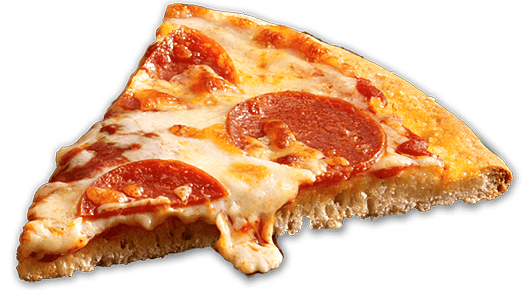
Palermo’s Pizza.

“What part of Donald Trump is not elite? The business side, the politics side, the inheritance side?” BBC reporter Emily Maitlis asked.

“Oh my god, there’s so many things about the president. How about the cheeseburgers, how about the pizzas that we eat?” Scaramucci replied.

“Everyone eats cheeseburgers, pizzas, what are you talking about?” the reporter fired back.

I’m with the reporter. A love of certain foods does not make an everyman.

Scaramucci then accused Maitlis of “coming across a little elitist” and said he grew up in a middle-class family with a “tight budget” and “little to no money.”

He said Trump understands the “common struggle” even better than he does.

“He knows how to operate in the elitist world and has unbelievable empathy for the common struggle that’s going on with the middle-class people and the lower middle-class people,” he said.

Oh sure, he understands the “common people”. Having daddy hand you a million bucks in seed money, that’s a very typical thing, happens to most commoners, right? Oh, and the language! “Common struggle”, pretty sure that’s shortspeak for commoners, because Tiny Tyrant fancies himself royalty. As for empathy? Oh, please. Pull the other one, it has bells on. It is totally unbelievable that Trump has any empathy at all. I would love to see someone point Trump at a typical lower middle class house, and tell him he had to take all his vacations in it, rather than his mansion in Florida, for a month. He wouldn’t be able to do it. Although you probably could park him in a Pizza Hut for a day, if the pizza was free.

Via The Hill. (Video at the link.)

Ritchelly Oliveira.

© Ritchelly Oliveira.

Ritchelly Oliveira is a Brazilian visual artist, predominantly working in the realm of portraiture. His images depict emotive studies of usually male figures, sometimes layered with natural imagery of flowers and birds. The characters are seen to both ignore and interact with the other components in the frame, and Oliveira creates playful areas of negative space that enhance the emotions perceivable in the drawings. Particularly in his portrait series ‘Lacunas’ (translating to ‘hiatus’ or ‘gap’), the pieces present an exploration of love and desire, offering a personal insight to the artist’s belief that “love can transform people in a way that is beautiful to capture.”

Beautiful, poignant work. You can see more at iGNANT.