
Mary Ellen Chase. His Birthday. Boston, Pilgrim Press, 1915.
It is Mr. V’s birthday today and I am far away from home, so I am sending this post to him with love. Happy Birthday, Darling. I miss you and wish you were here.

Mary Ellen Chase. His Birthday. Boston, Pilgrim Press, 1915.
It is Mr. V’s birthday today and I am far away from home, so I am sending this post to him with love. Happy Birthday, Darling. I miss you and wish you were here.
Our weekly flowers from Nightjar are here, and they look frosted with fairy dust.
Veronica persica or winter speedwell. These tiny blue flowers measure about one centimeter and are very common here in winter, especially in cultivated fields. They are so small to the naked eye that I never noticed how beautiful and shiny they are before seeing their photos on the computer.

Veronica, ©Nightjar, all rights reserved

Doctor Dick. London, Ernest Nister, New York, E.P. Dutton & Co., 1890
This is a short children’s storybook, but the artwork is charming. I’ve included the 4 full-page illustrations below the fold. [Read more…]
I did not manage to finish a knife for my brother’s 50 birthday last year, for I nearly hacked off my finger with a hatchet. So I am rectifying the issue this year.
This is the blade that was hardened when I was working on the rondel dagger. It is not a perfect blade, aesthetic-vise. I messed up the polish a few times and I had to eventually stop trying to correct it otherwise the knife would turn into a small razor. It is a good universal kitchen knife, very good cutter, I am just not happy with the surface finish. But it is either this or nothing and this year I want to give my brother a knife I know he wants. He is going to appreciate it even with the flaws.
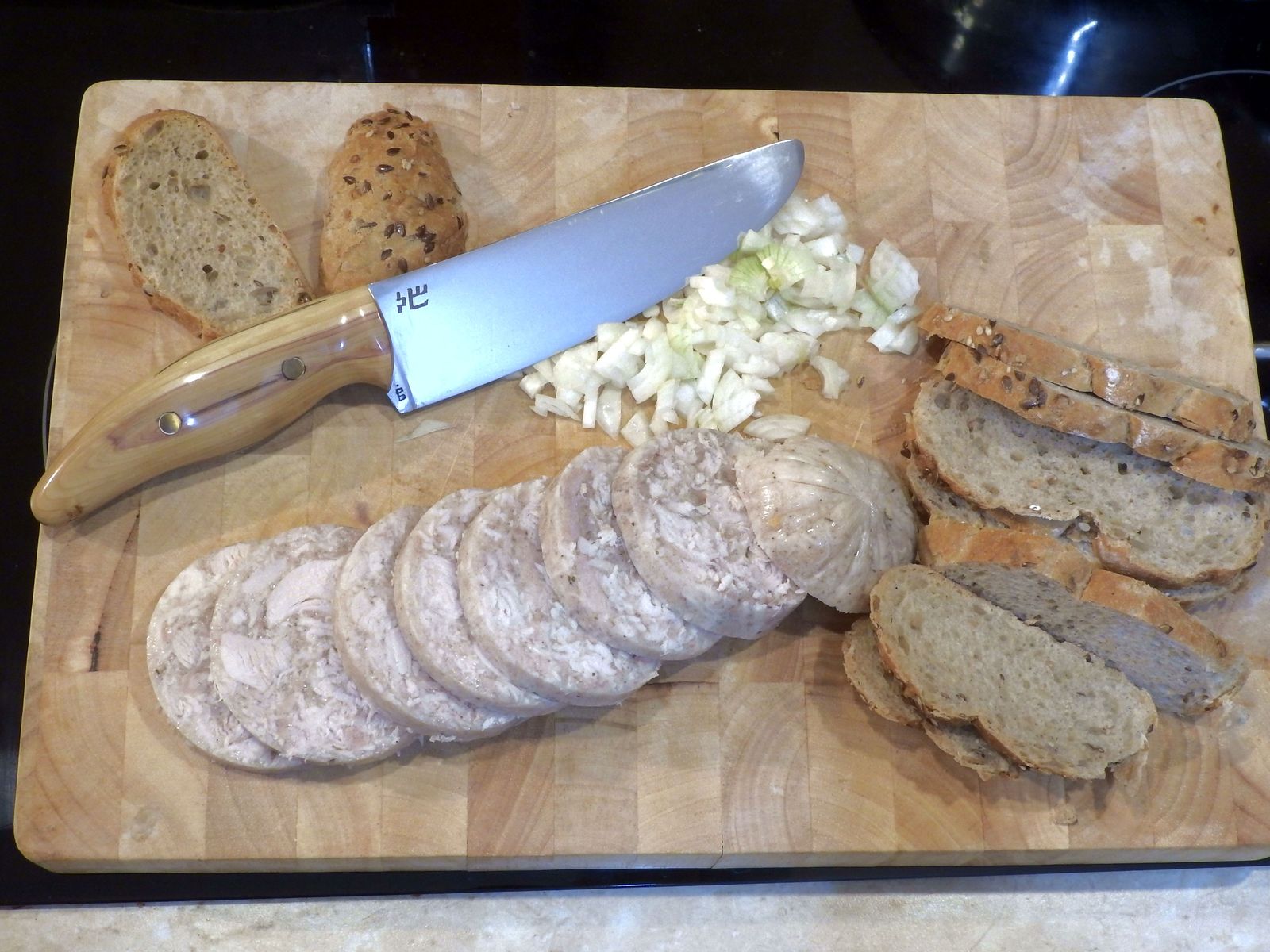
© Charly, all rights reserved. Click for full size.
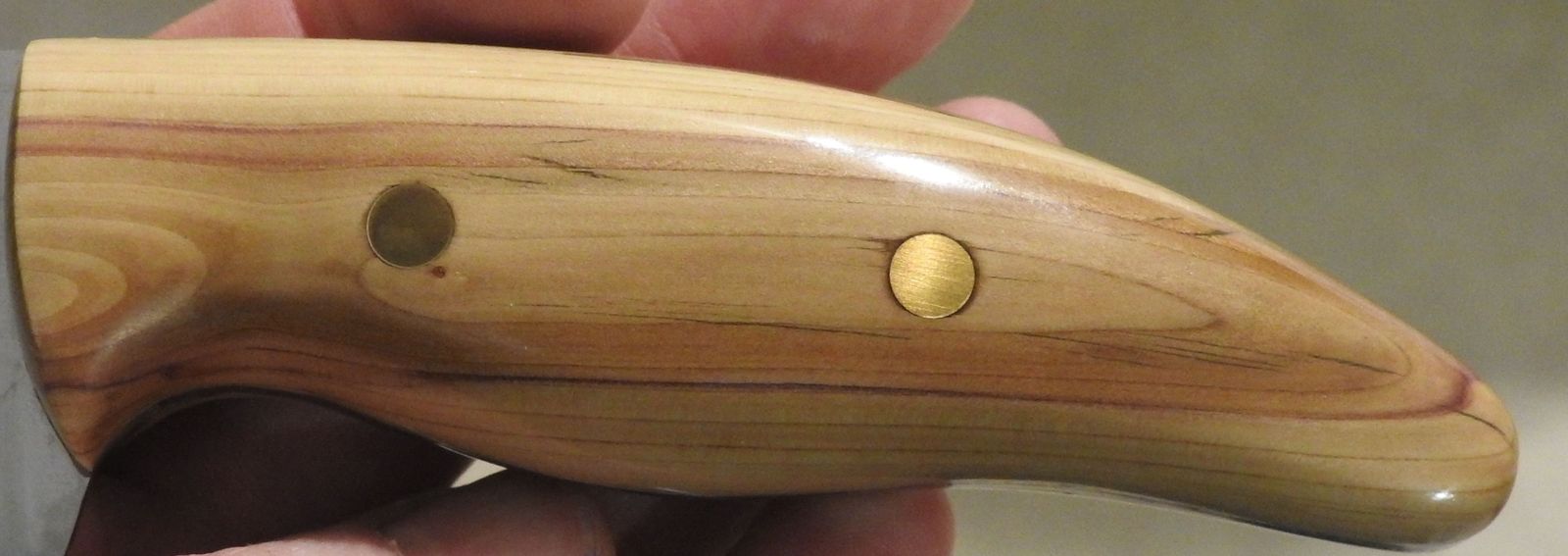
I tried to make up for the flaws with the handle, so I have used a piece of partially rotten lilac branch that I have harvested last fall. It is just stunningly beautiful wood and this is probably the prettiest knife handle I have made so far. The wood is rock-hard with tiny pores (lilac is one of those woods that can take 1000 grit polish without dirtying) and would probably hold up well even without the boat lacquer coating. But it was partially rotten, so the outlying regions were not only discolored, but also softer, so I soaked it in boat lacquer to stabilize it. With the coating, it should be near indestructible.
The lilac-colored heartwood will probably age into dark brown over the years, but it might take a really long time since the branch was already several years dead when I cut it off.

© Charly, all rights reserved. Click for full size.

© Charly, all rights reserved. Click for full size.
© Charly, all rights reserved. Click for full size.

Edward C. Butler. Our Little Mexican Cousin. Boston, L. C. Page & company, 1905.

Photo from Atlas Obscura by Frederic Ducarme
Today’s tree story is about another victim of the cult of Greed. Developers, building artificial islands for luxury resorts, are buying mature coconut trees from farmers, but their removal and relocation has many people worried.
Kaashidhoo is one of the largest of the 1,192 islands that make up the Maldives archipelago, but unlike many other islands, it does not teem with sunbathing Europeans. Its broad dirt roads are often deserted, flanked by pink Maldivian roses, mango-orange impatiens, and papaya and banana plants. The main occupation of the islanders is cultivating coconut and other tropical produce that can be sold in Malé, the Maldivian capital.
But lately, the local economy has been thrown out of balance. Crater-like holes have begun to appear across the island, some filled with dry leaves and others left as barren pits. These bald patches are the places where mature coconut trees used to stand tall. In the last year, Kaashidhoo farmers have sold hundreds of trees to new luxury resorts on nearby artificial islands.While some locals are grateful for the newfound income—$20 to $100 for each tree—others worry that beach erosion has intensified since the trees started getting uprooted. They see this as a fragile ecosystem threatened by the proliferation of luxury resorts. “It’s a huge issue,” says Ibrahim Naeem, Director General of the Maldives Environmental Protection Agency. “Importing coconut palm trees is prohibited in the Maldives, so they have to rely on residential islands.”
As time has gone on, environmental changes have set in.
Yet as the year went by, and more coconut trees disappeared, Jameel says that many locals grew concerned. Coral islands like Kaashidhoo are highly dynamic, constantly adjusting and dancing to the idiosyncrasies of wind, tides, and relentless waves. “Everyone has observed far more erosion around the beaches. That’s what we end up talking about most of the time,” Jameel says. In response, she joined a non-governmental organization called Young Leaders, to spread awareness about environmental issues on the island.
Also, once these areas are developed, locals are encouraged to stay away, and many of the benefits that they were promised from development have never materialized. Environmental groups are now co-ordinating campaigns to strengthen and enforce the laws, and they’re using the #mvtreegrab. I usually forget to Twitter, but today I will, and I’ll add that hashtag. There are plenty of pretty pictures with the story, so go have a look… if you can stomach another bad news story.
story via: Atlas Obscura

© Charly, all rights reserved. Click for full size.

Grace Louise Cook. Wellesley Stories. Boston, Mass. : E.H. Bacon & Co., 1904.
Our Monday flowers from Nightjar are bursting with brilliant raindrops.
Trees here have definitely started to bud. No, wait. I mean, bloom. They started to bloom. This is our plum tree. It’s a little too soon and I’m worried because there are still not that many bees around. We’ll see how it goes. Meanwhile, flowers with raindrops always give me some inspiration, even though macro photography in low light is always a challenge.

©Nightjar, all rights reserved

©Nightjar, all rights reserved

©Nightjar, all rights reserved

©Nightjar, all rights reserved


