So, Markers.

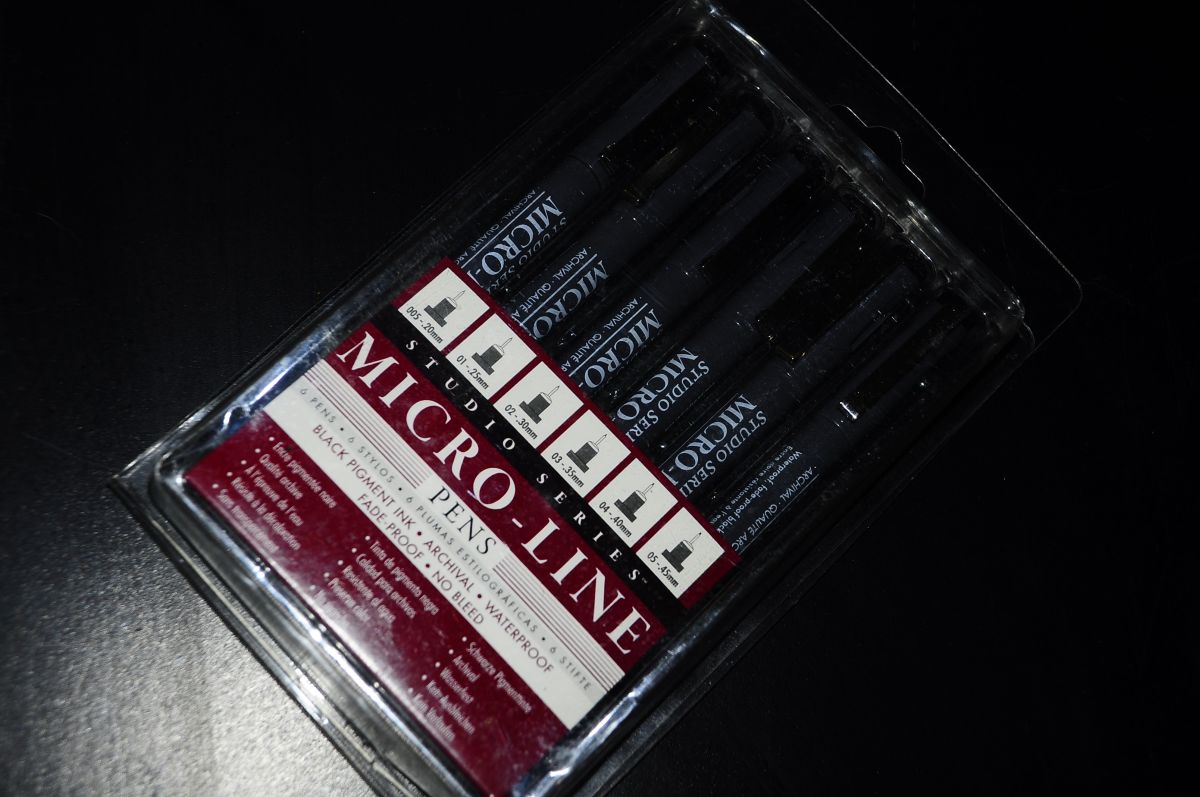
So, some of you might remember me moaning about markers a while back. I bought a packet of cheap ones ($15.00) until I can work up to spending on good ones. Last night, I decided to do a bit of drawing, and the first thing I discover? The 005 marker is bone dry. Doesn’t work at all. Art supplies are just so gosh darn fun.

William T. Horton.

Chris Ford: Affinity &emdash; Horton1

Click for full size.

William T. Horton is an artist little know these days. His work is stark, yet full of expressiveness and intensity. The Public Domain has an excellent article up, with many images. Just a few more here. Click all for full size.

The publisher Leonard Smithers (1861–1907) launched, bankrolled or otherwise helped the careers of an impressive variety of names: Richard Burton, Aubrey Beardsley, Aleister Crowley, Ernest Dowson, Oscar Wilde, W. B. Yeats, and Max Beerbohm were all referred to as “Smithers People” at one time or another. He drew to his circle the most eccentric and interesting characters of the era and in 1896 launched the arts and literary magazine the Savoy to showcase many of them. Aubrey Beardsley was made art editor while Arthur Symons was placed at the editorial helm. While not entirely a “Decadent” outfit (it also published George Bernard Shaw and Joseph Conrad), the magazine became a lightning rod for the curious and in it, as Bernard Muddiman wrote, “the abnormal, the bizarre, found their true home”1. It also launched the career of an illustrator and mystic named William T. Horton. Arguably one of the most fascinating and most unusual of all the “Smithers People”, he published very little work and remains almost completely unknown today.

Chris Ford: Affinity &emdash; Horton2

The Path to the Moon from Horton’s A Book of Images (1898). Click for full size.

Chris Ford: Affinity &emdash; Horton3

Horton’s cover for Knut Hamsun’s Hunger (1899) — Source: private scan from book. Click for full size.

Chris Ford: Affinity &emdash; Horton4

One of two Horton images featured in H. Rider Haggard’s The Mahatma and the Hare, a Dream Story (1911) — Source. Click for full size.

You can read and see much more at The Public Domain. Horton’s A Book of Images can be seen in its entirety here. W.B. Yeats’s introduction to A Book of Images is well worth reading, too.

Hey, Art!

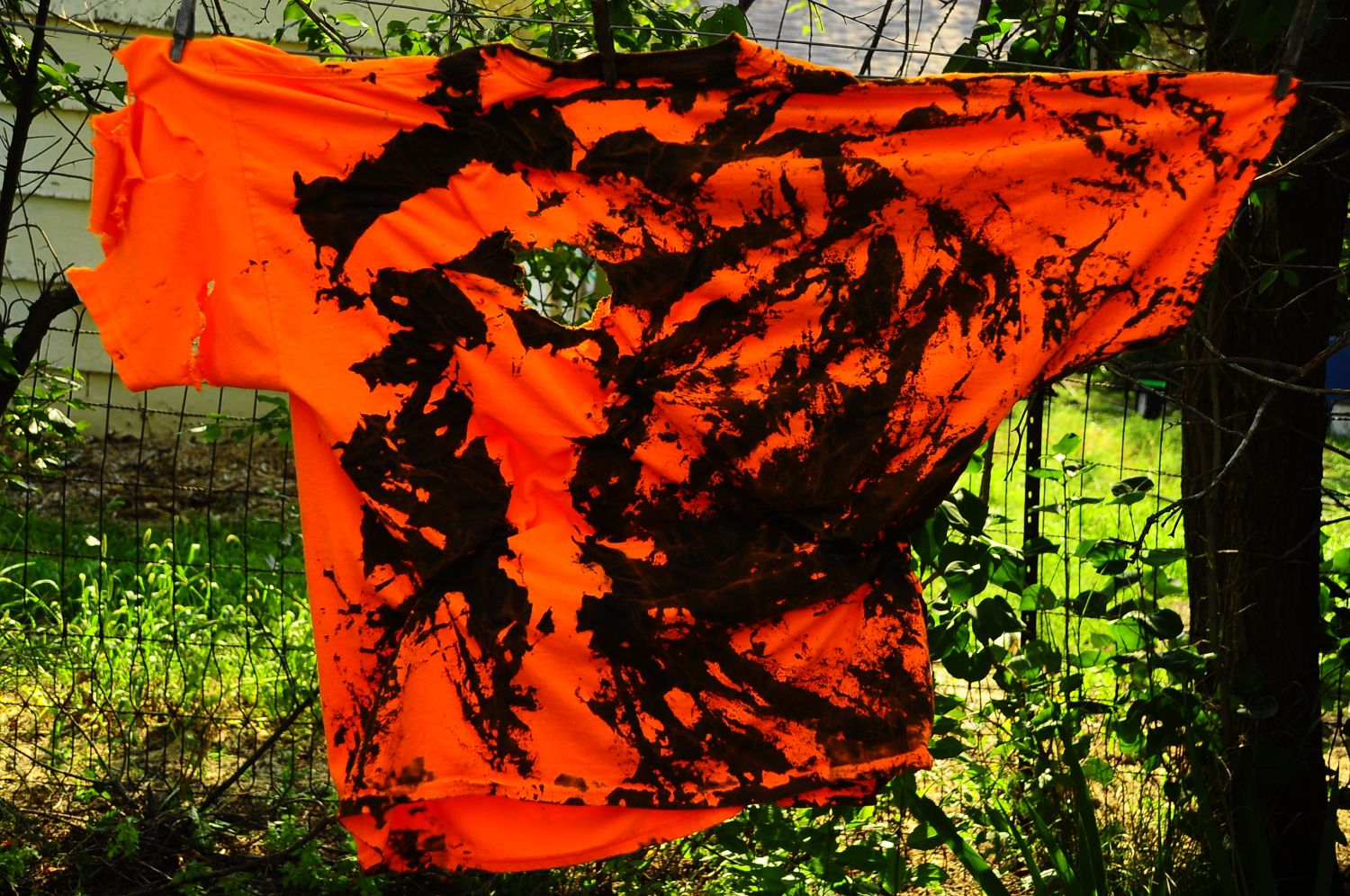
Not really. :D This is one of the T-shirts I was using when doing Submerged, then the rats did their part. I’m sure if I was enough of a pretentious twit, framed it, stuck it in a gallery, and made up a buncha twaddle about its significance, I could make good change off it. That won’t happen though. It’s gone back to the rats. Click for full size.

© C. Ford.

Revitalizing Detroit.

Charles McGee, Unity. Photo by Sal Rodriguez. All images courtesy of Library Street Collective.

In 2014, when the City of Detroit threatened to sell many of the Detroit Institute of Art’s prized artworks to help the Motor City exit bankruptcy, the question of art’s role in the city’s future came front and center. Ultimately, the museum raised nearly a billion dollars to preserve the city’s cultural heritage—and its Picassos. Two years before, in what has become known as a “grand bargain,” local residents, husband and wife duo Anthony and JJ Curis, decided to open the Library Street Collective on a once-barren stretch of land. The Collective is a gallery with a traditional artist roster and a mission to revitalize the city by commissioning artists from the city and around the world to make public art in the streets of Detroit.

“Me or JJ don’t have an art background,” says Anthony Curis to Creators. “At the time, I was redeveloping a building in downtown Detroit that was meant to be a restaurant.” Back then, downtown Detroit’s state of near-total abandonment led him to open a gallery instead, at the suggestion of his wife. “The model wasn’t focused as much on the brick and mortar as it was on what kind of change we can make in the city.” He explains, “When we opened the gallery, we were really focused on public art and how could we change the landscape, making the community a little bit more vibrant and interesting. We are very interested in and keen on our mission to engage the public and reach people. That’s where the gallery was born.”

You can read much more, and see more about this project at The Creators Project.

Chess As A Comic Book Trope.

Charlton Comics, Vol. 1, No. 36. Strange Suspense Stories (March 1958) (courtesy World Chess Hall of Fame).

Hyperallergic has a great article about The World Chess Hall of Fame in St. Louis, and chess as a comic book trope. Chess was a very common trope in much of pulp fiction, also. There are so many awesome images, I would have agonized over which to include here, so just the one. Click on over to see them all, and do some reading, too.

ST. LOUIS — “Chess and comics are a natural pair,” Shannon Bailey, chief curator of the World Chess Hall of Fame (WCHOF), told Hyperallergic. “The concepts of battle, the struggle of good versus evil, strategy, and speed, have always played a central role in both chess and comic book themes.”

Bailey organized POW! Capturing Superheroes, Chess & Comics now at WCHOF, a nonprofit institution that explores the connections between art and chess in its programming. Founded in 1986 by the United States Chess Federation, WCHCOF opened in St. Louis’s Central West End neighborhood in 2011, following the closure of its Miami museum in 2009. Recent exhibitions range from Designing Chessmen on the imagery of chess, to chess during World War II and the games designs of Michael Graves. WCHCOF is active as a collecting institution, and since POW! opened in March, collectors Floyd and Bernice Sarisohn — whose memorabilia and ephemera form the foundation of the exhibition — have decided to donate their comic books and related sets.

[…]

POW! Capturing Superheroes, Chess & Comics continues through September 17 at the World Chess Hall of Fame (4652 Maryland Avenue, St. Louis, Missouri).

You can read and see everything at Hyperallergic.

Hieronymus Bosch Piñatas.

You do not want to miss the work of Roberto Benavidez, not one single bit of it! This artist is well worth a healthy little detour in your day. All of his work is stunning, imaginative, and very beautiful. There’s a distinct sense of humour suffused throughout, a noticing of the irony in small details. Hyperallergic has an excellent article, lots of images, and Benavidez’s website is full of delights.

Hieronymus Bosch piñata by Roberto Benavidez.

…How appropriate, then, that Los Angeles-based artist Roberto Benavidez has made wild, larger-than-life representations from the Hieronymus Bosch painting, “The Garden of Earthly Delights,” in piñata form.

“Sin is inherent in both the Bosch painting and the piñata, so to me it was a perfect pairing,” said Benavidez, in an email interview with Hyperallergic. “I like that my work is a blend of both Mexican and European art forms, which in a way represents who I am. Plus, I have always admired and gravitated towards old painting techniques. The oddness of the creatures and people, the odd perspective — they were captivating. As a sculptor, the challenge of taking these odd 2D forms and recreating [them] into 3D is the most fulfilling challenge for me right now.”

Benavidez has an interdisciplinary practice that includes sculpture, photography, and print work, but has experimented extensively with piñatas as a medium, including a collection of “Sugar Skull Piñatas” and a set of “Painting Piñatas,” in which he renders landscapes out of his own handcrafted version of the cheap paper fringe found on piñatas.


One of Roberto Benavidez’s “Painting Pinatas”.

“The painting piñatas are predominately vessels as well,” said Benavidez. “These were inspired by the layering of the crêpe paper when fringing the 3-D forms and realizing how similar it was to blending and layering colors with paint, although a bit more limiting … I love the absurdity of taking the cheapest and most unimaginative form of the piñata and putting hours of such meticulous fringe work into it.”

Have a bit of a wander this day, and delight in the work of Roberto Benavidez. The full article is at Hyperallergic.